
无人机

Search documents
拟投资上市公司体外项目 高德红外实控人黄立计划减持不超3%公司股份
Jing Ji Guan Cha Wang· 2025-11-19 03:10
Group 1 - The actual controller and chairman of Gaode Infrared, Huang Li, plans to reduce his shareholding by up to 128,122,083 shares, accounting for no more than 3.00% of the company's total share capital, due to funding needs for other innovative industries [2] - Gaode Infrared's main business includes infrared focal plane detector chips, infrared thermal imaging systems, and traditional non-lethal ammunition, among others [2] - For the first three quarters of 2025, Gaode Infrared achieved a revenue of 3.068 billion yuan, representing a year-on-year growth of 69.27%, and a net profit attributable to shareholders of 582 million yuan [2] Group 2 - Puzhou Technology, established in 2015, is a high-tech company based in Wuhan, specializing in the research, production, sales, operation, and low-altitude data operation of drones [3] - Zhonghua Brain Machine, also based in Wuhan, focuses on the development of a hardware and software platform for brain-computer interface systems, with a complete research and production system [3] - Recently, Zhonghua Brain Machine announced the successful completion of the first clinical implantation of a domestically developed brain-computer interface chip in collaboration with Huazhong University of Science and Technology [3]


256线激光雷达,L3级智驾:大疆农业发布新无人机
Guan Cha Zhe Wang· 2025-11-19 02:05
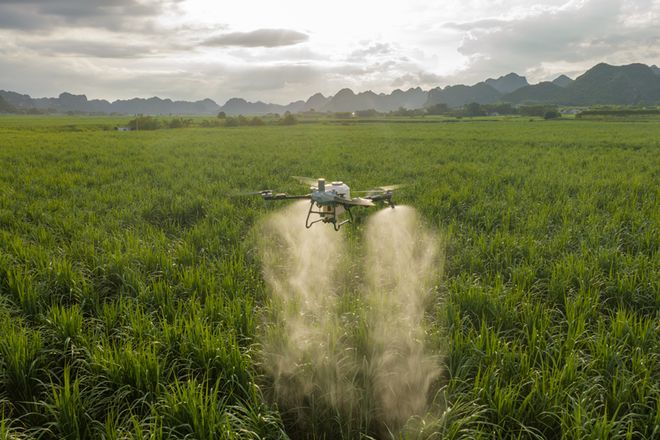
Core Insights - DJI Agriculture has launched three new agricultural drones: T100S, T70S, and T55, catering to various field sizes and operational needs [1][4] Product Features - The T100S has a maximum takeoff weight of 149.9 kg, with a spray system capacity of 85 liters, a payload capacity of 90 kg, and a lifting capacity of 95 kg, featuring an innovative onboard battery cooling system [2] - Compared to its predecessor T100, the T100S emphasizes "small size, large payload," with a new movable arm design that enhances flexibility and reduces weight by over 11 kg, making it easier for a single operator to transport [2][4] - The T100S incorporates advanced safety features, including a 256-line LiDAR with a 153% increase in point cloud density and a new generation of millimeter-wave radar, achieving L3 automation level for specific operational conditions [4] Market Positioning - The T70S is designed for medium operational intensity, sharing safety features with the T100S, and has a spray capacity of 50 liters, with an option to increase to 50 liters per minute with specialized nozzles [6] - The T55 targets smallholders and scattered plots, featuring a lightweight design and ease of transport, equipped with 360-degree coverage sensors and a simplified mobile control mode [6] Market Impact - By November 2025, DJI's agricultural drones are expected to complete 3.2 billion acres of crop protection tasks in China, with a rice penetration rate of 60% and over 90% in major production areas [8] - DJI Agriculture has expanded its reach to over 100 countries, focusing on key agricultural regions such as Brazil, Mexico, Thailand, and Japan, and has trained over 70,000 drone operators [10]
国安达(300902) - 300902国安达投资者关系管理信息20251119
2025-11-19 01:14
Group 1: Energy Storage Business Growth - The company's revenue in the energy storage fire protection sector increased from approximately 11 million yuan in 2022 to over 74 million yuan in 2023, with an expected growth to 130 million yuan in 2024 [2] - The company is a major supplier in the domestic energy storage fire protection market, collaborating with leading battery manufacturers like CATL and Eve Energy [2] - The company aims to enhance its market share in the domestic market while gradually increasing its overseas revenue share, supported by product certifications in various countries [2] Group 2: Strategic Investment in Kewitai - The company has made a strategic investment in Kewitai, acquiring a 31.21% stake, increasing its total ownership from 19.81% to 51.02% [3] - Kewitai specializes in the low-altitude economy, particularly in drones for heavy payloads and long endurance, aligning with the company's long-term vision for this sector [3] - Despite a decline in orders due to external factors in the past two years, Kewitai has seen a significant increase in orders this year, with production lines operating at high capacity [3] Group 3: Firefighting Robot Development - The company has established a clear layout in the firefighting robot sector, with a focus on both application and research [3] - A large remote-controlled firefighting robot has been successfully developed and is now in practical use, targeting high-risk areas such as power substations and petrochemical sites [3] - The company is also developing intelligent robots with a focus on autonomous task execution, collaborating with industry-leading manufacturers to build an open and collaborative industrial ecosystem [3]

大疆亮剑,农业无人机迈入智驾时代
雷峰网· 2025-11-19 00:35
Core Viewpoint - The agricultural drone industry is transitioning from manual control to intelligent driving, driven by changes in user demand and the expansion of operational scenarios [1][15]. Group 1: DJI's Agricultural Drone Business - DJI's agricultural drone segment, while not widely recognized, is a significant part of its business puzzle, with a projected shipment of 200,000 units by 2025, leading to an estimated annual revenue exceeding 10 billion [2][3]. - DJI's agricultural drones hold a market share of nearly 90% in China, with 62,332 units out of a total of 69,427 units reported in the subsidy system [3][5]. - The agricultural drone sector is crucial for honing flight technology, contributing 98% of flight time in China's drone industry, enhancing DJI's overall technological capabilities [5][6]. Group 2: Cost Reduction and Market Activation - The past decade has focused on cost reduction, with the price of agricultural drones dropping significantly from 100,000 for a 10-liter payload drone to around 10,000, a 90% decrease [8][10]. - This price drop has transformed agricultural drones from tools for professional pest control teams to accessible equipment for ordinary farmers, with the user ratio shifting from 90% small B users to 50% self-use users [10][13]. - The decline in costs is attributed to various factors, including the optimization of design and the decreasing prices of lithium batteries, which account for about one-third of the drone's cost [9][12]. Group 3: Transition to Intelligent Driving - The introduction of laser radar in DJI's T100S and T70S models marks the beginning of the intelligent driving era for agricultural drones, enabling fully automated operations in specific scenarios [6][17]. - The multi-sensor intelligent driving solution combines millimeter-wave radar, vision, and laser radar, significantly enhancing obstacle detection capabilities [18]. - DJI's commitment to user safety is evident in its new policy offering free repairs for drones that collide with obstacles during operation, reflecting confidence in its intelligent driving technology [19]. Group 4: Future Developments and Industry Trends - The future of agricultural drones includes advancements towards L4 level autonomous operations, with capabilities for real-time monitoring of crop health and pest identification using AI [20][22]. - The industry is moving towards a model where agricultural drones serve as intelligent assistants, providing comprehensive agricultural solutions rather than just operational tools [20][23]. - The evolution of agricultural drones is reshaping perceptions of modern agriculture, emphasizing efficiency and technological integration in farming practices [22][23].
农业无人机走向自动驾驶
第一财经· 2025-11-18 23:58
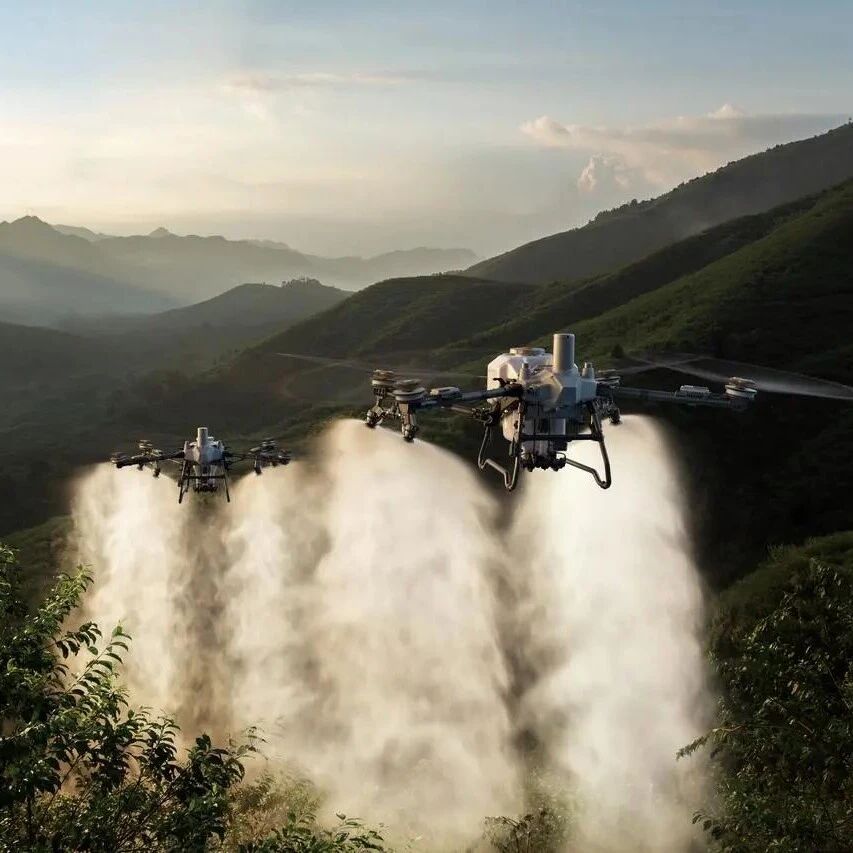
Core Viewpoint - The article discusses the advancements in agricultural drones, particularly focusing on DJI's new products that have reached L3 (conditional automation) levels, highlighting the integration of AI and sensor technologies in enhancing automation and market penetration in agriculture [3][4][7]. Group 1: Technological Advancements - DJI's agricultural drones have achieved L3 automation, allowing for fully automated operations in specific scenarios [7]. - The new T100S drone can carry loads of 90 kg and 95 kg, with production capabilities of 400-500 units per day [6]. - The flight hours of agricultural drones now account for 98% of the entire drone industry, indicating a significant increase in usage [6]. Group 2: Market Penetration and Challenges - DJI's annual shipments of agricultural drones have increased from 2,000 units a decade ago to 200,000 units this year, with a domestic subsidy of approximately 62,000 units out of 70,000 [6][11]. - The penetration rates for different crops show that rice has a 60% penetration, while orange trees have only 40%, primarily due to obstacles like power lines [11][12]. - The average operational frequency for corn in Inner Mongolia is only 1.8 times, significantly lower than the 9.5 times for rice and wheat, indicating a need for increased usage [12]. Group 3: Sensor Technology and AI Integration - The integration of multiple sensors, including visual sensors, laser radar, and millimeter-wave radar, is essential for navigating complex agricultural environments [8]. - AI has been incorporated into mobile applications for pest identification and medication recommendations, enhancing the operational efficiency of drones [9]. Group 4: International Market Expansion - DJI's primary market remains domestic, with significant potential in Latin America and East Asian countries, but faces regulatory challenges in Europe regarding chemical spraying and pilot certification [13]. - The need for adaptation to local regulations and practices presents a barrier to expanding into international markets [13].
农业无人机走向自动驾驶
Di Yi Cai Jing Zi Xun· 2025-11-18 23:40
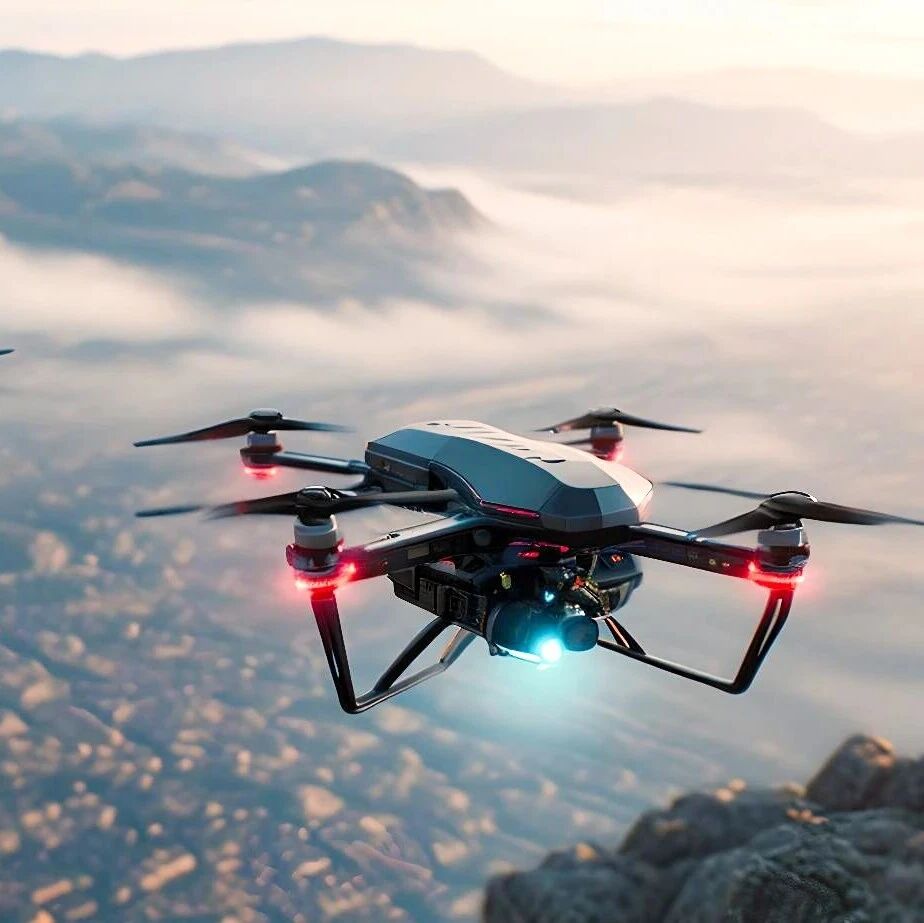
Core Insights - DJI has launched new agricultural drones that have reached L3 (conditional automation) level, indicating significant advancements in automation and technology in the agricultural sector [1][3] - The penetration rate of agricultural drones in China has reached a certain level, but manufacturers need to address technical and market expansion challenges to capture new markets [1][6] Group 1: Product Development and Technology - The new DJI agricultural drones are capable of carrying loads of 90 kg and 95 kg, with production lines capable of assembling 400-500 units daily [2] - Agricultural drones have seen an increase in flight hours, accounting for 98% of the entire drone industry, with DJI and XAG holding nearly 80% of the global market share [2] - The number of agricultural drones shipped by DJI has increased from 2,000 units ten years ago to 200,000 units this year [2] Group 2: Automation and Safety Challenges - Agricultural drones have progressed from L0 to L3 automation levels, with the latest models capable of fully automated operations in specific scenarios [3][4] - Safety concerns arise from potential collisions with power lines and other obstacles, necessitating the integration of multiple sensors for obstacle detection [3][4] - The use of AI in agricultural drones has been introduced to assist in pest identification and medication recommendations [4] Group 3: Market Penetration and Expansion - DJI's penetration rates in specific crops are approximately 60% for rice and 40% for navel oranges, indicating room for growth in other areas [6][7] - The average usage frequency of drones in major corn-producing regions is only 1.8 times, significantly lower than in rice and wheat areas, highlighting the need for increased usage [7] - Challenges in entering overseas markets include regulatory requirements and varying local practices, which necessitate tailored approaches for different regions [8]
KULR Technology (KULR) - 2025 Q3 - Earnings Call Transcript
2025-11-18 22:30
Financial Data and Key Metrics Changes - KULR Technology Group reported approximately $6.9 million in revenue for Q3 2025, representing a 116% year-over-year growth and a 75% sequential increase from the previous quarter [4][23] - The company achieved a new trailing 12-month revenue record of $16.7 million, marking the fifth consecutive quarter of revenue growth compared to the prior year [23] - Product revenue grew by 112%, while services revenue declined by 74%, indicating a strategic shift towards a product-driven business model [23] Business Line Data and Key Metrics Changes - The transition from services to product revenue is evident, with product revenue more than doubling [4] - The launch of KULR One Air has resulted in over 150 battery SKUs, positioning the company in a rapidly growing market segment [5][11] Market Data and Key Metrics Changes - The UAV and drone battery market is projected to grow from approximately $1.5 billion in 2025 to over $2.4 billion by 2030, driven by increased adoption in various sectors [12] - KULR is expanding its KULR One platform into AI data centers and telecom infrastructure, tapping into some of the fastest-growing energy markets globally [5][14] Company Strategy and Development Direction - KULR aims to grow its energy storage and management business tenfold over the next three years, supported by a strong financial foundation and strategic investments [5] - The company plans to expand its Texas headquarters to over 100,000 sq ft and scale production significantly to meet rising demand [6][13] Management's Comments on Operating Environment and Future Outlook - Management expressed optimism about entering a super growth cycle as demand surges for advanced energy storage solutions across core markets [8] - The company is well-positioned to capitalize on the increasing demand for high-performance energy systems, particularly in the context of AI and telecom infrastructure [9][10] Other Important Information - KULR holds approximately $120 million in Bitcoin, reflecting a disciplined approach to its digital asset strategy [26][34] - The company has no debt and a strong cash position, allowing it to navigate market volatility effectively [34] Q&A Session Summary Question: What is KULR's strategic priorities today as a Bitcoin treasury company with operations? - KULR's priorities are focused on its core energy management and storage business, alongside vibration reduction technologies, both of which are expected to drive strong revenue growth for 2026 [27] Question: What is the long-term strategy for the Bitcoin treasury and mining operations? - The company believes in a favorable long-term pricing outlook for Bitcoin and has shifted to growing its position through mining, which also aligns with its energy storage solutions [29] Question: What outcomes have been achieved in terms of institutional participation and market perception since the reverse split? - Since the reverse split in June 2023, institutional ownership has more than doubled, and there are no plans for another reverse split [30] Question: Can management provide updates on partnerships with government, military, aerospace, and corporate sectors? - KULR is making steady progress on partnerships, which involve multi-stage qualification and certification processes, and these engagements are crucial for establishing long-term pathways for product integration [31] Question: What concrete steps is management taking to stabilize the stock price? - The primary focus is on accelerating revenue growth in core markets, with significant traction in autonomous systems and energy storage solutions [33]

广州把科研干到全球第六,你还在说它只有早茶和收租?
Sou Hu Cai Jing· 2025-11-18 18:39
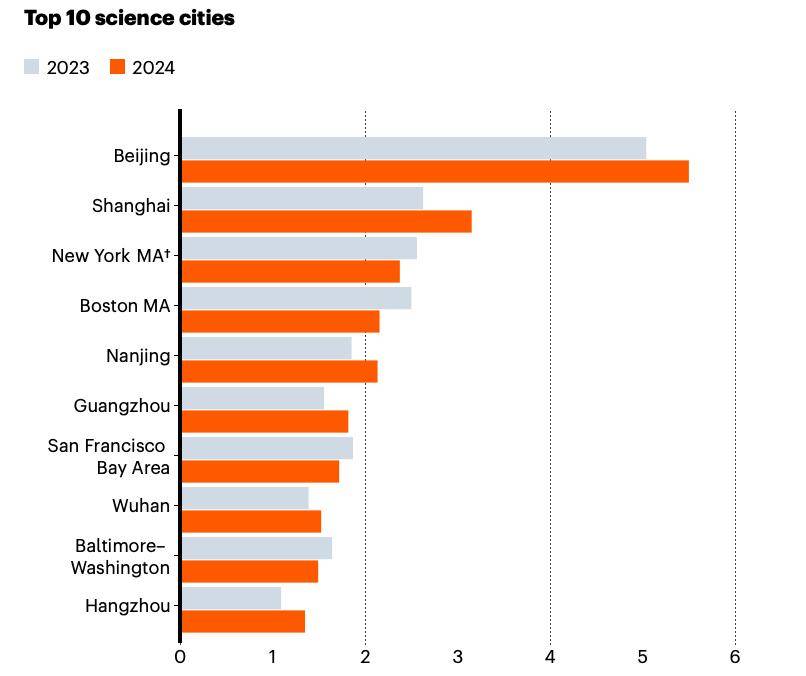
Core Insights - Guangzhou has achieved the rank of the sixth global research city, surpassing cities like Hong Kong, Shenzhen, and Hangzhou, and notably outpacing the San Francisco Bay Area [1][2][7] - The ranking is based on the "Nature Index" published by Springer Nature, which tracks contributions to high-quality scientific journals [8][9] Ranking Overview - The top ten global research cities are Beijing, Shanghai, New York metropolitan area, Boston metropolitan area, Nanjing, Guangzhou, San Francisco Bay Area, Wuhan, Baltimore-Washington, and Hangzhou [2][6] - Guangzhou's ranking improved from eighth to sixth, with a significant increase in its contribution score from 1558.1 to 1820.05 [2][7] Research Output - Guangzhou's research output includes 3,966 papers, ranking fourth in China and sixth globally [7] - The city has shown consistent improvement over the past decade, moving from 42nd place in 2015 to 6th in 2024, overtaking 36 cities [11] Academic Performance - In the five major scientific disciplines tracked by the Nature Index, Guangzhou ranks as follows: sixth in physical sciences, ninth in life sciences, fourth in chemistry, third in earth and environmental sciences, and tenth in health sciences [11] Calculation Methodology - The Nature Index uses a "share" metric to assess contributions, which allocates a paper's contribution based on the proportion of authors affiliated with a specific institution or region [12][13] Institutional Support - Guangzhou is recognized for its strong academic infrastructure, with 84 universities and over 160,000 students, contributing significantly to its research output [16] - The city has established a robust "2+2+N" technology innovation platform, housing national laboratories and major scientific facilities [17][18] Corporate Contributions - In 2023, Guangzhou's R&D expenditure exceeded 100 billion yuan, with corporate R&D accounting for 65.8% of the total [19] - The number of high-tech enterprises in Guangzhou has grown to 13,500, contributing nearly 50% of industrial output [20] Unicorn Companies - By 2025, Guangzhou is projected to have 24 unicorn companies, ranking fourth among Chinese cities and eleventh globally [21]
11月还没结束,中国经济巨变,出现三个反常现象,风向真的变了!
Sou Hu Cai Jing· 2025-11-18 16:11
Economic Trends - The current economic landscape in China is characterized by a significant increase in household savings, with total RMB deposits reaching 325.55 trillion, a year-on-year growth of 8%, and household deposits alone increasing by 11.39 trillion in October [2] - The phenomenon of citizens purchasing government bonds has intensified, with some bonds selling out within minutes of release, indicating a shift in consumer behavior towards saving rather than spending [4] Consumer Behavior Changes - There is a notable shift in attitudes towards luxury goods, with brands like Burberry and Coach experiencing sales growth exceeding 30%, despite a general trend of increased savings [6] - The luxury market is adapting by implementing stricter quality checks and offering discounts to boost sales, reflecting a change in consumer expectations and market dynamics [7][8] Automotive Market Dynamics - Sales of imported luxury vehicles such as Mercedes-Benz and Audi have declined, while domestic brands like BYD and Geely are gaining market share, indicating a shift in consumer preferences towards local products [9] Brand Perception and Global Influence - The transition from a focus on GDP growth to a more consumer-centric economy highlights the rising influence of Chinese brands globally, with a growing confidence among consumers in domestic products [11] - Chinese brands are increasingly recognized for their quality and innovation, with companies like Huawei and Xiaomi making significant inroads in international markets, showcasing the evolution of "Made in China" to a brand-driven economy [13][15]
大疆农业:今年农业无人机全球发货量超20万台
Xin Hua Cai Jing· 2025-11-18 14:52
Core Insights - DJI Agriculture has achieved significant growth in global drone shipments, with over 200,000 units shipped by 2025, and domestic operational units exceeding 320,000, completing 3.2 billion acres of agricultural tasks [1][2] Group 1: Product Launch and Features - DJI Agriculture officially launched three new agricultural drones: T100S, T70S, and T55, designed for various agricultural applications including large-scale operations and ease of use for new users [1] - The T100S is a flagship model featuring high payload capacity and comprehensive safety systems, while the T70S offers a cost-effective solution for medium-sized farms, and the T55 focuses on lightweight design for single-user operations [1] Group 2: Market Expansion and Training - DJI's sales network now spans over 100 countries, with a focus on key agricultural regions such as Brazil, Mexico, Thailand, and Japan, utilizing a "sales + training + service" model to enhance local farming efficiency [2] - Over 70,000 local operators have been trained, contributing to the modernization of agriculture in their respective regions [2] Group 3: Technological Advancements - The company is advancing drone technology towards higher levels of automation, achieving L3 level automation, which allows for conditional autonomous operation in various environmental conditions [3] - This advancement is supported by a fully self-developed multi-sensor fusion solution, enhancing operational safety and efficiency [3]