石油

Search documents
贸易大洗牌,中国怎么办?
盐财经· 2026-03-05 00:31
Group 1 - The article discusses the escalation of the conflict between the US and Israel, leading to significant geopolitical and economic implications, particularly in the oil market [3] - Iran's Revolutionary Guard has announced the closure of the Strait of Hormuz, a critical oil passage, and has attacked several oil tankers, causing a spike in European natural gas futures by 50% [3] - The conflict has affected oil and gas facilities in Saudi Arabia and Qatar, leading to operational shutdowns [3] Group 2 - China, India, and Japan, as major consumers of Gulf oil and gas, are impacted, but China's oil reserves can cover 110 to 140 days of national consumption, indicating a relatively stable position for now [4] - The article highlights the recent decrease in prices for beef and cherries in China due to increased imports from South America, particularly Brazil and Chile [7] - China's exports grew by 6.1% last year, while imports only increased by 0.5%, prompting the government to enhance promotional efforts to boost imports [8] Group 3 - China's trade with Africa saw a remarkable growth of 25.8% last year, attributed to the complementary economic stages between China and Africa, where Chinese industrial products meet African demand for affordable goods [10] - The article mentions China's initiative to implement zero tariffs on 100% of products for 53 African countries, facilitating the entry of various African agricultural products into the Chinese market [10] - India and Vietnam are identified as potential markets for increased trade with China, with India showing significant reliance on Chinese industrial goods [12]


美国油价创四年最大涨幅,中国制造业PMI环比下跌 | 财经日日评
吴晓波频道· 2026-03-05 00:30
Group 1 - The manufacturing PMI in China for February recorded at 49.0%, a decrease of 0.3 percentage points from the previous month, falling below the 50% threshold, indicating a contraction in the manufacturing sector [2] - The non-manufacturing business activity index slightly increased to 49.5%, up by 0.1 percentage points from the previous month, driven by holiday consumption in sectors like accommodation and catering [2] - The RatingDog composite PMI for February rose to 55.4, the highest in 33 months, with the manufacturing PMI at 52.1, indicating strong recovery in exports and high-end manufacturing despite the disruptions from the Spring Festival [2] Group 2 - The traditional manufacturing sector is experiencing ongoing transformation pains, with weak domestic demand becoming a long-term drag on China's overall economic recovery [3] - The population in Zhejiang province increased by 310,000 to 67.01 million, reflecting a trend of population concentration in the Yangtze River Delta and Pearl River Delta regions, while many central and western provinces are experiencing outflows [4][5] - The domestic smartphone market saw a year-on-year decline of 16.1% in January, with total shipments at 22.87 million units, indicating ongoing challenges in the industry due to supply chain issues and a lack of disruptive technology [6][7] Group 3 - The U.S. gasoline prices have surged significantly due to escalating conflicts in the Middle East, with prices rising from approximately $2.9 to over $3.1 per gallon in just two days, marking the largest single-day increase since March 2022 [8] - The Korean stock market experienced a dramatic decline, with the KOSPI index dropping 12.06% in one day, the largest single-day drop in its history, driven by heightened geopolitical tensions [12] - The short drama platform Hongguo has canceled certain guaranteed payment mechanisms for smaller production companies, indicating a shift in strategy towards supporting high-quality projects and AI-driven content [10][11]

格林大华期货早盘提示-20260305
Ge Lin Qi Huo· 2026-03-04 23:41
Report Industry Investment Rating - The report gives a "downward" rating for the global economy in the macro and financial sector [1] Core Viewpoints - The global economy is facing significant uncertainties due to geopolitical conflicts in the Middle East, changes in U.S. policies, and the impact of AI. These factors are putting pressure on the U.S. stock market, inflation, and the overall economic outlook. The U.S. economy may experience a downturn, and the global economic cycle has started to decline [1][2][3] Summary by Related Catalogs Global Economic Logic - Trump's offer of war insurance and naval escort for oil tankers eases market liquidity risk, but Iran's actions and stance increase geopolitical tensions [2] - Hedge funds are selling U.S. stocks at a fast pace, and warnings from financial leaders suggest a high - risk environment similar to the 2008 financial crisis [1][2] - The expected缩表 policy of Fed's nominee Wash has a negative impact on global equity and commodity assets [2] - The U.S. is changing its global strategy, which may lead to a "flight from U.S. assets" and has a huge impact on the global political and economic order [2] - Consumer K - type differentiation in the U.S. is intensifying, and funds are flowing from technology stocks to defensive sectors [2] Impact on Asset Classes - The U.S. returning to the Monroe Doctrine will have a profound and subversive impact on major asset classes such as global economy, U.S. bonds, U.S. stocks, the U.S. dollar, precious metals, and industrial metals [3] - Wash's combination of interest rate cuts and缩表 indicates a major shift in Fed's monetary policy, leading to a strong expectation of liquidity contraction for equity assets [3] - The Nasdaq has broken through the six - month moving average again, and factors like AI substitution and the Middle East situation may trigger a new round of large - scale selling of U.S. stocks, which could negatively affect U.S. consumption [3] Geopolitical and Market Risks - Iran's "long - term war" stance and related actions are putting pressure on the global market, especially on oil prices and inflation [1] - Wall Street strategists warn that the U.S. stock market may need to fall by 10% - 15% to prompt government action, and high - oil prices may kill the Fed's interest rate cut possibility [1] - The market is facing huge uncertainties due to the Middle East conflict and AI's impact on the software industry, and investors may face an 18 - 24 - month "painful period" [1] - The rise in U.S. gasoline prices increases the risk of stagflation [1] - Stocks of some financial companies are under pressure due to investor redemptions and concerns about AI's impact on software companies [1] - The yen is weakening due to domestic fiscal policy uncertainty, reduced hedging demand, and lower expectations of Bank of Japan's interest rate hikes [1]
美股科技股反弹,英特尔涨超5%,比特币猛拉7%,白宫向参议院提交美联储下任主席提名
21世纪经济报道· 2026-03-04 23:15
Market Overview - Major European and US stock indices collectively rose, with Germany's DAX and Italy's MIB indices increasing by over 1.7% [1] - The US stock market ended a two-day volatile period with all three major indices rebounding, the Nasdaq rising over 1% and gaining nearly 300 points intraday [1] Stock Performance - In the US, the Dow Jones increased by 238.14 points (+0.49%), Nasdaq by 290.79 points (+1.29%), and S&P 500 by 52.87 points (+0.78%) [2] - Major tech stocks led the rebound, with Intel rising over 5%, Amazon and Tesla over 3%, and Meta and Nvidia over 1% [2] - Semiconductor stocks generally rose, with the Philadelphia Semiconductor Index increasing by nearly 2% [2][3] Cryptocurrency Market - Cryptocurrency stocks surged, with Coinbase up over 14% and major cryptocurrencies like Bitcoin and Ethereum rising by over 7% and 9% respectively [5][6] - The total trading volume for Bitcoin reached approximately $109.36 billion, reflecting a 29.25% increase in the last 24 hours [6] Chinese Stocks - The Nasdaq Golden Dragon China Index rose by 0.8%, with notable increases in stocks like NIO (+5.5%) and Xiaomi (+4%) [5] Energy and Commodities - Energy stocks declined, with ConocoPhillips down over 2% and ExxonMobil and Chevron dropping over 1% [7] - Gold and silver prices increased, with gold reaching a peak of $5200 before settling around $5140, marking a daily increase of over 1% [7] - International oil prices continued to rise, with WTI crude oil up over 2% to $76.11 per barrel [7] Geopolitical Context - The geopolitical situation in the Middle East is tense, with reports of military actions involving Iran and Israel, which may impact market sentiment and economic forecasts [8]

战火、石油与底牌
汽车商业评论· 2026-03-04 23:05
Core Viewpoint - The article discusses the recent surge in oil prices and the stock performance of China's "Big Three" oil companies (China National Petroleum Corporation, China Petroleum & Chemical Corporation, and China National Offshore Oil Corporation) due to geopolitical tensions in the Middle East, particularly the conflict involving Iran and the closure of the Strait of Hormuz [5][11][12]. Group 1: Oil Price Surge and Market Impact - The oil price has seen a historic increase, with Brent crude surpassing $85 per barrel, marking a rise of over 20% since the onset of the conflict [6][11]. - The "Big Three" oil companies in China experienced consecutive trading halts, achieving their first collective limit-up in A-share history, with China National Petroleum Corporation reclaiming its position as the top market cap in A-shares [5][12]. - The geopolitical situation has led to a significant disruption in global oil supply, with estimates suggesting that 20%-30% of maritime oil trade could be affected, raising concerns about potential oil prices reaching $150-$200 per barrel if the situation persists [11][12]. Group 2: Investment Logic in Oil Sector - Warren Buffett's Berkshire Hathaway has heavily invested in oil stocks, indicating a long-term strategy based on macroeconomic and industry fundamentals rather than short-term speculation [17][18]. - Major U.S. oil companies have shifted focus from aggressive capacity expansion to capital discipline, leading to increased dividends and stock buybacks, which enhances their attractiveness to investors [18][19]. - The lack of capital expenditure in the fossil fuel sector over the past decade, combined with disciplined production cuts from OPEC+, has created a supportive environment for oil prices and profit margins [19][20]. Group 3: Considerations for Retail Investors - Retail investors are cautioned against entering the market for "Big Three" stocks at this time due to the extreme risk-reward imbalance amid geopolitical tensions and high oil prices [29][30]. - While the "Big Three" companies have shifted towards capital returns and have attractive dividend yields, the potential for a significant price correction exists if geopolitical tensions ease [30][31]. - Historical precedents, such as the Gulf War and the Russia-Ukraine conflict, demonstrate that oil prices can experience rapid increases followed by steep declines, suggesting caution for investors considering entry points during high volatility [31][32]. Group 4: Future Energy Landscape - The article highlights the ongoing transition towards clean energy and the potential for structural demand shifts in oil consumption due to the rise of electric vehicles in China [39][40]. - The need for a diversified energy security strategy is emphasized, with a focus on developing renewable energy sources and hydrogen as part of national security [40]. - The current crisis may serve as a catalyst for accelerating the global energy transition, underscoring the importance of investing in sustainable energy solutions [40].

能源早新闻丨全国人大首场发布会提及国家电网、中石油;生态环境法典是中国第二部以“法典”命名的法律
中国能源报· 2026-03-04 22:33
Key Points - The National People's Congress highlighted investments by State Grid in Portugal and a joint venture between China National Petroleum Corporation and Shell in Australia, emphasizing technology sharing and economic development [2] - The newly introduced Ecological Environment Code is China's second law named as a "code," representing a systematic integration and enhancement of existing environmental laws [2] - A member of the National Committee expressed intentions to promote Chinese products and technologies globally, contributing to the renewable energy sector [3] - The National Energy Administration is advancing rural wind and solar energy development, aiming to enhance electricity supply and promote renewable energy heating solutions [4] - In January, 5,690 new renewable energy projects were registered in China, with 66 wind and 5,618 solar projects, indicating robust growth in the sector [5] - The credit index for Chinese enterprises remained stable at 161.79 in January, reflecting a good credit level across various industries [6] - The Three Gorges South Line lock has commenced its scheduled maintenance for 2026, marking the ninth planned maintenance since its operation began [6] - European economists are concerned that disruptions in Middle Eastern oil and gas supplies could lead to significant inflation and economic downturns [7] - A major oil field in southern Iraq has suspended production due to shipping disruptions caused by the closure of the Strait of Hormuz [7] - The Tarim Oilfield has produced over 500 billion cubic meters of natural gas, playing a crucial role in ensuring national energy security and promoting a low-carbon energy structure [8]




Oil Swings as Iran Denies Report of US Outreach to End War
Youtube· 2026-03-04 22:13
Oil Market Analysis - The Midwest is experiencing a significant oversupply of crude oil, with the US being a net exporter of crude oil and natural gas, leading to expectations of lower prices ahead of the midterms [1][7]. - A colder-than-normal winter previously pushed natural gas prices up, but they have since collapsed, indicating a potential peak in oil prices [2][4]. - Brent crude oil recently reached a new high of around $85, but the December contract is projected to decline to approximately $58, reflecting a bearish outlook [3][4]. Supply Dynamics - The Western Hemisphere, particularly the US and Canada, is now the price maker in crude oil, with a surplus supply of nearly 8 million barrels per day [7]. - A sustained supply curtailment in the Middle East is deemed unlikely, suggesting that oil prices may trend lower as the midterms approach [8]. Agricultural Sector Insights - Farmers are facing challenges due to massive supply from Brazil, which is impacting prices and profitability [11][15]. - There is a need for demand support, particularly through biofuels, to stabilize prices in the agricultural sector [11][12]. - Current corn prices are around $3.50, and there is speculation that a low price point for crude oil could be around $40, indicating a potential bottom in prices [16].

TRUMP'S VENEZUELA GAMBIT: Undercutting China with oil and minerals
Youtube· 2026-03-04 21:00
Group 1 - The trip of Interior Secretary Doug Burham to Venezuela aims to forge business partnerships in rare earth mineral mining, highlighting Venezuela's vast untapped deposits [1][3] - The Venezuelan president, Darcy Rodriguez, has expressed that Venezuela is open for business, indicating a willingness to expand economic relations with the U.S. [2][4] - The U.S. administration views the partnership with Venezuela as a strategic move to reduce reliance on China for rare earth minerals [3] Group 2 - Secretary Burham's meetings include discussions with rare earth executives and plans to meet with oil and gas executives to enhance the flow of goods [4][5] - Venezuela has already shipped 100 million barrels of oil to the U.S., with the U.S. selling this oil at full price and returning some funds to Venezuela [4] - The potential increase in Venezuelan oil production could help ease global oil prices, emphasizing the importance of the energy relationship between Venezuela and the U.S. [5]
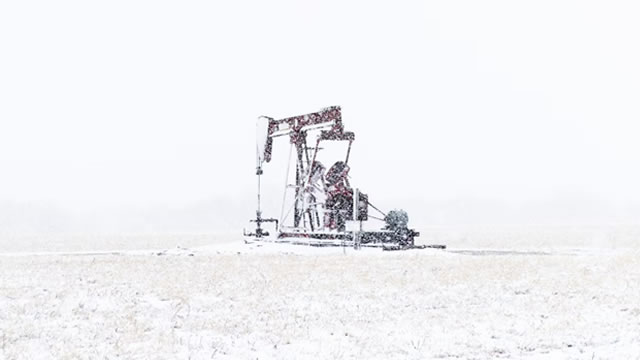
Global-U.S. oil price spread hits more than 2-year high, as Strait of Hormuz shutdown halts tanker traffic
MarketWatch· 2026-03-04 20:49
The U.S. and Israel started a conflict with Iran over the weekend, wreaking havoc on the oil-rich Middle East region. Brent crude prices are taking the bigger brunt of the impact, with its premium abo... ...

Conflict in Iran could become much more problematic for the oil market, says Citi's Max Layton
Youtube· 2026-03-04 19:38
Core Viewpoint - The oil market is facing significant risks due to geopolitical tensions, particularly involving Iran, which could lead to escalated military actions impacting energy infrastructure and prices [2][3][4]. Price Forecast - The expected trading range for Brent crude oil is between $80 to $90, while WTI is projected to be $5 to $8 lower than Brent [2]. Market Dynamics - Energy stocks have seen inflated valuations, driven by broader market strength and expectations of a favorable economic environment in the U.S. However, there is skepticism about the sustainability of these valuations given the current oil price dynamics [5][6]. Geopolitical Risks - The situation with Iran remains precarious, with the potential for asymmetric responses to perceived threats, which could further destabilize the oil market [3][4]. Long-term Outlook - A bearish 12-month outlook on oil prices is based on a transition from a broader international conflict to a more localized risk concerning Iran, which could reduce the number of barrels at risk from 20-30 million to 2-3 million [7]. Additionally, peace deals related to the Russia-Ukraine conflict are anticipated to further influence oil prices [7].