在线服务

Search documents
春节打车被绕路加价?这些维权渠道帮你挽回损失
Xin Lang Cai Jing· 2026-02-11 03:27
Core Viewpoint - The article highlights the common issues faced by passengers during the Spring Festival when using ride-hailing services, emphasizing the importance of utilizing official complaint channels for effective resolution of disputes. Group 1: Common Issues in Ride-Hailing - Passengers frequently encounter problems such as drivers increasing fares during bad weather, refusing to pick up without extra payment, intentionally taking longer routes, and canceling orders after accepting them [1][7]. - These issues can significantly affect the travel experience during the festive season, leading to frustration among users [1][7]. Group 2: Evidence Preservation for Complaints - It is crucial for passengers to retain evidence such as trip records, order screenshots, fare details, communication with drivers, and location tracking to support their claims [1][7]. - Retaining this information facilitates a more efficient complaint process through the appropriate channels [1][7]. Group 3: Official Complaint Channels - Passengers can first utilize the official complaint channels provided by ride-hailing platforms, where they can find options to report drivers and submit their issues directly [1][8]. - For traditional taxis, passengers can contact the local transportation supervision hotline 12328 for issues like refusal to pick up or fare disputes [2][8]. - The 12315 platform serves as a national consumer rights protection channel, addressing both individual driver misconduct and platform management issues [2][8]. Group 4: Third-Party Complaint Platforms - The Black Cat Complaint platform offers an additional layer of support for consumers, allowing easy access to file complaints through various digital channels [3][9]. - The platform simplifies the complaint process, enabling users to submit their issues and evidence in under five minutes, thus reducing the time and effort required for resolution [3][9]. Group 5: Complaint Processing and Transparency - Black Cat Complaint employs an intelligent ticketing system that provides real-time updates on the status of complaints, ensuring transparency throughout the process [4][10]. - The platform allows for collective complaints, enhancing visibility and pressure on platforms and drivers to address recurring issues [4][11]. Group 6: Legal Support and Resources - The platform offers an AI legal assistant that provides professional legal advice and documentation for consumers, helping them understand their rights and navigate the complaint process effectively [4][11]. - This service is available 24/7, ensuring that users can access legal support whenever needed [4][11]. Group 7: Consumer Reference Tools - The Black Cat Complaint platform features a red-black list module that helps consumers avoid problematic ride-hailing services by displaying complaint statistics and response rates [5][12]. - Passengers are encouraged to check these rankings before booking rides to minimize the likelihood of encountering issues [5][12]. Group 8: Overall Consumer Protection Framework - The article emphasizes a comprehensive consumer protection framework that includes multiple complaint channels, ensuring that passengers can effectively address issues encountered during their Spring Festival travels [6][12]. - By preserving evidence and utilizing the appropriate channels, consumers can hold non-compliant drivers and platforms accountable, enhancing their travel experience [6][12].
谁在沉迷AI算命?
3 6 Ke· 2026-01-15 09:37
Core Insights - The rise of AI fortune-telling represents a unique intersection of technology and traditional practices, providing a new form of emotional support in an uncertain post-pandemic world [1][2] - AI fortune-telling has become a significant outlet for societal emotions, with users seeking certainty and guidance from AI-generated insights [2] Industry Overview - AI fortune-telling, or "online metaphysics," has a history that predates large AI models, with the first online fortune-telling websites emerging around 2000 [3] - Astrotalk, an online astrology platform founded by Puneet Gupta, has captured 80% of the Indian online astrology market, boasting 40 million users and 15,000 active astrologers, generating over $250 per minute in revenue [4] - In China, various AI-driven fortune-telling products are gaining traction, with platforms like "AI Life K-Line Chart" selling services for 5-10 yuan, achieving thousands of transactions in a short period [4] Market Dynamics - The traditional fortune-telling market in China is characterized by a mix of registered institutions and numerous individual practitioners, with a projected market size of over 12 billion yuan in 2024 and a growth rate of 43.7% [7] - AI fortune-telling products are mostly free or low-cost, making them accessible to a broader audience, thus transforming a traditionally high-cost service into a more consumable product [7][8] User Behavior - The demographic of AI fortune-telling users skews younger, with 68% of users aged 18-35, indicating a shift in who seeks these services [12][13] - Users are increasingly turning to AI for emotional support and guidance, viewing it as a cost-effective alternative to traditional fortune-telling [12][13] Technological Implications - AI's role in fortune-telling is primarily as a tool that processes and outputs information based on established metaphysical rules, rather than creating new methodologies [8] - Current AI models lack the ability to learn from individual cases, which can lead to inconsistencies in the advice provided compared to human practitioners [9][10] Ethical Considerations - The anonymity and non-judgmental nature of AI fortune-telling can lead to ethical dilemmas, as AI may provide advice without considering moral implications [10][11] - The reliance on AI for emotional support raises concerns about the potential for users to become overly dependent on technology for guidance [11][12]
杭州EDI经营许可证办理条件
Sou Hu Cai Jing· 2025-12-24 12:41
Core Viewpoint - The article emphasizes the importance of obtaining the EDI Operating License for businesses engaged in online data processing and transactions in Hangzhou, a hub for e-commerce and digital economy. This license is essential for compliance and operational legitimacy in the digital marketplace [1]. Group 1: Necessity of EDI License - Companies operating online businesses for profit must obtain the EDI Operating License, including various online transaction services such as e-commerce platforms and online ticketing [1][6]. - Personal online stores and individual businesses are exempt from this requirement, but corporate entities must comply [2]. Group 2: Core Conditions for Application - Four essential conditions must be met before applying for the EDI Operating License, including compliance with local regulations and specific operational criteria [3]. - The applicant must be a legally registered domestic limited liability company or joint-stock company, with no foreign shareholders [6]. Group 3: Required Documentation - A detailed checklist of required materials for the application process is provided, emphasizing the importance of thorough preparation to avoid delays [5][10]. - Key documents include the business license, company articles, identification of shareholders, and proof of social security contributions for employees [7][11]. Group 4: Technical and Operational Requirements - Companies must have a registered domain name, domestic server hosting, and a physical office space of at least 50 square meters [6][11]. - Additional technical documentation may include a website functionality description, server hosting agreements, and a business feasibility report [11].


美股异动 | Q3营收同比增长57.7% 迅雷(XNET.US)逆市涨超2%
智通财经网· 2025-11-13 15:04
Core Viewpoint - Xunlei (XNET.US) experienced a stock price increase of over 2%, reaching $8.16, following the announcement of its Q3 2025 adjusted earnings of $0.09 per ADS, with a strong revenue growth of 57.7% year-over-year to $126.4 million [1] Revenue Breakdown - Subscription service revenue reached $40.7 million, reflecting a year-over-year growth of 22.3%, driven by stable user growth and increased willingness to pay [1] - Live streaming and other services revenue surged to $49.1 million, a significant year-over-year increase of 127.1%, attributed to an enriched content ecosystem, enhanced interactive products, and improved platform commercialization efficiency [1] - Cloud computing revenue amounted to $36.6 million, marking a year-over-year growth of 44.9%, with strong demand particularly in distributed storage and services for small and medium-sized enterprises [1] Future Outlook - For Q4 2025, Xunlei projects total revenue to be between $131 million and $139 million, indicating an approximate 6.8% quarter-over-quarter growth based on the midpoint of the range, with the outlook subject to potential adjustments due to market or operational changes [1]

中消协:第三季度共受理消费者投诉536761件
Zhong Guo Xin Wen Wang· 2025-11-07 06:56
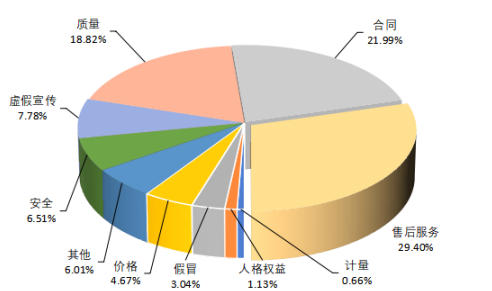
Core Points - The China Consumers Association reported a total of 536,761 consumer complaints in the third quarter of 2025, representing a year-on-year increase of 7.9% [1] - A total of 274,427 complaints were resolved, recovering economic losses of 236 million yuan for consumers [1] - The number of consumer visits and consultations reached 155,900 [1] Complaint Nature Analysis - After analyzing the nature of complaints, after-sales service issues were the most prominent, accounting for 29.4% of total complaints [2] - Compared to the third quarter of 2024, complaints regarding false advertising, safety, and contract issues increased, while complaints about after-sales service, quality, and measurement decreased [4] Complaint Classification by Issues - In the third quarter of 2025, complaints related to after-sales service totaled 157,786, representing 29.4% of total complaints, while contract-related complaints were 118,043 (21.99%) [5] - Quality complaints accounted for 101,001 (18.82%), and false advertising complaints were 41,739 (7.78%) [5] Product and Service Category Analysis - Product-related complaints totaled 283,263, making up 52.77% of total complaints, while service-related complaints were 231,542 (43.14%) [6] - The top five categories for product complaints included home electronics, daily goods, food, clothing, and transportation tools [6] - For service complaints, the leading categories were life and social services, internet services, education and training services, cultural and entertainment services, and sales services [6] Complaint Hotspots and Typical Cases - The rise of the trendy toy economy has led to significant complaints regarding product quality and after-sales service, particularly in blind box and figurine purchases [11] - Complaints about misleading advertising and safety issues in the weight loss product market have also surged, with many consumers reporting adverse health effects [15] - Pet consumption disputes have increased, with issues such as hidden health problems and misleading marketing practices being reported [19] - Complaints related to overseas travel services have highlighted shortcomings in information accuracy and service fulfillment by travel platforms [23] - The issue of automatic renewal services continues to rise, with complaints about hidden terms and lack of cancellation options [27] - Complaints regarding smart driving technology have emerged, focusing on performance limitations and lack of transparency in data sharing [31] - A significant increase in complaints about power banks has been noted, particularly concerning product recalls and safety concerns [37] - Insurance consumption complaints have risen, with issues related to misleading marketing and unauthorized automatic renewals being prevalent [38]
遭遇自动扣费如何投诉?网络时代新选择
Xin Lang Cai Jing· 2025-10-16 09:37
Core Viewpoint - The convenience of automatic billing has become a default option in many services, but it also hides significant risks for consumers, including unexpected charges and difficulties in obtaining refunds [1][2]. Group 1: The Gray Area of Automatic Renewal - The controversy surrounding automatic billing primarily revolves around "informed consent," as many applications set the "automatic renewal" option as the default, often obscuring cancellation options in small print [2]. - For platforms, automatic renewal enhances user retention and provides stable income, leading to a lack of transparency that undermines consumer rights [2]. - Legal experts indicate that failure to prominently inform users about upcoming renewals may violate consumer rights, and continued charges after cancellation could constitute breach of contract or unjust enrichment [2]. Group 2: Consumer Actions When Issues Arise - The most direct action for consumers facing unwanted renewals is to contact platform customer service, with some companies offering a "refund within seven days of automatic renewal" policy [3]. - However, not all platforms respond positively; some users report being denied refunds with excuses related to system limitations or lengthy review processes [3]. - If negotiations fail, consumers can file complaints with regulatory bodies, such as through the "12315" system, to report issues related to inadequate disclosure or misleading practices [3]. Group 3: New Options in the Digital Age - Increasingly, consumers are turning to social complaint platforms, such as "Black Cat Complaints," to report issues related to automatic billing [4]. - These platforms allow users to describe their problems and submit evidence, with the complaint process being publicly displayed to enhance transparency [4][5]. - The "red and black list" feature on such platforms provides consumers with pre-purchase insights, allowing them to see past complaint volumes and response rates, which serves as a warning for potential issues [6]. Group 4: Preventing Automatic Billing Traps - Prevention is easier than remedy; users should carefully read service terms, especially regarding renewal clauses, before subscribing [8]. - Many apps allow users to disable automatic renewal, but the option may be buried in settings, requiring thorough navigation [8]. - Regularly checking bank and payment records can help identify unusual charges, and users should cancel automatic renewals on both the platform and payment channels [8]. Conclusion - The original intent of automatic billing is to provide convenience, but a lack of transparency can lead to unfair charging practices [9]. - A healthy consumer environment requires proactive regulation from companies and vigilance from consumers, encouraging them to report issues to promote market fairness [9][10].
金融助力服务消费需更加精准有效
Zheng Quan Ri Bao· 2025-09-27 15:46
Core Viewpoint - The service consumption sectors, including education, cultural tourism, health, elderly care, and sports, are becoming crucial for driving domestic demand and stabilizing economic growth, necessitating strong financial support to address the financing needs of these sectors [1][2]. Group 1: Financial Support for Service Consumption - Service consumption is linked to both public welfare and economic transformation, serving as a key indicator of social development and quality of life [1]. - The operational entities in the service consumption sector typically exhibit characteristics such as "light assets, lack of collateral, and urgent financing needs," making traditional credit models inadequate to meet their financing demands [1][2]. - Financial institutions are encouraged to proactively direct credit resources towards the service consumption sector to resolve the mismatch between market potential and financial support [1]. Group 2: Innovation in Financial Products - Financial institutions should innovate credit products tailored to the specific needs of different sub-sectors, moving away from a "one-size-fits-all" approach [2]. - For light asset enterprises like knowledge-based services and online services, exploring credit loans based on intellectual property and order data as collateral is recommended [1][2]. Group 3: Technology Empowerment - Embracing financial technology, including big data, artificial intelligence, and cloud computing, can enhance service efficiency and risk management for service consumption enterprises [2]. - Technology can significantly improve financing efficiency and reduce costs for enterprises lacking traditional collateral [2]. Group 4: Service Model Optimization - Financial institutions should evolve from being mere "fund providers" to "comprehensive service providers," offering value-added services alongside credit support [2]. - Establishing deeper cooperative relationships with service consumption entities can create a mutually beneficial ecosystem [2]. Group 5: Case Study and Future Outlook - The example of Zhejiang demonstrates how local financial institutions can effectively stimulate new consumption vitality through innovative financial products and services [2]. - As policies are implemented, more financial institutions are expected to take concrete actions to direct financial resources towards the service consumption sector, contributing to the transformation and upgrading of consumption and promoting high-quality economic and social development [2].
法国经济竞争力遭受关税重创
Jing Ji Ri Bao· 2025-08-13 22:05
Core Viewpoint - The recent trade agreements between Europe and the U.S. have not mitigated the damaging impacts of U.S. tariffs, leading to a significant increase in France's trade deficit and raising concerns about the competitiveness of French exports [1][2]. Trade Deficit and Economic Impact - In June, France's trade deficit expanded to approximately 7.7 billion euros, with imports rising by 400 million euros to 57.6 billion euros and exports increasing by 300 million euros to 49.9 billion euros [1]. - For the first half of 2025, France's cumulative trade deficit reached 43 billion euros, an increase of about 4.4 billion euros compared to the second half of 2024 [1]. - The trade deficit for the second quarter of 2025 was 22.9 billion euros, widening by approximately 2.8 billion euros from the first quarter [1]. Structural Issues in Trade Agreements - The framework agreement between the U.S. and Europe reveals significant structural differences, particularly regarding tariff exemptions, with the U.S. interpreting a 15% tariff as broadly applicable to European goods, while Europe seeks exemptions for key industries [2]. - French officials emphasize the need to advocate for exemptions beyond the aviation sector, including pharmaceuticals and food processing [2]. Agriculture and Food Sector Concerns - French agricultural products, including wine and cheese, are excluded from tariff exemptions, with potential additional tariffs of 800 million euros if wine and spirits do not receive exemptions [3]. - The U.S. demands simplification of health certifications for meat and dairy, which could impact food safety standards in France and Europe [3]. Digital Services and Technology - The U.S. claims that Europe has committed to exempting American companies from certain taxes, while Europe has only stated it will coordinate further [3]. - France views the digital services sector as a critical area for exerting pressure on the U.S. and aims to implement a digital tax on American tech giants [3]. Military and Energy Procurement - The U.S. has indicated that Europe will significantly purchase American military equipment by 2026, but European officials argue that military procurement was never formally on the agenda [4]. - France is pushing for exemptions in energy and pharmaceuticals to protect domestic jobs and industries, criticizing the reliance on U.S. fossil fuels [4]. France's Position and Strategy - France expresses dissatisfaction with compromises made in negotiations with the U.S. and vows to maintain its competitiveness through "strategic autonomy" [5]. - French officials argue that the U.S. tariffs will lead to a "lose-lose" situation, affecting both American consumers and exports [5]. - The French government aims to strengthen its position in trade negotiations by focusing on collective unity within the EU and addressing structural imbalances in service trade [6]. Future Coordination and Policy Recommendations - Experts suggest that France should enhance coordination in trade strategy, avoid unilateral actions, and utilize "anti-coercion tools" against U.S. threats [6]. - Policy recommendations include targeted subsidies, diversifying export markets, and increasing investments in innovation and green development to counteract U.S. tariff impacts [6].
租赁危机愈演愈烈,大批澳人花钱雇人看房!最高$200/次
Sou Hu Cai Jing· 2025-08-03 08:21
Core Insights - The rental crisis in Australia is intensifying, leading potential renters to hire individuals to view properties on their behalf [1] - Demand for rental viewing tasks on the Airtasker platform surged by 166% year-on-year in June, indicating increased pressure on renters [1] - The CEO of Airtasker, Tim Fung, noted that the high demand for rentals makes it difficult for renters to secure housing quickly [1] Summary by Categories Rental Market Dynamics - The rental market is characterized by high demand, making it challenging for renters to find suitable housing [1] - Renters are employing various strategies, including hiring others to view properties, to increase their chances of securing a rental [1] Airtasker Platform Insights - Airtasker allows users to post tasks for property viewings, with prices ranging from 40 AUD to 200 AUD [1] - The platform's growth reflects the difficulties renters face in the current market, as they seek faster and more efficient ways to find housing [1][3] Expert Opinions - Leo Patterson Ross, CEO of Tenants Union of NSW, highlighted the dual impact of limited viewing opportunities and time constraints on potential renters [1] - He also pointed out the risks associated with hiring individuals for viewings, as the industry lacks regulation and oversight [3][6] - The effectiveness of hiring someone to view properties can vary, with some individuals potentially lacking the necessary expertise to provide valuable insights [5][6] Implications for Renters - The trend of hiring others for property viewings may exacerbate inequalities in the rental market, favoring those with more resources [6] - There is a concern that this practice could lead to increased pressure on renters, either through higher rental bids or the need to hire viewing assistance [6]

“99%的AI公司都是泡沫”
虎嗅APP· 2025-07-18 14:12
Core Viewpoint - The CEO of Fiverr, Micha Kaufman, emphasizes that 99% of AI companies are likely to be bubbles, as most do not provide significant value or innovation, and the market will eventually clear itself [27][29]. Group 1: AI's Impact on Employment - AI is perceived as a threat to various professions, with Kaufman stating that it will automate many tasks, leading to a need for individuals to enhance their skills or consider changing careers [7][11]. - The CEO encourages employees to aim for full automation of their current tasks, which would free up time for more strategic thinking and creativity [11][12]. - There is a growing concern about the fear and resistance to AI among employees, which Kaufman believes should be addressed through personal responsibility for self-improvement [12][13]. Group 2: The Future of Work - The current job market is compared to the dot-com bubble, with Kaufman suggesting that many young people are disillusioned with work, but those who seek meaning and purpose will continue to thrive [15][16]. - The importance of competition and the drive for resources is highlighted, indicating that individuals must adapt to the changing landscape to avoid becoming burdens [16]. Group 3: Market Dynamics and AI Bubble - Kaufman identifies a saturation of AI startups, predicting that many will fail due to oversupply and lack of differentiation [18][28]. - The concept of "cloning time" is introduced, where the speed of product replication has drastically decreased, making it harder for new entrants to establish a unique market position [18][19]. - The CEO stresses that true innovation and value creation are essential for survival in the AI space, as many current offerings lack differentiation [19][29]. Group 4: The Role of Founders - In a market where technology is democratized, the unique value of a startup increasingly relies on the capabilities and vision of its founders [24][25]. - Kaufman emphasizes the importance of strong leadership and the ability to navigate challenges, as successful companies often have resilient teams that can adapt and overcome obstacles [25]. Group 5: The Future of Content Creation - The discussion on copyright highlights concerns that AI-generated content may undermine the motivation for human creativity, as original creators may not receive recognition or compensation [31][34]. - Kaufman argues that the essence of creativity and the role of humans in content creation must be preserved, despite the rise of AI [34]. Group 6: The Evolution of Business Strategy - The CEO notes that the rapid pace of technological change makes it difficult to predict the future, contrasting it with the predictability of past technological advancements like Moore's Law [38]. - Companies must remain agile and responsive to market changes, focusing on speed and direction to maintain competitive advantage [44][46].