
信息技术产品

Search documents
印度“红灯补贴”被置于聚光灯下
Huan Qiu Shi Bao· 2025-12-24 22:43
Core Viewpoint - The World Trade Organization (WTO) announced that China has formally requested dispute resolution regarding India's trade measures on solar photovoltaic (PV) products and information technology (IT) products, marking another step by China to protect its industrial interests following a similar lawsuit concerning electric vehicles and battery subsidies [1]. Group 1: China's Actions - China has initiated a dispute resolution request at the WTO against India for measures that allegedly violate multiple WTO obligations, including tariff constraints and national treatment [1]. - The Chinese Ministry of Commerce claims that India's measures provide unfair competitive advantages to domestic industries and cause substantial harm to Chinese interests [1]. Group 2: India's Measures - India's core measures include the "Production-Linked Incentive" (PLI) scheme, which offers substantial subsidies to local manufacturing in sectors like IT and solar energy, imposes high tariffs on imports, and mandates local procurement [1]. - The tightening of India's "domestic content requirements" aims to restrict imports from specific countries, particularly China, by setting a "Domestic Value Added" (DVA) threshold of over 50% for products to qualify as local [2]. Group 3: Economic Implications - Analysts suggest that India's dual approach of high tariffs and domestic subsidies creates a significant cost disadvantage for imported products while enhancing the price competitiveness of local products [2]. - This strategy, characterized as "import substitution subsidies," is seen as discriminatory against imports and is in violation of WTO rules, specifically the prohibition of subsidies that distort international trade [2].
张瑜:最确定的景气在哪? ——张瑜旬度会议纪要No.127
Xin Lang Cai Jing· 2025-12-04 23:04
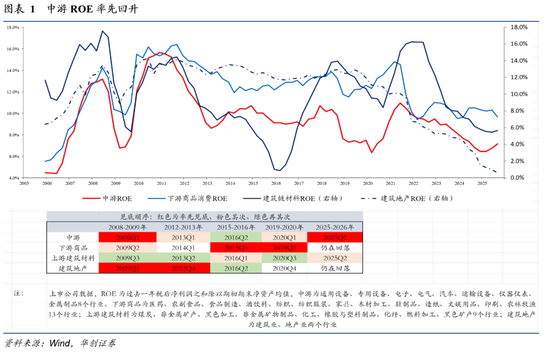
Group 1 - The article discusses the current economic environment characterized by a policy-intensive period and an upcoming data vacuum period, which is expected to lead to increased market activity [1][10] - The policy-intensive phase will begin in December with key meetings, including the Political Bureau meeting and the Central Economic Work Conference, followed by various ministerial meetings [1][10] - The data vacuum period in January and February will lack significant economic data, which historically leads to market volatility and increased activity [1][10] Group 2 - The analysis identifies three macroeconomic divergences: the divergence between export price index and domestic PPI, the contrasting performance of exports and real estate, and the stock market's reliance on valuation rather than earnings growth [2][11] - The core judgment is that the most certain economic growth is likely to be found in the midstream manufacturing sector over the next 3-6 months, supported by four new changes in this sector [3][12] - Midstream manufacturing has seen a reversal in profit dynamics, with overseas gross margins now significantly higher than domestic margins, indicating a shift in profit cycles [3][12] Group 3 - The stability of export demand is a key support for midstream manufacturing, with expectations of a continued rise in global industrial production over the next six months [6][15] - Key categories within high-tech and mechanical exports, such as information technology products, ships, and automobiles, are showing stable demand, further supporting the outlook for midstream manufacturing [6][15] - The current cycle is unique, as midstream manufacturing can rely on overseas markets for profit recovery, with expectations that prices in this sector may rebound sooner than the overall PPI [7][16]

张瑜:最确定的景气在哪? ——张瑜旬度会议纪要No.127
一瑜中的· 2025-12-04 16:04
Group 1 - The article discusses the current economic landscape, highlighting a "policy intensive period" followed by a "data vacuum period" in the upcoming months [2][3] - The first phase involves a series of important policy meetings starting in December, including the Political Bureau meeting and the Central Economic Work Conference, which will accelerate policy implementation [2] - The second phase will see a lack of key economic data, leading to increased market activity but uncertainty about the economic outlook [3] Group 2 - The article identifies three major macroeconomic divergences: the divergence between export price index and domestic PPI, the contrasting performance of exports and real estate, and the stock market's reliance on valuation rather than earnings growth [4] - The core judgment is that the most certain economic recovery is likely to occur in the midstream manufacturing sector over the next 3-6 months, supported by four key changes in this sector [5] Group 3 - The four changes in midstream manufacturing include: a recovery in ROE for midstream manufacturers, overseas gross margins surpassing domestic margins, a significant proportion of overseas gross margins in midstream manufacturing, and the ongoing technological wave benefiting certain sectors [5][11] - The stability of midstream manufacturing is supported by two main factors: the stability of export demand and the robust performance of key product categories such as high-tech machinery and electronics [11][12] - The article concludes that the current cycle is unique, with midstream manufacturing potentially benefiting from overseas markets, leading to an independent recovery in profits and prices [12]

航天发展:11月21日召开董事会会议
Mei Ri Jing Ji Xin Wen· 2025-11-21 11:05
Group 1 - The company, Aerospace Development, held a temporary board meeting on November 21, 2025, to discuss the proposal for increasing capital and introducing investors for its subsidiary, Aerospace Tianmu (Chongqing) Satellite Technology Co., Ltd. [1] - For the first half of 2025, the revenue composition of Aerospace Development was as follows: Defense Equipment accounted for 54.06%, Equipment Manufacturing for 32.72%, Information Technology for 12.38%, and Other Civilian Industries for 0.84% [1] - As of the report, the market capitalization of Aerospace Development was 19.8 billion yuan [1]

全球对美关税谈判加速,多国在博弈中寻求破局
Sou Hu Cai Jing· 2025-11-14 18:21
Core Viewpoint - The recent trade framework agreements between the United States and several Latin American countries, along with potential tariff reductions for Switzerland, signify a new phase in the global tariff negotiations, driven by domestic inflation pressures and the need for economic resilience [1][3][7]. Group 1: Trade Agreements - The U.S. has reached trade framework agreements with Argentina, Guatemala, Ecuador, and El Salvador, focusing on reducing tariffs on agricultural products such as bananas, coffee, and cocoa, which are not sufficiently produced domestically [5][6]. - The agreement with Argentina is the most comprehensive, offering preferential market access for U.S. pharmaceuticals, chemicals, machinery, IT products, medical devices, and automobiles [6]. Group 2: Domestic Influences - The acceleration of tariff negotiations is partly due to rising domestic inflation, particularly in food prices, which has created pressure on the government following recent local elections [7][9]. - The U.S. government is considering adjustments to tariffs on food-related imports, indicating a more flexible approach to tariff strategies [9]. Group 3: Legal and Political Context - The U.S. government faces legal challenges regarding the president's authority to impose tariffs under the International Emergency Economic Powers Act, which could impact existing tariffs on Canada, Mexico, and China [11]. - Despite these legal uncertainties, negotiations continue as countries seek favorable agreements, driven by the fear of falling behind competitors who have already secured deals [11]. Group 4: Global Trade Responses - In response to U.S. tariff policies, countries are actively seeking diversified trade partnerships to reduce reliance on the U.S. market [13][14]. - The European Union is expanding trade partnerships globally, while ASEAN countries are leveraging regional agreements to enhance economic integration [15]. - Multilateral trade systems are being reinforced, with initiatives aimed at strengthening global trade frameworks amidst current trade disruptions [15].
特朗普拟显著调降关税并宣布与多国的架构协议 以应对食品等高物价
Zhong Guo Ji Jin Bao· 2025-11-14 10:34
Core Points - President Trump is preparing to significantly reduce tariffs and promote new trade agreements with Latin American countries to address voter concerns about high living costs, particularly food prices [1][2] - The agreements aim to lower tariffs on essential food items such as beef, bananas, and coffee beans, which have been a burden on American consumers [1][2] - The administration is also considering broader tariff exemptions that could apply to popular food items, with specific mentions of coffee and fruit imports [1][2] Trade Agreements - The most significant agreement is with Argentina, which will provide preferential market access for U.S. exports, including pharmaceuticals, chemicals, machinery, IT products, and medical devices [2] - Agreements with Guatemala, El Salvador, and Ecuador focus on reducing tariffs on major export products like bananas and coffee beans, which are not produced domestically in the U.S. [2] - These framework agreements are expected to be finalized in about two weeks, targeting specific product exemptions rather than general tariff reductions [2] Economic Strategy - The administration's strategy is described as flexible and multi-layered, aiming to leverage trade agreements with key allies in the Western Hemisphere [2] - Ongoing trade negotiations with Switzerland may also lead to tariff reductions on products like watches and chocolate [3] - This initiative is seen as an effort to improve public perception of Trump's handling of high prices, as he aims to lower living costs and stimulate economic growth [3]

光电股份: 北方光电股份有限公司2025年第二次临时股东会会议资料
Zheng Quan Zhi Xing· 2025-08-15 16:35
Meeting Details - The second extraordinary general meeting of shareholders for 2025 will be held on August 25, 2025, at 2:30 PM [1] - The meeting will take place at the company's conference room located at 35 Chang Le Middle Road, Xincheng District, Xi'an, Shaanxi Province [1] - The voting will be conducted both on-site and through the Shanghai Stock Exchange's online voting system [1] Agenda - The meeting will start with the host announcing the commencement and introducing the attendees [1] - The agenda includes reading and reviewing the proposals, particularly the proposal to cancel the supervisory board, change registered capital and business scope, and amend the company's articles of association [1][4] - Shareholders will have the opportunity to speak, ask questions, and vote on the proposals [1] Proposal Highlights - The proposal includes the cancellation of the supervisory board, transferring its powers to the audit committee of the board of directors [4] - The company plans to change its total capital and registered capital, with 73,966,642 new shares registered with the China Securities Depository and Clearing Corporation [4] - The business scope will be revised to align with the company's development needs and regulatory requirements, including changes in manufacturing and service areas [5] Business Scope Changes - The previous business scope included military optoelectronic equipment and related products, which will be updated to include a broader range of manufacturing and technical services [5][7] - New areas of focus will include specialized equipment manufacturing, optical instruments, virtual reality devices, and industrial robots [5][7] - The company will also engage in technology development, consulting, and various manufacturing activities related to optical and electronic materials [5][7] Legal and Regulatory Compliance - The meeting will be legally witnessed by lawyers from Shanxi Languang Law Firm, ensuring compliance with relevant laws and regulations [2] - The company has made amendments to its articles of association and related rules to comply with the latest legal requirements and improve governance [4][7]

涉及健康安全、绿色环保、养老适老等,一批重要国家标准发布
news flash· 2025-07-02 07:13
Group 1: Elderly and Child Care - A total of 7 national standards were released for home-based elderly meal services, rehabilitation aids in elderly care institutions, and convenient services on medical insurance platforms, addressing the needs of elderly care and medical security [2] - 9 national standards were introduced to enhance product packaging safety, particularly for children, including requirements to prevent children from opening packaging [2] - 4 national standards were established to improve the aging-friendly features of products and enhance anti-counterfeiting technology [2] Group 2: Daily Life - 2 national standards were published for oral hygiene products, focusing on calcium silicate and toothpaste abrasion testing methods to protect public oral health [3] - 3 financial service national standards were introduced, including a unique product identification code and descriptions of banking services, supporting financial security and high-level financial openness [3] - 2 national standards were released for emergency management and urban power service continuity guidelines, enhancing emergency response capabilities and promoting resilient city construction [3] Group 3: Emerging Industries - 7 national standards were published in areas such as artificial intelligence, information technology, and the Internet of Things, providing technical support for digital service capabilities [4] - 5 national standards were established for data centers and cybersecurity technologies, facilitating deeper interconnectivity in the digital economy [4] - 2 national standards were introduced for electric earth-moving machinery safety and battery swap systems, aiding the green transformation of traditional industries [4] Group 4: Transportation and Energy - 12 national standards were released for waterway passenger transport services, road traffic signs, fuel consumption evaluation methods for passenger cars, and automotive maintenance, providing technical support for transportation safety [5] - 14 national standards were published for ship soft ladders, propellers, and buoyancy materials for submersibles, enhancing quality and efficiency in the shipbuilding industry [5] - 2 national standards for ethanol gasoline and its blending components were introduced, ensuring the stability of fuel quality [5]