
六氟化铀

Search documents
Cameco2025Q4自产铀产量环比增长36%至600万磅,平均实现价格环比上涨5%至65.53美元 磅
HUAXI Securities· 2026-02-15 00:25
Investment Rating - The report provides a recommendation rating for the industry as "Recommended" [1] Core Insights - In Q4 2025, Cameco's uranium production increased by 36% quarter-on-quarter to 600 million pounds, while the average realized price rose by 5% to $65.53 per pound [1] - The overall revenue for Q4 2025 was CAD 1.201 billion, reflecting a 2% year-on-year increase and a 95% quarter-on-quarter increase [2][13] - The uranium business generated revenue of CAD 1.027 billion in Q4 2025, a 1% decrease year-on-year but a 96% increase quarter-on-quarter [4] - The fuel services segment achieved revenue of CAD 174 million in Q4 2025, marking an 18% year-on-year increase and a 91% quarter-on-quarter increase [5] Summary by Relevant Sections Uranium Business - Q4 2025 uranium production was 600 million pounds (2724 tons), a 2% decrease year-on-year but a 36% increase quarter-on-quarter [1] - The company sourced 630 million pounds (2860 tons) of uranium externally, a 350% quarter-on-quarter increase [1] - Uranium sales volume for Q4 2025 was 1120 million pounds (5085 tons), down 13% year-on-year but up 84% quarter-on-quarter [1] - As of the end of 2025, uranium inventory stood at 970 million pounds, with an average inventory cost of $61.85 per pound [1] - The average realized price for uranium in Q4 2025 was $65.53 per pound, up 12% year-on-year and 5% quarter-on-quarter [1] Fuel Services Business - Q4 2025 production in the fuel services segment was 3800 tons of uranium, a 6% year-on-year increase and a 23% quarter-on-quarter increase [1] - Sales volume for fuel services in Q4 2025 was 4400 tons of uranium, reflecting a 5% year-on-year increase and a 132% quarter-on-quarter increase [1] - The average realized price for fuel services in Q4 2025 was CAD 39.39 per kg of uranium, up 11% year-on-year but down 20% quarter-on-quarter [1] Financial Performance - Gross profit for Q4 2025 was CAD 273 million, a 9% year-on-year increase and a 61% quarter-on-quarter increase [2][13] - The adjusted EBITDA for Q4 2025 was CAD 591 million, up 12.8% year-on-year and 12.8% quarter-on-quarter [13] - Net earnings attributable to equity holders for Q4 2025 were CAD 199 million, compared to CAD 135 million in Q4 2024 [13]
Cameco2025Q4自产铀产量环比增长36%至600万磅,平均实现价格环比上涨5%至65.53美元/磅
HUAXI Securities· 2026-02-14 14:56
Investment Rating - The report provides a recommendation rating of "Recommended" for the industry [1]. Core Insights - In Q4 2025, Cameco's uranium production increased by 36% quarter-on-quarter to 600 million pounds, while the average realized price rose by 5% to $65.53 per pound [1]. - The company experienced a significant increase in external uranium procurement, with a 350% quarter-on-quarter growth to 630 million pounds [1]. - The total uranium sales volume for Q4 2025 was 1,120 million pounds, reflecting an 84% increase quarter-on-quarter but a 13% decrease year-on-year [1]. - The average inventory cost for uranium stood at $61.85 per pound, with total inventory at 970 million pounds by the end of 2025 [1]. - The fuel services segment saw a production increase of 6% year-on-year and 23% quarter-on-quarter, reaching 3,800 tons of uranium [1]. Financial Performance Summary - For Q4 2025, the overall revenue was CAD 1.201 billion, marking a 2% year-on-year increase and a 95% quarter-on-quarter increase [2]. - Gross profit for the same period was CAD 273 million, up 9% year-on-year and 61% quarter-on-quarter [2]. - The uranium business generated revenue of CAD 1.027 billion, a 1% year-on-year decline but a 96% quarter-on-quarter increase [3][4]. - The fuel services segment achieved revenue of CAD 174 million, reflecting an 18% year-on-year increase and a 91% quarter-on-quarter increase [5]. Operational Highlights - In 2025, Cameco produced 21 million pounds of uranium, exceeding the revised annual guidance of 20 million pounds announced on August 28, 2025 [7]. - The Inkai joint venture produced 8.4 million pounds of uranium in 2025, surpassing the previous year's output of 7.8 million pounds [8]. - The fuel services department achieved a record production of 14,000 tons of uranium in 2025, including 11,200 tons of hexafluoride uranium [9]. - The company successfully expanded its long-term contract portfolio in the uranium business, with approximately 230 million pounds of long-term delivery commitments remaining after fulfilling 2025's obligations [12].
特朗普亲手把印度推给中俄!50%关税背后,莫迪的三重反击让白宫慌了
Sou Hu Cai Jing· 2025-08-11 01:36
Core Points - The article discusses the escalating trade tensions between the US and India, particularly focusing on the imposition of a 25% additional tariff on Indian goods, raising the total tariff to 50%, the highest in US history [1] - It highlights India's strong diplomatic response to US accusations regarding its oil trade with Russia, emphasizing perceived double standards in US and EU policies [3] - The geopolitical implications of these tensions are explored, including India's potential pivot towards China and continued cooperation with Russia [7][8] Trade Relations - The US has imposed a 25% additional tariff on Indian goods, leading to a total tariff rate of 50% [1] - The trade deficit between the US and India reached $45.8 billion in 2024, with Trump previously promising to eliminate this deficit [3] - India's agricultural tariffs are notably high, with corn, soybeans, and wheat averaging 17%, and dairy products exceeding 50% [3] Diplomatic Responses - India's Ministry of External Affairs criticized the US for its "unfair" and "illogical" actions, citing past US encouragement for India to purchase Russian oil [1][3] - The Indian Army's social media post referencing historical US arms sales to Pakistan sparked significant public discourse [4] Geopolitical Implications - The article suggests that the US's actions may push India closer to China, as evidenced by Modi's upcoming visit to China for the Shanghai Cooperation Organization summit [7] - India's military cooperation with Russia remains strong, with 35% of its oil imports coming from Russia in 2024, saving India $4.2 billion [7] - The article notes that Russia is positioned to benefit from the US-India tensions, with Russian officials criticizing US actions as neo-colonialism [8] Future Outlook - The trade war is expected to significantly alter the geopolitical landscape and highlight the complex challenges India faces in international relations [10]


美对印度加征25%额外关税!竟因俄罗斯?!
Zheng Quan Shi Bao· 2025-08-06 15:08
Core Points - The U.S. has imposed a 25% additional tariff on goods from India in response to India's continued import of Russian oil, as stated by the White House [1] - India's Ministry of External Affairs defended its actions, claiming that the purchase of Russian oil was a necessary response to global market fluctuations and that the accusations against India were unfair [2] - President Trump criticized India's high tariffs and non-tariff barriers, which he believes have hindered U.S.-India trade, leading to a significant trade deficit [2] Group 1 - The U.S. government has taken measures against India due to its import of Russian oil, which is seen as a direct response to geopolitical tensions [1] - India argues that its imports of Russian oil are a passive choice made necessary by the disruption of traditional supply sources due to the Russia-Ukraine conflict [2] - The U.S. has expressed concerns over India's trade practices, particularly regarding the sale of Russian oil on the open market for profit [2] Group 2 - The European Union's trade with Russia is significantly larger than India's, with projected trade volumes reaching €67.5 billion in 2024, indicating a disparity in the criticism directed at India [2] - The U.S. continues to import various products from Russia, including uranium hexafluoride and palladium, highlighting a complex trade relationship despite geopolitical tensions [2] - Trump's announcement of tariffs and other punitive measures reflects ongoing trade tensions and the U.S. administration's focus on addressing trade imbalances with India [2]
美对印度加征25%额外关税!竟因俄罗斯?!
证券时报· 2025-08-06 15:03
Group 1 - The article discusses the recent decision by the U.S. government to impose a 25% additional tariff on goods imported from India in response to India's continued import of Russian oil [1][2] - India's Ministry of External Affairs stated that the accusations against India are unfair and emphasized that the country's purchase of Russian oil was a necessary measure to ensure affordable energy for its citizens amid global market fluctuations [2] - The article highlights the contradiction in the criticism of India, noting that the European Union's trade volume with Russia is significantly larger than India's, with projected trade figures for 2024 reaching €67.5 billion [2]
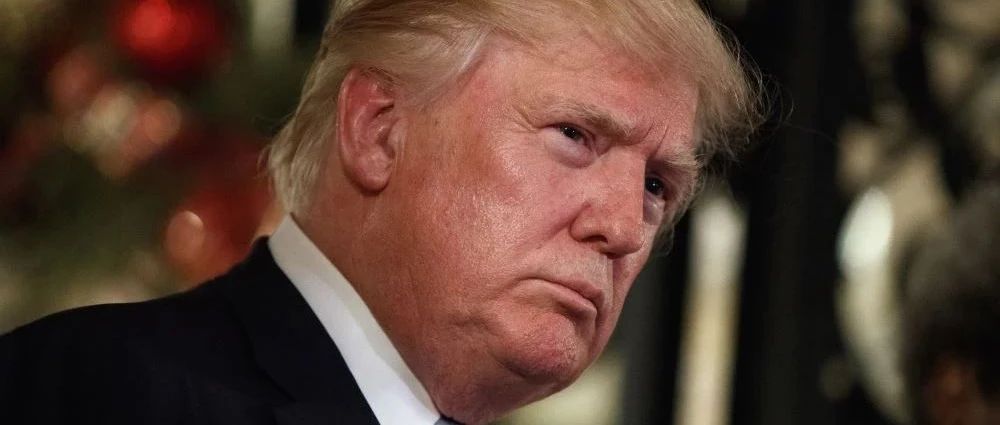
摆事实批评西方双标,翻历史唤起痛苦回忆,印度深夜回击美关税威胁
Huan Qiu Shi Bao· 2025-08-05 22:30
Core Viewpoint - India has firmly rejected the United States' threats regarding its purchase of Russian oil, signaling a significant shift in diplomatic relations between the two countries [1][2][4]. Group 1: US-India Relations - The relationship between the US and India has deteriorated sharply, with Trump threatening to impose a 25% tariff on Indian goods due to its continued purchase of Russian oil [1][4]. - India's Ministry of External Affairs has stated that the US's actions are "unjust and unreasonable," emphasizing that India will take necessary measures to protect its national interests and economic security [1][3]. - Analysts suggest that the past 25 years of diplomatic efforts to strengthen US-India relations may have been severely damaged by recent events [1][9]. Group 2: India's Oil Imports - India has become the largest market for Russian oil in 2023, importing 89 million tons last year, which has drawn criticism from the US and Europe [4]. - The Indian government has defended its oil imports, stating that they are essential for ensuring affordable energy for its consumers amid global market pressures [3][4]. - The US has previously encouraged India to purchase Russian oil to stabilize global energy markets, highlighting a contradiction in its current stance [3][4]. Group 3: Historical Context - The Indian Army has reminded the public of the US's historical support for Pakistan during the 1971 India-Pakistan war, suggesting a long-standing pattern of US double standards in its foreign policy [5][6]. - The timing of the Indian Army's social media post, which highlighted US arms sales to Pakistan, indicates a strategic response to current tensions with the US [5][6]. Group 4: Global Reactions - Russia has criticized the US for its attempts to exert economic pressure on countries pursuing independent foreign policies, framing it as a form of neo-colonialism [8]. - Indian commentators have expressed that Trump's actions have shattered the perception of a strategically significant US-India relationship, reducing it to a more ordinary status [8][9].
“你们也在买俄罗斯商品”:印度强硬回怼特朗普关税威胁
Xin Lang Cai Jing· 2025-08-05 03:56
Core Viewpoint - The article discusses the tensions between India and the United States regarding India's import of Russian oil amidst the ongoing Russia-Ukraine conflict, highlighting India's stance against U.S. threats and the geopolitical implications of energy trade [1][2][4]. Group 1: U.S. Threats and India's Response - The U.S. President Donald Trump has issued warnings to India regarding its continued import of Russian oil, threatening to impose higher tariffs on Indian goods if the imports do not cease [1][4]. - India's Ministry of External Affairs spokesperson, Randeep Jaiswal, criticized the U.S. threats as "unfair and unreasonable," asserting that India will take necessary measures to protect its national interests and economic security [4][5]. Group 2: Energy Trade Dynamics - Since the onset of the Russia-Ukraine conflict, India has significantly increased its imports of Russian oil, with an average daily import of approximately 1.75 million barrels in the first half of the year, marking a 1% increase from the previous year [4]. - The article notes that the U.S. and EU have also continued to import goods from Russia, including liquefied natural gas and various chemicals, which Jaiswal points out as a double standard in the criticism directed at India [4][5]. Group 3: Geopolitical Context - Historically, India has maintained close ties with Russia for geopolitical reasons, especially in energy and military sectors, with 85% of its oil being imported [4]. - The article mentions that India is viewed as a key player in the U.S. "Indo-Pacific strategy," but recent disagreements, particularly over oil imports and trade negotiations, have strained relations [5].
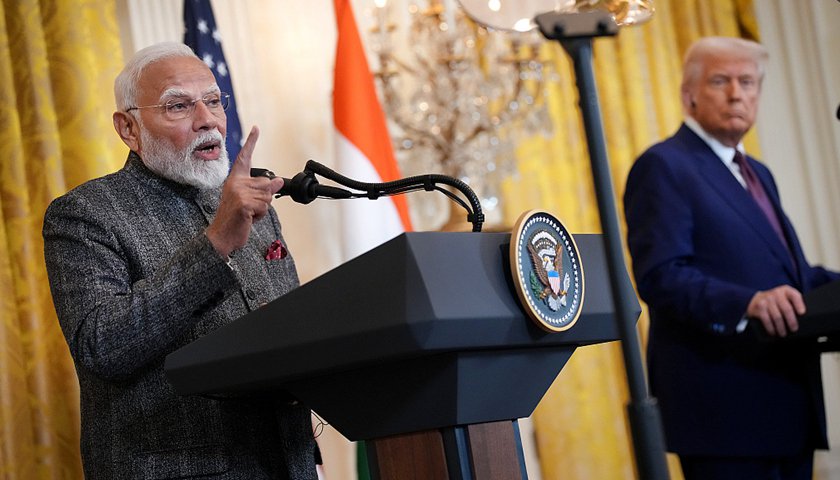
印度回应特朗普威胁
中国基金报· 2025-08-05 00:22
Core Viewpoint - The article discusses the tensions between the United States and India regarding trade policies, particularly in light of India's purchase of Russian oil amid the ongoing Russia-Ukraine conflict, and highlights India's stance on maintaining its economic interests and energy security [2][3]. Group 1: U.S.-India Trade Relations - President Trump announced a 25% tariff on Indian goods starting August 1, with potential additional punitive tariffs due to India's procurement of Russian energy [3]. - Trump accused India of profiting from the resale of Russian oil, threatening to significantly increase tariffs, although he did not specify the amount [3]. Group 2: India's Response - India's Ministry of External Affairs stated that the accusations against India are unfair and emphasized that the country will take necessary measures to protect its national interests and economic security [2]. - The statement clarified that India's purchase of Russian oil was a "passive choice" due to the disruption of traditional supply sources following the conflict, and that the U.S. had previously supported India's actions to stabilize the global energy market [2]. Group 3: Comparative Trade Data - The article notes that the trade volume between the EU and Russia is significantly larger than that of India, with the EU's trade with Russia reaching €67.5 billion in 2024 and service trade at €17.2 billion in 2023, far exceeding India's trade with Russia during the same period [2]. - In 2024, the EU's imports of liquefied natural gas from Russia hit a historical high of 16.5 million tons, indicating a broader reliance on Russian energy among Western nations [2].

铀行业点评:SPUT或将重启采购,铀板块三季度有望持续催化
Hua Yuan Zheng Quan· 2025-06-19 09:00
Investment Rating - The report does not provide a specific investment rating for the uranium industry [4] Core Insights - Sprott's Physical Uranium Trust (SPUT) announced a financing round totaling $200 million to purchase physical uranium, marking a potential restart of procurement since November 2024 [4] - The expected procurement could lead to a significant market impact, with the potential to purchase approximately 1,200 tons of U3O8, representing about 6.5% of the projected total spot market volume for 2024 [4] - Recent U.S. policy initiatives to accelerate advanced nuclear reactor deployment have catalyzed significant developments in the global nuclear energy sector, enhancing market confidence [4] - The third quarter is anticipated to be a critical period for the nuclear energy sector, driven by increased demand from large tech companies and government agencies [4] Summary by Sections SPUT Financing and Market Impact - SPUT's financing of $200 million is aimed at purchasing physical uranium, which could support the trust's investment goals and re-establish its role as a key buyer in the spot uranium market [4] - The procurement is expected to occur at a spot price of $75 per pound of U3O8, allowing for the acquisition of approximately 1,200 tons [4] Policy Developments and Industry Outlook - Following the U.S. presidential directive on advanced nuclear reactors, several key agreements and contracts have been established, indicating a robust demand for stable clean energy [4] - The nuclear energy sector is expected to see increased transaction orders and long-term cooperation agreements, benefiting midstream and upstream uranium companies [4] Investment Recommendations - The report suggests focusing on companies involved in the enrichment and mining of uranium, as well as those in the nuclear power sector, due to the anticipated positive market dynamics in the third quarter [4]
伊朗核计划遭重创!IAEA紧急评估:约1.5万台离心机极可能被毁
Jin Shi Shu Ju· 2025-06-17 05:57
Group 1 - The head of the International Atomic Energy Agency (IAEA) indicated that approximately 15,000 centrifuges at Iran's Natanz facility are likely severely damaged or destroyed due to power outages caused by Israeli airstrikes [1] - The IAEA's assessment suggests that the external power interruption poses a critical threat to the high-speed rotating centrifuges, with at least two of Iran's operational uranium enrichment facilities rendered inoperative [1] - The Fordow enrichment facility, located deep in the mountains, reportedly showed no damage, although the IAEA has not yet conducted on-site inspections [1] Group 2 - Four buildings at the Isfahan nuclear facility were reported damaged, including a uranium conversion plant essential for producing uranium hexafluoride, which is required for centrifuges [2] - The damaged structures include a central chemistry laboratory, a uranium conversion plant, a Tehran reactor fuel manufacturing facility, and an under-construction facility for processing uranium tetrafluoride to metallic uranium [2] - There are indications that underground spaces at Isfahan, which may store a significant portion of Iran's highly enriched uranium, remain unaffected, but further inspections are needed for a comprehensive assessment [2]