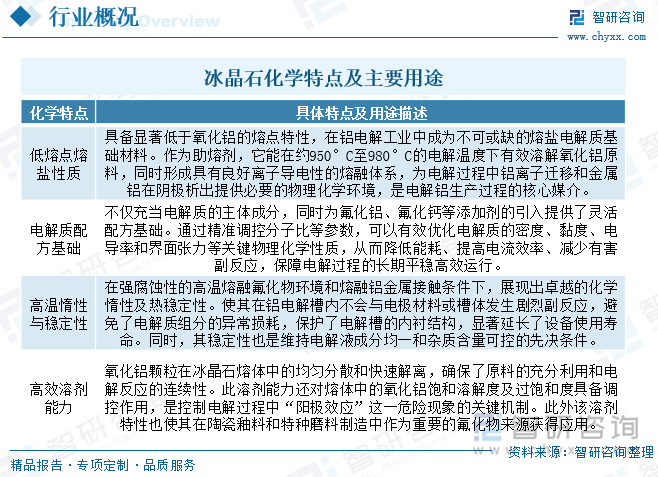
冰晶石

Search documents
基础化工行业研究:液氯、对硝基氯化苯等涨幅居前,建议关注进口替代、纯内需、高股息等方向
Huaxin Securities· 2026-03-17 00:24
Investment Rating - The report maintains a "Buy" rating for several companies in the chemical industry, including Xinyangfeng, Senqilin, Ruifeng New Materials, Sinopec, Juhua, Yangnong Chemical, CNOOC, Tongkun, Daotong Technology, and others [9]. Core Insights - The report highlights significant price increases in products such as liquid chlorine (up 97.90%) and p-nitrochlorobenzene (up 80.33%), while products like coke and lithium battery electrolyte experienced notable declines [3][4][14]. - The report suggests focusing on sectors such as helium, biodiesel, and agricultural chemicals due to the geopolitical tensions affecting oil prices and supply chains [5][6][7][17]. - Brent crude oil prices reached $103.14 per barrel, reflecting an increase of 11.27% from the previous week, while WTI prices rose by 8.59% to $98.71 per barrel [5][14]. Summary by Sections Chemical Industry Investment Recommendations - The report emphasizes the importance of monitoring geopolitical developments and their impact on oil prices, which are expected to rise significantly [5][18]. - It identifies helium as a key investment opportunity due to its supply constraints and price elasticity during geopolitical conflicts [6][17]. - Biodiesel is highlighted as a growing sector, particularly in Europe, where demand is expected to increase due to rising oil prices and energy security concerns [7][17]. - Agricultural chemicals are projected to benefit from rising food prices, with a potential increase in demand for fertilizers and pesticides [7][17]. Price Trends - The report details the price movements of various chemical products, noting significant increases in liquid chlorine, p-nitrochlorobenzene, and other chemicals, while also reporting declines in coke and lithium battery electrolyte prices [3][4][14]. - It provides a comprehensive overview of the price dynamics in the petrochemical sector, indicating a volatile market influenced by geopolitical factors [18][24]. Company Focus and Earnings Forecast - The report includes a table of key companies with their earnings per share (EPS) forecasts and price-to-earnings (PE) ratios, reinforcing the "Buy" recommendation for these firms [9]. - Companies such as Sinopec and CNOOC are noted for their high dividend yields and strong correlation with oil prices, making them attractive investments in the current market environment [5][14].
液氯、对硝基氯化苯等涨幅居前,建议关注进口替代、纯内需、高股息等方向
Huaxin Securities· 2026-03-16 15:21
Investment Rating - The report maintains a "Buy" rating for several companies in the chemical industry, including Xinyangfeng, Senqilin, Ruifeng New Materials, Sinopec, Juhua, Yangnong Chemical, CNOOC, Tongkun, Daotong Technology, and others [9]. Core Insights - The report highlights significant price increases in products such as liquid chlorine (up 97.90%) and p-nitrochlorobenzene (up 80.33%), while products like coke and lithium battery electrolyte saw declines [3][4][14]. - The report suggests focusing on sectors like helium, biodiesel, and agricultural chemicals due to rising oil prices and geopolitical tensions affecting supply chains [5][7][17]. - Brent crude oil prices reached $103.14 per barrel, reflecting an increase of 11.27% from the previous week, while WTI prices rose by 8.59% to $98.71 per barrel [5][14]. Summary by Sections Chemical Industry Investment Recommendations - The report emphasizes the importance of monitoring geopolitical developments and their impact on oil prices, which are expected to remain high due to ongoing tensions in the Middle East [18][24]. - It identifies helium as a key investment opportunity, particularly due to its supply constraints and price elasticity during geopolitical conflicts [6][17]. - Biodiesel is highlighted as a growing market, especially in Europe, where demand is expected to rise due to energy security concerns [7][17]. - Agricultural chemicals are projected to benefit from rising food prices, with increased demand for fertilizers and pesticides anticipated [7][17]. Price Trends - The report details significant price movements in various chemical products, with notable increases in liquid chlorine, p-nitrochlorobenzene, and others, while some products like coke and lithium battery electrolyte experienced price drops [3][4][14]. - The report also notes that the PTA market saw a substantial increase, with prices rising by 16.8% in the East China market [31][34]. Market Dynamics - The report discusses the volatility in the propane market, which saw a significant price increase followed by a decline due to fluctuating demand and geopolitical tensions [23][29]. - It highlights the impact of international oil prices on domestic markets, particularly in the context of the ongoing geopolitical situation in the Middle East [18][24]. - The report indicates that the demand for diesel is expected to improve as construction and logistics activities ramp up with the warming weather [22][26].
基础化工行业周报:中东局势推涨原油价格,化工品价格全面上涨-20260311
Shanghai Securities· 2026-03-11 11:22
Investment Rating - The report maintains an "Overweight" rating for the basic chemical industry [9][42]. Core Viewpoints - The ongoing escalation of the Middle East situation has led to a significant increase in international oil prices, which in turn is driving up chemical product prices. The report suggests that coal chemical companies may benefit from this cost increase [5][9]. - The report highlights that the prices of various chemical products have surged, with notable increases in methanol and olefins due to rising costs [5][9]. - The report emphasizes the importance of the government's green and low-carbon transformation goals, which are expected to influence the chemical industry positively [5][9]. Market Performance - Over the past week (February 28 to March 6), the basic chemical index decreased by 0.56%, while the CSI 300 index fell by 1.07%, indicating that the basic chemical sector outperformed the broader market by 0.51 percentage points [3][14]. - The top-performing sub-industries within basic chemicals included coal chemicals (up 12.26%), nitrogen fertilizers (up 7.01%), and inorganic salts (up 6.91%) [3][17]. Chemical Product Price Trends - The top five products with the highest price increases over the past week were liquid chlorine (up 300.00%), international diesel (up 68.01%), and phthalic anhydride (up 56.13%) [4][25]. - Conversely, the products with the largest price declines included industrial-grade lithium carbonate (down 11.52%) and battery-grade lithium carbonate (down 11.09%) [4][23]. Investment Recommendations - The report suggests focusing on several key sectors: 1. Refrigerants, with companies like Jinshi Resources and Juhua Co. recommended. 2. Chemical fibers, with a focus on Huafeng Chemical and Xin Fengming. 3. High-quality companies such as Wanhua Chemical and Hualu Hengsheng are also highlighted [9][42]. - The report encourages attention to the tire sector, recommending companies like Sailun Tire and Linglong Tire, as well as the agricultural chemicals sector with companies like Yara International and Salt Lake Potash [9][42].
工业级碳酸锂、电池级碳酸锂等涨幅居前,建议关注进口替代、纯内需、高股息等方向 | 投研报告
Sou Hu Cai Jing· 2026-02-25 01:15
Group 1 - The core viewpoint of the report highlights significant price increases in industrial-grade and battery-grade lithium carbonate, while other products like liquid chlorine and nitric acid experienced substantial declines [2][4] - Key products with notable price increases this week include industrial-grade lithium carbonate (up 7.58%), battery-grade lithium carbonate (up 7.46%), PVC (up 6.06%), and ammonium chloride (up 5.71%) [2][4] - Conversely, products with significant price declines include liquid chlorine (down 46.95%), nitric acid (down 8.00%), and natural gas (down 5.99%) [2][4] Group 2 - The chemical industry is currently in a weak overall performance phase, with mixed results across different sub-sectors due to past capacity expansions and weak demand [4] - The report suggests focusing on investment opportunities in glyphosate, fertilizers, and sectors benefiting from domestic demand and high dividend yields [4] - Specific recommendations include investing in glyphosate companies like Jiangshan Co., Xingfa Group, and Yangnong Chemical, as well as domestic leaders in lubricant additives and coal-to-olefins [4]
工业级碳酸锂、电池级碳酸锂等涨幅居前,建议关注进口替代、纯内需、高股息等方向
Zhong Guo Neng Yuan Wang· 2026-02-25 01:13
Group 1 - The core viewpoint of the report highlights significant price increases in industrial-grade and battery-grade lithium carbonate, while other products like liquid chlorine and nitric acid experienced substantial declines [2][4] - The report indicates that industrial-grade lithium carbonate rose by 7.58%, and battery-grade lithium carbonate increased by 7.46%, with PVC and ammonium chloride also showing notable gains [2][4] - Conversely, products such as liquefied gas and liquid chlorine saw significant price drops, with liquid chlorine decreasing by 46.95% [2][4] Group 2 - The chemical industry is currently facing a weak overall performance, with mixed results across different sub-sectors due to past capacity expansions and weak demand [4] - The report suggests focusing on investment opportunities in glyphosate, fertilizers, and sectors benefiting from domestic demand and high dividend yields [4] - Specific recommendations include companies like Jiangshan Co., Xingfa Group, and Yangnong Chemical in the glyphosate sector, and China National Chemical Fertilizer as a key recommendation in the fertilizer industry [4]
行业相对表现:工业级碳酸锂、电池级碳酸锂等涨幅居前,建议关注进口替代、纯内需、高股息等方向
Huaxin Securities· 2026-02-24 12:53
Investment Rating - The report maintains a "Buy" rating for several companies in the chemical industry, including Xin Yang Feng, Sen Qi Lin, Rui Feng New Material, Sinopec, Ju Hua Co., Yang Nong Chemical, China National Offshore Oil Corporation, Tong Kun Co., and Dao Tong Technology [11]. Core Insights - The report highlights significant price increases for industrial-grade lithium carbonate (up 7.58%) and battery-grade lithium carbonate (up 7.46%), while liquid chlorine and nitric acid experienced substantial declines [4][18]. - The report suggests focusing on investment opportunities in areas such as import substitution, domestic demand, and high-dividend stocks, particularly in light of fluctuating international oil prices [6][18]. - The chemical industry is currently facing a mixed performance, with some sectors showing resilience while others struggle due to overcapacity and weak demand [21]. Summary by Sections Chemical Industry Investment Recommendations - The report emphasizes the importance of monitoring price trends in key chemical products, noting both significant increases and decreases in various sectors [4][18]. - It recommends focusing on sectors like glyphosate, fertilizers, and companies with strong domestic demand and import substitution potential [21]. Price Trends - Key products that saw price increases include industrial-grade lithium carbonate, battery-grade lithium carbonate, PVC, and ammonium chloride, while products like liquid chlorine and nitric acid saw significant price drops [4][5][18]. - The report indicates that the overall chemical industry remains weak, with performance varying across sub-sectors due to past capacity expansions and weak demand [21]. Market Outlook - The report predicts that international oil prices will stabilize around $65 per barrel, influenced by geopolitical uncertainties and expectations of price declines [6][18]. - It highlights the potential for certain sectors, such as the lubricants and chemical fertilizers, to benefit from domestic demand and import substitution strategies [21].
多氟多(昆明)科技开发有限公司含氟废水综合利用技改项目公示
Xin Lang Cai Jing· 2025-12-10 13:55
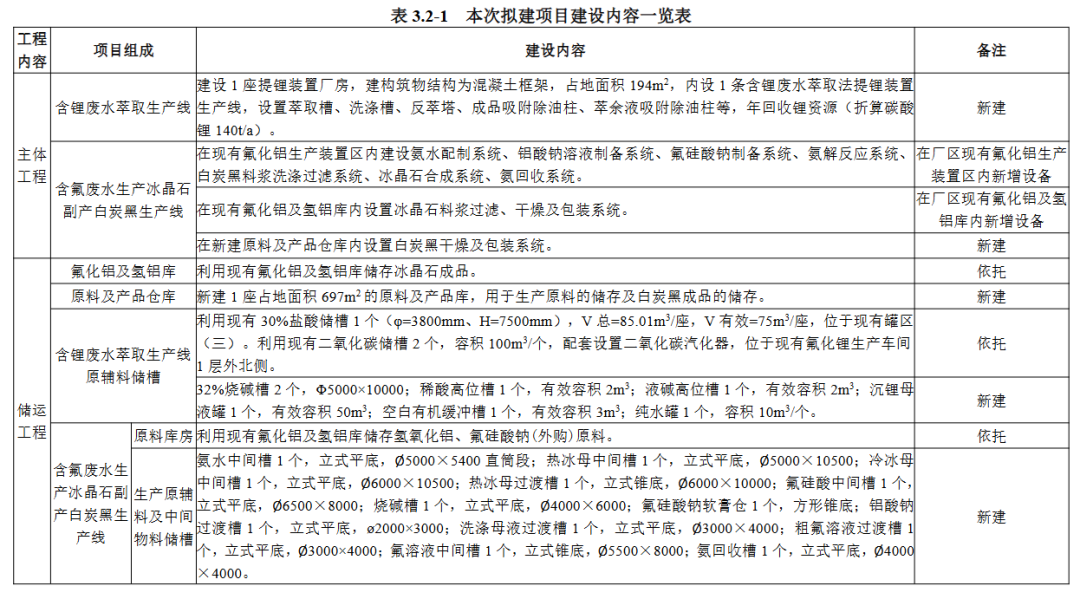
Project Overview - The project is named "Fluorine-containing Waste Comprehensive Utilization Technical Transformation Project" by Multi-Flor (Kunming) Technology Development Co., Ltd [5][10] - The project is located in the factory area of Multi-Flor (Kunming) Technology Development Co., Ltd in Yunnan Province, Anning City, Lupu Town, Xia Lupu Village [10] - The nature of the project is a reconstruction with an investment of 20.4 million yuan [10] Project Components - A new lithium extraction facility will be built next to the existing fluorine-containing wastewater treatment station, utilizing extraction technology to recover lithium resources from fluorine-containing wastewater [2][6] - A new production facility for ice crystal stone and white carbon black will be established in the existing aluminum fluoride production area, along with a new raw material and product warehouse [2][6] - A new ammonia recovery system and storage tanks will be constructed to recover ammonia from wastewater [2][6] - A new wastewater treatment station will be built to provide deep treatment for the wastewater generated by the project [2][6] - An additional 8t/h biomass boiler will be added to supplement the existing natural gas boiler for steam supply [2][6] Company Background - Multi-Flor (Kunming) Technology Development Co., Ltd is a wholly-owned subsidiary of Multi-Flor New Materials Co., Ltd, established in May 2011 [4][9] - The company is located in Anning City, Yunnan Province, with a factory area of 61,080.3 square meters, primarily engaged in the research, production, and sales of inorganic fluorine chemical new technologies and products [4][9]


2025年中国氟化铝产业供需及价格概况:需求端推动行业再度进入涨价周期[图]
Chan Ye Xin Xi Wang· 2025-08-21 01:42
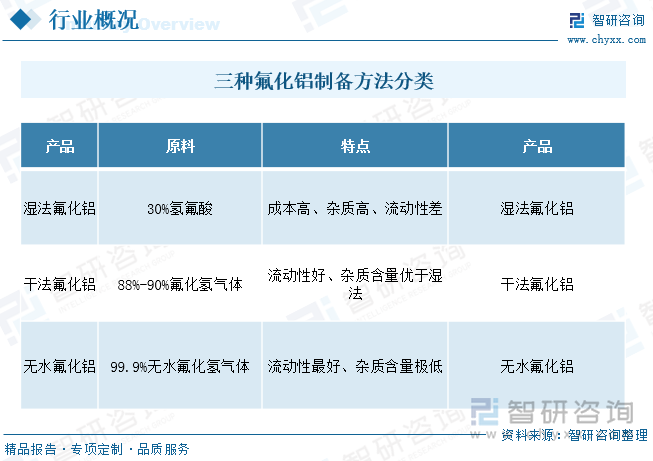
Core Viewpoint - The aluminum fluoride industry in China is experiencing structural fluctuations in supply and demand from 2018 to 2024, with continuous capacity expansion but actual production being adjusted due to environmental policies and technological upgrades. Domestic demand is primarily driven by the electrolytic aluminum industry, which accounts for over 70% of the demand, while export fluctuations significantly impact the supply-demand balance [1][9]. Industry Development Overview - Aluminum fluoride (AlF₃) is a stable inorganic compound primarily used in electrolytic aluminum production. There are three main preparation methods for aluminum fluoride, with dry methods being preferred due to lower impurity content and better flow properties compared to wet methods, which have been largely phased out [2]. Policy Background - Local policies in provinces like Hubei, Henan, and Zhejiang focus on the comprehensive utilization of fluorine resources, development of high-value-added fluorinated products, and promoting technological innovation to drive industry upgrades towards low-energy and low-emission processes [4][5]. Industry Chain - The upstream of the aluminum fluoride industry includes the extraction and processing of raw materials such as fluorite and hydrofluoric acid, concentrated in resource-rich areas like Hunan and Zhejiang. The midstream involves the production of aluminum fluoride, while the downstream applications are primarily in electrolytic aluminum, glass manufacturing, ceramics, pharmaceuticals, and electronics [7][8]. Current Industry Status - From 2018 to 2024, the supply-demand relationship in the aluminum fluoride industry has shown structural fluctuations, with production capacity expanding but actual output being affected by environmental policies and technological upgrades. In 2024, the production and demand of aluminum fluoride in China are projected to be 790,000 tons and 656,000 tons, respectively, showing slight growth compared to 2023 [9][11]. Import and Export Dynamics - In 2024, China's aluminum fluoride import and export volumes are expected to be 0.02 million tons and 13.41 million tons, respectively. The export market faces challenges from low-price competition from emerging countries and green trade barriers from developed nations, while domestic companies are focusing on strategies like long-term contracts and cost control to stabilize exports [13]. Competitive Landscape - The aluminum fluoride industry in China is characterized by a highly concentrated competitive landscape, dominated by a few specialized production companies that integrate the entire industry chain, from core technology research and development to large-scale production and diversified market sales [15][16]. Development Trends - The aluminum fluoride industry is accelerating its transition towards green and low-carbon practices, with companies developing clean production technologies and circular economy models to reduce energy consumption and pollution emissions. There is also a focus on high-value-added products to meet the demands of high-end markets such as new energy batteries and semiconductor materials [17].
电解铝期货品种周报-20250721
Chang Cheng Qi Huo· 2025-07-21 03:16
Report Industry Investment Rating No relevant information provided. Core Viewpoints of the Report - The aluminum market is expected to experience large - range oscillations, with an overall upward - biased trend in August. The new production capacity of domestic electrolytic aluminum in the third quarter is at the lowest level of the year. August is the window period for the transition between the off - season and peak season of downstream industries. With the temporary easing of the China - US tariff war, exports remain resilient. Additionally, with the implementation of domestic anti - involution and stable - growth policies, the supply and demand situation in August can be viewed optimistically [5][12]. - The aluminum price is expected to maintain an upward - biased oscillation, with a fluctuation range of 20,500 - 21,000 yuan/ton. The Shanghai Aluminum 2509 contract is expected to oscillate in the range of 20,500 - 21,100 [12][8]. Summary by Relevant Catalogs Mid - term Market Analysis - Trend judgment: Large - range oscillations, with an overall upward - biased trend in August. The new production capacity of domestic electrolytic aluminum in the third quarter is at the lowest level of the year. August is the window period for the transition between the off - season and peak season of downstream industries. With the temporary easing of the China - US tariff war, exports remain resilient. Additionally, with the implementation of domestic anti - involution and stable - growth policies, the supply and demand situation in August can be viewed optimistically [5]. - Strategy suggestion: Hold long positions at low levels in the mid - term [5]. Variety Trading Strategy - Last week's strategy review: The range of Shanghai Aluminum 2509 in the coming week was expected to be 20,200 - 20,900. Appropriate long positions could be established near the lower end of the range [7]. - This week's strategy suggestion: The Shanghai Aluminum 2509 contract is expected to oscillate in the range of 20,500 - 21,100. Appropriate long positions could be established near the lower end of the range [8]. - Hedging suggestion for spot enterprises: Consider allocating an appropriate amount of virtual futures inventory at low prices [9]. Overall Viewpoint Bauxite Market - Starting from August, the import of bauxite from Guinea to China is expected to decrease. Overall, the import volume of domestic bauxite in the second half of the year is expected to decline compared with the first half, and there is a risk that the monthly balance of bauxite may turn into a deficit. However, considering that some enterprises have stocked up in advance to cope with the rainy season, the supply - demand contradiction of bauxite is not expected to be significant in the short term. The price of bauxite in the third quarter is expected to remain stable. If the shipment volume remains low and domestic bauxite inventory continues to decline, the contradiction will gradually become prominent, and the bauxite price may turn upward in the fourth quarter [10]. Alumina Market - As of July 18, the built - in production capacity of domestic metallurgical - grade alumina was about 111.75 million tons, the operating capacity was about 92.2 million tons, and the operating rate was about 83.61%, up from about 83.28% last week, showing an overall upward trend since the end of May. There is a new production capacity project in Guangtou Beihai in Q3, and the operating capacity of alumina still has the potential to refresh the historical peak in the first half of the year. However, there are many factors disturbing the ore supply from Guinea in the second half of the year [10]. Production of Electrolytic Aluminum - According to Aladdin, the current operating capacity of domestic electrolytic aluminum is about 44.2 million tons, and the new production capacity of electrolytic aluminum in Q3 is at the lowest level of the year [10]. Import and Export - The theoretical import loss of electrolytic aluminum is currently about 1,200 yuan/ton, down from about 1,350 yuan/ton last week. Since February 2025, China's aluminum exports have been increasing. Although the growth rate has declined due to tariff disturbances since April, overall, exports remain resilient [10]. Demand - Aluminum profiles: The weekly operating rate of the domestic aluminum profile industry increased by 1 percentage point to 50.5% this week, mainly due to the increase in orders for automotive profiles from some enterprises, while the operating rate of building profiles remained weak [11]. - Aluminum plates, strips, and foils: The operating rate of leading aluminum plate and strip enterprises remained stable at 63.2%. In mid - to late July, the probability of an increase in the operating rate driven by improved demand is extremely low. During the transition period between the off - season and peak season in August, if the aluminum price remains relatively stable, downstream customers' stocking actions for the peak season may bring about a wave of demand recovery. The operating rate of leading aluminum foil enterprises remained stable at 69.6%. The overall demand in the aluminum foil market continued to be weak this week. As it is the traditional consumption off - season from July to August, there is no hope for a recovery in terminal demand, and the operating rate of the aluminum foil industry is expected to continue to decline in the short term [11]. - Aluminum cables: The operating rate of leading aluminum cable enterprises increased by 0.4 percentage points to 62% this week, showing signs of bottoming out and recovery. In the final year of the "14th Five - Year Plan", the supervision of power grid construction is still urgent. Coupled with the relatively abundant backlog of orders from enterprises, there is still a window period for concentrated deliveries in the second half of the year, which will drive the operating rate of aluminum cables and aluminum consumption after August [11]. - Alloys: The operating rate of the primary aluminum alloy industry remained stable at 54.0%. The performance in mid - July was better than the previous weak and stable situation, maintaining a game pattern of "dominated by molten aluminum allocation and demand suppressed by aluminum prices". The exports of primary aluminum alloys and aluminum wheels may enter a deep adjustment period in the second half of the year, and a substantial recovery will depend on clear policies and the alleviation of cost pressures. The operating rate of leading recycled aluminum enterprises decreased by 0.2 percentage points to 53.4% this week, mainly due to the shortage of raw materials and the reduction in demand. Constrained by both raw materials and orders, the operating rate of the industry is expected to continue to be under pressure in the short term [11]. Inventory - Electrolytic aluminum: The latest social inventory of aluminum ingots is 490,000 tons, an increase of about 5% compared with the week before last and a decrease of about 39% compared with the same period last year. Recently, the purchasing and stocking sentiment of downstream customers has improved, and the demand in the aluminum cable sector still has some support during the off - season. The sustainability of the inventory build - up of aluminum ingots still needs to be observed, but the situation of inventory remaining at a historical low level in the same period is difficult to change for the time being. The inventory of aluminum rods is 153,200 tons, a decrease of about 2% compared with last week and an increase of about 10% compared with the same period last year. Although the production cuts by aluminum rod manufacturers have reduced the arrival pressure on the supply side, the current replenishment of rigid demand is mainly a short - term boost, and the off - season theme of downstream industries has not changed. Therefore, from a long - term perspective, the inventory of aluminum rods will still maintain an upward trend, and the general trend has not changed significantly. The LME electrolytic aluminum inventory has been increasing slightly since July, after a continuous slight decline since May 2024, but it is still at a low level since 1990 [11]. Alumina Profit - The average cash cost of the Chinese alumina industry is currently about 2,600 yuan/ton, and the profit is about 550 yuan/ton, the same as last week [12]. Electrolytic Aluminum Profit - The average production cost of domestic electrolytic aluminum is currently about 17,500 yuan/ton, and the theoretical profit is about 3,200 yuan/ton, down from 3,300 yuan/ton last week. The profit is at a relatively high level [12]. Market Expectation - Policy expectations continue to ferment, and social inventory is at a low level in recent years; overseas tariff negotiations have been postponed, and export orders have recovered in the short term. However, the marginal demand during the off - season is weakening, and the operating rate of aluminum processing enterprises is under pressure; the expectation of the Fed's interest rate decision is disturbing, and the recent rebound of the US dollar index has suppressed metal prices. The aluminum price is expected to maintain an upward - biased oscillation, with a fluctuation range of 20,500 - 21,000 yuan/ton [12]. Personal View - The new production capacity of domestic electrolytic aluminum in the third quarter is at the lowest level of the year. August is the window period for the transition between the off - season and peak season of downstream industries. With the temporary easing of the China - US tariff war, exports remain resilient. Additionally, with the implementation of domestic anti - involution and stable - growth policies, the supply and demand situation in August can be viewed optimistically. Looking forward to the coming week, the Shanghai Aluminum 2509 contract is expected to oscillate in the range of 20,500 - 21,100 [12]. Key Concerns - Whether the inventory of LME and domestic electrolytic aluminum will increase more than expected. - Whether the import window for aluminum ingots will open [12]. Important Industrial Link Price Changes - The prices of various aluminum - related products and raw materials have shown different degrees of change. For example, the price of bauxite from Guinea remained stable at 73 US dollars/dry ton, while the price of动力煤 (Q5500平仓价) at Jingtang Port increased by 1.73% week - on - week [13]. Important Industrial Link Inventory Changes - The inventory of various aluminum - related products and raw materials has also changed. For example, the port inventory of bauxite increased slightly this week, and the LME aluminum inventory increased by 7.59% week - on - week [14]. Supply - Demand Situation - The operating rate of the domestic aluminum processing industry increased by 0.2 percentage points to 58.8% this week, driven by the slight increase in the weekly operating rates of aluminum profiles and aluminum cables. Overall, the weekly operating rate of downstream aluminum processing is expected to continue to be under pressure next week [22][23]. Futures - Spot Structure - The current price structure of Shanghai Aluminum is still in a relatively strong pattern. The adjustment of Shanghai Aluminum at the beginning of last week was mainly concentrated in the near - end, reflecting the market's cautious attitude towards high prices during the off - season. However, the attitude of the Ministry of Industry and Information Technology towards the high - quality development of the copper and aluminum industries near the weekend may further open the prelude to Supply - side 2.0, and it should be treated as a relatively strong situation [27]. Spread Structure - The spread between aluminum ingots and ADC12 is currently about - 1,330 yuan/ton, down from - 1,260 yuan/ton last week. The current spread between primary aluminum and alloys is at a relatively high level in recent years, which may have a drag on the electrolytic aluminum price [33][34]. Market Capital Situation - LME aluminum: The net long position has been increasing slightly in the past 10 weeks. Since May, the short - selling camp has been reducing positions overall, and the long - buying camp has been increasing positions slightly since early June. The market is expected to be dominated by a relatively strong oscillation recently [35]. - SHFE electrolytic aluminum: The net long position of the main contract has remained stable this week. Since early July, both the long - buying and short - selling camps have slightly reduced positions to cope. The net long position of funds mainly for financial speculation has continued to decrease slightly. The net short position of funds from mid - and downstream enterprises has increased slightly. From the performance of the main funds, the market is expected to oscillate at a high level next week [38].
2025年中国冰晶石产业供需规模及国际贸易现状简析:阶段性供需错配基本结束,价格开始回落[图]
Chan Ye Xin Xi Wang· 2025-06-19 01:58
Industry Overview - The production of cryolite in China is steadily increasing from 2018 to 2024, with production and demand expected to reach 188,000 tons and 168,000 tons respectively in 2024, despite periodic supply constraints due to bauxite supply fluctuations and environmental policies [1][12]. - Cryolite is essential in the aluminum electrolysis industry, serving as a flux and enhancing the efficiency of alumina dissolution and ion migration [2]. Policy Background - China's cryolite industry policies are focused on technological innovation driven by environmental constraints, resource security, and optimizing supply structure through capacity regulation [4][5]. - The government promotes clean production technologies and circular economy models, aiming to reduce environmental burdens and enhance domestic supply capabilities [5]. Industry Chain - The cryolite industry chain includes upstream mining of bauxite and other minerals, midstream cryolite manufacturing through various production methods, and downstream applications in aluminum electrolysis, new energy, and other sectors [7][8]. Current Market Dynamics - The increasing dependence on imported bauxite and high domestic bauxite prices exacerbate supply-demand imbalances in the cryolite market, leading to rising production costs for alumina and increased demand for cost-effective cryolite solutions [10][12]. - The market is characterized by cautious supply expansion and rigid demand growth, with production costs rising due to upstream pressures [12]. Market Size and Trends - The cryolite market is projected to contract slightly in 2024, with a market size of 1.276 billion yuan, a decrease of 0.36% from 2023, driven by falling raw material prices and slower demand growth in the aluminum sector [13]. - Despite production and export growth, companies face pressure on profit margins due to cost transmission delays and market bargaining power disparities [13]. Export and Import Dynamics - China's cryolite trade has shifted from reliance on imports to becoming a net exporter, with imports declining and exports increasing due to domestic capacity upgrades and rising international demand for eco-friendly cryolite [16]. - In 2024, China's cryolite import and export volumes are expected to be 1,700 tons and 21,400 tons respectively, with a focus on high-purity and customized products [16]. Competitive Landscape - The cryolite industry is regionally concentrated, with major clusters in Jiaozuo, Henan, and Zibo, Shandong, where leading companies leverage their full supply chain advantages and scale [18][19]. - Companies are focusing on high molecular ratio cryolite and other innovative products to build technological barriers and enhance competitive positioning [20]. Future Development Trends - The cryolite industry is expected to transition towards high value-added and functional products, with a focus on developing high molecular ratio cryolite and new composite materials [20]. - The industry is integrating into global carbon neutrality efforts, with companies adopting cleaner production methods and circular economy practices to reduce carbon footprints [20].