白电

Search documents
家电行业 2026W08 周报:上海楼市政策放宽加码,春节错期白电产销均有增长
GUOTAI HAITONG SECURITIES· 2026-03-01 13:30
Investment Rating - The report assigns an "Overweight" rating for the industry, indicating a projected performance that exceeds the Shanghai and Shenzhen 300 Index by more than 15% [5]. Core Insights - The new "Shanghai Seven Measures" have been released, which include easing housing purchase restrictions, optimizing housing provident fund loan policies, and improving personal housing property tax policies. These measures are expected to stimulate the real estate market and positively impact the home appliance sector [2][3]. - The report highlights a recovery point in the real estate chain's performance, with stock prices expected to trend upwards. Key recommendations include companies like Boss Electric (13.8X), Bull Group (15.9X), Midea Group (12.2X), Haier Smart Home (10.5X), TCL Electronics (10.9X), and Hisense Visual (10.6X) [2]. - The report notes significant growth in the air conditioning sector, with production reaching 19.926 million units in January 2026, a year-on-year increase of 19.5%, and sales of 19.848 million units, up 11.9% [3]. Summary by Sections Investment Recommendations - The report recommends investing in companies with strong fundamentals and attractive valuations, including: - Midea Group (12.2X) - Haier Smart Home (10.5X) - TCL Electronics (10.9X) - Hisense Visual (10.6X) - Stone Technology (14.5X) - Ecovacs (15.6X) [2][6]. Policy Changes - Key changes in housing policies include: - Reduction in the required social security or individual income tax payment period for non-local residents to purchase homes in the outer ring [2]. - Increase in the maximum housing provident fund loan limit for first-time homebuyers from 1.6 million to 2.4 million, with potential increases for families with multiple children [3]. Market Performance - The report indicates that the air conditioning market is experiencing growth due to a combination of factors, including the timing of the Spring Festival, concentrated policy benefits, and the initiation of overseas replenishment cycles [3].




家电行业 2026W08 周报:上海楼市政策放宽加码,春节错期白电产销均有增长-20260301
GUOTAI HAITONG SECURITIES· 2026-03-01 11:55
Investment Rating - The report assigns an "Increase" rating for the industry, indicating a projected performance that exceeds the Shanghai Composite Index by more than 15% over the next 12 months [5]. Core Insights - The new "Shanghai Seven Measures" have been released, which include relaxed housing policies, leading to an uptick in white goods production and sales during the Chinese New Year period [2]. - Key investment recommendations include: 1. Recovery points in the real estate chain and upward movement in stock prices for companies like Boss Electric (13.8X PE) and Bull Group (15.9X PE) [2]. 2. Stable transition of national subsidies, with leading black and white goods companies like Midea Group (12.2X PE), Haier Smart Home (10.5X PE), TCL Electronics (10.9X PE), and Hisense Visual (10.6X PE) recommended for their solid operations and high dividends [2]. 3. Core drivers for smart home appliances going overseas, with recommendations for robot vacuum leaders Roborock (14.5X PE) and Ecovacs (15.6X PE) [2]. 4. Companies with stable performance and upward elasticity, including Ninebot (14.6X PE), Anfu Technology (33.2X PE), Hailong Cold Chain (13.4X PE), and Beiding Co. (27.8X PE) [2]. 5. Companies expanding into new business lines, such as Rongtai Health (17.2X PE) and Wanlong Magnetic Plastic (22.2X PE) [2]. Summary by Sections - **Real Estate Policy Changes**: The new policies include reducing housing purchase restrictions, optimizing housing provident fund loan policies, and improving personal housing property tax policies. For instance, the maximum loan amount for first-time homebuyers has increased from 1.6 million to 2.4 million yuan, with potential increases for families with multiple children or purchasing green buildings [3]. - **Air Conditioning Market Data**: In January 2026, domestic air conditioning production reached 19.926 million units, a year-on-year increase of 19.5%, while sales were 19.848 million units, up 11.9%. Exports totaled 11.587 million units, reflecting a 10.1% increase, driven by the timing of the Chinese New Year and policy benefits [3].




深康佳A跌2.04%,成交额1.14亿元,主力资金净流出1525.84万元
Xin Lang Cai Jing· 2026-02-26 06:36
Core Viewpoint - The stock of Deep Konka A has experienced a significant decline in 2023, with a year-to-date drop of 22.74% and a recent 60-day decline of 25.44% [1] Financial Performance - For the period from January to September 2025, Deep Konka A reported a revenue of 7.679 billion yuan, representing a year-on-year decrease of 5.43% [2] - The company recorded a net profit attributable to shareholders of -982 million yuan, which is a year-on-year increase of 38.89% [2] Stock Market Activity - As of February 26, 2023, Deep Konka A's stock price was 3.84 yuan per share, with a total market capitalization of 9.247 billion yuan [1] - The stock has seen a net outflow of 15.2584 million yuan in principal funds, with large orders showing a buy of 111.632 million yuan and a sell of 230.776 million yuan [1] Shareholder Information - As of September 30, 2025, the number of shareholders for Deep Konka A was 146,700, a decrease of 3.33% from the previous period [2] - The top ten circulating shareholders include Hong Kong Central Clearing Limited, which increased its holdings by 1.8757 million shares to 12.7781 million shares [3]

巨亏百亿、节节败退,康佳究竟犯了什么错?
Xin Lang Cai Jing· 2026-02-13 11:07
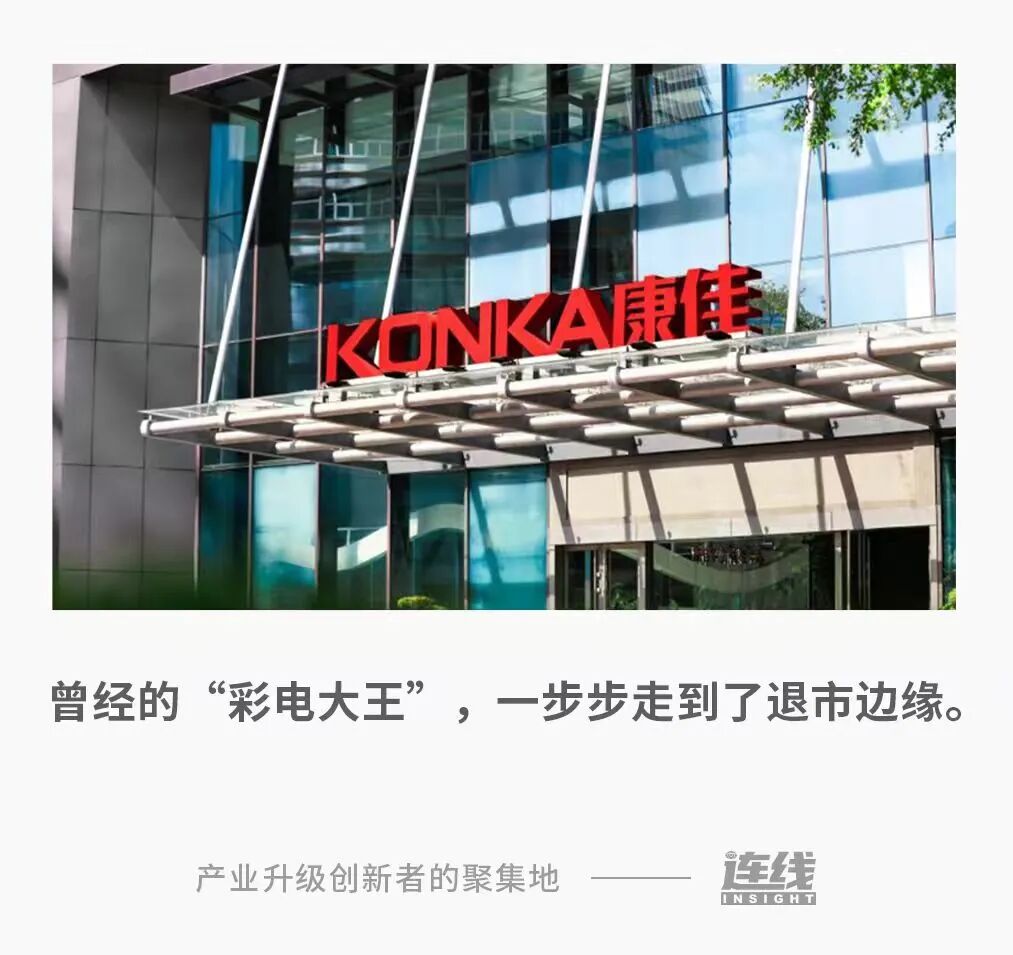
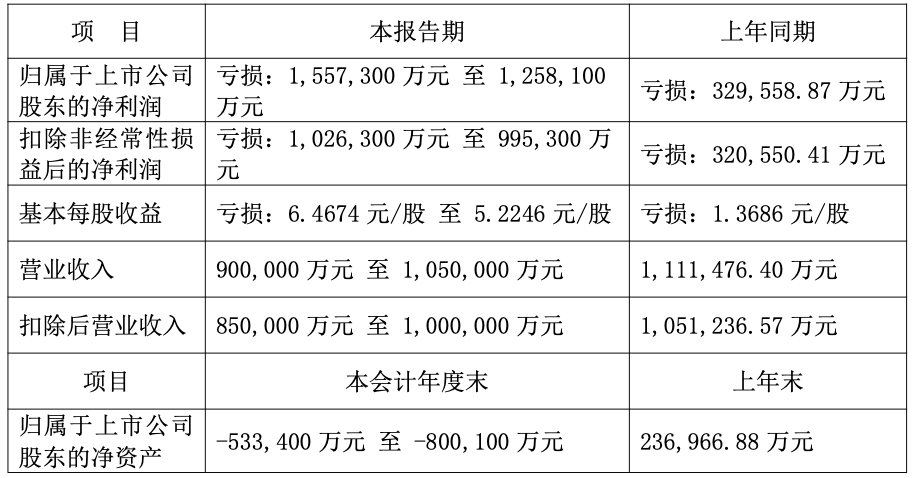
Core Viewpoint - The article discusses the decline of Konka, a once-prominent player in the Chinese television market, highlighting its significant financial losses and strategic missteps that have led to its current precarious position in the industry [5][11]. Financial Performance - Konka is expected to report a net profit loss of between 12.581 billion to 15.573 billion yuan for 2025, a staggering increase from a loss of 3.296 billion yuan the previous year, marking a year-on-year increase of 3.8 to 4.7 times [5][6]. - The company's revenue for 2025 is projected to be between 9 billion to 10.5 billion yuan, reflecting a decline of 5.53% to 19% compared to the previous year [5][6]. - As of the end of 2025, Konka's net assets are expected to turn negative, ranging from -5.334 billion to -8.001 billion yuan, which could trigger delisting risks under stock exchange regulations [10][11]. Business Strategy and Challenges - Konka's diversification strategy has led to a lack of focus on its core consumer electronics business, resulting in diminished market presence and competitiveness [5][17]. - The company has ventured into various sectors such as real estate, semiconductors, and environmental protection, but these efforts have not yielded profitable results and have instead strained its resources [17][18]. - The consumer electronics segment, which accounts for approximately 90% of Konka's revenue, has been underperforming, with a gross margin of only 3.23% and significant losses in its core television business [7][8]. Market Position - Once a leading brand in the television market, Konka has fallen to a position outside the top tier, with its brand recognition declining among younger consumers [8][11]. - The company's market share has diminished significantly, with its television shipments ranking it outside the top four in the industry [8][11]. Management Changes and Future Outlook - Following a change in control to China Resources Group, Konka's management has undergone significant restructuring, with hopes that the new leadership will stabilize the company and guide it through its financial difficulties [19][20]. - China Resources has provided financial support, including a low-interest loan of 3.97 billion yuan, aimed at alleviating Konka's cash flow issues and supporting its operational needs [22][24]. - The path to recovery for Konka involves focusing on its core consumer electronics business while also developing its semiconductor and PCB sectors, requiring time and strategic effort to regain market position [24].

华源晨会精粹20260208-20260208
Hua Yuan Zheng Quan· 2026-02-08 10:15
Fixed Income - Long-term bond yields are expected to decline by 5-10 basis points, with the 10Y and 30Y government bond yields having decreased nearly 10 basis points since January 7, 2026 [2][7] - As of February 6, 2026, brokers and funds have net sold over 108.6 billion yuan in ultra-long-term bonds (remaining maturity over 20 years), while insurance funds have net bought 120.6 billion yuan, indicating a shift in investment strategy [2][7] - The current steep yield curve suggests that banks may increase their allocation to government bonds as their funding costs decrease, with expectations for the 10Y government bond yield to fluctuate between 1.6% and 1.9% in 2026 [2][7] Transportation - Korean shipping company Sinokor plans to sell all its container ships to Mediterranean Shipping Company for approximately 2.5 to 3 billion USD and focus on Very Large Crude Carriers (VLCC), which may reshape oil shipping pricing logic [19][20] - The VLCC market is sensitive to supply-side changes, with a significant portion of the fleet expected to reach 20 years of age starting in 2026, potentially leading to a supply shortage and upward pressure on freight rates [21][22] Home Appliances - The real estate market is showing signs of stabilization, which may lead to a recovery in valuations for home appliance companies, particularly in the white goods sector [23][24] - Recent data indicates that the inventory of commercial housing is gradually decreasing, and the transaction volume of second-hand homes in major cities is increasing, suggesting a potential easing of pressure on domestic demand [23][24] Metals and New Materials - Copper prices are expected to experience short-term fluctuations due to inventory accumulation, with recent data showing a rise in copper stocks across various markets [27][28] - The aluminum market is also facing similar trends, with prices expected to fluctuate as inventory levels rise, while demand remains stable [29] - The supply of tungsten and rare earth elements is tightening, leading to sustained high prices for these materials [5] New Consumption - Huangshan Tourism plans to invest 530 million yuan in a hotel project to enhance its tourism offerings, which aligns with the growing visitor numbers to the Huangshan scenic area [33] - In January 2025, Tmall's beauty sales grew by 24% year-on-year, indicating a stable competitive landscape in the beauty sector [33]
预亏超百亿,老牌家电巨头或被*ST
Zhong Jin Zai Xian· 2026-02-02 10:58
Group 1 - The company, Deep Konka A, expects a significant net profit loss for 2025, projecting a loss between 15.573 billion yuan and 12.581 billion yuan, compared to a loss of 3.296 billion yuan in the previous year [1][2] - The projected loss is attributed to increased impairment provisions for inventory, accounts receivable, equity investments, financial assistance, and ineffective assets, leading to a negative net asset value for shareholders [2][3] - The company's consumer electronics business is experiencing revenue decline due to insufficient product competitiveness, resulting in continued losses despite a reduction in overall expenses [3] Group 2 - If the audited net assets for 2025 are negative, the company's stock may face a delisting risk warning, potentially being classified as *ST [3] - The investigation of former executives, including the former chairman and vice president, for serious violations of discipline and law marks the first case since China Resources took control of Konka in July 2025 [4] - The former chairman, Zhou Bin, has been with the company since 2001, rising through the ranks to become the chairman of the board, and has faced accountability for previous financial reporting inaccuracies [4]
康佳集团预亏超百亿,或将被实施*ST
Shen Zhen Shang Bao· 2026-01-31 06:02
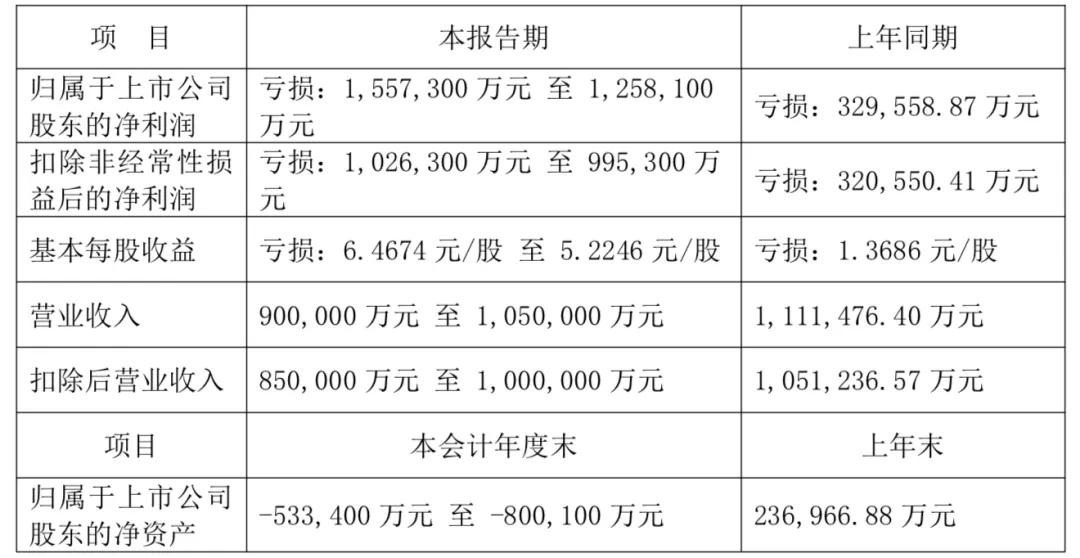
Core Viewpoint - Konka Group Co., Ltd. (referred to as "Deep Konka A") is expected to report significant losses for the fiscal year 2025, with net losses projected between 12.581 billion to 15.573 billion yuan, compared to a loss of 3.296 billion yuan in the previous year [1][2][3]. Financial Performance Summary - The projected net profit attributable to shareholders is expected to be a loss of 12.581 billion to 15.573 billion yuan, compared to a loss of 3.296 billion yuan in the same period last year [1][2]. - The estimated net assets at the end of the fiscal year are projected to be between -5.334 billion to -8.001 billion yuan, down from 2.369 billion yuan at the end of the previous year [1][2]. - Estimated operating revenue is expected to be between 9 billion to 10.5 billion yuan, down from 11.147 billion yuan in the previous year [1][2]. - The net profit after deducting non-recurring gains and losses is projected to be a loss of 9.953 billion to 10.263 billion yuan, compared to a loss of 3.206 billion yuan in the previous year [1][2]. Reasons for Performance Decline - The company cites increased impairment provisions for inventory, accounts receivable, equity investments, financial assistance, and ineffective assets as a major reason for the projected losses [3]. - The consumer electronics business has faced declining revenue due to insufficient product competitiveness, leading to continued losses despite a reduction in overall expenses [3]. Corporate Governance Changes - In April 2025, China Resources and Overseas Chinese Town signed a share transfer agreement, resulting in China Resources becoming the new controlling shareholder with a 30% stake in Konka [6]. - Following the change in control, several executives with backgrounds in China Resources have joined the management team of Konka [7]. - The company has seen significant changes in its board of directors, with a majority of non-independent directors now affiliated with China Resources [7]. Regulatory Issues - The company has faced scrutiny from regulatory bodies, including warnings issued to former executives for inaccurate financial disclosures related to a 2018 transaction [9]. - Two former executives are currently under investigation for serious violations of discipline and law [7][8]. Market Performance - As of January 30, the stock price of Deep Konka A closed at 4.98 yuan per share, reflecting a decline of 0.60%, with a total market capitalization of 11.992 billion yuan [10].
资金视角与基本面视角看-家电未来如何演绎
2026-01-28 03:01
Summary of Key Points from the Conference Call Industry Overview - The conference call focuses on the home appliance industry, particularly the white goods sector, and discusses the impact of various factors on its performance in 2026 [1][2][3]. Core Insights and Arguments - **Market Dynamics**: The home appliance sector's performance in 2025 was driven by passive funds like ETFs and insurance capital, leading to stock price fluctuations that diverged from fundamentals. The focus for 2026 will shift to opportunities from an insurance perspective [1][2]. - **Copper Price Impact**: Rising copper prices have increased production costs for white goods. However, leading companies can manage these costs through upstream negotiations, internal efficiency improvements, and price increases downstream. Historical data suggests that price transmission is the most effective method to mitigate short-term profit impacts [1][4][8]. - **Government Subsidies**: The continuation of national subsidy policies in 2026, with a focus on energy-efficient products, is expected to support demand for white goods. Rising raw material costs may lead to more cautious pricing strategies, potentially reducing competitive pressure [1][5][9]. - **Commodity Cycle Analysis**: Historical commodity cycles have significantly impacted the home appliance sector, with past copper price surges leading to a 3-4 percentage point decline in gross margins. However, the current cycle shows a more moderate copper price increase of about 30% since September 2025, with other raw material prices declining, resulting in manageable overall cost pressures [6][7][10]. Financial and Investment Insights - **Insurance Capital Trends**: There has been a notable increase in insurance capital investment in the stock market, driven by policy support and a preference for high-dividend stocks. The home appliance sector meets these criteria, being undervalued and cash-rich, making it a potential target for increased insurance capital allocation [3][15][18]. - **Potential Growth from Insurance Investments**: If 3%-15% of new insurance capital in 2026 is allocated to the home appliance sector, it could lead to an increase of approximately 100 billion RMB, resulting in an expected industry average growth of 5%-10% [3][21]. - **Valuation and Cash Position**: The home appliance industry is currently undervalued, with companies like Midea and Gree holding over 100 billion RMB in net cash. This strong cash position enhances their attractiveness as investment targets for insurance funds [19][20]. Additional Important Insights - **Exchange Rate Management**: The appreciation of the RMB reduces export revenues, but large home appliance companies can manage this risk through strategies like increasing overseas brand presence, establishing production capacity abroad, and employing foreign exchange hedging [12][14][13]. - **Competitive Landscape**: The competitive environment is shifting towards a more defensive stance, with smaller companies initiating price increases, which larger firms are likely to follow. This trend may help stabilize margins despite rising costs [9][10]. - **Future Outlook**: The overall outlook for the home appliance industry remains optimistic, with expectations of stable demand and potential for significant returns from high-dividend stocks in a defensive market environment [22][23].
“华润系”接管提速 康佳洗牌纾困
Bei Jing Shang Bao· 2026-01-19 13:52
Core Viewpoint - Konka, a historic Chinese electronics company, is undergoing a significant transformation driven by its new controlling shareholder, China Resources, amid a challenging market environment characterized by stock competition and declining industry growth [2][3]. Group 1: Shareholder and Management Changes - China Resources has become the controlling shareholder of Konka, with a shareholding exceeding 30% after a series of stock transfers [3]. - Key management changes have occurred, including the appointment of Dong Gang as Vice President and the resignation of former executives, indicating a shift towards a management style aligned with China Resources [3]. Group 2: Financial Adjustments - China Resources provided Konka with a low-interest loan of 3.97 billion yuan to alleviate long-standing financial pressures, with part of the funds allocated to repay debts to the previous controlling shareholder [4]. - Despite a net loss of 982 million yuan in the first three quarters of 2025, the company has reduced its losses by 38.89% year-on-year, indicating some positive impact from the financial adjustments [4]. Group 3: Business Strategy and Focus - Konka is narrowing its focus to core business areas, including consumer electronics, PCB, and semiconductors, in response to intensified competition in the home appliance market [6]. - The consumer electronics segment remains a priority for transformation, although it is currently facing profitability challenges due to various market factors [6][7]. - The PCB business is relatively stable, while the semiconductor sector is seen as a future growth area, despite being in the early stages of industrialization and facing short-term losses [7]. Group 4: Industry Context - The home appliance industry is experiencing structural adjustments, with a shift from price competition to value competition, which may influence Konka's business optimization efforts [6][7]. - The company must adapt to industry trends, enhance the profitability of its core businesses, and accelerate the commercialization of its emerging semiconductor operations to achieve a successful transformation [7].
“华润系”接管提速,康佳洗牌纾困
Bei Jing Shang Bao· 2026-01-19 13:51
Core Viewpoint - Konka, a historic Chinese electronics company, is at a critical transformation juncture as it faces ongoing losses and industry challenges, necessitating a strategic shift towards core business areas and operational efficiency [1][6]. Group 1: Corporate Restructuring - After China Resources took control, a comprehensive integration process began, affecting equity, personnel, and financial aspects to lay the groundwork for transformation [3]. - In April 2025, China Resources became the controlling shareholder of Konka, holding over 30% of the shares, which solidified control for subsequent adjustments [3]. - Key personnel changes included the appointment of Dong Gang as Vice President and the resignation of former executives, indicating a shift towards China Resources' management philosophy [3]. Group 2: Financial Support and Challenges - China Resources provided Konka with a low-interest loan of 3.97 billion yuan to alleviate long-standing financial pressures, with a portion allocated to repaying previous debts [4]. - Despite a net loss of 982 million yuan in the first three quarters of 2025, this represented a 38.89% reduction in losses year-on-year, indicating some progress [5]. - The company reported a negative operating cash flow of 1.086 billion yuan in the first half of 2025, highlighting ongoing liquidity challenges [5]. Group 3: Business Focus and Market Conditions - In response to intensified competition, Konka is narrowing its focus to three core areas: consumer electronics, PCB, and semiconductors, aiming for growth through business optimization [6]. - The consumer electronics segment remains a primary focus but is currently unprofitable, with a gross margin of only 0.39% due to various operational challenges [8]. - The PCB business is relatively stable, while the semiconductor sector is seen as a future growth point, although it is still in the early stages of industrialization and profitability [8][9]. Group 4: Industry Context - The domestic home appliance market is experiencing structural adjustments, with a shift from price competition to value-based competition, which may influence Konka's business strategies [7][9]. - The company must adapt to industry trends, enhance the profitability of core operations, and expedite the commercialization of emerging businesses to navigate the competitive landscape effectively [9].