
奥迪A4

Search documents
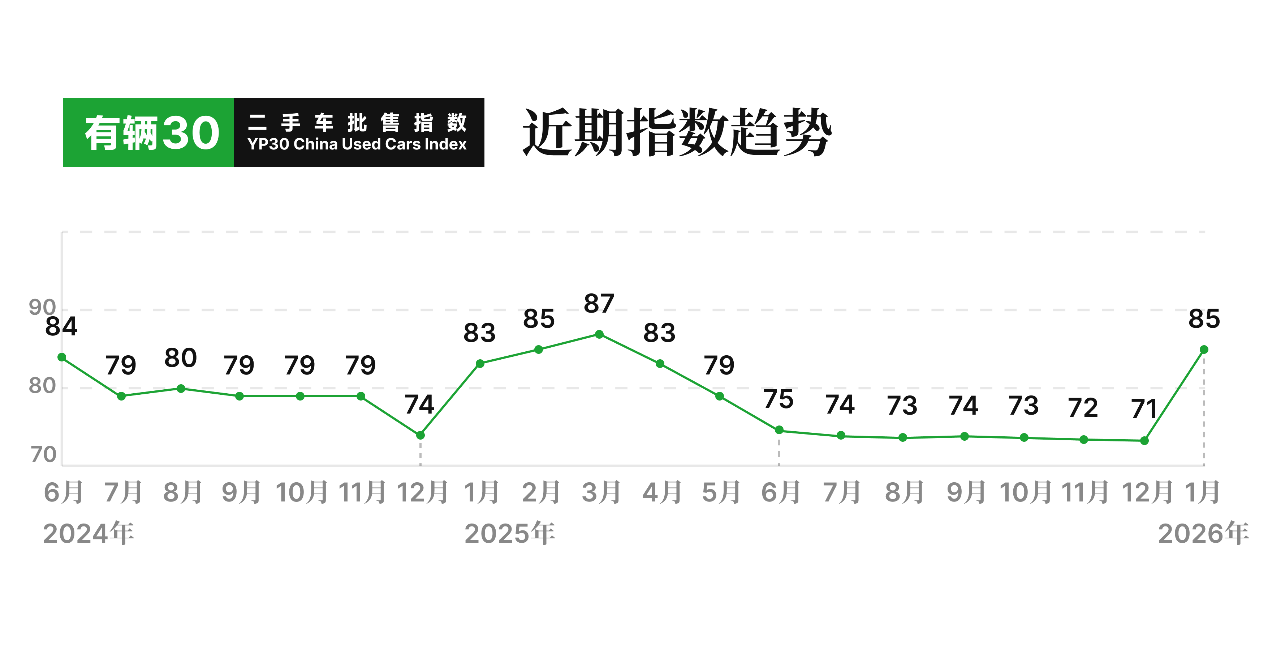
有辆30指数2026年首月大涨近20%,折射春节前二手车需求强劲
Zhong Guo Qi Che Bao Wang· 2026-02-06 05:51
Core Insights - The "Youliang 30 Used Car Wholesale Index" recorded a significant increase of 19.7% month-on-month in January 2026, reaching 85 points, driven by strong demand in the automotive consumption market before the Spring Festival, marking the largest monthly increase since its inception [1] - The index now includes a complete list of 30 benchmark models, enhancing its transparency and market reference value, providing a clearer and more credible quantitative framework for observing the dynamics of the Chinese used car market [1][2] Index Composition - The 30 benchmark models represent high liquidity and typical market indicators across various segments, covering brands from China, the US, Germany, and Japan, aimed at reflecting the overall trends in the Chinese used car market [2] - Notable models include Chinese brands like Great Wall Haval H6 and BYD Song, German brands like Volkswagen Golf and BMW 3 Series, Japanese brands like Honda CR-V and Toyota RAV4, and American brands like Tesla Model Y and Buick GL8 [2] Market Trends - The index data for January 2026 reveals a profound structural adjustment beneath the overall market prosperity, with mid-to-large vehicles experiencing a price increase of 27.1% year-on-year, significantly higher than the average market increase of 11.1% for compact cars [4] - Chinese brands led the market with a year-on-year price increase of 36.9%, reflecting advancements in technology, product strength, and market recognition, while German brands maintained a robust 34.6% increase [7] - In contrast, Korean and French brands faced declines of 9.0% and 13.8% respectively, indicating challenges in market share and brand influence [7] Vehicle Type Dynamics - The market has seen a notable shift in demand, with MPV prices soaring by 35.7%, becoming the fastest-growing category, while traditional SUV prices saw a modest increase of 3.2% and sedans increased by 18.6% [10] Circulation and Transactions - The liquidity of used car sources in China continues to rise, with total used car transactions in 2026 surpassing 20 million units, reaching 20.108 million, a year-on-year increase of 2.52%, and an increasing proportion of interprovincial transactions [13] - The "Youliang 30 Index" provides innovative analysis on interprovincial circulation, with Sichuan province entering the top 5 in interprovincial procurement in January 2026 [13] Index Value and Macro Significance - The "Youliang 30 Index" serves as a quantifiable and traceable "data dashboard" for industry governance and market fluctuation assessment, helping relevant departments gauge the true structure of the current consumption market and consumer confidence levels [22] - The index's monthly data series creates a dynamic price map, allowing for scientific measurement and analysis of the impact of policies like "trade-in" on the circulation segment [22] - The transparency and standardization of the "Youliang 30 Index" respond to national requirements for market data element commercialization and the establishment of a high-standard market system, facilitating the transition of the used car industry from a traditional "experience-driven" model to a "data-driven" modernized development phase [22]

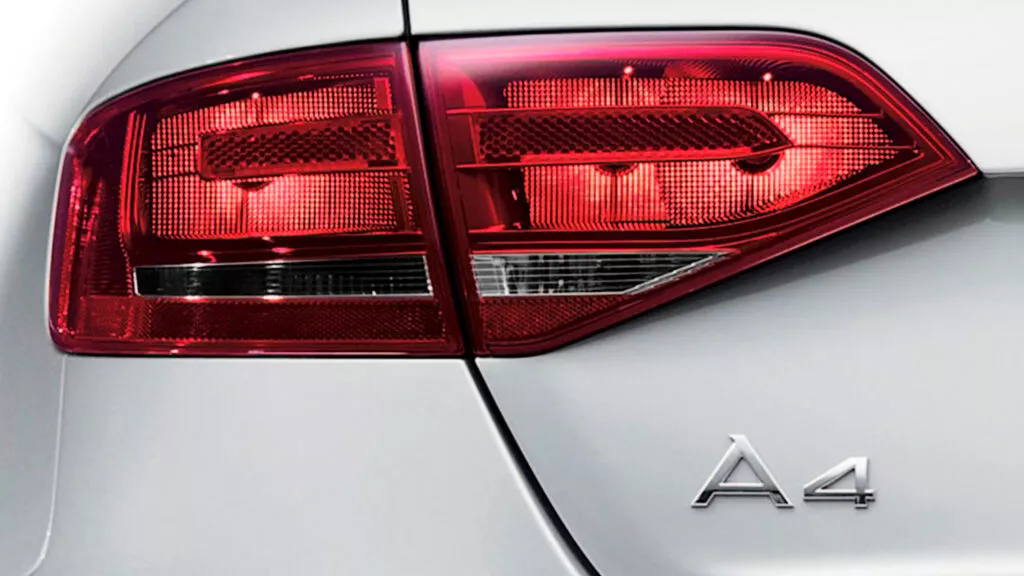
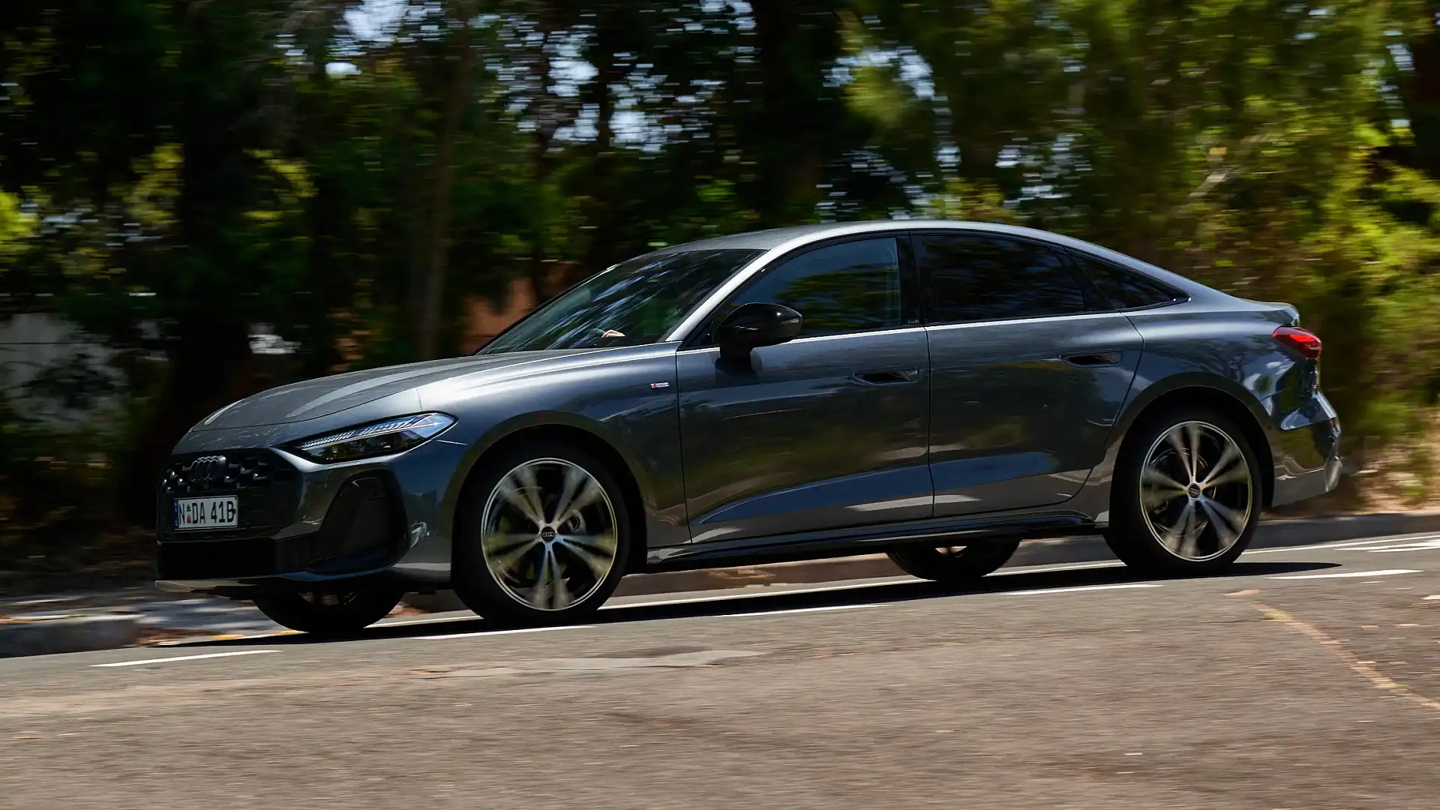
奥迪再认错!A5或改回A4命名
Zhong Guo Qi Che Bao Wang· 2026-02-05 07:30
Core Viewpoint - Audi's recent decision to rename its well-known A4 model to A5 has been acknowledged as a mistake by the global CEO Gernot Döllner, indicating a potential return to the A4 name in future updates [1][3] Group 1: Naming Strategy - Audi's naming strategy, initiated in 2023 under former CEO Markus Duesmann, assigned odd numbers to fuel vehicles and even numbers to electric vehicles, leading to the A4 being renamed A5 [3] - The renaming has caused confusion among customers and difficulties for sales personnel, impacting sales negatively [3] - Due to competitive pressures and declining sales, Audi has decided to abandon the previous naming strategy, allowing the A6 to retain its name and suggesting that the A5 may revert to A4 in future updates [3][4] Group 2: Future Developments - Audi is developing an electric version of the A4, named A4 e-tron, which will be based on a new scalable system platform and incorporate design elements from the striking C concept car [4] - The launch of the A4 e-tron was initially planned for around 2028, but under Döllner's leadership, Audi has adjusted its electrification timeline, committing to continue developing and selling fuel vehicles, hybrids, and electric vehicles for the next 7 to 10 years [4] - Audi's previous naming conventions have faced criticism, with a shift away from traditional engine displacement labels to a numerical system that will be discontinued by 2024 [6]
奥迪承认A4更名为A5是失误 或回归传统命名
Xi Niu Cai Jing· 2026-02-03 07:39
Group 1 - Audi's CEO, Gernot Döllner, admitted that renaming the classic A4 to A5 was a significant mistake and hinted at a potential return to the A4 nameplate in the next model update [2] - In 2023, Audi introduced a new naming convention where odd numbers represent fuel vehicles and even numbers represent electric vehicles, leading to confusion among consumers as the new A5 conflicted with the existing A5 coupe [2] - Audi's global user experience data indicated a 42% increase in dealer inquiries, with 23% of consumers unable to distinguish between model relationships, exacerbated by the unchanged A6L in the Chinese market [2] Group 2 - Audi has announced a return to the traditional naming system using "letter + number" to differentiate vehicle sizes and positions, with "A" for sedans and "Q" for SUVs, while power types will be indicated by suffixes [3] - The naming of the newly announced but not yet launched A5L is still under discussion, and Döllner mentioned that there is a possibility of reverting the A5 back to the A4 name, with future naming planning based on the A6 [3] - Audi's global sales are projected to decline by 11.8% in 2024 to 1.6712 million units, with electric vehicle sales also down by 8% to 164,000 units, leading Döllner to reject previous aggressive electrification strategies [2]

阿里千问投入30亿加码春节AI大战;又一黄金平台出现兑付异常
Sou Hu Cai Jing· 2026-02-03 01:31
Group 1 - The State Administration for Market Regulation and nine other departments released the "Guidelines for the Construction of Low-altitude Economic Standard System (2025 Edition)" focusing on five core areas: low-altitude aircraft, infrastructure, air traffic management, safety supervision, and application scenarios [2] - The guidelines aim to establish a four-dimensional integrated standard supply system by 2027 to meet the safety and healthy development needs of the low-altitude economy [2] Group 2 - The Ministry of Industry and Information Technology announced a mandatory national standard for automotive door handles, effective January 1, 2027, addressing safety requirements for door operation after accidents [3] - The standard mandates that each vehicle door must be equipped with a mechanical release handle to ensure accessibility in emergencies [3] Group 3 - SpaceX announced the acquisition of AI company xAI for $250 billion, based on a recent funding round that valued xAI at $230 billion [4][5] - Alibaba's Qianwen APP launched a "Spring Festival Invitation Plan" with an investment of 3 billion yuan to promote AI experiences during the holiday season, marking a record high for Alibaba's Spring Festival activities [6] Group 4 - Tencent responded to concerns regarding its "Yuanbao Spring Festival Red Packet" sharing activity, stating it is evaluating compliance with external link management regulations [7] - Ant Group's CEO announced a special incentive program for teams making innovative contributions in AI, with potential rewards linked to business value enhancement [8] Group 5 - CPE Yuanfeng invested $350 million in Burger King China, acquiring approximately 83% of the shares, with plans to expand the number of stores from 1,250 to over 4,000 by 2035 [12] - Former Sam's Club China president, Wen Ande, has joined Metro China as an advisor, bringing experience in store expansion and membership fee adjustments [13] Group 6 - Mercedes-Benz has adjusted the suggested retail prices of some models by approximately 10%, aiming to improve cash flow for dealers [10] - Audi acknowledged that renaming the A4 to A5 was a mistake and plans to revert to traditional naming conventions for future models [11]


早报|SpaceX宣布收购人工智能企业xAI;深圳水贝黄金平台再爆雷;奥迪承认更名A4为A5是错误;腾讯内部信回应元宝红包分享争议
虎嗅APP· 2026-02-03 00:41
Group 1 - SpaceX has announced the acquisition of AI company xAI, which is also under Elon Musk's ownership [2] - Oracle plans to raise $25 billion through bonds related to AI financing, marking the largest financing deal in the U.S. corporate sector this year [4] - CPE Yuanfeng has completed a deal to acquire a controlling stake in Burger King's China operations, injecting $350 million and aiming to expand the number of stores from approximately 1,250 to over 4,000 by 2035 [5] Group 2 - Tesla's humanoid robot is set to begin mass production by the end of 2026, with an expected annual output of 1 million units [8] - Xiaomi's CEO Lei Jun responded to concerns about a decline in car deliveries, explaining that January's figures were affected by the seasonal market and the discontinuation of the first-generation SU7 model [18] - The Shanghai government has initiated a project to purchase second-hand housing for affordable rental housing, targeting new citizens, young people, and graduates [9]




奥迪回应更名争议:A4改A5是错误,未来车型标识将尊重传统
Huan Qiu Wang Zi Xun· 2026-02-02 07:28
Group 1 - Audi admitted that renaming its well-known model A4 to A5 was a mistake and hinted at reinstating the A4 nameplate in the next update of the latest model, which has a history of 32 years [1] - In 2023, Audi announced a plan where all gasoline and diesel models would adopt odd-numbered names, while electric vehicles would use even-numbered names for differentiation in showrooms [3] - The A4 was the first non-electric Audi model name to be canceled as the brand merged the A4 sedan and wagon into the A5 name, which was previously used only for coupe, convertible, and five-door "Sportback" derivatives [3] Group 2 - Customer and dealer feedback indicated that the new name was confusing, leading Audi to reverse its decision on future models and cancel the plan to rename the new gasoline-powered A6 to A7 [3]
奥迪承认:将 A4 更名为 A5 是一个“错误”
Xin Lang Cai Jing· 2026-02-02 02:23
Core Insights - Audi's global CEO admitted that renaming the A4 to A5 was a mistake and indicated that the A4 nameplate, which has a 32-year history, will return in the next model update [1][3]. Group 1: Naming Strategy - Audi's 2023 plan states that all fuel and diesel models will use odd-numbered names, while electric models will use even-numbered names to help consumers differentiate between the two types in showrooms [3]. - The A4 was the first non-electric Audi model name to be eliminated, with the A4 sedan and wagon being merged into the A5 naming system, which was originally designated for two-door coupes, convertibles, and the five-door Sportback models [3]. - High-performance versions will also follow this naming convention, with the S4 series merging into the S5 series, and the upcoming RS5 replacing the RS4 [3]. Group 2: CEO Statements - CEO Gernot Döllner acknowledged the renaming decision as a mistake and stated that Audi will revert to the original naming system, where the A series represents sedans and the Q series represents SUVs, with numbers corresponding to model size and market segment [5]. - Döllner mentioned that the only error in the A5 renaming incident was the timing of the decision, which was made too close to production, leading to a rushed adjustment [5]. - When asked if the A5 could revert back to the A4 name, Döllner responded affirmatively, indicating that future naming will be based around the A6 as a core reference [5].
一汽奥迪迈入千万用户时代:以体系力之韧承载稳健发展的中国样本
Zhong Guo Jing Ji Wang· 2026-01-22 04:12
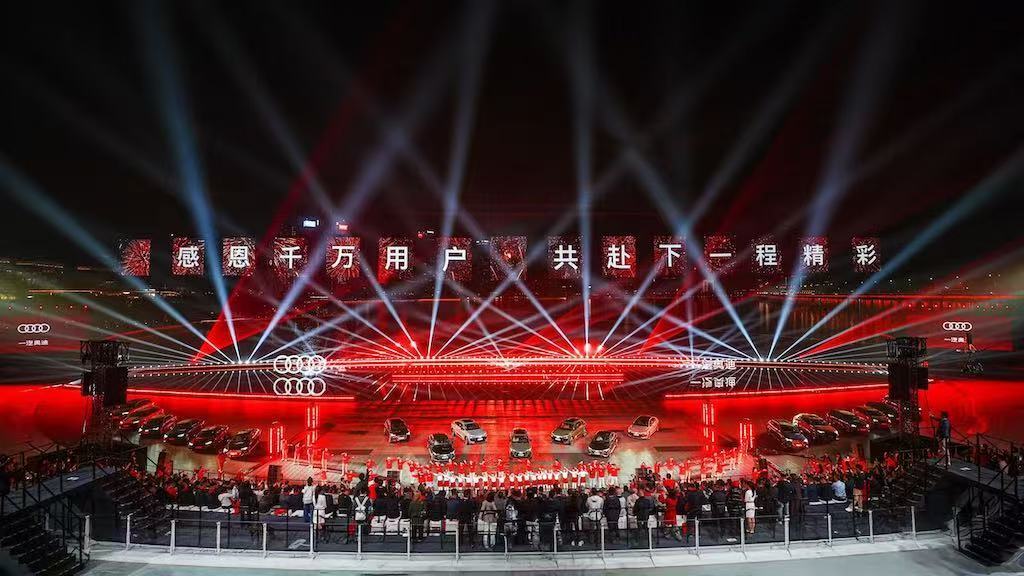
Core Insights - The Chinese automotive industry is undergoing significant transformation, with joint ventures like FAW-Volkswagen achieving notable milestones in their transition [1] - FAW-Volkswagen's Audi brand has become the first joint venture luxury car brand in China to reach over 10 million users, marking a significant achievement in Sino-German economic cooperation [3] Group 1: Achievements and Milestones - FAW-Volkswagen has reached a production and sales milestone of over 30 million passenger vehicles as of October last year [1] - Audi's success in the Chinese market is highlighted by its introduction of the long-wheelbase A6 model in 1999, which catered to local consumer preferences for space [3][4] - The brand has pioneered several luxury segments in China, including the first domestically produced luxury B-class car, the A4, and the B-class luxury SUV segment with the Q5 [6] Group 2: Strategic Development and Market Position - FAW-Volkswagen has established a robust luxury automotive brand system over the past 38 years, demonstrating strategic foresight and the ability to build from the ground up [4][6] - The company has implemented international standards in its 4S sales service system since 2000, setting a benchmark for luxury automotive service in China [6] - The brand's comprehensive approach includes initiatives like Audi's "Qianjiehui" and "Audi Technology Day," enhancing its market presence and brand image [6] Group 3: Operational Excellence and Long-term Strategy - FAW-Volkswagen emphasizes the importance of maintaining high standards across all operational aspects, from production quality to after-sales service, especially as it scales to a larger user base [10][11] - The company has built a network of approximately 600 stable dealerships, ensuring effective market coverage and customer service while maintaining profitability for dealers [13] - The shift towards a long-term strategy focuses on user experience and dealer support, which is crucial for sustaining growth in a competitive market [11][13]
漂洋过海50余年 奥迪要在美“安家”了?
Zhong Guo Qi Che Bao Wang· 2025-04-29 01:19
Core Viewpoint - Audi is increasingly considering local production in the U.S. to mitigate the impact of tariffs imposed by the Trump administration, as the company faces significant cost challenges due to its reliance on imports [2][10]. Group 1: Audi's Current Situation - Audi has not established any production facilities in the U.S. since its entry into the market over 50 years ago, relying entirely on imports for sales [3]. - The Q5 model, produced in Mexico, accounts for a significant portion of Audi's sales in the U.S., with over 5,800 units sold in 2024 alone [4]. - The potential for triple tariffs on the Q5, including a 25% import tariff and additional tariffs under the USMCA, could increase costs by over 50%, making it unprofitable to sell the model in the U.S. [4]. Group 2: Sales Performance and Challenges - Audi's total vehicle deliveries in the U.S. fell by 14% year-on-year to 196,000 units, with Q5 sales dropping by 23% [5]. - The Q3 model saw a 45% increase in sales, reaching 32,090 units, but it also faces potential price increases due to tariffs [6]. - Audi has paused new vehicle deliveries to U.S. dealers, with over 37,000 vehicles currently in inventory, which can sustain sales for about two months [6]. Group 3: Industry Impact and Competitor Response - Other automakers, such as Jaguar Land Rover and Mitsubishi, are also halting deliveries and storing vehicles at ports due to the new tariffs [7][8]. - Major competitors like Mercedes-Benz and BMW have established U.S. production facilities, allowing them to better manage tariff impacts and maintain flexibility in production [9]. - Mercedes-Benz has decided to absorb the increased costs without raising prices for the 2025 models, leveraging its U.S. manufacturing capabilities [9]. Group 4: Future Production Plans - Audi is evaluating options for local production in the U.S., potentially utilizing existing Volkswagen facilities or constructing a new plant, which could take 3-4 years [10]. - The company had previously considered building an electric vehicle factory in the U.S. due to incentives from the Inflation Reduction Act but did not finalize plans at that time [10].
