
富硒鸡蛋

Search documents
华墅乡冲刺首季“开门红”
Xin Lang Cai Jing· 2026-02-05 18:10
Group 1 - The core project in Huashu Township involves the construction of a modern chicken breeding industrial park covering an area of 101 acres with a total investment of 130 million yuan, expected to start trial operations in August this year [1] - The industrial park will feature 11 modern chicken houses designed for a total capacity of 1.2 million chickens, focusing on centralized and intelligent breeding with automated feeding and environmental control systems [1] - A key highlight of the project is its green cycle approach, which includes advanced environmental treatment equipment to convert chicken manure into high-quality organic fertilizer and plans to raise black soldier flies for feed, creating an ecological chain [1] Group 2 - The Wanjing Village agricultural industrial park has successfully planted 2000 acres of winter vegetables, primarily celery and scattered flowers, with all production based on orders for markets in Beijing and Northeast China [2] - The project leverages the mild climate and facility agriculture advantages of Quzhou to significantly enhance economic benefits by addressing the winter vegetable supply gap in Northern China [2] - A dedicated team has been established in Huashu Township to coordinate with enterprises, addressing challenges related to water and electricity access, land policy, and assisting in applying for agricultural support policies [2]
人民日报:泰国正大集团不断加码投资
Ren Min Ri Bao· 2026-02-03 10:10
Core Viewpoint - Charoen Pokphand Group (CP Group) has been deeply investing in the Chinese market for over 40 years, demonstrating a strong commitment to seizing opportunities in China despite various challenges [2][5][11]. Group 1: Company History and Development - CP Group started as a small seed business in Bangkok in 1921 and has evolved into one of the largest multinational corporations in China, with over 670 enterprises and more than 80,000 employees across various sectors [3][5]. - The company was the first foreign enterprise to receive an investment certificate in China in 1981, marking a significant milestone in its history [4][5]. - CP Group's total revenue in China reached 208 billion RMB in 2024, making it one of the largest foreign investors in the country [5]. Group 2: Investment Strategy and Market Adaptation - CP Group has consistently adapted its investment strategy to align with China's economic development, focusing on high-quality growth and innovation [5][11]. - The company has introduced various products to meet the evolving consumer demands in China, such as DHA eggs and selenium-enriched eggs, while also exploring new business models like industrial tourism [6][10]. - CP Group's collaboration with local governments and farmers has created a successful model for rural development, with over 22.4 billion RMB invested in projects across 16 provinces [6][10]. Group 3: Cultural and Economic Integration - CP Group has embraced the cultural heritage of its operations in China, such as the development of the "Sun River" coffee brand, which integrates traditional techniques with modern technology [8][9]. - The establishment of the Xunlong Coffee Cultural Park aims to enhance tourism and cultural experiences, reflecting the company's commitment to blending local culture with business [9][10]. - The company plans to leverage China's digital transformation and artificial intelligence advancements to enhance its operational efficiency and product offerings in the coming decade [10][11].
排队免单,躺着赚钱?揭秘久知星火如何用9个月收割百万用户!
Sou Hu Cai Jing· 2026-02-02 08:18
Core Viewpoint - The article discusses the innovative business model of "Jiu Zhi Xing Huo," which allows consumers to purchase craft beer and potentially receive their money back through a unique referral and cashback system, raising questions about its sustainability and long-term viability [1][3]. Group 1: Business Model and Consumer Attraction - The model features a simple rule: consumers pay 168-198 yuan for a box of beer and can receive a full refund once three new users purchase the same product, creating a transparent and low-barrier entry for consumers [3][5]. - The system claims to generate cashback from product price differences rather than relying on new investments, which distinguishes it from traditional Ponzi schemes [5][6]. - The platform allows users to queue for multiple products simultaneously, enhancing the likelihood of receiving refunds and incentivizing sharing [5][8]. Group 2: Revenue Generation Mechanism - The platform's revenue model is based on a price difference of 98 yuan per box, with 56 yuan allocated to a cashback fund and 42 yuan to a market incentive pool, creating a self-sustaining cycle as long as product sales continue [7][8]. - The cashback fund accumulates from each sale, ensuring that refunds can be processed as long as sales are maintained [8][9]. Group 3: Marketing and Distribution Strategy - The company employs a dual-channel strategy combining "ground forces" (local stores) and "air forces" (online marketing) to drive sales [10][11]. - Low entry barriers for shared stores allow rapid expansion, with over 300,000 sales points established in a short time, leveraging a "everyone can be a seller" model [11][12]. - Multi-level agency structures incentivize local market development and create a long-term revenue stream for promoters through binding rewards [12][13]. Group 4: Challenges and Future Considerations - The sustainability of the model hinges on the quality of the products offered; if the products do not meet consumer expectations, the model may fail to retain customer loyalty [15][16]. - The business model is heavily reliant on continuous new user acquisition; market saturation could lead to longer cashback cycles, undermining consumer trust [17][18]. - The initiative represents a radical experiment in consumer engagement, aiming to transform consumers into investors and promoters, challenging traditional retail dynamics [18].

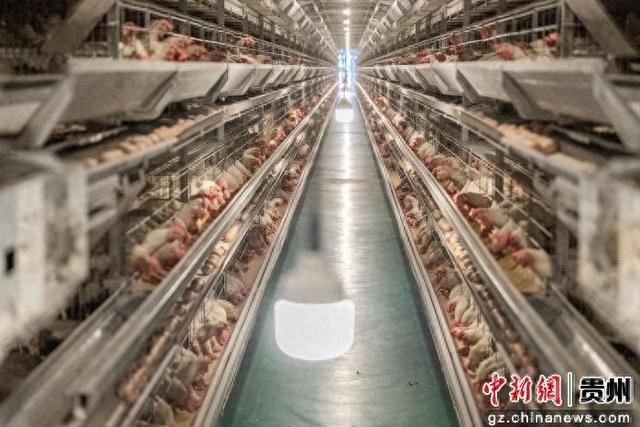
贵州赫章每日100万枚鸡蛋畅销大湾区
Zhong Guo Xin Wen Wang· 2026-01-30 08:52
Core Insights - The egg-laying chicken farming industry in Hezhang County, Guizhou, has seen significant growth, with a stock of 4.0963 million chickens and an annual production of approximately 1.3 billion eggs, accounting for one-quarter of Guizhou's total output [1] - The collaboration between Panyu and Hezhang has enabled the local egg production to penetrate the Guangdong-Hong Kong-Macao Greater Bay Area market, with daily sales reaching 1 million eggs [1] Group 1: Industry Development - Hezhang County's ecological advantages, including clean air and water, support the development of ecological chicken farming [1] - The industry employs a full supply chain development approach, utilizing technology to enhance the efficiency of feed, breeding, and egg production processes [3] - The establishment of 14 large-scale farms, including three provincial and four municipal leading enterprises, positions Hezhang among the top producers in the province [5] Group 2: Quality Control and Branding - A comprehensive traceability system is implemented for Hezhang eggs, ensuring high standards and certifications for quality, including "supply to Hong Kong" and "Greater Bay Area vegetable basket project" certifications [3] - Panyu has invested 10.3 million yuan in cooperative funds to build facilities that enhance the scale of production, including a 5,016 square meter young chicken farm [5] - Branding efforts have led to the creation of well-known brands such as "China Sea Sparrow Egg" and "Axi Lisi Five Grain Egg," significantly increasing the added value of Hezhang eggs [5] Group 3: Logistics and Market Access - A new logistics network has been established to reduce transportation time from Hezhang to Guangzhou to within 72 hours, significantly lowering product loss rates [8] - Strategic partnerships with companies like Qian Dama Group have facilitated direct sourcing of Hezhang eggs, enhancing market presence and consumer trust [9] - The marketing initiatives, including promotional events and media collaborations, have successfully increased the visibility and sales of Hezhang eggs in urban markets [8]
“深耕中国市场的决心从未改变”(见证·中国机遇)
Ren Min Ri Bao· 2026-01-29 01:21
Core Viewpoint - Charoen Pokphand Group (CP Group) has evolved from a small seed business in Thailand to one of the largest multinational enterprises in China, significantly contributing to the country's economic development and benefiting from the opportunities presented by China's reform and opening-up policy [9][10][12]. Group 1: Company History and Development - CP Group was founded in 1921 by a young entrepreneur, who started a seed business in Bangkok, laying the foundation for its future expansion into China [10][11]. - The company made its first investment in China in 1979, establishing a modern feed factory in Shenzhen, marking the beginning of its significant presence in the Chinese market [11][12]. - By 2024, CP Group has established over 670 enterprises in China, employing more than 80,000 people across various sectors, with a total revenue of 208 billion RMB [12][19]. Group 2: Investment Strategy and Market Position - CP Group has consistently increased its investment in China, adapting to market changes and focusing on high-quality development opportunities [12][19]. - The company operates in over ten sectors, including agriculture, food production, retail, pharmaceuticals, and industrial sectors, making it the largest foreign investor in China [12][19]. - CP Group's business philosophy emphasizes mutual benefits for the country, the people, and the enterprise, which has guided its operations in China [12]. Group 3: Innovation and Product Development - CP Group has embraced technological advancements in its operations, such as using smart robots for poultry farming, which allows one person to manage 168,000 chickens [13]. - The company has diversified its product offerings to meet the growing demand for healthy and varied agricultural products, including specialized egg products [13][14]. - CP Group is exploring new business models, such as industrial tourism, to enhance consumer engagement and adapt to the evolving economic landscape [13][14]. Group 4: Cultural and Economic Integration - The establishment of the Xinglong Coffee Cultural Park reflects CP Group's commitment to integrating local culture with its business operations, promoting tourism and cultural heritage [16][17]. - The park features a blend of traditional coffee processing techniques and modern technology, aiming to create an immersive experience for visitors [17]. - CP Group's coffee products have begun to export internationally, leveraging China's free trade policies to expand its market reach [18]. Group 5: Future Outlook - CP Group plans to accelerate its digital transformation and invest in new technologies over the next decade, focusing on hard technology, robotics, and smart manufacturing [18][19]. - The company remains optimistic about China's long-term development prospects and aims to contribute to the country's high-quality economic growth and social progress [19].

在华四十余年 泰国正大集团不断加码投资——“深耕中国市场的决心从未改变”(见证·中国机遇)
Ren Min Ri Bao· 2026-01-28 22:07
Core Viewpoint - Charoen Pokphand Group (CP Group) has significantly contributed to China's economic development over the past 40 years, evolving from a small seed business to a major multinational corporation with extensive investments across various sectors in China [1][3][4]. Group 1: Company History and Development - CP Group was founded in 1921 by a Chinese immigrant, starting as a small seed shop in Bangkok, Thailand, and has since become one of the largest foreign investors in China [2][3]. - The company established its first modern feed factory in Shenzhen in 1979, marking its entry into the Chinese market [3]. - As of 2024, CP Group operates over 670 enterprises in China, employing more than 80,000 people and generating a total revenue of 208 billion RMB [3][4]. Group 2: Investment Strategy and Market Position - CP Group has maintained a strong commitment to investing in China, adapting to market changes and focusing on high-quality development opportunities [4][10]. - The company emphasizes a "three benefits" business philosophy, prioritizing benefits for the country, the people, and the enterprise [4]. - CP Group's investment strategy includes exploring new business models and expanding its product offerings to meet the evolving demands of Chinese consumers [5][10]. Group 3: Innovations and New Business Models - CP Group is leveraging technology in its operations, such as using smart robotics in egg production, which allows one person to manage 168,000 chickens [5]. - The company is diversifying its product range to include health-oriented options like DHA eggs and selenium-enriched eggs, responding to consumer trends [5][6]. - CP Group is also exploring industrial tourism by transforming its egg production facilities into educational and tourist attractions [5][6]. Group 4: Cultural and Economic Contributions - CP Group has invested in the Hainan coffee industry, revamping the "Sun River" coffee brand and establishing a cultural park that integrates tourism and coffee production [7][9]. - The company aims to enhance local economies by collaborating with farmers and local governments, creating job opportunities and promoting rural revitalization [6][9]. - CP Group's coffee products have gained international recognition, with exports to Australia underlining its commitment to expanding its global footprint [9].
迎元旦 促消费|市经开区第三届采藕活动启动
Sou Hu Cai Jing· 2025-12-26 03:55
Core Viewpoint - The third "Lotus Encounter" lotus harvesting event was launched in the Economic Development Zone, showcasing the region's agricultural productivity and promoting local agricultural products [2][4]. Group 1: Event Overview - The lotus harvesting event took place on December 21 at the Yao Garden in Shahe Town, marking the peak season for lotus root harvesting [2]. - The event featured lively performances and included various interactive activities such as weight guessing, live auctions, and tasting of fresh lotus root dumplings [6]. Group 2: Agricultural Impact - The "Yaochi Youou" brand has been established, with over 2,500 tons of lotus root produced annually, creating employment for more than 400 people [9]. - The Economic Development Zone has developed a unique planting industry chain that includes seasonal activities: spring lotus, summer flowers, autumn lotus seeds, and winter lotus root consumption [9].
从严整治“坑老”骗局
Jing Ji Ri Bao· 2025-11-04 00:04
Core Viewpoint - The article highlights the emergence of fraudulent practices targeting elderly consumers through deceptive marketing strategies, particularly in the sale of health products and supplements [1] Group 1: Fraudulent Practices - Some unscrupulous merchants are using a "offline lead + private domain live streaming" model to lure elderly consumers into purchasing overpriced products by falsely advertising ordinary eggs as "selenium-rich eggs" [1] - These merchants employ tactics such as "free trials - creating anxiety - false advertising - high-priced sales" to form an illegal chain that exploits the health anxieties and lower information discernment of elderly individuals [1] Group 2: Regulatory Response - Market regulatory authorities have begun to publish typical cases and are intensifying efforts to crack down on scams targeting the elderly [1] - There is a call for increased joint law enforcement, innovative regulatory methods, and raising awareness among elderly consumers to protect themselves and restore order in the pharmaceutical and health product markets [1]
“富硒鸡蛋”“黑玛卡”涉虚假宣传,北京科奥世纪百货被罚12万元
Bei Jing Shang Bao· 2025-10-29 04:23
Core Points - The National Market Supervision Administration of China has announced typical cases of false advertising related to elderly medications and health products, specifically targeting Beijing Kao Century Department Store for misleading promotions and consumer information violations [1] Group 1: Company Actions - Kao Century Department Store utilized a "offline traffic + private domain live streaming" model to attract elderly consumers by misrepresenting ordinary eggs as "selenium-rich eggs" with a promotional offer of "1 yuan for 10 selenium-rich eggs" [1] - The store falsely advertised a basic agricultural product, "black maca," as being produced by the "French Lancôme Group," claiming it had benefits such as "regulating body functions" and "tightening and anti-wrinkle" effects, fabricating product capabilities and misrepresenting brand partnerships [1] Group 2: Regulatory Response - The Beijing Pinggu District Market Supervision Bureau investigated the store and found that it collected consumer personal information without explicit consent during the membership registration process, severely infringing on the legal rights of elderly consumers [1] - As a result of the investigation, the store received a warning and was fined 120,400 yuan [1]
虚假宣传诱骗老人消费、擅自收集老人信息……七起典型案例公布
Zhong Guo Xin Wen Wang· 2025-10-29 02:53
Core Viewpoint - The article discusses the enforcement actions taken by market regulatory authorities in various regions of China against companies engaging in false advertising and misleading promotions targeting elderly consumers, particularly in the health and wellness sector [1]. Group 1: Case Summaries - Beijing Kao Century Department Store was found guilty of falsely advertising regular eggs as "selenium-rich eggs" and misrepresenting a product's origin and benefits, leading to a fine of 120,400 yuan [2][3]. - A-Huan Network Technology (Suzhou) Co., Ltd. was penalized for promoting health products with unproven disease treatment claims, resulting in a fine of 250,000 yuan [5][6]. - Chuzhou Yueqiang Medical Consulting Co., Ltd. was fined 200,000 yuan for exaggerating the effects of a health product in its promotions [9][10]. - Dongxiang District Bingxiu Daily Chemical Products Store was fined 200,000 yuan for making unsubstantiated health claims about its products [12][13]. - Guan County Yixin Convenience Supermarket was fined 60,000 yuan for misleading advertising of ordinary food products as having extensive health benefits [15][16]. - Guangzhou Kang'ermei Health Information Consulting Co., Ltd. faced a fine of 250,000 yuan for falsely claiming that its health products could treat diseases [18][19]. - Sichuan Ruikang Home Health Management Co., Ltd. was fined 16,000 yuan for promoting a health product with unverified disease treatment claims [21][22]. Group 2: Legal Basis and Penalties - The actions taken against these companies were based on violations of the Anti-Unfair Competition Law, the Advertising Law, and the Consumer Rights Protection Law, with penalties including fines and orders to cease illegal activities [3][6][10][13][19][22]. - The fines imposed varied by case, with amounts ranging from 16,000 yuan to 250,000 yuan, reflecting the severity of the violations and the potential harm to consumers [3][6][10][13][19][22]. Group 3: Analysis of Cases - The cases highlight a trend of targeting elderly consumers, who may have limited ability to discern misleading information, through deceptive marketing practices [4][7][11][14][20][23]. - The enforcement actions serve as a deterrent to other businesses, aiming to protect consumer rights and maintain market order, particularly in the health and wellness sector [4][7][11][14][20][23].