
就业报告

Search documents
The Week Ahead: Early March Brings PMI Readings, Jobs Data
Schaeffers Investment Research· 2026-02-26 18:00
Economic Data and Employment Reports - Upcoming economic data includes manufacturing and services readings, as well as employment data, which the Federal Reserve will monitor closely for insights into economic health [1] - The S&P final U.S. manufacturing purchasing manager's index (PMI) and the Institute for Supply Management (ISM) manufacturing reading are scheduled for release [3] - The ADP employment report, S&P final U.S. services PMI, ISM services index, and the Fed's Beige Book will be released mid-week [3] Earnings Reports - Earnings season continues with reports expected from various companies including Abercrombie & Fitch, American Eagle, AutoZone, Bath & Body Works, Best Buy, and others [2] - A detailed schedule of key market events for the week ahead has been provided, indicating that all economic dates are tentative and subject to change [2] Jobless Claims and Productivity Data - Weekly jobless claims data will be released, along with U.S. productivity data and the import price index [4] - The U.S. employment report, including updates on the unemployment rate and hourly wages, is set for release at the end of the week [4]
Friday's jobs report will be delayed because of the partial government shutdown
CNBC· 2026-02-02 17:43
Core Viewpoint - The US Bureau of Labor Statistics (BLS) has announced the postponement of the January jobs report due to a government shutdown, impacting the release of key economic data [1][2]. Group 1: Impact of Government Shutdown - The BLS will not release the January jobs report as scheduled, with the release to be rescheduled upon the resumption of government funding [2]. - The shutdown has caused delays in various routine releases by the BLS, which includes important economic indicators such as the consumer price index and import/export data [3]. - The government shutdown was triggered by Congress's failure to agree on a spending plan, particularly regarding funding for the Department of Homeland Security [5]. Group 2: Economic Data Expectations - Markets had anticipated an increase of 55,000 jobs in the upcoming report, with the unemployment rate expected to remain steady at 4.4% [5]. - The jobs report is crucial as it provides insights into hiring trends and the overall employment situation, which are key indicators for economic health [4].


降息持续升温,黄金却怂了!
Jin Tou Wang· 2025-12-04 09:45
Group 1 - Gold prices remained stable above $4200, reaching a high of $4241.40 due to weak U.S. employment data, but closed near $4203, showing little change [1] - In the European market, gold prices slightly declined, hovering around $4188 [1] Group 2 - The U.S. job market unexpectedly contracted, with private sector jobs decreasing by 32,000 in November, the largest drop since March 2023, significantly below the expected increase of 40,000 [3] - Wage growth also slowed, with job switchers seeing a 6.3% increase, the lowest since February 2021, and wage growth for those staying in their positions at 4.4%, down 0.1 percentage points from October [3] Group 3 - The Federal Reserve is expected to announce a 25 basis point rate cut in December, with a probability of 89%, up from 88% the previous day [7] - The November non-farm payroll report has been rescheduled for release on December 16, which will be the last employment data available before the Fed's meeting on December 9-10 [5][6]

We won't get an October jobs report because of the government shutdown
Business Insider· 2025-11-19 18:07
Core Points - The Bureau of Labor Statistics (BLS) will not release the October jobs report due to a lack of data collection during the government shutdown [1] - The collection period for November 2025 data will be extended, with the new release date set for December 16 instead of December 5 [2] - The Federal Reserve will lack timely jobs data before its last meeting of the year on December 9 and 10, as the last full jobs report was released in early September [3] - Following the BLS announcement, the prediction of a hold in the December Federal Reserve meeting increased from approximately 50% to 66% [4] - The BLS will not publish a separate Job Openings and Labor Turnover Survey for September, including that data in the October report scheduled for December 9 [4] - The government shutdown lasted for a record 43 days, affecting funding and operations across all agencies [4]

缺失、推迟、人手不足,美国的“数据混乱”才刚开始!
Jin Shi Shu Ju· 2025-11-14 03:23
Group 1 - Economists are concerned that key economic data for October, particularly regarding inflation and unemployment, may be permanently lost due to the longest government shutdown in history [1][2] - The October unemployment rate will not be published for the first time in 77 years, although employment creation estimates will still be calculated [1][3] - The release of the Consumer Price Index (CPI) for October remains uncertain, with indications that it may not be published [1][3] Group 2 - The government shutdown has created significant challenges for the Bureau of Labor Statistics (BLS), which is responsible for compiling key economic reports [1][4] - The BLS has lost 25% of its staff since February, and one-third of leadership positions remain vacant, complicating the recovery process [4] - Data collection for October will be less accurate due to the inability to conduct timely surveys of households and businesses during the shutdown [3][4] Group 3 - The economic reports for September are expected to be released soon, but they will be retrospective and not reflect the economic conditions during the shutdown [5] - The release of November's economic reports may also be delayed as the BLS prioritizes completing the September and October reports [5]
华尔街的最大“噩梦”:一大堆“垃圾数据”即将来袭
Sou Hu Cai Jing· 2025-11-11 04:49
Group 1 - The U.S. government shutdown has created a significant "black hole" in the economy, leading to a backlog of critical economic reports that will soon be released [2] - The September employment report is expected to be released soon, with estimates suggesting it could be available as early as this week or early next week [2] - The shutdown has severely impacted the release of key inflation reports for October, including the Consumer Price Index (CPI), Producer Price Index (PPI), and Personal Consumption Expenditures (PCE) index, which may not be published at all [4] Group 2 - The delay in the September employment report and the potential absence of the October inflation reports will hinder the Federal Reserve's decision-making regarding interest rate cuts in their upcoming meetings [4] - The October employment report is likely to be delayed significantly, possibly until just before the Federal Reserve's next meeting on December 9-10, and may even be combined with the November report [4][6] - The forced leave of hundreds of thousands of federal employees could distort the data in the October report, making it less reliable [6]

US employment report will not be published again as government shutdown drags on
Reuters· 2025-11-07 11:04
Core Insights - The U.S. Labor Department will not publish its employment report for the second consecutive month due to the government shutdown, raising concerns about the potential delay of the October report when operations resume [1] Group 1 - The employment report is a closely watched economic indicator that provides insights into job growth and unemployment rates [1] - The unprecedented nature of the report's absence for two months highlights the significant impact of the government shutdown on economic data dissemination [1] - There are growing fears that the October employment report may also be delayed, which could affect market expectations and economic forecasts [1]
联邦政府持续“停摆”,多项报告推迟发布,美经济数据“断供”引多方不安
Sou Hu Cai Jing· 2025-10-16 22:57
Core Insights - The U.S. federal government shutdown has entered its third week, severely impairing the ability to release key economic reports such as inflation and employment data, leading to a state of "data blindness" for both domestic and international markets [1][3][5] - The shutdown has resulted in the postponement of critical economic indicators, including the September employment report and the Consumer Price Index (CPI), which is essential for monetary policy decisions [3][4][6] Economic Data Impact - Federal agencies responsible for economic indicators have halted nearly all data collection and publication, causing significant delays in the release of important reports that are viewed as market barometers [3][5] - The delay in the CPI report, now scheduled for October 24, raises concerns about its accuracy, as it may be based on incomplete data due to the ongoing shutdown [3][4] Global Repercussions - The lack of U.S. economic data is affecting global policymakers, complicating their decision-making processes and increasing the risk of errors in judgment [5][6] - Officials from various countries, including Japan, have expressed concerns about the implications of U.S. data unavailability on their own economic policies [5][6] Alternative Data Sources - Despite the shutdown, the Federal Reserve continues to gather economic information through its networks, and private data service providers are offering alternative data, albeit with limitations [7] - Experts warn that while alternative data sources exist, they cannot fully replace the comprehensive and official datasets typically provided by U.S. agencies [7] Trust and Governance Concerns - The ongoing shutdown and the resulting data disruption are raising questions about the governance and reliability of the U.S. economic system, which could impact foreign exchange reserves and monetary decisions globally [7] - The International Monetary Fund (IMF) has highlighted that political interference in data quality and timeliness could further complicate policy-making for central banks and policymakers worldwide [7]
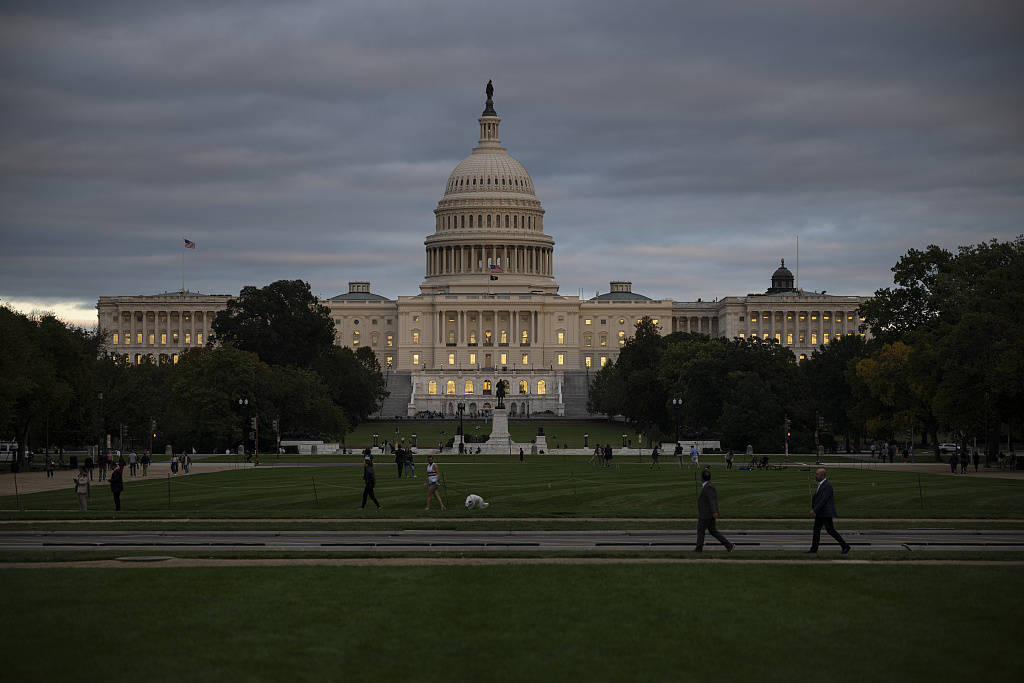
美国联邦政府“停摆”进入第三周(国际视点)
Ren Min Ri Bao· 2025-10-15 22:22
Core Points - The U.S. federal government shutdown has entered its fifteenth day, marking the longest shutdown in nearly seven years, with no substantial progress in negotiations to restart the government [1][2] - The shutdown began on October 1 due to the Senate's failure to pass a new temporary funding bill before federal funds were exhausted, highlighting increasing political polarization and a lack of compromise between the Democratic and Republican parties [2][3] - The shutdown has led to significant disruptions in public services, affecting vulnerable populations and international visitors, with many federal employees being furloughed or forced to work without pay [4][5] Group 1: Political Dynamics - The Senate has failed to pass the funding bill after eight votes, with the latest vote resulting in 49 in favor and 45 against, indicating a deepening political stalemate [2][3] - The ongoing political battle has escalated into a public relations war, with both parties blaming each other for the shutdown, and the White House using a countdown timer to highlight the duration of the shutdown [3] - Historical context shows that government shutdowns have occurred over 20 times since 1974, often as a result of budgetary disputes between the two parties [3] Group 2: Economic Impact - The shutdown is expected to negatively impact the U.S. economy, with estimates suggesting a reduction of approximately 0.1% in annual GDP growth for each week the government remains shut down [6][7] - The previous shutdown from December 2018 to January 2019 resulted in a $11 billion loss in economic output, indicating the potential for significant economic repercussions if the current shutdown continues [6][7] - The shutdown has created a "data blind spot" for economic decision-making, as key federal agencies have paused operations, delaying important economic indicators and complicating monetary policy decisions for the Federal Reserve [6][7] Group 3: Public Services Disruption - Numerous public services have been halted, with federal employees facing furloughs and layoffs, impacting essential services such as air traffic control and social assistance programs [4][5] - The Smithsonian Institution and other federally funded organizations have closed, affecting tourism and public access to cultural resources [5] - Food banks and social assistance programs are struggling due to a lack of federal support, with reports of significant funding shortfalls impacting their ability to serve communities in need [5][6]
报道称美国政府可能准备发布就业数据,美债收益率回落
Sou Hu Cai Jing· 2025-10-02 20:28
Group 1 - Senator Warren urges the government to release the September employment report despite the government shutdown, emphasizing its importance for the Federal Reserve's decision-making on interest rates [1][2] - The Bureau of Labor Statistics (BLS) has reportedly completed the collection of September labor data, and the employment report is likely ready for release if the government reopens [1][2] - The government shutdown is causing a disruption in the release of key economic data, leading to a reliance on alternative data sources, such as the ADP report, which indicates a significant decline in private sector employment [2][3] Group 2 - The monthly employment report is considered one of the most critical economic data points in the U.S., especially amid concerns over a weakening job market and rising unemployment [3] - The White House attributes the government shutdown to the Democrats, claiming it undermines the economy and disrupts timely public data essential for decision-making by businesses and policymakers [3]