
工业人形机器人Walker S1

Search documents
汽车零部件、机器人主线周报:本周板块持续向上,新剑完成IPO辅导登记-20260111
Soochow Securities· 2026-01-11 14:06
Investment Rating - The industry investment rating is "Overweight," indicating an expected outperformance of the industry index relative to the benchmark by more than 5% in the next six months [53]. Core Insights - The automotive parts sector saw a weekly increase of 3.37%, ranking second among the SW automotive sector, with a year-to-date increase of 47.4% since the beginning of 2025 [2][19]. - The robotics sector experienced a weekly rise of 3.74%, with a year-to-date increase of 68.14% since the beginning of 2025, outperforming the automotive parts sector by 0.37% [2][27]. - Key developments include the announcement of a 7.8 billion yuan contract for Xusheng Group with a North American new energy manufacturer, expected to start production by the end of 2026 [2][42]. - Notable stock performances this week include Xusheng Group (+18.05%), Xinquan Co. (+16.17%), and Hengshuai Co. (+13.24%) [2][42]. Summary by Sections Automotive Parts Sector Weekly Review - The automotive parts sector ranked second in the SW automotive index this week, with a performance of +3.37% [19]. - The sector's PE (TTM) is at 1.3 times that of the entire A-share market, and its PB (LF) is at 1.5 times, indicating a strong valuation relative to the market [25]. - The sector's PE has increased by 8.75 times and PB by 0.74 times since the beginning of 2025 [25]. Robotics Sector Weekly Review - The robotics index increased by 3.74% this week, with a year-to-date performance of +68.14% since the beginning of 2025 [27]. - The latest PE (TTM) for the robotics sector is at 1.39 times that of the entire A-share market, with a PB (LF) at 1.90 times [37]. - The sector's PE has risen by 5.53 times and PB by 0.64 times since the beginning of 2025 [37]. Key Stock Tracking - Core stocks in the automotive parts sector include Fuyao Glass, Top Group, and Junsheng Electronics, with recommendations based on EPS and PE dimensions [48]. - The report highlights the importance of focusing on structural opportunities in the automotive parts sector and certainty in the robotics sector, particularly with upcoming product launches and market applications [2][48].





【汽车零部件&机器人周度跟踪】本周交易热度上升,人形板块持续贡献超额收益
东吴汽车黄细里团队· 2026-01-05 13:30
Investment Highlights - The SW Auto Parts Index increased by 2.91% this week, ranking first in the SW automotive sector, with a year-to-date increase of 42.58% [2][12] - The latest trading day saw the SW Auto Parts PE (TTM) at the 79.44% historical percentile and PB (LF) at the 75.50% historical percentile [12][33] Robotics Sector Review - The Wande Robotics Index rose by 3.73% this week, with a year-to-date increase of 62.08%, outperforming the SW Auto Parts sector by 0.83% [3][12] - The latest trading day recorded the Wande Robotics PE (TTM) at the 68.31% percentile for the year 2025, and PB (LF) at the 79.42% percentile [3][44] Core Coverage Changes - Yinchuan Co. increased its investment in Sichuan Yinchuan by 380 million yuan for capacity construction of water-cooled plates and front-end modules, expected to reach production by 2029 [4][12] - Huada Technology announced a mid-term dividend plan for 2025, proposing a cash dividend of 0.15 yuan per share, totaling 70.46 million yuan [4][12] - Fuda Co. completed the transfer of 25% equity in Guilin Fuda Alfin for 48 million yuan [4][12] Weekly Performance of Core Coverage Stocks - The top five performing stocks this week were: Xinquan Co. +14.05%, Beite Technology +11.64%, Top Group +8.26%, Daimai Co. +8.01%, and Xinz坐标 +7.97% [5][12] Investment Recommendations - For auto parts, focus on structural opportunities by selecting product-oriented companies and those entering high-value sectors to increase ASP, with a priority on companies expanding capacity in Europe, North America, and Southeast Asia [7][12] - In robotics, look for certainty opportunities with the expected release of Optimus V3 in Q1 2026, and monitor the order timeline and application deployment by domestic companies like Xiaopeng and Yuzhu [7][12] - Recommended stocks based on EPS include Fuyao Glass, Xingyu Co., Minshi Group, Junsheng Electronics, and Xingyuan Zhuomei, with a focus on Xinquan Co. [7][12] - Recommended stocks based on PE include Top Group, Junsheng Electronics, Shuanghuan Transmission, Minshi Group, Yinchuan Co., and Feilong Co., with a focus on Yap Co. and Daimai Co. [7][12]


汽车零部件、机器人周度跟踪:本周交易热度上升,人形板块持续贡献超额收益-20260104
Soochow Securities· 2026-01-04 15:14
Investment Rating - The industry investment rating is "Overweight," indicating an expected outperformance of the industry index relative to the benchmark by more than 5% in the next six months [58]. Core Insights - The automotive parts sector saw a weekly increase of 2.91%, ranking first among the SW automotive sector, with a year-to-date increase of 42.58% [2][15]. - The robotics sector experienced a weekly rise of 3.73%, with a year-to-date increase of 62.08%, outperforming the automotive parts sector by 0.83% [2][29]. - Key companies in the automotive parts sector are making strategic moves, such as Silver Wheel's investment of 380 million yuan in capacity expansion and Huada Technology's announcement of a cash dividend plan [2][51]. Summary by Sections Automotive Parts Sector Weekly Review - The automotive parts sector ranked first in the SW automotive index this week, with a year-to-date performance of +42.58% [15][19]. - The sector's PE (TTM) is at a historical 79.44% percentile, and PB (LF) is at 75.50% [27]. - The top-performing stocks this week include Xinquan Co. (+14.05%), Beite Technology (+11.64%), and Top Group (+8.26%) [2][46]. Robotics Sector Weekly Review - The robotics index increased by 3.73% this week, with a year-to-date performance of +62.08% [29]. - The sector's PE (TTM) is at a historical 45.12% percentile, and PB (LF) is at 54.43% [39]. - Notable developments include the planned A-share listing of Yuejiang Technology and the H-share listing of Zhejiang Rongtai [40]. Key Company Tracking - Key companies in the automotive parts sector include Fuyao Glass, Top Group, and Silver Wheel, with significant recent announcements regarding capacity expansion and dividend plans [51][46]. - The top five stocks by weekly performance are Xinquan Co., Beite Technology, Top Group, Daimai Co., and New Coordinates [2][46]. Investment Recommendations - For the automotive parts sector, focus on companies with structural opportunities, particularly those enhancing ASP through high-value segments and expanding capacity in Europe, North America, and Southeast Asia [2][53]. - In the robotics sector, look for certainty in opportunities, especially with the upcoming release of Optimus V3 and the application of domestic manufacturers [2][53].
从1到1000!广西工业人形机器人产业再进阶
Guang Xi Ri Bao· 2025-12-27 03:26
Group 1 - The core achievement of the company is the production of the 1000th industrial humanoid robot, Walker S2, marking a significant milestone in the development of humanoid robots in Guangxi [1][2] - The company has successfully implemented humanoid robots in various sectors, including industrial manufacturing, healthcare, and public services, with the Walker S1 robots already operational in logistics at Dongfeng Liuzhou Motor [2][3] - The local government has introduced policies to support the robot industry, focusing on application expansion, talent acquisition, funding support, and innovation platform development, aiming to establish Guangxi as a hub for robot technology application and product export [3] Group 2 - The robot industry ecosystem in Guangxi is beginning to take shape, with 23 companies projected to produce 683,000 robots in 2024, and a reported production of 789,000 robots by November this year, reflecting a year-on-year growth of 22.4% [3] - The company emphasizes collaboration between intelligent manufacturing and traditional manufacturing, showcasing the joint efforts of local enterprises and the speed of innovation in the region [4] - The vision for Guangxi's robot industry is evolving from local use to global application, indicating a strategic shift towards broader market engagement [4]

广西第1000台工业人形机器人下线 打造面向东盟的产业基地
Zhong Guo Xin Wen Wang· 2025-12-26 15:17
Core Insights - The production of the 1000th industrial humanoid robot, Walker S2, in Liuzhou marks a significant milestone in the transition from technology implementation to large-scale production in the region [1][3]. Group 1: Product and Technology - The Walker S2 robot stands 1.76 meters tall and features human-like walking and fine manipulation capabilities, along with autonomous battery swapping technology for full-space operations in industrial settings [1]. - The robot has already been integrated into local production lines for tasks such as material handling, feeding, and sorting, with plans to expand its application to more manufacturing scenarios in the future [3]. Group 2: Industry Development - Liuzhou has identified artificial intelligence terminals and robotics as the fourth pillar industry, implementing supportive policies to foster development in this sector [3]. - A strategic cooperation agreement was signed between Dongfeng Liuzhou Motor Co., Ltd. and UBTECH Robotics Corp. to promote the application of humanoid robots in automotive manufacturing [3]. - The rapid production growth from the first humanoid robot to the 1000th in just six months exemplifies Liuzhou's role as a model for "artificial intelligence + manufacturing" applications in Guangxi [3]. Group 3: Future Goals - The Vice Chairman of the Guangxi Zhuang Autonomous Region Government expressed hopes for UBTECH to use the 1000th robot as a starting point to accelerate towards an annual production target of 5000 units, while deepening cooperation with Guangxi and exploring the ASEAN market [5].
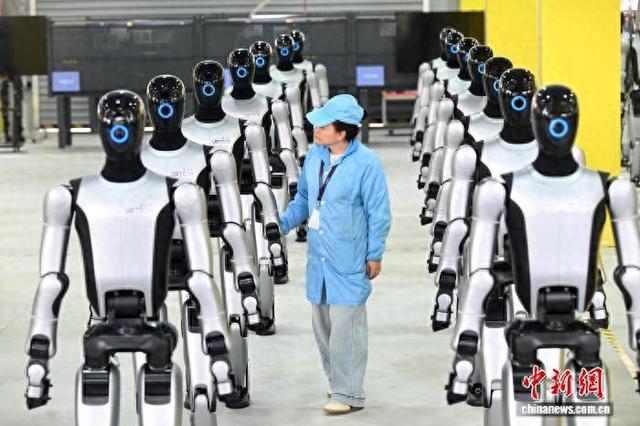
谁说中国机器人只会唱歌跳舞?优必选谭旻:没有真正通过商业验证的量产交付都没有意义
Xin Lang Cai Jing· 2025-12-12 09:13
Core Viewpoint - The recent controversy surrounding a video of UBTECH's humanoid robot formation highlights the industry's deep interest in humanoid robot development and the potential for creating commercial value as these robots transition from science fiction to real-world applications [3][15]. Industry Insights - The perception that "Chinese robots only perform while American robots work" is overly simplistic, as over 80% of the world's most advanced factories are newly built in China, providing fertile ground for the humanoid robot industry [3][15]. - The humanoid robot industry is shifting focus from entertainment to practical applications, which is seen as a healthier direction for sustainable development [3][15]. Technological Development - UBTECH has a 13-year history of building an open ecosystem for collaboration with various AI models, indicating a commitment to testing different models' advantages for humanoid robots [4][16]. - The next significant breakthrough in AI models for humanoid robots will likely involve integrating computer vision, as 80% of information exchange occurs visually rather than verbally [5][17]. Competitive Landscape - UBTECH has launched multiple iterations of its industrial humanoid robot, Walker, with the latest model, Walker S2, capable of autonomous battery swapping, showcasing rapid development and adaptation to real-world applications [6][19]. - While American companies focus heavily on AI investment, Chinese humanoid robot companies are rapidly developing practical applications, leveraging the largest smart manufacturing scenarios globally [7][18]. Market Goals - UBTECH aims to deliver between 500 to 1,000 robots this year, with targets of 3,000 to 5,000 next year and 10,000 by 2027, emphasizing the importance of commercial validation before scaling production [9][21]. - The trend of entertainment-focused robots is seen as a temporary phase, with a shift towards real-world applications being encouraged by government policies [10][24]. Future Outlook - The Chinese humanoid robot industry has the potential to become a standard-setting entity, benefiting from advancements in electric motor technology and the largest smart manufacturing applications globally [8][20]. - Embracing challenges and opportunities in the humanoid robot sector could lead to the formation of a new trillion-dollar industry cluster in China [11][24].
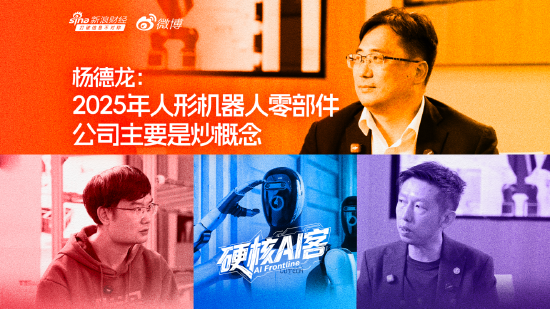
中国的机器人公司能不能给全世界造机器人?
Xin Lang Cai Jing· 2025-12-12 09:13
Core Viewpoint - The discussion highlights the rapid development and application of humanoid robots in China, contrasting with the perception that Chinese robots are primarily for entertainment while American robots focus on practical applications. The Chinese humanoid robot industry is seen as leading in real-world applications despite lacking the massive AI investment capabilities of American counterparts [1][12][22]. Group 1: Industry Development - In the past two years, nearly 200 humanoid robot companies have been established in China, indicating a flourishing industry with diverse approaches to attract attention and develop applications [7][27]. - The emergence of large AI models is expected to significantly enhance humanoid robots' capabilities, particularly in communication and interaction, leading to a potential explosion in their application in the coming years [8][28]. - The company aims to deliver between 500 to 1,000 humanoid robots this year, with targets of 3,000 to 5,000 next year and 10,000 by 2027, emphasizing the importance of commercial validation through mass delivery [10][30]. Group 2: Market Dynamics - The market is currently witnessing a trend where many domestic startups are heavily investing in promoting their robots, reflecting a competitive landscape [5][26]. - The industry is expected to avoid price wars in the near future as it is still in the early stages of development and moving towards mass production [33]. - The capital market is currently focused on component companies transitioning to robot parts, with a shift expected by 2026 towards companies that can secure large orders [34]. Group 3: Future Prospects - The humanoid robot sector is viewed as a potential "fourth major industry" in China, following home appliances, smartphones, and new energy vehicles, with significant growth anticipated as the industry matures [33]. - China has the opportunity to become a standard-setting entity in the humanoid robot industry due to its robust supply chain and manufacturing capabilities, which could influence global standards [14][15]. - The ongoing AI investment in the robotics field is seen as a genuine innovation drive rather than a speculative bubble, with real applications expected to emerge [40].
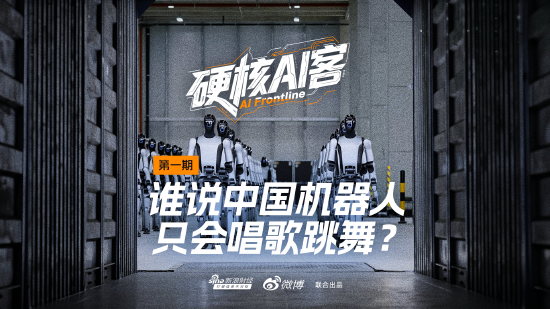
谭旻:下一步大模型的重大突破一定是在视觉方面
Xin Lang Cai Jing· 2025-12-12 09:02
Core Viewpoint - The discussion highlights the rapid development and application of humanoid robots in China, contrasting with the perception that Chinese robots are primarily for entertainment while American robots focus on practical applications. The Chinese humanoid robot industry is seen as leading in real-world applications despite lacking the massive AI investment capabilities of American counterparts [1][12][22]. Group 1: Industry Development - In the past two years, nearly 200 humanoid robot companies have been established in China, indicating a flourishing industry with diverse approaches to attract attention and develop applications [7][27]. - The emergence of large AI models is expected to significantly enhance humanoid robots' capabilities, particularly in communication and interaction, leading to a potential explosion in their application in the coming years [8][28]. - The company aims to deliver between 500 to 1,000 humanoid robots this year, with targets of 3,000 to 5,000 next year and 10,000 by 2027, emphasizing the importance of commercial validation through mass delivery [10][30]. Group 2: Market Dynamics - The market is currently focused on the application of humanoid robots rather than speculative investments, with a shift towards practical use cases rather than mere concepts [27][40]. - The industry is expected to avoid price wars in the near future as it is still in the early stages of development and moving towards mass production [33]. - The capital market is currently speculative, primarily focusing on component companies transitioning to robot parts, with a significant shift expected by 2026 towards companies that can secure large orders [34]. Group 3: Future Prospects - The humanoid robot sector is viewed as a potential "fourth major industry" in China, following home appliances, smartphones, and new energy vehicles, with the belief that China can set global standards in this field [33][15]. - The company believes that the integration of humanoid robots into various industries will enhance productivity and efficiency, marking a significant opportunity for growth [39][40]. - The ability to autonomously replace batteries in robots is highlighted as a critical advancement, showcasing the robots' operational capabilities in industrial settings [13][32].
谁说中国机器人只会唱歌跳舞?|硬核AI客
Xin Lang Cai Jing· 2025-12-12 08:51
Core Viewpoint - The discussion highlights the misconception that Chinese robots are only for entertainment, emphasizing that they are rapidly advancing in practical applications and leading in the humanoid robot industry globally [1][10][31]. Group 1: Industry Development - The humanoid robot sector in China has seen the establishment of nearly 200 companies in the past two years, indicating a flourishing and diverse market [4][24]. - Chinese humanoid robots are focusing on vertical applications in various scenarios, showcasing significant growth and innovation [10][31]. - The industry is expected to evolve over the next 10 to 20 years, with a strong emphasis on integrating large models with humanoid robots for practical applications [4][24]. Group 2: Investment and Market Dynamics - The current investment landscape in AI and robotics is compared to the dot-com bubble, with a focus on real applications rather than mere concepts [19][38]. - Companies are advised to focus on securing orders from major manufacturers to ensure sustainable growth, as the market will shift from speculative investments to actual performance metrics by 2026 [35][38]. - The goal for humanoid robot companies is to achieve a break-even point within the next two to three years, with a projected delivery of 500 to 1,000 units this year and 3,000 to 5,000 units next year [29][30]. Group 3: Technological Advancements - The emergence of large AI models is significantly enhancing the cognitive capabilities of humanoid robots, enabling better interaction and communication [26][27]. - The integration of computer vision is seen as crucial for the next major breakthrough in humanoid robotics, allowing for more effective interaction with the environment [27][28]. Group 4: Future Outlook - The Chinese humanoid robot industry is positioned to potentially set global standards due to its robust supply chain and manufacturing capabilities [12][33]. - The industry is viewed as a potential "fourth major industrial track" in China, following home appliances, smartphones, and new energy vehicles [32].
广西新质生产力发展势头正盛
Guang Xi Ri Bao· 2025-12-10 03:11
Group 1: High-Tech Industry Growth - The sales revenue of high-tech industries in Guangxi increased by 14.3% year-on-year from January to November, with high-tech manufacturing and high-tech services growing by 12.6% and 15.3% respectively [1] - High-tech enterprises in the region benefited from a total corporate income tax reduction of 1.7 billion yuan, indicating strong development momentum in technology research and market transformation [1] Group 2: Artificial Intelligence Industry Expansion - Sales revenue for integrated circuits, industrial robots, drones, and special operation robots grew by 25.6%, 28.3%, 100%, and 290% respectively from January to November, reflecting rapid growth in the AI sector [2] - The company Ubtech Robotics in Liuzhou saw a 69.1% increase in sales revenue, highlighting the rich application scenarios for AI in Guangxi [2] - The development model in Guangxi emphasizes market-driven technology implementation and industrial clustering, creating a virtuous cycle of technology landing, market validation, industrial growth, and tax revenue increase [2] Group 3: Steady Development of High-End Manufacturing - The intelligent manufacturing equipment and rail transit equipment industries grew by 11.2% and 20.4% year-on-year, while new energy sectors like photovoltaic equipment, lithium-ion batteries, and new energy vehicles saw sales revenue increases of 24.6%, 15.8%, and 16% respectively [3] - Guangxi Fudi Battery Co., Ltd. reported a production value of 18 billion yuan from January to October, a 33% increase year-on-year, with exports rising by 34% [3] - The tax data from the high-end manufacturing sector indicates a transition from policy incentives to substantial industry contributions, enhancing economic resilience and reducing reliance on traditional industries [3] Group 4: Deepening Digital and Real Economy Integration - The core digital economy industries in Guangxi experienced a 9.9% year-on-year increase in sales revenue, with digital product manufacturing and digital factor-driven industries growing by 14.2% and 9.5% respectively [4] - The company Jiejia Run Technology Group reported a 16% increase in sales revenue, driven by its AI model for precision agriculture, serving over 2 million acres globally [4] - The growth of the digital economy is seen as an upgrade to traditional industries, creating new economic growth spaces and achieving both economic and social benefits [4]