数控金属切削机床

Search documents
国家统计局副局长盛来运评读《2025年国民经济和社会发展统计公报》
Guo Jia Tong Ji Ju· 2026-02-28 03:01
Core Viewpoint - The 2025 National Economic and Social Development Statistical Bulletin reflects China's economic resilience and progress amid complex domestic and international challenges, showcasing a commitment to stability and growth under the leadership of the central government [2][3]. Group 1: Economic Growth and Development - In 2025, China's GDP grew by 5.0%, surpassing 140 trillion yuan for the first time, marking a significant achievement in the "14th Five-Year Plan" [3]. - The per capita GDP reached 99,665 yuan, a 5.1% increase from the previous year, translating to approximately 13,953 USD, maintaining a level above 13,000 USD for three consecutive years [4]. - China's contribution to global economic growth is projected to remain around 30%, solidifying its position as the world's second-largest economy [5]. Group 2: Modernization and Technological Advancement - The investment in R&D increased by 8.1%, reaching 2.80% of GDP, surpassing the OECD average for the first time, with basic research funding accounting for 7.08% [6][7]. - The high-tech manufacturing sector saw a value-added growth of 9.4%, with its share of total industrial value-added rising to 17.1% [7]. - The digital economy flourished, with the value-added of the digital product manufacturing industry increasing by 9.3% [8]. Group 3: Domestic and International Circulation - Domestic consumption reached over 50 trillion yuan, growing by 3.7%, with domestic demand contributing 67.3% to economic growth [10]. - The total import and export volume exceeded 45 trillion yuan, marking a 3.8% increase, and maintaining China's position as a key player in global supply chains [11]. Group 4: High-Quality Development and Structural Reforms - The establishment of a unified national market progressed, with the market access negative list reduced to 106 items [12]. - The average urban unemployment rate was 5.2%, with 12.67 million new urban jobs created, reflecting a stable employment situation [15]. - The clean energy consumption ratio reached 30.4%, with significant reductions in energy consumption per unit of GDP and CO2 emissions [14]. Group 5: Social Welfare and Quality of Life - The average disposable income for urban residents increased by 5.0%, aligning with economic growth, while the share of service consumption in total spending reached 46.1% [15]. - The healthcare system expanded, with over 1 million hospital beds and 13.4 million healthcare professionals by year-end [16]. - Social insurance coverage increased, with 1.08 billion people enrolled in basic pension insurance and 1.33 billion in medical insurance [16].
攻坚应变顶压前行 稳中有进向新向优——《2025年国民经济和社会发展统计公报》评读
Xin Hua Wang· 2026-02-28 01:54
Core Insights - The article emphasizes the significant achievements of China's economy in 2025, highlighting the resilience and adaptability in the face of complex domestic and international challenges [2][3]. Economic Growth and Development - In 2025, China's GDP grew by 5.0%, surpassing 140 trillion yuan for the first time, marking a successful completion of the "14th Five-Year Plan" [3]. - The economic growth resulted in an increase of over 5 trillion yuan, reflecting enhanced production capabilities in agriculture and industry, as well as a vibrant service sector [3]. Per Capita Development - China's per capita GDP reached 99,665 yuan, a 5.1% increase from the previous year, translating to approximately 13,953 USD, maintaining above 13,000 USD for three consecutive years [4]. - Labor productivity improved by 6.1%, outpacing economic growth by 1.1 percentage points [4]. International Influence - China's 5% economic growth positioned it among the top global economies, contributing approximately 30% to world economic growth [5]. - In 2025, China's goods imports reached 18.5 trillion yuan, maintaining its status as the world's second-largest import market for 17 consecutive years [5]. Modern Industrial System - The modernization of the industrial system accelerated, with R&D expenditure increasing by 8.1%, reaching 2.80% of GDP, surpassing the OECD average for the first time [6][7]. - High-tech manufacturing value added grew by 9.4%, accounting for 17.1% of total industrial value added [7]. Digital Economy - The digital economy thrived, with the value added of digital product manufacturing increasing by 9.3% and the information technology service sector growing by 11.1% [8]. - Online retail sales approached 16 trillion yuan, reflecting an 8.6% growth [8]. Domestic and International Circulation - Domestic consumption reached over 50 trillion yuan, with a 3.7% increase, contributing 67.3% to economic growth [10]. - The total goods import and export volume exceeded 45 trillion yuan, marking a 3.8% increase and solidifying China's role in global supply chains [11]. High-Quality Development - The focus on high-quality development led to significant reforms, including a reduction in market access restrictions and an increase in new business registrations [12][13]. - The urbanization rate reached 67.89%, with rural residents' income growing by 6.5% [13]. Green Transition - Clean energy consumption rose to 30.4% of total energy consumption, with significant reductions in energy intensity and carbon emissions [14]. - The production of new energy vehicles exceeded 16 million units, maintaining a global leadership position [14]. Social Welfare - The urban unemployment rate averaged 5.2%, with 12.67 million new jobs created, supporting a 5.0% increase in per capita disposable income [15][16]. - Social services expanded, with significant increases in healthcare and education infrastructure, enhancing overall quality of life [16].
机械设备行业简评:2025年机床行业稳健增长,高端数控机床领域加速推进
Donghai Securities· 2026-02-27 09:16
Investment Rating - The industry investment rating is "Overweight" indicating that the industry index is expected to outperform the CSI 300 index by 10% or more in the next six months [7]. Core Insights - The machine tool industry in China is projected to maintain steady growth in 2025, with a significant acceleration in the high-end CNC machine tool sector [3][6]. - In 2025, the production of metal cutting machine tools reached 868,300 units, a year-on-year increase of 9.70%. The export value of machine tools was $12.91 billion, up 14.60% year-on-year, while imports amounted to $5.87 billion, reflecting a modest growth of 0.40% [6]. - The domestic high-end CNC machine tool market is rapidly advancing, driven by policy support and market demand, with significant breakthroughs in core technologies [6]. Summary by Sections Production and Market Growth - The production of CNC metal cutting machine tools reached 346,800 units in 2025, marking a year-on-year increase of 16.81%. The overall machine tool market is expected to continue its growth trend into 2026, supported by strong demand from high-end manufacturing sectors such as new energy vehicles and aerospace [6]. Export Performance - The export structure of machine tools has shown significant improvement, with the average export price increasing by 40.19% year-on-year. Despite a decrease in the number of exported units by 18.20%, the total export value reached a record high, indicating a successful transition towards high-value CNC machine tools [6]. Domestic High-End CNC Machine Tool Development - The domestic high-end CNC machine tool industry is experiencing accelerated development, with a notable increase in domestic market share. The localization rate of five-axis CNC machine tools has risen from 18% in 2020 to 55% in 2024, indicating a strong trend towards domestic substitution [6]. Recommendations - It is advisable to focus on leading domestic machine tool companies that possess strong R&D capabilities, core technology barriers, and deep ties with downstream clients. Companies such as Kede CNC, Nuwei CNC, and Huatai Precision are highlighted as key players in this sector [6].
锐财经丨工业经济持续向优向新发展
Ren Min Ri Bao Hai Wai Ban· 2026-01-26 03:07
Group 1: Industrial Growth and Performance - In 2025, the industrial added value of large-scale industries increased by 5.9% compared to the previous year, showing a faster growth rate, up by 0.1 percentage points [2] - The mining, manufacturing, and electricity, heat, gas, and water production and supply industries saw added value growth of 5.6%, 6.4%, and 2.3% respectively [2] - Among 41 major industrial categories, 36 experienced growth, resulting in a growth coverage of 87.8% [2] Group 2: Export Performance - Large-scale industrial enterprises achieved an export delivery value of 15.8 trillion yuan, a 2.2% increase from the previous year, demonstrating strong resilience [2] - The equipment manufacturing sector showed significant export performance, with railway, shipbuilding, aerospace, and specialized equipment exports increasing by 24.2%, 10.2%, and 7.5% respectively [2] Group 3: Profit Structure Improvement - From January to November 2025, profits of large-scale industrial enterprises continued to grow, with the equipment manufacturing sector's profits increasing by 7.7%, contributing 2.8 percentage points to the overall profit growth of large-scale industrial enterprises [2] Group 4: High-tech Manufacturing Growth - In 2025, the added value of high-tech manufacturing increased by 9.4%, the highest growth rate since 2022, contributing 26.1% to the overall industrial growth [5] - Specific industries such as integrated circuit manufacturing, aircraft manufacturing, and biopharmaceuticals saw added value growth rates of 26.7%, 24.8%, and 12.1% respectively [5] Group 5: Digital Product Manufacturing - The added value of the digital product manufacturing industry grew by 9.3% in 2025, contributing 20.3% to the overall industrial growth [7] - Production of communication products like mobile communication base station equipment and 5G smartphones increased by 13.5% and 12.5% respectively [7] Group 6: Technological Innovation and Product Development - Companies are focusing on technological and industrial innovation, with examples like the AI-powered unmanned bulldozer deployed in complex mining environments [4] - New technologies such as perovskite materials and quantum computing are advancing rapidly, with successful prototypes being developed [4] Group 7: Consumer Supply and Market Trends - The industrial sector is adapting to new consumption trends, with a focus on optimizing product supply and enhancing brand development [8] - The integration of 5G, industrial internet, and other technologies into various sectors is expected to support the digital transformation of the economy [8]
工业经济持续向优向新发展
Ren Min Ri Bao Hai Wai Ban· 2026-01-26 01:16
Group 1 - The Ministry of Industry and Information Technology announced the 2025 National Key R&D Program for the industrialization of high-tech achievements, highlighting advancements in ultra-high energy density dielectric materials, large-tonnage carbon fiber composite materials, and high-performance sealing components for aerospace hydraulic systems [1] - In 2025, the industrial added value of large-scale industries increased by 5.9% compared to the previous year, with mining, manufacturing, and electricity, heat, gas, and water production and supply sectors growing by 5.6%, 6.4%, and 2.3% respectively [2] - The export delivery value of large-scale industrial enterprises reached 15.8 trillion yuan, a 2.2% increase from the previous year, showcasing resilience, particularly in the equipment manufacturing sector, which saw significant export growth in railways, ships, and aerospace [2] Group 2 - The high-tech manufacturing sector's added value grew by 9.4% in 2025, contributing 26.1% to the overall industrial growth, with notable increases in integrated circuit manufacturing, aircraft manufacturing, and biopharmaceuticals [5] - The digital product manufacturing sector's added value increased by 9.3%, contributing 20.3% to the overall industrial growth, with significant production increases in mobile communication base station equipment and 5G smartphones [6][7] - The Ministry of Industry and Information Technology emphasized the importance of optimizing product supply to support consumption upgrades and enhance consumer vitality, focusing on smart, green, and integrated development in the consumer goods industry [7]
2025年全国规模以上工业增加值增长5.9 新质生产力加速形成
Yang Shi Wang· 2026-01-21 09:21
Group 1 - In 2025, China's industrial economy demonstrates strong resilience, with a year-on-year growth of 5.9% in industrial added value for large-scale enterprises, an acceleration of 0.1 percentage points compared to the previous year [1] - In December, the industrial added value grew by 5.2% year-on-year, showing a positive momentum in industrial production recovery at the end of the year [1] - The manufacturing sector continues to play a key supporting role, with a year-on-year growth of 6.4% in added value, and 36 out of 41 major industrial categories achieved growth, resulting in a growth coverage of 87.8% [1] Group 2 - The equipment manufacturing industry shows significant growth, with a year-on-year increase of 9.2% in added value, accounting for 36.8% of the total industrial output, an increase of 2.2 percentage points from the previous year [2] - The automotive industry grew by 11.5%, and the electronics industry by 10.6%, contributing 12.4% and 18.1% respectively to the overall industrial growth [2] - Traditional industries are advancing green transformation, with the petroleum processing industry growing by 6.7%, and the biomass fuel processing sector growing by 16.8% [2] Group 3 - High-tech manufacturing continues to lead industrial high-quality development, with a year-on-year growth of 9.4% in added value, contributing 26.1% to the overall industrial growth [3] - Key sectors such as integrated circuit manufacturing and aircraft manufacturing saw growth rates of 26.7% and 24.8% respectively [3] - The digital product manufacturing sector also shows strong growth, with a year-on-year increase of 9.3% in added value, contributing 20.3% to overall industrial growth [3] Group 4 - From January to November 2025, profits of large-scale industrial enterprises continued to grow, with equipment manufacturing profits increasing by 7.7%, driving an overall profit growth of 2.8 percentage points for all large-scale industrial enterprises [4] - The industrial economy in China is achieving structural optimization and quality improvement under pressure, with new growth drivers accelerating formation [4] - The need for continued adherence to new development concepts and the strengthening of the real economy is emphasized for high-quality industrial development [4]
2025年装备制造业“压舱石”作用凸显
Zhong Guo Hua Gong Bao· 2026-01-21 04:25
Group 1: Equipment Manufacturing Industry - The added value of the equipment manufacturing industry above designated size accounted for 36.8% of the total industrial output in 2025, an increase of 2.2 percentage points from the previous year [1] - The added value of the equipment manufacturing industry grew by 9.2% compared to the previous year, with a growth rate acceleration of 1.5% [1] - All eight sub-industries within the equipment manufacturing sector achieved growth, with the automotive and electronics industries showing rapid growth rates of 11.5% and 10.6%, contributing 12.4% and 18.1% to the overall industrial growth, respectively [1] Group 2: High-Tech Manufacturing Industry - The added value of high-tech manufacturing above designated size increased by 9.4% year-on-year in 2025, marking the highest growth rate since 2022, with a contribution rate of 26.1% to the overall industrial growth [2] - Key sectors such as integrated circuit manufacturing, aircraft manufacturing, electronic materials manufacturing, and biopharmaceuticals saw added value growth rates of 26.7%, 24.8%, 23.9%, and 12.1%, respectively [2] - The "Artificial Intelligence+" trend significantly boosted the production of storage chips and servers, which grew by 22.8% and 12.6%, respectively [2] Group 3: Digital Products Manufacturing Industry - The added value of digital products manufacturing above designated size rose by 9.3% year-on-year in 2025, with a contribution rate of 20.3% to the overall industrial growth [2] - Industries such as electronic components and smart device manufacturing experienced added value growth of 12.6% and 11.2%, respectively [2] - Production of intelligent manufacturing equipment, including industrial control computers and systems, 3D printing equipment, and CNC metal cutting machine tools, saw significant increases of 86.5%, 52.5%, and 13.7%, respectively [2] Group 4: Overall Industrial Economic Outlook - The industrial economy is projected to achieve rapid growth in 2025, with stable industrial production and significant growth in both equipment and high-tech manufacturing sectors [3] - Traditional manufacturing is undergoing optimization and upgrading, with a focus on implementing new development concepts and strengthening the real economy [3] - The emphasis is on cultivating new growth drivers to lay a solid foundation for high-quality industrial development [3]
前三季度北京市汽车制造业投资增长45.4% 新能源汽车产量同比增长1.5倍
Zhong Guo Jing Ying Bao· 2025-10-23 03:50
Group 1 - The industrial added value of Beijing's large-scale industries grew by 6.5% year-on-year in the first three quarters of this year [1] - The computer, communication, and other electronic equipment manufacturing industries saw a significant growth of 24.6%, while the automotive manufacturing industry grew by 13.4% [1] - Strategic emerging industries and high-tech manufacturing industries' added value increased by 17.9% and 9.9%, respectively, with lithium-ion batteries and new energy vehicles showing remarkable production growth [1] Group 2 - The total export delivery value of large-scale industries reached 158.9 billion yuan, marking a 6.0% year-on-year increase, with a notable 11.2% growth in September [1] - The automotive manufacturing sector achieved a total profit of 16.06 billion yuan from January to August, reflecting a 3.0% decline year-on-year [2] - Manufacturing investment in the city grew by 5.4%, with automotive manufacturing investment surging by 45.4% [2]
北京高端制造领跑,“链式”效应凸显|新京报社论
Xin Jing Bao· 2025-10-22 14:50
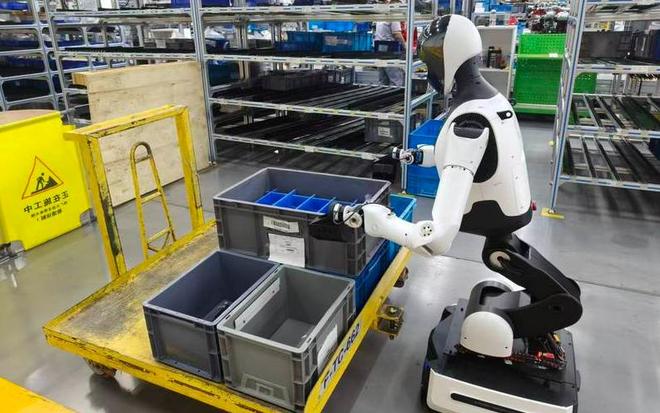
Core Insights - Beijing's economy has shown robust growth with a GDP of 38,415.9 billion yuan, reflecting a year-on-year increase of 5.6% in the first three quarters [2] - The high-end manufacturing sector has emerged as a key driver of economic growth, with significant increases in the production of strategic emerging industries and high-tech manufacturing [2][3] Economic Performance - The value added of strategic emerging industries and high-tech manufacturing increased by 17.9% and 9.9% respectively [2] - Production of lithium-ion batteries, new energy vehicles, wind turbine generators, service robots, and CNC metal cutting machine tools saw growth rates of 160%, 150%, 47.1%, 39.6%, and 19.1% respectively [2] Industrial Transformation - Beijing's industrial structure is shifting towards a "high-precision" model, with notable growth in computer, communication, and electronic equipment manufacturing at 24.6% [3] - The rapid growth in high-end manufacturing indicates a successful transition from research to production, highlighting the city's unique advantages in R&D and innovation [3] Ecosystem Development - The high-end manufacturing sector is creating a synergistic industrial ecosystem that enhances economic resilience and internal growth [4] - The integration of digital technologies such as AI, big data, and industrial internet is providing a strong foundation for manufacturing transformation [4] Future Outlook - The strong performance of high-end manufacturing is seen as a strategic foundation for Beijing's high-quality development [5] - Continuous efforts are needed to optimize the business environment, strengthen talent cultivation, and ensure supply chain stability to support the growth of specialized and innovative enterprises [4][5]

北京高端制造领跑,“链式”效应凸显 | 新京报社论
Xin Jing Bao· 2025-10-22 14:30
Core Insights - Beijing's economy has shown robust growth in the first three quarters, with a GDP of 38,415.9 billion yuan, reflecting a year-on-year increase of 5.6% [2] - The high-end manufacturing sector has emerged as a key driver of economic growth, with significant increases in the production of strategic emerging industries and high-tech manufacturing [2][3] - The rapid growth in production of lithium-ion batteries (1.6 times), new energy vehicles (1.5 times), wind turbine generators (47.1%), service robots (39.6%), and CNC metal cutting machine tools (19.1%) highlights the vitality of Beijing's economy [2][3] Economic Structure Transformation - The shift towards high-end manufacturing is reshaping Beijing's economic structure, moving away from a service-dominated model to a more diversified and resilient industrial cluster [3][4] - The growth in the computer, communication, and other electronic equipment manufacturing sector (24.6%) and the surge in new energy vehicle production indicate a significant transition towards a "high-precision" industrial structure [2][3] Innovation and Technology Integration - Innovation-driven development is at the core of new productive forces, with high-end manufacturing serving as a critical area for translating technological advancements into production [3][4] - The integration of digital technologies such as artificial intelligence, big data, and industrial internet is providing a strong foundation for the transformation and upgrading of the manufacturing sector [4] Systemic Development Effects - The "chain-like" development effect of high-end manufacturing fosters a collaborative industrial ecosystem, enhancing economic resilience and internal growth dynamics [4] - The comprehensive recovery of five major equipment manufacturing sectors further confirms the systemic revival trend within Beijing's economy [4] Future Outlook - The strong performance of high-end manufacturing signals a strategic foundation for Beijing's high-quality development, emphasizing the importance of nurturing specialized and innovative enterprises [5] - Continuous efforts are needed to optimize the business environment, strengthen talent cultivation, and ensure the stability of industrial chains to support the growth of "specialized and innovative" companies [4][5]