文旅服务

Search documents
21社论丨多措并举,推动“能消费、敢消费、愿消费”
21世纪经济报道· 2026-03-05 00:10
Group 1 - The core viewpoint of the article emphasizes the importance of consumption as a key driver of economic growth, with a target for China's retail sales of consumer goods to exceed 50 trillion yuan by 2025, contributing 52% to economic growth [1] - The government plans to enhance consumer capacity through fiscal subsidies and policies aimed at increasing the coverage and effectiveness of consumer incentives, benefiting a broader population [1][2] - A sustainable increase in income is essential for boosting consumer confidence, with initiatives focused on promoting high-quality employment and income growth for residents [2] Group 2 - The article highlights the need for consumers to feel secure in their spending, which will be supported by legislative measures aimed at strengthening social safety nets, including laws on social assistance and healthcare [2] - Increased fiscal investment in public services such as education, healthcare, and elderly care is crucial for reducing consumer anxiety and encouraging spending [2] - The article discusses the importance of providing diverse and high-quality consumer choices to enhance consumer satisfaction, with ongoing upgrades in product and service offerings [3] Group 3 - The creation of an internationalized consumption environment and promotional activities are expected to enhance the attractiveness of the domestic market, contributing to a positive cycle of domestic consumption and international engagement [3] - The article concludes that the strategies to enable, encourage, and enhance consumer spending are vital for transitioning China's economy from investment-driven to consumption-driven growth, ultimately benefiting all citizens [3][4]

苏浙皖三省绘就新春发展画卷
Xin Lang Cai Jing· 2026-02-25 16:55
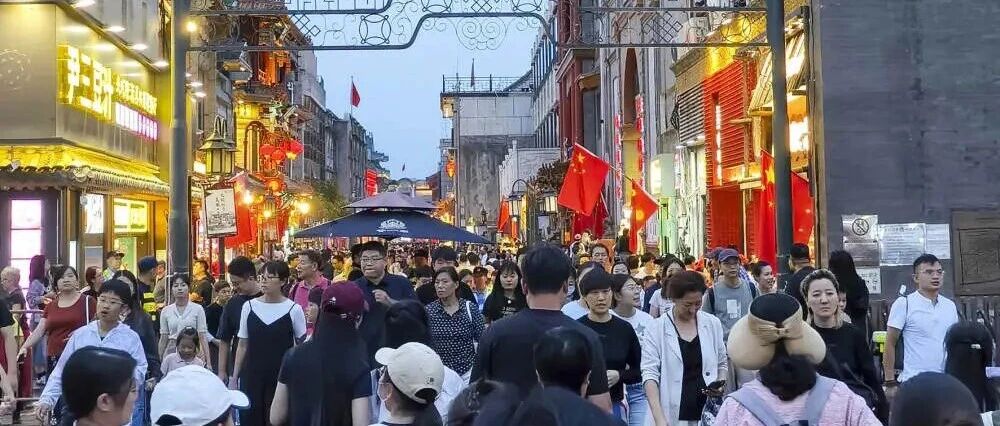
Core Insights - The article highlights the successful conclusion of the longest Spring Festival holiday in history, emphasizing the cultural and tourism integration efforts in Jiangsu, Zhejiang, and Anhui provinces, which contributed to a vibrant festive atmosphere and strong economic momentum for high-quality development in the new year [1] Group 1: Cultural and Tourism Integration - Jiangsu province saw significant tourism activity during the Spring Festival, with 75.81 million visitors and total spending of 60.963 billion yuan, reflecting a year-on-year increase of 10.1% and 10.5% respectively [2] - The province hosted over 5,800 cultural and tourism events, with notable attractions including the 40th Qinhuai Lantern Festival in Nanjing and various folk celebrations across cities like Suzhou and Xuzhou, enhancing the cultural experience for visitors [2] - Anhui province activated tourism consumption through a food festival, featuring a culinary competition that showcased local delicacies and attracted significant visitor engagement, effectively converting traffic into consumption [3] Group 2: Livelihood and Employment Support - During the holiday, the three provinces implemented various measures to ensure public safety and support employment, enhancing the overall experience for travelers [4] - Jiangsu introduced several convenience services, such as drone monitoring for crowd management and free public transport, to improve visitor safety and comfort [4] - Zhejiang province focused on facilitating the return of migrant workers, launching a free return train service and organizing job fairs to connect employers with job seekers, aiming to provide nearly 20,000 job opportunities in the first quarter [4][5]
精准施策聚合力,激活消费新动能
Qi Lu Wan Bao· 2026-02-25 12:58
Group 1 - The core viewpoint emphasizes that consumption is fundamental to economic growth and essential for improving people's livelihoods, with a focus on boosting consumer confidence and releasing consumption potential in Jining [1] - The "Spring Festival Consumption Season" and "Canal Grand Market" activities aim to create a vibrant consumption atmosphere with monthly themes and seasonal features to meet diverse consumer needs [1] - Jining is leveraging policy guidance, innovative scenarios, and integrated business models to stimulate market vitality and ensure that consumer benefits reach the public [1] Group 2 - The upgrade in consumption reflects the public's demand for high-quality and diverse consumption scenarios, leading to the integration of commerce, culture, tourism, and sports [2] - Major projects in the cultural and tourism consumption sector, such as Nishi Mountain Sacred Place and Liangshan Water Margin, are operational and utilize promotional strategies to convert event traffic into consumer growth [2] - New consumption initiatives, including live-streaming e-commerce festivals and online New Year goods festivals, are enhancing the online sales of "Jining Good Products" and promoting the city as a culinary destination [2]
春节消费新图景:反向团圆兴起,烟火小店走红
Sou Hu Cai Jing· 2026-02-20 14:37
Group 1 - The 2026 Spring Festival saw a shift in traditional celebration methods, with diverse travel patterns such as one-way return, family outings, reverse reunions, and staggered travel leading to a structural increase in dining and tourism consumption [1][3] - The trend of "reverse reunion," where young professionals in first-tier cities invite their parents to celebrate the New Year, has disrupted the traditional Spring Festival travel patterns, resulting in a surge in customer flow in major cities like Beijing and Shenzhen [3] - Haidilao, a representative of the hot pot industry, reported over 7 million customers served during the first five days of the Spring Festival, with a year-on-year increase of over 10% in customer flow on New Year's Eve and the first day of the New Year [3] Group 2 - Travel demand surged during the Spring Festival, with a 40% year-on-year increase in flight bookings from the second to the fifth day of the New Year, highlighting popular destinations such as Beijing, Chengdu, and Guangzhou [3][5] - Local food establishments experienced significant growth, with a nearly 40% increase in traffic on the "must-eat list" compared to the previous year, and a remarkable 81% increase in order volume for listed merchants [5] - Cities like Shanghai, Beijing, Guangzhou, and Shenzhen ranked among the top in overall traffic on the "must-eat list," while smaller cities like Shantou and Sanya saw substantial growth, with some cities experiencing increases of around 200% compared to last year [5]
华侨城A(000069) - 2026年1月主要业务经营情况公告
2026-02-13 11:45
证券代码:000069 证券简称:华侨城 A 公告编号:2026-10 特此公告。 深圳华侨城股份有限公司 深圳华侨城股份有限公司 2026 年 1 月主要业务经营情况公告 本公司及董事会全体成员保证公告内容的真实、准确、完整,没 有虚假记载、误导性陈述或重大遗漏。 一、2026 年 1 月房地产销售情况 2026 年 1 月,公司实现合同销售面积 4.5 万平方米,同比减少 45%;合同销售金额 5.9 亿元,同比减少 53%。 二、2026 年 1 月新增土地情况 2026 年 1 月,公司旗下文旅企业合计接待游客 554 万人次,同 比减少 15%,主要受春节假期时间点差异影响。公司将聚焦春节节点, 统筹整合各类资源打造多元节庆活动,引进非遗技艺、民俗体验等特 色内容,将娱乐与民俗深度融合,丰富游客文化体验。 注:月度经营数据为阶段性信息,可能与后续定期报告数据存在 差异,敬请投资者以公司正式发布的定期报告为准。 2026 年 1 月,公司无新增土地情况。 三、2026 年 1 月旅游综合业务情况 二〇二六年二月十四日 1 董 事 会 ...

年味浓,消费热——山东多维发力撬动新春消费
Feng Huang Wang Cai Jing· 2026-02-13 06:14
Core Insights - The new spring consumption season in Shandong is a comprehensive initiative aimed at boosting consumer spending and enhancing the local economy, showcasing practical measures to promote consumption, stabilize markets, and benefit people's livelihoods [1][9] Group 1: Consumption Activities - A wide-ranging new spring consumption season is being launched across 16 cities in Shandong, integrating various market entities to create a multi-layered consumer experience [2] - In Liaocheng, over 50 exhibition booths are attracting crowds with traditional products, while local merchants are offering significant discounts to enhance consumer engagement [2] - The "2026 Shandong New Year Consumption Season" features over 327 promotional activities, including themed shopping festivals and cultural events, to stimulate holiday economic activity [4] Group 2: Local Initiatives - In Heze, the spring festival market is thriving, with merchants reporting a threefold increase in inventory compared to previous years, indicating strong demand for festive goods [3] - Various counties are organizing unique themed activities, such as the "2026 Hui Purchase Shandong Life Festival" and "Home Appliance and Furniture Consumption Season," to further drive local consumption [2][3] Group 3: Financial Support - Shandong has allocated 75 billion yuan in subsidies to support consumer spending during the spring festival, focusing on high-frequency consumption areas like shopping and dining [7] - Local governments are implementing various promotional activities, including car purchase subsidies and housing consumption events, to stimulate economic activity [7] Group 4: Tourism and Cultural Integration - The integration of tourism and cultural activities is being emphasized, with over 530 cultural and tourism events planned to attract visitors and enhance the festive atmosphere [6][8] - Special packages combining flights, hotels, and attractions are being offered to international tourists, particularly from Southeast Asia and South Korea, to boost inbound tourism [8]
大千生态环境集团股份有限公司关于上海证券交易所对公司业绩预告有关事项的问询函的回复公告
Shang Hai Zheng Quan Bao· 2026-02-11 18:08
Core Viewpoint - The company received an inquiry letter from the Shanghai Stock Exchange regarding its performance forecast, indicating a significant increase in expected revenue for 2025, while also addressing concerns about revenue recognition and related party transactions [1][2]. Revenue Forecast and Business Operations - The company expects its 2025 revenue to be between 320 million and 360 million yuan, representing an increase of 205.32 million to 245.32 million yuan compared to the previous year [1]. - The company reported a total revenue of 153.19 million yuan for the first three quarters of 2025, indicating a need for detailed disclosures regarding revenue recognition and related transactions [1][2]. Revenue Recognition and Related Transactions - The company confirmed that its revenue recognition practices comply with the Shanghai Stock Exchange guidelines, with no undisclosed deductions from revenue [2][3]. - Specific related party transactions included contracts with Nanjing Bubugao Real Estate Co., Ltd., totaling 60.93 million yuan, with recognized revenue of 33.60 million yuan during the reporting period [3][4]. Business Segments and Growth Drivers - The company's main business segments include ecological construction, cultural tourism operations, and newly added pet services and sales, with the latter showing rapid growth due to significant investments in brand building and market promotion [8][9]. - The ecological construction segment saw a notable increase in revenue due to the completion of several projects in the fourth quarter, while the pet services segment benefited from the expansion of physical stores and online sales channels [10][11]. Financial Performance and Cost Structure - The company reported a significant increase in sales, management, and R&D expenses, primarily due to the expansion of the pet services business, with sales expenses rising by 280.5% year-on-year [22][23]. - The management expenses increased by 55.85%, reflecting the need for additional personnel and operational costs associated with new business ventures [24][25]. Accounts Receivable and Impairment Provisions - The company’s accounts receivable and contract assets totaled 570 million yuan, accounting for 49.31% of current assets, with a substantial increase in impairment provisions due to slower payment cycles from government projects [22][30]. - The company has implemented a rigorous approach to assessing credit risk and determining impairment provisions, ensuring compliance with accounting standards [31][32].

如何让服务消费“花得起、买得到、放心买”?
2 1 Shi Ji Jing Ji Bao Dao· 2026-02-04 02:19
Core Viewpoint - Service consumption is becoming a structural variable driving economic growth in China, with a shift from material to service-oriented consumption as residents' income rises and GDP per capita exceeds $13,000 [1][2] Group 1: Reasons for Service Consumption as a Key Driver - The combination of resident demand upgrade, economic structure transformation, and continuous policy support has established service consumption as a new driving force for high-quality economic development [2][3] - The aging population and the growing number of young children create a strong demand for services such as elderly care and childcare, with the domestic service industry expected to employ over 30 million people by 2024 [2] - The "scene economy" in sectors like tourism and health is driving consumption, with projected leisure tourism revenue of 450 billion yuan during the 2025-2026 winter season [2] Group 2: Economic Structure Transformation - The service sector has become the largest industry in China's economy, with the unique non-standard nature of services influencing consumer behavior and market dynamics [3] - Establishing a reliable service standard and credit system is crucial for enhancing consumer trust and expanding service consumption [3] Group 3: Policy Support and Institutional Framework - A comprehensive policy framework has been developed to support service consumption, transitioning from merely stimulating demand to fostering supply-demand collaboration [3][6] - The government is focusing on improving market access in sectors like healthcare and education while enhancing consumer infrastructure, with a 95.9% year-on-year increase in sales of tax refund goods expected by 2025 [3] Group 4: Practical Pathways for Modernizing Service Supply - Addressing structural mismatches in supply and demand, improving service quality, and enhancing consumer confidence are essential for the growth of service consumption [4][5] - Emphasizing technological innovation and digital transformation can help standardize services and reduce transaction costs, making services more accessible and reliable [4][5] Group 5: Focus on Basic Needs and Social Welfare - The aging population is shifting service consumption from optional to essential, increasing demand for healthcare and home care services [7] - Strengthening social security systems and expanding coverage can stabilize residents' income expectations and enhance consumer confidence [7] Group 6: Future Outlook - Service consumption is positioned as a key driver for China's economic transformation, with significant growth potential and a favorable policy environment [8] - The success of service consumption will depend on building a modern supply system that ensures quality, trust, and accessibility, ultimately benefiting the entire population [8]
如何让服务消费“花得起、买得到、放心买”?丨孙立坚专栏
Xin Lang Cai Jing· 2026-02-03 22:56
Core Viewpoint - Service consumption is becoming a structural variable in China's economic growth, driven by the transformation of consumer demand from material to service-oriented, with a projected increase in per capita service consumption expenditure to 46.1% by 2025 [2] Group 1: Reasons for Service Consumption as a Key Driver - The combination of resident demand upgrades, economic structure transformation, and continuous policy support creates a robust foundation for service consumption [3] - The aging population and the growing number of young children in China are driving demand for essential services like elderly care and childcare, with the domestic housekeeping industry expected to create over 30 million jobs by 2024 [3] - Experience-based consumption in sectors like tourism and health is expected to generate significant economic activity, with leisure tourism revenue projected to reach 450 billion yuan during the 2025-2026 winter season [3] Group 2: Economic Structure and Trust - The service sector has become the largest industry in China's economy, with its unique non-standard nature influencing consumer behavior and market dynamics [4] - Establishing a unified service standard and a reliable credit system is essential for enhancing service quality and consumer trust, which are critical for unlocking potential demand [4] Group 3: Policy Support and Institutional Framework - The policy framework has shifted from merely stimulating demand to a dual focus on supply and demand collaboration, with significant improvements in areas like medical and educational market access [4] - By 2025, the sales of tax refund goods for outbound travelers are expected to increase by 95.9%, indicating a growing emphasis on enhancing consumer infrastructure [4] Group 4: Challenges and Opportunities - Despite rapid growth in service consumption, issues such as structural mismatches in supply and demand, quality concerns, and consumer confidence need to be addressed [5] - The integration of AI and big data in service consumption can help overcome challenges related to non-standard services, enhancing precision and efficiency in service delivery [5] Group 5: Modernization of Supply System - The modernization of the service supply system is crucial, focusing on making services affordable, accessible, and trustworthy [6] - Emphasizing the development of a professional workforce in essential service areas like elderly care and childcare is vital for meeting growing demand [6] Group 6: Institutional Improvement and Market Integration - The establishment of a unified national market can reduce transaction costs and facilitate the replication of quality services across regions [7] - Continuous efforts to optimize the business environment for private enterprises and enhance service standards are necessary for fostering a safe and fair consumption environment [7] Group 7: Open Cooperation and Trade Upgrading - Promoting high standards in service trade and enhancing cross-border payment systems can lower costs and improve efficiency in service consumption [8] - The focus on integrating regional economies and enhancing service resource collaboration can lead to improved supply efficiency and quality [8] Group 8: Focus on Livelihood and Essential Services - The aging population is shifting service consumption from optional to essential, creating stable demand for healthcare and related services [9] - Strengthening social security systems and expanding coverage can enhance consumer confidence and support service consumption growth [9] Group 9: Long-term Economic Growth - Service consumption is positioned as a new engine for economic growth, with significant potential for expansion and development [10] - The successful transformation of service consumption into a long-term economic driver depends on building a modern supply system that ensures quality, trust, and accessibility [10]

小时候爸妈送我去新东方,长大后我送爸妈去新东方
36氪· 2026-01-31 13:35
Core Viewpoint - The article discusses the ongoing transformation in the education and training industry, particularly focusing on the emerging trend of elderly education as a new business avenue for companies like New Oriental, amidst declining birth rates and an aging population [4][12]. Group 1: Industry Trends - The education market is facing a peak in school-age population, with K12 education nearing its ceiling, while the elderly market is showing increasing potential [13][20]. - The silver economy in China is projected to exceed 20 trillion yuan by 2030, with 55.7% of elderly individuals engaging in monthly spending on mental consumption, including travel and cultural training [13][14]. - Companies like New Oriental and others are entering the elderly education sector, viewing it as a natural extension of their existing services [14][18]. Group 2: Company Initiatives - New Oriental is piloting an elderly university in Nanjing and has launched a "Retirement Club" in Beijing, offering affordable courses in various interests [4][10]. - Other educational institutions, such as Angli Education and Zhuoyue Education, are also expanding into the silver economy, with Angli opening five "Happy Communities" in Shanghai for elderly interest courses [15][17]. - New Oriental has invested over 1 billion yuan in cultural tourism and has developed high-end travel routes, aiming to attract elderly customers through educational experiences [26][30]. Group 3: Business Model Challenges - The elderly education market is complex, with a significant portion of the elderly population having limited budgets for education, making it difficult to achieve high profitability [20][21]. - The average price for courses at New Oriental's elderly university is around 37.5 yuan per class, with low-cost introductory classes designed to attract students [22][23]. - Retaining students in elderly education poses challenges due to health concerns and the nature of courses being more interest-based rather than necessity-driven [23][34]. Group 4: Strategic Insights - New Oriental's strategy focuses on leveraging existing K12 operational experience to expand into elderly education, with an emphasis on cultural tourism and wellness services [25][35]. - The company aims to connect elderly customers with higher-margin products in cultural tourism and wellness, thereby increasing profit margins [35][36]. - The transition from serving children to addressing the needs of the elderly involves adapting services to alleviate loneliness and health concerns, while maintaining a focus on educational value [35][36].