
新三金(货币基金

Search documents
理财观念进阶!年轻人青睐“新三金”
Sou Hu Cai Jing· 2026-02-06 01:15
Core Viewpoint - The rise of the "New Three Golds," consisting of money market funds, bond funds, and gold funds, reflects a shift in investment preferences among young people, moving away from traditional savings to diversified asset allocation [1][3][4] Group 1: Investment Trends - Over 21 million users are expected to adopt the "New Three Golds" by the end of 2025, with nearly half being young individuals [1] - The decline in bank deposit interest rates has made traditional savings less attractive, prompting young investors to seek alternatives [1][3] - The combination of high liquidity, stable returns, and risk mitigation offered by the "New Three Golds" aligns with the investment needs of younger generations [1][3] Group 2: User Experience and Accessibility - The "New Three Golds" are characterized by low entry barriers, ease of operation, and a user-friendly experience on internet financial platforms [3] - Intuitive design and transparent performance metrics enhance the investment experience, making it more accessible and less intimidating for young investors [3] Group 3: Financial Literacy and Planning - The adoption of the "New Three Golds" signifies a growing financial literacy among young people, who are increasingly focused on proactive investment strategies rather than passive savings [3][4] - Financial institutions are urged to shift from product-centric to customer-centric approaches, emphasizing innovation, service enhancement, and refined risk management to meet the evolving needs of consumers [4]

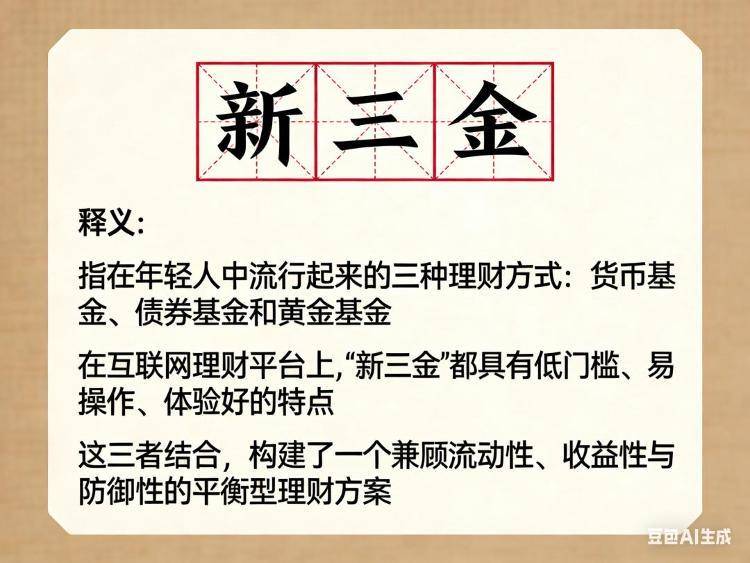
经济热点快评|理财观念进阶!年轻人青睐“新三金”
Sou Hu Cai Jing· 2026-02-05 14:51
Core Viewpoint - The rise of the "New Three Golds," consisting of money market funds, bond funds, and gold funds, reflects a shift in investment preferences among young people, moving away from traditional savings to diversified asset allocation [1][2][3] Group 1: Investment Trends - Over 21 million users are expected to adopt the "New Three Golds" by the end of 2025, with nearly half being young individuals [1] - The decline in bank deposit interest rates and the volatility of the stock market have led young investors to seek safer and more stable investment options [1][2] - The combination of high liquidity, stable returns, and defensive attributes in the "New Three Golds" creates a balanced investment strategy [1][2] Group 2: User Experience and Preferences - Internet financial platforms offer low entry barriers, ease of operation, and a user-friendly experience, making it easier for young investors to engage with these funds [2] - The design of these platforms enhances transparency and reduces the complexity traditionally associated with financial products, aligning with the preferences of younger investors [2] - Young investors are transitioning from passive savings to active investment strategies, focusing on long-term wealth accumulation and financial literacy [2][3] Group 3: Industry Implications - The emergence of the "New Three Golds" indicates a need for the financial industry to shift from a product-centric to a customer-centric approach [3] - Financial institutions are encouraged to innovate products, upgrade services, and refine risk management to meet the demands for safe, profitable, and liquid financial products [3]
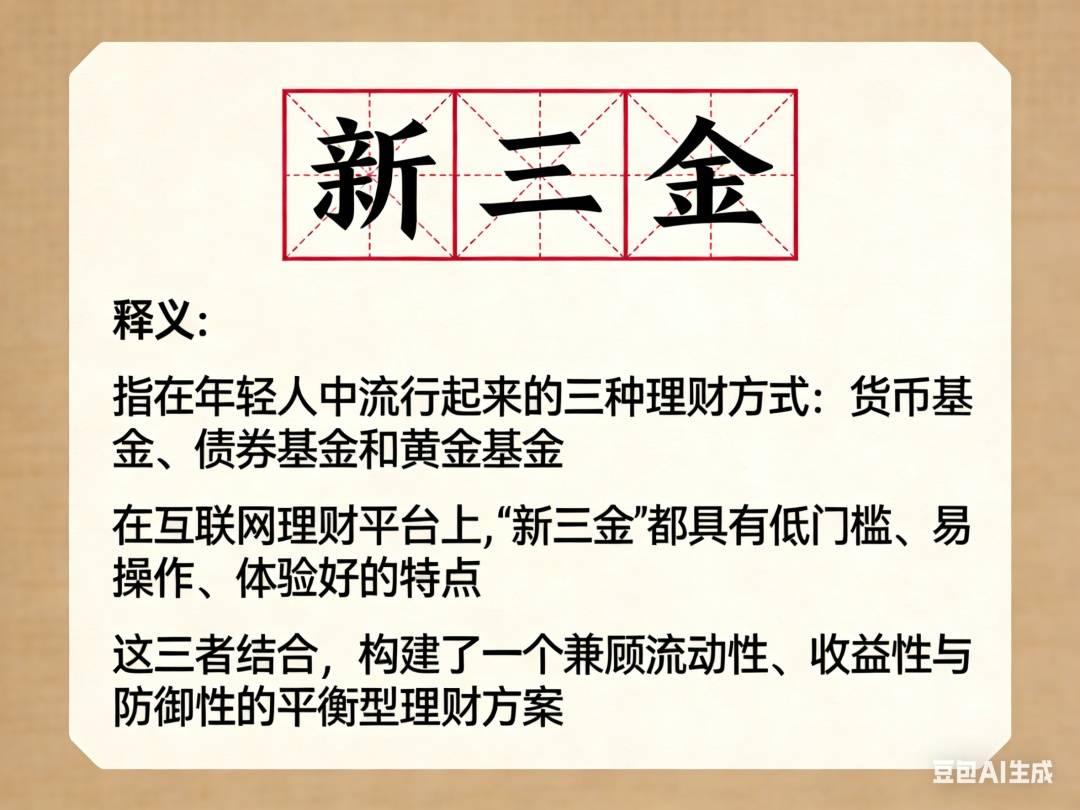
“新三金”成年轻人理财新选择
Jing Ji Ri Bao· 2026-01-18 21:57
Core Insights - The traditional savings method of "earning interest by saving in banks" is no longer sufficient for young people's needs for capital preservation and appreciation in a declining deposit interest rate environment [1] - The rise of the "New Three Golds" investment portfolio, consisting of money market funds, bond funds, and gold funds, reflects a shift in young people's financial management mindset towards proactive and diversified asset allocation [1][2] Investment Trends - Over 21 million users have adopted their own "New Three Golds" by the end of November 2025, with nearly half being young individuals [1] - Young investors are increasingly inclined to build balanced asset portfolios considering short, medium, and long-term liquidity needs, with money market funds being suitable for liquidity management, bond funds providing stable returns, and gold funds offering both hedging properties and long-term appreciation potential [2] Investor Behavior - Young investors often mistakenly believe that the "New Three Golds" are completely safe, overlooking the inherent risks associated with gold price volatility and interest rate impacts on bond funds [2][3] - The "New Three Golds" concept emphasizes the importance of asset allocation rather than guaranteeing low risk and stable returns, highlighting the need for investors to align their financial goals and risk tolerance with their asset allocation strategies [3][4] Industry Implications - The emergence of the "New Three Golds" indicates a need for financial institutions to transition from a "product-centered" to a "customer-centered" approach, offering personalized asset allocation plans based on risk assessments [3] - Financial institutions are encouraged to invest in low-volatility, risk-diversified strategies and explore high-growth potential sectors like technology and AI to meet diverse client needs [3] Financial Education - The core value of the "New Three Golds" lies in guiding young people to develop asset allocation habits rather than guaranteeing profits, emphasizing the importance of rational planning and long-term commitment in wealth growth [4]
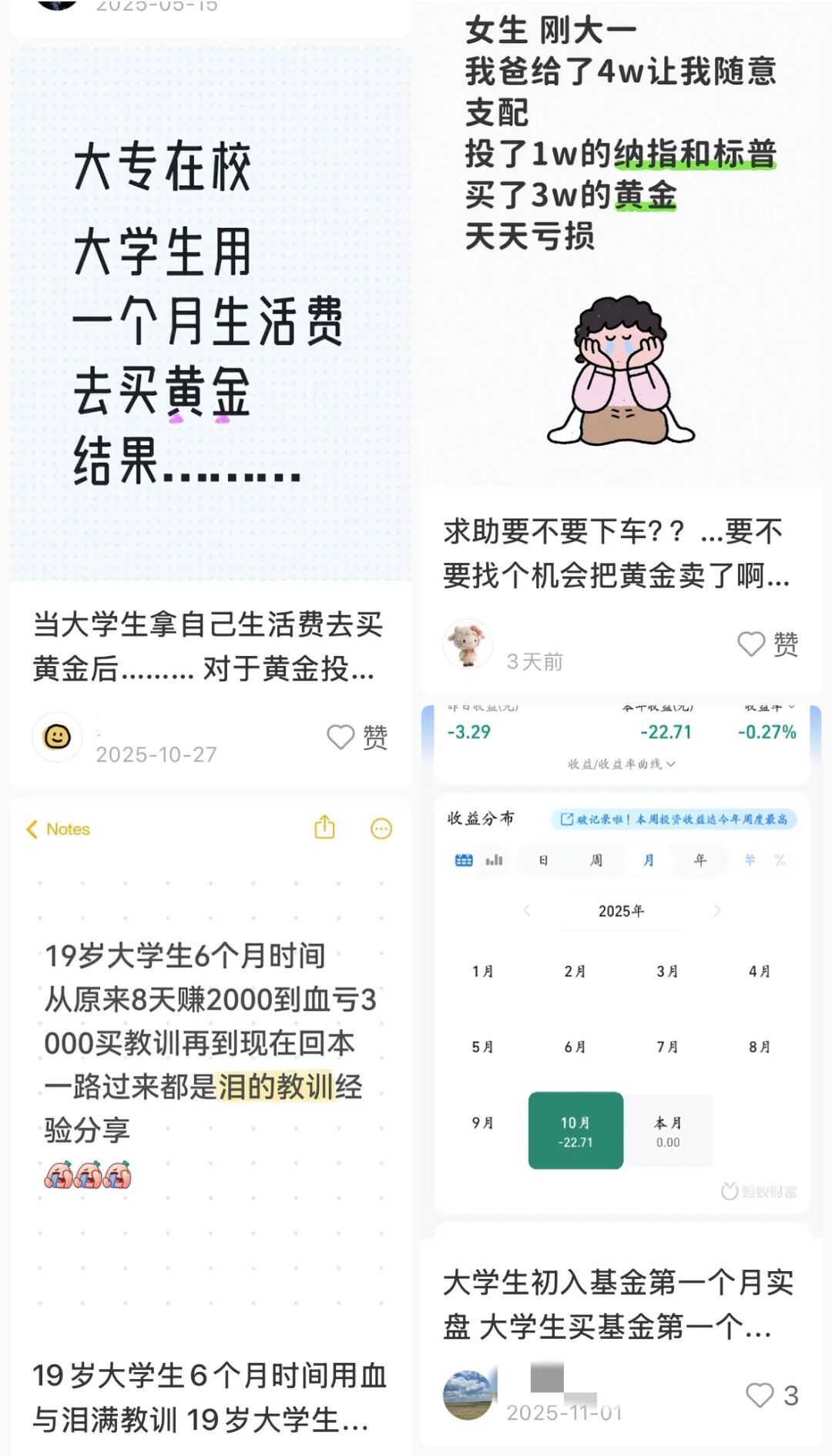
“被套住了才开始研究”,买“新三金”理财的年轻人赚到钱了吗?
3 6 Ke· 2026-01-07 01:59
Group 1 - The core viewpoint of the articles highlights the shift of young investors towards conservative financial strategies, particularly the adoption of "New Three Golds" (money market funds, bond funds, and gold funds) as a middle ground between high-risk and low-return options [1] - As of April 2025, over 9 million individuals born in the 1990s and 2000s have allocated their investments into the New Three Golds, indicating a significant trend among younger generations [1] - The articles illustrate the psychological impact of investment losses on young investors, with many experiencing heightened stress and anxiety as they navigate the volatile gold market [3][6] Group 2 - The case of a young investor, referred to as Xiao Zhang, exemplifies the challenges faced by new investors, including the temptation to invest impulsively during market highs and the subsequent emotional turmoil from losses [2][3] - Xiao Zhang's initial conservative investment strategy involved placing funds in money market and bond funds, yielding an average return of approximately 2.5%, reflecting a cautious approach influenced by past family experiences with investment losses [4][5] - The articles discuss the broader trend of young individuals engaging in gold investments, often without adequate knowledge or preparation, leading to significant financial distress for some [8][14]
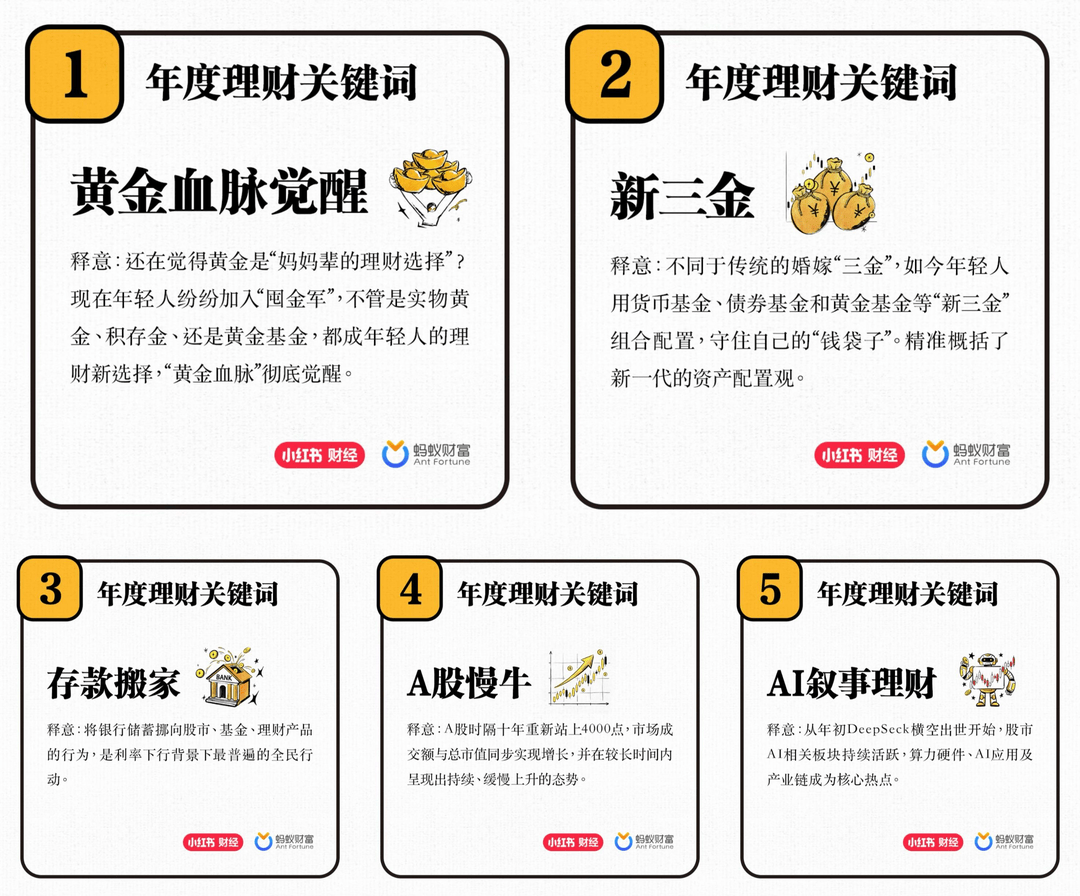
年度理财关键词发布!从“存款搬家”到“新三金”,大众理财转向多元配置
Sou Hu Cai Jing· 2025-12-30 08:53
Core Insights - In 2025, deposit rates are expected to enter the "0% range," while gold prices are reaching new highs, indicating a significant shift in public investment awareness [1] - A joint annual financial keyword voting by Ant Wealth and Xiaohongshu revealed five major keywords: "Awakening of Gold Bloodline," "New Three Golds," "Deposit Migration," "A-share Slow Bull," and "AI Narrative Finance," with gold-related keywords dominating [1] Group 1: Investment Trends - The trend of "deposit migration" to gold, funds, stock markets, and insurance reflects a shift in investment preferences, as individuals are increasingly prioritizing asset allocation in a low-interest environment [3] - The "Awakening of Gold Bloodline" keyword received the highest votes, indicating a growing interest among younger generations in gold investments, including gold funds and physical gold [3][5] - As of early October, over 8.9 million users on the Ant Wealth platform have started investing in gold ETFs, with those born after 1995 accounting for over 40% of the investors [3] Group 2: New Investment Strategies - The "New Three Golds" concept, which includes money market funds, bond funds, and gold funds, has emerged as a popular investment strategy among young people, balancing liquidity, stability, and potential returns [5] - By the end of November 2025, over 21 million users had adopted their own "New Three Golds," with nearly half being young investors [5] - The diversification approach of "New Three Golds" allows investors to adapt their portfolios based on market conditions, with a reported 12.8% increase in returns for those who shifted from bond funds to "fixed income plus" products [6]
基金代销发力存款“平替”储蓄资金或将逐步“进阶”
Shang Hai Zheng Quan Bao· 2025-12-14 15:30
Group 1 - The core viewpoint is that declining deposit rates are prompting investors to seek alternative investment options, leading to a diversification of savings into various asset classes [1][3] - There is a notable shift in public wealth management from relying solely on deposits to a more diversified asset allocation strategy, with fund distribution agencies proactively guiding investors in this transition [1][2] - The "new three golds" strategy is gaining traction among younger investors, encouraging them to allocate funds across money market funds, bond funds, and gold ETFs for a diversified investment approach [2] Group 2 - The "fixed income plus" products are becoming increasingly popular among conservative investors, indicating a trend towards these assets as a response to low interest rates [3] - Investors are becoming more accepting of slight fluctuations in their investments in exchange for higher returns, making "fixed income plus" products a key vehicle for reallocating funds [3] - It is advised that investors transitioning to "fixed income plus" products should balance yield and risk, with recommendations to allocate less frequently used funds to these funds for smoother net value fluctuations [3]
中国家庭财富与消费报告
Sou Hu Cai Jing· 2025-11-30 16:08
Group 1: Income and Asset Allocation - The average annual income per household in China reached 55,500 yuan in Q3 2025, with wage income accounting for 62.1% of total income, indicating its core role in household finances [1][10][27]. - Middle-aged groups in first-tier cities exhibit strong income growth, with their average annual income being 2.05 times that of their counterparts in non-first-tier cities, reflecting the advantages of urban employment quality and salary levels [1][10][29]. - The proportion of families without mortgage loans reached 56.1%, indicating reduced financial pressure from housing assets, while the overall household debt ratio shows a "U-shaped" distribution, with 49.2% of families being debt-free [1][11][46]. Group 2: Consumption Expenditure and Consumer Groups - The average monthly consumption expenditure per household reached 3,004 yuan, with first-tier city households spending an average of 4,442 yuan, significantly higher than other city tiers [2][11][12]. - Young consumers are active in entertainment and dining, focusing on quality and personalized experiences, while middle-aged consumers prioritize education and healthcare due to family responsibilities [2][12]. - Households with housing assets show higher consumption capabilities across all age groups, particularly in first-tier cities, where homeownership correlates with increased spending in various categories [12][13]. Group 3: Consumer Expectations and Influencing Factors - Consumer expectations improved in Q3, with about 69% of households planning to maintain their consumption levels, and 11% intending to increase spending [3][14]. - Employment stability is a key factor influencing consumer confidence, with those unemployed for over three months planning to cut back on discretionary spending [3][14]. - Households with annual incomes below 50,000 yuan show a higher tendency to reduce flexible spending, highlighting the impact of income levels on consumption plans [3][15]. Group 4: Recommendations and Policy Suggestions - To enhance consumer confidence, policies should focus on supporting employment and income for youth and low-income groups, guiding rational financial asset allocation, and improving housing security [16][17]. - Introducing inclusive financial products and optimizing housing finance structures can alleviate the pressure of housing costs on other consumption categories [16][17]. - Establishing a consumption support system tailored to different life stages can stimulate demand across all age groups, particularly for youth and middle-aged consumers [17].

“新三金”理财热度渐起,低息环境下如何稳健理财?
2 1 Shi Ji Jing Ji Bao Dao· 2025-06-04 11:32
Core Insights - The trend of investing in "New Three Golds" (money market funds, bond funds, and gold funds) is rising as investors seek higher yields in a low-interest-rate environment [1][2][4] - The decline in deposit interest rates has led to a significant shift in investor behavior, with a growing preference for stable and low-risk investment products [3][5] Investment Trends - As of April 30, 2023, 9.37 million post-90s and post-00s investors have allocated funds to money market, bond, and gold funds, indicating a shift towards these "New Three Golds" [1] - The popularity of "fixed income plus" products has surged, with user numbers increasing by 88% year-on-year in the first four months of 2023 [1][2] Market Dynamics - The rapid decline in deposit rates has made money market funds more attractive due to their safety, liquidity, and yield, with the total scale expected to grow from 8.1 trillion yuan at the end of 2020 to 13.6 trillion yuan by the end of 2024 [2] - Global inflows into physical gold ETFs reached approximately $11 billion in April 2023, with total assets under management reaching $379 billion, driven by rising gold prices and ongoing demand from the Chinese market [2][3] Investor Behavior - Investors are increasingly favoring medium to long-term pure bond funds, with individual investors holding about 8% of net assets in these funds as of 2024, a significant increase from 3.5 percentage points in 2023 [3] - The cautious and steady investment attitude reflects a broader trend of seeking balanced strategies rather than pursuing high-risk, high-reward opportunities [4][5] Recommendations for Asset Allocation - In a low-interest-rate environment, it is suggested that investors maintain a balanced approach to asset allocation, ensuring that liquidity needs are met without sacrificing potential returns [5][6] - For gold investments, a dollar-cost averaging strategy is recommended to mitigate short-term price volatility while capitalizing on long-term appreciation potential [6]