智能康复设备

Search documents
八大科技展区亮相CES Asia 2026,勾勒未来消费电子蓝图
Sou Hu Cai Jing· 2026-02-05 07:38
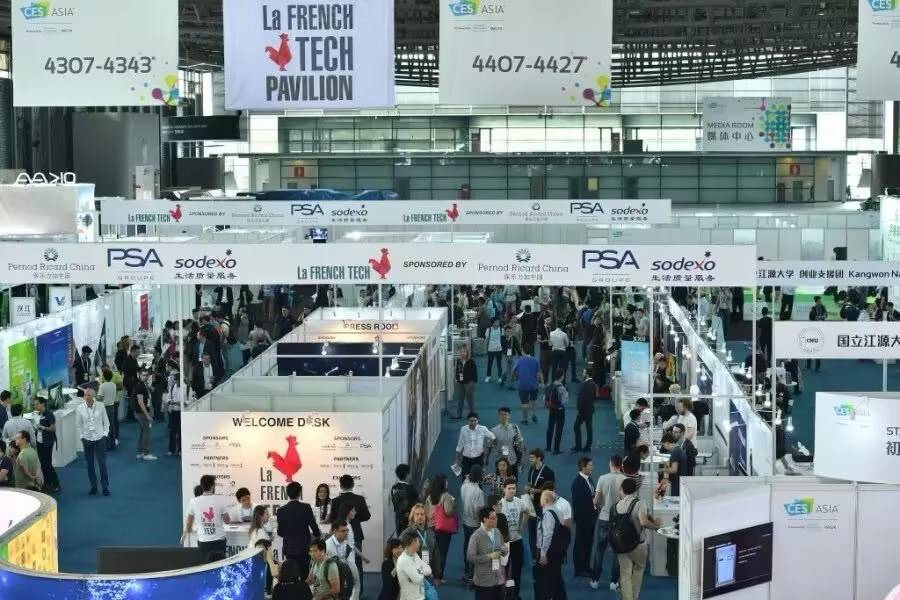
Core Insights - CES Asia 2026 will focus on "Technology Integration and Innovative Symbiosis," showcasing advancements in embodied intelligence, artificial intelligence, and low-altitude economy across an immersive 50,000 square meters exhibition space [2] - The event is scheduled to take place from June 10 to June 12, 2026, in Beijing, providing a platform for technology display, business matchmaking, and ecosystem building [2] Group 1: Embodied Intelligence - The Embodied Intelligence exhibition area will highlight breakthroughs in "flexible technology + multimodal interaction," featuring humanoid robots and flexible operational devices [3] - Key technologies such as hand-eye servo coordination, emotional computing, and spatial intelligent navigation will be showcased, addressing diverse scenarios like home services and emergency rescue [3] - The integration of flexible robots and drones will be a highlight, enabling innovative applications in complex environments [3] Group 2: Artificial Intelligence - The Artificial Intelligence exhibition area will emphasize "AI-native and full-scenario empowerment," showcasing core technologies like edge large models and cross-device collaboration [4] - AI-native smartphones will be a focal point, enhancing multi-modal interaction and task automation even in offline environments [4] - Emerging terminals like smart glasses and immersive AI desktop partners will also be presented, aiming to transform smartphones into intelligent assistants [4] Group 3: Low-altitude Economy - The Low-altitude Economy exhibition area will focus on the integration of "flying carriers + intelligent applications," featuring aerial work robots and eVTOLs [5] - Aerial work robots equipped with flexible robotic arms will demonstrate practical capabilities in high-altitude cleaning and precise delivery [5] - The intelligent mobility segment will showcase L4 autonomous driving and smart cockpit innovations, aligning with national low-altitude economic development strategies [5] Group 4: Smart Living - The Smart Living exhibition area will center on "seamless intelligence and health co-existence," showcasing the transition from single product intelligence to whole-home connectivity [6] - Home automation systems will utilize Matter protocol and 3D spatial scanning technology for seamless device integration and energy management [6] - The healthcare segment will focus on AI health monitoring devices, emphasizing non-invasive blood glucose monitoring and ECG analysis [7] Group 5: Intelligent Cockpit - The Intelligent Cockpit exhibition area will highlight the deep integration of automotive electronics and consumer electronics, showcasing innovations in "multi-modal perception + edge large models" [8] - New-generation smart cockpits will move beyond traditional app interactions, providing proactive service based on driver and passenger needs [8] - Solutions for seamless connectivity between travel and home will be presented, promoting cars as mobile smart living spaces [8] Group 6: Green Energy Storage - The Green Energy Storage exhibition area will align with the "dual carbon" strategy, showcasing portable storage and home energy systems [9] - Home energy systems will demonstrate solutions for solar integration and emergency power supply, catering to energy autonomy needs [9] - Portable storage products will leverage high energy density batteries and fast charging technology for outdoor and emergency applications [9] Group 7: Electronic Components - The Electronic Components exhibition area will focus on "hardcore foundation and innovation empowerment," presenting core technologies in the consumer electronics supply chain [10] - High-performance AI chips and flexible PCBs will be highlighted, addressing supply chain bottlenecks and enhancing product competitiveness [10] - The exhibition will facilitate connections between upstream and downstream enterprises, showcasing the entire industry chain [10] Group 8: Digital Art Technology - The Digital Art Technology exhibition area will emphasize "technology empowerment and creative expression," featuring AR/VR content and interactive art installations [11] - AR educational materials will utilize 3D visualization to enhance immersive learning experiences [11] - The exhibition will provide a platform for cross-industry innovation, connecting technology with culture, education, and entertainment [11] Additional Insights - The eight exhibition areas are interconnected through the theme of "technology integration," creating a comprehensive innovation ecosystem [11] - The event will also host forums and matchmaking events to discuss industry trends and foster collaboration among leading enterprises and research institutions [11] - Registration for exhibitors is ongoing, providing opportunities for businesses to engage with cutting-edge technologies and expand commercial partnerships [11]

四川高质量推进2025年30件民生实事——用“民生之笔”绘就幸福四川温暖底色
Si Chuan Ri Bao· 2026-02-04 00:23
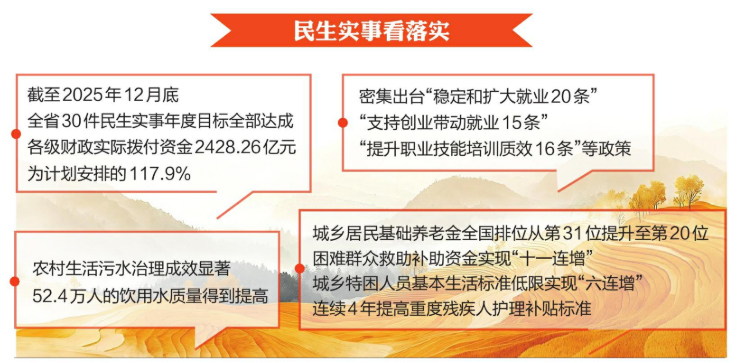
Core Viewpoint - The Sichuan provincial government emphasizes the importance of addressing people's needs through the implementation of 30 key livelihood projects, aiming to enhance the quality of life and happiness of its citizens [3][4]. Group 1: Implementation and Financial Commitment - The Sichuan provincial government has committed to achieving all 30 livelihood projects by the end of December 2025, with actual financial allocations reaching 242.826 billion yuan, exceeding the planned budget by 117.9% [4]. - The government aims to transform its people-centered development philosophy into a clear "task list" and "roadmap" for the implementation of these projects [4]. Group 2: New Initiatives and Community Engagement - The introduction of 10 new projects aims to address changing social structures and new demands from the public, enhancing the precision and coverage of social welfare [6]. - Community centers are being utilized to provide educational resources for the elderly, with over 20,000 new quality educational slots created to meet the demand for lifelong learning [6]. Group 3: Health and Rehabilitation Services - The establishment of smart rehabilitation centers in local health facilities allows for advanced rehabilitation services to be accessible to disabled individuals, enhancing their recovery experience [7]. - Initiatives such as free HPV vaccinations for eligible girls and the development of a smart education platform for rural students are part of the broader strategy to promote health and educational equity [7]. Group 4: Early Childhood Education and Social Welfare - The integration of childcare services into the basic education system addresses the long-standing issue of access to early childhood education, with new classes created to accommodate 40 children [9]. - The government is focusing on a comprehensive approach to social welfare, ensuring that policies are designed to meet the needs of all citizens, including vulnerable groups [10]. Group 5: Monitoring and Accountability - A new closed-loop supervision system has been established to ensure that every investment translates into tangible benefits for the community, with a dedicated team of 300 supervisors monitoring project implementation [12]. - The government emphasizes the importance of not only completing projects but also ensuring their quality and effectiveness through continuous feedback and improvement mechanisms [13].
北交所消费服务产业跟踪第五十期(20260201):加快培育服务消费新增长点工作方案发布,关注相关领域北交所消费标的
Hua Yuan Zheng Quan· 2026-02-02 14:57
Investment Rating - The report does not explicitly provide an investment rating for the industry or specific companies Core Insights - The "Work Plan" issued by the State Council aims to accelerate the cultivation of new growth points in service consumption, focusing on six key areas and three potential areas, which is expected to open up incremental space for service consumption [3][6] - By 2025, the per capita service consumption expenditure in China is projected to reach 13,602 yuan, with a year-on-year increase of 4.5%, accounting for 46.1% of total per capita consumption expenditure [3][11] - The domestic tourism market is expected to see 6.522 billion trips in 2025, a year-on-year increase of 16.2% [3][14] - The ice and snow industry is projected to generate over 187.5 billion yuan in consumption during the 2024-2025 season, with a growth rate exceeding 25% [3][30] - The emotional economy market in China is expected to reach 23,077.67 billion yuan in 2024 and surpass 45,000 billion yuan by 2029 [3][36] Summary by Relevant Sections Service Consumption Growth - The "Work Plan" focuses on optimizing service supply and fostering new service consumption models, particularly in transportation, housekeeping, automotive aftermarket, online audio-visual services, travel services, and inbound consumption [3][6] - The report highlights the increasing contribution of final consumption expenditure to economic growth, projected to be 52% in 2025, up by 5 percentage points from 2024 [9] Market Performance - The median price-to-earnings (P/E) ratio for the North Exchange service consumption sector decreased from 48.2X to 47.7X, with a total market capitalization dropping from 114.684 billion yuan to 112.981 billion yuan [46][51] - The median market cap for companies in this sector fell from 2.038 billion yuan to 1.978 billion yuan [51] Company Insights - Notable companies in the service consumption sector include: - Elderly care: Zhisheng Information, Beiyikang - Sports: Huayang Racing, Kangbiter - Tourism: Meiya Technology - Emotional/experiential consumption: Taihu Snow, Lusi Co., Baixinglong - Education: Digital Human, Tonghui Information - Online audio-visual: Xiange International, Haifiman - Apparel: Zhongfangbiao, Tianfangbiao [3][40] Performance Highlights - The report indicates that 29% of companies in the North Exchange service consumption sector saw stock price increases, with the median stock price change being -2.41% [46] - Top performers included Qiule Seed Industry (+22.55%), Kangnong Seed Industry (+13.50%), and Oufu Egg Industry (+7.05%) [46][56]
力促国货潮品“上架”拓展市场 成都举办都市圈免退税产品供需对接会
Sou Hu Cai Jing· 2026-01-27 06:08
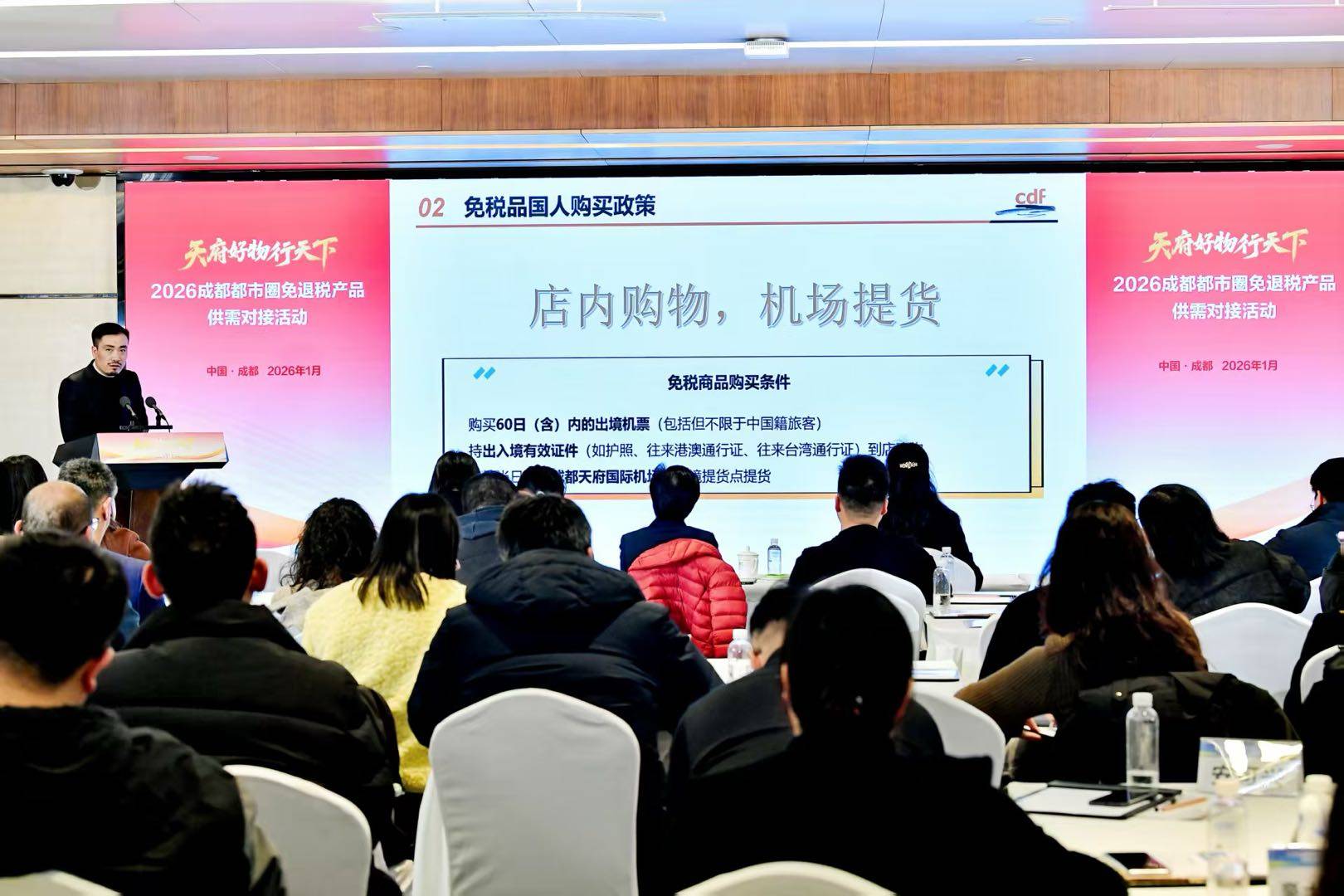
Group 1 - Chengdu is enhancing its duty-free shopping experience by increasing the variety of products available in duty-free stores, aiming to promote local brands and products internationally [3][5] - As of November 30, 2025, Chengdu has over 600 duty-free stores, with more than 180 offering an "immediate purchase and refund" service, which has been optimized to include multiple refund methods [3][4] - The Chengdu Business Bureau is actively analyzing consumer preferences among international tourists to better tailor product offerings in duty-free stores, focusing on local cultural products and high-tech items [4][6] Group 2 - Local companies, such as Qianli Beiyikang Medical Technology Co., are keen to enter duty-free stores to enhance brand visibility and access high-value consumer segments, with products already reaching 70 countries [5][6] - The strategy of including more local products in duty-free stores is expected to improve the shopping experience for tourists and increase inbound consumption [5][6] - The competitive edge of domestic products is being validated through sales data, with popular categories including clothing, bags, and electronics, indicating a strong market for culturally significant items [6]
成都拓展免退税消费场景 助力“川味好物”畅销全球
Sou Hu Cai Jing· 2026-01-27 00:08
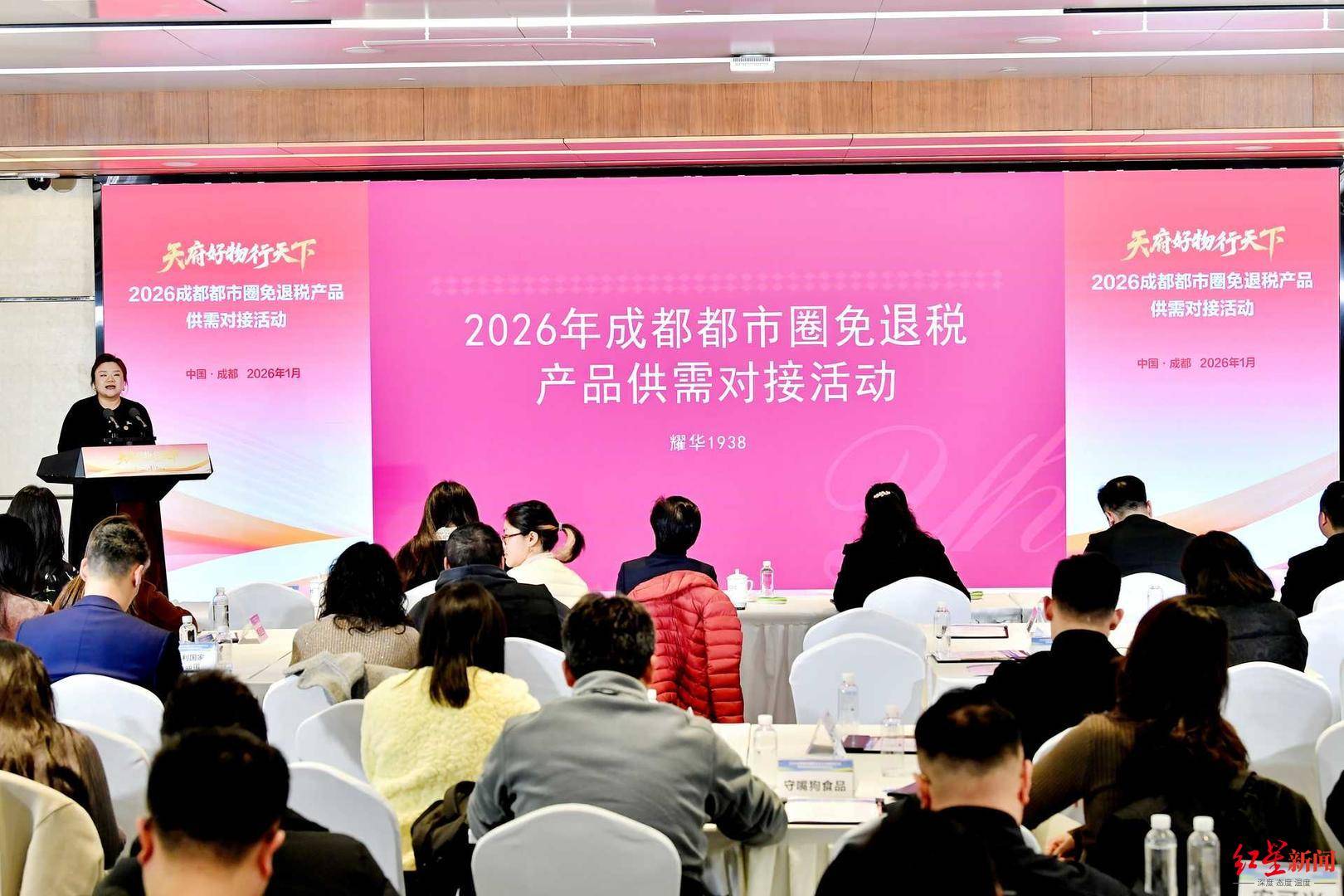
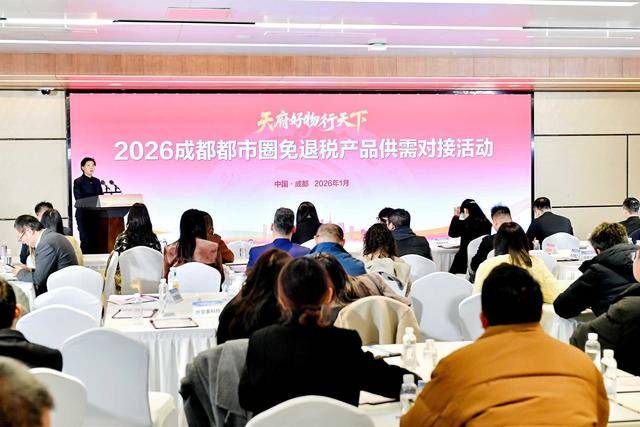
Core Insights - Chengdu is leveraging its unique cultural and tourism resources to attract global tourists and enhance the purchasing experience for overseas visitors, focusing on the internationalization of local brands [1][3] Group 1: Government Initiatives - The Chengdu Municipal Bureau of Commerce organized the "2026 Chengdu Urban Circle Tax-Free Product Supply and Demand Matching Conference" to create a bridge between production and sales, aiming for resource complementarity [1] - The government is developing a product matrix for tax-free goods that includes local specialties such as panda cultural products, Shu embroidery, and Sichuan tea and liquor, while also establishing a demand-driven analysis mechanism [3] Group 2: Business Opportunities - Companies like Sichuan Qianli Beiyikang Medical Technology Co., Ltd. are entering tax-free stores to enhance visibility and access stable high-end sales channels, which accelerates their overseas brand establishment [4] - Chengdu Yaohua Food Co., Ltd. views entry into tax-free stores as a strategic move to reach high-net-worth tourists, improve brand exposure, and reduce barriers to cooperation in tax-free channels [5] Group 3: Market Trends - The main categories for tax refunds include clothing, bags, shoes, jewelry, and electronics, indicating a strong market for local cultural brands that resonate with tourists [5] - As of November 30, 2025, Chengdu has over 600 tax-free stores, with more than 180 offering "buy and refund" services, enhancing the shopping experience for global travelers [5]
蓉品蓉企出川出海综合服务平台首发上线
Xin Lang Cai Jing· 2026-01-26 21:05
Group 1 - The Chengdu metropolitan area is launching the "Tianfu Good Products Going Global" initiative, which includes four major actions and six plans to promote local enterprises' international expansion by 2026 [1] - The "Rongpin Rongqi Going Global Comprehensive Service Platform" has been officially launched, focusing on core needs for enterprises going abroad, covering various service types and integrating government, industry, and market services [1] - The platform aims to lower the barriers for enterprises to go global through nine specialized services, including policy guidance, product selection displays, global market expansion, logistics sharing, and cross-border financial support [1] Group 2 - The Chengdu Municipal Bureau of Commerce is collaborating with relevant departments to enhance the product variety in duty-free shops, promoting local products and improving the shopping experience for tourists [2] - Sichuan Qianli Beiyikang Medical Technology Co., Ltd. has entered 70 countries and regions with its products, and views the inclusion in duty-free shops as a way to enhance visibility and access to high-end sales channels [2] - Chengdu Yaohua Food Co., Ltd. sees opportunities in duty-free shops to reach high-net-worth customers, improve brand exposure, and drive product upgrades in quality, packaging, and cultural value [2]
力促国货潮品“上架” 成都举办都市圈免退税产品供需对接会
Sou Hu Cai Jing· 2026-01-26 15:08
Group 1 - Chengdu is enhancing its duty-free shopping experience by expanding the variety of products available in duty-free stores, aiming to promote local brands and products to international markets [1][3] - As of November 30, 2025, Chengdu has over 600 duty-free stores, with more than 180 offering an "immediate purchase and refund" service, which has been optimized to include multiple refund methods [3][4] - The Chengdu Municipal Bureau of Commerce is actively analyzing consumer preferences and trends to guide merchants in optimizing their product offerings, ensuring that the products align with what international tourists desire [4][6] Group 2 - Local companies, such as Sichuan Qianli Beiyikang Medical Technology Co., are leveraging the duty-free store platform to enhance brand visibility and access high-value consumer segments, while also gathering consumer preference data for product development [6][7] - The strategy of including more local and culturally significant products in duty-free stores is expected to enhance the shopping experience for tourists and increase inbound consumption [6][7] - The competitive edge of domestic products is being validated through sales data, with popular categories including clothing, bags, shoes, jewelry, and electronics, indicating a strong market for culturally relevant brands [7][8]
“精诚为民”筑牢百姓生命健康保障防线
Xin Lang Cai Jing· 2025-12-22 17:14
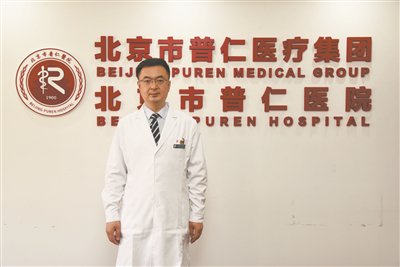
Core Viewpoint - The article highlights the innovative leadership of Gu Qiang, the director of Beijing Puren Hospital, in advancing healthcare services and reforming the medical system in Beijing, emphasizing the importance of quality healthcare and community service [3][4][5][6]. Group 1: Hospital Development and Management - Gu Qiang has led the establishment of Beijing Puren Medical Group, implementing the "Five Unchanged, Five Unified" management principle to enhance operational efficiency across various healthcare facilities [3]. - The hospital has seen a 22% increase in outpatient visits at the Dongcheng District Maternal and Child Health Hospital within two years due to performance reforms that link patient satisfaction to staff promotions [3]. - A remote medical platform has been developed to allow real-time transmission of X-ray images from community health service centers to the hospital's imaging center, facilitating expert consultations [3]. Group 2: Quality of Care and Medical Innovation - Gu Qiang has prioritized academic development by designing a "433" discipline framework, focusing on four key specialties, three diagnostic platforms, and three specialty centers to enhance the hospital's reputation [4]. - The hospital achieved high-quality completion of its tertiary comprehensive hospital accreditation, with patient satisfaction rates maintained above 98% [4]. - The implementation of a quality control system covering the entire diagnosis and treatment process has been a key focus, alongside the establishment of a multi-disciplinary consultation model for complex cases [4]. Group 3: Integration of Traditional and Modern Medicine - Gu Qiang has actively promoted the integration of traditional Chinese medicine (TCM) with Western medicine, launching TCM clinics and developing comprehensive treatment plans for chronic disease patients [5]. - Over a thousand community physicians have been trained in TCM techniques, enhancing the capacity for TCM services in grassroots healthcare [5]. - Upgrades to TCM facilities within the medical group have made services like acupuncture and massage more accessible to residents [5]. Group 4: Human-Centered Care and Community Engagement - The hospital has initiated palliative care forums and expanded services for elderly patients, including home care for those with disabilities [6]. - Gu Qiang maintains a hands-on approach, regularly seeing patients and coordinating assistance for those in financial need [6]. - The hospital aims to achieve the status of a tertiary A-level comprehensive hospital by 2025, reflecting its commitment to continuous improvement in healthcare delivery [6].
北交所策略专题报告:脑机接口政策强势赋能,关注北证医疗新质标的
KAIYUAN SECURITIES· 2025-12-21 08:43
Group 1 - The brain-computer interface (BCI) is recognized as a future industry in China's 14th Five-Year Plan, with policies aimed at fostering its development, including a target for core technology breakthroughs by 2027 and achieving global leadership by 2030 [3][12][16] - The global BCI market was valued at $1.5 billion in 2021 and is projected to reach $3.3 billion by 2027, while the domestic market is expected to grow from 3.2 billion yuan in 2024 to 4.6 billion yuan by 2026, reflecting an 18.81% year-on-year growth in 2024 [3][17][19] - Non-invasive BCIs dominate the market, accounting for 86% of the total, with medical applications being the primary focus, representing 56% of the downstream enterprises [18][23][25] Group 2 - The 2024 national pharmaceutical circulation market is projected to reach 2.947 trillion yuan, with the wholesale market accounting for 77.94% of total sales, and the retail market contributing 22.06% [4][40][46] - The pharmaceutical distribution industry is characterized by a continuous optimization of structure, enhanced professional service capabilities, and a growing focus on health services, driven by aging populations and increased health awareness [52][53] - The North Exchange has 11 listed companies related to pharmaceuticals, with significant profit margins reported, including companies like Deyuan Pharmaceutical and Xinghao Pharmaceutical, which have shown substantial growth in net profits [4][51][68] Group 3 - The North Exchange's pharmaceutical and biotechnology sector saw a weekly increase of 1.91%, with medical devices leading the growth at 6%, while 80.95% of the sector's stocks experienced an increase in market value [5][58][61] - Notable stock performances include Lude Medical and Beiyikang, which saw weekly increases of 20.61% and 10.46%, respectively, indicating strong market interest in these companies [5][67] - As of December 19, 2025, there are 13 pharmaceutical and biotechnology companies queued for listing on the North Exchange, with an average revenue of 382 million yuan and net profits exceeding 100 million yuan for several firms [68][69]
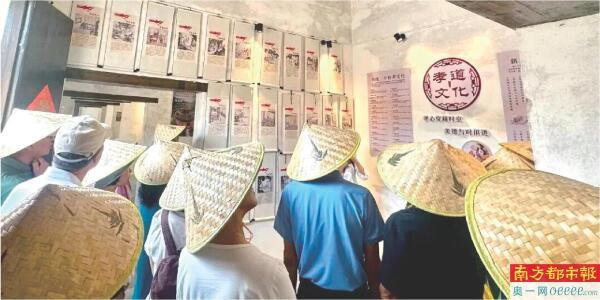
深圳公布首批银发经济产业园
Nan Fang Du Shi Bao· 2025-12-04 23:14
Core Insights - Shenzhen is accelerating the development of its "Silver Economy" by establishing a multi-dimensional industrial park system, with 15 new parks announced for 2025, indicating a strategic move to capture a trillion-yuan market potential [4][12] - The first batch of "Silver Economy Industrial Parks" includes three key parks focusing on smart manufacturing, medical devices, and other high-tech sectors, aligning with Shenzhen's industrial development direction [6][12] Group 1: Industrial Development - The Bao'an District has the highest number of selected parks, focusing on smart manufacturing, medical devices, and biomedicine, with 14 elderly care institutions and 3,471 elderly care beds established by the end of 2024 [5][12] - The three parks selected as the first batch include the New Bridge East Advanced Manufacturing Industrial Park in Bao'an, the Deep Hundred New Economic Base in Pingshan, and the Longhua Silver Economy Industrial Park, all of which are aligned with Shenzhen's strengths in technology and innovation [6][12] Group 2: Policy and Support - Shenzhen's government has implemented a comprehensive policy support system to promote high-quality development in the silver economy, including investment support measures and a focus on original innovation and technology breakthroughs [8][12] - The establishment of a virtual silver economy industrial park and multiple district-level parks aims to create a collaborative "1+N" development model, enhancing service delivery and resource integration for enterprises [8][12] Group 3: Cultural Integration - The Guihuatang Laowei Elderly Health and Tourism Industrial Park combines cultural heritage with modern health services, promoting Hakka culture and offering various wellness programs [9][10] - The park has implemented initiatives like the "Silver Inheritor Plan" to engage elderly individuals in traditional crafts, fostering cultural transmission and product innovation [10] Group 4: Market Potential - The silver economy in China is projected to reach 30 trillion yuan by 2035, with Shenzhen positioning itself as a leader in this burgeoning market [11][12] - The establishment of a street-level silver economy committee in Longhua District aims to enhance collaboration among enterprises, addressing fragmentation in the industry and fostering competitive advantages [13]