
智能音响

Search documents
年货越来越“聪明” 工厂实验室里藏着中国智造的密码
Yang Shi Wang· 2026-02-10 21:28
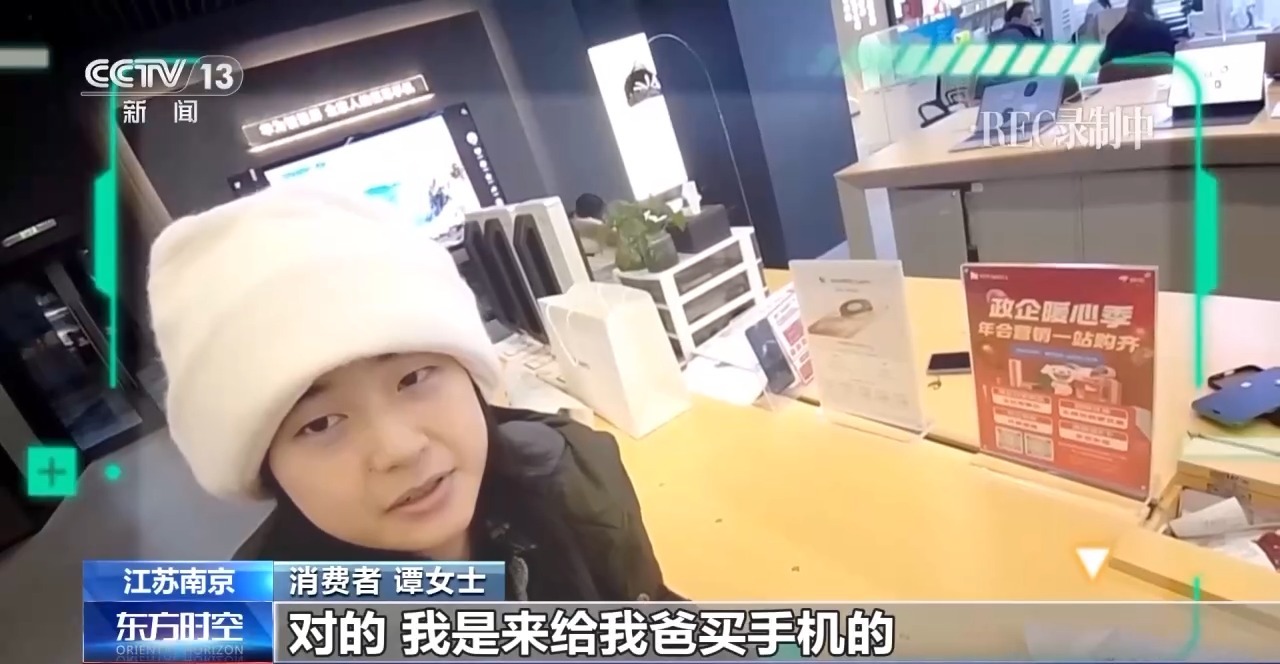
Core Insights - The upcoming Spring Festival is driving a surge in consumer spending on electronic products, particularly in home appliances, 3C products, and automobiles, with a notable increase in sales due to the "old-for-new" policy initiated in 2026 [1][3] - Smart home appliances are gaining popularity, with products like sweeping robots, refrigerators, and washing machines being highly sought after by consumers [9][11] - The rapid advancement in smart technology is evident, with significant improvements in product features and functionalities occurring within short timeframes [11][14] Consumer Behavior - Consumers are actively utilizing the "old-for-new" policy, with discounts of 500 yuan from national subsidies and 200 yuan from store promotions being reported [3] - There is a growing trend of consumers purchasing electronic gifts for family members, such as smartphones and AI hearing aids, reflecting a shift in purchasing dynamics within families [5][7] - The demand for smart kitchen appliances, like cooking machines, is increasing among working professionals [11] Industry Trends - The production of smart appliances is experiencing a significant uptick, with some companies reporting a doubling of production capacity compared to the previous year to meet the demand for the Spring Festival [14] - Young professionals are playing a crucial role in the research and development sectors of technology companies, contributing to innovation and product upgrades [14] - The integration of smart technology into daily life is transforming consumer experiences, with advancements in human-computer interaction making products more user-friendly [8][15] Technological Advancements - The development of smart products is characterized by rapid iterations, with companies implementing "small iterations" every six months and "large iterations" annually to enhance user experience [14] - Innovations in robotics and AI are being showcased, with robots now capable of performing complex tasks and enhancing efficiency in various sectors [17][19] - The emergence of smart city technologies is evident, with applications such as contactless public transport and drone deliveries becoming commonplace [15][19]

广东惠州拓未来产业发展新赛道 多项人工智能产品出货全球第一
Zhong Guo Xin Wen Wang· 2026-01-28 12:35
Group 1 - The core focus of Huizhou's development is on artificial intelligence and robotics, with significant achievements in the industry, including Shenghong Technology holding the largest global market share in high-density multilayer PCB for graphics cards, Stone Technology aiming for the top global shipment of service robots by 2025, and Desay SV holding the leading position in smart cockpits and intelligent driving in China [1][2][3] Group 2 - Huizhou's industrial layout includes petrochemical energy new materials, electronic information industry, and health industry, with the petrochemical sector being the largest in Guangdong Province, accounting for 25% of refining, 54% of ethylene, 50% of aromatics, and 68% of PTA production capacity in the province [2] - In the electronic information sector, Huizhou has achieved over 100 billion RMB in four sub-sectors: smart terminals, new energy storage, core basic electronics, and ultra-high-definition video, with service robots and smart TVs accounting for 30% of Guangdong's production, lithium batteries for 20%, and smart speakers for 40% [2] Group 3 - Huizhou plans to invest in 199 projects by 2026, with a minimum investment of 20 billion RMB, and aims to enhance connectivity with Shenzhen through infrastructure projects such as highways and railways [2] - The establishment of the Huizhou Artificial Intelligence and Robotics Bureau is planned to target future industrial development, with the creation of Guangdong's first 10,000-card computing power cluster by Runze Group and a top-three global ranking for Xinqiang Electronic's server heat sink [3]
廖巍:惠州四个细分领域规模突破千亿,先进制造业支撑作用凸显
2 1 Shi Ji Jing Ji Bao Dao· 2025-12-27 13:45
Economic Overview - During the "14th Five-Year Plan" period, Huizhou's economy surpassed the 500 billion and 600 billion yuan thresholds, achieving an average GDP growth rate of 6.3% over the first four years, completing its total target one year ahead of schedule [1] Industrial Development - Huizhou's industrial sector has seen significant progress, with the number of large-scale industrial enterprises exceeding 5,200, doubling since 2020; industrial investment has surpassed 100 billion yuan for four consecutive years, totaling over 640 billion yuan in five years, also doubling from the previous five-year period [2] - The average annual growth rate of industrial added value is 8.8%, ranking first in the province; the industrial sector consistently accounts for over 45% of GDP, highlighting its role as an economic stabilizer [2] - Advanced manufacturing is increasingly prominent in Huizhou, with its added value expected to account for 64% of the industrial added value by 2024, ranking second in the Pearl River Delta; two clusters have been recognized as national advanced manufacturing clusters, and two as national characteristic industrial clusters for small and medium-sized enterprises [2] Key Industries - The petrochemical industry is the largest in Guangdong province, with refining, ethylene, aromatics, and PTA production capacities accounting for 25%, 54%, 50%, and 68% of the province's total, respectively [2] - The electronic information industry ranks third in the province, with four sub-sectors—smart terminals, new energy storage, core basic electronics, and ultra-high-definition video—each exceeding 100 billion yuan in scale; service robots and smart TVs account for nearly 30% of provincial output, while lithium-ion battery production capacity and smart speakers account for nearly 20% and 40% of the province's total, respectively [2] - The two major industrial clusters contribute 70% to industrial growth [2]
义利天下丨在义乌“听见”时代的变化
Zhong Guo Xin Wen Wang· 2025-12-22 12:19
Core Insights - The article highlights the journey of Xia Zhiwen, who started in Yiwu in 2006 with electronic clocks and small gifts, and successfully adapted to the rise of smart devices and industry transformation, eventually entering the audio sector [2] Company Development - Xia Zhiwen has witnessed the evolution of the Yiwu market from version 1.0 to 6.0, indicating significant changes in market dynamics and consumer preferences over nearly two decades [2] - The company has shifted from traditional offline sales to smart audio products, reflecting a strategic pivot towards modern technology and consumer electronics [2] Brand Strategy - There is a strong confidence in building proprietary brands and expanding into overseas markets, suggesting a focus on brand development and international growth opportunities [2]
智能座舱竞争转向“数据质量、场景颗粒度与深度适配”之争
Xin Jing Bao· 2025-11-28 03:47
Core Insights - The automotive industry is experiencing a trend of functional homogenization due to the widespread adoption of large model capabilities, shifting competition from "model scale" to "data quality, scene granularity, and depth adaptation" [1] - Companies need to build an integrated closed-loop capability of "scene-data-model" to achieve "model as application," creating differentiated experiences in real-world usage scenarios [1] Industry Trends - There is an increasing willingness among users to pay for comfort hardware such as smart seats and smart audio systems, with experience depth becoming a key value anchor for future smart cockpits [1] - The interaction paradigm of smart vehicles is transitioning from "passive response tools" to "proactive cognitive partners," moving beyond user-triggered commands to proactively predicting and providing services based on integrated sensor data, user behavior, and contextual needs [1] Future Directions - By 2025, smart cockpits are expected to shift from "digital redundancy" to "pragmatism," with a rational transformation in smart cockpit interactions, leading to a "rebalancing" of touch controls and physical buttons [1] - The competitive focus of future smart cockpits will return from "breadth of functionality" to "depth of experience" [1]
政策利好持续释放 杭州人工智能终端企业迎新机遇
Zheng Quan Ri Bao· 2025-09-15 16:10
Core Viewpoint - The Hangzhou Municipal Economic and Information Technology Bureau has released a draft action plan for the development of the artificial intelligence terminal industry, aiming to provide clear guidance for the sector's growth from 2025 to 2027 [1][2]. Policy Guidance - The draft plan targets an industry scale of 300 billion yuan by 2027, with goals to implement 100 key research projects, create 30 popular terminal products, cultivate 20 independent brands, and establish 50 typical application scenarios [2][3]. - Key focus areas include intelligent visual terminals, intelligent computing terminals, intelligent robots, and smart wearable devices, with specific product development outlined for each category [2][3]. Industry Development Measures - The plan includes measures to enhance innovation, high-end manufacturing, and industrial support capabilities, such as government funding support of up to 10 million yuan for qualifying AI companies and projects [3]. - It emphasizes the importance of foundational elements like data, computing power, and algorithms to strengthen the industry [3]. Corporate Landscape - By 2027, the plan aims to nurture five companies with a valuation of over 10 billion yuan, 20 companies over 1 billion yuan, and 60 "specialized and innovative" small giant enterprises [4]. - Several listed companies in Hangzhou are already positioning themselves in relevant fields, such as Zhejiang Dahua Technology Co., Ltd. and Hongsoft Technology Co., Ltd., which are actively developing AI terminal products [4][5]. Market Trends - Companies are encouraged to focus on operational scenarios to secure long-term revenue, utilize export tax rebates to enhance hardware margins, and leverage government and user data for financing [5].
华勤技术(603296.SH):目前已投入工业及人形机器人的研究工作
Ge Long Hui· 2025-03-18 08:58
Group 1 - The core viewpoint of the article is that Huqin Technology (603296.SH) is actively investing in the research of industrial and humanoid robots, while also focusing on the development of AI-related products and infrastructure [1] - The company has launched multiple AI PCs in 2024, providing new market opportunities for PC manufacturers as AI technology evolves [1] - Huqin Technology is collaborating with North American clients to accelerate the release of VR products, smart home devices, and smart speakers in the AI67 sector [1] Group 2 - The company is seizing the rapid development period of AI infrastructure by providing a full range of products including AI servers, general servers, storage servers, and switches to leading domestic CSIP companies in 2024 [1] - The business strategy has been upgraded from "2+N+3" to "3+N+3," positioning robotics as one of the three emerging business areas [1] - The company is confident in the future development of AI products and robotics, maintaining open collaboration with industry leaders to explore various AI technology applications [1] Group 3 - Huqin Technology's customized server solutions meet the high-performance and low-power requirements of DeepSeek [1] - The company has built an open and compatible ecosystem for computing power, adapting to major global GPU chip platforms such as NVIDIA, AMD, and Intel, as well as mainstream domestic GPU chip platforms [1] - Future plans include evaluating and advancing technical compatibility with various domestic third-party models to promote breakthroughs in AI technology across more fields [1]

智能家居行业双周报:两会政策定调,智能家居迎估值重构
Guoyuan Securities· 2025-03-14 11:43
Investment Rating - The report maintains a "Recommended" rating for the smart home industry [6][27]. Core Insights - The smart home industry is expected to benefit from a combination of policy support, technological advancements, and evolving consumer demands, driving rapid growth in the sector [4][27]. - Recent government policies, including expanded subsidies for home appliances and a focus on digital economy development, are set to stimulate consumption in the smart home market [3][4][19]. - The shift in consumer preference from "single product intelligence" to "whole-home smart solutions" is accelerating due to rising living standards and the aging population, which is increasing demand for home care solutions [4][27]. Summary by Sections Market Review - In the past two weeks (March 3, 2025 - March 14, 2025), the Shanghai Composite Index rose by 2.97%, the Shenzhen Component Index by 3.46%, and the ChiNext Index by 2.60%. The smart home index (399996.SZ) increased by 4.65%, outperforming the Shanghai Composite by 1.68 percentage points [1][11]. - Year-to-date (January 1, 2025 - March 14, 2025), the smart home index has risen by 15.37%, significantly outperforming the Shanghai Composite by 13.35 percentage points [11][14]. Industry Policy Tracking - New national subsidies have been introduced, including the inclusion of kitchen and bathroom renovation products in the subsidy program, which is expected to enhance market penetration of energy-efficient products [2][17]. - The "Shenzhen Action Plan for Accelerating the Development of the Artificial Intelligence Terminal Industry (2025-2026)" aims to integrate AI capabilities into various smart home products [2][18]. Industry News Tracking - The 2025 government work report emphasizes actions to boost consumption, develop the digital economy, and promote aging-friendly renovations, providing a supportive direction for the smart home industry [3][19]. - Collaborative efforts among major companies, such as the establishment of a smart home IoT open platform, are indicative of the industry's move towards integrated solutions [3][22]. Investment Recommendations - The report highlights that the expansion of the appliance subsidy program from 8 to 12 categories is expected to further stimulate the smart home market, building on the previous year's success which saw over 62 million units sold, generating nearly 270 billion yuan in consumption [4][27]. - The continuous evolution of technologies such as IoT, AI, and big data is expected to broaden the application boundaries of smart home devices, leading to the creation of high-value innovative products [4][27].

