
气

Search documents
山东沂源:多举措扎实落实水电气热价格优惠政策
Zhong Guo Fa Zhan Wang· 2026-02-24 06:32
Core Viewpoint - The article discusses the implementation of price reduction policies for water, electricity, gas, and heating for disadvantaged groups in Yiyuan County, Shandong Province, emphasizing the importance of ensuring these policies are effectively executed [1][2] Group 1: Policy Implementation - Yiyuan County Development and Reform Bureau is actively coordinating with various departments to ensure the effective implementation of price reduction policies for water, electricity, gas, and heating [1] - A notification regarding the implementation of these price reduction policies has been drafted, clarifying the responsibilities and tasks of each unit involved [1] - A special meeting was organized with relevant departments to discuss the implementation of the price reduction policies, distributing a clear policy document to guide the process [1] Group 2: Policy Communication - A summary table of the water, electricity, gas, and heating price reduction policies has been created and disseminated to various local authorities and utility companies to ensure proper implementation [2] - The county has issued a notification to ensure that all relevant departments and utility companies are aware of and adhere to the price reduction policies [2]
加强公用事业反垄断 有力服务高质量发展 ——解读《关于公用事业领域的反垄断指南》
Zhong Guo Jing Ji Wang· 2026-02-11 12:14
Core Viewpoint - The newly released "Antitrust Guidelines for Public Utilities" marks a significant step in China's antitrust legal framework, specifically targeting essential public services such as water, electricity, gas, heating, sewage treatment, waste management, and public transportation, aiming to enhance regulatory precision and support high-quality development [1] Group 1: Need for the Guidelines - Public utilities exhibit significant public, foundational, and network-dependent characteristics, with natural monopoly attributes primarily in infrastructure sectors [2] - Some public utility companies have misused their market power in natural monopoly sectors to extend monopolistic advantages into competitive areas, harming consumer rights [2] - Since the implementation of the Antitrust Law, 43 antitrust cases in the public utility sector have been investigated, highlighting both the accumulation of enforcement experience and existing challenges in the regulatory landscape [2] Group 2: Institutional Innovations - The Guidelines consist of seven chapters and 50 articles, emphasizing four major innovations: - A modern governance approach of "differentiated regulation and precise measures," focusing on distinguishing between natural monopoly and competitive sectors [4] - Clear analysis factors for identifying abuse of market dominance in public utilities, detailing specific behaviors and legitimate justifications [5] - Systematic regulation of fair competition reviews and the abuse of administrative power to eliminate competition [6] - A "flexible and multi-faceted" incentive and constraint mechanism encouraging companies to comply proactively [7] Group 3: Practical Significance - The implementation of the Guidelines will provide a professional and clear enforcement toolbox for regulatory agencies, enhancing case handling quality and efficiency [8] - For public utility operators, the Guidelines serve as an authoritative compliance guide, helping them identify risks associated with extending monopolistic advantages into competitive areas [8] - The Guidelines aim to enhance consumer welfare by regulating unfair pricing, refusal to deal, and other practices that harm public interests, ensuring better access to essential services [8] Group 4: Future Outlook - The release of the Guidelines signifies a solid step in China's antitrust legal system, with a mission to support high-quality development and common prosperity [9] - Strengthening antitrust enforcement in public utilities is crucial for building a unified national market, addressing hidden barriers that hinder free flow of resources [9] - Antitrust enforcement must adapt to emerging trends in digitalization, addressing potential new forms of monopolistic behavior in smart utilities and platform services [10]
美锦能源2026年2月4日涨停分析:资金效率优化+战略调整+评级稳定
Xin Lang Cai Jing· 2026-02-04 02:20
Core Viewpoint - Meijin Energy (SZ000723) reached its daily limit of 5.17 yuan, with a 10% increase, resulting in a total market capitalization of 22.766 billion yuan and a circulating market capitalization of 22.724 billion yuan, with a total transaction amount of 803 million yuan as of the report date [1] Group 1 - The reasons for Meijin Energy's stock surge include optimization of capital efficiency, strategic adjustments, and stable ratings. The company has terminated inefficient projects and redirected remaining raised funds to improve liquidity, enhancing operational conditions and positively impacting stock prices [2] - Rating agencies have maintained the company's credit rating at A+ with a stable outlook, indicating a level of stability that boosts market confidence in the company [2] - Meijin Energy possesses a complete integrated industrial chain of "coal - coke - gas - chemical - hydrogen," providing a competitive advantage in the industry. Positive developments in related sectors such as coal and new energy vehicles could further drive the company's stock price [2] Group 2 - On February 4, there was a notable inflow of funds into coal and new energy vehicle sectors, with some stocks in the same sector experiencing increases, creating a sectoral linkage effect that benefited Meijin Energy as a related concept stock [2] - From a technical perspective, if the MACD indicator forms a golden cross and the stock price breaks through short-term resistance levels, it may attract more technical investors, further pushing the stock price up [2] - Data from Tonghuashun shows significant net buying from large orders on that day, indicating that major funds are optimistic about the stock [2]

谋划海底“油、气、光、电、水”五网融合综合管廊
Xin Lang Cai Jing· 2026-01-29 16:41
Core Viewpoint - The provincial marine department aims to enhance marine oil and gas reserves and production through the development of integrated underwater infrastructure, promoting a multi-energy and multi-industry fusion approach [2] Group 1: Infrastructure Development - The provincial marine department plans to create a comprehensive underwater infrastructure that integrates oil, gas, light, electricity, and water [2] - The establishment of the underwater comprehensive pipeline will lead to a significant upgrade in the capabilities of marine energy resource sharing [2] Group 2: Industry Integration - The initiative will promote vertical coupling of marine oil and gas with marine chemical industries, and horizontal coupling of two technical routes: olefin refining and aromatic chemicals [2] - The project aims to enhance local resource utilization in Hainan, focusing on "Hainan oil for Hainan refining and Hainan gas for Hainan use" [2] Group 3: New Development Models - The integration of marine technology and industries will foster a new development model, enabling deep integration of six major marine industries: deep-sea oil and gas, new marine energy, high-end deep-sea equipment, marine tourism, marine fisheries, and modern marine services [2] - The initiative will also cultivate four future marine industries: marine biological manufacturing, underwater intelligent robots, AI marine models, and marine quantum communication navigation [2] Group 4: Strategic Goals - The project aims to expand the development space for marine resource exploitation and offshore rescue, creating a modern marine industry cluster characterized by "6+4+2" [2] - This initiative will provide comprehensive support for marine disaster reduction, ecological environment protection, and scientific research [2]

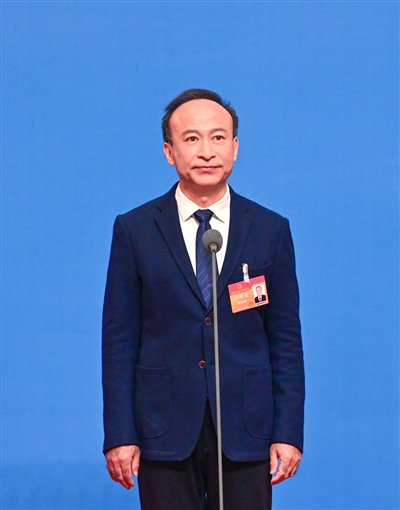
胡汉舟: 能源供应保障有力 绿色转型加速推进
Guo Jia Tong Ji Ju· 2026-01-20 11:26
Group 1: Energy Production and Supply - In 2025, energy production in China continues to grow steadily, with major energy products such as coal, oil, gas, and electricity reaching historical highs, enhancing energy supply security [2] - The industrial raw coal production reached 4.83 billion tons, an increase of 1.2% compared to the previous year [2] - The industrial crude oil production was 21.6 million tons, marking a 1.5% increase year-on-year, while natural gas production reached 261.9 billion cubic meters, up 6.2% [2] Group 2: Clean Energy Development - The construction of clean energy is accelerating, with installed capacity for wind and solar power surpassing that of coal-fired power for the first time in 2025 [4] - The total clean energy generation reached 34,213 billion kilowatt-hours, an increase of 8.8%, accounting for 35.2% of total industrial power generation, up 2.1 percentage points from the previous year [4] - New energy storage capacity exceeded 100 million kilowatts, representing over 40% of the global total, maintaining the world's leading position [4] Group 3: Green Transition and Energy Efficiency - Under the "dual carbon" goals, the proportion of coal consumption continues to decline, while the share of clean energy consumption steadily increases, with non-fossil energy surpassing oil to become the second-largest energy type [5] - The total energy consumption in 2025 grew by 3.5% year-on-year, with a reduction of over 5% in energy consumption per unit of GDP compared to the previous year [5] - The energy consumption per unit of industrial added value has decreased for two consecutive years, indicating significant progress in industrial energy conservation [5]
2025中国矿业十大新闻发布
Zhong Guo Xin Wen Wang· 2025-12-30 09:11
Core Viewpoint - The China Mining Association released the "Top Ten Mining News of 2025," highlighting significant developments in the mining sector, including legislative changes, major discoveries, and advancements in technology. Group 1: Legislative and Regulatory Developments - The revised "Mineral Resources Law of the People's Republic of China" will take effect on July 1, focusing on enhancing support for strategic mineral resources exploration and extraction, and ensuring competitive bidding for mining rights [2] - The Ministry of Natural Resources clarified the rules for the minimum price for mining rights transfer, ensuring that the pricing follows market principles and remains confidential until the end of the transaction [8] Group 2: Major Discoveries and Achievements - The first domestic thousand-ton gold mine was discovered in China, with a total gold metal amount of 1,444.49 tons located in the Dadonggou gold mine in Liaoning Province [3] - New copper resources exceeding 20 million tons were discovered in the Qinghai-Tibet Plateau, forming four major copper resource bases with a potential forecast of 150 million tons [5] - China's lithium reserves have increased significantly, rising from 6% to 16.5% of the global total, making it the second-largest lithium reserve holder in the world [9] Group 3: Industry Events and Recognitions - The 27th China International Mining Conference was held on October 23, attracting professionals from over 40 countries [4] - Zijin Mining ranked fourth among Chinese companies and first among global metal mining companies in terms of return on net assets, as reported in the 2025 Fortune Global 500 list [6] - The successful launch of China's first geological hyperspectral remote sensing satellite, "Geology No. 1," on May 17, represents a significant technological advancement in geological information acquisition [7] Group 4: Production Milestones - In 2025, China's crude oil production is expected to reach approximately 215 million tons, and natural gas production is projected to exceed 260 billion cubic meters, both setting historical records [11]
中办、国办关于做好2026年元旦春节期间有关工作通知:全力做好煤电油气生产、运输保障
Xin Hua She· 2025-12-22 09:42
Core Viewpoint - The notice issued by the Central Committee of the Communist Party of China and the State Council emphasizes the importance of ensuring a stable and orderly market supply during the 2026 New Year and Spring Festival, focusing on energy security and support for vulnerable populations [1][2]. Group 1: Support for Vulnerable Populations - Local governments are urged to provide timely and sufficient assistance to those in need, including the issuance of relief funds and additional living subsidies where possible [2]. - Special attention will be given to vulnerable groups such as the elderly, disabled, and children in difficult situations, with initiatives like the "Warm Winter Delivery" campaign [2]. - Measures will be taken to address wage arrears and support employment for those facing job difficulties [2]. Group 2: Market Supply Stability - The notice calls for robust production and transportation guarantees for coal, electricity, oil, and gas to ensure stable energy supply and pricing for the public [3]. - There will be a focus on food security, with responsibilities assigned to local governments to monitor and ensure the supply of essential goods like grains, meat, and vegetables [3]. - Regulatory measures will be strengthened to prevent price gouging and fraud in essential goods and services [3]. Group 3: Cultural and Spiritual Enrichment - Activities such as the "New Year Goes to the Grassroots" theme interviews and various cultural performances will be organized to enhance community spirit and cultural engagement [3]. - The promotion of tourism and cultural products will be prioritized to enrich the public's holiday experience [3]. Group 4: Safe and Convenient Travel - Enhanced planning for transportation during peak travel times will be implemented to meet public demand, including the waiver of tolls for small vehicles during holidays [4]. - Safety measures will be reinforced for various travel-related services, ensuring priority for military personnel and other key groups [4]. Group 5: Safety Production Responsibility - There will be a strict enforcement of safety production responsibilities across various sectors, with a focus on preventing major accidents [5]. - Regular inspections will be conducted in high-risk areas such as old buildings, tourist attractions, and public venues to identify and mitigate fire hazards [5]. Group 6: Social Stability Maintenance - A comprehensive approach will be taken to address social conflicts and risks, with increased engagement from leadership to resolve issues at the grassroots level [6]. - Law enforcement will focus on serious crimes and public safety in crowded areas, ensuring a secure environment during the holiday season [6]. Group 7: Promotion of Good Practices - The notice encourages the promotion of traditional values and frugality while combating negative social practices [7]. - There will be a crackdown on violations related to holiday spending and gift-giving, reinforcing the importance of integrity and accountability [7]. Group 8: Emergency Preparedness - A 24-hour emergency response system will be established to ensure readiness for any unexpected events during the holiday period [8]. - Local units are required to maintain service quality while avoiding bureaucratic inefficiencies during the holiday season [8].
水、电、气三表计量出新规
Xin Lang Cai Jing· 2025-12-21 16:36
Core Viewpoint - The State Administration for Market Regulation has released a compliance guideline for the lifecycle management of water, electricity, and gas meters, ensuring accurate measurement and protecting consumer rights [1] Group 1: Compliance Guidelines - The compliance guideline specifies detailed requirements for the procurement, verification, storage, installation, rotation, and disposal of residential water, electricity, and gas meters [2] - Public utility companies must ensure that the meters used comply with national standards and possess type approval certificates [2] - Meters must undergo mandatory verification before installation, and timely rotation is required to prevent exceeding their service life [2] Group 2: Consumer Rights and Compensation - The guideline establishes rules for handling meter malfunctions, ensuring that public utility companies are responsible for replacing faulty meters at no cost to consumers [3] - If consumers are overcharged due to meter issues, companies are required to refund or compensate accordingly [3] - The guideline promotes transparency by encouraging companies to use information technology for managing meter replacements and to inform consumers about plans and methods through public notices and SMS [3] Group 3: Complaint Mechanism - Public utility companies are mandated to create a complaint handling mechanism for meter-related disputes, making complaint methods and contact information publicly available [4] - In cases of disagreement over meter readings, consumers can request arbitration, and during this process, companies must provide temporary replacement meters to ensure uninterrupted service [4]
水电气三表计量新规来了
Xin Lang Cai Jing· 2025-12-20 17:01
Core Viewpoint - The new compliance guidelines for the measurement of water, electricity, and gas utilities aim to ensure accurate metering and protect consumer rights throughout the entire lifecycle of the measuring instruments [1][2] Group 1: Lifecycle Management - The guidelines require urban water, electricity, and gas utility companies to establish a comprehensive ledger of measuring instruments and implement dynamic management [1] - Regular inspections must be conducted to ensure traceability from procurement to disposal, with relevant records maintained for at least the duration of use [1] Group 2: Fault Handling and Compensation - Specific rules for handling faults have been established, outlining the responsibilities of utility companies [1] - If measuring instruments fail or are inaccurate due to non-human causes, companies are required to replace them free of charge and must refund or compensate users for any overcharges resulting from measurement issues [1] Group 3: Complaint Mechanism - Utility companies are mandated to create a complaint handling mechanism for measurement disputes, including the publication of complaint methods, channels, and contact numbers [2] - Timely processing and registration of measurement complaints is required [2]
市场监管总局:全面规范公用企业水电气计量行为
Xin Hua Wang· 2025-12-19 12:44
Core Viewpoint - The State Administration for Market Regulation released a guideline aimed at standardizing the measurement practices of urban public utilities such as water, electricity, and gas, ensuring consumer rights and fostering a fair market environment [1] Group 1: Measurement Management - The guideline focuses on core aspects of measurement management, emphasizing the entire lifecycle of water, electricity, and gas meters [1] - It specifies detailed requirements for the procurement, calibration, storage, installation, replacement, and decommissioning of residential meters to ensure their accuracy and reliability [1] - Clear instructions are provided for scenarios such as scheduled replacements and fault replacements [1] Group 2: Dispute Resolution and Risk Prevention - A mechanism for dispute resolution and risk prevention is established, which includes clear public complaint channels for enterprises [1] - A rapid response mechanism is outlined to address consumer complaints effectively [1] Group 3: Information Management - Enterprises are encouraged to develop measurement information management systems that integrate measurement data with government platforms [1] - This integration aims to enhance transparency and improve collaborative governance efficiency [1]