
沉浸式体验

Search documents
北京朝阳推动数字视听产业发展
Ren Min Ri Bao· 2026-02-12 21:46
Group 1 - The event in Beijing focused on the theme "Cultural Technology Driven: New Ecology of Digital Audiovisual" and released a three-year action plan for the high-quality development of the digital audiovisual industry in Chaoyang District from 2026 to 2028 [1] - The action plan includes 18 measures aimed at enhancing the quality of leading industries such as film, advertising, animation, and music, with a target to exceed a scale of 200 billion yuan in the digital audiovisual industry within three years [1] - Chaoyang District is positioned as a core area for the capital's cultural center construction, leveraging its advantages in resource aggregation and full-chain collaboration to promote the prosperity of the cultural industry [1] Group 2 - Chaoyang District is leveraging technological innovation advantages in areas like Wangjing, Jiu Xian Qiao, and others to drive key technology research and development, aiming to create an innovation growth pole for the AIGC audiovisual industry [2] - Cuigezhuang Township is identified as an important hub for the digital audiovisual industry cluster in northern Chaoyang, attracting representative enterprises in the audiovisual field and forming a solid industrial foundation and innovation ecosystem [2]

服务消费支持政策落地,利好这些板块
Zhong Guo Zheng Quan Bao· 2026-01-29 15:18
Core Viewpoint - The Chinese government has issued a work plan to accelerate the cultivation of new growth points in service consumption, aiming to optimize and expand service supply, enhance service consumption quality, and support high-quality economic development [1] Group 1: Key Areas of Focus - The work plan targets key areas such as transportation services, housekeeping services, online audio-visual services, travel and accommodation services, automotive aftermarket services, and inbound consumption, focusing on optimizing service supply and innovating consumption scenarios [2] - It also emphasizes potential areas like performance services, sports event services, and experiential services, aiming to improve incentive mechanisms, optimize safety management, and cultivate quality brands [2] Group 2: Support Mechanisms - The plan includes strengthening support for cultivating new growth points in service consumption through the establishment of standard systems, enhancing credit construction, and reinforcing financial support [3] Group 3: Industry Impact - The work plan aligns with residents' demand for high-quality living, aiming to increase quality supply while benefiting people's livelihoods, thus promoting a positive interaction between consumption and investment [4] - It is expected to accelerate industrial integration and foster new productive forces, particularly in sectors like automotive aftermarket and digital consumption [4] - Digital empowerment is anticipated to reshape the consumption ecosystem, with new scenarios like smart housekeeping and immersive experiences driving enterprise transformation [4] Group 4: Investment Opportunities - Financial analysts suggest that sectors such as the silver economy (smart elderly care, health tourism), ice and snow economy, and sports events are likely to become new growth areas, driven by technology and emotional experience [5] - The service consumption sector is expected to benefit from policy support, with a focus on experience-oriented and service-oriented consumption trends [5] - The strategic positioning of service consumption is set to enhance its role as a core engine for driving domestic demand, with increased interest in popular travel routes and related industries [5]
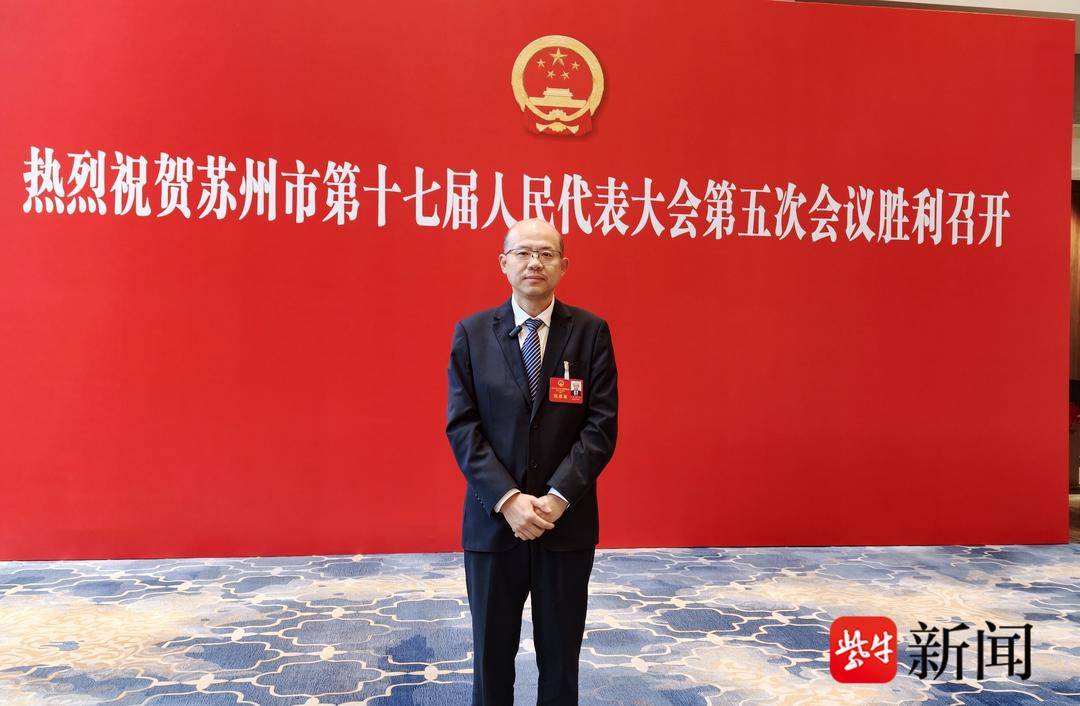
苏州市人大代表刘泓:深化职业教育与人工智能融合,赋能文旅产业高质量发展
Yang Zi Wan Bao Wang· 2026-01-23 10:49
Core Viewpoint - Suzhou is actively building a service industry "1840" system, with the cultural and tourism industry playing a crucial role in the consumption-oriented service industry. The urgent need for digital and intelligent transformation in the cultural tourism sector highlights a significant shortage of professionals who understand both cultural tourism and AI [1][3]. Group 1: Industry Development - The integration of AI technology is essential for revitalizing the charm of "Suzhou-style life" in the digital age, including Jiangnan gardens, intangible cultural heritage, and wellness tourism [3]. - The development of vocational education, particularly in cultural tourism, is recommended to supply high-quality "smart craftsmen" to the industry [1][3]. Group 2: Educational Initiatives - Vocational colleges in cultural tourism should collaborate with enterprises to offer courses in "Smart Tourism Technology" and "Digital Cultural Creation Design," incorporating new technologies like AI-guided tours and immersive experiences into the curriculum [3]. - Establishing training bases in partnership with cultural tourism enterprises and technology companies is crucial for students to learn in real-world settings, such as smart scenic areas and digital museums [3][4]. Group 3: Talent Development - There is a need to enhance the AI skills and digital content creation training for vocational college teachers, as well as to involve industry experts and cultural heritage inheritors in teaching [3][4]. - A collaborative ecosystem involving government, enterprises, and schools is necessary to improve talent cultivation and evaluation mechanisms, aiming to create a high ground for "AI + Cultural Tourism" talent development in the Yangtze River Delta [4].

学习规划建议每日问答 | 如何理解大力发展文化旅游业
Xin Hua She· 2026-01-12 14:01
Core Viewpoint - The Chinese government emphasizes the deep integration of culture and tourism as a key strategy for economic and social development, aiming to build a culturally strong nation and a tourism powerhouse [1] Group 1: Importance of Cultural Tourism - Cultural tourism is a vital part of the national economy and a means to meet the people's needs for a better life, characterized by creativity, sustainability, and low consumption [2] - The cultural tourism sector is expected to generate approximately 19.1 trillion yuan in revenue and domestic travel spending is projected to reach about 5.8 trillion yuan in 2024, reflecting growth rates of 7.1% and 17.1% respectively [2] Group 2: Development Strategies - The focus is on cultivating new business models that integrate culture and tourism, enhancing the quality of tourism through cultural elements, and promoting various innovative tourism products and services [3] - There is a strong push for technological innovation in the cultural tourism sector, utilizing advanced technologies like 5G, big data, and AI to enhance traditional cultural industries and improve service quality [3] - The strategy includes expanding both domestic and international markets, encouraging cultural enterprises to enhance their global presence and improve the competitiveness of cultural and tourism businesses [4] - Policy support is crucial, with an emphasis on funding, investment models, and establishing a comprehensive evaluation system for cultural and tourism enterprises [4]
四川这3个城市试点消费新业态新模式新场景
Si Chuan Ri Bao· 2025-12-15 00:21
Core Viewpoint - The central government has allocated a total of 1 billion yuan to support three cities in Sichuan Province—Chengdu, Mianyang, and Nanchong—as part of a pilot program aimed at enhancing new consumption models and scenarios in 50 selected cities across the country [1][3]. Group 1: Financial Support and Objectives - Chengdu, Mianyang, and Nanchong will receive 400 million yuan, 300 million yuan, and 300 million yuan respectively, totaling 1 billion yuan in central financial support [1][8]. - The initiative aims to optimize product supply, innovate consumption formats, and strengthen cross-industry integration to enhance diverse consumption potential and expand domestic demand [3][6]. Group 2: Characteristics of Selected Cities - Chengdu is recognized for its rapid development of an international consumption center, with over 4,000 new stores established, ranking third nationally [3][4]. - Mianyang, known as China's only science and technology city, leverages its technological advantages to create unique consumer experiences, such as drone and VR tourism [5]. - Nanchong, the second-largest city in Sichuan by population, has a strong market potential and unique cultural resources that support large-scale consumption scenarios [5]. Group 3: Strategic Directions for Consumption Development - The pilot program will focus on three main directions: 1. Supporting the establishment of a robust first-release economic service system to enhance local consumption [7]. 2. Promoting innovative and diverse service consumption scenarios to upgrade service consumption functions [7]. 3. Encouraging collaboration between quality consumption resources and well-known IPs to stimulate local consumption potential [7]. Group 4: Structural Changes in Consumption - The current consumption structure is shifting from a focus on goods to a balanced emphasis on both goods and services, which is expected to enhance service consumption and optimize the consumption supply structure [8]. - A recent implementation plan by 12 departments in Sichuan outlines 19 measures to promote high-quality service consumption, aiming to strengthen the role of consumption in economic growth [8].
需求升级与供给改革:文旅产投融合如何解锁城市新价值
Zhong Guo Jing Ji Wang· 2025-12-12 09:20
Core Insights - The forum highlighted the need for cities to enhance their tourism recognition and integrate cultural and technological advancements to drive tourism development [2][3][4] - A consensus emerged on the importance of collaboration between government, market, and social forces to achieve high-quality development in the tourism sector [7][8] Group 1: Challenges in Tourism Development - Cities like Hefei and Ordos face challenges in tourism recognition, with Hefei's economic strength not matching its tourism visibility, while Ordos struggles with a lack of clear tourism identity despite its name recognition [2] - The uneven distribution of tourism resources leads to seasonal imbalances, as seen in Ordos, where peak seasons are overcrowded while off-seasons see underutilization of resources [2][3] - Infrastructure deficits, such as the absence of railways and airports in regions like Nujiang, significantly hinder tourism potential, with Nujiang's tourism revenue at only 9.04 billion yuan compared to Yunnan's total tourism revenue of 1.44 trillion yuan in 2024 [3] Group 2: Proposed Solutions - Industry representatives emphasized the role of travel agencies in guiding tourist flows and suggested developing new tourism products to address seasonal imbalances [4][6] - Investment strategies should be based on thorough feasibility studies, considering local economic conditions and consumer capabilities, to ensure sustainable project development [4][6] - Digital marketing innovations, such as those proposed by China Mobile, can enhance tourism engagement through technology, addressing cities' needs for modern marketing strategies [5] Group 3: Collaborative Approaches - The forum concluded that a "symbiotic logic" is essential for tourism development, requiring clear strategic positioning from cities and deep integration of local characteristics by enterprises [7] - Successful city branding must be supported by robust tourism projects, balancing light and heavy asset models to ensure sustainable growth [7] - The emphasis on commercial rationality in investment decisions highlights the need for reliable market assessments and viable business models to attract investment [7]
超22万游客武汉“打卡”中国文旅产业博览会
Zhong Guo Xin Wen Wang· 2025-09-15 03:59
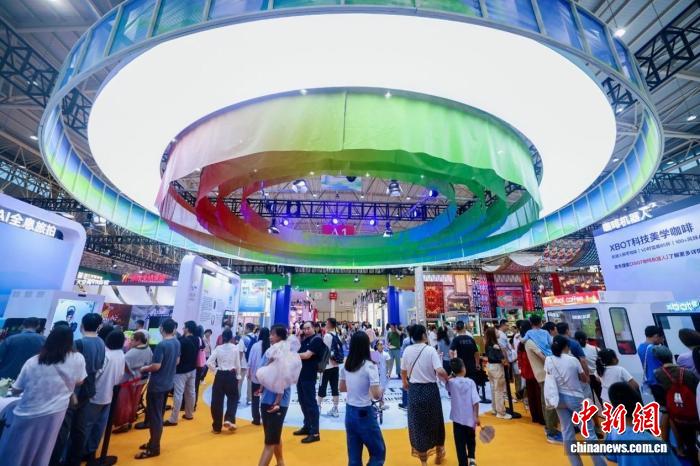
Group 1 - The 2025 China Cultural Tourism Industry Expo concluded in Wuhan, attracting 2000 enterprises and 225,000 visitors, with a total signing amount of 23.28 billion yuan for cultural tourism projects [1][4] - The expo featured a theme of "Deepening Cultural Tourism Integration, Enjoying a Better Life," covering an exhibition area of 100,000 square meters, including various performance and experience zones [2] - The event saw significant on-site transactions, with cultural and tourism products generating 170 million yuan in sales, and 810 million yuan in cooperation agreements from five negotiation activities [4] Group 2 - Half of the 225,000 attendees were from outside Wuhan, with hotel bookings in the city increasing by 43.5% year-on-year during the expo [4] - The expo included promotional activities to convert business visitors into tourists, with various discounts offered at local attractions [7] - Upcoming events include a large-scale city parade during the National Day and Mid-Autumn Festival, featuring 20 cultural tourism floats and nearly 1,000 performers [7]
江苏出台文件:发挥“苏超”撬动效应 策划“跟着‘苏超’去旅行”主题旅游线路
Zhong Guo Xin Wen Wang· 2025-09-04 07:04
Core Viewpoint - The Jiangsu Provincial Government has introduced a three-year action plan (2025-2027) aimed at promoting high-quality development in the cultural tourism industry, leveraging the "Su Super" football league to enhance tourism experiences and offerings [1][2]. Group 1: Action Plan Overview - The action plan includes six major actions with 22 key tasks, focusing on quality product supply, expanding consumer services, optimizing market environment, and providing policy support [1]. - The plan aims to enhance various tourism formats such as "performance + tourism," "exhibition + tourism," and "film + tourism," with a goal of increasing visitor numbers to registered museums to 150 million by 2027 [2]. Group 2: Economic Impact and Growth - In the first eight months of this year, Jiangsu Province saw a 10.43% increase in tourist numbers and a 9.94% rise in tourist spending, with UnionPay's off-site cultural tourism consumption growing by 14.86% [1]. - The action plan emphasizes the development of night economy initiatives, including night tours and cultural performances, which have already led to a 25% increase in nighttime consumption around popular museums [2][3]. Group 3: Cultural and Tourism Integration - The plan seeks to create themed travel routes linked to the "Su Super" league and develop unique cultural IPs based on local literature and history, such as "Dream of the Red Chamber" and "Journey to the West" [2]. - It also aims to enhance water-based leisure tourism by developing more boat and cruise tours, promoting the "Water Charm Jiangsu" cultural tourism brand [2]. Group 4: Technological Advancements - The action plan focuses on the development of new business formats in digital entertainment and smart tourism, including VR experiences and AI-driven services, to attract more visitors [3].
规范文旅业态,让暑期游玩更安心
Xin Hua Wang· 2025-08-18 23:24
Group 1: Travel Photography - The travel photography industry faces issues such as aggressive upselling and obstruction of public spaces, leading to negative tourist experiences [1][3] - Hangzhou's Xixi Wetland has implemented a management guideline that divides shooting areas into free and paid zones, requiring advance reservations and limiting the number of commercial shoots to ten groups per day [2] - The need for refined management and industry self-regulation is emphasized to ensure that travel photography enhances rather than detracts from the tourist experience [4] Group 2: Immersive Experiences - The rise of immersive experiences like escape rooms has spurred cultural consumption but also led to unregulated growth and safety concerns [5] - Jin City has established a multi-departmental regulatory mechanism to address the challenges of oversight in the cultural market, promoting proactive governance [6] - Recommendations include developing content classification guidelines and enhancing brand culture to ensure the quality and safety of immersive experiences [6] Group 3: Water Sports - The popularity of water sports in Rizhao's Wanpingkou Scenic Area has prompted the establishment of a comprehensive safety management system involving police, fire, and medical services [7] - A 24-hour monitoring and response mechanism has been created, including the formation of a rescue team equipped with various emergency response tools [8] - The scenic area has protocols for adverse weather conditions, ensuring the safety of tourists through timely communication and operational adjustments [9]
精耕细作发展旅游业
Jing Ji Ri Bao· 2025-05-14 22:06
Core Insights - The cultural tourism market in China is experiencing significant growth, driven by local initiatives and the development of new attractions and business models [1] - The tourism industry is recognized for its role in economic stability, consumer spending, job creation, and public welfare, supported by various government plans [1] - Key statistics for 2024 include 5.62 billion domestic trips (up 14.8%), total domestic spending of 5.8 trillion yuan (up 17.1%), and 132 million inbound tourists (up 60.8%) with spending nearing 100 billion USD (up 77.8%) [1] Group 1: Industry Development - The tourism industry is essential for economic growth and requires comprehensive planning and policy support to avoid low-level competition and redundancy [2] - Local governments are encouraged to create long-term development plans tailored to their unique resources and cultural contexts [2] - Financial institutions are urged to lower lending thresholds and increase loan amounts for promising tourism businesses, alongside enhanced fiscal support [2] Group 2: Cultural Integration and Innovation - The integration of culture into tourism is emphasized, aiming to enrich tourism offerings and enhance service quality through traditional and local cultural elements [3] - The tourism sector is encouraged to leverage new technologies to drive innovation and improve management practices, fostering the development of new business models [3] - There is a focus on promoting new tourism formats, such as low-altitude sightseeing and immersive experiences, to ensure healthy growth in the industry [3]