
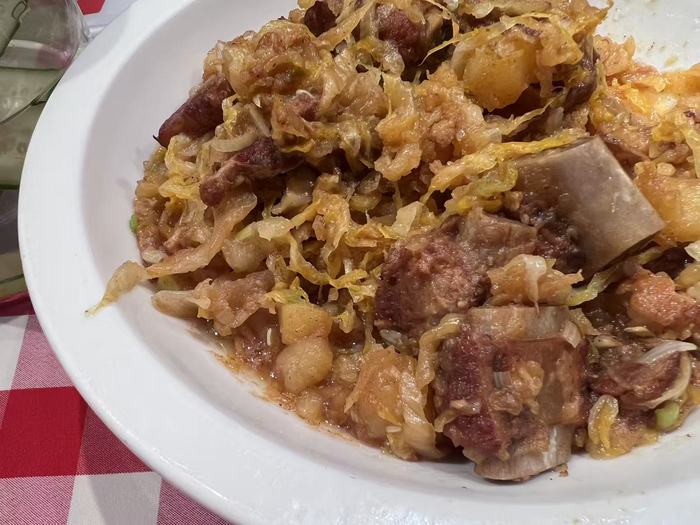
猪排烩酸菜

Search documents
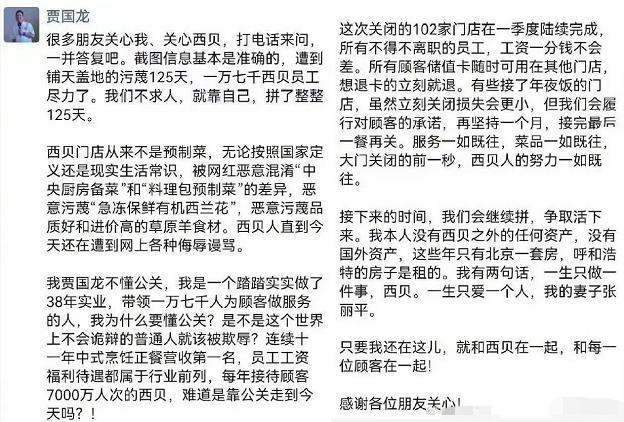
一句话压垮一个老牌餐企? 贾国龙确认西贝将关闭102家门店
3 6 Ke· 2026-01-20 04:18
Core Viewpoint - After 125 days of efforts, Xibei's chairman confirmed the closure of 102 stores, representing 30% of its total outlets, amid challenges in the prepared food sector [1][4]. Summary by Sections Store Closures and Employee Commitment - Xibei will close 102 stores gradually in the first quarter, ensuring that employee salaries remain intact and customer prepaid cards can be used at other locations [1][2][10]. - The company will honor commitments to customers who have booked New Year's Eve dinners by completing their last service before closing [2][10]. Internal Measures and Employee Welfare - Xibei has implemented internal measures to support employees, including a "complaint award" and psychological counseling for staff [5]. - Since September, the company has raised salaries for frontline employees by an average of 500 yuan per month, with reports of service staff earning nearly 9,100 yuan after deductions [5][10]. External Adjustments and Promotions - Xibei has made significant adjustments to its menu and pricing, including the introduction of new dishes and a large-scale price reduction on 40 items [6][8]. - Promotional activities have been launched, such as offering 100 yuan vouchers for in-store purchases and discounts on popular dishes [8][10]. Financial Performance and Market Position - Despite these efforts, Xibei's revenue in November was only 265 million yuan, less than half of the same period last year, indicating ongoing financial struggles [10][12]. - The company has faced a decline in store numbers since October, with nearly 10 closures in just one month [10][12]. Brand Image and Public Relations Challenges - The crisis was exacerbated by public relations missteps, including a failure to address consumer concerns effectively and a lack of empathy in communications [20][21]. - The founder's personal brand, once a source of strength, has become a liability as public scrutiny intensifies [23][24]. Industry Implications and Lessons Learned - The situation serves as a cautionary tale for the restaurant industry, highlighting the importance of balancing operational excellence with effective communication in the public sphere [24]. - Xibei's experience underscores the need for brands to adapt to changing consumer expectations and the impact of social media on public perception [24].

2025年餐饮品牌“西贝”营销动作、社媒热度与消费者反馈分析报告
数说Social Research· 2026-01-19 04:20
Investment Rating - The report does not explicitly provide an investment rating for the company. Core Insights - In 2025, the company "Xi Bei" faced a significant public relations crisis due to the "pre-made dish wave," which severely tested its brand reputation and consumer trust. The crisis peaked in September, with online mentions exceeding 400,000 and interactions nearing 70 million, significantly increasing the proportion of negative sentiment [3][4]. - To address the crisis, Xi Bei implemented a series of strategic adjustments in the second half of 2025, including a shift in focus from personal branding to product and service quality, a commitment to "in-store freshly made" dishes for over 30 menu items, and the introduction of a "sunshine kitchen" initiative to enhance transparency [3][4][5]. - The company also adjusted its pricing strategy, reducing the average customer spending from 92 yuan to a range of 75-85 yuan by lowering prices on over 40 dishes and launching large-scale promotional activities such as "Xi Bei invites you to dinner" [3][4][12]. Summary by Sections 1. Marketing Actions in 2025 - Xi Bei undertook a series of marketing adjustments focused on crisis response and brand rebuilding, particularly after the September crisis [5]. - The company quickly implemented transparency and quality enhancement measures in response to consumer concerns about food safety and information rights [7]. 2. Social Media Heat Analysis - In 2025, Xi Bei's social media performance was closely linked to its marketing and public relations events, showing a pattern of "silent periods followed by explosive reactions" [22]. - The brand's online mentions peaked in September, with a surge from approximately 53,000 mentions in August to over 405,000 in September, reflecting a nearly sevenfold increase [26]. 3. Consumer Feedback and Sentiment Analysis - Throughout 2025, consumer feedback evolved from a trust crisis to cautious observation, with neutral sentiment dominating but negative interactions significantly outpacing positive ones [35]. - During the pre-made dish wave, negative sentiment surged, with negative mentions rising from 3.3% to 29.6% [40]. 4. Marketing Strategy Effectiveness and Social Media Performance Correlation - The marketing actions taken by Xi Bei had a clear impact on social media heat, with crisis management actions and subsequent promotional activities leading to significant peaks in online mentions [44]. - The adjustments in marketing strategy influenced consumer sentiment, with proactive measures in the fourth quarter helping to alleviate some negative perceptions [48]. 5. Conclusion - In 2025, Xi Bei navigated a major public relations crisis and implemented a series of marketing and strategic adjustments that led to a temporary recovery in social media heat and customer traffic. However, the long-term rebuilding of brand trust remains a challenge [53][54].
不再“狂撒代金券”之后 西贝的生意怎么样了?
Xin Jing Bao· 2026-01-04 14:15
Core Insights - The article discusses the transformation of Xibei, a restaurant chain, following a public relations crisis that began in September 2025, leading to a significant shift in its operational and pricing strategies [1][3][4]. Group 1: Company Response to Crisis - Xibei experienced a drastic decline in daily revenue, with losses reaching 200,000 to 300,000 yuan per day during the crisis, prompting a halt in expansion and a focus on core operational issues [3][4]. - The company initiated a comprehensive reform over 113 days, addressing menu preparation, pricing, service transparency, and employee welfare, marking a systemic restructuring rather than a mere emergency response [4][5]. - Xibei implemented a significant price reduction of nearly 20% on over 30 menu items, lowering the average customer spending from 92 yuan to 75 yuan, which helped improve customer traffic by approximately 5% compared to the previous year [6][8]. Group 2: Operational Changes - The restaurant chain shifted its food preparation process to enhance freshness, with key dishes being made on-site rather than pre-prepared, including the transition of lamb skewers to be freshly cut and grilled [5][6]. - Xibei introduced a dual transparency mechanism with "open kitchens" and live streaming of kitchen operations, ensuring that customers can see food preparation processes, thereby enhancing trust [7][9]. Group 3: Industry Impact - The crisis catalyzed the development of national standards for pre-prepared foods, addressing long-standing issues of information asymmetry in the industry [3][9]. - The incident led to a broader industry consensus on the importance of transparency, with practices like kitchen live streaming becoming standard among chain restaurants [9][10]. - The public's perception of pre-prepared foods shifted from fear to a more rational understanding, emphasizing the need for clear labeling and transparency in food sourcing and preparation [9][10].
不再“狂撒代金券”之后,西贝的生意怎么样了?
Bei Ke Cai Jing· 2026-01-04 12:13
Core Viewpoint - The article discusses the transformation of Xibei, a restaurant chain, following a public relations crisis, highlighting its efforts to rebuild trust and improve customer experience through significant operational changes and price adjustments [1][6][26]. Group 1: Company Response to Crisis - Xibei experienced a significant drop in customer traffic and revenue during the crisis, with daily sales decreasing by 1 million yuan on September 10 and 11, and losses escalating to 200,000-300,000 yuan by September 12 [14]. - In response, Xibei initiated a comprehensive reform over 113 days, focusing on improving food preparation processes, pricing strategies, and employee welfare [1][16]. - The company implemented a "systematic restructuring" of its business model, emphasizing the return of core cooking processes to the stores and enhancing transparency in food preparation [16][20]. Group 2: Customer Engagement and Pricing Strategy - Xibei reduced prices on over 30 dishes by nearly 20%, lowering the average customer spending from 92 yuan to 75 yuan, which was a shift from a profit-driven pricing model to one based on customer perception [17][18]. - The adjustments led to a 5% increase in overall customer traffic compared to the previous year, indicating a positive market response to the new pricing strategy [19]. - The company emphasized the importance of customer feedback in setting prices, aiming to align with consumer expectations and enhance perceived value [18]. Group 3: Transparency and Food Safety - Xibei introduced a dual mechanism of "open kitchen" and "live streaming" in all stores to enhance transparency, with each location equipped with six cameras covering all operational areas [20]. - The company also upgraded its food safety protocols, undergoing over 80 inspections by government authorities without any violations reported, which helped maintain customer trust during the crisis [24]. - A new "food safety officer" role was established in each store, with incentives for employees to ensure compliance with safety standards, further reinforcing the commitment to food safety [24]. Group 4: Industry Impact and Future Outlook - The crisis prompted the development of national standards for pre-prepared food, addressing long-standing issues of transparency and consumer rights in the restaurant industry [15][26]. - The incident catalyzed a broader industry shift towards transparency, with practices like kitchen live streaming and ingredient traceability becoming standard among chain restaurants [26]. - As Xibei continues its transformation, the restaurant industry is expected to evolve towards healthier and more mature practices, driven by consumer demand for quality and transparency [27].
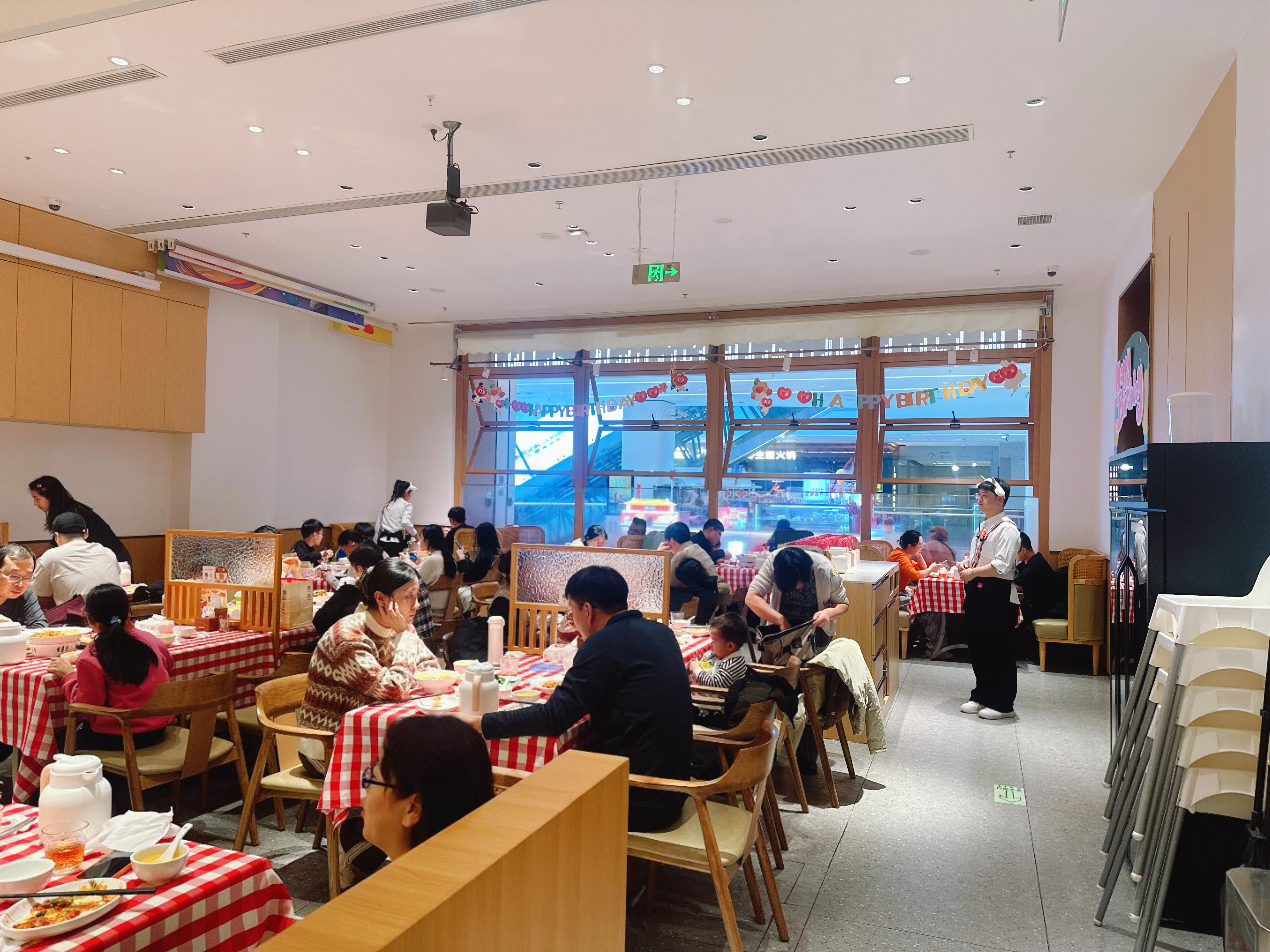
西贝100天,贾国龙悟了
Jing Ji Guan Cha Wang· 2025-12-26 08:14
Core Insights - The founder of Xibei Restaurant, Jia Guolong, publicly acknowledged past mistakes and emphasized the importance of listening to customer feedback and improving service quality [1][3][12] Group 1: Crisis Management - Xibei faced a significant public relations crisis after accusations of using pre-made dishes, leading to a drastic drop in customer traffic and sales, with some stores experiencing over a 50% decline [3] - In response to the crisis, Xibei chose to remain silent on social media, allowing time for internal adjustments and avoiding further escalation of the situation [3][4] - The company implemented a series of changes, including menu modifications and a shift towards fresh, made-to-order dishes, which required significant adjustments to their supply chain and operational processes [4][6] Group 2: Pricing Strategy - Xibei adjusted the prices of nearly 40 dishes, reducing them by 5% to 20%, which lowered the average customer spending from 92 yuan to approximately 75 yuan [6][7] - The company introduced promotional activities, such as "spend 50 get 50" vouchers, which successfully increased customer traffic and improved sales during weekends [6] - The pricing strategy shifted from a cost-plus model to a customer perception-based pricing model, aiming to enhance value perception among customers [6][7] Group 3: Employee Engagement - Xibei increased salaries for all frontline staff by 500 yuan and introduced various incentive programs to boost morale and service quality [8][9] - The company emphasized the importance of human resources, ensuring no layoffs occurred during the crisis and focusing on staff training and development [8][9] Group 4: Transparency and Food Safety - Xibei implemented a dual transparency mechanism with live kitchen feeds and strict adherence to food safety regulations, enhancing customer trust [10][11] - The company established dedicated food safety personnel in each location and increased the weight of food safety in performance evaluations [11] - Following the crisis, Xibei successfully passed over 80 government inspections without any food safety issues, reinforcing their commitment to quality [11] Group 5: Long-term Sustainability - The company's actions during the crisis demonstrated a commitment to genuine customer engagement and operational improvements, but challenges remain regarding the sustainability of these changes [12] - Future success will depend on converting short-term promotions into long-term customer loyalty and clearly defining the brand's positioning in the market [12]
西贝舆论风波整整2个月,生死如何?
Xin Lang Cai Jing· 2025-11-12 19:20
Core Viewpoint - The restaurant chain Xibei is undergoing significant changes in response to a recent public relations crisis, focusing on product adjustments, service improvements, and price reductions to regain customer trust and enhance brand image [1][3][9]. Product Adjustments - Xibei has committed to improving food safety and has made several product changes, including transitioning from pre-prepared to on-site cooking. As of September 30, the first batch of product adjustments has been completed, such as switching to non-GMO soybean oil and preparing certain dishes fresh in-store [5][9]. - The second phase of product adjustments includes handmade dumplings and freshly made chicken soup, with ongoing discussions with suppliers to shorten product shelf life while ensuring safety [5][9]. Service Improvements - The company is refocusing on family dining and enhancing services for children, the elderly, and women. By November, all stores will be equipped with first aid kits, and by December, each store will have at least one staff member trained in first aid [5][9]. Customer Traffic and Sales Strategies - Following the adjustments, customer traffic has begun to recover, with some stores reporting a 20% increase in weekend traffic compared to the previous year. However, trust issues remain among some consumers [6][8]. - To address complaints about high prices, Xibei implemented significant price reductions on over 40 dishes starting October 1, with discounts exceeding 20%. Additionally, the company distributed free vouchers to attract customers, resulting in a 5% increase in overall customer traffic compared to the previous year [7][8]. Store Adjustments - Xibei has closed nearly 10 stores since October, which the company states is a normal part of restaurant operations, with an annual store adjustment rate of about 10%. In 2022, Xibei opened 13 stores and closed 31, while in 2023, it opened 26 and closed 14 [7][8]. Brand Recovery Efforts - The company is focused on transforming the crisis into an opportunity for brand rebuilding, emphasizing transparency and customer engagement. While some progress has been made in restoring customer traffic, full recovery of brand trust will take time [9].
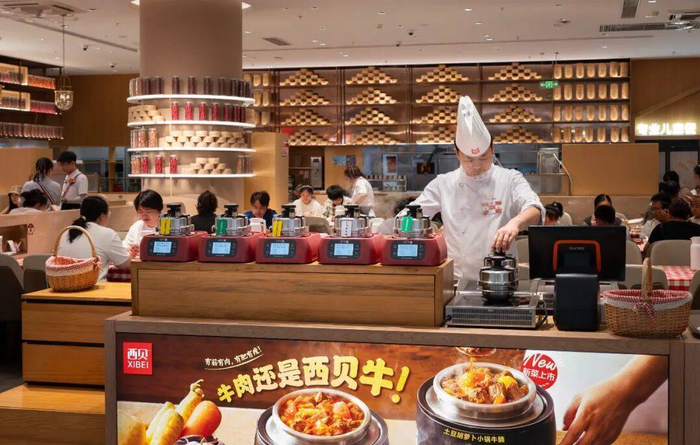
直击风波后的西贝:25分钟计时沙漏取消,羊肉串羊排现烤、西兰花承诺1个月内用完
第一财经· 2025-09-27 03:08
Core Viewpoint - The company Xibei is shifting its focus from speed to quality in response to recent challenges, including a decline in customer trust and sales due to the pre-prepared food controversy [3][10]. Summary by Sections Customer Experience and Sales - Xibei's restaurant occupancy rate is currently around 30%-40%, with a noticeable decline in business activity [3]. - The company is issuing 100 yuan vouchers to customers to regain their trust and encourage repeat visits, valid from September 25 to October 31 [5][8]. Changes in Food Preparation - Xibei has eliminated its previous "timed hourglass" promise for serving food within 25 minutes, indicating a shift in operational priorities [5]. - The company has committed to making significant changes to its food preparation processes, moving from centralized kitchen operations to on-site cooking to better meet customer expectations [10][12]. - Specific changes include: - Switching to non-GMO soybean oil for all dishes [10][12]. - Introducing fresh ingredients, such as fresh pumpkin slices in oatmeal millet porridge and freshly cut lamb skewers [7][10]. - Ensuring that all meat products, including pork and beef, are prepared fresh on-site rather than pre-cooked and frozen [10][12][13]. Company Response and Future Outlook - Xibei issued an apology letter acknowledging the gap between its production methods and customer expectations, promising to improve transparency and food safety [11][12]. - The company aims to enhance its operational efficiency while maintaining food quality, reflecting a broader trend in the restaurant industry towards balancing speed and quality [10][12].
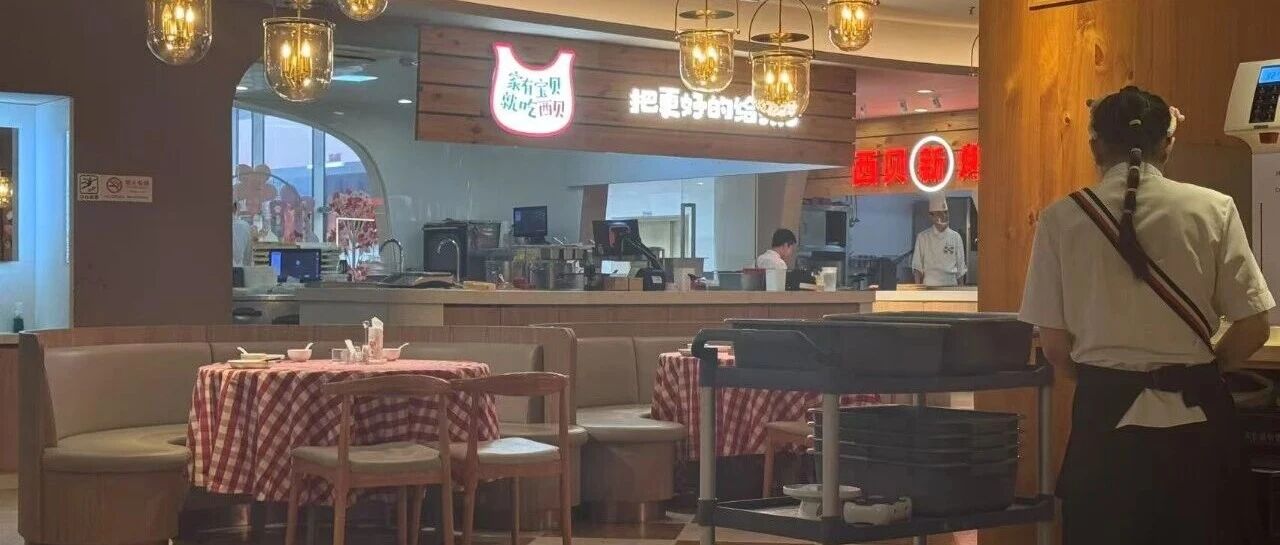
罗永浩“停战”后,西贝紧急培训厨师
Xin Lang Cai Jing· 2025-09-18 10:59
Core Viewpoint - Xibei is implementing a series of apology and rectification measures in response to the "pre-made food" controversy, including adjustments to cooking processes and ingredient sourcing [1][3]. Summary by Sections Rectification Measures - Xibei announced plans to shift from centralized kitchen processing to on-site cooking at stores, aiming to complete these changes by October 1 [1][3]. - Specific adjustments include switching to non-GMO soybean oil for all dishes, preparing children's meals on-site, and modifying the preparation of various signature dishes [1][3]. Operational Challenges - The transition to on-site cooking will likely increase labor costs due to the need for skilled chefs and additional training for existing staff [3][4]. - The adjustments may also lead to higher food waste and require more kitchen space and equipment, potentially affecting overall efficiency [3][4]. Financial Implications - Xibei's average profit margin of 5% may be further compressed due to increased operational costs from the changes [5]. - Comparatively, Xibei's profit margin is positioned in the middle range within the industry, with competitors like KFC and Haidilao reporting higher margins [5][6]. Market Conditions - The overall restaurant industry is facing challenges, with a reported 4.3% growth in national dining revenue, but a decline in revenue growth for larger establishments [6][7]. - Xibei has experienced a significant drop in customer traffic following the controversy, with daily revenue losses estimated at 1 million to 3 million yuan [6][7]. Consumer Trust Issues - Xibei's shift towards a "family-friendly restaurant" model, focusing on children's meals, raises concerns about regaining consumer trust, particularly regarding food safety and ingredient transparency [10][12]. - The controversy surrounding pre-made foods has highlighted a disconnect between industry standards and public perception, complicating Xibei's efforts to rebuild trust with consumers [12].
“西罗之争”也是餐饮行业改进的机遇
Nan Fang Du Shi Bao· 2025-09-15 15:09
Core Viewpoint - The incident involving Luo Yonghao's comments about Xibei's use of pre-prepared dishes has sparked significant public attention, leading to Xibei's acknowledgment of the gap between its production methods and customer expectations, and a commitment to adjust its practices by moving some food preparation to in-store cooking [1][3]. Group 1: Consumer Rights and Expectations - Consumers assert their right to know the true nature of the food they purchase, supported by consumer protection laws that mandate transparency regarding whether dishes are freshly prepared or pre-prepared [1][2]. - Many consumers do not oppose pre-prepared dishes per se but are against paying a premium for what they believe to be freshly cooked meals when, in fact, they are not [2]. Group 2: Industry Response and Opportunities - The controversy presents a transformation opportunity for the restaurant industry, as Xibei's adjustments respond to consumer demands for transparency and quality, potentially enhancing the dining experience [3][5]. - The shift towards in-store cooking and communication with suppliers to ensure freshness aligns with growing consumer concerns about food safety and ingredient quality [3]. Group 3: Regulatory and Market Trends - Recent regulatory developments, including a draft national standard for pre-prepared foods that mandates the absence of preservatives and requires disclosure of pre-prepared dish usage, indicate a move towards greater transparency in the industry [3]. - The market's response to this incident has led many restaurants to adopt live-streaming of kitchen processes, allowing consumers to witness food preparation firsthand, thereby building trust between consumers and the restaurant industry [4].
北京市市监局:已关注到西贝
Nan Fang Du Shi Bao· 2025-09-15 13:39
Core Viewpoint - The controversy surrounding the pre-prepared dishes of the restaurant chain Xibei has sparked significant public attention and regulatory scrutiny, highlighting consumer rights and the need for transparency in the food industry [1][2][4]. Company Summary - Xibei has acknowledged the disparity between its production methods and customer expectations, committing to adjust its operations by moving from centralized kitchen processing to on-site cooking in stores by October 1 [2][4]. - The company plans to modify several well-known dishes to be prepared fresh in-store, which aligns with consumer preferences for transparency and quality [4]. Industry Summary - The pre-prepared dish controversy presents an opportunity for the restaurant industry to improve and adapt, as consumer demand for transparency and quality increases [4][5]. - The recent regulatory developments, including the introduction of national food safety standards for pre-prepared dishes, will require restaurants to disclose their use of such products, further pushing the industry towards greater transparency [4]. - Many restaurants have begun live-streaming their kitchen processes to enhance consumer trust, showcasing the preparation of dishes in real-time [5].