
矿业ETF(561330)

Search documents
2026核心赛道前瞻:科技+周期双轮驱动,这些行业值得重点关注
Mei Ri Jing Ji Xin Wen· 2026-02-09 01:37
Group 1 - The market liquidity is relatively abundant at the beginning of 2026, with A-shares daily trading volume maintaining above 2 trillion yuan, and technology and cyclical stocks showing a rotating upward trend [1] - The technology sector and related cyclical fields, such as upstream non-ferrous metals, are expected to present investment opportunities in 2026, particularly in the semiconductor chip industry where leading companies' capital expenditures have exceeded expectations [1] - The communication sector remains a core area deeply tied to overseas computing power demand, with capital expenditures from overseas cloud companies expected to continue rising in 2026 [1] Group 2 - The AI industry is anticipated to drive growth in related supply chains, with potential shortages and price increases in certain sectors, such as space photovoltaics in the electricity supply side [2] - According to the "14th Five-Year Plan," domestic grid investment is set to accelerate, with fixed asset investment by the State Grid expected to grow by 40% compared to the previous five-year period [2] - The cyclical sector, particularly non-ferrous metals, is gaining market attention, with financial attributes expected to receive strong support during a rate-cutting cycle [2]
金融属性+大国博弈机遇:有色矿业怎么看?
Mei Ri Jing Ji Xin Wen· 2026-02-09 01:37
Core Viewpoint - Investors may focus on investment opportunities in the non-ferrous mining and metals sector, driven by the financial attributes of non-ferrous metals in a rate-cutting environment and the benefits of precious metals from a declining US dollar index and de-dollarization demand [1] Group 1: Non-Ferrous Metals and Mining Sector - The demand for industrial metals, rare earths, and energy metals is influenced by significant supply-side disruptions and strong strategic reserve needs [1] - The energy transition, driven by advancements in AI, humanoid robots, and solid-state batteries, is expected to increase demand for copper, aluminum, and lithium, with lithium demand in energy storage surpassing that in electric vehicles [1] - The correlation of copper and aluminum with AI data centers is higher than with other metals, leading to a notable price increase since last year [1] Group 2: Precious Metals - There is a marked increase in investment demand for gold, with domestic central banks continuously increasing their gold reserves and emerging market central banks showing significant demand for gold reserves [1] - Both domestic and overseas investors believe that the future price of gold has upward potential [1] Group 3: Market Trends and Recommendations - The short-term price increase potential exists for metals like copper, aluminum, and gold, with lithium prices rising rapidly due to supply disruptions and increasing storage demand [2] - The rare earth sector is also expected to see price stability and potential increases due to strategic reserve needs and ongoing supply regulations [2] - The non-ferrous sector, including gold and silver, has already seen significant short-term gains, but there may still be room for growth throughout the year, suggesting a strategy of gradual investment [2] - The mining ETF (561330) is highlighted as a potential investment opportunity, having shown strong price elasticity over the past two to three years [2]
1月狂涨69.8%,显著跑赢所有板块
Ge Long Hui· 2026-01-27 11:29
Group 1: Precious Metals Surge - The global silver market has experienced an "epic" short squeeze, with the main silver contract in Shanghai soaring by 14% on January 26, reaching over 30 yuan per gram, while gold surpassed 1150 yuan per gram, both hitting historical highs [1][4] - Since the beginning of 2026, the A-share precious metals sector has risen by 69.8%, significantly outperforming other sectors, while the non-ferrous metals sector has increased by 30.85% [1][3] - In the first 17 trading days of the year, the gold stock ETF (517400) rose by 38.06%, and the mining ETF (561330) increased by 26.89% [1] Group 2: Underlying Logic of Precious Metals Rally - The surge in precious metals is driven by heightened international geopolitical tensions, particularly actions taken by the Trump administration, including military actions and withdrawal from international organizations [4][6] - The ongoing geopolitical instability has led to increased global demand for gold as a safe-haven asset, with many countries significantly increasing their gold purchases since the onset of the Russia-Ukraine conflict [6][7] - Countries are planning to repatriate gold reserves from the U.S. due to concerns over geopolitical safety, with Germany and several African nations planning to return over 400 tons of gold [7][10] Group 3: Super Cycle in Non-Ferrous Metals - The non-ferrous metals sector has also seen significant price increases, with the mining ETF (561330) showing a 106.11% rise in 2025, making it the top performer among all non-ferrous ETFs [16] - Prices of various non-ferrous metals, including tin, nickel, and lithium, have shown substantial weekly increases, indicating strong demand and supply constraints [18][19] - The ongoing geopolitical tensions have made non-ferrous resources strategic assets, leading to increased control and demand for these materials globally [20][21] Group 4: Institutional Outlook - Major investment banks are bullish on gold prices, with Goldman Sachs raising its 12-month gold price target from $4800 to $5500, citing geopolitical risks and the ongoing demand from central banks [23] - Morgan Stanley has also increased its gold price forecast for the end of 2026 from $4600 to $5300, emphasizing the beginning of a global reserve asset restructuring [23] - The demand for non-ferrous metals is expected to grow due to macroeconomic factors and industry-specific needs, with institutions favoring copper, aluminum, cobalt, and rare earths as key investment areas [23][26]


矿企有望享受“量价齐升”,关注矿业ETF(561330)
Mei Ri Jing Ji Xin Wen· 2025-12-30 07:19
Group 1 - The metal market experienced significant volatility on December 29, with silver futures seeing over a 10% increase before turning negative, while copper briefly surpassed 100,000 yuan per ton before narrowing its gains. Platinum and palladium contracts hit their daily limit down in the afternoon [1] - The structural deficit in silver supply and demand has persisted for five years, with silver prices soaring over 150% this year due to industrial demand from photovoltaic silver paste and AI electronics, alongside a high gold-silver ratio. The global silver supply is primarily a byproduct of copper, lead, and zinc mining, and the expected increase in silver supply by 2026 is minimal, failing to cover the projected shortfall of over 100 million ounces [1] - In contrast, copper is transitioning from an anticipated shortage to a real one, with a projected global copper market deficit of 500,000 to 1 million tons by 2026. The decline in existing mine grades and lagging capital expenditures are contributing to supply challenges, while demand from AI and power grids is creating a rigid demand for copper, suggesting that copper prices are likely to rise [1] Group 2 - The recent significant price increases in metals like silver and copper have led to profit-taking, resulting in heightened short-term volatility. Companies with high-quality mining resources are expected to benefit from both volume and price increases, providing a good margin of safety and typically higher stock price elasticity compared to the metals themselves. Investors are advised to keep an eye on mining ETFs (561330) and consider opportunities for low-cost acquisitions [2]
ETF日报:2026年养殖业有望迎来利润与估值的同时修复 关注养殖ETF
Xin Lang Cai Jing· 2025-12-29 14:11
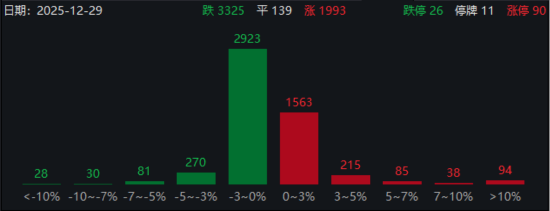
Market Overview - The A-share market experienced slight fluctuations, with the Shanghai Composite Index rising by 0.04% to 3965.28 points, marking a nine-day winning streak, while the Shenzhen Component Index fell by 0.49% to 13537.10 points. The total trading volume remained high at 2.15 trillion yuan, with more declines than gains in the overall market. As the year-end approaches, market hotspots are becoming more dispersed, with the oil and military sectors performing relatively well. After a brief adjustment in the fourth quarter, the market has resumed its upward trend, and the positive factors driving this rally are expected to remain unchanged, indicating a potential slow bull market next year [1][10]. Metal Market Dynamics - The metal market has shown significant volatility, with silver futures experiencing over a 10% increase during the day but closing lower. Copper futures broke the 100,000 yuan mark but also saw a narrowing of gains by the end of the day. Platinum and palladium contracts hit their daily limit down. The fluctuations in commodity prices have led to a decline in the non-ferrous metal sector in the stock market [3][12]. - Silver has been in a structural supply deficit for five years, driven by industrial demand from photovoltaic silver paste and AI electronics, with a cumulative increase of over 150% this year. The global supply of silver is primarily a byproduct of copper, lead, and zinc mining, and the expected increase in silver supply by 2026 is minimal, unable to fill the significant demand gap. The demand from the photovoltaic industry is stable despite the push for "de-silverization," while the rapidly expanding demand from AI data centers and automotive electronics will further support silver prices. A physical deficit of over 100 million ounces of silver is anticipated by 2026 [3][12]. - In contrast, copper is transitioning from an expected shortage to a real shortage, with projections indicating a deep deficit of 500,000 to 1 million tons in the global copper market by 2026. The decline in existing mine grades and lagging capital expenditures are hindering copper supply growth, while the explosive demand from AI and power grids is creating a rigid demand for copper, making price increases more likely in the long term [3][12]. Investment Strategies - Given the significant prior gains in metals like silver and copper, profit-taking has led to increased short-term volatility. Companies with high-quality mining resources are expected to benefit from both volume and price increases, providing a good safety margin and typically higher stock price elasticity than the metals themselves. Investors are advised to pay attention to mining ETFs (561330) and consider opportunities for low-cost acquisitions [4][13]. - The livestock sector saw a mild increase today, with pig supply expected to contract significantly due to strong policy and market-driven reductions, potentially leading to a rising price trend. The chicken sector is also expected to see price stabilization as seasonal demand increases, while the egg-laying industry faces upstream supply constraints that will gradually affect prices. Overall, the livestock industry is anticipated to recover in profits and valuations by 2026, making livestock ETFs (159865) worth monitoring [4][14]. Currency and Economic Outlook - The offshore RMB has strengthened against the USD, reaching the 7.0 mark, the highest in 15 months. It is expected that the RMB will maintain a strong trend in the short term, with a moderate appreciation anticipated in 2026, which could enhance the attractiveness of Chinese assets to global capital [4][14]. - In 2026, China is expected to continue its loose monetary and proactive fiscal policies, leading to a further recovery in total demand. Globally, fiscal expansions in the US, Europe, and Japan are also expected to improve demand. The Federal Reserve is likely to maintain a loose stance, benefiting the A-share market during the economic recovery phase [5][15]. Index Performance - The A500 index emphasizes industry balance and sector leaders, providing a more diversified and growth-exposed style that can offer a better beta base during the industrial upgrade cycle. Since its base period, the A500 has shown an annualized total return of 9.11% with a volatility of 21.41%, outperforming the CSI 300 in total returns, particularly in growth phases. The A500 index, covering leading companies across various sectors, offers investors a balanced choice between defensive and growth potential during market fluctuations [6][15].
12月24日盘后播报:高弹性板块涨幅居前,贵金属涨势如虹
Mei Ri Jing Ji Xin Wen· 2025-12-24 12:01
Market Performance - A-shares showed strong performance today, with the Shanghai Composite Index rising by 0.53% to 3940.95 points, the Shenzhen Component Index increasing by 0.88%, and the ChiNext Index up by 0.77% [1] - The total trading volume in the Shanghai and Shenzhen markets was 1.88 trillion yuan, a decrease of 19.6 billion yuan compared to the previous trading day [1] - High-volatility sectors such as military, consumer electronics, photovoltaic, and telecommunications performed well, while sectors like aquaculture, coal, and dividend stocks lagged behind [1] Investment Outlook - The long-term outlook for the equity market remains optimistic, driven by policies aimed at "expanding domestic demand," which includes support for income-driven demand, reasonable investment returns, and financial demand constrained by capital and debt [2] - The current bottleneck in the A-share market is attributed to the K-shaped economic recovery, with high-growth sectors like AI and export chains facing uncertainty, while low-growth sectors such as consumption and real estate may require policy support to recover [2] - The trade surplus has exceeded 1.2 trillion USD, indicating strong competitiveness in Chinese manufacturing, but rising protectionism poses risks to export growth [2] Sector Recommendations - Investors are advised to focus on sectors with more certainty, such as those related to power infrastructure, including mining ETFs, non-ferrous metal ETFs, and grid ETFs [3] - The economic structure remains unchanged, but if risks in AI and related fields materialize, cash flow ETFs may present significant value [3] - Precious metals are experiencing a strong upward trend, with gold prices surpassing 4500 USD per ounce for the first time, driven by geopolitical risks, supply shortages, and strong investment demand [3]
12月1日大盘简评
Mei Ri Jing Ji Xin Wen· 2025-12-02 01:13
Group 1 - A-shares experienced a rebound with the Shanghai Composite Index rising by 0.65% to 3914.01 points and the Shenzhen Component Index increasing by 1.25% to 13146.72 points, indicating improved market activity and a potential phase of stabilization after recent adjustments [1] - The non-ferrous metals sector showed strong performance, with silver and copper reaching historical highs, supported by the Federal Reserve's interest rate cut cycle and increased global liquidity, alongside investments in new energy and power grids [1] - The gaming ETF saw a recovery, rising by 1.64%, following the National Press and Publication Administration's approval of 184 domestic online game licenses in November, marking a record high for the year [1] Group 2 - The gold sector continued its upward trend, supported by heightened expectations for interest rate cuts by the Federal Reserve, which have risen to over 80%, alongside geopolitical uncertainties that enhance gold's safe-haven appeal [2] - The combination of the Fed's rate cut cycle, increasing global uncertainties, and trends towards de-dollarization is expected to provide ongoing support for gold prices, prompting interest in gold ETFs and stocks [2]
11月5日大盘简评
Mei Ri Jing Ji Xin Wen· 2025-11-06 01:16
Group 1 - A-shares experienced a slight upward trend on November 5, with the Shanghai Composite Index rising by 0.23% to 3969.25 points, and the Shenzhen Component Index increasing by 0.37% [1] - The trading volume in the Shanghai and Shenzhen markets was approximately 18723.41 billion yuan, a decrease of about 434.17 billion yuan compared to the previous trading day [1] - Sectors such as photovoltaic, carbon neutrality, and new energy vehicles showed strong performance, while TMT sectors faced a pullback, particularly in integrated circuits and computers [1] Group 2 - The A-share market continued to fluctuate below 4000 points, with TMT sectors still in a correction phase [2] - In the absence of policy support in the fourth quarter, sectors with growth potential are expected to focus on AI and anti-involution, with limited expansion into consumer sectors [2] - Public funds' allocation to TMT sectors reached a historical high of 40% in Q3, indicating a potential slowdown in future price increases [2] Group 3 - The bond market may show some performance in the fourth quarter, with limited upward space for government bond yields following the resumption of government bond trading by the central bank [3] - The macroeconomic pressure in China is evident, with insufficient domestic demand being a major structural issue, complicating the transmission of anti-involution policies [3] - Investors are advised to pay attention to the ten-year government bond ETF and government bond ETF due to the potential for a decline in bond yields [3]
铜价屡创新高,新经济领域为铜带来新增长逻辑
Mei Ri Jing Ji Xin Wen· 2025-10-31 01:09
Core Insights - Recent copper price increases are attributed to constrained supply, a synergy of new and traditional demand, and a loose monetary environment [1] - New economic sectors such as renewable energy and AI are driving significant copper demand, transforming its asset characteristics from a traditional industrial metal to a core material for new infrastructure, thus opening long-term growth opportunities [1][2] Supply Side Analysis - Global copper supply disruptions have become normalized, with significant incidents affecting major copper mines, leading to a projected 35% decrease in output from a major Indonesian mine by 2026 and potential delays in production from a Chilean mine due to safety checks [1] - The expected new copper production capacity of only 500,000 tons by 2025 is insufficient to meet the anticipated demand increase of 800,000 tons, resulting in an expanding supply-demand gap [1] Demand Side Analysis - The growth in copper demand is now driven by new economic sectors, reducing reliance on traditional industries like real estate and home appliances, which are more susceptible to economic cycles [2] - Key demand drivers include: - Electric vehicles (EVs), with each vehicle requiring 80-100 kg of copper, four times that of traditional fuel vehicles, and a projected global EV sales increase to over 30 million units by 2025, adding approximately 250,000 tons of copper demand [2] - AI computing centers, where each server rack consumes 100-200 kg of copper, with significant demand growth expected as countries invest in AI infrastructure [2] - Power grid investments in China exceeding 500 billion yuan annually during the 14th Five-Year Plan, with over 40% of copper demand coming from power grid applications [2] Financial Attributes - Copper's status as a dollar-denominated commodity and the potential for lower interest rates to stimulate financing across the supply chain are expected to further boost overall demand [3] - Investment opportunities exist through index-based tools, particularly mining ETFs that focus on upstream mining sectors, covering copper, gold, and rare earths, with notable elasticity and potential for excess returns [3] - Long-term growth in emerging industries and a tight supply-demand balance are expected to support the sector's prosperity, with opportunities for strategic accumulation during short-term adjustments [3]
梁杏:布局A股,关注核心+卫星的配置策略
Mei Ri Jing Ji Xin Wen· 2025-10-16 01:17
Core Viewpoint - The adjustment in the US stock market is expected to have a limited impact on the A-share market, which is likely to maintain a slow bull trend despite short-term fluctuations [1][2]. Group 1: Market Trends - Historical experience shows that significant declines in the US market often lead to global market volatility, but A-shares have demonstrated relative resilience recently [1]. - The technology sector, particularly in artificial intelligence, is leading the current A-share rally, with both domestic and North American computing capabilities playing a role [1][2]. - A-share's fundamentals exhibit a degree of independence from US market movements, suggesting that local factors will also influence performance [1]. Group 2: Investment Strategy - The current low-interest-rate environment is prompting capital to flow into the stock market in search of higher returns, resulting in relatively abundant liquidity [1]. - The recent market adjustment is viewed as a favorable opportunity for investors to accumulate shares, particularly for those optimistic about A-share's future [2][3]. - A recommended investment strategy involves a "core + satellite" approach, combining core holdings with satellite investments in technology and dividend stocks to enhance investment experience during market volatility [3]. Group 3: Sector Focus - The "anti-involution" theme is highlighted as a potential investment opportunity, encompassing sectors like steel, coal, photovoltaic, construction materials, aquaculture, and chemicals, which are supported by national policies [5]. - The aquaculture sector has shown resilience, with its performance remaining strong even during broader market declines, indicating its unique internal circulation logic [5]. - Other sectors currently in a downward cycle are not recommended, while the mining and non-ferrous metals sectors may present opportunities due to their independent performance linked to commodities like gold and copper [5].