磨砂膏

Search documents
一罐磨砂膏被抢爆,山东夫妻狂揽19亿
Xin Lang Cai Jing· 2026-02-06 10:27
Core Viewpoint - The company "Banmu Huatian" is preparing to go public in Hong Kong, leveraging its success in the affordable personal care market, but faces challenges related to its reliance on traffic and quality controversies [3][9][43] Company Overview - Founded in 2010 in Jinan, Shandong, Banmu Huatian started with flower plant extracts and expanded into body lotions, cleansers, masks, and shampoos, becoming a leading domestic brand in body care [6][9] - The company has achieved significant sales growth, with revenue increasing from 1.2 billion RMB in 2023 to nearly 1.9 billion RMB in the first three quarters of 2025 [11][26] Market Position - Banmu Huatian is recognized as the first domestic personal care brand to file for an IPO in Hong Kong, being dubbed the "first domestic personal care stock" [9] - It has become the leading domestic brand in body lotion, body scrub, and cleansing mousse, with a market share of 0.8% in the body care sector, ranking ninth overall [14][11] Financial Performance - The company reported a revenue of 18.95 billion RMB for the first nine months of 2025, a 76.7% increase year-on-year, with a net profit of 1.25 billion RMB, reflecting a 465.22% growth [26][31] - Marketing expenses are high, with 47.3% of revenue allocated to sales and marketing, indicating a heavy reliance on promotional activities [35][36] Product Strategy - Banmu Huatian's products are priced around 20 RMB, with a focus on affordability while maintaining a high gross margin of over 60% [33] - The company has developed a diverse product line with 509 main SKUs, targeting body, hair, and facial care [22][19] Marketing and Sales Channels - The brand has effectively utilized social media and e-commerce platforms, achieving over 75% of sales from online channels, particularly through Douyin [25][31] - Collaborations with celebrities have significantly boosted brand visibility and sales, with notable partnerships including stars like Guan Xiaotong and Sun Yingsha [23][26] Challenges and Risks - The company faces quality issues, with numerous complaints regarding product safety and effectiveness, which could impact brand reputation [38][39] - Increased competition in the personal care market, with many brands entering the space, poses a threat to Banmu Huatian's market position [18][9] Future Plans - The company plans to use funds from its IPO to expand its market presence, enhance brand development, and invest in research and development, particularly targeting Southeast Asian markets [31][33] - Despite its growth, the company must address its heavy marketing reliance and improve its R&D capabilities to sustain long-term success [43][42]


一罐磨砂膏被抢爆,山东夫妻狂揽19亿
盐财经· 2026-02-06 10:10
Core Viewpoint - The company "Banmu Huatian" is preparing to go public on the Hong Kong Stock Exchange, leveraging its success in the affordable personal care market while facing challenges related to its reliance on traffic and quality controversies [2][8]. Group 1: Company Overview - Founded in 2010, Banmu Huatian has evolved from selling floral extracts to a wide range of personal care products, including body lotions and scrubs, capitalizing on the rise of content e-commerce [5][10]. - The company has become the leading domestic brand in body care products, achieving significant sales growth, with revenue increasing from 1.2 billion RMB in 2023 to nearly 1.9 billion RMB in the first three quarters of 2025 [10][30]. Group 2: Product Strategy - Banmu Huatian's products are characterized by an average price of around 20 RMB, positioning them as affordable yet high-quality options in the market [12][39]. - The company has successfully captured market share in body lotions and scrubs, with cumulative sales of approximately 56.9 million and 37.7 million units, respectively, making it the top domestic brand in these categories [12][15]. Group 3: Marketing and Sales Strategy - The company has heavily invested in marketing, spending about 8.96 billion RMB in sales and marketing expenses in the first three quarters of 2025, which accounts for 47.3% of its revenue [40][30]. - Banmu Huatian has effectively utilized social media platforms like Douyin and Xiaohongshu for marketing, creating a successful "content seeding + live streaming conversion" model that has driven significant sales growth [26][28]. Group 4: Financial Performance - The company's revenue reached 18.95 billion RMB in the first nine months of 2025, reflecting a 76.7% year-on-year growth, with a net profit of 1.25 billion RMB, marking a 465.22% increase [30][30]. - Despite high revenue growth, the company faces financial pressure with a debt ratio of 67.6% and a significant increase in inventory, indicating potential challenges in sales turnover [46][43]. Group 5: Challenges and Risks - Banmu Huatian's reliance on marketing over research and development has raised concerns about its long-term competitiveness, as its R&D expenditure has decreased to 1.5% of revenue [41][47]. - The company has faced quality issues, with numerous complaints regarding product safety, which could impact its brand reputation and market position [42][47].

大爆发!“组团”来了:君乐宝、钱大妈、袁记食品......知名消费企业掀港股上市潮
Zhong Guo Ji Jin Bao· 2026-01-31 06:58
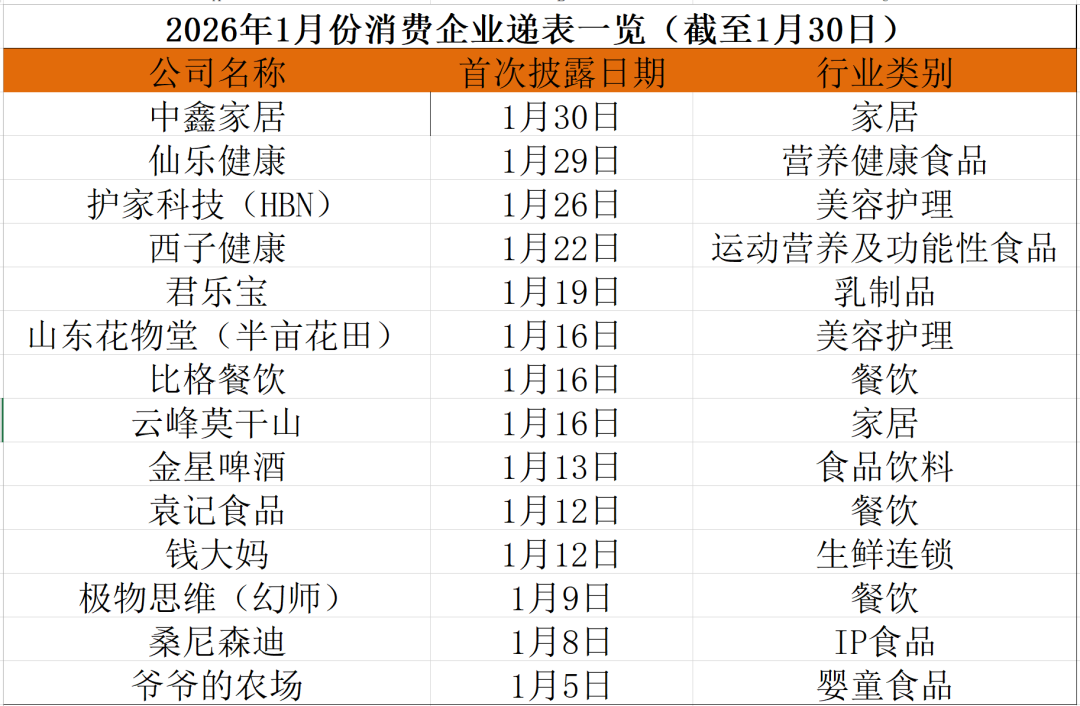
Core Viewpoint - The Hong Kong capital market is experiencing a surge in listings from consumer companies, with notable firms like Junlebao, Qian Dama, and Yuanji Food preparing to go public, indicating a strategic move amidst a challenging domestic consumption environment [1][5]. Group 1: Market Trends - In early 2026, 14 consumer companies have disclosed H-share prospectuses, a significant increase compared to the same period in 2025 [1]. - The IPO of Dongpeng Beverage, expected to raise HKD 10 billion, marks the largest IPO in the Asian beverage sector in recent years [1]. - The trend of consumer companies going public in Hong Kong reflects a strategic response to various market conditions, including policy support and capital market changes [5][6]. Group 2: Company Highlights - Junlebao, a leading player in the dairy industry, aims to raise funds for factory construction, capacity expansion, brand marketing, and digital transformation, with annual revenue around RMB 20 billion [2]. - Jin Xing Beer, a traditional brewery, has shown explosive growth, with revenue increasing from RMB 356 million to RMB 1.109 billion and net profit soaring from RMB 12 million to RMB 305 million over two years [3]. - The emerging beauty brand Banmu Huatian is also pursuing a Hong Kong listing to enhance R&D and brand development in a competitive market [3]. Group 3: Factors Driving Listings - Policy support from the Chinese government has facilitated the process for consumer companies to list in Hong Kong, with measures introduced to encourage leading firms to access capital markets [5][6]. - The shift towards Hong Kong listings is also driven by tightening A-share market conditions for consumer companies, making Hong Kong a more attractive option for capital raising [6]. - The influx of venture capital and private equity into emerging consumer firms has created pressure for exits, making public listings a viable path for capital recovery [7]. Group 4: Market Performance and Challenges - There is a noticeable divergence in stock performance among consumer companies listed in Hong Kong, with some achieving high valuations while others struggle post-IPO [8][9]. - The market favors companies with strong brand presence and visible cash flow, while smaller brands face liquidity discounts due to lack of profitability [9]. - Successful expansion in the consumer sector requires matching growth with profitability, as merely increasing store numbers is no longer sufficient to attract capital [9].
大爆发!“组团”来了:君乐宝、钱大妈、袁记食品、金星啤酒、比格餐饮......知名消费企业掀港股上市潮,资本、市场与政策共振的必然结果
Zhong Guo Ji Jin Bao· 2026-01-31 05:35
Core Viewpoint - The surge of consumer companies listing on the Hong Kong Stock Exchange (HKEX) in early 2026 is driven by a combination of capital demands, market conditions, and favorable policy environments, marking a significant trend in the consumer sector [1][8]. Group 1: Listing Trends - Major consumer companies such as Mingming Hen Mang and Dongpeng Beverage have recently completed their IPOs, with Dongpeng raising an estimated HKD 10 billion, setting a record for the Asian beverage industry [1][4]. - As of January 30, 2026, 14 consumer companies have disclosed their H-share prospectuses, indicating a notable increase compared to the same period in 2025 [2][4]. - The trend includes a diverse range of sectors, including food and beverage, beauty care, and home goods, showcasing a multi-faceted approach to capitalizing on market opportunities [4][6]. Group 2: Company Highlights - Junlebao, a leading dairy brand, aims to raise funds for factory construction, capacity expansion, and brand marketing, with an annual revenue of approximately CNY 20 billion [4]. - Jinxing Beer, known for its craft beer, reported a revenue increase from CNY 356 million to CNY 1.109 billion from 2023 to the first nine months of 2025, with net profit soaring from CNY 12 million to CNY 305 million, marking a 2400% increase [5]. - Other notable companies like Qian Dama and Yuanji Food are also advancing their listing processes, reflecting a broader trend of consumer companies seeking capital to support growth and expansion [4][6]. Group 3: Market Dynamics - The favorable policy environment, including measures from the China Securities Regulatory Commission to support leading enterprises in listing in Hong Kong, has facilitated this trend [8]. - The recovery of the HKEX since 2025 has made it an attractive option for consumer companies, with over one-third of new listings in the first half of 2025 being consumer-related [9]. - The internal pressures for capital and the need for significant funding to support growth strategies are driving companies to pursue listings as a means of capitalizing on market opportunities [9][10]. Group 4: Valuation and Market Performance - There is a noticeable divergence in stock performance among consumer companies listed on the HKEX, with some achieving high valuations while others struggle post-IPO [11][12]. - The market favors companies with strong brand presence and visible cash flow, while smaller brands face liquidity discounts due to lack of profitability [12]. - The ability to expand internationally and enhance operational efficiency is becoming increasingly important for valuation in the consumer sector [12].
营销费用占比近半 半亩花田递表港交所
Bei Jing Shang Bao· 2026-01-18 15:25
Core Viewpoint - The company, Shandong Huawutang Cosmetics Co., Ltd., is preparing for an IPO on the Hong Kong Stock Exchange, with a focus on increasing marketing expenses to boost sales, while the industry is shifting towards R&D and innovation [1][3][8]. Financial Performance - The company reported a revenue of 11.99 billion in 2023, projected to increase to 14.99 billion in 2024, representing a 25% year-on-year growth. By the first three quarters of 2025, revenue is expected to reach 18.95 billion, showing a 76.7% increase [4]. - Adjusted net profit is expected to rise from 23.7 million in 2023 to 82.8 million in 2024, and further to 148 million in the first three quarters of 2025, marking a 197.2% increase [4]. Marketing Strategy - The company has significantly increased its marketing expenses, with monthly marketing costs nearing 100 million. For the periods ending September 30, 2024, and September 30, 2025, marketing expenses were 5 billion and 8.96 billion, respectively, accounting for 46.6% and 47.3% of revenue [5][6]. - The company has successfully leveraged online sales channels, with online revenue reaching 10.27 billion in 2023 and 14.45 billion in the first three quarters of 2025, representing 85.7% and 76.3% of total revenue [7]. R&D and Innovation - Despite the increase in marketing expenses, the company's R&D expenditure as a percentage of revenue has declined, with R&D costs of 22.34 million and 28.14 million for the first three quarters of 2024 and 2025, respectively, representing 2.1% and 1.5% of revenue [8]. - The company has established R&D centers in Shanghai, Jinan, and Guangzhou, accumulating 131 patents, indicating a commitment to enhancing its innovation capabilities [9]. Industry Context - The domestic beauty market is becoming increasingly competitive, with brands shifting focus from marketing to R&D and innovation. The company faces challenges from both established international brands and emerging local competitors [9].

半亩花田递表港交所:业绩高速增长 营销费用占比近五成
Bei Jing Shang Bao· 2026-01-18 14:44
Core Viewpoint - The company, Shandong Huawutang Cosmetics Co., Ltd., has submitted a listing application to the Hong Kong Stock Exchange, with its brand, Banmu Huatian, showing significant revenue and profit growth, driven by increasing marketing expenses. However, the competitive landscape in the domestic beauty market is shifting towards research and innovation, necessitating strategic adjustments by the company [1][4][8]. Group 1: Financial Performance - Banmu Huatian's revenue for 2023 was 1.199 billion yuan, projected to increase to 1.499 billion yuan in 2024, representing a 25% year-on-year growth. By the first nine months of 2025, revenue further rose to 1.895 billion yuan, a 76.7% increase compared to 2024 [4]. - The adjusted net profit for Banmu Huatian grew from 23.7 million yuan in 2023 to 82.8 million yuan in 2024, marking a 249.4% increase, and reached 148 million yuan in the first nine months of 2025, a 197.2% increase from the same period in 2024 [4]. Group 2: Marketing and Sales Strategy - The company has significantly increased its marketing expenses, with monthly marketing costs nearing 100 million yuan by 2025. Marketing expenses accounted for 46.6% and 47.3% of revenue in 2024 and 2025, respectively [5][6]. - Banmu Huatian has successfully leveraged online sales channels, with revenue from online platforms reaching 1.027 billion yuan in 2023 and 1.445 billion yuan in the first nine months of 2025, constituting 85.7% and 76.3% of total revenue for those periods [7]. Group 3: Industry Context and Challenges - The domestic beauty market is experiencing intense competition, with brands shifting focus from marketing to research and innovation. Banmu Huatian's R&D expense ratio has declined, with R&D expenses of 22.34 million yuan and 28.14 million yuan in the first three quarters of 2024 and 2025, respectively, representing 2.1% and 1.5% of revenue [8][9]. - The company faces challenges from both established international brands and emerging local competitors, necessitating a proactive approach to market trends and consumer preferences influenced by social media and KOL recommendations [9].
告别“罚金一刀切”,南京积极探索生态损害赔偿新实践——
Nan Jing Ri Bao· 2025-11-13 02:47
Core Viewpoint - The article highlights an innovative approach in Nanjing's ecological damage compensation system, where educational initiatives replace traditional punitive measures, promoting environmental awareness among students while addressing minor environmental violations [1][2][3]. Group 1: Innovative Educational Approach - Nanjing's ecological damage compensation case involved a unique educational session for students, where they learned to create mosquito-repellent sachets from medicinal herb waste, showcasing the potential of waste materials [1][2]. - The session, titled "The Wonderful Transformation of Medicinal Herb Waste," served as a practical application of the ecological damage compensation agreement, providing a new perspective on handling minor environmental violations [1][2]. Group 2: Regulatory and Institutional Framework - The Nanjing ecological environment bureau proposed a "substitute restoration" plan, allowing the university to fulfill compensation responsibilities through educational outreach, rather than imposing fines [2][3]. - This approach reflects a shift from punitive measures to collaborative solutions, emphasizing ecological restoration and community engagement [3][4]. Group 3: Broader Implications and Future Directions - Nanjing has been actively reforming its ecological damage compensation system, introducing local standards for handling such cases and promoting innovative mechanisms that link clean production with ecological restoration [4]. - The city aims to enhance public participation in environmental protection through initiatives like community health clinics and environmental services, ensuring that ecological rights are upheld for both citizens and businesses [4].
柠檬清香怡悦生活日常
Jing Ji Ri Bao· 2025-08-22 00:11
Group 1 - The consumption of lemons is expanding due to their unique aroma, taste, and nutritional value, increasingly appearing on dining tables, in beverages, and as additives in daily products [1] - The logistics improvements have allowed northern consumers to access fresh lemons, with 8 out of the 10 provinces showing the fastest growth in lemon sales being northern provinces, indicating a growing market potential [1] - The market for lemons is diversifying, with various niche lemon varieties like perfumed lemons, green lemons, seedless lemons, and small green lemons gaining popularity among consumers [1] Group 2 - As of August 4, the average wholesale price of lemons in China reached 14.11 yuan per kilogram, nearly double the price of 7.96 yuan per kilogram from the previous year, influenced by extreme weather affecting major lemon-producing areas [2] - The increase in lemon prices is attributed to rising consumption and an expanding consumer base, although it is expected that prices may decrease with the new lemon harvest in the autumn [2]
走访300+消费公司后,我发现了一个超级品牌的共性
Hu Xiu· 2025-04-10 06:35
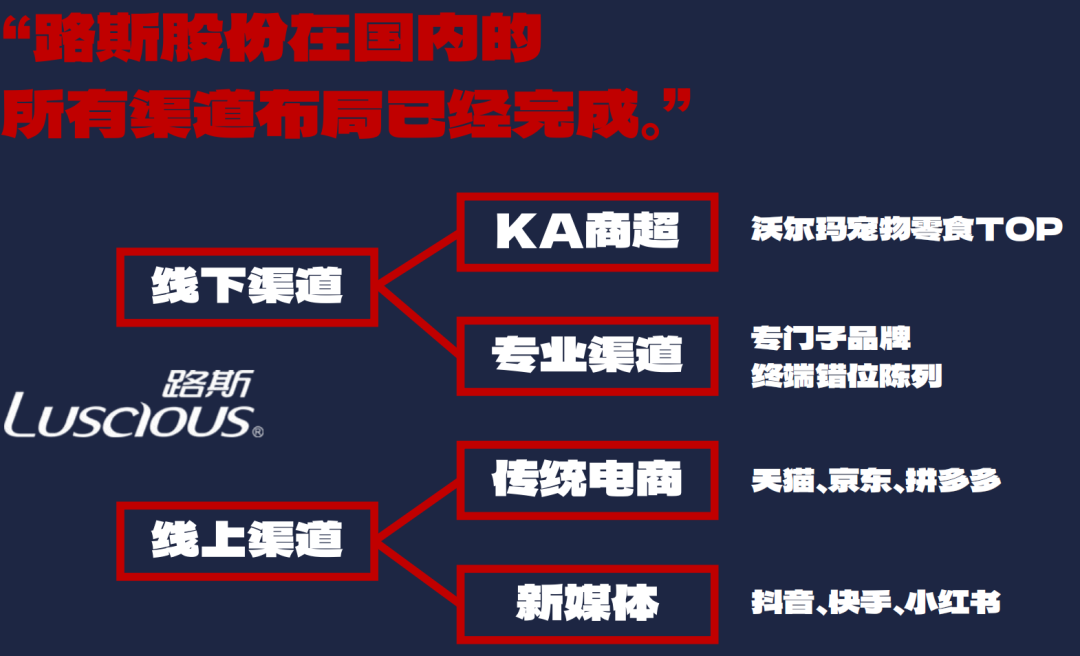
Core Insights - The core barrier for consumer goods and retail across cycles is the development of channels and brands, with a focus on how companies leverage these elements to create sustainable growth. Group 1: Channel Development - Super channels incubate super brands, with successful brands like Coca-Cola and Nestlé relying heavily on channel strength [2][10] - Companies like Lusi Co., which initially focused on international markets, have shifted to domestic markets by building strong channel networks rather than solely relying on social media platforms [5][8] - Lusi Co. has established a comprehensive channel presence, including major retail systems and online platforms, to support its brand growth [6][7][8] Group 2: Product Focus - The concept of "super products" is crucial, as seen in brands like Mixue Ice City and Luckin Coffee, which focus on strategic single products to drive brand recognition [11][12] - The case of "Boss Loves Fish" illustrates how focusing on a single product can lead to brand success, emphasizing the importance of product quality and differentiation [17][12] Group 3: Brand Power - The essence of consumer goods barriers lies in brand strength rather than just channel or product power, as highlighted by historical examples from Coca-Cola [40][41] - The evolution of brand competition has transitioned from product competition to marketing competition, emphasizing the importance of storytelling and content in brand development [43][50] Group 4: Content Strategy - Effective content strategy is essential for brand growth, with a focus on creating engaging narratives that resonate with consumers [51][62] - Brands must adapt their content to different platforms, understanding that each medium has unique characteristics and audience expectations [106][100] - Successful brands like Banmu Huatian have leveraged targeted content strategies across platforms to achieve significant sales growth [108][110] Group 5: Market Trends - The rise of new media platforms has transformed consumer engagement, with brands needing to adapt their strategies to remain relevant in a rapidly changing market [106][125] - The case of Zibo barbecue demonstrates how viral marketing can create significant brand awareness and consumer interest [70][72] Group 6: Case Studies - The example of "Ren Yang Yi Tou Niu" illustrates how storytelling and community engagement can enhance brand value and consumer loyalty [168][171] - The strategic use of KOLs (Key Opinion Leaders) in marketing campaigns can effectively drive brand recognition and sales [120][119]