营养食品

Search documents
不止是家门口的超市:国科优选,重新定义社区品质生活
Xin Lang Cai Jing· 2026-02-26 13:34
Core Insights - Guoke Youxuan is a quality new retail platform focused on serving community families, emphasizing daily consumption needs and building a complete supply chain from production to community [3][4] - The platform prioritizes quality over quantity, adopting a "few but excellent" product selection strategy to ensure safety, quality, and user experience [3][5] - Guoke Youxuan's brand philosophy centers on selecting products with the mindset of parents and children, ensuring trust through stable and traceable quality [3][6] Business Model - The company employs an online-offline integrated community new retail model, utilizing community operations and live interactions for convenient shopping experiences [4][6] - It has established 5,000 physical service points across multiple cities, allowing users to experience products in-store or enjoy nearby delivery services [4][5] - This model combines the convenience of online shopping with the tactile experience of traditional retail, catering especially to family users and older consumers [4][6] Quality Assurance - Guoke Youxuan's core competitive advantage lies in its stringent quality control system, which includes direct sourcing, full traceability, third-party verification, and multiple testing stages [5][6] - The selection team conducts thorough on-site inspections of production areas, ensuring that only products meeting platform standards are included [5][6] - The transparent quality control system allows consumers to trace the origin and journey of each product, enhancing their confidence in purchases [5][6] Service Features - The platform promotes a "try before you buy" service philosophy, allowing customers to sample products before making a purchase decision [5][6] - This approach reduces impulsive buying and caters to consumers who may be less comfortable with online shopping, particularly older adults [5][6] - Guoke Youxuan also offers a comprehensive after-sales service, including a 365-day no-reason return policy, reflecting its confidence in product quality and commitment to customer satisfaction [6][7] Market Positioning - Guoke Youxuan is not merely a shopping platform but a comprehensive solution for daily family consumption, focusing on quality supply chains, integrated online-offline models, experiential shopping, and robust after-sales support [6][7] - The platform's emphasis on quality and service positions it well in a market where consumers increasingly prioritize rational purchasing and high-quality products [6][7] - As more consumers seek healthy, convenient, and reliable lifestyles, platforms like Guoke Youxuan are expected to deliver tangible value to families [7]


张家港多措并举护航银发经济 精准破解老年群体消费痛点
Su Zhou Ri Bao· 2026-01-24 00:53
Core Viewpoint - The aging population is driving the "silver economy," which is becoming a new engine for consumption and high-quality economic development. Zhangjiagang City is implementing a comprehensive strategy to enhance the shopping experience for the elderly, ensuring they have access to suitable products and services while feeling secure in their purchases [1]. Group 1: Upgrading Consumption Venues - Zhangjiagang's market regulatory department has initiated the upgrade of offline consumption venues, establishing dedicated areas for elderly consumers in supermarkets, pharmacies, and community canteens to enhance product visibility and quality assurance [2]. - The newly established silver consumption zones feature a range of products tailored for the elderly, including adaptive clothing, mobility aids, and nutritional foods, with strict adherence to quality and service standards [2]. - Pharmacies have introduced medication guidance areas where pharmacists provide personalized consultations, ensuring safe medication use for the elderly [2]. Group 2: Service Innovation - The introduction of the "Silver Consumption Experience Officer" program allows elderly volunteers to monitor and provide feedback on service quality, pushing businesses to improve their offerings [3]. - A set of service standards and operational guidelines for silver consumption scenarios has been developed to encourage proactive service adaptation by businesses [3]. - Educational initiatives, such as the "Smart Assistance for the Elderly" program, aim to bridge the digital divide by teaching elderly consumers how to shop and pay using smartphones, thereby enhancing their shopping experience [3]. Group 3: Regulatory Oversight - Zhangjiagang's market regulatory authority has intensified enforcement efforts to create a safe consumption environment for the elderly, including the establishment of a dedicated green channel for consumer rights protection [5]. - The average resolution time for consumer disputes has been reduced to within three working days, improving the efficiency of conflict resolution [5]. - Ongoing efforts to combat fraud in the elderly market have included five special operations this year, resulting in the investigation of two cases related to counterfeit and misleading advertising [5].
【2025榜单】5万亿赛道,30个破局者,15条洞察:中国新银发消费品牌TOP30年度榜
新消费智库· 2026-01-19 14:32
Core Insights - The aging population in China is projected to exceed 297 million, creating a massive market for elderly products, estimated to surpass 50 trillion yuan [2] - Currently, there are over 60,000 types of elderly products globally, but only about 2,000 are produced at scale in China, indicating a significant supply-demand gap [2] - The purchasing power primarily lies with the children of the elderly, who are caught between emotional concerns and practical needs [6][7] Group 1: Consumption Trends - Elderly consumers are willing to spend on health and entertainment, prioritizing products that enhance their longevity and enjoyment of life [6] - The majority of purchases are made by children, who often pay for expensive items like smartwatches and massage chairs, emphasizing the need for dual marketing strategies targeting both generations [7][8] - Elderly individuals are increasingly tech-savvy, often outperforming younger generations in using smartphones and apps, indicating a demand for user-friendly designs rather than "senior versions" of products [10] Group 2: Product Design and Marketing - Effective elderly products should focus on simplicity, removing unnecessary features to avoid confusion [11][12] - Many elderly consumers buy health monitoring devices not for strict data tracking but for peace of mind, highlighting the emotional aspect of health management [13] - Community influencers, such as local shopkeepers, are more effective in promoting products than celebrity endorsements, emphasizing the importance of trust in marketing [14] Group 3: Emerging Business Models - The rental market for medical and rehabilitation equipment is growing, as it offers a cost-effective solution for short-term needs [15] - Companies must focus on genuine product quality and user needs rather than merely meeting subsidy standards to ensure long-term viability [16] - The market for elderly products is vast but under-supplied, with many existing products failing to meet the actual needs and preferences of elderly consumers [17] Group 4: Consumer Behavior - Elderly consumers are cautious decision-makers, often requiring extensive research before making purchases, leading to high brand loyalty once trust is established [20] - They are sensitive to price but prioritize perceived value and effectiveness over mere affordability [21] - Consumption is often driven by necessity rather than desire, with elderly consumers seeking solutions to specific life challenges [22] Group 5: Trust and Authority - Trust in authority figures has evolved, with elderly consumers now valuing advice from family members and community peers alongside traditional experts [24] - Many elderly individuals play a significant role in family purchasing decisions, acting as key financial managers and decision-makers for household needs [26] Group 6: Innovative Brands - The article highlights 30 innovative brands catering to elderly consumers, including those focused on health, home care, and lifestyle products, showcasing the diversity and potential within the silver economy [27][28][29]

CPI同比涨幅继续扩大 PPI同比降幅收窄
Xin Lang Cai Jing· 2026-01-09 17:39
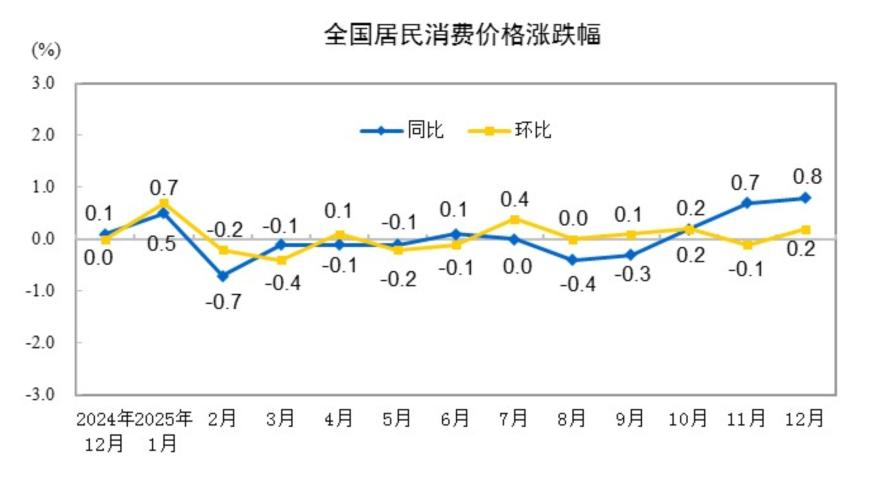
Group 1 - In December 2025, the Consumer Price Index (CPI) increased by 0.2% month-on-month and 0.8% year-on-year, while the Producer Price Index (PPI) rose by 0.2% month-on-month but decreased by 1.9% year-on-year [1][2] - The CPI's year-on-year growth rate expanded by 0.1 percentage points compared to the previous month, reaching the highest level since March 2023, primarily driven by an increase in food prices, which rose by 1.1% [1][3] - Key food items such as fresh vegetables and fruits saw price increases of 18.2% and 4.4%, respectively, contributing approximately 0.16 percentage points to the CPI's year-on-year increase [1][2] Group 2 - The month-on-month CPI increase was influenced by rising prices of industrial consumer goods, excluding energy, which rose by 0.6%, contributing about 0.16 percentage points to the CPI [2] - The PPI's year-on-year decline of 1.9% showed a narrowing of the decline by 0.3 percentage points from the previous month, with significant price reductions in coal mining and lithium-ion battery manufacturing [3] - Prices in sectors such as external storage devices and biomass liquid fuels increased by 15.3% and 9.0%, respectively, indicating a growth in new productive forces [3]
国家统计局:12月份CPI上涨0.8%,PPI环比上涨0.2%涨幅比上月扩大0.1个百分点
Jin Rong Jie· 2026-01-09 02:30
Core Insights - In December 2025, the national consumer price index (CPI) increased by 0.8% year-on-year, with urban areas rising by 0.9% and rural areas by 0.6% [3][20] - The producer price index (PPI) for industrial producers decreased by 1.9% year-on-year, with a narrowing decline compared to the previous month [12][25] CPI Analysis - The CPI rose by 0.2% month-on-month in December, driven by increased consumer demand ahead of the New Year [20][21] - Food prices increased by 1.1% year-on-year, significantly impacting the CPI, with fresh vegetable prices soaring by 18.2% [6][23] - Core CPI, excluding food and energy, rose by 1.2%, maintaining a growth rate above 1% for four consecutive months [20][23] PPI Analysis - The PPI saw a month-on-month increase of 0.2%, marking the third consecutive month of growth [24][25] - The decline in PPI year-on-year was less severe than in previous months, indicating a potential stabilization in industrial pricing [12][25] - Key industries such as coal mining and lithium-ion battery manufacturing experienced price increases, reflecting improved supply-demand dynamics [24][25] Price Movement by Category - In December, food and beverage prices rose by 0.8% year-on-year, contributing approximately 0.24 percentage points to the CPI [6][11] - The prices of production materials decreased by 2.1% year-on-year, with significant declines in mining and raw materials sectors [14][19] - The prices of durable consumer goods fell by 3.5%, while general daily necessities saw a price increase of 1.4% [14][19]
扩内需政策措施继续显效
Jing Ji Wang· 2025-12-11 06:56
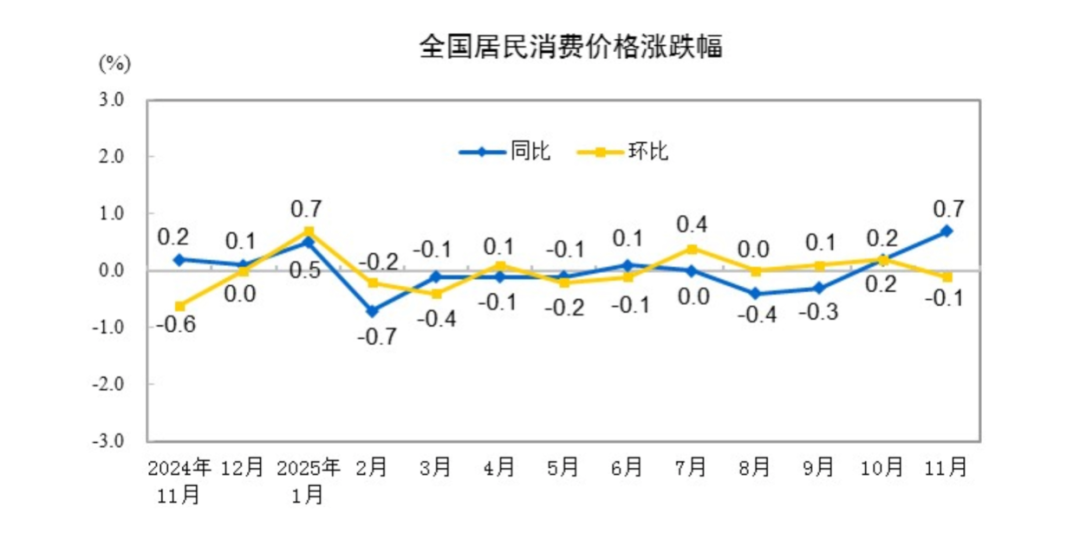
Group 1: Consumer Price Index (CPI) Insights - In November, the CPI increased by 0.7% year-on-year, marking the highest growth since March 2024, with a month-on-month decrease of 0.1% [2][3] - The rise in CPI was primarily driven by a shift in food prices from decline to increase, with fresh vegetable prices rising by 14.5% after nine consecutive months of decline [2][3] - Core CPI, excluding food and energy, rose by 1.2% year-on-year, maintaining above 1% for three consecutive months, indicating stable inflationary pressures [2][3] Group 2: Producer Price Index (PPI) Insights - The PPI increased by 0.1% month-on-month in November, marking the second consecutive month of growth, influenced by seasonal demand increases in certain industries [4] - Year-on-year, the PPI decreased by 2.2%, with the decline slightly widening compared to the previous month, primarily due to high comparison bases from the previous year [4] - The increase in PPI was supported by rising prices in coal and gas sectors, while international oil price fluctuations led to a decrease in domestic oil and gas extraction prices [4] Group 3: Market Trends and Future Outlook - The ongoing "anti-involution" measures are showing results, with price declines in key industries narrowing, indicating improved market competition [5] - Emerging industries are rapidly developing, contributing to price increases in related sectors, such as a 13.9% rise in external storage devices and components [6] - Future inflation is expected to remain low, with a gradual recovery in prices anticipated due to stable domestic demand and effective competition governance [7][8]
CPI同比涨幅扩大 核心CPI继续上涨
Xin Hua She· 2025-12-11 00:31
Group 1: Consumer Price Index (CPI) Trends - In November, the national Consumer Price Index (CPI) slightly decreased by 0.1% month-on-month but increased by 0.7% year-on-year, marking the highest growth since March 2024, with a 0.5 percentage point increase from the previous month [1] - The rise in CPI year-on-year was primarily driven by a shift in food prices from a decline to an increase, with food prices changing from a decrease of 2.9% to an increase of 0.2%, impacting CPI by approximately 0.04 percentage points [1] - Fresh vegetable prices saw a significant turnaround, increasing by 14.5% after a 9-month decline, contributing an additional 0.49 percentage points to the CPI [1] Group 2: Core CPI and Industrial Prices - The core CPI, excluding food and energy, rose by 1.2% year-on-year, maintaining a growth rate above 1% for three consecutive months [2] - Service prices and industrial consumer goods prices, excluding energy, increased by 0.7% and 2.1%, respectively, contributing approximately 0.29 and 0.53 percentage points to the CPI [2] - The Producer Price Index (PPI) increased by 0.1% month-on-month but decreased by 2.2% year-on-year, with the decline attributed to a high comparison base from the previous year [2] Group 3: Industry-Specific Price Changes - The "involution" competition in key industries has shown improvement, with price declines in coal mining, photovoltaic equipment manufacturing, and lithium-ion battery manufacturing narrowing over several months [3] - Emerging industries such as new materials and intelligent technology are driving price increases, with external storage devices and components rising by 13.9% year-on-year [4] - Consumer demand has been effectively released, leading to price increases in related industries, such as a 20.6% rise in the manufacturing of arts and crafts and ceremonial goods [5]
11月CPI同比上涨0.7% 为2024年3月以来最高 国家统计局:宏观政策不断显效 价格呈现积极变化
Zhong Guo Zheng Quan Bao· 2025-12-10 22:27
Group 1: Consumer Price Index (CPI) Insights - In November, the national Consumer Price Index (CPI) showed a slight month-on-month decrease of 0.1% but a year-on-year increase of 0.7%, marking the highest growth since March 2024, with an increase of 0.5 percentage points from the previous month [1] - The increase in CPI year-on-year was primarily driven by a turnaround in food prices, which shifted from a decrease of 2.9% in the previous month to an increase of 0.2% [2] - Core CPI, excluding food and energy prices, rose by 1.2% year-on-year, maintaining a growth rate above 1% for three consecutive months, indicating effective domestic demand expansion policies [2] Group 2: Producer Price Index (PPI) Insights - The Producer Price Index (PPI) increased by 0.1% month-on-month in November, marking the second consecutive month of growth [3] - The rise in PPI was attributed to seasonal increases in demand across certain domestic industries, particularly in coal and gas, with coal mining prices rising by 4.1% and gas production prices by 0.7% [3] - Year-on-year, the PPI decreased by 2.2%, with the decline slightly widening by 0.1 percentage points compared to the previous month, largely due to high comparison bases from the previous year [3] Group 3: Sector-Specific Price Changes - The rapid development of emerging industries has led to price increases in related sectors, with prices for external storage devices and components rising by 13.9% year-on-year [4] - Consumer demand has been effectively released, contributing to price recoveries in relevant industries, such as a 1.1% increase in the price of nutritional food manufacturing [4] - The prices of household appliances, including washing machines and air conditioners, saw a narrowing of year-on-year declines, indicating a positive trend in consumer goods pricing [4]
11月CPI同比上涨0.7% 为2024年3月以来最高
Zhong Guo Zheng Quan Bao· 2025-12-10 20:17
Group 1 - In November, the Consumer Price Index (CPI) showed a slight month-on-month decrease of 0.1% but a year-on-year increase of 0.7%, marking the highest growth since March 2024 [1] - The increase in CPI year-on-year was primarily driven by a turnaround in food prices, which shifted from a decrease of 2.9% in the previous month to an increase of 0.2% [1] - The Producer Price Index (PPI) rose by 0.1% month-on-month, marking the second consecutive month of increase, while year-on-year it decreased by 2.2% [2][3] Group 2 - The core CPI, excluding food and energy prices, increased by 1.2% year-on-year, maintaining a growth rate above 1% for three consecutive months, indicating effective demand expansion policies [2] - Seasonal demand increases in certain domestic industries contributed to the rise in PPI, with coal mining and gas production prices increasing by 4.1% and 0.7% respectively [2] - The prices of fresh vegetables saw a significant turnaround, increasing by 14.5% year-on-year after nine months of decline, indicating a tightening supply due to weather and production disruptions [1][4] Group 3 - The prices of essential consumer goods, such as nutritional food manufacturing, increased by 1.1% year-on-year, reflecting the positive impact of consumption-boosting initiatives [4] - The prices of home appliances, including washing machines and air conditioners, experienced a narrowing decline compared to the previous month, suggesting a recovery in consumer demand [4] - The prices in the non-ferrous metal mining sector rose by 2.6% month-on-month, driven by international price increases, while oil and gas extraction prices fell due to declining international oil prices [3]
去年3月以来最高!国家统计局发布重要数据
Zhong Guo Zheng Quan Bao· 2025-12-10 02:29
Core Insights - In November, the Consumer Price Index (CPI) increased by 0.7% year-on-year, marking the highest growth since March 2024, primarily driven by a reversal in food prices from decline to increase [2][4] - The Producer Price Index (PPI) rose by 0.1% month-on-month, marking the second consecutive month of increase, while year-on-year, it decreased by 2.2% [5][8] CPI Analysis - The CPI's year-on-year increase of 0.7% reflects a 0.5 percentage point rise from the previous month, largely due to food prices shifting from a 2.9% decline to a 0.2% increase [2][4] - Fresh vegetable prices saw a significant turnaround, increasing by 14.5% year-on-year after nine months of decline, while pork and poultry prices decreased by 15.0% and 0.6%, respectively, with the rate of decline narrowing [4] - Core CPI, excluding food and energy, rose by 1.2% year-on-year, maintaining above 1% for three consecutive months [4] PPI Analysis - The PPI's month-on-month increase of 0.1% is attributed to seasonal demand increases in certain domestic industries, such as coal and gas, with coal mining prices rising by 4.1% [5][7] - Year-on-year, the PPI's decline of 2.2% is influenced by high comparison bases from the previous year, with various macroeconomic policies showing positive effects on prices [8] - Prices in emerging industries, such as new materials and intelligent manufacturing, have increased, with specific categories like external storage devices rising by 13.9% year-on-year [8]