虚拟现实

Search documents
变局之下前景依然乐观:投资颠覆性未来丨汇丰2季度财富洞察
华尔街见闻· 2026-03-30 08:16
Core Insights - The article discusses how disruptive technologies, particularly artificial intelligence, are reshaping the investment landscape and driving economic growth despite concerns about inflation and global risks [4]. Group 1: Economic Growth and Innovation - Cathie Wood believes that innovation and tax reductions will enhance productivity, thereby promoting economic growth [4]. - The healthcare sector is expected to be the largest beneficiary of cost reductions driven by open-source artificial intelligence, particularly from companies like Meta and in China [4]. Group 2: Healthcare Industry Opportunities - The pharmaceutical industry is projected to face $300 billion in patent expirations over the next five years, but AI-driven healthcare presents significant growth opportunities [4]. - AI is anticipated to advance early disease diagnosis and potentially extend human lifespan, indicating a modernization of diagnostics and improvement in patient treatment outcomes [4].


山东明确电子信息产业着力发展培育的核心产品和场景
Da Zhong Ri Bao· 2026-01-23 01:09
Core Insights - Shandong Province aims to achieve a revenue of over 850 billion yuan in the electronic information manufacturing industry this year, with the artificial intelligence terminal sector expected to generate around 400 billion yuan [1][2] Group 1: Key Focus Areas - The plan emphasizes the development of core products and scenarios in key support areas such as artificial intelligence terminals, advanced computing, new energy batteries, smart home appliances, integrated circuits, and virtual reality [1] - For artificial intelligence terminals, the focus will be on empowering wearable devices, smartphones, personal computers, industrial terminals, and commercial terminals, with the goal of launching innovative products with strong market competitiveness [1][2] Group 2: Technological Advancements - Shandong will work on breakthroughs in high-end general-purpose chips, artificial intelligence servers, and next-generation batteries, accelerating the development of products that integrate artificial intelligence with edge computing and intelligent agents [2] - The province plans to implement the "Artificial Intelligence + Iconic Electronic Information Products" initiative to cultivate intelligent terminal products with capabilities such as active perception, multi-modal natural interaction, and autonomous learning [2] Group 3: Application Scenarios - Shandong will create application cases in the fields of cultural tourism, education and training, and health care, focusing on virtual reality and smart home products [2] - The province aims to enhance the innovative application level of new energy batteries in new power systems, electric vehicles, and charging facilities [2] - Research will be conducted to explore integrated development models and paths in key industries such as manufacturing, energy, and agriculture, promoting the application of new technologies and products [2]
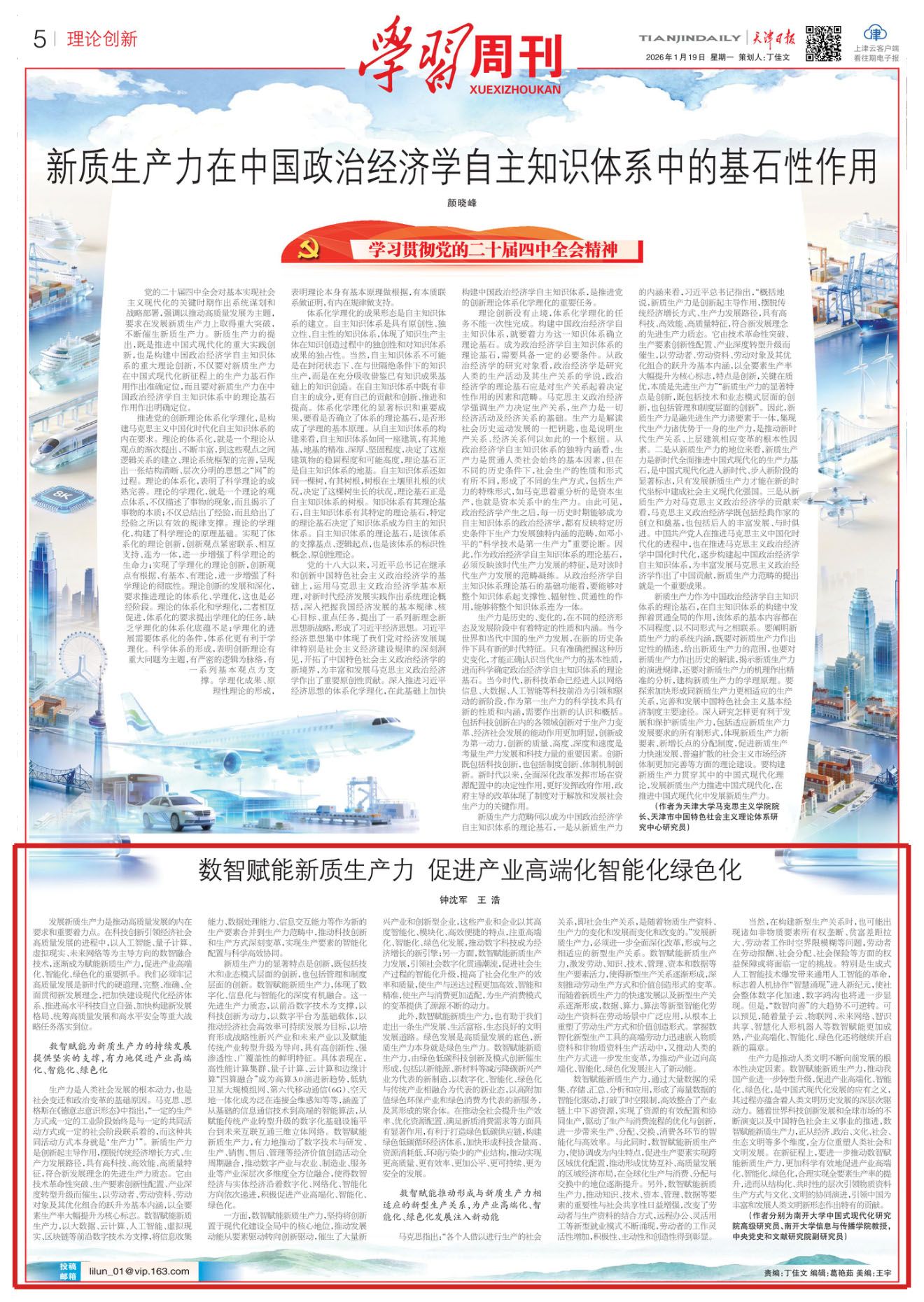
数智赋能新质生产力 促进产业高端化智能化绿色化
Xin Lang Cai Jing· 2026-01-19 14:04
Core Viewpoint - The article emphasizes the importance of establishing an autonomous knowledge system in China's political economy, highlighting the role of new quality productivity as a theoretical foundation for this system [3][4][5]. Group 1: Theoretical Foundation - The autonomous knowledge system is characterized by originality, independence, and self-sufficiency, reflecting the unique contributions and innovations of knowledge producers [2]. - The theoretical foundation of the autonomous knowledge system is likened to a building's foundation or a tree's roots, which determine its stability and growth potential [2][4]. - The construction of this knowledge system requires a deep understanding of the basic principles and essential factors that influence production relations, as emphasized by Marxist political economy [4][5]. Group 2: New Quality Productivity - New quality productivity is defined as a form of productivity that emphasizes innovation, high efficiency, and quality, aligning with the new development philosophy [9][14]. - It is driven by technological breakthroughs, innovative configurations of production factors, and deep industrial transformations, marking a shift from traditional economic growth models [14][15]. - The integration of digital technologies such as artificial intelligence, quantum computing, and big data is crucial for enhancing new quality productivity and promoting high-end, intelligent, and green industrial development [9][10][14]. Group 3: Role of Digital Empowerment - Digital empowerment is identified as a key enabler for the continuous development of new quality productivity, facilitating the transformation of industries towards higher efficiency and sustainability [11][19]. - The article discusses how digital technologies can optimize resource allocation and enhance the efficiency of production and consumption processes, leading to a more intelligent and precise production model [19]. - The emergence of new production relationships, driven by digital empowerment, is expected to reshape labor production methods and value creation forms, fostering a more innovative and flexible workforce [18][20]. Group 4: Green Development - New quality productivity is inherently linked to green production, emphasizing the importance of low-carbon technologies and sustainable practices in driving economic growth [17]. - The article highlights the need for a green, low-carbon supply chain and a circular economy to achieve higher quality, efficiency, and sustainability in development [17][21]. - The integration of green technologies and practices is seen as essential for meeting new consumption demands and enhancing overall production efficiency [17].
美股盘前要点 | 美国12月CPI数据重磅来袭!“五角大楼披萨指数”再度狂飙
Ge Long Hui· 2026-01-13 12:35
Group 1 - US stock index futures showed slight declines, with Nasdaq futures down 0.17%, S&P 500 futures down 0.09%, and Dow futures down 0.12% [1] - European stock indices had mixed results, with Germany's DAX up 0.01%, UK's FTSE 100 down 0.06%, France's CAC down 0.44%, and the Euro Stoxx 50 up 0.06% [1] - Nvidia clarified tightened payment terms for chips, stating that H200 chips do not require prepayment [1] Group 2 - Nvidia and Eli Lilly announced a $1 billion investment over the next five years to accelerate AI applications in the pharmaceutical industry [2] - Meta plans to lay off at least 10% of its virtual reality R&D department as part of the launch of the Meta Compute top-level strategic plan [2] - Citigroup is reportedly set to lay off about 1,000 employees as part of a broader plan to cut 20,000 jobs [2]
遗址说话 遗产永存(记者手记)
Ren Min Ri Bao Hai Wai Ban· 2025-12-09 01:12
Core Viewpoint - The article highlights the integration of modern technology with cultural heritage, showcasing how digital innovations like virtual reality and augmented reality can enhance the experience of historical sites, specifically the Dabaon Temple site in Nanjing [1]. Group 1: Cultural Heritage and Technology - The Dabaon Temple site features significant historical architecture, including a massive foundation and the deepest vertical burial site in China, reflecting its grand past [1]. - New technologies such as virtual reality, augmented reality, and holographic projections are being utilized to digitally recreate the historical splendor of the temple [1]. - Events like the Global Maker Competition are fostering creativity among the youth, allowing for contemporary expressions of cultural heritage [1]. Group 2: Visitor Experience - The interactive experiences at the site evoke cultural memories and create emotional connections that transcend time [1]. - Visitors can engage with both the historical ambiance and modern technological displays, enhancing their understanding and appreciation of the Ming Dynasty's cultural legacy [1].
有关应用场景 这22个新领域有新“机”
Zhong Guo Jing Ji Wang· 2025-12-04 10:57
Core Insights - The article discusses the implementation of the State Council's opinions on accelerating the cultivation and large-scale application of new scenarios across 22 key areas, emphasizing the connection between technology and industry [2][3]. Group 1: Digital Economy - The digital economy sector will explore applications of technologies such as the metaverse, virtual reality, intelligent computing power, and robotics in various fields including office, social, consumption, and entertainment [3]. Group 2: Artificial Intelligence - The focus will be on strengthening core technology breakthroughs and promoting high-value application scenarios in the artificial intelligence sector [3]. Group 3: Unmanned Systems - Expansion of unmanned systems applications will cover industrial production, urban planning, comprehensive transportation, public services, safety protection, and agricultural production [4]. Group 4: Biotechnology - The biotechnology sector will prioritize the development of application scenarios for bio-based materials, low-carbon transformation of bioenergy, and green preparation of natural products [5]. Group 5: Clean Energy - Innovations in clean energy will include digital and intelligent management of energy production, smart grids, green electricity supply, virtual power plants, and vehicle-to-grid interactions [5]. Group 6: Marine Development - The marine development sector will promote applications in deep-sea exploration, deep-sea mining, offshore aquaculture, marine engineering equipment, marine electronic information, and marine biomedicine [6]. Group 7: Manufacturing - The manufacturing sector will encourage localities and enterprises to cultivate application scenarios in industrial design, pilot testing, and inspection services [6]. Group 8: Transportation - Innovations in transportation will focus on smart traffic management, vehicle networking, and intelligent scheduling to optimize urban traffic structures and expand international air cargo transfer applications [7]. Group 9: Smart Logistics - The smart logistics sector will explore new logistics models that integrate new technologies and business formats, including smart intermodal transport [7]. Group 10: Modern Agriculture - Innovations in modern agriculture will encompass application scenarios across the entire industry chain, including seed breeding, farming, and food processing [8]. Group 11: Emergency Rescue - The emergency rescue sector will focus on digital scenarios, enhancing intelligent perception, unmanned rescue, and aerial rescue technologies and equipment [8]. Group 12: Mining Safety - The mining safety sector will develop intelligent application scenarios for real-time condition perception, process visibility, risk assessment, and resource allocation [9]. Group 13: Smart Water Conservancy - The smart water conservancy sector will promote integrated monitoring and management scenarios for water engineering construction and river inspection [9]. Group 14: Construction Safety - The construction safety sector will focus on creating smart construction sites and dynamic digital models for construction processes [9]. Group 15: Forestry and Grassland - The forestry and grassland sector will introduce application scenarios for monitoring, ecological governance, and disaster prevention [9]. Group 16: Government Services - The government services sector will explore innovative public service scenarios for various employment groups, including recent graduates and migrant workers [10]. Group 17: Smart Cities - The smart city sector will innovate scenarios for comprehensive digital transformation and open key application areas [10]. Group 18: Rural Development - The rural development sector will open scenarios for harmonious and digital rural construction [10]. Group 19: Healthcare - The healthcare sector will innovate application scenarios for health consultations, diagnostic guidance, remote medical services, and medication review [11]. Group 20: Elderly Care - Innovations in elderly care will include service robots, smart wearable devices, remote service systems, and online family doctor services [11]. Group 21: Culture and Tourism - The culture and tourism sector will enhance digital performances, digital art, and immersive experiences, integrating various applications for smart tourism [11]. Group 22: Cross-Industry Consumption - The cross-industry consumption sector will strengthen the integration of commerce, culture, tourism, sports, health, and transportation, fostering applications of technologies like the internet, 5G, and virtual reality [12].

【图解】有关应用场景 这22个新领域有新“机”
Zhong Guo Jing Ji Wang· 2025-12-04 07:55
Core Insights - The article discusses the implementation of new opportunities in 22 key areas as outlined by the State Council's recent policy on accelerating scene cultivation and large-scale application of new scenarios [2]. Group 1: New Opportunities in Various Fields - The focus is on exploring application scenarios in areas such as the metaverse, virtual reality, intelligent computing, and robotics within office, social, consumption, and entertainment sectors [4]. - In the artificial intelligence sector, there is an emphasis on strengthening core technology development and promoting high-value application scenarios [4]. - The development of all-space unmanned systems is highlighted, with applications in industrial production, urban planning, public services, and agriculture [4][5]. Group 2: Energy and Marine Development - The clean energy sector is set to innovate in digital and intelligent energy production management, smart grids, and virtual power plants [5]. - Marine development will focus on deep-sea exploration, marine engineering equipment, and marine biomedicine [5]. Group 3: Industrial and Transportation Innovations - The manufacturing sector is encouraged to cultivate application scenarios in industrial design and testing services [6]. - Innovations in transportation include smart traffic management and international air cargo transfer applications [6]. Group 4: Safety and Emergency Response - The emergency rescue system will enhance digital scenarios with intelligent sensing and unmanned rescue technologies [7]. - The mining safety sector aims to develop intelligent applications for real-time condition monitoring and risk prevention [7]. Group 5: Urban and Rural Development - The smart city initiative will focus on comprehensive digital transformation and the opening of key application scenarios [8]. - In rural construction, there will be efforts to improve ecological monitoring and disaster prevention [8]. Group 6: Healthcare and Social Services - The healthcare sector will innovate in remote medical services and health consultations [9]. - In elder care and childcare, there will be advancements in service robots and online healthcare systems [9]. Group 7: Cultural and Consumer Integration - The cultural and tourism sectors will enhance digital experiences and smart management of visitor flows [10]. - Cross-industry consumer integration will focus on merging commerce, culture, and technology, including 5G and virtual reality applications [10].

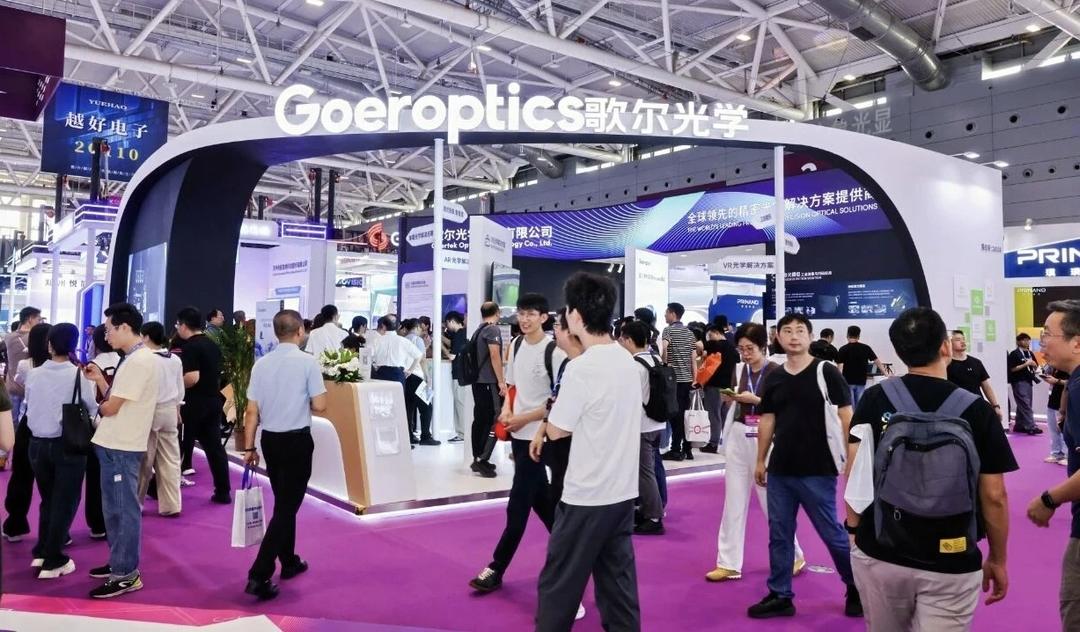
歌尔股份产品出货量全球领先,融入国际产业链
Qi Lu Wan Bao· 2025-12-03 14:28
Core Viewpoint - The news highlights the significant growth and strategic initiatives of GoerTek Inc., a technology innovation enterprise from Weifang, which has become a leader in the global acoustic and optical precision components and smart hardware sectors [1][3]. Group 1: Company Overview - GoerTek Inc. was established in 2001 and has developed into a key high-tech enterprise in China, recognized as a national technology innovation demonstration enterprise and a champion in specific manufacturing sectors [1][3]. - The company has consistently ranked among the top 500 enterprises in China and the top 500 private enterprises, with a goal to be included in the Fortune China Technology 50 list by 2025 [1]. Group 2: Strategic Initiatives - GoerTek is deeply integrated into global supply chains, targeting international markets and leading in product shipments of micro speakers, MEMS acoustic sensors, virtual reality, and smart wearables [3]. - The company is enhancing collaboration with global strategic clients and exploring the integration of AI with smart terminals, as well as developing new technologies and products for the metaverse [3]. Group 3: Innovation and Talent Development - GoerTek is spearheading the establishment of the National Virtual Reality Innovation Center and collaborating with renowned universities to promote talent cultivation through industry-education integration [3]. - The company is implementing targeted talent acquisition plans and plans to strengthen its talent development efforts to support the growth of emerging industries [3]. Group 4: Future Outlook - As the AI revolution accelerates, GoerTek aims to seize development opportunities, expand its production layout in Weifang, and enhance its smart manufacturing model to create a globally competitive AI and metaverse industry cluster [4].

“两翼齐飞”助推文化和科技深度融合
Zhong Guo Qing Nian Bao· 2025-11-23 00:38
Core Viewpoint - The integration of technology and culture is essential in the AI era, emphasizing the need for cultural innovation and scientific spirit to thrive in international competition [1][2][10] Group 1: Cultural Innovation and Technology Integration - The Chinese government aims to stimulate cultural innovation and development through the integration of technology, particularly artificial intelligence [1][2] - The "Two Wings Theory" proposed by Xi Jinping highlights the equal importance of scientific popularization and technological innovation in achieving innovative development [2][10] Group 2: The Role of Science and Technology in Cultural Development - The concept of "Four Powers" (thought leadership, spiritual cohesion, value appeal, and international influence) is crucial for cultural construction in the context of AI [3][10] - Science popularization is identified as a key method for disseminating scientific ideas and enhancing societal unity [3] Group 3: Enhancing International Influence through Cultural Exchange - The use of AI technologies can facilitate cross-cultural communication and enhance the global influence of Chinese culture and technological achievements [4][9] - The promotion of a global community through cultural exchange is emphasized, with a focus on overcoming cultural barriers and fostering mutual understanding [9] Group 4: Building a New Ecosystem for Cultural Development - AI is reshaping the cultural development ecosystem, necessitating a transformation from mere knowledge transmission to cultural shaping [5][10] - The establishment of intelligent and precise science communication networks is essential for effective dissemination of scientific knowledge [7] Group 5: Strengthening Cultural Confidence through Tradition and Modernity - The integration of Marxist principles with traditional Chinese culture is vital for addressing new challenges in cultural construction and scientific popularization in the AI era [8] - The exploration of traditional cultural wisdom can enhance modern scientific spirit and contribute to innovative cultural products [8]
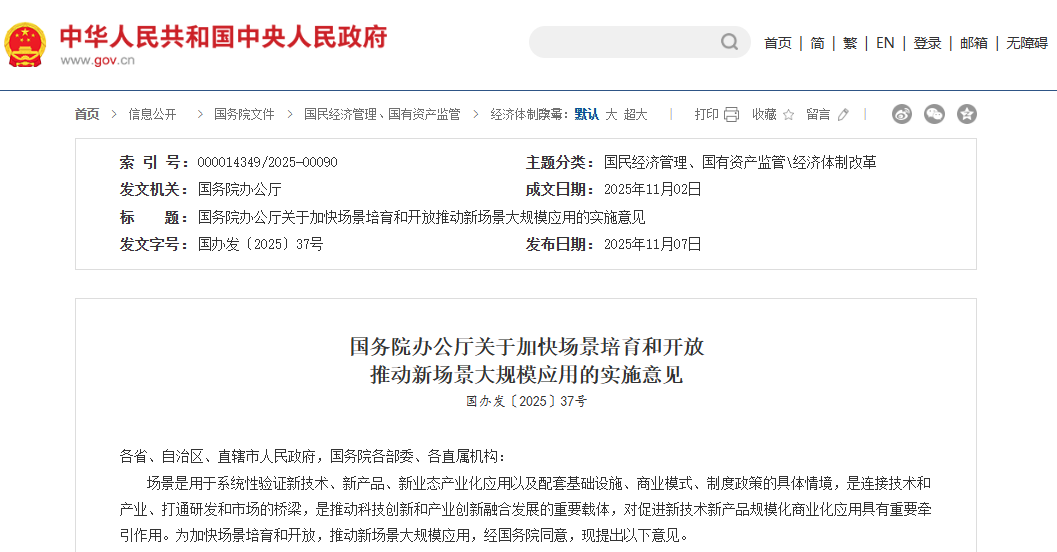
利好来了!刚刚 国办发布实施意见!信息量很大
Zhong Guo Ji Jin Bao· 2025-11-07 16:20
Core Viewpoint - The State Council's implementation opinion aims to accelerate the cultivation and large-scale application of new scenarios, emphasizing the integration of technology and industry to promote economic and social high-quality development [1][3]. Summary by Relevant Sections Overall Requirements - The opinion emphasizes innovation-driven, reform-promotion, and systematic advancement, leveraging China's vast market and diverse application scenarios to support the construction of major comprehensive scenarios and high-value niche scenarios [8]. Economic and Social Application Scenarios - Focus on creating new application scenarios in digital economy, artificial intelligence, unmanned systems, and biotechnology, with specific emphasis on integrating these technologies into various industries [9][10]. New Industry Application Scenarios - In manufacturing, the focus is on smart and green manufacturing, while in transportation, the emphasis is on intelligent traffic management and logistics [11][12]. Industry-Specific Application Scenarios - Emergency management, mining safety, and smart water management are highlighted as key areas for developing innovative application scenarios [13][14]. Social Governance and Public Services - The opinion promotes the development of smart governance services, including intelligent appointment systems and digital social security, to enhance public service efficiency [15][16]. Enhancing Application Scenario Support - The document outlines the need for policy support and management systems to ensure the effective implementation of new application scenarios, emphasizing collaboration among various sectors [20][21].