豆包模型

Search documents
【十大券商一周策略】回归业绩!主题轮动加快,聚焦这些板块
券商中国· 2026-01-18 15:07
Group 1 - The core viewpoint emphasizes a shift from narrative-driven trends to performance-based evaluations as the market enters the earnings forecast period, with a focus on sectors like chemicals, non-ferrous metals, and power equipment [2][5] - The adjustment of financing margins is seen as a part of counter-cyclical regulation, which does not affect the overall upward market trend but influences market structure [2][6] - The article suggests that a good investment combination should be based on "resources + traditional manufacturing pricing weight estimation," with recommendations to increase allocations in non-bank sectors and high-growth areas like semiconductors [2][6] Group 2 - The article discusses the acceleration of thematic rotation in the market, particularly focusing on domestic semiconductor and power sectors, driven by regulatory actions and increased demand for domestic computing power [3][4] - It highlights the importance of monitoring investor sentiment and market stability, suggesting that the current market may enter a period of volatility with potential for structural differentiation in investments [4][8] - The focus on performance-driven investment strategies is expected to intensify as companies begin to disclose earnings, with a recommendation to prioritize sectors that are likely to benefit from cyclical recovery and technological advancements [5][11] Group 3 - The article notes that the recent increase in financing margins reflects a policy signal aimed at guiding rational investment and maintaining market stability, which is crucial for the long-term bullish outlook [7][10] - It emphasizes that while the market may face short-term pressures, the underlying fundamentals and supportive policies are expected to sustain a gradual upward trend in the market [8][9] - The discussion includes the potential for new growth drivers post-holiday, with a focus on sectors like electronics, power equipment, and non-ferrous metals, as well as the ongoing interest in commercial aerospace [9][12] Group 4 - The article indicates that the AI industry chain is becoming a focal point for investment, with a notable shift in capital towards sectors related to AI applications and computing power [12] - It suggests that despite some funds exiting high-flying sectors, liquidity remains strong, allowing for continued investment in less leveraged sectors like chemicals and home appliances [12] - The overall sentiment is that the market is transitioning from rapid growth to a more stable and sustainable pace, with a focus on sectors that can provide solid returns amidst changing market dynamics [10][11]





报道:字节计划2026年资本支出1600亿元,半数将投入AI芯片
硬AI· 2025-12-23 09:24
Core Viewpoint - ByteDance plans to increase its capital expenditure to 160 billion RMB (approximately 23 billion USD) in 2026, focusing on AI infrastructure development, particularly in advanced semiconductor chip procurement for AI model and application development [2][3]. Group 1: Investment Plans - ByteDance's capital expenditure for 2026 is set to rise from 150 billion RMB this year to 160 billion RMB, with a significant portion allocated for AI infrastructure [2]. - Approximately half of the planned investment will be directed towards purchasing advanced semiconductor chips, with an estimated 85 billion RMB earmarked for AI processors in the upcoming year [2]. Group 2: Competitive Landscape - ByteDance is positioning itself as a leading player in the global AI competition, with its Doubao model dominating the consumer-facing AI application sector in China [4]. - The company has seen a substantial increase in daily token usage, exceeding 30 trillion times in October, compared to Google's 43 trillion times during the same period [4]. - ByteDance's flexibility as a non-public company allows it to make aggressive investments and long-term strategic moves in the AI sector, distinguishing it from other major Chinese tech firms like Alibaba and Tencent [4]. Group 3: Market Context - The planned investment reflects the proactive stance of Chinese tech companies in the AI competition, although it remains significantly lower than the combined 300 billion USD spent by major US tech giants like Microsoft, Alphabet, Amazon, and Meta on AI data center construction this year [3].

AI市场扩容下猛打价格战 火山引擎撇掉了others标签
Jing Ji Guan Cha Wang· 2025-12-19 05:37
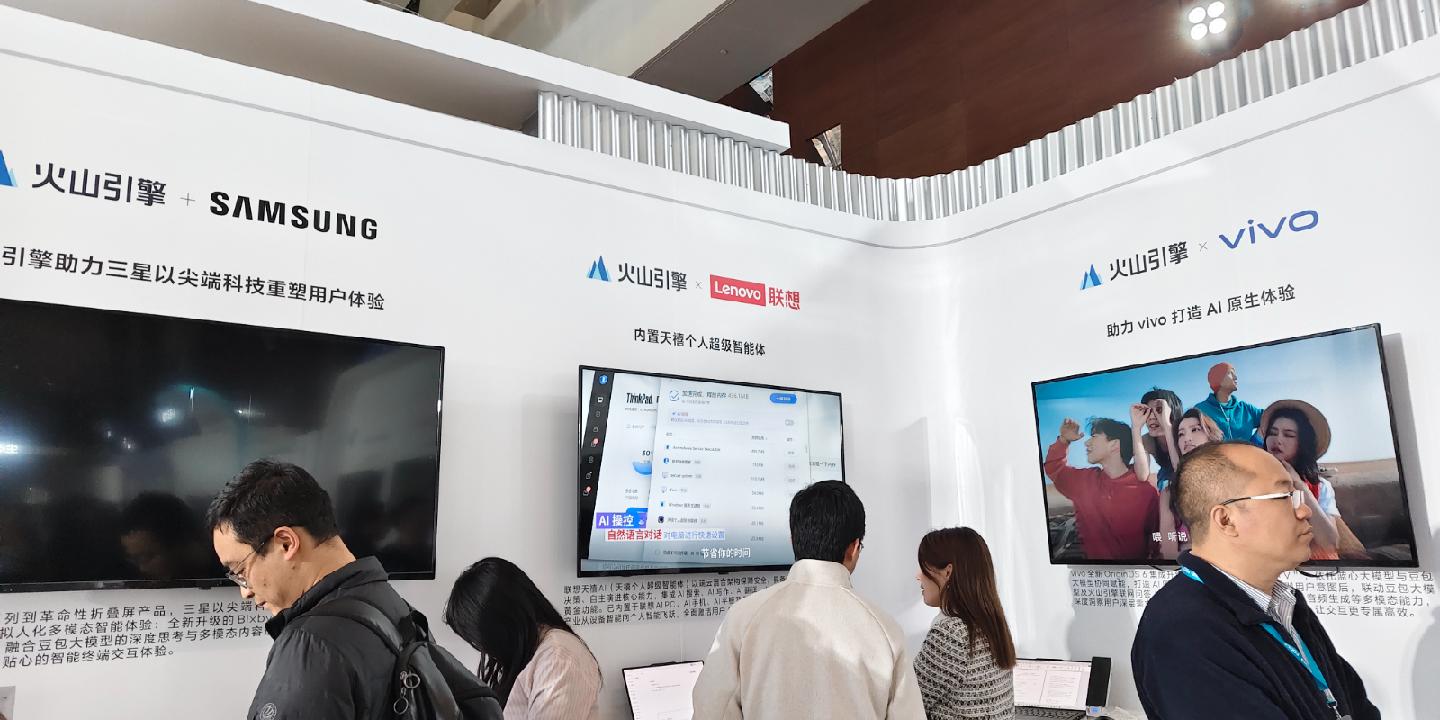
Core Insights - ByteDance's cloud service platform, Volcano Engine, is rapidly gaining traction in the Chinese cloud market, with significant participation in its recent FORCE conference, attracting nearly 10,000 attendees and a high level of interest from potential clients [2] Group 1: Market Position and Growth - Volcano Engine is currently ranked second in the Chinese AI cloud market with a 14.8% share, significantly trailing behind Alibaba's 35.8% [3] - The platform has seen a dramatic increase in model invocation volume, with a nearly 400% year-on-year growth expected by mid-2025, capitalizing on the AI boom [3] - The company aims to surpass 100 billion yuan in revenue by 2024 and over 200 billion yuan by 2025, driven by aggressive pricing strategies [3] Group 2: Client Base and Industry Penetration - Volcano Engine serves over 90% of mainstream automotive companies in China and 9 out of the top 10 global smartphone manufacturers [2] - The platform has successfully expanded into various sectors, including finance, healthcare, entertainment, and consumer goods, with a target of over 1 million users by 2025 [2] Group 3: Competitive Strategy - The company initiated a price war in May 2023, reducing the cost of its main model's inference input to 0.0008 yuan per 1,000 tokens, which is over 99% lower than the industry average [3] - This aggressive pricing strategy has allowed Volcano Engine to rapidly capture market share and attract a diverse range of clients, particularly in B2B sectors [3]
备战“牛市春躁”,掘金科技主线
2025-12-01 16:03
Summary of Conference Call Records Industry Overview - The conference call discusses the technology sector, particularly focusing on the TMT (Technology, Media, and Telecommunications) industry, with a strong emphasis on AI applications and infrastructure [1][2][4]. Key Points and Arguments 1. **Market Sentiment and Economic Conditions** - After a period of low market sentiment, a rebound is expected due to an 80% probability of Federal Reserve interest rate cuts, alongside global liquidity easing and domestic monetary conditions [1][2]. 2. **Investment Opportunities in Technology** - The technology sector is anticipated to lead the market in the upcoming bull market, particularly in the AI industry chain and Google’s computing power [1][2][4]. 3. **Performance of Growth Factors** - Strong performance of mid to large-cap growth styles is expected, with the ChiNext and Sci-Tech Innovation Board showing significant investment value due to low valuations and improving earnings expectations [1][4]. 4. **Focus on TMT Sector** - Key areas of interest include AI infrastructure, particularly in computing power, storage, and electricity. Storage chip prices have surged by 360% since the beginning of the year, and DRAM contract prices have increased by up to 30% [1][4]. 5. **AI Application Growth** - Several A-share AI application companies have shown performance inflection points, with notable increases in net profit growth, indicating a rise in AI application penetration and mature business models [1][4][5]. 6. **2026 AI Industry Chain Investment Focus** - Investment in the AI industry chain will focus on power and storage capacity shortages, as well as AI application tracks. The overseas market will concentrate on Google’s computing infrastructure supply chain, while the domestic market will focus on TSMC’s allocation of computing chips [6][7]. 7. **Key Players in PCB and Optical Module Sectors** - Important companies in the PCB sector include Shenghong Technology and Huitian Technology, while leading firms in the optical module sector are expected to benefit from a supply-demand imbalance [8]. 8. **Emerging Materials Technology** - New materials technology is expected to see significant upgrades, with high-performance materials like new copper foils and quartz fabrics becoming increasingly important in both traditional electronics and new computing demands [9]. 9. **AI Edge Application Ecosystem** - The AI edge application ecosystem is projected to accelerate with improvements in large model accuracy, with companies like ByteDance and Meta making significant investments in smart glasses [10]. 10. **Consumer Electronics Market Trends** - Anticipated price increases in storage may lead to higher consumer product prices and lower shipment volumes, but strong demand from Apple and Samsung is expected to provide resilience [11][12]. 11. **Computer Sector Development** - The computer sector is poised for growth, particularly in emerging technologies like quantum computing and brain-computer interfaces, with significant market potential projected for the coming years [13][14]. 12. **Recent Advances in AI Applications** - Notable advancements in AI applications include Google’s Gemini 3 and Alibaba’s AI assistant, indicating a strong growth trajectory in the sector [15]. 13. **Trends in Autonomous Driving and Humanoid Robots** - The autonomous driving sector is witnessing significant developments, with companies like Tesla and Huawei making strides in Robot Taxi services. The humanoid robot industry is also moving towards commercialization, with several contracts signed for industrial applications [16][17]. 14. **Brain-Computer Interface Developments** - The brain-computer interface sector is gaining traction with increased policy support and the introduction of new medical devices, indicating a promising future for this technology [18]. 15. **Investment Targets in the Computer Sector** - Potential investment targets include companies involved in AI applications, humanoid robots, autonomous driving, and brain-computer interfaces, all of which show strong growth potential [19][20].
庆祝'“AI云第一” 字节阿里分蛋糕
3 6 Ke· 2025-10-13 02:07
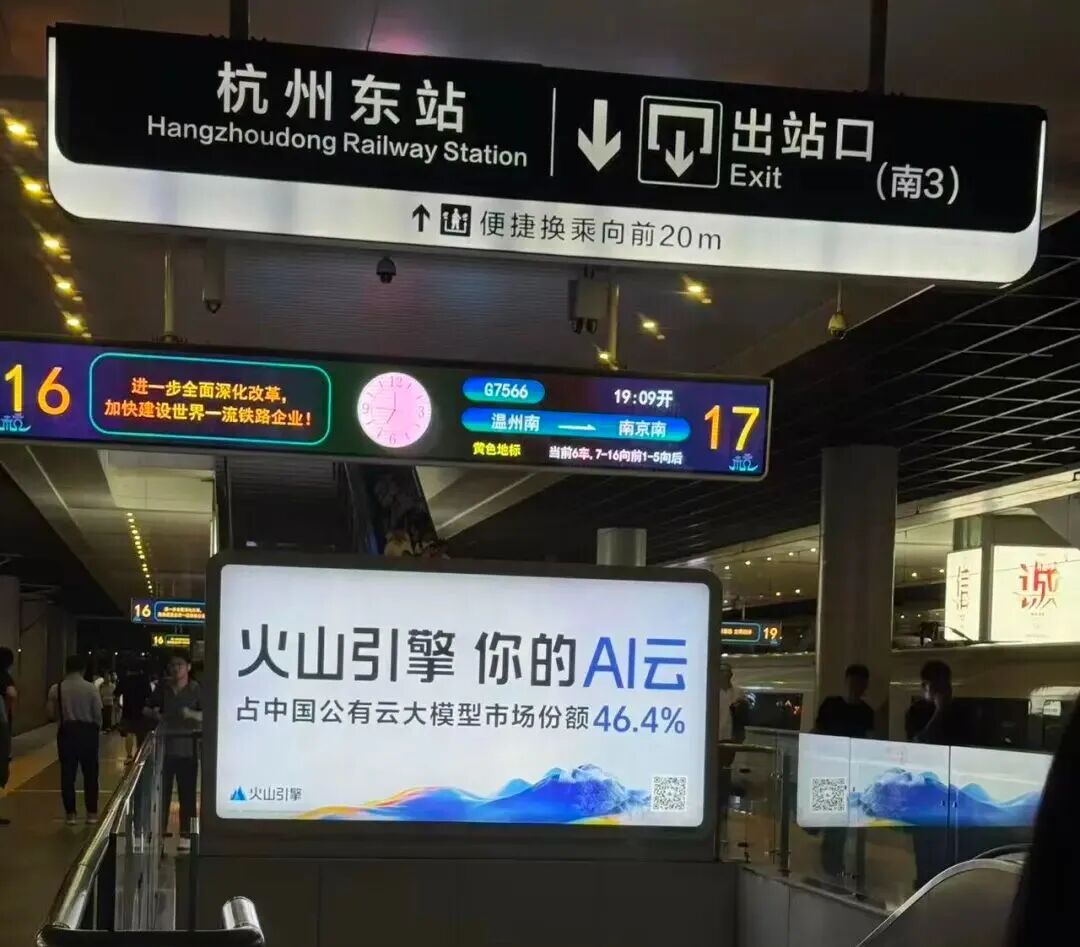
Core Insights - The competition in the "AI cloud market" between Alibaba and ByteDance has intensified, with both companies claiming leadership in various metrics [1][2][3] - The core issue lies in the differing methodologies used to define and measure market share, leading to multiple companies claiming to be "number one" [5][17] Market Positioning - ByteDance's Volcano Engine claims to lead in the public cloud model market (MaaS) with a 46.4% market share, based on the total number of model calls on its platform [1] - Alibaba Cloud emphasizes a full-stack service model, including IaaS, PaaS, and MaaS, leading to a higher overall revenue figure [10][18] - Baidu claims to be the leader in AI public cloud services, focusing on product and industry-specific services [6] Market Dynamics - The AI cloud market is characterized by various service models, with companies adopting different strategies based on their strengths [15][19] - The market is still relatively small, with significant growth potential, as evidenced by the explosive increase in model call volumes following price reductions [14][16] Competitive Strategies - Companies are focusing on different aspects of the market, with Alibaba leaning towards comprehensive solutions and ByteDance targeting rapid growth in model service usage [15][16] - The competition is shifting from price wars to a focus on model performance and service depth, as companies seek to differentiate themselves [19][20] Future Outlook - The AI cloud market is expected to expand significantly, with companies like ByteDance projecting a 100-fold increase in market space [16] - As the market matures, the emphasis will likely shift towards the effectiveness and efficiency of models rather than just pricing [19][20]

庆祝「AI云第一」,字节阿里分蛋糕
3 6 Ke· 2025-10-09 10:48
Core Viewpoint - The competition in the "AI cloud market" between Alibaba and ByteDance is intensifying, with both companies claiming leadership in various metrics, leading to a complex landscape of market share claims and statistics [1][4][20]. Group 1: Market Share Claims - ByteDance's Volcano Engine claims a 46.4% market share in China's public cloud model market, emphasizing its dominance without using extreme terms like "first" [1]. - Different companies, including Alibaba, ByteDance, and Baidu, all assert they are "number one" in the AI cloud market, but their claims are based on different metrics and definitions [4][20]. - The statistics used by Volcano Engine focus on the Model as a Service (MaaS) segment, which may not encompass all cloud service usage, leading to questions about the comprehensiveness of their claims [3][7]. Group 2: Revenue and Service Models - Alibaba Cloud's definition of AI cloud includes a full-stack service model, covering Infrastructure as a Service (IaaS), Platform as a Service (PaaS), and MaaS, leading to a total revenue figure that positions it as a leader in the AI cloud market [11][21]. - Baidu's claims of being the "first" in AI public cloud services include a broader range of revenue sources, including customized industry services [9][21]. - The overall market for MaaS is still relatively small compared to traditional cloud computing, with Alibaba Cloud's revenue exceeding 800 billion yuan in 2024, highlighting the disparity in scale [17][18]. Group 3: Competitive Strategies - The competition is shifting from price wars to a focus on service depth and model efficiency, as companies realize that simply lowering prices is not a sustainable strategy [23]. - Smaller AI model companies are finding it increasingly important to differentiate themselves, as they lack the resources to adopt a full-stack approach like larger competitors [24]. - The market is evolving towards valuing self-developed models and their performance, with a report indicating that Alibaba's self-developed model holds a significant market share in terms of daily token usage [22].
全天候无劳动力限制,AI经济正在到来
深思SenseAI· 2025-09-28 01:36
Group 1 - The article discusses the evolution of human economic activities through digitalization, highlighting the transition from manual to electronic forms of computation, which began with the invention of the computer in 1946 [2][3] - The digitalization of economic activities is seen as an inevitable process, where algorithms can drive economic activities, leading to increased efficiency and intelligence in decision-making [3][7] - The internet and mobile internet have significantly improved matching efficiency in three main areas: information, goods, and social interactions, transforming how humans engage in economic activities [8][10][11] Group 2 - The emergence of AI marks a new phase in the digitalization process, where AI can perform specific tasks and has the potential to generalize its capabilities across various applications [12][15] - By 2025, AI is expected to surpass human capabilities in general work delivery, with models like OpenAI's GPT-3 showing significant advancements in intelligence and functionality [15][18] - The AI economy is characterized by the ability of computers to participate in the entire "collect information - decision - action" chain, leading to a fully automated economic system [20][21] Group 3 - The AI economy will enable continuous operation without human intervention, significantly increasing productivity and efficiency in various sectors [21][22] - AI applications are already being developed to automate tasks in digital environments, with potential expansions into physical tasks as technology matures [22][23] - The concept of unlimited labor supply is introduced, where AI can replicate its capabilities at a low marginal cost, potentially transforming economic structures [24][26][28] Group 4 - The reduction of transaction costs is a key benefit of digitalization, as AI and digital tools streamline information flow and decision-making processes [33][35] - The article emphasizes that AI can reduce irrational decision-making in economic activities, leading to more rational and efficient outcomes [37][39] - Historical insights can be leveraged through AI's memory capabilities, allowing for better decision-making by referencing past solutions to contemporary problems [40][41]
AI应用:浮现中的AI经济
机器之心· 2025-08-30 01:18
Group 1 - The article discusses the evolution of human economic activities from manual to digital, highlighting the significance of the digital age initiated by computers and the subsequent rise of the AI economy [4][5][9] - The transition from the internet and mobile internet to AI represents a new phase where algorithms can not only match but also perform tasks, indicating a shift towards a more automated economic system [18][22] - The AI economy is characterized by the ability of AI to perform the entire "collect information-decision-action" chain, which was previously reliant on human involvement [19][24] Group 2 - The article outlines the stages of economic digitalization, emphasizing that the current phase is marked by AI's capability to generalize and deliver work, surpassing human capabilities by 2025 [22][24] - AI's role in the economic system is expected to lead to a significant increase in productivity, with estimates suggesting that AI could achieve three times the output of human labor in a day [26][28] - The emergence of a "non-scarcity economy" is anticipated, where AI's capabilities could lead to an output that exceeds human demand, fulfilling Keynes' prediction of resolving economic issues through technological advancement [39][40] Group 3 - The article highlights the reduction of transaction costs in economic activities due to digitalization, with AI further enhancing efficiency in information collection and decision-making processes [42][45] - AI's involvement in decision-making is expected to decrease irrational decisions, leading to more rational economic behaviors and improved overall efficiency [49][53] - The potential for an "all-weather automated economic system" is discussed, where AI can operate continuously, significantly increasing the volume of work completed [26][28]
字节 AI 硬件大会来袭,半导体材料ETF(562590)早盘震荡回升
Sou Hu Cai Jing· 2025-06-11 02:56
Group 1 - The A-share market indices opened higher on June 11, 2025, with the semiconductor materials and equipment theme index rising by 0.89% [1] - Notable stocks in the semiconductor sector included Jing Technology, which increased by 5.65%, and Kangqiang Electronics, which rose by 3.26% [1] - The semiconductor materials ETF (562590) saw a 19.63% increase over the past year, closing at 1.05 yuan [1] Group 2 - Guosen Securities raised the global semiconductor sales forecast for 2025 to $700.9 billion, with an expected growth of 8.5% to $760.7 billion in 2026 [2] - The demand for logic and memory chips is driven by artificial intelligence, cloud infrastructure, and advanced consumer electronics, with double-digit growth anticipated in 2025 [2] - The semiconductor materials ETF (562590) closely tracks the semiconductor materials and equipment theme index, selecting 40 related listed companies, indicating potential growth opportunities in the semiconductor materials and equipment sector [2]
豆包模型升级,深度思考帮电商商家读懂消费者,还能自动生成爆款内容
Sou Hu Cai Jing· 2025-04-21 14:49
Core Viewpoint - The article discusses the rise of a domestic AI model called Manus, which is designed to be more practical and capable of problem-solving, unlike traditional chatbots or rigid tools [2] Group 1: AI Development and Capabilities - The AI landscape has evolved significantly with breakthroughs in AIGC (generative artificial intelligence), expanding capabilities from text generation to images and videos [3] - The e-commerce industry is particularly eager to leverage AI to reduce workload, as it heavily relies on visual content [4] - The upgraded Doubao 1.5 Deep Thinking Model has made significant advancements in visual reasoning, multi-modal interaction, and reduced visual description hallucinations [8] Group 2: E-commerce Applications - The Doubao model addresses common issues in traditional content creation, such as high costs and time-consuming processes for producing high-quality images and videos [9] - The model can generate realistic images that closely resemble real-life photography, significantly improving the quality of AI-generated content [9] - Doubao's capabilities extend to writing marketing copy, with its performance surpassing that of other models in creative writing tasks [14] Group 3: Customer Service Enhancement - The Doubao model can provide instant and accurate responses to common customer inquiries, improving shopping experiences and reducing the pressure on human customer service representatives [22] - It can analyze user feedback and preferences, enabling personalized product recommendations based on historical behavior and real-time interactions [23] - The integration of AI in customer service can lead to higher conversion rates and lower return rates by accurately understanding shopping intentions [23] Group 4: Industry Impact and Future Outlook - The advancements in AI technology and the cost-effectiveness of the Doubao model make it accessible to all e-commerce operators, not just large businesses [24] - The model is poised to become a core component of e-commerce infrastructure, driving efficiency and innovation across the industry [24]