
2.5D封装技术

Search documents
AI 算力破局关键!52 页先进封装报告逐页拆解(含隐藏机遇)
材料汇· 2026-01-06 16:00
Core Insights - The article discusses the rising costs associated with advanced semiconductor processes, highlighting that the transition from planar FET to FinFET and Nanosheet technologies has led to exponential increases in design and manufacturing costs, making it difficult for small and medium enterprises to invest in advanced processes [8][9]. - The industry is shifting towards higher concentration among leading foundries, while advanced packaging technologies allow smaller companies to participate in high-end chip design without relying on advanced processes [9][11]. - The article emphasizes the importance of heterogeneous integration and the need for tailored architectures based on application scenarios, indicating a trend towards dynamic adjustments in advanced packaging strategies [25][56]. Cost Trends - Design costs have surged from $28 million for 65nm processes to $725 million for 2nm processes, with manufacturing investments also increasing significantly [9]. - The investment required for a 5nm factory is five times that of a 20nm factory, indicating a substantial financial barrier for smaller players in the industry [8]. Architectural Comparisons - The article compares four architectures, noting that smaller systems (like mobile chips) benefit from a "large chip + 3D stacking" approach, while larger systems (like AI servers) favor a "chiplet + 3D stacking" strategy to balance performance and cost [16][24]. - As system complexity increases, the advantages of chiplet-based designs become more pronounced, particularly in terms of cost efficiency [17][23]. Advanced Packaging Technologies - Advanced packaging is evolving to meet the demands of AI and high-performance computing, with technologies like 2.5D and 3D packaging becoming standard for high-end chips [36][72]. - The integration of HBM (High Bandwidth Memory) with 2.5D packaging has become a standard, driven by the need for high memory bandwidth in AI applications [29][36]. Interconnect Technologies - The article highlights the critical role of interconnect technologies in enhancing I/O density, with projections showing a significant increase in interconnect density from 1960s levels of 2/mm² to future levels of 131072/mm² [38]. - Advanced packaging is shifting from being a secondary process to a core component of performance enhancement, with interconnect-related technologies expected to yield higher profit margins than traditional packaging [39][42]. Market Dynamics - The article notes that the demand for advanced packaging is driven by the need for high bandwidth, miniaturization, and low power consumption, particularly in edge AI applications [49][50]. - The automotive sector's transition from distributed ECUs to centralized computing is pushing for higher integration levels, which in turn drives advancements in packaging technologies [53][56]. Technology Evolution - The evolution of packaging technologies is characterized by a shift from single technology optimization to system-level engineering design, necessitating cross-domain integration capabilities [68][70]. - The article outlines a clear roadmap for the evolution of interconnect technologies, indicating that the industry is entering a phase of rapid technological iteration driven by market demands [154][165]. Cost Structure - The cost structure for 2.5D packaging is primarily driven by the interposer (Si/mold/silicon bridge) and packaging substrate, while for 3D packaging, the key cost factor is the bonding process [168][169]. - The differences in cost structures dictate the profitability models for companies, with 2.5D packaging firms needing to manage interposer and substrate costs, while 3D packaging firms focus on optimizing bonding yields and efficiency [169].






美国将建HBM封装产线
半导体行业观察· 2025-12-30 01:45
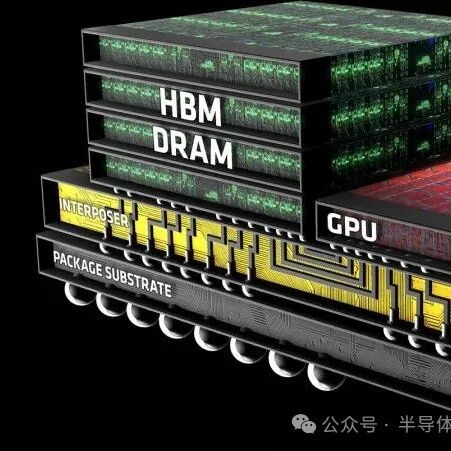
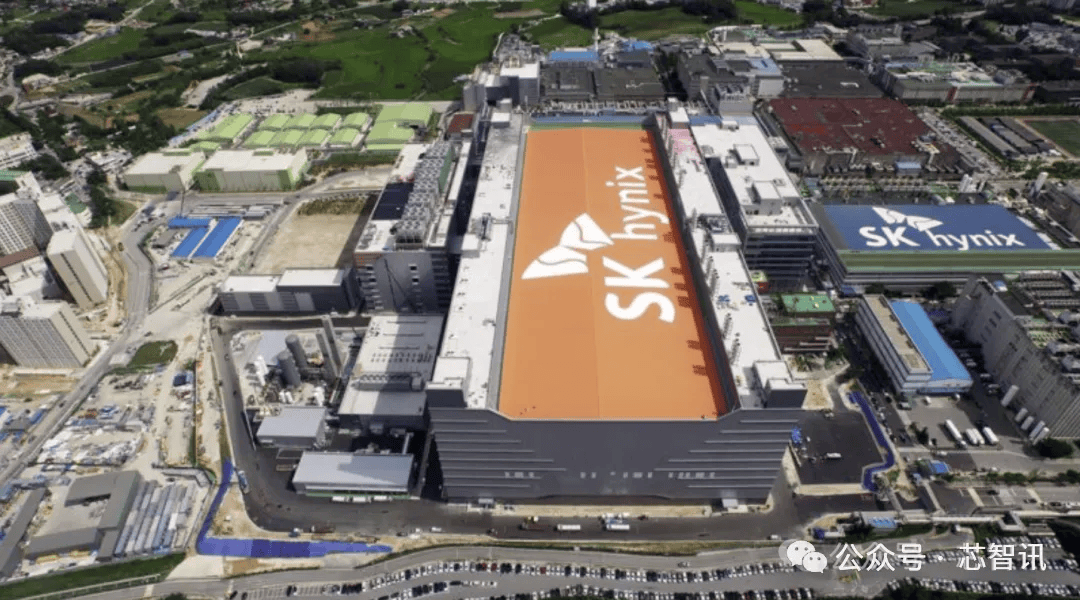
SK海力士位于美国首家工厂——Lastwepiet Packaging工厂,计划成为人工智能存储器尖端封装生产 基地。该工厂预计将于2028年下半年投产。为实现这一目标,SK海力士宣布将在美国投资38.7亿美 元(约合5.4万亿韩元)。 SK海力士之所以在加州西拉法叶新建一条封装生产线,主要原因在于其高带宽内存(HBM)。HBM 是人工智能半导体的关键组件,而美国政府一直在积极吸引包括SK海力士在内的主要半导体公司进 行本地投资,以加强美国尖端半导体供应链。 此外,SK海力士正计划在该工厂建设一条2.5D封装的量产生产线。2.5D封装技术通过在半导体和基 板之间插入一层称为硅中介层的薄膜,来提升芯片的性能和能效。全球科技巨头英伟达的高性能AI加 速器也采用2.5D封装技术制造,将HBM显存与高性能GPU和CPU集成在一起。 SK海力士此举被解读为旨在通过建立2.5D量产生产线来增强其整体人工智能半导体封装能力,包括 HBM。 公众号记得加星标⭐️,第一时间看推送不会错过。 SK海力士计划投资以获取超越HBM技术的尖端封装技术。据报道,该公司正准备在其位于美国的新 封装工厂建立首条2.5D封装量产生产线。 2. ...
SK海力士赴美建2.5D封装厂:投资38.7亿美元,预计2028年投产
Sou Hu Cai Jing· 2025-12-29 05:37
12月29日消息,据韩国媒体ZDNet Korea报导,韩国存储芯片大厂SK海力士(SK hynix)正在采取一项具备战略意义的重大投资,计划在美国印第安纳州 西拉法叶(West Lafayette)建立其首条2.5D 先进封装量产线。 据介绍,这座先进封装工厂是SK海力士在美国境内的首座生产基地,定位为AI内存专用的最先进封装生产基地,总投资额约为38.7亿美元,目标是在 2028年下半年正式投入营运。 目前,2.5D 封装技术被视为整合HBM 与高性能系统半导体(如GPU 或CPU)的核心制程之一。其技术原理是在半导体芯片与电路板(Substrate)之间插 入一层被称为"硅中介层"(Silicon Interposer)。而这项技术具备透过硅中介层缩短芯片间的传输距离,大幅优化电力消耗与数据处理速度,以提升性能 与电力效率的优势。尤其,目前全球AI 芯片大厂英伟达(NVIDIA)的高性能AI 加速器,便是通过2.5D 封装技术将HBM 与高性能GPU/CPU 紧密整合而 成,更显示出相关市场潜质。 SK海力士认为,若能掌握2.5D 封装的量产能力,将能全面强化其在AI 半导体封装领域的竞争力,而不仅仅局 ...
华天科技披露2024年年报,这一细节值得关注
Mei Ri Jing Ji Xin Wen· 2025-04-01 15:12
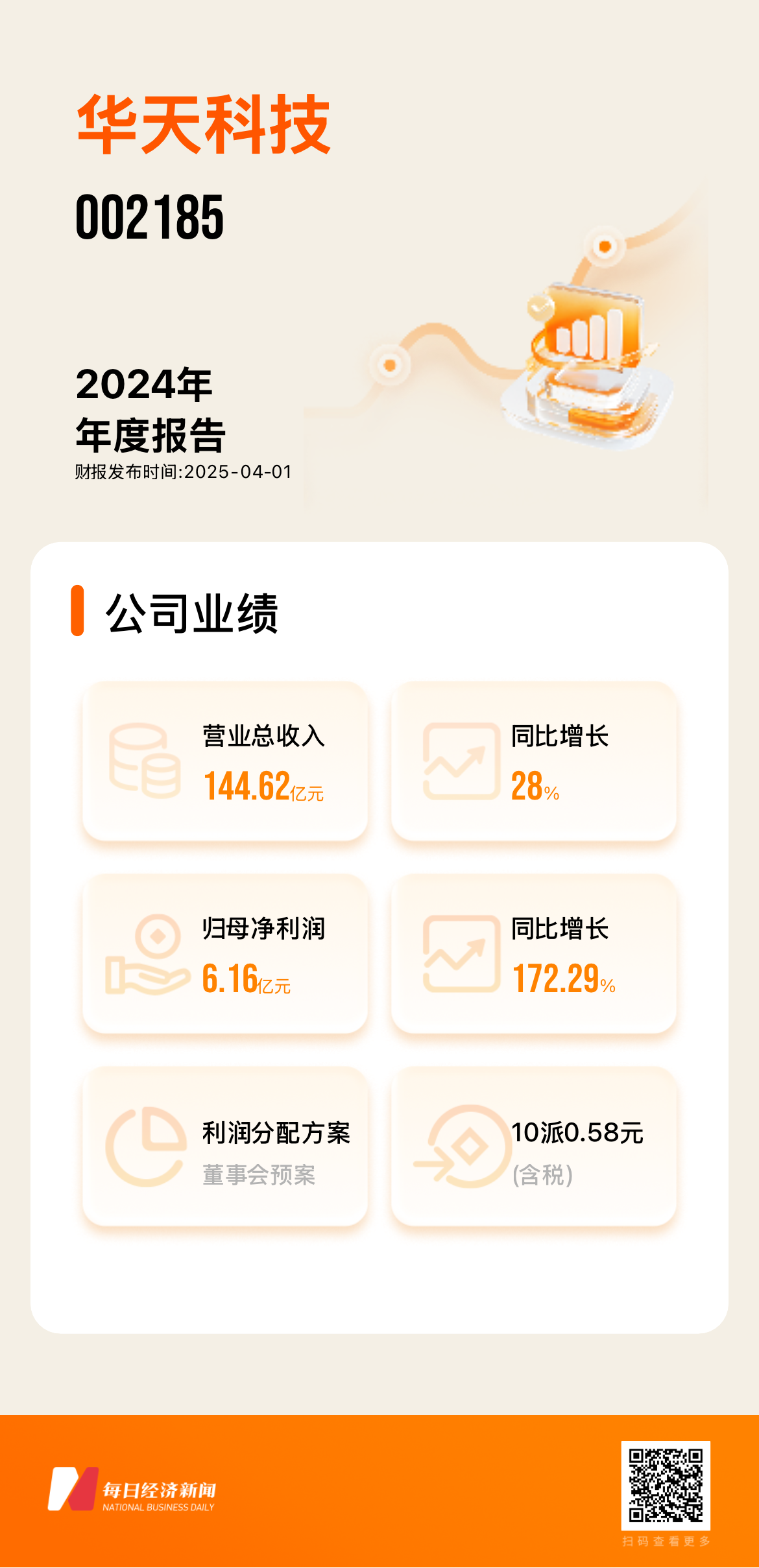
Group 1: Company Developments - Huatian Technology (华天科技) reported its 2024 annual report, highlighting ongoing research and development in advanced packaging technologies, particularly focusing on Chiplet, automotive electronics, and board-level packaging [1] - The company has completed the construction and equipment debugging of its 2.5D production line, which is crucial for mainstream computing chips [1] - Huatian's R&D investment aims to develop 2.5D packaging technology for applications in AI, big data, and high-performance computing, with a goal to increase market share [1] Group 2: Industry Trends - Changdian Technology (长电科技) is also investing in 2.5D packaging technology, with its XDFOI®Chiplet series entering stable mass production [2] - This technology focuses on high-density heterogeneous integration solutions, covering 2D, 2.5D, and 3D integration technologies, indicating a trend towards collaborative design and integrated testing [2] - Both Huatian and Changdian are prioritizing R&D in high-performance computing 2.5D advanced packaging, while Tongfu Microelectronics (通富微电) has not reported similar projects in its 2023 annual report [3] Group 3: Competitive Landscape - Tongfu Microelectronics is upgrading its large-size multi-chip Chiplet packaging technology, developing new processes to enhance chip reliability, although it lacks a focus on 2.5D packaging [3] - The competitive landscape shows a clear focus among leading companies on advanced packaging technologies, particularly in the context of high-performance computing and AI applications [2][3]
电子行业:AI应用侧深度渗透,驱动国产先进封装技术寻求突破
Jinyuan Securities· 2025-02-28 08:07
Investment Rating - The report rates the electronic industry as "Overweight" (first-time rating) [1] Core Insights - DeepSeek has achieved three major breakthroughs in algorithm efficiency, significantly reducing memory usage and inference latency while maintaining model performance [1][2] - The optimization of algorithms does not diminish the value of the computing power industry but rather restructures demand, leading to a multi-tier growth engine in the trillion-level computing power market [1][29] - The demand for high-performance computing chips remains strong due to the continuous expansion of model parameters and training data [1][35] Summary by Sections Breakthroughs in DeepSeek Architecture - DeepSeek optimizes from input processing to computation and output stages, enhancing computing efficiency while reducing redundant calculations [2] - The introduction of a KV cache mechanism reduces inference complexity significantly, leading to lower resource consumption [2][5] - The Multi-Head Latent Attention (MLA) technology reduces KV cache space by over 90% while maintaining performance [5] Efficiency Improvements - The DeepSeek-V3 model activates only about 5.5% of parameters per token, significantly lowering computational load [8][10] - The GRPO algorithm allows for high-level reasoning capabilities without the need for supervised fine-tuning, achieving better performance with reduced training costs [21][25] Market Demand and Growth - The report predicts that the global advanced packaging revenue will grow from approximately $37.8 billion in 2023 to $69.5 billion by 2029, with a compound annual growth rate of 11% [1] - The demand for advanced packaging technologies, such as 2.5D and 3D packaging, is expected to rise as traditional methods face limitations [1][51] Investment Recommendations - The report suggests focusing on key players in the 2.5D/3D packaging technology, including equipment manufacturers and OSAT companies [1]