
BOLON AI智能眼镜

Search documents
科技巨头争“戴”AI眼镜
Shen Zhen Shang Bao· 2025-12-11 23:21
Core Insights - The AI glasses market is rapidly evolving, with major tech companies like Google, Meta, Xiaomi, and Li Auto launching new products, indicating a significant shift towards mainstream adoption of AI glasses [1][2][3] Group 1: Market Developments - Google plans to release two types of AI glasses by 2026, one being a screenless assistant type and the other featuring a display module for navigation and real-time translation [2] - Meta introduced the Meta Ray-Ban Display smart glasses, which are seen as a step towards their 2027 "Orion" glasses [2] - Xiaomi's AI glasses weigh 40 grams and are priced at 1999 yuan, while Li Auto's Livis glasses weigh 36 grams with a battery life of 18.8 hours [2] Group 2: Sales and Demand Trends - Global smart glasses shipments are projected to reach 1.487 million units in Q1 2025, marking an 82.3% year-on-year increase, with China's growth rate at 116.1% [3] - The Quark AI glasses S1 have seen high demand, often selling out quickly, with resale prices on second-hand markets reaching 4000 to 5000 yuan [4] - Rokid's new AI glasses sold 40,000 units within five days of launch, while Meta's Ray-Ban Meta series has shipped over 2 million units globally [4] Group 3: Industry Competition and Future Outlook - The entry of multiple companies into the AI glasses market is intensifying competition, driving innovation and optimization in product features, design, and pricing [5] - Industry experts predict that 2025 will be a pivotal year for AI glasses, transitioning from basic functionality to enhanced usability [5] - Ant Group's executive emphasized the need for standardized communication protocols and security measures to ensure seamless integration of AI glasses as a "super terminal" connecting various devices [6]




被忽视的“最后一公里”!跑遍广州八大商场,我发现了AI眼镜的真相
3 6 Ke· 2025-12-09 10:26
Core Insights - Google re-enters the smart glasses market with Project Aura, a collaboration with XREAL, set to launch in 2026, featuring the Android XR platform and Gemini AI [1] - Major players like Meta, Alibaba, and Baidu have already entered the AI glasses space, indicating a growing trend in AI hardware [1] - AI glasses have gained significant attention over the past year, with various brands launching new products and consumers discussing their applications on social media [1] Industry Overview - The AI glasses market is becoming increasingly competitive, with new entrants like Li Auto and collaborations such as Rokid and BOLON generating buzz [1][2] - A recent evaluation by Lei Technology highlights the performance of various AI glasses, including BOLON AI glasses and Quark S1 [2] Market Presence - Despite the hype, AI glasses are not widely available in physical retail locations, particularly in Guangzhou's major shopping districts, indicating a gap between online interest and offline availability [4][5][26] - The lack of AI glasses in prominent retail spaces suggests that they have not yet reached mainstream consumer channels, limiting their visibility and accessibility [26] Consumer Experience - Traditional eyewear retailers are not fully equipped to handle the technological aspects of AI glasses, leading to a disconnect in customer service and product knowledge [27][30] - The dual identity of AI glasses as both tech products and everyday eyewear complicates their market positioning, requiring a balance between digital and optical expertise [30][40] Distribution Challenges - The integration of AI glasses into the traditional eyewear market faces challenges, particularly in providing comprehensive services like fitting and prescription [30][41] - Companies like Rokid and Quark are exploring different approaches to address the compatibility and fitting issues associated with smart glasses [60] Future Outlook - For AI glasses to achieve widespread adoption, a robust offline system that facilitates consumer confidence in purchasing, fitting, and using these products is essential [65] - The industry must navigate the complexities of consumer education and retail integration to ensure that AI glasses become a seamless part of everyday life [65]

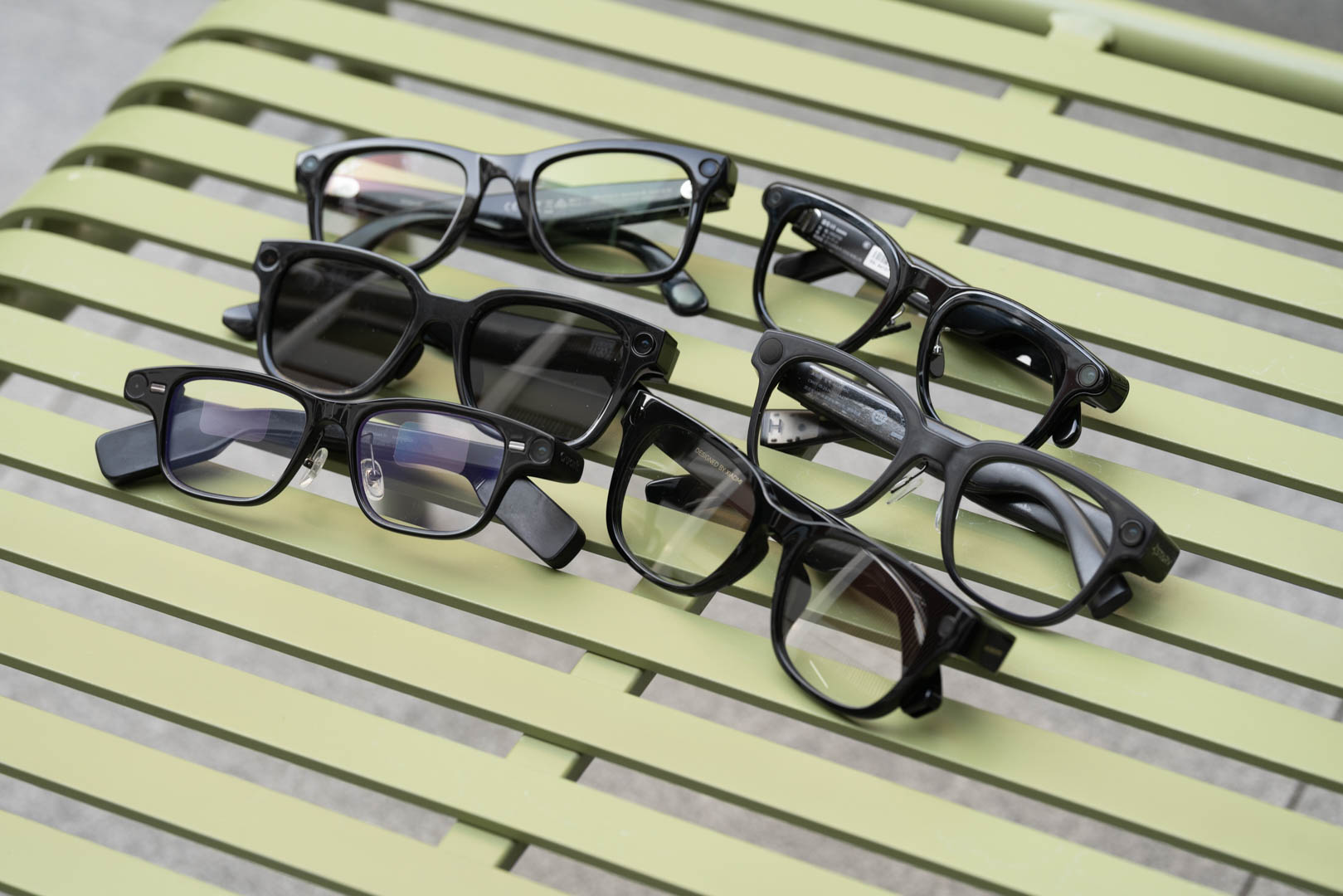
“百镜大战”来临! 谁能抢占AI眼镜市场高地?
Mei Ri Jing Ji Xin Wen· 2025-12-02 13:26
Core Insights - The AI glasses market is experiencing a surge in demand, with significant sales reported by companies like Meta and Rokid, indicating a potential turning point for the industry [1][3][9] - However, the industry faces challenges related to supply chain constraints and the need for hardware innovation to meet the growing demand [3][4][5] Group 1: Market Demand and Sales Performance - Meta's new Ray-Ban Meta glasses sold out within 48 hours, prompting the company to increase investment to boost production capacity [1] - Rokid reported selling 40,000 units of its glasses within five days of launch, with users averaging eight hours of daily wear [1] - Quark AI glasses topped Tmall's smart glasses sales during the "Double 11" shopping festival, showcasing strong consumer interest [1] Group 2: Supply Chain and Production Challenges - The industry is facing a production bottleneck, with Rokid's initial shipment forecast of 100,000 to 150,000 units being significantly exceeded by actual demand [3] - AI glasses require a new hardware architecture that presents challenges in manufacturing, necessitating deep customization within the supply chain [4][5] - Companies are restructuring their production schedules and expanding capacity to meet the anticipated demand, with projections of reaching a million units in deliveries by early next year [4] Group 3: Technological and Material Innovations - The future of AI glasses relies on breakthroughs in foundational materials and miniaturization, such as silicon carbide for high-transparency glass and advanced battery technology [6] - The industry is moving towards a more mature supply chain that can support the necessary scale for cost reductions [5][6] Group 4: Competitive Landscape - The AI glasses market is becoming increasingly competitive, with various players, including major companies like Alibaba and startups like Rokid, vying for market share [9] - Alibaba views AI glasses as a critical personal mobile interface post-smartphone era, investing in comprehensive technology capabilities to enhance competitiveness [8][9] - The Chinese market is expected to diverge from overseas models, with a focus on AI-driven hardware innovation to meet diverse consumer needs [9]
61岁贝索斯创业物理AI,马斯克破防:“跟屁虫”; 优必选回应人形机器人量产交付视频被质疑造假 | AI周报
创业邦· 2025-11-24 04:00
Core Insights - The article highlights significant developments in the AI industry, including new startups, funding rounds, and technological advancements, reflecting the rapid growth and investment in AI technologies globally. Group 1: AI Startups and Innovations - Jeff Bezos has founded a new AI startup named "Project Prometheus," which has raised $6.2 billion in funding and employs nearly 100 staff from major tech companies [3] - The humanoid robot company, UBTECH, has responded to allegations that its delivery video for the Walker S2 robot was CGI, asserting that the video was filmed live during the delivery of hundreds of robots [3] - Tencent has open-sourced its latest video generation model, HunyuanVideo 1.5, which is a lightweight model capable of generating high-definition videos [8] Group 2: Funding and Valuations - Genspark has completed a $275 million Series B funding round, bringing its valuation to $1.25 billion [7] - The "Dark Side of the Moon" project is planning an IPO in the second half of next year, with a post-funding valuation expected to reach approximately $4 billion [6] - Databricks is in talks for a new funding round that could exceed a valuation of $130 billion, reflecting strong interest in AI infrastructure despite concerns about a potential bubble [15][29] Group 3: Market Trends and Predictions - The global 3D printing market is projected to reach $24.61 billion in 2024, with a compound annual growth rate of 18.5% from 2024 to 2034, indicating a robust growth phase for the industry [7] - AI mobile phones are expected to see shipments challenge 600 million units by 2026, driven by the expansion of 5G networks and the replacement of feature phones in emerging markets [32] - The AI sector is witnessing a significant shift, with predictions that generative AI could eliminate up to 50% of entry-level white-collar jobs, potentially raising unemployment rates to 10%-20% [12] Group 4: AI Financing Overview - A total of 18 AI financing events were disclosed globally this week, with a total financing scale of 66.75 billion RMB, averaging 3.93 billion RMB per event [36] - In the domestic market, the disclosed financing total reached 3.125 billion RMB, with the highest amount coming from the humanoid robot developer, Star Motion Era, which completed a 900 million RMB A+ round [44] - Internationally, the disclosed financing total was 63.629 billion RMB, with the highest being the $6.2 billion seed round for Project Prometheus [54]

AI眼镜的冰与火 如何跨越“不可能三角”
2 1 Shi Ji Jing Ji Bao Dao· 2025-11-20 10:37
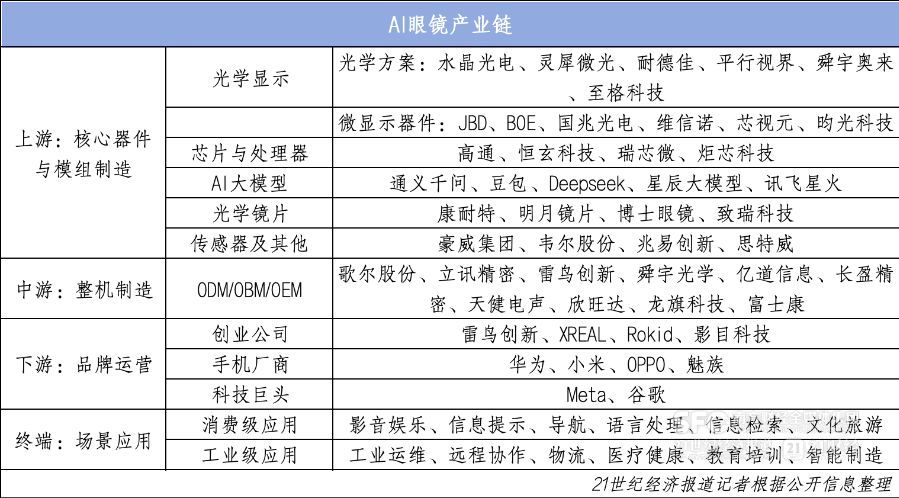
Core Insights - The AI glasses market is experiencing significant growth, with sales of AI shooting and display glasses increasing over tenfold year-on-year, making it the fastest-growing category in digital products [1] - Major players in the industry include internet giants like Alibaba and Baidu, as well as hardware manufacturers such as Huawei and Xiaomi, alongside numerous vertical startups [1][2][4] - The global smart glasses market is projected to exceed 40 million units by 2029, with China expected to lead in growth rate [1][6] Market Dynamics - The AI glasses sector is crowded with various players, including established tech companies and startups, indicating a competitive landscape [1][5] - Baidu and Alibaba have launched their AI glasses, with Baidu's product weighing 39 grams and Alibaba's Quark AI glasses topping sales charts during the Double Eleven shopping festival [2][3] - Xiaomi's AI glasses sold out within half an hour of release, showcasing strong consumer demand [4] Investment and Financing - The smart glasses market is attracting significant investment, with 23 rounds of financing reported in 2025 alone [5] - Thunder Innovation recently completed a financing round, raising approximately 800 million yuan, surpassing initial expectations [5] Sales Performance - The AI wearable device index has risen by 26.3% over the past year, reflecting a robust market trend [6] - During the Double Eleven sales event, the transaction volume for smart glasses surged by 2500%, with brands like Rokid and Thunder Innovation seeing sales increases of over 700% and 80%, respectively [6] Industry Challenges - The industry faces a "trilemma" where achieving lightweight design, high performance, and long battery life in AI glasses is challenging [1][10] - High return rates for AI glasses, estimated at 30% to 50%, indicate issues with customer satisfaction and product maturity [9] Technological Integration - AI models are crucial for the evolution of smart glasses, enabling functionalities beyond entertainment to include payment, navigation, and e-commerce [8] - The integration of AI models is seen as a key factor for the future success of AI glasses, with companies like Xiaomi and Alibaba incorporating their proprietary AI technologies [8] Supply Chain and Production - The supply chain for AI glasses is complex, involving multiple components such as chips, sensors, and optical modules, which are not yet fully mature [10] - Production capacity is a significant challenge, with many manufacturers struggling to meet demand due to high production costs and the need for specialized manufacturing processes [11] User Experience Focus - Industry experts suggest a shift from adding features to enhancing user experience, emphasizing the need for AI glasses to prioritize comfort and usability [12][13] - The design of AI glasses is evolving to meet aesthetic demands, with a focus on lightweight models weighing between 20 to 40 grams [14]
ROKID发布AI眼镜,看好端侧需求起量及云厂引领下的AI生态完善
Tianfeng Securities· 2025-11-17 08:01
Investment Rating - The industry rating is maintained as "Outperform" [11] Core Insights - The report highlights the accelerating investment in AI infrastructure by major tech companies, indicating a robust demand for computing power and a positive outlook for the AI ecosystem [1][17] - The end-side AI market is expected to see significant growth, with key players like Apple, Nvidia, and Meta leading innovations and product launches [2][20][24] Summary by Sections AI Cloud Side - The ongoing US-China talks are easing tensions, leading to increased investments from major tech firms, which is expected to drive demand in the computing supply chain [1][17] - Meta has raised its capital expenditure forecast to $70-72 billion, driven by urgent needs in AI computing [1][18] - Microsoft's capital expenditure reached $34.9 billion in Q1 2026, with plans to double its data center capacity in the next two years [1][19] - Alphabet has adjusted its capital expenditure guidance for 2025 to $91-93 billion, focusing on expanding AI and cloud computing infrastructure [1][19] AI End Side - Apple reported record earnings, with iPhone revenue expected to grow by double digits in Q1 2026, and is increasing its AI R&D investments [2][20] - Nvidia's GTC Washington summit showcased the Vera Rubin superchip, with GPU shipment targets raised to 20 million by 2026 [2][24] - Meta's smart glasses have seen strong sales, with Reality Labs exceeding expectations, prompting increased production [2][26] - Industrial Fulian's net profit surged by 62% YoY in Q3, validating the profitability of its AI server business [2][29] - Luxshare Precision is leading innovations in AR technology and showcasing advanced optical interconnect solutions [2][32] - Google officially launched the seventh-generation TPU "Ironwood," expected to be available soon [2][41] - Rokid has introduced the new BOLON AI smart glasses, marking a significant collaboration in the smart wearable sector [2][8]




计算机行业“一周解码”:阿里千问APP上线,全面对标ChatGPT
Bank of China Securities· 2025-11-17 06:30
Investment Rating - The industry investment rating is "Outperform the Market" [40] Core Insights - Alibaba has launched the "Qianwen" app, entering the C-end AI assistant market, aiming to create a comprehensive AI agent platform and expand globally, enhancing the integration of technology and commercialization [11][12] - The autonomous driving sector is accelerating, with "LuoBo Kuaipao" leading the global Robotaxi commercialization process, achieving over 250,000 fully autonomous orders weekly and expanding its services to 22 cities worldwide [13][14] - Rokid has partnered with BOLON to introduce AI smart glasses, which feature advanced functionalities such as AI object recognition and voice navigation, marking a significant step in wearable technology [17][19] - The release of GPT-5.1 signifies a new era in AI, enhancing ChatGPT's intelligence and conversational experience, with features like adaptive reasoning and personalized dialogue styles [20][21][23] Summary by Sections 1. Alibaba's Qianwen App Launch - Alibaba is developing the "Qianwen" app based on the Qwen model, directly competing with ChatGPT, and plans to enhance its AI capabilities over the coming months [11][12] - The international version of the app is also in development, targeting overseas users [11][12] 2. Autonomous Driving and Robotaxi - "LuoBo Kuaipao" has become the world's largest fully autonomous ride-hailing platform, with significant growth in service volume and geographical expansion [13][14] - The company has established partnerships in cities like Dubai and Abu Dhabi, facilitating its global expansion [14][15] 3. AI Smart Glasses by Rokid and BOLON - The new BOLON AI smart glasses are designed for comfort and functionality, featuring a 12-megapixel camera and various AI capabilities [17][19] - Rokid aims to innovate further in the AI glasses market, focusing on lightweight designs and enhanced user experience [18][19] 4. GPT-5.1 Model Release - OpenAI's GPT-5.1 introduces significant improvements in conversational AI, focusing on user experience and adaptability [20][21][23] - The model includes features for personalized dialogue and enhanced emotional intelligence, marking a shift towards more human-like interactions [21][23]
Rokid联动BOLON,智能眼镜的主动破圈
Tai Mei Ti A P P· 2025-11-17 02:35
Core Insights - Rokid has established itself as a leading player in the smart glasses market, achieving significant sales milestones and positioning itself as a major contender by 2025 [2][10] - The company emphasizes a user-driven approach, having completed over 200 product updates since the launch of its smart glasses, enhancing functionality and user experience [5][10] - Rokid's strategy includes breaking out of the traditional tech-savvy user demographic, attracting a more diverse user base across various professions [8][10] Company Overview - Rokid has been operational for 11 years, raising over 3.5 billion RMB through 13 funding rounds, with notable investors including Temasek and IDG Capital [2] - The company aims to redefine user interaction in the AI era, moving away from traditional devices like smartphones and computers to smart glasses as the new interface [2][3] Product Development - Rokid has partnered with various companies to launch innovative applications, including navigation, payment, and music experiences tailored for smart glasses [5] - The introduction of "Rokid Care," an insurance product for accidental damage, reflects the company's commitment to enhancing user confidence in smart hardware [5] Market Expansion - The user demographic for Rokid Glasses has shifted significantly, with only 16% of users being from the tech industry, indicating a successful expansion into broader markets [8] - The collaboration with BOLON to create stylish AI smart glasses highlights the company's focus on merging fashion with technology, aiming to attract a wider audience [9][10] Future Outlook - The partnership with BOLON is expected to enhance market competitiveness and innovation, positioning smart glasses as a fashionable and functional accessory [10] - The industry is witnessing a transformation where smart glasses are seen not just as tech devices but as a new medium for personal expression and lifestyle [10]
爆款AI眼镜背后,“长沙智造”C位出道
Chang Sha Wan Bao· 2025-11-15 11:54
Core Insights - Rokid and BOLON have launched the new BOLON AI smart glasses, achieving sales of 40,000 units within the first five days across all channels, topping sales charts on platforms like Tmall, JD, and Douyin [1] - Blue Glass Technology, as the exclusive supplier for Rokid, provides comprehensive production services from precision components to complete assembly, leveraging its expertise in lightweight composite materials [1][2] - The Rokid glasses weigh only 49 grams, overcoming traditional AR glasses' challenges of being heavy, having short battery life, and unclear displays, thanks to Blue Glass Technology's advancements in precision manufacturing [1] Company and Industry Summary - Rokid is focused on human-computer interaction technology and aims to develop AR glasses and related software and hardware products, utilizing the YodaOS operating system for ecosystem development [1] - Blue Glass Technology has established vertical integration capabilities covering "materials—process—manufacturing," enabling efficient and stable production while promoting significant breakthroughs in domestic supply chains [1][2] - The integration capabilities of Blue Glass Technology translate into competitive advantages for products, facilitating the transition of AI hardware from "lab samples" to "mass production," with a target of 1 million units for Rokid in the coming year [2] - The demand for AI edge hardware is expected to continue growing, with Blue Glass Technology positioned as a crucial player in the AI hardware industry chain due to its technological accumulation and production capabilities [2]

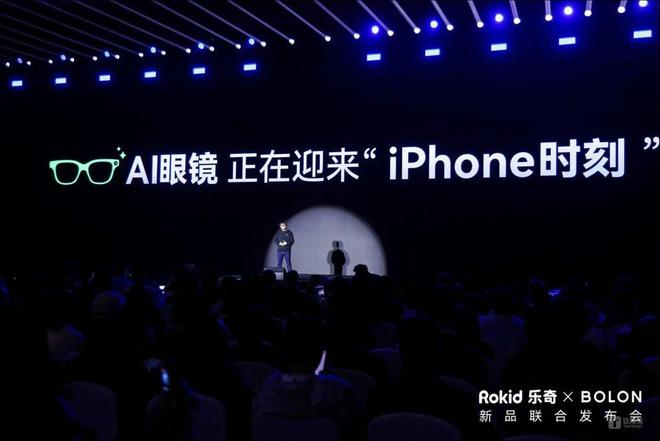
Rokid乐奇与BOLON眼镜联合发布新品智能眼镜 AI眼镜正在迎来“iPhone时刻”
Zheng Quan Shi Bao Wang· 2025-11-15 03:29
Core Insights - Smart glasses are evolving from tools to fashion symbols, redefining the boundaries of human-computer interaction [1] Product Overview - The newly launched BOLON AI smart glasses are designed without a display, focusing on "fashionable design" and "hardcore functionality," with a price of 2,199 yuan [2] - The glasses come in two styles: sunglasses and optical glasses, featuring a lightweight design at only 38.5g and equipped with a Qualcomm AR1 processor, a 12MP Sony camera, and dual-directional speakers [2][3] - BOLON has partnered with All Vision to offer dynamic photochromic lenses that change color in 25 seconds and block over 99% of UVA and UVB rays [2] Strategic Collaboration - The collaboration between BOLON and Rokid is significant for both companies; BOLON aims to reach the 3C and digital consumer market while leveraging its traditional optical advantages in the smart glasses sector [3] - Rokid benefits from BOLON's fashion design and optical technology, enhancing the stylish aspect of its products and reducing the "hardcore" feel of tech products [3] Market Trends and Sales Performance - Rokid's new product line, "Wind, Forest, Fire, Mountain," inspired by traditional craftsmanship, is priced between 4,599 and 5,858 yuan, with a strong initial sales performance of 40,000 units sold within an hour of launch [4] - Daily user engagement for Rokid smart glasses averages nearly 8 hours, with over 15 million total usage instances, indicating a growing acceptance among a broader user base [4] - The demographic of Rokid's users has shifted significantly, with the proportion of tech professionals dropping from nearly 50% to 16%, while other sectors like education and agriculture have seen increased representation [4] Future Projections - Rokid's sales target for AI glasses is set at 1 million units for the next year, with expectations to reach 2-3 million units in the following year and over 10 million units in three years [5] - The company plans to collaborate with more international brands for co-branded products, marking the beginning of its global expansion [5] - The CEO of Rokid likens the potential of AI glasses to the transformative impact of the Macintosh and iPhone, suggesting that AI glasses will define the next computing era [6]