
ChatGPT Agent

Search documents
美国大厂为什么集体绕开“龙虾”?
阿尔法工场研究院· 2026-03-26 00:04AI Processing
以下文章来源于世界模型工场 ,作者世界模型工场 世界模型工场 . 看世界的模型,也看模型的世界。在这里,认识AI,通向未来。 (世界模型工场关注AI圈内部消息,交流八卦请添加作者微信:lovelisa1005,获取更多一手消息) 导语:在美国市场,Claude Code这类"安全版电脑操控"成为美国主流企业标配。 3月23日深夜,Anthropic突然扔出一颗重磅炸弹,旗下产品迎来关键更新。 这一次,AI真正学会了操控电脑。 更新后的Claude Code,可以直接打开本地文件、使用浏览器、操作IDE。 更夸张的是,当系统没有现成接口时,它会像一个真人一样,直接接管鼠标、键盘和屏幕,无需任何复杂设置。 Claude Cowork则把这套能力从程序员专属扩展到普通知识工作者。你只需在Mac桌面App里给它一个文件夹权限,它就能自主读写文件、整理 资料、执行多步工作流。 业内瞬间沸腾,这被视为Claude体系迄今为止最激进的一次能力跃迁:AI从会聊天进化到会动手。 一夜之间,全球开发者社区都在刷屏"AI终于长出手了"。 恰恰相反,它们早已把这一底层范式视为下一代AI的核心竞争力,并坚定地把它做进自家模型和产品闭环 ...





从最顶级的30个AI Agent产品里,看懂了这三个趋势
3 6 Ke· 2026-02-27 11:20
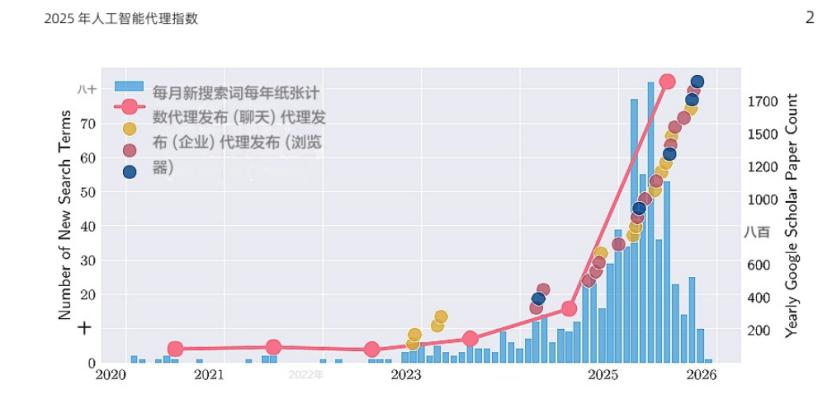
Claude Code、ChatGPT Agent、Manus,再加上一堆大厂的企业级工作流平台,动不动就喊"替代打工人""创造万亿美 元价值"。麦肯锡的报告也在推波助澜:62% 的企业正在试水 Agent。 但把热闹先放一边,真正的问题是——在真实工作场景里,Agent 到底走到哪一步了? 最近,MIT、哈佛、斯坦福等机构的研究团队发布了一份《2025 AI Agent Index》。 这帮学者干了一件很有价值的事: 进入2026 年,Agent 彻底火了。 他们把市面上最具代表性的30 个代理系统逐一拆开来看了一遍,并设计了45 个维度,仔细扒了扒这些产品的技术细 节、部署情况、设计架构、工具使用和安全机制等信息,得出了当下Agent最硬核的3个真相。 透过这部分报告,我们就能更清晰地了解当下Agent发展的真实情况。 01 产品形态收拢在这3个方向 大多数代理产品集中在2024–2025 年发布。 (蓝色柱状图代表与代理型人工智能产品相关的谷歌新增搜索词,红线则代表谷歌学术中包含"人工智能代理"或"代理 型人工智能"关键词的论文发表数量) 从产品形态看,AI代理基本收拢在了三个方向: 聊天式代理(12个 ...
OpenAI急迫招入OpenClaw之父解决四个问题
虎嗅APP· 2026-02-16 08:52
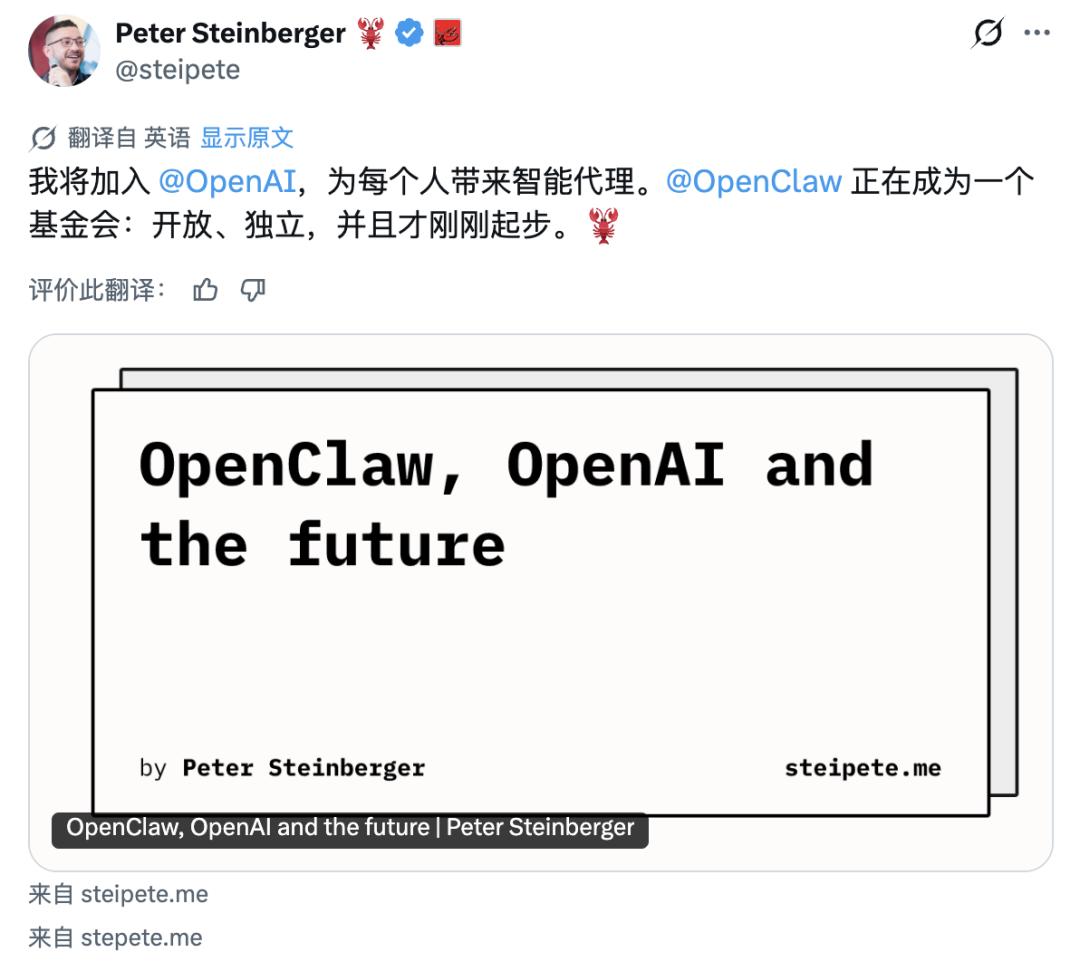
Core Viewpoint - The article discusses the significant developments at OpenAI, particularly the addition of Peter Steinberger, who will lead the development of the next-generation personal agent, which is expected to become a core component of OpenAI's products [4][7]. Group 1: OpenAI's Strategic Direction - OpenAI's strategy emphasizes model capability, safety, and compliance, rather than rapid and complete openness, which has led to a trend where its agent products exhibit stronger thinking capabilities than execution abilities [7]. - The current product matrix of OpenAI consists of three layers: foundational model layer (GPT series), agent application layer (ChatGPT Agent for personal clients and Frontier for enterprise clients), and tool layer (AgentKit and GPT Store) [8]. Group 2: Peter Steinberger's Role and Impact - Peter Steinberger's expertise is expected to address several challenges faced by OpenAI, including reducing the learning curve for users, enhancing local execution capabilities, improving multi-agent collaboration efficiency, and aligning agent functionalities with user needs [9]. - Steinberger's addition is seen as a strategic move to accelerate the deployment of OpenAI's agent products across various scenarios, leveraging his experience in rapidly iterating products based on user demands [9]. Group 3: OpenClaw's Future - OpenClaw will operate as an independent, non-profit open-source foundation, with OpenAI continuing to sponsor it, ensuring that the project remains free from ownership by any single company [5][10]. - The operational model of OpenClaw is likened to that of PyTorch and Linux, where tech giants like Google, Intel, and Microsoft play a sponsorship role [10]. Group 4: Competitive Landscape - The competition in the agent market is intensifying, with major AI players positioning themselves for a battle over user retention, monetization, and ecosystem development in 2026 [14]. - The article highlights the challenges OpenAI faces in retaining talent, as concerns about the balance between product development and research may impact the work environment for new hires like Steinberger [14].

突发,OpenClaw之父宣布加入OpenAI,小扎抢人失败
3 6 Ke· 2026-02-16 01:26
就在刚刚,OpenClaw 开发者 Peter Steinberger 在 X 平台官宣加入 OpenAI。 他还发了一篇长文解释自己的选择。 用他自己的话说:「我将加入 OpenAI,致力于把智能体带给每一个人。OpenClaw 将转为基金会形式运作,并保持开源和独立。」 这个结局,某种程度上也算是意料之中。 此前就有消息称,OpenAI 不仅想把 Peter 本人挖过来,连带着维护这款开源 Agent(智能体)项目的几位核心成员也要一锅端。 谈判的条件相当诱人——让他们在 OpenAI 负责个人智能体相关工作,顺便参与其他产品开发,甚至还在讨论成立一个基金会专门运营 OpenClaw 开源项 目。 不过在最终拍板之前,除了 OpenAI,Meta 同样在疯狂发力。毕竟现在 AI 人才争夺战打得火热,而个人智能体又被各家列为重点方向,谁都不想落后。 上周 Peter Steinberger 就在 Lex Fridman 的播客时爆料,现在每个月自掏腰包 1 万到 2 万美元维持 OpenClaw 运营,同时正在跟好几家大型 AI 实验室谈合 作。 这场争夺战到底有多激烈呢?当时 Peter 还在播客里还透露 ...
AI Agent如何实现商业化?
Xin Lang Cai Jing· 2026-02-14 08:31
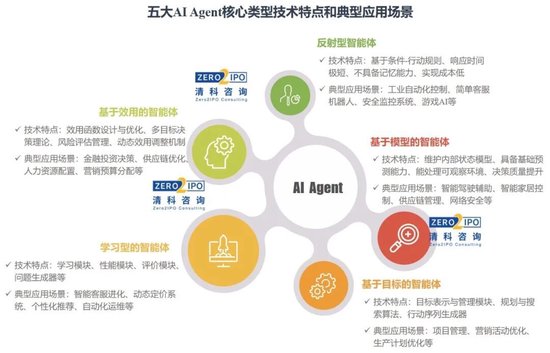
Core Insights - AI Agents are evolving from technical tools to new production factors, marking a critical phase for industry development and increasing investment interest [1][8] - The Chinese government aims for over 90% penetration of new generation AI applications by 2030, indicating a broad market potential for AI Agents [8][34] - The global AI Agent market is projected to grow from $5.1 billion in 2024 to $47.1 billion by 2030, with a CAGR of 44.8% [8][34] Group 1: AI Agent Definition and Characteristics - AI Agents are defined as autonomous or semi-autonomous software entities that perceive, decide, and act to achieve business goals, emphasizing autonomy, interactivity, and adaptability [2][3] - The "perception-decision-action" loop in AI Agents is powered by large models, which provide essential capabilities like dialogue and logical reasoning, although they lack autonomous action [3][29] - AI Agents can be categorized into five core types: reflex agents, model-based agents, goal-based agents, utility-based agents, and learning agents, each serving different applications [5][31] Group 2: Market Growth and Policy Support - The AI Agent industry is structured into three layers: foundational technologies, platform development, and application layers, with significant growth expected in enterprise and consumer applications [7][33] - The Chinese government's policies are driving rapid growth in the AI Agent market, with a focus on integrating AI into various sectors, including manufacturing [8][34] - Market forecasts indicate that by 2026, the proportion of enterprise applications integrating task-specific AI agents will rise from under 5% to 40% [8][34] Group 3: Competitive Landscape and Business Models - The AI Agent market features diverse players, including AI-native platform providers, tech giants, large model vendors, vertical solution providers, and traditional enterprises undergoing digital transformation [9][35] - Main business models in the AI Agent field include SaaS subscription, platform ecosystem, and customized enterprise services, each with distinct advantages [16][41] - The competition is intensifying, with companies focusing on integrating AI capabilities into existing products and developing specialized agents for various industries [15][40] Group 4: Application Areas and Demand Differentiation - AI Agents are being deployed across various sectors, including media, customer support, finance, and software development, with significant value realized in customer service and data analysis [19][44] - Different industries exhibit distinct needs for AI Agents, with manufacturing focusing on efficiency, finance on risk control, and healthcare on diagnostic accuracy [22][47] - The trend is shifting towards specialized AI Agents that cater to specific industry requirements, enhancing their effectiveness and value [22][47] Group 5: Investment Trends and Challenges - Investment in the AI Agent sector has surged since 2025, with notable funding rounds and acquisitions highlighting the growing interest in this space [48][49] - The investment focus is shifting from general platforms to specialized agents in vertical industries, with a preference for companies with established customer bases and positive cash flow [49] - Challenges remain in the commercialization of AI Agents, including technical limitations, integration difficulties, and emerging security risks [26][52]
AI手搓的Cowork“李鬼”版跟“李逵”一样能打,还免费?
Tai Mei Ti A P P· 2026-01-19 04:53
Core Insights - Anthropic's Cowork is a desktop AI agent that allows users to automate tasks without programming, but it is expensive, available only to Max users at a minimum of $100 per month [1] - The rapid development of a free open-source version, OpenWork, within 48 hours indicates low technical barriers and clear product logic [1] - The development cycle of Cowork was only 10 days, with most of the code generated by AI, showcasing the potential for AI to create AI [1][9] Product Comparisons - Manus, developed by a company acquired by Meta, is known as the "first general AI agent" and achieved $100 million in annual recurring revenue within 8 months of its launch [3] - Gemini CLI, Google's open-source terminal agent, offers free access to Gemini 2.5 Pro and supports various integrations, but has a higher usage barrier due to its command-line interface [5][6] - ChatGPT Agent, launched in July 2025, operates in a virtual machine environment and has a lower baseline success rate of 12.5% in practical tests, indicating a need for optimization [5][6] Technical Architecture - Manus employs a multi-agent system using a MapReduce architecture, allowing it to handle large-scale tasks efficiently [7] - Cowork operates within a local folder using sandbox mechanisms for security, while Gemini CLI provides direct access to system terminals, offering flexibility but with higher risks [6][8] - The integration of multiple agents and tools represents different balances of security and capability across these products [7] Industry Implications - The emergence of AI building AI signifies a shift in software development timelines, reducing them from months to days [9] - The recursive improvement process within Anthropic has led to a significant increase in coding efficiency, with AI now handling 60% of coding tasks [10] - The transition from traditional software development roles to AI-assisted roles is reshaping the engineering landscape, with engineers focusing more on code review and architecture [12] Future Trends - The trend of AI constructing its successors is irreversible, with predictions indicating that by 2028, 90% of B2B procurement will be handled by AI agents [22] - The potential for AI to transform workflows into AI-first designs is significant, although challenges related to security and reliability remain [22][23] - The shift from passive chatbots to proactive AI agents represents a fundamental change in human-computer collaboration, with profound implications for productivity and task execution [23]


国家发改委推进绿色氢氨醇布局
GUOTAI HAITONG SECURITIES· 2026-01-05 06:10
Report Summary 1. Report Industry Investment Rating No information provided. 2. Core Viewpoints The report focuses on the latest policies, industry developments, and upcoming events in the hydrogen energy industry. The National Development and Reform Commission is promoting the national green hydrogen, ammonia, and alcohol planning layout, and multiple regions have introduced relevant industrial policies. There are also many significant industrial developments, such as the launch of new projects and the delivery of new products. Additionally, a major industry conference is upcoming [3][6][12]. 3. Summary by Directory 3.1 Industry Policies - The National Development and Reform Commission promotes the national green hydrogen, ammonia, and alcohol planning layout, including building zero - carbon transportation corridors and stations, increasing new energy supply, etc. [3][6] - Beijing encourages the construction of renewable energy projects in factories and explores the use of hydrogen energy [6]. - Urumqi plans to add no less than 20,000 tons/year of green hydrogen production capacity by 2027 [6]. - Guangzhou Baiyun promotes the application of hydrogen - fuel - cell vehicles and supports the construction of hydrogen refueling stations [6]. - Shandong Zhaoyuan focuses on developing nuclear power, wind and solar equipment, energy storage batteries, and hydrogen production industries [6]. 3.2 Industry Dynamics - A 100 - million - yuan project for 100 sets of 1000 - standard - cubic - meter alkaline electrolyzer components is about to start [7]. - Kunhua Technology delivers 200 hydrogen - powered heavy trucks in Xinjiang Hami [8]. - Dalian Shipbuilding delivers the world's first methanol - dual - fuel - powered intelligent VLCC, with significant emission reduction [8]. - Rongcheng New Energy starts the trial operation of the first batch of hydrogen - assisted two - wheeled vehicles [8]. - Jieqing Technology delivers a new small - power closed - type air - cooled system for a German hydrogen - powered drone inspection project [8]. - A 3.534 - billion - yuan project for alloy solid - state hydrogen storage materials in Inner Mongolia is approved [8]. - A 4 - billion - yuan green hydrogen project of China Guangdong Nuclear Power is in the environmental impact assessment publicity stage [8]. - China National Coal Group signs a 200,000 - ton green methanol project in Inner Mongolia [8]. - Dongfang Hydrogen Energy unveils the "Hydrogen Intelligence Safety Center" [8]. - Sunlight and Longji are pre - selected for the bid of 29 alkaline electrolyzers of State Power Investment Corporation [9]. - CIMC Enric and Datang Hainan plan to cooperate on a green methanol project in Hainan [9]. - The first "carbon compensation" trade in the hydrogen energy field in China is completed in Zhejiang Jiaxing [3][9]. - China's first million - ton - level near - zero - carbon steel production line is fully connected, with a potential carbon reduction of 50% - 80% [3][9]. - Fujian's first hydrogen - powered zero - carbon bus demonstration line (Xiamen Route 736) is opened [3][9]. 3.3 Investment and Financing Events No investment and financing events are reported [10]. 3.4 Industry Conference Forecast The 2nd China Hydrogen Energy and Fuel Cell Technology Conference will be held from January 22 to 23, 2026, in Hefei, Anhui. The conference focuses on the innovation of the entire hydrogen fuel cell industry chain, and many well - known enterprises and institutions will participate [12].
图数室丨回看2025,AI那些“封神”瞬间
Xin Lang Cai Jing· 2025-12-26 09:28
Core Insights - The year 2025 is marked as a transformative period for artificial intelligence (AI), transitioning from experimental concepts to practical applications in everyday life, signifying the "Year of AI for All" [2] Group 1: Major Developments in AI - DeepSeek launched its R1 model on January 20, 2025, creating a significant impact in the global AI community [4] - On February 17, xAI released its latest AI model, Grok 3, followed by the introduction of the Evo 2 AI biology model by a collaboration of institutions on February 19 [6] - Google unveiled its strongest reasoning model, Gemini 2.5 Pro, on March 25, the same day OpenAI introduced a native image generation feature based on the GPT-4o model [6] Group 2: Notable Events and Milestones - The first humanoid robot marathon was held in Beijing on April 13, with the humanoid robot "Tiangong" winning the race [6] - By July 2025, China had registered 433 large models that were operational [8] - The EU's AI Act came into effect in August, establishing the first comprehensive regulatory framework for AI globally [8] Group 3: Product Launches and Innovations - On May 22, Anthropic launched the Claude 4 series of large models, and on July 18, OpenAI released a new intelligent product called "ChatGPT Agent" [8] - In October, ByteDance's Volcano Engine released an updated version of the Doubao model, which became the first in China to support "tiered adjustment of thinking length" [10] - Google's "Solar Catcher" project was publicly announced on November 5, aiming to create space-based machine learning data centers [12]



备战“牛市春躁”,掘金科技主线
2025-12-01 16:03
Summary of Conference Call Records Industry Overview - The conference call discusses the technology sector, particularly focusing on the TMT (Technology, Media, and Telecommunications) industry, with a strong emphasis on AI applications and infrastructure [1][2][4]. Key Points and Arguments 1. **Market Sentiment and Economic Conditions** - After a period of low market sentiment, a rebound is expected due to an 80% probability of Federal Reserve interest rate cuts, alongside global liquidity easing and domestic monetary conditions [1][2]. 2. **Investment Opportunities in Technology** - The technology sector is anticipated to lead the market in the upcoming bull market, particularly in the AI industry chain and Google’s computing power [1][2][4]. 3. **Performance of Growth Factors** - Strong performance of mid to large-cap growth styles is expected, with the ChiNext and Sci-Tech Innovation Board showing significant investment value due to low valuations and improving earnings expectations [1][4]. 4. **Focus on TMT Sector** - Key areas of interest include AI infrastructure, particularly in computing power, storage, and electricity. Storage chip prices have surged by 360% since the beginning of the year, and DRAM contract prices have increased by up to 30% [1][4]. 5. **AI Application Growth** - Several A-share AI application companies have shown performance inflection points, with notable increases in net profit growth, indicating a rise in AI application penetration and mature business models [1][4][5]. 6. **2026 AI Industry Chain Investment Focus** - Investment in the AI industry chain will focus on power and storage capacity shortages, as well as AI application tracks. The overseas market will concentrate on Google’s computing infrastructure supply chain, while the domestic market will focus on TSMC’s allocation of computing chips [6][7]. 7. **Key Players in PCB and Optical Module Sectors** - Important companies in the PCB sector include Shenghong Technology and Huitian Technology, while leading firms in the optical module sector are expected to benefit from a supply-demand imbalance [8]. 8. **Emerging Materials Technology** - New materials technology is expected to see significant upgrades, with high-performance materials like new copper foils and quartz fabrics becoming increasingly important in both traditional electronics and new computing demands [9]. 9. **AI Edge Application Ecosystem** - The AI edge application ecosystem is projected to accelerate with improvements in large model accuracy, with companies like ByteDance and Meta making significant investments in smart glasses [10]. 10. **Consumer Electronics Market Trends** - Anticipated price increases in storage may lead to higher consumer product prices and lower shipment volumes, but strong demand from Apple and Samsung is expected to provide resilience [11][12]. 11. **Computer Sector Development** - The computer sector is poised for growth, particularly in emerging technologies like quantum computing and brain-computer interfaces, with significant market potential projected for the coming years [13][14]. 12. **Recent Advances in AI Applications** - Notable advancements in AI applications include Google’s Gemini 3 and Alibaba’s AI assistant, indicating a strong growth trajectory in the sector [15]. 13. **Trends in Autonomous Driving and Humanoid Robots** - The autonomous driving sector is witnessing significant developments, with companies like Tesla and Huawei making strides in Robot Taxi services. The humanoid robot industry is also moving towards commercialization, with several contracts signed for industrial applications [16][17]. 14. **Brain-Computer Interface Developments** - The brain-computer interface sector is gaining traction with increased policy support and the introduction of new medical devices, indicating a promising future for this technology [18]. 15. **Investment Targets in the Computer Sector** - Potential investment targets include companies involved in AI applications, humanoid robots, autonomous driving, and brain-computer interfaces, all of which show strong growth potential [19][20].
AI泡沫论升温,智能体为何迎来爆发元年?
Xin Lang Cai Jing· 2025-11-27 07:13
Core Viewpoint - The AI industry is experiencing a dual narrative in 2025, with a significant market correction in global tech stocks while the AI agent sector is witnessing explosive growth, particularly in China, where the market size is projected to increase from 4.75 billion yuan in 2024 to 7.84 billion yuan, representing over 60% growth [1][6]. Group 1: Evolution of AI Agents - AI agents are defined as software programs capable of autonomously understanding, planning, and executing complex tasks, fundamentally differing from traditional AI assistants [2]. - The emergence of AI agents is a result of technological advancements, transitioning from early models that were primarily for demonstration to sophisticated systems capable of logical reasoning and multi-modal understanding [3][4]. - The core value of this evolution is transforming intelligence from a cost into a productivity driver, as articulated by industry leaders [5]. Group 2: Major Investments and Market Dynamics - The growth of AI agents is fueled by strategic investments from global tech giants, which are based on clear commercial return expectations, creating a positive cycle of research, implementation, and profitability [6]. - Companies like Baidu and Tencent are leading the charge with innovative AI solutions, such as Baidu's self-evolving AI agent and Tencent's integration within its WeChat ecosystem [7]. - The commercial value of AI agents is evident across various sectors, including healthcare, retail, and finance, where they are significantly enhancing operational efficiency and reducing costs [8]. Group 3: Underlying Factors for Growth - The rapid growth of AI agents is attributed to the convergence of technological maturity, rising demand, and an improved ecosystem [9]. - Breakthroughs in technology have drastically reduced the cost of large model inference by 90% and increased speed by tenfold, addressing previous scalability issues [10]. - The pressing need for cost reduction and efficiency in businesses drives the adoption of AI agents, which offer non-intrusive solutions that integrate seamlessly with existing systems [11]. Group 4: Future Outlook - The future of AI agents is expected to shift from scaling to refinement, ushering in a new era of human-machine collaboration, with predictions indicating that 60% of enterprises will rely on AI agents for core operations by 2026 [12]. - Despite existing challenges such as communication delays and talent shortages, the evolution of AI agents is seen as a necessary phase in technological advancement, distinguishing them from past speculative bubbles [13].

