MI455

Search documents
Morgan Stanley tweaks AMD stock price target post-earnings
Yahoo Finance· 2026-02-05 18:33
Core Viewpoint - Advanced Micro Devices (AMD) reported strong quarterly earnings but faced a challenging market environment, leading to a stock price target reduction by Morgan Stanley from $260 to $255, despite a potential upside of 28% from its current trading price around $200 [1][2]. Financial Performance - AMD's Q4 revenue reached $10.270 billion, exceeding Wall Street's expectation of $9.668 billion [6] - Data Center revenue was $5.380 billion, reflecting a quarter-over-quarter increase of 23.9% and a year-over-year increase of 39.4% [6] - Gross margin stood at 57%, surpassing Wall Street's estimate of 54.5% [6] - Earnings per share (EPS) were reported at $1.53, compared to Wall Street's expectation of $1.32 [6] - For Q1, AMD guided a revenue midpoint of $9.8 billion, above Wall Street's estimate of $9.416 billion, with a gross margin forecast of 55% [6][8]. Market Dynamics - The stock market has seen a significant decline in software stocks, with a reported loss of about $830 billion since January 28, 2026, contributing to AMD's stock drop of 17% following its earnings report [2]. - AMD's Q4 report included $390 million in MI308 sales linked to China, which CEO Lisa Su indicated were from orders placed in early 2025, highlighting the fluid situation in China [7]. Guidance and Outlook - AMD's Q1 guidance suggests a potential 2% sequential revenue decline when excluding the MI308 sales from China, indicating a more conservative outlook than the market reaction suggests [8]. - The company anticipates growth in its data center business for Q1, while other segments may experience a decline of nearly 15% from the previous quarter [9]. - AMD's confidence is bolstered by supply tightness in general-purpose server CPUs, driven by Intel constraints and healthy demand, positioning AMD to capture growth in Q1 [10]. Strategic Initiatives - The focus for AMD is on its rack-scale AI initiatives, particularly with the MI455, which is expected to be a significant growth driver [12][14]. - The MI355 has shown strong performance, tracking above $2 billion per quarter when excluding China sales, indicating robust demand [12]. - CEO Su emphasized the importance of the MI400 series and Helios as a major inflection point for the business, with the MI455 on schedule for Q3 delivery [14].

摩根士丹利科技访谈-Joe-Moore谈英伟达融资与竞争格局-博通与联发科对比-AMD人工智能与CPU前景-美光与闪迪产业链调研及偏好
摩根· 2026-02-02 02:22
Investment Rating - The report maintains a neutral rating for AMD while expressing optimism for Micron Technology and SanDisk due to their strong fundamentals and market conditions [12][15]. Core Insights - NVIDIA plans to invest $100 billion over the next 6-7 years into OpenAI, with a focus on supporting the AI ecosystem and achieving a revenue target of $1 trillion by the end of the decade [1][2]. - The AI chip market is expected to see strong demand in the next 12 months, with NVIDIA holding an 85% market share, which is anticipated to remain stable [6]. - The storage business is closely tied to NVIDIA's performance, with a significant increase in storage chip prices, reflecting a strong market trend [3][13]. Summary by Sections NVIDIA and OpenAI - NVIDIA's investment in OpenAI is seen as a strategic move to bolster its market position and support the AI ecosystem, with no significant credit risk currently [1][2]. - Market concerns regarding OpenAI's data optimism are addressed, indicating confidence in NVIDIA's future performance even if actual data falls short of expectations [5]. AI Chip Market - The AI chip market is not viewed as a zero-sum game, with all manufacturers expected to convert capacity into sales over the next year [6]. - The growth rate for companies in this sector is projected to be between 80% and 100%, driven by strong demand for computing power [6]. Storage Market - The storage segment is highlighted as a strong investment opportunity, with a 90% increase in storage prices in Q1, driven by supply shortages and high demand from large data center operators [3][13]. - Micron is expected to generate approximately $7 billion in free cash flow this quarter, with actual prepayments potentially exceeding this figure [14]. AMD and Competitive Landscape - AMD's collaboration with OpenAI is seen as a potential advantage, but uncertainty remains regarding the competitiveness of its Mi 455 chip against NVIDIA [11]. - The report maintains a neutral stance on AMD while emphasizing the importance of monitoring its performance and execution [12]. Broader Market Dynamics - The report notes that the semiconductor and storage sectors are likely to benefit from NVIDIA's growth and the overall demand for AI technologies [15].

芯片巨头,赚翻了
半导体芯闻· 2026-01-30 11:22
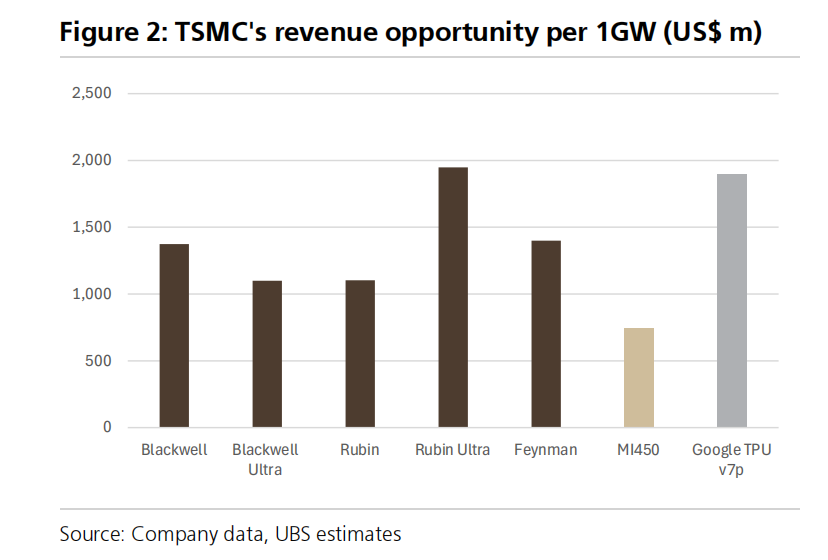
Core Insights - The surge in demand for AI data centers has led to a tight supply of storage semiconductors, resulting in record quarterly performances for both Samsung Electronics and SK Hynix [1][2] - Both companies are expected to supply the sixth generation of high bandwidth memory (HBM4) amid a supply-demand imbalance [1][3] Financial Performance - Samsung Electronics reported a revenue of 93.8 trillion KRW and an operating profit of 20.1 trillion KRW for Q4 2025, marking year-on-year increases of 23.7% and 209.2% respectively [1] - The semiconductor division of Samsung saw a 46% year-on-year revenue growth, reaching 44 trillion KRW, with operating profit soaring by 465.5% to 16.4 trillion KRW [1] - SK Hynix achieved a record revenue of 32.8267 trillion KRW in Q4, a 66.1% year-on-year increase, with operating profit rising by 137.2% to 19.1696 trillion KRW [1] Market Dynamics - The rapid expansion of AI data centers by major North American tech companies like Google, Microsoft, and Amazon has significantly increased the demand for storage semiconductors [2] - Despite a limited growth rate of DRAM bit shipments at around 10%, average selling prices (ASP) have surged by 25% to nearly 40% [2] - In NAND flash memory, SK Hynix's bit growth rate is approximately 10%, while Samsung's bit shipments have slightly declined, yet both companies' performance remains strong due to substantial price increases [2] HBM Market Trends - The HBM market is experiencing a supply shortage, exacerbated by AMD's announcement of its next-generation AI chip "MI455" featuring 432 GB of HBM4, which is 50% higher in capacity than similar products from Nvidia [3] - Both Samsung and SK Hynix have indicated that customer demand for HBM products far exceeds their current supply capabilities, leading to anticipated competition for market share [3] Future Product Strategies - Samsung and SK Hynix are preparing for the next generation of HBM (HBM4E) and customized HBM products, with both companies actively working to meet customer-specific requirements [4] - SK Hynix is focusing on customized HBM as a core competitive factor, while Samsung plans to initiate wafer trial production for customized HBM products in the second half of the year [4] NAND Flash Market Outlook - The demand for NAND flash memory is expected to grow significantly as AI applications shift focus towards inference stages, positioning NAND as a critical component in AI infrastructure [5] - The export value of Korean NAND flash memory is projected to reach 1.3 billion USD by January 2026, reflecting a 108% year-on-year increase [6] - Both Samsung and SK Hynix are adjusting their production strategies, focusing on high-margin products like HBM while maintaining stable pricing to enhance profitability [6][7]

Wall Street analyst updates this Nvidia rival stock price target
Finbold· 2026-01-21 15:11
Group 1 - KeyBanc Capital Markets maintains an 'Overweight' rating on Advanced Micro Devices (AMD) with a price target of $270, indicating a potential upside of approximately 16% from the current price of $231 [1] - The sustained strength in server CPU demand is highlighted as a primary driver, with hyperscaler customers securing capacity through 2026 [1][2] - AMD's latest-generation server platform is reportedly close to fully sold out until the end of 2026, indicating strong demand and tight supply [2] Group 2 - AI-related growth is central to AMD's outlook, with expectations for AI GPU revenue to reach between $14 billion and $15 billion by 2026, driven by cloud and enterprise deployments [2] - The ramp-up of next-generation MI455 GPUs is expected to begin in Q3 2026, with larger-scale Helios rack shipments anticipated in Q4 2026 [3] - Average selling prices are projected to rise by 10% to 15% due to tight supply and strong demand, supporting expectations for better-than-consensus results in Q4 2025 and higher guidance for Q1 2026 [4] Group 3 - Wall Street analysts maintain a bullish consensus on AMD, with 34 analysts rating it as a Strong Buy, including 26 buy recommendations and 8 hold recommendations [6] - The average 12-month price target for AMD is $284.29, suggesting a potential gain of about 19% from the recent price near $238, with the most optimistic forecast reaching $377 [8]
AMD Gets KeyBanc Upgrade as Hyperscaler Demand Accelerates
Yahoo Finance· 2026-01-17 17:55
Core Viewpoint - Advanced Micro Devices, Inc. (AMD) is experiencing strong demand in the hyperscaler market, leading to an upgrade from KeyBanc analyst John Vinh to Overweight with a price target of $270.00 [1] Group 1: Demand and Supply Dynamics - KeyBanc previously downgraded AMD due to concerns about a potential demand gap between MI355 and the upcoming MI455 platform, but recent supply chain checks have alleviated these worries [2] - Supply chain data indicates that AMD is nearly sold out of server CPUs for 2026 due to the surge in hyperscaler demand, with a potential price increase of 10-15% expected in Q1 2026 [3] Group 2: Revenue Projections - KeyBanc estimates that AMD's server CPU and AI GPU business will see significant growth, with AI revenues projected to reach $14-$15 billion this year [4] - Server CPU sales for AMD are expected to grow by at least 50% this year, with indications of 200,000 MI355 GPUs in the first half and a ramp-up of MI455 in the second half, targeting 290,000-300,000 units for the Helios solution [5]
PC成本双重挤压:CPU与存储器同步涨价,品牌厂毛利承压
Jing Ji Ri Bao· 2026-01-14 23:28
Group 1 - AMD is expected to raise prices for its CPU products, including the latest Ryzen 9000 series and several older processors, while Intel is also evaluating a price increase for its server processors [1] - The rising prices of CPUs and DRAM, which are the two main cost components in PCs, are putting pressure on brand manufacturers like Acer and ASUS, potentially affecting their profit margins [1] - Despite the cost pressures, Wall Street is optimistic about the future operations of AMD and Intel, with expectations of strong server demand and accelerated chip inventory digestion [1] Group 2 - The CPU market is shifting from being heavily reliant on the PC market cycle to becoming a key component in data center computing platforms, driven by AI servers, high-performance computing, and cloud infrastructure [2] - AMD is advancing new products in both the data center and PC segments, with the AI GPU MI355 and the upcoming MI455, while expanding the EPYC series in cloud and AI servers [2] - Intel is enhancing its data center and consumer product lines, accelerating the rollout of new server platforms and Gaudi AI accelerators, along with the Core Ultra processors and Panther Lake platform [2]
AMD (NasdaqGS:AMD) 2026 Conference Transcript
2026-01-06 03:32
Summary of CES 2026 Keynote Address by AMD CEO Dr. Lisa Su Industry Overview - The keynote was part of CES 2026, a major technology event showcasing innovations across various sectors, particularly focusing on AI and high-performance computing [1][4][5] - AMD is positioned as a central player in the global AI transformation, emphasizing its role in high-performance and AI computing [5][6] Core Points and Arguments AI and Computing Demand - AI is described as the most important technology of the last 50 years, with AMD prioritizing its development [15][16] - The number of active AI users has surged from 1 million to over 1 billion, with projections of reaching over 5 billion users [16][17] - Global compute infrastructure demand is expected to grow from approximately 1 Zettaflop in 2022 to over 100 Zettaflops by 2025, necessitating a further increase to over 10 Yottaflops in the next five years [17][19] - AI's integration into various sectors, including healthcare, education, and productivity, is highlighted as transformative [15][16] AMD's Technological Innovations - AMD's Helios platform is introduced as a next-generation rack scale solution designed for AI, featuring advanced MI455 GPUs and EPYC CPUs [23][30] - The MI455 GPU boasts 320 billion transistors and is designed for high performance, delivering up to 10 times more performance compared to previous generations [27][30] - The Helios rack is designed for optimal serviceability and reliability, weighing nearly 7,000 pounds and integrating cutting-edge technologies [24][25][26] Partnerships and Collaborations - AMD's collaboration with OpenAI is emphasized, showcasing the need for increased compute capacity to support advanced AI models [31][39] - Luma AI's CEO, Amit Jain, discusses their partnership with AMD, highlighting the efficiency and performance improvements achieved through AMD's hardware [50][59] Future Outlook - The demand for compute is expected to continue growing, with AMD's next-gen MI500 series already in development, promising a 1,000x increase in AI performance over four years [63][64] - The Ryzen AI 400 Series is introduced as the most advanced family of AI PC processors, set to enhance productivity and content creation capabilities [67][68] Additional Important Content - The keynote emphasizes the collaborative nature of innovation, stating that AI is not a solo act but a shared pursuit among industry leaders [2][4] - The importance of an open ecosystem for AI development is stressed, with AMD advocating for shared technology standards across hardware and software [48][49] - The potential of AI in personal computing is highlighted, with AI PCs becoming essential partners in productivity and creativity [65][66] This summary encapsulates the key themes and innovations presented during the CES 2026 keynote by AMD's CEO, focusing on the transformative impact of AI and the company's strategic advancements in computing technology.
AMD20251211
2025-12-12 02:19
Summary of AMD Conference Call Company Overview - The conference call discusses AMD's strategic initiatives and market outlook, particularly in the context of AI and data center opportunities. Key Points Industry Dynamics - Major companies are significantly increasing capital expenditures supported by free cash flow, benefiting the entire ecosystem [2][3] - Confidence in AI's commercial prospects is rising, with real application cases emerging, leading to productivity improvements and reduced inference costs [2][3] - The data center market presents a trillion-dollar opportunity, with accelerators capturing a significant share, including general-purpose and custom ASIC chips [2][4] AMD's Strategic Partnerships - AMD signed a multi-year 6 GW collaboration agreement with OpenAI, which is a defensive agreement based on performance warrants [2][5] - The first gigawatt-level product is planned for deployment in the second half of 2026, with gradual scaling in 2027 [2][5] - Collaboration with Meta on the Helios rack, designed to meet OCP standards, aims for high-density deployment [2][6] Product Focus and Market Position - AMD does not sell heavy rack-level systems but focuses on high-value components like GPUs, CPUs, and networking [2][7] - The client business has seen a 60% revenue growth over three consecutive quarters, driven by improved average selling prices (ASP) and a shift towards high-end PC and enterprise markets [3][12] - The company anticipates that GPU gross margins will gradually rise as business scales and solutions optimize [2][7] Market Opportunities and Challenges - The data center market is expected to see a shift from general silicon chips to custom silicon chips, with ASICs projected to capture 20%-25% of the market [4][5] - AMD's addressable market is estimated at one trillion, focusing on data center opportunities, including accelerators and CPUs, while competitors may include broader infrastructure components [4][5] - The company is closely monitoring the Chinese market dynamics and has received some licenses to operate within regulatory frameworks [10][11] Future Outlook - AMD aims for overall gross margins to reach 55%-58% in the long term, driven by investments in high-margin business areas and expanding market share [7][12] - The company is focused on reducing total cost of ownership (TCO) in data centers while supporting open standards, with significant developments in their Infinity Fabric technology [9][10] Competitive Landscape - AMD is evaluating customer AI workload characteristics and maintaining flexibility in hardware design, with ongoing assessments of general versus dedicated silicon needs [8][9] - The company is positioned well in the server market, with a rapidly expanding enterprise customer base and significant CPU demand driven by inference computing [12] Conclusion - AMD is strategically positioned to capitalize on the growing AI and data center markets, with strong partnerships, a focus on high-value products, and a commitment to innovation and flexibility in its offerings [2][3][4][5][6][7][8][9][10][11][12]
Advanced Micro Devices (NasdaqGS:AMD) FY Conference Transcript
2025-12-10 19:27
Summary of Advanced Micro Devices (AMD) FY Conference Call - December 10, 2025 Industry Overview - The discussion centers around the AI industry, highlighting a significant investment cycle with over $3 trillion in announced AI spending, particularly in compute and networking sectors [3][4] - AMD views AI as a transformational technology that will fundamentally change the global economy, indicating a long-term growth opportunity [4] Key Points on AMD's Position and Strategy - AMD is experiencing increased demand for its compute capabilities, both in GPU and CPU segments, driven by hyperscale companies that are well-capitalized and funding their investments through free cash flow [4] - The company believes that the data center market represents a trillion-dollar opportunity, with 20%-25% of that market being custom silicon (ASICs) and the remainder being general-purpose compute [5][11] - AMD maintains that the majority of the market will continue to favor general-purpose GPUs due to their flexibility and ability to support various workloads [10][11] Customer Engagement and Partnerships - AMD has established a significant partnership with OpenAI, committing to a multi-year agreement for six gigawatts of deployment, which is expected to ramp up in 2027 [16][17] - The collaboration with OpenAI has enhanced AMD's visibility in the competitive landscape against NVIDIA and Broadcom, positioning AMD as a key player in providing real compute solutions [15][21] Financial Performance and Market Dynamics - AMD's client business has seen a 60% revenue increase over the last three quarters, primarily driven by average selling price (ASP) expansion as the company moves into premium PC and enterprise markets [36] - The company is focused on market share expansion and improving gross margins, with a long-term target of achieving 55%-58% gross margin across its business segments [24][23] Competitive Landscape - AMD acknowledges the competitive nature of the AI hardware market, emphasizing the importance of flexibility in silicon design to meet diverse customer needs [10][27] - The company is cautious about the evolving landscape, particularly regarding custom silicon developments by competitors like NVIDIA, but remains committed to its programmable architecture [27][29] Challenges and Risks - The situation with China remains dynamic, with uncertainties regarding product demand and export controls impacting AMD's revenue forecasts [34][35] - AMD is monitoring the market closely to ensure compliance with U.S. government regulations while addressing customer demand in China [34] Conclusion - AMD is strategically positioned to capitalize on the growing AI market, leveraging partnerships and a strong product portfolio to drive future growth while navigating competitive and regulatory challenges [39]
AI基建热下的台积电赚麻了!瑞银:每GW带来10–20亿美元收入!
Hua Er Jie Jian Wen· 2025-11-18 11:43
Core Insights - TSMC is poised for unprecedented growth opportunities as a major foundry amid the global investment wave in cloud AI servers, with UBS estimating that each 1GW server project could generate $1-2 billion in revenue for TSMC, equating to 1.0-1.5% of its projected sales for 2025 [1] Group 1: Revenue Potential from AI Server Projects - Each 1GW server construction will require TSMC to provide approximately 2,000 to 5,000 advanced process wafers per month and 3,000 to 6,000 CoWoS advanced packaging wafers [9] - The potential revenue from OpenAI's announced transactions, totaling 26GW, could reach $34.4 billion for TSMC, with contributions from NVIDIA ($11 billion), AMD ($4.5 billion), and Google ($18.9 billion) [10] Group 2: Demand Variations Across AI Platforms - TSMC's revenue from NVIDIA's next-generation AI GPU platforms is expected to grow, with revenue from the Blackwell Ultra/Rubin platform at approximately $1.1 billion per 1GW, increasing to $1.4-1.9 billion for the Rubin Ultra/Feynman platform [2] - The efficiency of ASIC solutions, such as Google's TPU v7p, requires significantly more N3 capacity (4,900 wafers/month) compared to NVIDIA's 2,000-4,000 wafers/month, leading to higher revenue contributions for TSMC from ASIC projects [8] Group 3: Factors Driving Growth - The growth in TSMC's revenue is attributed to multiple factors, including process technology migration, increased GPU unit counts per rack, and the application of advanced packaging technologies like CoWoS, with a potential transition to panel-level packaging by 2028 [5] - Capital expenditures for each 1GW project are expected to drive $1-2 billion in wafer fabrication equipment investments for logic chip production, indicating a direct correlation between AI infrastructure expansion and TSMC's capacity demand and capital expenditure growth [9]