
Nemotron 3

Search documents
英伟达不想只卖 GPU
3 6 Ke· 2026-03-18 23:49
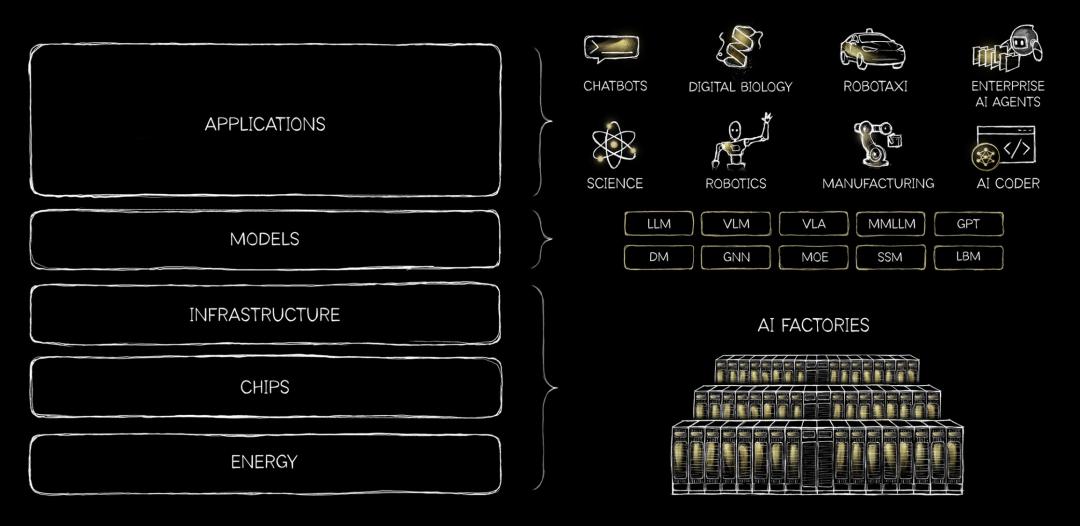
Core Viewpoint - Nvidia is redefining itself as a vertically integrated and horizontally open company, moving beyond its traditional focus on high-performance GPUs to embrace a more comprehensive approach in the AI landscape [1][2]. Group 1: Hardware Developments - The next-generation Vera Rubin computing platform has evolved from a single chip to a complete chip system consisting of 7 custom chips and 5 different racks, connected via the latest NVLink 6 network [3]. - The Vera CPU, integrated with 256 liquid-cooled processors, offers double the computational efficiency of traditional CPUs and is designed specifically for agentic AI [3]. - Nvidia's Vera Rubin platform boasts a single-card inference capability that is up to 5 times better than the previous Blackwell chip, with a 90% reduction in token generation costs [3]. - Nvidia has integrated the Groq 3 LPU into the Vera Rubin platform, which allows for lower latency and more stable AI inference tasks, addressing previous shortcomings in Nvidia's architecture [4]. Group 2: Market Strategy - Nvidia is entering the consumer-grade SoC market with the N1X chip, developed in collaboration with MediaTek, targeting high-end AI PCs and laptops [5][6]. - The strategy aims to raise the competitive barrier, requiring potential competitors to develop not just better GPUs but also superior CPUs, switches, network protocols, and low-latency modules [7]. - Nvidia's approach indicates a desire to capture every aspect of AI infrastructure hardware, aiming to maximize revenue opportunities [8]. Group 3: Software Initiatives - Nvidia has announced a partnership with the open-source project OpenClaw to launch NemoClaw, an open-source AI agent platform that allows enterprises to deploy and manage AI agents without hardware restrictions [9][10]. - The shift from a hardware-centric to a software-centric strategy is driven by the need to retain customers in a market where custom AI chips from cloud providers are gaining significant market share [12]. - Nvidia emphasizes the importance of structured data for enterprise applications, positioning NemoClaw as a key tool for businesses to leverage AI effectively [13][14]. Group 4: AI Ecosystem and Future Outlook - Nvidia's "AI Five-Layer Cake" theory outlines the interdependence of energy, chips, data centers, models, and applications, suggesting that advancements in one layer will drive demand across others [16]. - The company is investing in various sectors, including nuclear energy and medical AI, to ensure a robust AI ecosystem and to avoid bottlenecks in any layer of the AI supply chain [16]. - Nvidia's comprehensive strategy aims to expand the overall AI market, ensuring sustained demand for its computational power [16].


没有商业模式--DeepSeek最坚固的“护城河”
华尔街见闻· 2026-01-19 09:46
Core Viewpoint - DeepSeek's unique advantage lies in its lack of a commercial model, allowing it to focus solely on its AGI (Artificial General Intelligence) aspirations without external pressures or funding requirements [3][8][12]. Group 1: Market Expectations and Competition - The market's expectations for DeepSeek's upcoming model are tempered by the saturation of open-source models, making it less likely to shock the world again as it did previously [3][4]. - DeepSeek is no longer the only or the most open player in the market, as other labs have quickly followed suit with their own models [5][8]. Group 2: Funding and Control - DeepSeek's founder, Liang Wenfeng, has maintained a "zero external financing" approach, prioritizing control over financial gain, which is unique among top labs [3][9]. - The success of Liang's quantitative fund, which generated over $700 million in profit with a 53% return rate, allows DeepSeek to fund its operations without external investment [3][11]. Group 3: Advantages of No Commercial Model - The absence of external funding means DeepSeek is not burdened by commercial KPIs, allowing it to focus purely on technological advancements [3][12]. - The lack of external financial pressures fosters a flat organizational structure, reducing internal competition and bureaucracy, which can hinder innovation [14][15]. Group 4: Research and Resource Allocation - DeepSeek's limited resources do not impede its research quality, as good research does not necessarily require excessive computational power [13][14]. - The organization can prioritize innovative ideas without the distractions and conflicts that often accompany larger, well-funded labs [15][18].

没有商业模式,是DeepSeek最坚固的“护城河”
3 6 Ke· 2026-01-19 08:22
Core Insights - The article discusses the upcoming anniversary of DeepSeek and the expectations surrounding its new model release, emphasizing that the market should temper its expectations as the AI landscape has evolved significantly since last year [1][10]. Group 1: Business Model and Funding - DeepSeek's strongest competitive advantage is its unique model of zero external financing, allowing it to pursue its AGI dream without commercial pressures [2][15]. - The founder, Liang Wenfeng, prioritizes control over financial backing, making DeepSeek an outlier in a capital-driven AI industry [3][18]. - DeepSeek's funding comes from its profitable quantitative fund, Huanfang Quantitative, which generated over $700 million (approximately 5 billion RMB) in profit last year, allowing for investment in resources without external investor pressure [4][18]. Group 2: Market Position and Competition - The article warns that while DeepSeek previously led the market with its models, it is no longer the only or the most open player, as many competitors have emerged with open-source models [10][11]. - The expectation that DeepSeek will release a groundbreaking model is tempered by the reality that the market is now saturated with open-source alternatives, diminishing its unique position [10][14]. Group 3: Internal Dynamics and Research Quality - The absence of external funding allows DeepSeek to maintain a flat organizational structure, reducing internal competition and bureaucracy, which can hinder research quality [20][22]. - The article highlights that excessive funding can lead to "big company syndrome," where resources are mismanaged and research quality suffers, a situation DeepSeek avoids by self-funding [6][20]. - The focus on research quality over sheer computational power is emphasized, with insights from Ilya Sutskever suggesting that significant breakthroughs do not necessarily require vast computational resources [7][21]. Group 4: Investor Perspective - The author expresses a paradoxical desire to invest in DeepSeek while recognizing that accepting external funding would compromise its unique characteristics and mission [9][25]. - The article concludes that DeepSeek's lack of a commercial model is its enduring strength, allowing it to align its internal goals with its AGI research without external pressures [25].

Truist Raises NVIDIA (NVDA) PT After Nemotron 3 AI Model Launch
Yahoo Finance· 2026-01-08 15:09
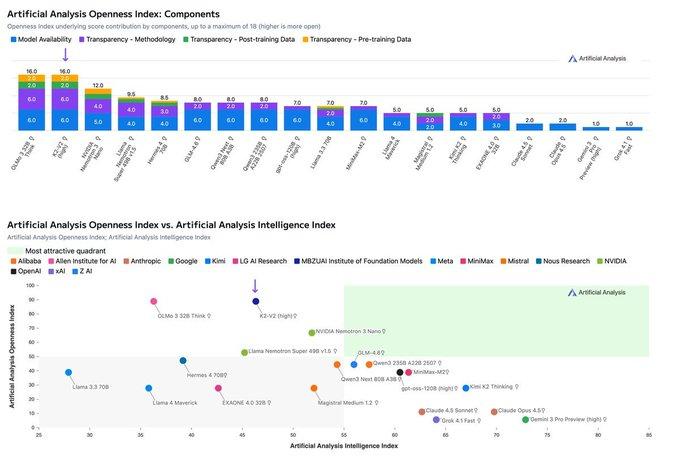
Group 1 - NVIDIA Corporation (NASDAQ:NVDA) is highlighted as a must-buy AI stock, with Truist raising its price target from $255 to $275 while maintaining a Buy rating [1] - Truist's analysis indicates that AI infrastructure semiconductor stocks are currently undervalued relative to their growth potential, despite challenges in AI infrastructure and funding [3] - The firm anticipates increased upward pressure on estimates for AI semiconductor stocks compared to diversified analog semiconductors as they approach 2026 [3] Group 2 - NVIDIA recently launched the Nemotron 3 family of open models, which includes three variants: Nano (30 billion parameters), Super (100 billion parameters), and Ultra (500 billion parameters) [4] - The Nemotron 3 models utilize a hybrid mixture-of-experts architecture, combining Mamba and Transformer technologies, resulting in a 4x increase in throughput for the Nano model compared to its predecessor [5] - NVIDIA specializes in designing GPUs and data center solutions that are essential for training and running large-scale AI models, supported by its CUDA software platform [6]
英伟达成美国大模型开源标杆:Nemotron 3连训练配方都公开,10万亿token数据全放出
量子位· 2025-12-26 06:35
Core Viewpoint - Nvidia is aggressively advancing in open-source models with the introduction of the "most efficient open model family" Nemotron 3, utilizing a hybrid Mamba-Transformer MoE architecture and NVFP4 low-precision training [1][22]. Group 1: Model Architecture and Efficiency - Nemotron 3 combines Mamba and Transformer architectures to maximize inference efficiency [7]. - The model architecture features a unique arrangement of Mamba-2 layers and MoE layers, significantly reducing the reliance on self-attention layers [10]. - In typical inference scenarios with 8k input and 16k output, Nemotron 3 Nano 30B-A3B achieves a throughput 3.3 times greater than Qwen3-30B-A3B, with advantages becoming more pronounced as sequence length increases [12]. - The model demonstrates robust performance on long-context tasks, scoring 68.2 on the RULER benchmark with 1 million token input length, compared to only 23.43 for Nemotron 2 Nano 12B [14]. Group 2: LatentMoE Architecture - For larger models, Nvidia introduces the LatentMoE architecture, which performs expert routing in a latent space [15]. - LatentMoE addresses two bottlenecks in MoE layer deployment: low-latency scenarios and high-throughput scenarios, reducing the weight loading and communication costs significantly [16][18]. - LatentMoE utilizes 512 experts with 22 activated, compared to the standard MoE's 128 experts with 6 activated, achieving better performance across various tasks [20]. Group 3: Training Innovations - Nvidia employs NVFP4 format for training, achieving a peak throughput three times that of FP8, and has successfully trained models on up to 250 trillion tokens [22]. - The training process retains high precision for certain layers to maintain model stability, while most layers are quantized to NVFP4 [23]. - Nemotron 3's post-training utilizes multi-environment reinforcement learning, covering a wide range of tasks simultaneously, which enhances stability and avoids common issues associated with phased training [24][26]. Group 4: Performance Metrics and Open Source - The model shows consistent accuracy across various downstream tasks, with NVFP4-trained models closely matching BF16 versions in performance [28]. - The entire post-training software stack is open-sourced under the Apache 2.0 license, including NeMo-RL and NeMo-Gym repositories [32]. - Nemotron 3 allows for cognitive budget control during inference, enabling users to specify the maximum number of tokens for thought chains, thus balancing efficiency and accuracy [34].
腾讯研究院AI每周关键词Top50
腾讯研究院· 2025-12-20 02:33
Group 1: Core Insights - The article presents a weekly roundup of the top 50 keywords in the AI sector, highlighting significant developments and trends in the industry [2]. - Key players mentioned include Google, Apple, ByteDance, NVIDIA, and OpenAI, indicating a competitive landscape in AI technology and applications [3][4]. Group 2: Chip Developments - Google is advancing its AI chip technology with the introduction of TorchTPU [3]. - Apple is focusing on AI server chips, which may enhance its capabilities in AI applications [3]. Group 3: Model Innovations - Google has launched the Gemini 3 Flash model, while ByteDance introduced Seed1.8, showcasing ongoing innovation in AI models [3]. - Other notable models include MiMo-V2-Flash from Xiaomi and Nemotron 3 from NVIDIA, indicating a diverse range of AI model developments [3]. Group 4: Application Trends - OpenAI is expanding its ecosystem with the ChatGPT application store and various applications like ChatGPT Images and SAM Audio [3][4]. - Companies like Tencent and xAI are also developing unique applications, such as the writing mode and Grok Voice, respectively [3][4]. Group 5: Technological Insights - The article discusses various technological insights, including AI memory systems and recursive self-improvement, which are critical for future AI advancements [4]. - The AI adult content market and AGI predictions are also highlighted, reflecting the broader implications of AI technology [4].






As Nvidia Launches New Nemotron 3 Models, Should You Buy, Sell, or Hold NVDA Stock?
Yahoo Finance· 2025-12-18 13:46
Core Viewpoint - Nvidia is positioned as a leading AI infrastructure company, with strong growth potential reflected in its premium valuation compared to the sector average, driven by its innovative products and strategic partnerships [1][4]. Financial Performance - Nvidia reported record revenue of $57 billion for Q3, marking a 22% increase quarter-over-quarter and a 62% increase year-over-year, primarily due to data center revenue of $51.2 billion [8]. - The company's gross margins remained high at 73.4% GAAP and 73.6% non-GAAP, with earnings per share (EPS) at $1.30 [8]. - Nvidia returned $37 billion through buybacks and dividends in the first nine months of fiscal 2026, with an additional $62.2 billion authorized for repurchases [8]. Market Position and Valuation - Nvidia's forward price-to-earnings (P/E) ratio stands at 40x, significantly higher than the sector's 24.34x, indicating market expectations for faster growth and stronger long-term earnings [1]. - The company's market capitalization is approximately $4.15 trillion, although shares have fallen over 17% from recent highs, reflecting investor concerns about the sustainability of AI spending [5]. Product Development and Innovation - The launch of the Nemotron 3 family of open models aims to enhance agentic AI development, with the Nemotron 3 Nano model delivering four times the throughput of its predecessor [6][10]. - Nvidia's collaboration with Synopsys focuses on integrating AI and accelerated computing into engineering workflows, enhancing design and simulation processes [9]. Strategic Partnerships - Nvidia has invested $2 billion in Synopsys to strengthen its commitment to AI in engineering [10]. - Partnerships with HUMAIN and Upwind aim to expand Nvidia's infrastructure capabilities and secure AI workloads, respectively [10][12]. Analyst Outlook - For Q4 of fiscal 2026, Nvidia expects revenue of about $65 billion, with EPS estimates showing significant year-over-year growth [13]. - Analysts remain optimistic, with price targets ranging from $250 to $350, indicating potential upside from current levels [14][15].
Top 3 big tech stocks to buy in 2026
Finbold· 2025-12-16 12:34
Core Viewpoint - The technology sector presents a compelling investment opportunity, with analysts predicting continued momentum into 2026, highlighting Alphabet, Nvidia, and Tesla as the top three tech stocks to consider [1][14]. Group 1: Alphabet (GOOGL) - Alphabet has significantly outperformed its peers and the S&P 500, with shares trading above $308, reflecting a nearly 63% year-to-date increase [2]. - The company has excelled in the AI sector with its Gemini models and Tensor Processing Unit (TPU), enhancing its competitiveness in the data center market [3]. - Potential partnerships are anticipated around TPUs, with companies like Meta showing interest, which could unlock new revenue streams [4]. Group 2: Nvidia (NVDA) - Nvidia is closely associated with AI, achieving a 31.6% gain year-to-date, with shares trading around $176 [5]. - The company's GPUs are widely used by leaders in the AI field, making them essential for data centers [7]. - Nvidia's recent launch of open-source AI models, Nemotron 3, aims to democratize AI development, potentially solidifying its market position further by 2026 [8]. Group 3: Tesla (TSLA) - Tesla, while primarily an automaker, is increasingly recognized as a tech stock, with shares at nearly $473, up 17% year-to-date [9]. - CEO Elon Musk's focus on automated driving and AI has attracted analyst attention, with a potential price target of $800 by 2026 suggested by Wedbush [11]. - Positive investor sentiment is supported by successful autonomous vehicle testing in Austin and efforts to improve sales in Europe with more affordable models [12][13].


AI日报丨英伟达收购SchedMD;Skild AI采购星动纪元灵巧手
美股研究社· 2025-12-16 10:11
Group 1 - The article highlights the rapid development of artificial intelligence technology, presenting significant opportunities in the market [3] - Skild AI, a US-based robotics company valued at $14 billion, has adopted a Chinese company's advanced dexterous hand technology, marking a significant entry of Chinese components into the global humanoid robot supply chain [5] - Ant Group has upgraded its AI health application AQ to "Antifufu," focusing on a "health+" strategy with new features for health companionship, inquiries, and services [6] Group 2 - SenseTime has launched the Seko 2.0, the first multi-episode generative AI agent, showcasing significant advantages in consistency for multi-episode video generation [7][8] - NVIDIA has acquired SchedMD, a leading developer of open-source workload management systems for high-performance computing and AI, planning to continue the development of the Slurm software [10] - NVIDIA has introduced the Nemotron 3 open model family, aimed at providing an efficient platform for building agent-based AI applications, with the first model already available and larger models expected in 2026 [11]

资讯日报:市场聚焦周二即将公布的美国非农与零售数据-20251216
Guoxin Securities Hongkong· 2025-12-16 06:07
Market Overview - The Hong Kong stock market showed a decline, with the Hang Seng Index closing at 25,629, down 1.34% for the day and up 27.76% year-to-date[3] - The Hang Seng Tech Index fell by 2.48%, while the Hang Seng China Enterprises Index decreased by 1.78%[3] - The Shanghai Composite Index dropped 0.55%, with a year-to-date increase of 15.40%[3] Sector Performance - Technology stocks faced significant losses, with Baidu down over 5%, Kuaishou down over 4%, and Alibaba down over 3%[9] - Semiconductor stocks also weakened, with InnoLight down over 9% and Hua Hong Semiconductor down over 6%[9] - Biopharmaceutical stocks saw substantial declines, with Kelun Pharmaceutical and BeiGene both down over 8%[9] Gold and Insurance Stocks - Gold and precious metal stocks performed well, with Zijin Mining up over 7% and Chifeng Jilong Gold up over 5%[9] - Insurance stocks rose collectively, with New China Life Insurance up over 4% and China Pacific Insurance up over 2%[9] Economic Data Focus - The market is anticipating key economic data releases, including the November non-farm payrolls and October retail sales, which are expected to provide important guidance for market direction[9] - The unemployment rate in urban areas was reported at 5.1% for November, with retail sales totaling 43,898 billion yuan, reflecting a year-on-year growth of 1.3%[14] U.S. Market Trends - U.S. stock indices opened higher but closed lower, with significant pressure from AI-related stocks[9] - Major tech stocks like Apple, Microsoft, and Amazon experienced declines, while Meta and Nvidia saw slight gains[9] - The Nasdaq China Golden Dragon Index fell by 2.17%, with Alibaba down 3.59% and JD down 2.00%[9]