PERC电池

Search documents
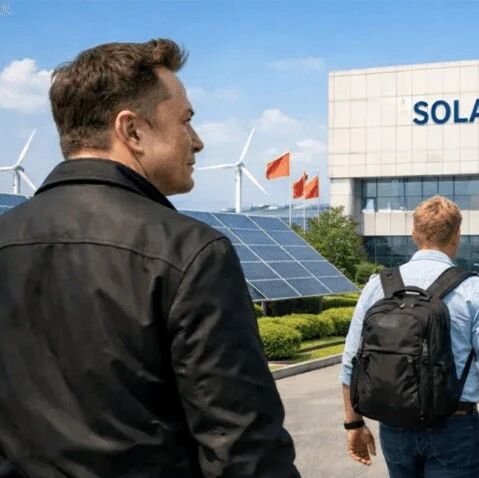
马斯克团队来华密访光伏企业,重点看的是什么?
36氪· 2026-02-10 13:30
Core Viewpoint - The recent visit of Elon Musk's team to several Chinese photovoltaic companies has sparked significant market interest and speculation about potential collaborations in the solar energy sector [5][6]. Market Reaction - Following the news, Chinese photovoltaic stocks experienced notable price increases, with companies like JinkoSolar seeing a 36% surge over two trading days, while GCL-Poly and TCL Zhonghuan also reported substantial gains of 26% and 16%, respectively [6]. - Analysts suggest that the stock price increases are driven more by market sentiment and expectations rather than fundamental changes in the companies' performance [9]. Industry Insights - The visit reflects a strategic interest from global tech giants in the renewable energy sector, particularly as the demand for stable and efficient power sources grows alongside advancements in artificial intelligence [7]. - Chinese companies dominate the global photovoltaic supply chain, accounting for over 70% of production capacity and shipments, making them essential for Musk's ambitions in space solar energy [10]. Technological Focus - Musk's team showed particular interest in next-generation technologies such as Heterojunction (HJT) and perovskite solar cells, which are believed to offer advantages in efficiency and cost reduction [14][15]. - HJT technology is noted for its higher efficiency and lower production costs, while perovskite cells are recognized for their performance in low-light conditions and potential for lightweight applications in space [15]. Future Considerations - Despite the excitement, industry experts caution that the current stock price increases may not be sustainable without concrete orders or agreements, as the economic viability of space solar energy remains uncertain [11][20]. - The photovoltaic industry is currently undergoing a significant adjustment phase, with challenges in supply and demand dynamics that need to be addressed [12]. Strategic Implications - The interactions between Musk and Chinese photovoltaic companies may lead to customized battery solutions for specific applications, but the realization of these opportunities will depend on the ability to manufacture these technologies at scale and low cost [17]. - The broader implications of Musk's interest signal a potential shift in energy paradigms and industry directions, igniting public imagination about the future of energy [20].

8个月内三换董事长,跨界电池片上市公司管理层“大换血”
Sou Hu Cai Jing· 2026-02-10 11:30
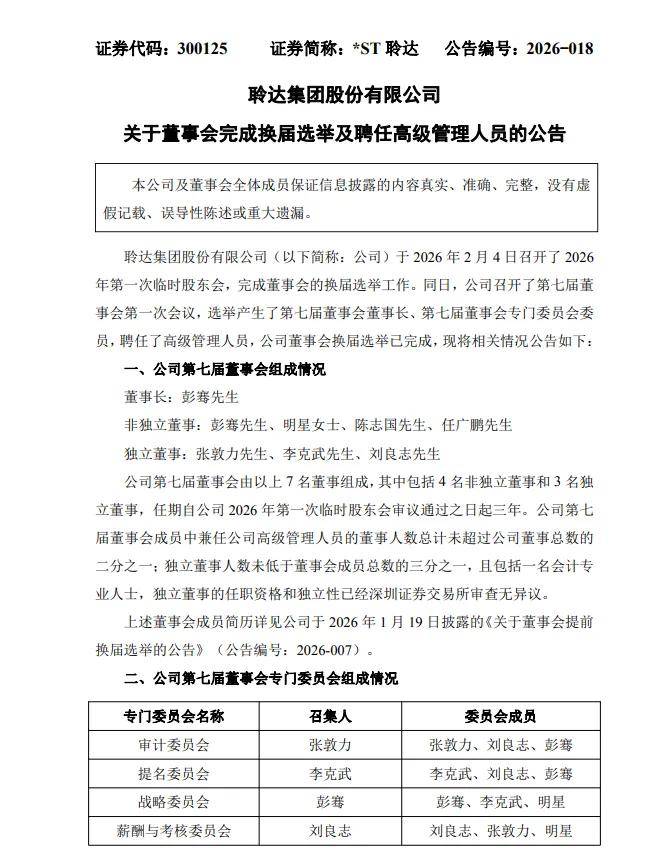
Core Viewpoint - The management reshuffle at *ST Lingda (300125) continues, marking significant changes in leadership as the company faces challenges in the photovoltaic industry, including a temporary suspension of battery production [1][10]. Group 1: Management Changes - *ST Lingda announced the completion of its board restructuring and the appointment of new senior management on February 4, with many new faces in the newly formed seventh board [1]. - The new chairman, Peng Qian, replaces the former chairman Jin Yongfeng, who has stepped down after only eight months in the role [6][7]. - The restructuring saw the departure of seven board members, including five directors and two independent directors, while new appointments include Peng Qian, Mingxing, Chen Zhiguo, and Ren Guangpeng [7][8]. Group 2: Company Background and Challenges - *ST Lingda entered the battery segment in 2021 by acquiring 100% of Jinzhai Jiayue, but soon faced difficulties as the photovoltaic industry adjusted [8][10]. - The company announced a temporary production halt for its subsidiary Jinzhai Jiayue, becoming the first listed company in the photovoltaic sector to do so [10]. - The company has been struggling with debt issues, leading to pre-restructuring applications from creditors [10]. Group 3: Future Outlook - Following the management changes, *ST Lingda is expected to divest its photovoltaic assets and shift its main business focus, as previous expansion plans for battery production have been terminated [11]. - The company had previously planned significant investments in battery production capacity, including a 15GW TOPCon and 5GW HJT expansion, which are now deemed unfeasible [11].

电池片-炼焦煤-大宗商品热点解读
2025-12-31 16:02
Summary of Key Points from Conference Call Records Industry: Photovoltaic (PV) Battery Cells Core Insights and Arguments - **Price Decline**: In 2025, the price of photovoltaic battery cells significantly dropped, reaching a low of 0.24 yuan per watt in June, influenced by policies, demand, and costs, leading to an industry downturn with operating rates falling below 50% and severe inventory accumulation [1][3][7] - **Market Share and Technology**: TOPCon batteries dominate the market with nearly 80% share, while PERC technology is gradually phasing out. Future expectations point towards DC batteries becoming the new mainstream technology, with leading companies already building some capacity for this transition [4][11] - **Production Capacity**: China's PV battery cell production is concentrated in the eastern coastal regions and Sichuan province, with Jiangsu province leading at 327.6 GW due to its developed economy and strong industrial base [5][6] - **Global Dominance**: By 2025, China holds a dominant position in the global PV supply chain, accounting for 90%-95% of polysilicon, silicon wafer, and battery production, and 83% of module production. Major export markets include India, Indonesia, and Turkey, with India alone accounting for 50.89% of total exports [8][10] - **Policy Impact**: Policies significantly influenced the market, with the February announcements boosting demand temporarily, leading to a surge in installations. However, demand was overstretched, resulting in a sharp decline in new installations in the latter half of the year [9][12] Challenges and Future Outlook - **Industry Challenges**: The PV industry faces severe challenges, including price crashes, cost inversions, and halted expansion plans. The end of policy stimuli has led to a significant drop in downstream demand, exacerbating supply-demand imbalances [7][13] - **Future Demand Reduction**: Anticipated reductions in battery cell demand due to market pricing shifts and policy changes, with the transition from fixed subsidies to market pricing impacting growth models [13][14] - **Operational Factors**: Future operating rates will be influenced by inventory levels, order situations, production costs, and seasonal factors, with many companies facing increased inventory and reduced orders [15][16] Industry: Coking Coal Market Situation - **Price Trends**: Coking coal prices experienced three phases in 2025: a steady decline from January to mid-July, a rise from mid-July to mid-November, and a subsequent drop due to seasonal demand decline, with an annual average price of 1,216 yuan per ton [17] - **Supply and Demand Dynamics**: China's proven coking coal reserves account for 27% of the national total, primarily in North China. Production increased in the first half of 2025 but declined in the second half due to strict production checks [18] Consumption and Structural Changes - **Consumption Structure**: Coking coal consumption remains largely stable, with over 95% used for coke production, showing little change in recent years [19][20] - **Environmental Impact**: Seasonal air pollution has led to production limits for coking enterprises, affecting output levels [21] Future Predictions - **Demand from Steel Industry**: The steel industry is currently in a seasonal downturn, with limited demand for coke due to maintenance and production adjustments. Overall steel supply is expected to slightly decrease in 2025 [22] - **Supply Policies and Future Outlook**: Policies regarding safety, clean energy, and production capacity will maintain stable coking coal supply. However, resource depletion and quality decline may affect future production rates, with expected output between 490 million to 500 million tons in 2026 [23] - **Price Forecast**: The overall price trend for coking coal in 2026 is expected to be downward, with limited upward pressure due to insufficient domestic demand and ample supply, projected to fluctuate between 1,000 to 1,400 yuan per ton [25]
金融+工业“双轮驱动” 伦敦银呈现强势前景
Jin Tou Wang· 2025-12-26 06:29
Group 1 - The core viewpoint is that the silver market is experiencing a dual drive from financial attributes and industrial demand, leading to a fluctuating upward trend in silver prices [1] - Silver has both monetary and investment properties, historically serving as an important currency function and currently acting as an inflation hedge reserve asset [1] - The global silver consumption structure for 2024 is projected to have industrial demand at 59%, jewelry at 18%, and coins and bars at 16%, with photovoltaic demand accounting for 197.6 million ounces, approximately 17% of total demand [1] Group 2 - Silver is a critical component in photovoltaic cells, directly affecting the efficiency of energy conversion and the long-term reliability of components [1] - The current mainstream PERC solar cells require about 80 milligrams of silver per piece, while the more promising N-type TOPCon cells require up to 130 milligrams [1] - Short-term market analysis indicates a need to be cautious of potential pullback risks, particularly around the key resistance area of $65.88, which may serve as a turning point for the market [2]
BC电池有望实现“弯道超车”
Zhong Guo Dian Li Bao· 2025-12-08 03:26
Core Insights - The Chinese photovoltaic industry is experiencing a price recovery in the market for polysilicon, silicon wafers, battery cells, and modules, with year-on-year increases of 31.6%, 6.8%, 6.5%, and stable prices respectively as of January to September 2025. However, production volumes for polysilicon and silicon wafers have decreased by 32.8% and 12.5% respectively, while battery cell and module production have increased by 8.8% and 12.2% respectively [1] Group 1 - The photovoltaic industry is still in a period of transformation and deep adjustment, despite the positive price trends [1] - The BC battery technology is viewed as a key direction for future development in the photovoltaic market due to its higher efficiency and cost reduction potential [1] Group 2 - The current market competition is heavily focused on efficiency, with various technologies approaching their theoretical efficiency limits. BC batteries currently have a conversion efficiency of 27.5%, with a theoretical limit exceeding 29% [2] - The market share of PERC batteries has dropped to 11.2%, while TOPCon batteries dominate with a market share of 88.3%. BC batteries are expected to reach a market share of 10% by the end of 2025, indicating significant growth potential [3] Group 3 - Reducing costs is a major focus for the photovoltaic industry, with silver paste costs accounting for 27% of battery cell costs and 12% of total module costs as of December 2024 [4] - The rising price of silver has led to increased costs for high-temperature silver paste, prompting the industry to explore alternatives such as copper paste, which is cheaper and has better conductivity [4][5] Group 4 - Innovation is essential for the healthy and orderly development of the photovoltaic industry, with companies encouraged to accelerate technological innovation and improve product quality to strengthen their competitive edge [6]

2026年中国PERC电池行业发展现状、竞争格局及趋势预测
Sou Hu Cai Jing· 2025-11-24 09:46
Core Insights - PERC (Passivated Emitter and Rear Cell) technology is a high-efficiency photovoltaic cell technology that enhances light conversion efficiency while maintaining process compatibility, making it a mainstream technology in the solar market [1][6] - The PERC battery industry in China is experiencing structural adjustments, with production expected to reach 176 GW in 2024, despite a significant drop in market share from 85% in 2023 to below 5% by the end of 2024 [1][14] - The industry is characterized by a clear and tightly coordinated supply chain, with upstream materials like silicon and silver paste, midstream cell manufacturing, and downstream integration with various solar power and energy storage applications [1][9] Industry Overview - PERC batteries utilize a passivation layer to reduce carrier recombination at the rear while maintaining local contacts for current collection, thus improving efficiency [1][6] - The industry is moving towards higher localization rates and increased concentration, with a gradual shift towards collaboration with N-type technology and greener production methods [1][9] Production and Market Dynamics - In 2024, the production of PERC batteries in China is projected to be 176 GW, indicating a continuation of scale but with structural adjustments [14] - The efficiency of PERC technology is nearing theoretical limits, leading to a significant decline in market share, yet its production remains crucial for meeting the foundational demand in the photovoltaic market [1][14] Competitive Landscape - By 2025, the domestic PERC battery industry is expected to exhibit a tiered competitive structure, with leading companies like Tongwei and Longi dominating capacity [2][16] - Despite the impact of N-type technology, leading firms are maintaining their competitive positions through capacity upgrades and cost control [2][16] Research and Analysis - The research team employs a combination of desktop research, quantitative surveys, and qualitative analysis to comprehensively assess the PERC battery industry's market capacity, supply chain, operational characteristics, profitability, and business models [2][4] - A detailed report titled "2026-2032 China PERC Battery Industry Development Dynamic Monitoring and Investment Opportunity Insight Report" has been prepared to provide critical insights for enterprises, research institutions, and investment organizations [2][23]
光伏十年复盘
2025-09-28 14:57
Summary of the Solar Industry Conference Call Industry Overview - The solar photovoltaic (PV) industry in China has undergone three key phases: subsidy-driven growth, grid parity, and policy support, significantly increasing the share of renewable energy generation and domestic installed capacity [2][5][12]. Key Points and Arguments - **Market Growth and Policy Impact**: The introduction of large-scale renewable energy projects, such as the desert wind and solar base projects, has significantly boosted renewable energy generation in China [2]. - **International Market Dynamics**: The U.S. has increased its investment tax credit (ITC) to 30%, reflecting its commitment to renewable energy, despite trade barriers against Chinese products [2][6]. - **Technological Advancements**: The shift from multi-crystalline to mono-crystalline silicon has reshaped the market, with companies like LONGi Green Energy emerging as leaders. The TOPCon technology, led by JinkoSolar, is accelerating the phase-out of PERC technology [2][7][11]. - **Future Demand Projections**: By 2050, solar energy is expected to account for 50% of renewable energy generation, driven by government investment plans [2][9]. Industry Challenges - **Overcapacity and Price Wars**: The industry is currently facing challenges related to overcapacity and price wars, necessitating further policy support to stabilize prices [4][20]. - **Global Market Fluctuations**: The global PV market has seen a surge in demand since 2020, but the industry must navigate the impacts of international trade policies and competition [15][17]. Technological Developments - **Battery Technology Evolution**: The transition from PERC to TOPCon technology is significant, with companies like LONGi and Aiko leading in new battery technologies. However, the current overcapacity may hinder the profitability of these advancements [10][11][21]. - **Material Costs**: The prices of key materials such as silicon, glass, and encapsulants have risen due to increased demand and supply chain constraints [15][16]. Market Forecasts - **Installed Capacity Predictions**: Global installed capacity is projected to reach 610 GW by 2025, with a year-on-year growth of 13%. However, domestic demand may face pressure in 2026 due to policy changes [19]. - **Long-term Growth Outlook**: The solar market is expected to maintain a growth rate of 10%-15% in the coming years, with a stable domestic demand anticipated post-2026 [19]. Conclusion - The solar PV industry is poised for significant growth driven by technological advancements and supportive policies. However, challenges such as overcapacity and international trade dynamics must be addressed to ensure sustainable profitability and market stability [20].
隆基绿能晶科能源握手言和树典范 两光伏巨头年投146亿研发卷技术
Chang Jiang Shang Bao· 2025-09-21 23:15
Core Viewpoint - The two major photovoltaic giants, Longi Green Energy and JinkoSolar, have reached a "historic reconciliation" by settling their patent litigation, marking a significant shift from conflict to collaboration in the industry [1][3][4]. Group 1: Patent Litigation Background - Since early 2024, Longi Green Energy and JinkoSolar have engaged in mutual lawsuits, with each company acting as both plaintiff and defendant [2][5]. - The disputes stem from rapid technological advancements in the photovoltaic sector, with Longi leading in monocrystalline silicon wafers and high-efficiency cells, while Jinko has advantages in module integration and N-type battery technology [2][5]. - The reconciliation is seen as a means to end internal strife and foster collaboration to address global uncertainties in the market [2][6]. Group 2: Financial Performance and R&D Investment - In the first half of 2025, JinkoSolar reported revenue of 31.83 billion yuan, a year-on-year decline of 32.63%, while Longi Green Energy achieved revenue of 32.81 billion yuan, down 14.83% [7]. - Both companies have significantly invested in R&D, with combined expenditures reaching 14.62 billion yuan in 2023, highlighting their commitment to innovation [8]. - Longi has over 3,500 authorized patents, while Jinko has applied for more than 5,500 patents, with 75% being invention patents [8]. Group 3: Industry Implications and Future Outlook - The reconciliation sets a precedent for sustainable intellectual property partnerships in the photovoltaic industry, encouraging a healthier competitive environment [6][9]. - Both companies plan to enhance R&D efforts and accelerate the commercialization of advanced technologies, indicating a shift towards differentiated value competition rather than price wars [6][7]. - The industry is expected to recover from current low profitability cycles, with a focus on technological breakthroughs as a key driver for future growth [8][9].


新能源与互联网双向赋能:凯利普借势互联网开启产业升级新征程
Sou Hu Cai Jing· 2025-09-07 09:36
Core Insights - The photovoltaic and wind power industries are rapidly transforming the global energy landscape, with solar power costs dropping over 90% in the past decade, making it the most competitive clean energy source [1] - Innovations such as PERC cells, heterojunction technology, and perovskite cells are driving continuous breakthroughs in photovoltaic conversion efficiency [1] - The integration of digital technologies is becoming a core support for the large-scale application of renewable energy [3] Photovoltaic Industry - Distributed solar power is turning urban rooftops into micro power stations, while household systems are promoting energy independence in rural areas [1] - Large solar power bases in desert areas are creating a complete industrial chain from technology research and development to end-user applications [1] Wind Power Industry - The onshore wind turbine capacity has surpassed 6 megawatts, and offshore models are advancing beyond 10 megawatts [3] - Smart control systems enable wind turbines to sense wind speed and automatically adjust, maximizing wind energy capture [3] - The maturity of floating offshore wind technology is extending development into deep-sea areas [3] Digital Integration - AI algorithms are optimizing solar panel angles in real-time, increasing efficiency by 12% in Qinghai's solar industry park [3] - Virtual power plant platforms in Germany aggregate thousands of households' solar and storage devices for electricity trading [3] - China's State Grid's new energy cloud platform connects the largest scale of renewable energy station data globally, controlling generation prediction errors within 3% [3] Impact on Internet Industry - Data centers, which account for 2% of global electricity consumption, are exploring sustainable energy solutions [4] - Microsoft is submerging data centers underwater for cooling, while Google is building wind-powered data centers in Northern Europe [4] - China's "East Data West Computing" project is positioning computing centers in areas rich in wind and solar resources [4]
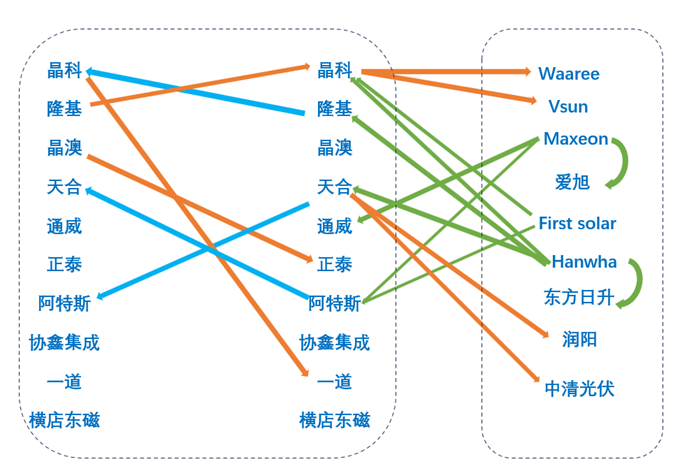
光伏专利大战:TOP10企业专利护城河深度解析
Tai Mei Ti A P P· 2025-08-09 10:02
Core Viewpoint - The article discusses the ongoing patent wars in the photovoltaic (PV) industry, emphasizing the shift from an incremental growth phase to a competitive landscape where companies are focusing on retaining advanced production capacity and eliminating outdated capacity. Patents are seen as a crucial tool in this "anti-involution" strategy [1]. Group 1: Patent Litigation Overview - The patent litigation between JinkoSolar and LONGi Green Energy is highlighted as a significant ongoing conflict in the PV sector, with a need to assess the patent situations of the top 10 companies in terms of module shipments [3]. - Since 2019, the patent wars in the PV industry have been continuous, with only two companies, GCL-Poly and Hengdian East Magnetic, not involved in any patent litigation [3]. - Tongwei Co., while rapidly rising in the top 10, has had minimal patent litigation exposure, primarily due to its dual leadership in silicon materials and cells [3]. Group 2: Patent Application Statistics - Trina Solar leads in patent applications with 7,219 patents, followed by JinkoSolar and LONGi Green Energy in second and third places, respectively [7]. - Canadian Solar, despite facing multiple patent infringement lawsuits, has a substantial patent application count of 4,669, placing it among the top tier of PV companies [7]. - GCL-Poly has a relatively low patent application count, while Hengdian East Magnetic has over 3,700 patents, but only 681 are related to PV technology, making it the lowest among the top 10 [7]. Group 3: Patent Validity and Status - LONGi Green Energy holds the highest number of valid patents at 3,900, while Trina Solar has 3,448 valid patents, and JinkoSolar has 2,449 [10]. - The analysis shows that Yida New Energy has the lowest percentage of expired patents at 3%, while GCL-Poly and Canadian Solar have high expiration rates of 40% and 32%, respectively [10]. - The proportion of pending patents indicates that Trina Solar has over 33% pending, while Hengdian East Magnetic and JinkoSolar have around 30% [10]. Group 4: Patent Types and Quality - JinkoSolar and Trina Solar have the highest number of invention patents, with JinkoSolar's invention patents making up 70% of its total applications [12]. - GCL-Poly's patent applications are primarily domestic, with minimal international presence, indicating a focus on the domestic market [17]. - GCL-Poly has a total of 1,138 patent applications, with 519 being valid, but a significant number of low-value patents have been abandoned or rejected [19]. Group 5: Legal Events and Patent Management - GCL-Poly has engaged in various legal events related to its patents, including transfers and acquisitions, indicating active management of its patent portfolio [25]. - Hengdian East Magnetic has also seen significant patent pledges, with over 75 patents pledged for financing, reflecting a strategic approach to leveraging its patent assets [38]. - The company has a relatively high number of invention patents, with 445 out of 681 total patents, indicating a focus on high-quality innovations [35]. Group 6: Strategic Insights and Recommendations - Both GCL-Poly and Hengdian East Magnetic have lower overall patent strengths compared to leading companies like JinkoSolar and LONGi Green Energy, which may impact their competitive positioning [42]. - GCL-Poly's strategy of acquiring external patents could enhance its litigation capabilities, while Hengdian East Magnetic's effective maintenance of patent validity is crucial for future legal defenses [42]. - The article suggests that PV companies should enhance innovation and proactively manage patent risks to minimize litigation exposure [45].