TWINSCAN XT:260

Search documents
心智观察所:真相比情绪重要,误读中国光刻机正在伤害真正的进步
Xin Lang Cai Jing· 2025-11-20 06:17
Core Viewpoint - The article emphasizes the significant technological gap between ASML's advanced lithography machines and domestic Chinese alternatives, highlighting the complexities involved in semiconductor manufacturing and the need for realistic assessments of China's capabilities in this field [3][4][10]. Summary by Sections ASML's Technology Showcase - ASML showcased its advanced DUV lithography machines, TWINSCAN XT:260 and TWINSCAN NXT:870B, at the China International Import Expo, with the XT:260 being particularly noted for its dual exposure capabilities aimed at advanced packaging [1][3]. Technical Complexity of Lithography Machines - The complexity of lithography machines extends beyond resolution metrics, involving a sophisticated integration of optics, mechanics, electronics, software, and materials, with ASML's EUV machines containing over 100,000 components from more than 5,000 suppliers [4][5]. Challenges in Domestic Development - Domestic lithography machines face significant challenges, including the need for extensive debugging and optimization, which typically requires 6-12 months post-assembly to achieve stable production [6][7]. Importance of Local Collaboration - For domestic lithography machines to achieve sustainable industrial capabilities, collaboration with local customers is essential, as real-world operational data is crucial for performance optimization and stability [6][7]. Market Dynamics and ASML's Position - ASML's market share in China is expected to decrease from a peak of 46% to around 20% by 2025, not due to domestic alternatives but rather a normalization of demand as existing orders are fulfilled [8][10]. Misinterpretation of Industry Signals - Claims of a strong domestic semiconductor industry based on increased chip exports are misleading, as these exports primarily consist of mature process chips that do not require advanced lithography technology [9][10]. Realistic Assessment of Progress - The article argues for a realistic acknowledgment of the technological gap in the semiconductor industry, stressing that genuine progress requires a grounded understanding of current capabilities rather than optimistic narratives [10][14]. Future Outlook - The future of the semiconductor industry will belong to those who face reality, invest continuously, and accumulate knowledge, with a call for a pragmatic approach to technological development in China [14][15].


真相比情绪重要,误读中国光刻机正在伤害真正的进步
Guan Cha Zhe Wang· 2025-11-20 00:56
Core Viewpoint - The article emphasizes the significant technological gap between ASML's advanced lithography machines and domestic Chinese alternatives, highlighting the complexities involved in semiconductor manufacturing and the need for realistic assessments of China's capabilities in this field [3][4][10]. Summary by Sections ASML's Technology Showcase - ASML showcased its advanced DUV lithography solutions, particularly the TWINSCAN XT:260 and TWINSCAN NXT:870B, at the 2025 China International Import Expo [1]. - The XT:260, designed for advanced packaging, features dual exposure capabilities and is based on the XT4 platform [3]. Technical Complexity of Lithography Machines - Modern lithography machines are intricate systems that integrate multiple disciplines, including optics, mechanics, electronics, software, and materials [4]. - ASML's EUV lithography machine consists of over 100,000 components from more than 5,000 suppliers, requiring precise coordination at the nanometer level [4][5]. Challenges in Domestic Development - The transition from assembling a lithography machine to achieving stable mass production typically requires a 6-12 month debugging period, emphasizing the importance of real-world data and experience [6]. - For domestic lithography machines to achieve sustainable industrial capabilities, collaboration with local customers is essential for performance optimization and long-term support [6][7]. Market Dynamics and Demand - ASML's recent orders totaled €2.6 billion in Q3 2024, with €1.4 billion for EUV machines, indicating strong demand primarily from companies like TSMC and Intel, rather than from China [10]. - ASML's market share in China is expected to decrease from 46% to around 20% by 2025, not due to domestic alternatives but because of fulfilled demand and a recovering global market [8]. Misinterpretations and Realities - Claims of a significant increase in Chinese semiconductor exports are misleading, as they primarily involve mature process chips that do not require advanced lithography technology [9]. - The article critiques the tendency to conflate advancements in packaging technology with breakthroughs in manufacturing technology, stressing the need for a clear understanding of the distinctions [5][10]. Future Outlook - The future of the semiconductor industry will belong to those who face reality, invest continuously, and accumulate knowledge over time [14]. - The article concludes that while China has made progress in certain areas of the semiconductor industry, the gap in lithography technology remains significant, and acknowledging this gap is crucial for realistic development strategies [10][15].
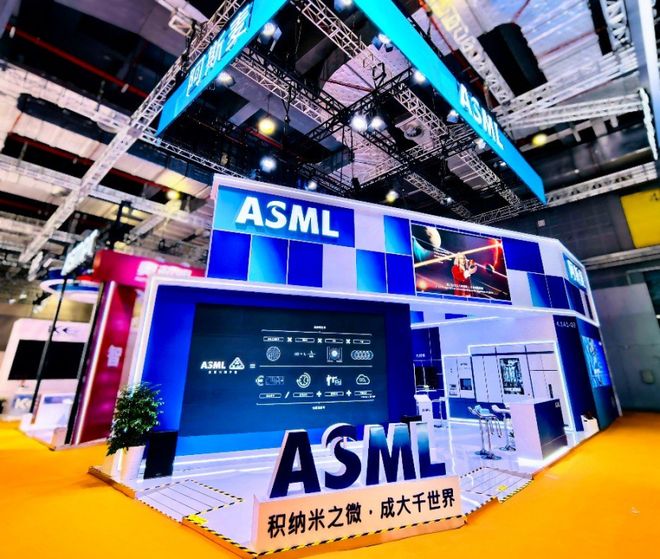
ASML中国区总裁沈波:AI正加速半导体产业生态系统创新
Zheng Quan Shi Bao· 2025-11-08 03:51
Core Insights - ASML is showcasing its comprehensive lithography solutions at the China International Import Expo, emphasizing the integration of lithography machines, computational lithography, and electron beam measurement technologies to support the evolution of Moore's Law in the AI era [1] - The company aims to enhance communication and interaction with partners and the semiconductor industry while adhering to legal and compliance principles to support sustainable development in China [1] - AI is identified as a key driver for both advanced and mainstream semiconductor processes, accelerating innovation within the industry ecosystem [1] Industry Trends - The demand for chips across various process nodes is surging due to AI's profound impact on society and daily life, with mainstream chips playing a crucial role in this growth [1] - The semiconductor industry faces challenges related to computing power and energy consumption, with sustaining Moore's Law being a critical response to these issues [1] Technological Innovations - To address the challenges, two main directions are proposed: improving AI model efficiency and enhancing chip performance through 2D scaling and 3D integration [2] - ASML has launched its first lithography machine for advanced packaging, the TWINSCAN XT:260, which boasts a production efficiency increase of up to 4 times compared to existing models [2] Market Presence - ASML has been operating in China for over 30 years, with a significant presence including offices in 17 cities, 15 logistics centers, 3 development centers, 1 training center, and 1 maintenance center [2] - The company employs over 2,000 people in mainland China, with a year-on-year growth of approximately 10% [3] Financial Performance - In 2023, the net system sales proportion from the China region was 27% in Q1, 27% in Q2, and 42% in Q3, with an expected 41% for 2024 [3] - The increase in market share in China is attributed to the cyclical nature of the semiconductor industry and the ability to fulfill backlog orders from Chinese clients [3] Future Outlook - The global semiconductor sales are projected to exceed $1 trillion by 2030, driven by AI infrastructure and other core growth engines [3] - The demand for servers and computing power is expected to lead to significant growth in the semiconductor industry as AI applications become more prevalent in consumer and industrial sectors [4]
ASML亮相第八届进博会 助力中国客户把握主流芯片市场机遇
Guo Ji Jin Rong Bao· 2025-11-07 17:18
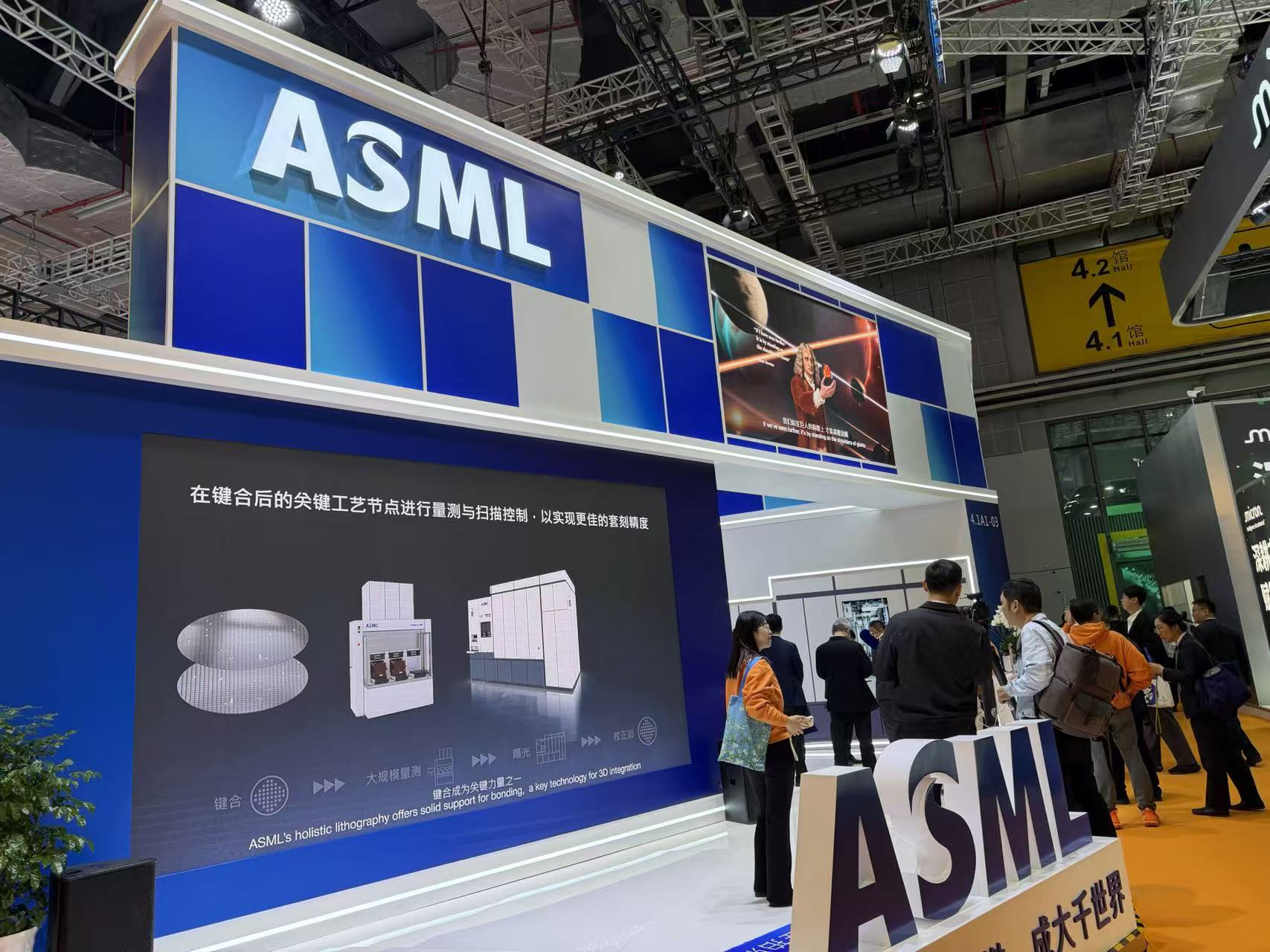
Core Insights - ASML emphasizes the growing demand for various process node chips driven by AI, highlighting its commitment to assist Chinese customers in seizing opportunities in the mainstream chip market [2][5] - The company showcases its comprehensive lithography solutions aimed at reducing energy consumption and costs while enhancing yield for customers [3][4] Group 1: ASML's Participation in the Expo - ASML is participating in the China International Import Expo for the seventh time, aiming to strengthen interactions with Chinese customers and partners [2] - The theme of ASML's exhibition is "From Nano to Macro," focusing on the opportunities and challenges in the semiconductor industry in the AI era [2] Group 2: Technological Innovations - ASML's lithography solutions integrate lithography machines, computational lithography, and electron beam measurement technologies to support advanced packaging and 3D integration [3] - The TWINSCAN XT:260, a new i-line lithography machine, enhances production efficiency by four times compared to existing models, while the TWINSCAN NXT:870B achieves a wafer output of over 400 wafers per hour [4] Group 3: Market Presence and Growth - ASML has been operating in the Chinese market for over 30 years, with more than 2,000 employees and offices in 17 cities, along with logistics and maintenance centers [4] - The rapid development of AI applications is driving significant growth in the semiconductor industry, particularly in mainstream chip markets, which are crucial for various AI-driven applications [5]
ASML亮相第八届进博会,助力中国客户把握主流芯片市场机遇
Guo Ji Jin Rong Bao· 2025-11-07 15:36
Core Insights - ASML emphasizes the growing demand for chips driven by AI, particularly in mainstream chip markets, during the China International Import Expo [1][5] - The company showcases its holistic lithography solutions aimed at enhancing efficiency and reducing costs for chip manufacturers [3][4] Group 1: Company Overview - ASML has participated in the China International Import Expo for the seventh time, aiming to strengthen interactions with Chinese customers and partners [1] - The company has over 2,000 employees in China, with offices in 17 cities and multiple logistics and maintenance centers [4] Group 2: Technological Innovations - ASML's holistic lithography solutions integrate lithography machines, computational lithography, and measurement technologies to improve yield while lowering energy consumption and costs [3] - Key products showcased include the TWINSCAN XT:260, which enhances production efficiency by four times, and the TWINSCAN NXT:870B, capable of processing over 400 wafers per hour [4] Group 3: Market Trends - The rapid development of AI applications is driving significant growth in the semiconductor industry, particularly in areas like smart devices, electric vehicles, and industrial automation [4][5] - The importance of mainstream process chips is expected to rise, with China focusing heavily on this segment due to its extensive AI application scenarios [5]
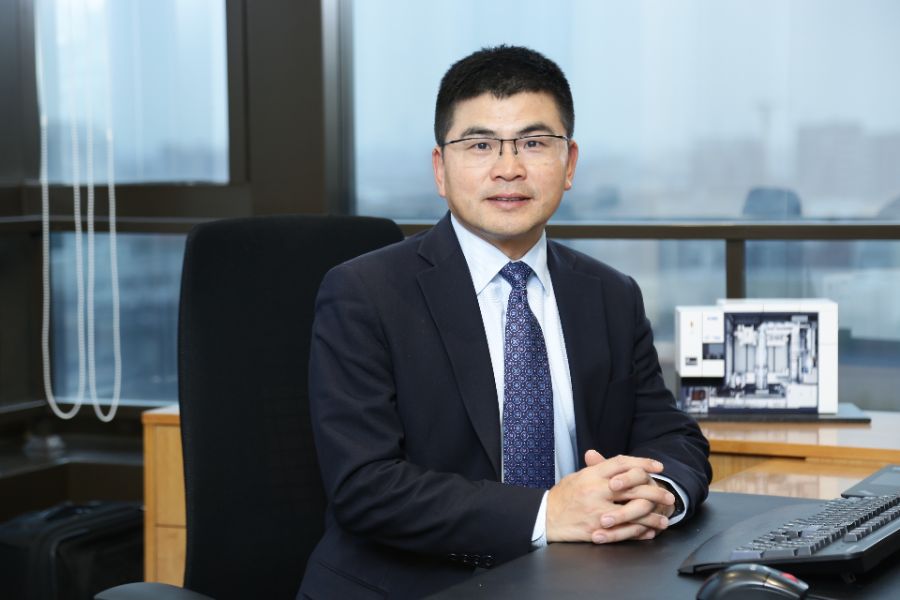
对话ASML中国区总裁沈波:AI浪潮下的“光刻逻辑”
2 1 Shi Ji Jing Ji Bao Dao· 2025-11-06 13:33
Core Viewpoint - ASML has reported strong financial results for the first three quarters of 2025, with a net sales of €7.5 billion, net lithography system sales of €5.6 billion, and a net profit of €2.1 billion, reflecting a gross margin of 51.6% [1] Financial Performance - In Q3 2025, ASML achieved net sales of €7.5 billion and net profit of €2.1 billion, with a gross margin of 51.6% [1] - The company anticipates a 15% growth in net sales for 2025 and expects 2026 sales to be at least at the same level as 2025 [1] AI's Impact on Semiconductor Industry - AI is becoming a key driver for growth in the global semiconductor industry, with strong investments in AI leading to increased demand for advanced logic chips and DRAM chips [3] - The CEO of ASML noted that while AI is expected to benefit semiconductor equipment companies, the actual demand for equipment has not yet fully materialized [4] - The semiconductor industry recognizes AI as a major force for the next wave of market growth, with AI evolving into a fundamental part of social infrastructure [5] Challenges and Opportunities - The current phase of AI development is characterized by significant investment but limited immediate demand for chips, indicating that the true impact on semiconductor capacity is yet to be realized [4][7] - AI presents two major challenges: the exponential growth in computing power demand and energy consumption concerns [9] - ASML is pursuing a dual-track approach to address these challenges, focusing on both 2D scaling and advancing 3D integration technologies [10] Market Dynamics in China - ASML's sales in China have been significant, with the Chinese market accounting for over 30% of global sales in recent years [12] - The company expects a normalization of sales in China, with a return to historical levels of 15%-20% of global sales [13] - ASML continues to support local customers in China while adhering to export control regulations [13] Strategic Collaborations - ASML has formed a strategic partnership with Mistral AI, investing in the company to accelerate AI applications and integration [7] - The company has launched the TWINSCAN XT:260 lithography machine aimed at enhancing production efficiency in advanced packaging [10]
ASML革命性封装光刻机!
国芯网· 2025-10-22 13:12
Core Insights - ASML has delivered its first lithography machine, TWINSCAN XT:260, designed for advanced packaging applications, addressing the increasing complexity of chip packaging and the industry's shift towards 3D integration and chiplet architectures [1][2] Group 1: Product Development - The TWINSCAN XT:260 utilizes 365nm i-line lithography technology with a resolution of approximately 400nm and a numerical aperture (NA) of 0.35, achieving a production speed of up to 270 wafers per hour, which is four times that of existing advanced packaging lithography machines [3] - The exposure area of XT:260 is 26x33mm, employing a 2x mask reduction technique, making it particularly suitable for interposer packaging applications [3] Group 2: Financial Performance - In Q3 2025, ASML reported net sales of €7.5 billion, a gross margin of 51.6%, and a net profit of €2.1 billion, with new orders amounting to €5.4 billion, including €3.6 billion for EUV lithography machines [4] - ASML anticipates Q4 2025 net sales between €9.2 billion and €9.8 billion, with a gross margin between 51% and 53%, projecting full-year net sales of approximately €32.5 billion, a year-on-year increase of about 15% [4] Group 3: Market Dynamics - Strong AI-related investments are driving demand for advanced logic chips and DRAM, benefiting ASML's broader customer base [5] - The share of lithography in overall wafer fab investments is increasing, particularly with the growing adoption of EUV technology among DRAM and advanced logic chip customers [5] - ASML expects robust performance in the Chinese market for 2024 and 2025, with overall sales in 2026 projected to not fall below those of 2025 [5]

先进封装设备市场,风云再起
半导体行业观察· 2025-10-22 01:20
Core Viewpoint - ASML's introduction of the TWINSCAN XT:260 marks its strategic entry into the advanced packaging market, highlighting the increasing importance of advanced packaging in semiconductor technology as traditional scaling approaches physical limits [2][34]. Group 1: Market Dynamics - The advanced packaging market is experiencing significant growth, driven by the rising demand for AI chips and high-performance computing, with a projected market size of $45.73 billion in 2024, expected to reach $113.33 billion by 2033, reflecting a compound annual growth rate (CAGR) of 9.5% [3]. - The demand for advanced packaging equipment is also on the rise, with projections indicating that the backend equipment revenue will reach approximately $7 billion by 2025 and exceed $9 billion by 2030, with a CAGR of nearly 6% [3]. Group 2: Equipment Trends - Key equipment areas such as thermal compression bonding (TCB) and hybrid bonding are rapidly growing, with the TCB market expected to reach $936 million by 2030, driven by integration needs in memory and AI platforms [6]. - The hybrid bonding equipment market is projected to grow at a CAGR of 21.1%, reaching $397 million by 2030, emphasizing its critical role in advanced 3D integration [9]. Group 3: Competitive Landscape - Major players in the backend equipment market include DISCO, BESI, K&S, ASMPT, and Hanmi, each specializing in different aspects of semiconductor manufacturing [21]. - DISCO leads in wafer thinning and cutting technologies, while BESI focuses on hybrid bonding equipment, indicating a diverse competitive landscape [23][26]. Group 4: ASML's Strategic Position - ASML's TWINSCAN XT:260 is designed specifically for advanced packaging, filling a technological gap in high-end packaging lithography and enhancing production efficiency and precision [34][37]. - The XT:260 features significant advancements, including a resolution of 400nm and a production efficiency of 270 wafers per hour, which is four times that of previous models [37]. Group 5: Domestic Market Challenges and Opportunities - Domestic suppliers currently meet less than 14% of local backend equipment demand, facing challenges from reliance on imported technologies and geopolitical uncertainties [41]. - However, domestic manufacturers are gaining momentum, supported by policies and capital investments, with expectations that the domestic backend equipment localization rate will exceed 20% by 2025 [42].

ASML第三季度新增订单54亿欧元 预计2025年净销售额同比增长约15%
Zheng Quan Shi Bao Wang· 2025-10-16 07:49
Core Insights - ASML reported strong financial results for Q3 2025, with net sales of €7.5 billion, a gross margin of 51.6%, and a net profit of €2.1 billion [1] - The company anticipates Q4 2025 net sales between €9.2 billion and €9.8 billion, with a gross margin between 51% and 53% [1] - ASML expects full-year 2025 net sales to reach approximately €32.5 billion, representing a year-on-year growth of about 15% [1] Financial Performance - Q3 2025 net sales: €7.5 billion, gross margin: 51.6%, net profit: €2.1 billion [1] - New orders in Q3 2025 amounted to €5.4 billion, with €3.6 billion attributed to EUV lithography systems [1] - Full-year 2025 net sales forecast: approximately €32.5 billion, with a gross margin of around 52% [1] Market Dynamics - AI-related investments are driving demand for advanced logic chips and DRAM, benefiting ASML's broader customer base [2] - The share of lithography in overall wafer fab investments is increasing, particularly with the adoption of EUV technology [2] - Strong business performance is expected in the Chinese market for 2024 and 2025, with limited impact on 2026 sales [2] Technological Advancements - ASML is expanding its EUV lithography technology applications, including advancements in High NA EUV [2] - The company has shipped its first product for advanced packaging, the TWINSCAN XT:260, which offers up to four times the production efficiency of existing solutions [2] - Collaboration with Mistral AI aims to integrate AI into ASML's lithography solutions, enhancing system performance and production efficiency [2] Future Outlook - AI is expected to continue driving the development of advanced semiconductor applications and increase the share of lithography in wafer fab investments [3] - ASML sees 3D integration as a new growth opportunity and is actively expanding in this area [3] - The company maintains its long-term revenue forecast, projecting total revenue could reach between €44 billion and €60 billion by 2030, with gross margins of 56% to 60% [3]
光刻机之王的最新财报,证实了存储的新周期
投中网· 2025-10-16 03:14
Core Viewpoint - ASML's Q3 financial results were stable, with AI storage demand being a key support factor, and the Q4 guidance is optimistic, although attention is needed on the anticipated decline in Chinese demand by FY2026 and geopolitical risks [6][31]. Financial Performance - ASML reported Q3 revenue of €7.516 billion, slightly below the industry consensus expectation of €7.68 billion, with a year-on-year increase of 0.7% and a quarter-on-quarter decrease of 2.3% [6][9]. - The company maintained its full-year growth forecast at 15%, with Q4 revenue guidance set between €9.2 billion and €9.8 billion [10][31]. - The earnings per share were €5.49, slightly above the expected €5.33, primarily due to lower expenses than anticipated [6][19]. Order Book and Market Dynamics - New orders in Q3 reached €5.4 billion, exceeding market expectations of €4.97 billion, driven by a significant increase in storage-related orders [11][13]. - The structure of new orders shifted, with the share of logic-related orders dropping from 84% to 53%, while storage orders rose from 16% to 47% [13][17]. Cost Management and Profitability - ASML's cost control measures resulted in lower expenses than previously guided, contributing to a higher-than-expected gross margin [19][22]. - Q3 gross margin was positively impacted by a reduction in sales and R&D expenses, which were lower than the guidance provided in Q2 [22][24]. Product and Revenue Structure - In Q3, revenue from lithography machines was €5.554 billion, accounting for 73.9% of total revenue, while service revenue was €1.962 billion, making up 26.1% [26]. - The average selling price for EUV machines was approximately €317 million, reflecting a 5.4% decrease quarter-on-quarter, while ArFi product prices also saw a decline [27][30]. Future Outlook - The management's guidance for Q4 is optimistic, with expectations for revenue to reach up to €9.8 billion, although there are concerns regarding a significant drop in demand from Chinese customers by FY2026 [8][31]. - The overall market sentiment remains cautious due to geopolitical tensions and the potential impact on capital expenditures in the semiconductor industry [18][31].