Topo Chico气泡水

Search documents
“K型经济”下的美国圣诞:富人狂欢,穷人挣扎
Guo Ji Jin Rong Bao· 2025-12-23 13:41
Group 1: Economic Disparity - The term "K-shaped economy" is frequently mentioned by executives, analysts, and Federal Reserve officials, indicating a divide where one segment of the population continues to thrive while another struggles under inflation and rising living costs [1][5] - The holiday shopping season is showcasing this economic divide, with high-income consumers maintaining spending levels while low-income individuals are forced to be more cautious and seek discounts [2][3] Group 2: Consumer Behavior - A survey by Bank of America revealed that 62% of respondents feel economic pressure, with 87% planning to shop at discount stores [3] - Moody's Analytics estimates that the top 10% of income earners contribute nearly half of consumer spending, highlighting the reliance on high-income groups for retail growth [4] Group 3: Corporate Adjustments - Major companies like Delta Air Lines, Coca-Cola, and McDonald's have acknowledged the economic divide, with executives noting that low-income consumers are facing significant challenges while affluent consumers continue to spend [8][9] - Delta's CEO mentioned that sales of first-class and business-class tickets are driving revenue growth, contrasting with the struggles of lower-end consumers [9] - Coca-Cola's COO indicated that the company's revenue growth is primarily from high-end products, while low-income consumers remain under pressure [9]
可口可乐选定新CEO
Bei Jing Shang Bao· 2025-12-11 15:29
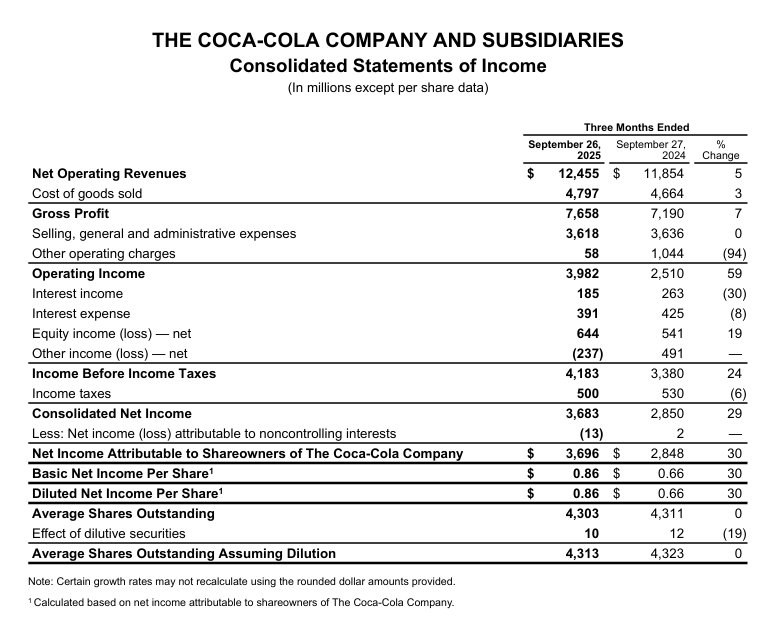
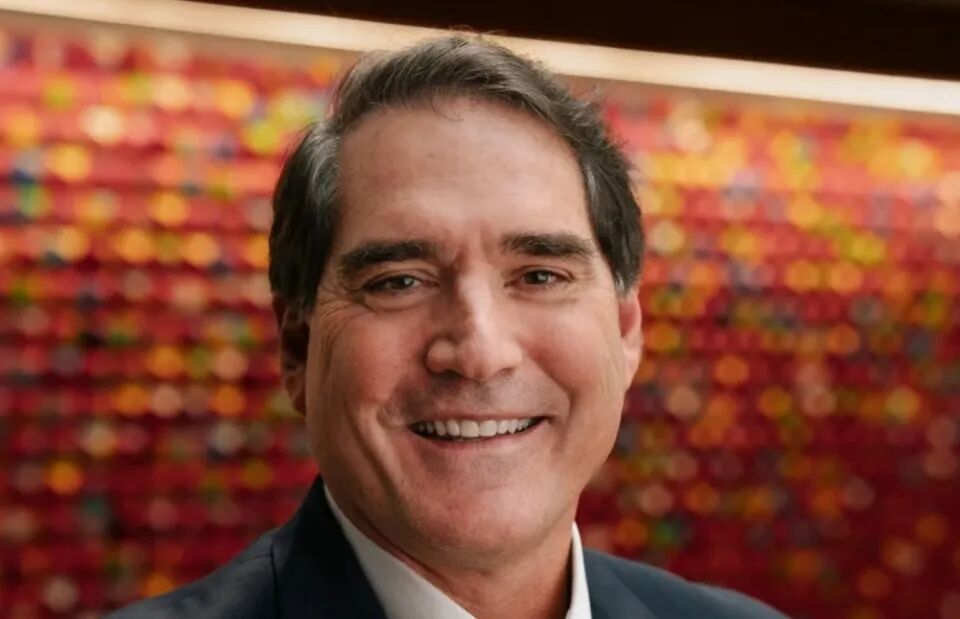
Core Insights - Coca-Cola has appointed Henrique Braun as the new CEO, effective March 31, 2026, succeeding James Quincey, who will become the executive chairman after nearly nine years as CEO [1] - Braun has extensive experience within Coca-Cola, having joined in 1996 and held various positions across different regions, including a significant role in the Greater China and Korean markets [1][2] - Under Quincey's leadership, Coca-Cola optimized its brand portfolio by eliminating over 200 underperforming brands and introducing more than 10 billion-dollar brands, resulting in a total of 30 billion-dollar brands currently [2] Company Strategy and Market Position - Coca-Cola is focusing on the Chinese market, which is its third-largest globally, and Braun's familiarity with this market may lead to continued emphasis on local innovation [2][3] - The company reported a 1% increase in global case volume and a 5% revenue growth to $12.455 billion in Q3, with a net profit of $3.683 billion, reflecting a 29% increase [3] - Despite overall growth, Coca-Cola faces challenges in the Asia-Pacific region, where case volumes have declined due to weakened consumer spending and increased competition [3][4] Challenges in the Chinese Market - Coca-Cola's Costa Coffee has seen a significant reduction in store numbers, dropping to approximately 334 locations, with only 11 new stores planned for 2025, far below the previously set target of 1,000 stores by 2025 [3] - The brand's market share in China is projected to be only 12.3% in 2024, less than half of Starbucks' share, indicating intense competition from local brands and other beverage categories [3][4] - Analysts suggest that despite Coca-Cola's investments in production capacity and product innovation, the current product offerings and marketing strategies have not yet effectively driven sales growth in the face of changing consumer preferences and competition [4]

可口可乐换帅
Bei Jing Shang Bao· 2025-12-11 12:56
Core Viewpoint - Coca-Cola has announced the appointment of Henrique Braun as the new CEO, effective March 31, 2026, succeeding James Quincey, who will transition to the role of Executive Chairman after a nine-year tenure as CEO. The company faces challenges such as intensified industry competition and declining sales in the Asia-Pacific market [1][3]. Leadership Transition - The board of directors has elected Henrique Braun as the new CEO, with his term starting on March 31, 2026. James Quincey will become the Executive Chairman after serving as CEO for nine years [3]. - Braun has been with Coca-Cola since 1996, holding various positions across North America, Europe, Latin America, and Asia. He has been the Chief Operating Officer since January 1, 2023, overseeing all global operations [3]. - During his tenure, Quincey optimized the brand and product portfolio, eliminating over 200 underperforming sub-brands and introducing more than 10 billion-dollar brands, bringing the total to 30 [4]. Market Challenges - China is Coca-Cola's third-largest market globally, following the U.S. and Mexico. In Q3, Coca-Cola reported a 1% increase in global case volume and a 5% revenue growth to $12.455 billion, with a net profit of $3.683 billion, up 29% [5]. - However, the Asia-Pacific market saw a decline in sales due to weakened consumer spending and poor industry performance. For instance, the number of COSTA stores in China has significantly decreased, with only 334 stores remaining as of December 11, 2023, and new store openings dropping from 92 in 2023 to just 11 planned for 2025 [5][6]. - The competitive landscape is intensifying, with local beverage brands gaining market share and competition in ready-to-drink tea and coffee segments becoming fierce [5][6]. Strategic Initiatives - In response to market pressures, Coca-Cola has increased investments and launched new products in China. Collaborations with bottlers have led to the establishment of new production facilities, and the company has introduced health-oriented products like prebiotic sparkling water [6]. - Despite these efforts, the decline in sales in the Asia-Pacific region indicates that existing product innovations and marketing strategies have not yet fully stimulated growth, with price adjustments becoming a more significant factor [7]. - Braun's experience in the Greater China region is expected to help him understand market complexities and consumer needs, potentially accelerating localized product innovation and digital operations to address the sales decline [7].

可口可乐,CEO大消息:60岁詹鲲杰即将卸任 接任者曾任大中华区总裁
Mei Ri Jing Ji Xin Wen· 2025-12-11 05:26
Group 1 - The core point of the article is the announcement of Coca-Cola's CEO succession plan, with Henrique Braun set to become the new CEO on March 31, 2026, while current CEO James Quincey will transition to Executive Chairman after his term ends [2][3] - James Quincey, aged 60, has been with Coca-Cola since 1996 and has played a significant role in transforming the company from a single carbonated beverage producer to a "total beverage company," adding over 10 billion-dollar brands during his tenure [4] - Under Quincey's leadership, Coca-Cola has focused on digital transformation and marketing innovation to enhance resilience against challenges like the COVID-19 pandemic, while divesting non-core assets [4] Group 2 - Henrique Braun, the new CEO, has extensive experience within Coca-Cola, having held various significant positions across North America, Europe, Latin America, and Asia since joining in 1996 [4] - Braun's key tasks will include identifying global growth opportunities, aligning the company closer to consumer needs, and leveraging technology to drive business performance and growth [5] - In the third quarter of 2025, Coca-Cola reported a revenue increase of 5% to $12.455 billion and a net profit growth of 29% to $3.683 billion, with global single-serve sales increasing by 1% [5]
可口可乐,CEO大消息:60岁詹鲲杰即将卸任,接任者曾任大中华区总裁
Mei Ri Jing Ji Xin Wen· 2025-12-11 05:19
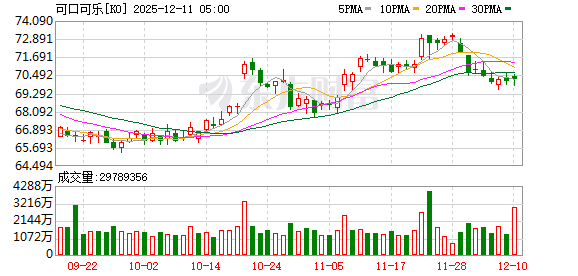
Core Insights - Coca-Cola announced a CEO succession plan, with Henrique Braun set to become CEO on March 31, 2026, succeeding James Quincey, who will transition to Executive Chairman after his term ends [1][3]. Group 1: Leadership Transition - James Quincey, the current CEO, has been with Coca-Cola since 1996 and has held various leadership roles, becoming CEO in 2017. Under his leadership, the company transformed from a single carbonated beverage producer to a "total beverage company," adding over 10 billion-dollar brands [3]. - Henrique Braun, the incoming CEO, has been with Coca-Cola since 1996 and has held significant positions across North America, Europe, Latin America, and Asia. He previously served as President of Greater China and Korea from 2013 to 2016 [5]. Group 2: Financial Performance - In Q3 2025, Coca-Cola reported a revenue increase of 5% year-over-year to $12.455 billion, with a net profit of $3.683 billion, reflecting a 29% increase [6]. - Global unit case volume grew by 1% in Q3, with zero-sugar Coca-Cola sales increasing by 14%, and bottled water and sports drinks both seeing a 3% rise. However, the Asia-Pacific region experienced a 1% decline in sales [6]. Group 3: Strategic Developments - Coca-Cola announced the sale of a 75% stake in Coca-Cola Beverages Africa (CCBA) to Coca-Cola HBC, with plans to sell the remaining 25% within six years [6]. - In China, Coca-Cola's bottlers have made progress with new production facilities, including the opening of a new plant in Shaanxi and the inauguration of a new plant in Zhengzhou [7]. Group 4: Market Overview - Coca-Cola's stock closed at $70.21 per share, with a total market capitalization of $302 billion [8][9].
美国人靠信用卡续命!华尔街赚钱,美国人啃面包,年轻人彻底清醒
Sou Hu Cai Jing· 2025-11-16 17:46
Group 1: Economic Disparity - The U.S. economy is experiencing a K-shaped recovery, with high-income households thriving while low-income families struggle, leading to a stark division in living conditions [3][8][13] - The income gap has reached an eight-year high, with low-income households seeing only a 1% wage increase, while high-income groups enjoy a 4% increase, significantly outpacing inflation [8][15] - The trend of middle-class "downward mobility" is evident, with 28% of middle-income families frequently shopping at discount stores, an increase of 8 percentage points over four years [6][8] Group 2: Consumer Behavior - High-end products are driving growth for companies like Coca-Cola, which relies on affluent consumers for its premium offerings, while demand for budget options is concentrated in discount stores [3][5] - Hilton's financial report indicates strong performance in its luxury hotel segment, contrasting with a decline in revenue from budget hotels [5] - The average price of new cars in the U.S. has surpassed $50,000, with high-end vehicles leading market growth, while the delinquency rate on high-risk auto loans has reached a 30-year high of 6.65% [6][10] Group 3: Policy and Economic Risks - The Federal Reserve's monetary policies post-pandemic have contributed to asset bubbles, benefiting wealthy families while increasing financial pressure on low-income households due to rising mortgage rates [13][15] - The U.S. national debt is approaching $36 trillion, with annual interest payments reaching $1 trillion, limiting the government's ability to implement effective social policies [15] - Political gridlock over debt ceilings and welfare policies is exacerbating economic disparities, with foreign investment in U.S. equities halving compared to the previous year [15]
财经观察:“K型”分化严重,如何影响美国人生活
Huan Qiu Shi Bao· 2025-11-13 22:45
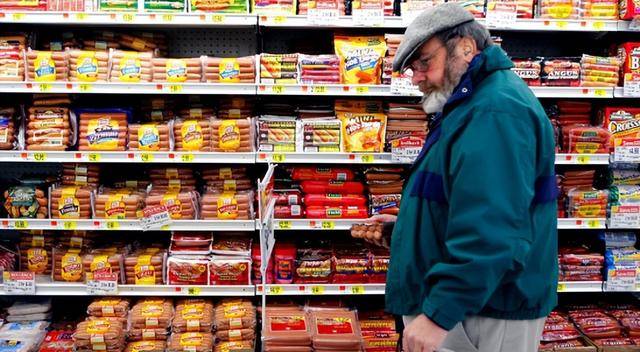
Group 1 - The term "K-shaped economy" describes the significant disparity in economic recovery among different social classes in the U.S., where some experience rapid recovery while others face stagnation or decline [2][7]. - In Seattle, the median household income has risen from $180,000 in 2019 to approximately $230,000 by 2025, while the median home price has surged to $1.6 million, highlighting the growing wealth gap [2][3]. - The consumption patterns of Coca-Cola reflect this economic divide, with sales growth driven by high-end products, while low-income consumers are increasingly shopping at discount stores [5][8]. Group 2 - Fast food chains like McDonald's are witnessing a decline in low-income customer visits, prompting them to introduce more special offers to attract this demographic [5][6]. - The automotive market shows a similar trend, with new car sales averaging over $50,000, while loan defaults and repossessions are rising among lower-income consumers [6][7]. - Airlines and hotel chains report a growing demand for premium services, with Delta Airlines noting that first-class and business-class revenues are expected to surpass economy class [6][7]. Group 3 - The economic policies post-pandemic, including unconventional monetary policies, have exacerbated wealth inequality, benefiting the affluent while low-income families face rising costs [7][10]. - The spending habits of the top 10% of income earners account for 49.7% of total consumer spending, the highest since 1989, indicating a growing reliance on this demographic for economic growth [9][10]. - The current economic climate has led to a pessimistic outlook among the general population regarding employment and the labor market, with concerns about long-term structural inequality [10].
美国消费出现K型分化,4200万人断粮背后,贫富消费鸿沟再拉大
3 6 Ke· 2025-11-07 02:32
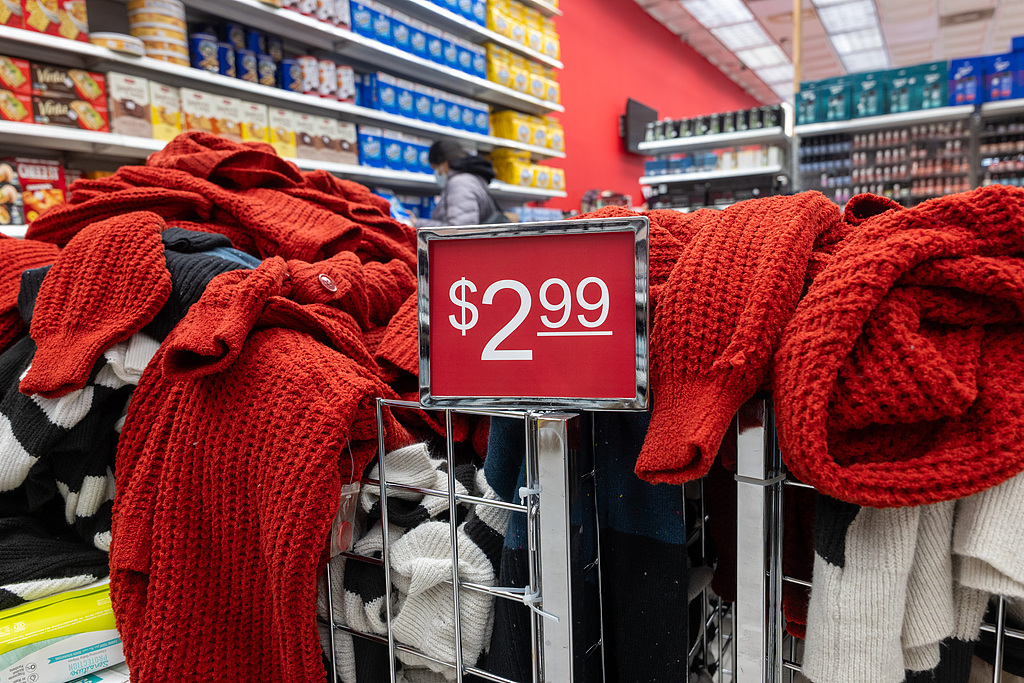
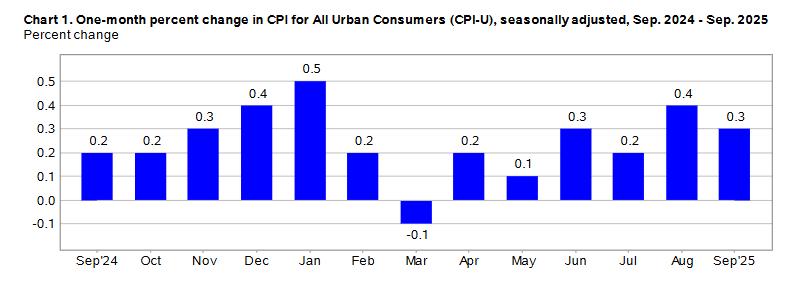
Core Insights - The recent CPI data for September shows a year-on-year inflation increase of 3.0%, slightly below the market expectation of 3.1%, indicating a structural split in consumer spending patterns in the U.S. [1][2] - Consumer confidence has significantly declined, particularly among low- and middle-income groups, with a 12-point drop in the confidence index reported by the University of Michigan, marking the largest single-month decline since 2020 [2][3] - The ongoing federal government shutdown has exacerbated economic losses, estimated at $18 billion, and is projected to reduce fourth-quarter GDP growth by at least 1 percentage point [2][19] Inflation Trends - The CPI data reveals a structural division between high inflation in essential goods and low inflation in discretionary spending, highlighting a "K-shaped" recovery where wealthier consumers thrive while lower-income households struggle [3][11] - Essential goods such as energy and food have seen significant price increases, with energy prices rising by 2.8% year-on-year and food prices increasing by 2.7% [4][15] - In contrast, discretionary items like used cars and clothing have experienced price declines, indicating a weakening demand in non-essential sectors [5][15] Consumer Behavior - The disparity in consumer spending is evident, with high-income households experiencing a "wealth effect" from rising asset prices, while low-income households face increasing costs for essentials [10][12] - The "inflation pain index" for households earning below $30,000 reached 4.2%, compared to just 0.8% for those earning above $150,000, illustrating the uneven impact of inflation [10][12] - The government shutdown has led to the suspension of food assistance programs, affecting millions of low-income individuals and further straining their purchasing power [19][20] Retail and Market Response - Retailers are adapting to the changing consumer landscape by focusing on high-end and low-cost products, while mid-tier brands struggle to maintain market share [20][27] - Sales of high-end organic foods have surged by 18%, while basic food items have seen minimal growth, reflecting a shift in consumer preferences towards premium products [20][27] - The automotive market shows a similar trend, with luxury vehicle sales increasing by 18%, while the volume of lower-priced vehicles has declined [21][27] Economic Outlook - The concentration of wealth among the top 20% of households, who hold 70% of financial assets, continues to widen the gap between income groups, leading to a potential "false prosperity" scenario [12][31] - If the wealth distribution remains imbalanced, there is a risk of a "differentiated recession" occurring by 2027, characterized by a decline in high-end consumption alongside a collapse in lower-income spending [31][32] - The ongoing economic trends highlight the need for policy interventions to address the growing disparities and ensure a more equitable distribution of economic growth [31][32]


量价齐升助推可口可乐(KO.US)Q3业绩超预期 重申2025年指引
智通财经网· 2025-10-21 12:43
Core Insights - Coca-Cola's Q3 sales growth exceeded market expectations, indicating strong consumer demand despite rising prices [1] - The company reported a 5% year-over-year revenue increase to $12.46 billion, surpassing analyst expectations of $12.41 billion [1] - Organic revenue grew by 6%, also better than analyst forecasts [1] Financial Performance - Q3 operating income reached $3.98 billion, a 59% increase year-over-year [1][3] - Net income attributable to shareholders was $3.70 billion, up 30% from the previous year [1][3] - Adjusted earnings per share were $0.82, exceeding the average analyst estimate of $0.78 [1] Product and Market Strategy - Coca-Cola's diverse beverage portfolio, including sugar-free sodas, sports drinks, and bottled water, is driving consumer preference [3] - The company benefits from price increases, particularly in products like Fairlife milk and Topo Chico sparkling water [3] - In North America, growth in ready-to-drink tea, water, and energy drinks offset a weak quarter for its flagship Coca-Cola soda [4] Future Outlook - Coca-Cola plans to launch a sugar-sweetened version of Coca-Cola in response to health initiatives, despite concerns over rising raw material costs [4] - The company aims to introduce 7.5-ounce mini cans priced under $2 to attract budget-conscious consumers [4] - Coca-Cola maintains its sales and profit targets for the year, with confidence in achieving its 2025 guidance of 5% to 6% organic revenue growth and a 3% increase in adjusted earnings per share from 2024 [4]