VLA 2.0

Search documents
中国 电动车:专家电话会议预计未来数月市场动能将恢复-China Auto_EV_ Expert call_ EVs should regain market momentum in months ahead
2026-03-30 05:15
Summary of Key Points from the Expert Call on China's Auto/EV Market Industry Overview - **Industry**: Electric Vehicles (EVs) in China - **Expert**: Mr. Liu Qing, former general manager of an auto sales company in Suzhou Core Insights 1. **Market Recovery Drivers**: The recovery in the EV market is primarily driven by subsidies, technological upgrades, and rising fuel prices [1][3] 2. **Future Trends**: In 2026, higher-priced models with feature upgrades are expected to dominate the market, with a potential acceleration in EV penetration due to fuel price uncertainties [1][2] 3. **New Model Launches**: The slow pace of new model launches in 2026 is attributed to existing inventory levels, with OEMs focusing on clearing inventory before introducing new products [1][10] 4. **Market Leaders**: BYD and Geely are anticipated to experience healthy growth as EV penetration increases [1][9] Market Dynamics 1. **Order Trends**: There has been a sequential improvement in order trends since late February 2026, suggesting better opportunities for EV players to regain market share [2] 2. **Government Subsidies**: Post-Chinese New Year (CNY) holidays, national and local government subsidies have been implemented, significantly boosting orders for vehicles priced around CNY100k [3] 3. **Battery Technology**: The introduction of BYD's blade battery 2.0 has led to increased customer interest and store traffic, indicating a positive response to technological advancements [4] 4. **Smart Driving Features**: The launch of new smart driving technologies by OEMs has also contributed to increased customer engagement and test drives [5] Market Projections 1. **NEV Shipments**: NEV shipments are expected to recover to 90% of last year's levels by March 2026, with further improvements anticipated in April 2026 [9] 2. **Market Share Growth**: NEVs are projected to increase their market share in the CNY100-200k segment from 45% to 55%, and by 6-7% in the above-CNY300k market [9] 3. **EV Penetration Increase**: If fuel prices continue to rise, NEV penetration could increase by 5-8% in 2026 [9] OEM Strategies 1. **Inventory Management**: OEMs are currently managing inventory levels, with an average of nearly two months of inventory at dealers, which will prolong the inventory clearance period [10] 2. **Promotional Strategies**: Promotions such as zero-interest fiscal plans and subsidies for insurance and trade-ins are crucial for clearing inventory [11] 3. **Competitive Landscape**: BYD is expected to maintain its market-leading position due to its advanced battery technology, while Geely is also positioned for growth by enhancing its product offerings [12][13] Conclusion - The expert call highlighted a cautiously optimistic outlook for the EV market in China, driven by government support, technological advancements, and strategic inventory management by OEMs. The competitive landscape is evolving, with key players like BYD and Geely poised for growth amidst changing market dynamics.
小鹏汽车-W Q4首次实现季度盈利
HTSC· 2026-03-24 10:30
Investment Rating - The report maintains a "Buy" rating for the company with a target price of HKD 100.70 [7][16]. Core Insights - The company achieved its first quarterly profit in Q4 2025, with a revenue of RMB 223 billion, a year-on-year increase of 38%, and a net profit of RMB 3.8 billion, marking a turnaround from losses [1][2]. - The overall gross margin improved to 21.3% in Q4 2025, driven by enhanced scale effects, new model launches, and high-margin service contributions [2][3]. - The company plans to launch four new models in 2026, including a flagship SUV and three Robotaxi models, which are expected to drive revenue growth [3][4]. Financial Performance - In 2025, the company reported a total revenue of RMB 767 billion, an 88% increase year-on-year, and a reduced net loss of RMB 11 billion, down 80% from the previous year [1][11]. - The Q4 2025 sales volume reached 116,249 units, a 27% increase year-on-year, with a gross margin improvement of 1.2 percentage points from the previous quarter [2][21]. - The company forecasts revenues of RMB 1,036 billion for 2026, RMB 1,305 billion for 2027, and RMB 1,678 billion for 2028 [5][11]. Valuation and Estimates - The report employs a segmented valuation approach, estimating the automotive sales business at 0.95x 2026E PS, with a total valuation of approximately RMB 892 billion [5][13]. - The Robotaxi business is valued at RMB 233 billion, while the humanoid robot business is estimated at RMB 360 billion [5][15]. - The overall market capitalization is projected to be around RMB 1,693 billion, leading to a target price of HKD 100.70 [16][20].
科技未来:视觉语言动作- 自动驾驶的下一个 AI 前沿-Future of Tech_ VLA as the next AI frontier in autonomous driving
2026-03-24 01:27
Summary of Key Points from the Conference Call Industry Overview - The focus is on the autonomous driving industry, particularly advancements in AI technologies and their implications for various automakers in Japan and China [1][4][5][12][13]. Core Insights and Arguments Global Autonomous Driving Penetration - Global L2+/L2++ penetration is projected to reach 36% by 2030, up from 15% in 2025, while L3 adoption is expected to be limited due to complexity and regulatory hurdles [1][25][28]. - In China, L2+/L2++ penetration is expected to rise to approximately 70% by 2030, significantly higher than the global average [30][34]. - The US market is anticipated to see L2+/L2++ penetration of around 36% by 2030, supported by consumer acceptance of advanced features [43][47]. Japan's Approach to Autonomous Driving - Japanese automakers are adopting varied strategies for commercialization, with Toyota leading through a 'multi-pathway' approach, combining internal development and partnerships [4][9][12]. - Upcoming models like Toyota's RAV4 and Sony Honda Mobility's Afeela are expected to drive the rollout of software-defined vehicles (SDVs) [8][12]. - The Japanese market is characterized by a cautious approach, prioritizing safety and reliability, with L2+/L2++ penetration projected at 29% by 2030 [48][49]. China's Competitive Landscape - Leading Chinese EV manufacturers such as XPeng and Li Auto are at the forefront of adopting Vision-Language-Action (VLA) models, enhancing user experience and decision-making capabilities [5][13]. - The intense competition among Chinese OEMs is accelerating the development of advanced driver-assistance systems (ADAS), which are becoming essential features in premium EVs [5][13]. - Concerns remain regarding the monetization potential of these technologies and the ability of Chinese OEMs to introduce advanced features in international markets [5][13]. Technological Shifts - The transition from rule-based systems to end-to-end (E2E) architectures is being driven by the need for faster deployment and improved handling of edge cases [2][9]. - VLA models are seen as the next frontier in E2E development, with companies like Waymo leveraging advanced AI to enhance navigation capabilities [3][9]. Additional Important Insights - Traditional auto parts suppliers face challenges as automakers assert more control over software layers, potentially reducing suppliers' revenue from design changes [11]. - Japan's government is promoting SDVs as a national priority, aiming for a 30% penetration target by 2030-2035, which may accelerate strategic initiatives across the sector [12]. - The role of high-definition (HD) maps remains relevant even in E2E systems, as they provide essential localization support and training data for AI models [66][67]. Investment Implications - Ratings for Japanese automakers include Outperform for Suzuki and Toyota, Market-Perform for Honda and Denso, and Underperform for Nissan, Mazda, and Subaru [12][14]. - In China, BYD and Xiaomi are rated as Outperform, while XPeng, NIO, and Li Auto are rated as Market-Perform [14]. This summary encapsulates the key points discussed in the conference call, highlighting the advancements and strategic directions of the autonomous driving industry in Japan and China.



小鹏汽车20260320
2026-03-22 14:35
Summary of XPeng Motors Conference Call Company Overview - **Company**: XPeng Motors - **Industry**: Electric Vehicles (EVs) Key Operational and Financial Highlights - **Deliveries**: Total deliveries in fiscal year 2025 reached 429,445 units, a 126% year-over-year increase [3] - **Top Models**: Mona M03 was the best-selling pure electric sedan in the 100,000 to 150,000 RMB segment; P7+ ranked first in the 150,000 to 200,000 RMB segment [3] - **Overseas Sales**: Nearly doubled to 45,000 units, contributing over 15% to total revenue [5] Financial Performance - **Revenue**: Q4 2025 revenue was 22.25 billion RMB, marking the first quarterly profit with a net profit exceeding 380 million RMB [5] - **Gross Margin**: Full-year gross margin was 18.9%, an increase of 4.6 percentage points year-over-year; Q4 gross margin was 21.3% [5] - **Cash Flow**: Free cash flow for the year was approximately 5 billion RMB, with cash on hand at year-end of 47.7 billion RMB [5] - **Q1 2026 Guidance**: Deliveries expected between 61,000 and 66,000 units, with total revenue projected between 12.2 billion and 13.2 billion RMB [5] Product Launch Plans for 2026 - **New Models**: Four new models planned for 2026, including the flagship six-seat SUV 'GX' launching in Q2 2026 [4][6] - **Technology Features**: New models will feature dual-energy platforms and support autonomous driving capabilities from L2+ to L4 [6] Global Expansion Strategy - **Sales Goals**: Aim to double overseas sales in 2026, increasing international business contribution to over 20% of total revenue [7] - **Store Expansion**: Targeting to expand the overseas sales and service network to 680 stores [7] - **Charging Network**: Plans to expand the self-operated 5C ultra-fast charging network to cover 10 key international markets [7] Autonomous Driving Technology - **VLA 2.0 Rollout**: Gradual rollout began on March 21, 2026, with significant improvements in test drive conversions [9] - **Performance Targets**: Aiming for a 25x improvement in average miles per takeover compared to industry average [9] - **International Deployment**: Preparations for R&D and testing of VLA 2.0 in overseas markets are underway, with monetization opportunities being explored [10] Turing AI SoC Development - **Performance Improvement**: Turing AI SoC achieved a 10-fold improvement in effective compute power; cumulative shipments exceeded 200,000 units [11] - **Collaboration**: Volkswagen is the first external customer for Turing SoC and VLA 2.0, with openness to collaborate with more partners [11] Investment in Physical AI - **R&D Investment**: Investment in physical AI-related R&D will rise to 7 billion RMB in 2026, with a focus on humanoid robots and autonomous driving [12][18] - **Humanoid Robot "Iron"**: Targeting mass production by the end of 2026, with a monthly production capacity goal of over 1,000 units [13] Robotaxi Business Development - **Timeline**: Passenger-carrying operations with a safety driver to start in H2 2026, with plans to operate without a safety driver by early 2027 [20] - **Scaling Strategy**: Expansion will depend on social acceptance and regulatory permissions, with a focus on select countries and regions [21] Conclusion XPeng Motors is positioned for significant growth in the EV market with ambitious plans for product launches, global expansion, and advancements in autonomous driving technology. The company aims to leverage its technological innovations and strategic investments to enhance its competitive edge in both domestic and international markets.
XPENG(XPEV) - 2025 Q4 - Earnings Call Transcript
2026-03-20 13:02
Financial Data and Key Metrics Changes - XPeng achieved total revenues of CNY 22.25 billion for Q4 2025, representing a 38.2% year-over-year increase and a 9.2% quarter-over-quarter increase [34] - Vehicle sales revenues were CNY 19.07 billion for Q4 2025, up 30% year-over-year and 5.6% quarter-over-quarter, primarily due to higher deliveries [34] - Gross margin for Q4 2025 was 21.3%, compared to 14.4% in Q4 2024 and 20.1% in Q3 2025 [35] - Net profit for Q4 2025 was CNY 0.38 billion, marking the first positive net profit for a single quarter, compared to a net loss of CNY 1.33 billion year-over-year [38] Business Line Data and Key Metrics Changes - Annual delivery reached 42,945 units, a 126% increase year-over-year, with significant contributions from the MONA M03 and P7+ models [5] - Revenues from services and others were CNY 3.18 billion for Q4 2025, a 121.9% year-over-year increase, driven by technical R&D services to Volkswagen and increased parts sales [35] Market Data and Key Metrics Changes - Overseas deliveries nearly doubled to 45,000 units, contributing over 15% of total revenue [5] - The company aims to double overseas deliveries in 2026, targeting international business to contribute over 20% of total revenue [14] Company Strategy and Development Direction - XPeng plans to launch four new models in 2026, expanding into both large and compact vehicles, designed for global markets [11] - The company is focusing on enhancing its AI capabilities and aims to push the technological frontier in autonomous driving and smart cockpit systems [9] - XPeng's strategy includes significant investment in physical AI R&D, with a planned increase to CNY 7 billion in 2026 [30] Management's Comments on Operating Environment and Future Outlook - Management expressed confidence in achieving fully autonomous driving capabilities within the next one to three years, with VLA 2.0 expected to enhance user experience and retention [10][48] - The company anticipates strong quarter-over-quarter growth in vehicle deliveries and revenue in 2026, driven by new model launches and technological advancements [31] Other Important Information - XPeng's cash position at the end of 2025 was CNY 47.66 billion, providing robust financial support for ongoing investments in AI R&D [38] - The company has established a full stack in-house developed technology system, including SoC and AI infrastructure, to support its autonomous driving initiatives [9] Q&A Session Summary Question: What type of major upgrade should we expect for XPeng's VLA 2.0 in the coming months? - Management expects at least one major version of OTA each quarter, with enhancements in road coverage and AI capabilities [42][44] Question: What is the deployment roadmap for XPeng Ultra model and VLA 2.0 in the overseas market? - VLA 2.0 testing is set to begin by the end of this year, with plans for gradual rollout in international markets [52] Question: What is the current progress of Robotaxi testing? - Management indicated that fully autonomous driving capability is expected within one to three years, with ongoing R&D for global operations [81]
XPENG(XPEV) - 2025 Q4 - Earnings Call Transcript
2026-03-20 13:02
Financial Data and Key Metrics Changes - XPeng achieved total revenues of RMB 22.25 billion for Q4 2025, representing a year-over-year increase of 38.2% and a quarter-over-quarter increase of 9.2% [32] - Vehicle sales revenues were RMB 19.07 billion for Q4 2025, up 30% year-over-year and 5.6% quarter-over-quarter, primarily due to higher deliveries [33] - Gross margin for Q4 2025 was 21.3%, compared to 14.4% in Q4 2024 and 20.1% in Q3 2025 [34] - Net profit for Q4 2025 was RMB 0.38 billion, marking the first positive net profit for a single quarter [37] Business Line Data and Key Metrics Changes - Annual delivery reached 42,945 units, a 126% increase year-over-year [5] - Revenues from services and others were RMB 3.18 billion for Q4 2025, up 121.9% year-over-year, driven by technical R&D services to Volkswagen and increased parts sales [34] Market Data and Key Metrics Changes - Overseas deliveries nearly doubled to 45,000 units, contributing over 15% of total revenue [5] - The company aims to double overseas deliveries in 2026, targeting international business to contribute over 20% of total revenue [13] Company Strategy and Development Direction - XPeng plans to launch four new models in 2026, expanding into both large and compact vehicles, designed for global markets [10] - The company is focusing on enhancing its AI capabilities and aims to push the technological frontier in autonomous driving and smart cockpit systems [8] - XPeng's strategy includes significant investment in physical AI R&D, with a planned increase to RMB 7 billion in 2026 [28] Management's Comments on Operating Environment and Future Outlook - Management expressed confidence in achieving significant growth in the physical AI market, which is expected to surpass the automotive industry in the next 5-10 years [26] - The company anticipates that the VLA 2.0 will enhance user retention and conversion rates, with expectations of higher sales volumes [45] - Management highlighted the importance of addressing safety issues and weaknesses in their technology before scaling up operations globally [47] Other Important Information - XPeng's cash position at the end of 2025 was RMB 47.66 billion, providing strong financial support for ongoing investments [37] - The company has begun mass production of its Turing AI SoC and has shipped over 200,000 units [19] Q&A Session Summary Question: What type of major upgrade should we expect for XPeng's VLA 2.0 in the coming months? - Management expects at least one major version of OTA each quarter, with enhancements in autonomous driving capabilities and multi-language support [42][44] Question: What is the deployment roadmap for XPeng Ultra model and VLA 2.0 in the overseas market? - VLA 2.0 testing is set to begin by the end of this year, with plans for gradual rollout in international markets [52] Question: What are the key markets for achieving 100% volume growth overseas this year? - Europe and Southeast Asia are identified as key markets, with local production efforts underway to support growth [71][74] Question: What is the current progress of Robotaxi testing? - Management indicated that fully autonomous driving capability is expected in 1-3 years, with ongoing testing and regulatory compliance efforts [83]
XPENG(XPEV) - 2025 Q4 - Earnings Call Transcript
2026-03-20 13:00
Financial Data and Key Metrics Changes - XPeng's total revenues for Q4 2025 were RMB 22.25 billion, an increase of 38.2% year-over-year and 9.2% quarter-over-quarter [32] - Vehicle sales revenue was RMB 19.07 billion, up 30% year-over-year and 5.6% quarter-over-quarter, primarily due to higher deliveries [32] - Gross margin for Q4 2025 was 21.3%, compared to 14.4% in Q4 2024 and 20.1% in Q3 2025 [33] - Net profit for Q4 2025 was RMB 0.38 billion, marking the first positive net profit for a single quarter [36] Business Line Data and Key Metrics Changes - Annual delivery reached 42,945 units, a 126% increase year-over-year [5] - Revenues from services and others were RMB 3.18 billion, representing a 121.9% year-over-year increase [33] - Vehicle margin for Q4 2025 was 13%, up from 10% in Q4 2024 [34] Market Data and Key Metrics Changes - Overseas deliveries nearly doubled to 45,000 units, contributing over 15% of total revenue [5] - The company aims to double overseas deliveries in 2026, targeting international business to contribute over 20% of total revenue [13] Company Strategy and Development Direction - XPeng plans to launch four new models in 2026, expanding into both large and compact vehicles [11] - The company is focusing on enhancing its global market share and expanding its AI vehicle offerings [12] - XPeng's strategy includes significant investment in R&D, with CNY 9.5 billion allocated in 2025, including CNY 4.5 billion for AI [26] Management's Comments on Operating Environment and Future Outlook - Management expressed confidence in achieving significant growth in the physical AI market, which is expected to surpass the automotive industry in the next 5-10 years [26] - The company anticipates that the VLA 2.0 will enhance user retention and conversion rates, with expectations of higher sales volume [44] - Management highlighted the importance of addressing safety issues and weaknesses in their technology before global deployment [46] Other Important Information - XPeng's cash position as of December 31, 2025, was RMB 47.66 billion, providing robust financial support for ongoing investments [36] - The company has begun construction of a humanoid robot mass production base in Guangzhou, targeting over 1,000 units per month by the end of 2026 [25] Q&A Session Summary Question: What type of major upgrade should we expect for XPeng's VLA 2.0 in the coming months? - Management indicated that they expect at least one major version of OTA each quarter, with significant improvements in autonomous driving capabilities [40][41] Question: What is the deployment roadmap for XPeng Ultra model and VLA 2.0 in the overseas market? - Management confirmed that VLA 2.0 testing is underway, with plans for gradual rollout in international markets by the end of the year [48][50] Question: What are the key markets for achieving 100% volume growth overseas this year? - Europe and Southeast Asia were identified as key markets, with local production efforts underway to support growth [67][70] Question: What is the current progress of Robotaxi testing? - Management stated that fully autonomous driving capability is expected to be achieved in 1-3 years, with ongoing testing and regulatory compliance efforts [78]
【太平洋科技-每日观点&资讯】(2026-03-17)
远峰电子· 2026-03-16 12:02
Market Performance - The ChiNext Index increased by 1.41%, while the Shanghai Composite Index decreased by 0.26% [1] - TMT sectors led the gains, with SW Printed Circuit Boards up by 3.38% and SW Digital Chip Design up by 3.26% [1] - TMT sectors also saw declines, with SW Communication Cables down by 3.46% and SW Panels down by 1.66% [1] Domestic News - Hon Hai Precision stated that due to the continuous explosion of global AI computing demand, AI cabinet shipments are expected to see exponential growth by 2026 [2] - Zhiyu announced the release of the world's first general-purpose large model GLM-5-Turbo optimized for lobster scenarios, with a 20% increase in API pricing [2] - SEMI reported that Kaiwei intends to acquire control of Jingyi Semiconductor, which focuses on high-end power devices and integrated circuits [2] - World Advanced announced a price increase for wafer foundry services starting April 2026, driven by rising costs in semiconductor equipment, materials, and labor [2] Overseas News - Micron Technology completed the acquisition of Powerchip's facility in Taiwan, which will enhance its advanced DRAM supply capabilities to meet AI-driven demand [3] - IDC forecasts that the global AI glasses market in China will reach 22.67 million units by 2026, with a year-on-year growth of 56.3% [3] - Russia has integrated a new photolithography system into its national industrial information system for semiconductor manufacturing [3] - Amazon Web Services plans to deploy processors designed by Cerebras in its data centers to support AI model inference capabilities [3] AI News - Wankang Technology launched the AI comic creation platform "Wankang Drama Factory," integrating various generative models for full-chain AI production [4] - Zhiyu released the GLM-5-Turbo model optimized for OpenClaw Agent scenarios, achieving significant enhancements in core capabilities [4] - JVS Claw introduced a mobile app allowing users to remotely control a dedicated cloud computer for complex tasks [4] - Stanford and Princeton released LabClaw, an open-source research skill library for biomedical applications [4] Industry Tracking - The successful launch of multiple satellites by the Kuaizhou-11 solid rocket marks a significant achievement in the deep space economy [5] - A Chinese team released the first multimodal brain decoding model, NOBEL, which unifies heterogeneous signals in its semantic embedding space [5] - XPeng launched its second-generation end-to-end autonomous driving system and initiated nationwide testing [5] - A new breakthrough in high-end chemical new materials was achieved with the successful production of a 30-ton annual capacity line for cyclic olefin polymer in Jiangsu [5] High-Frequency Data Updates - The international DRAM spot prices showed slight fluctuations, with DDR5 16G maintaining a stable price of $39.333 [6] - Semiconductor material prices were updated, with 4N zinc oxide powder priced at 1,675 yuan per kilogram [6]

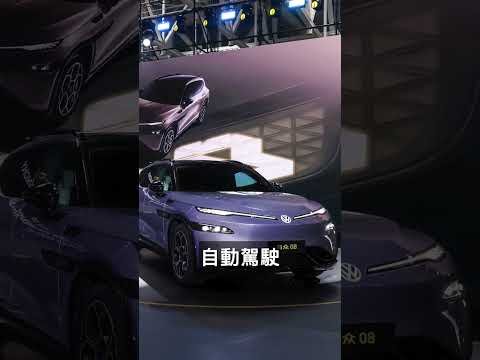
大眾砸7億向小鵬低頭!ID.UNYX 08下線#小鵬 #Volkswagen #電動車 #ChinaSpeed #VLA #Tesla
大鱼聊电动· 2026-03-14 11:18
大眾居然向 中國低頭了? ID. UNYX 08 剛剛下線 從簽約到量產 只花24個月 這就是 China Speed 的恐怖地方! 這台中型SUV 直接標配小鵬 VLA 2.0%全場景 自動駕駛 800V超充 1500 TOPS算力 730km續航 雙馬達496馬力 硬體拉滿 大眾砸7億美元 拿5%的股權 還成為VLA 2.0% 第一個客戶 以前總是 西方輸出技術 現在反過來了 中國AI開始 反向輸出給 全球巨頭 你說這是不是 中國電動車 真正崛起的信號?. ...
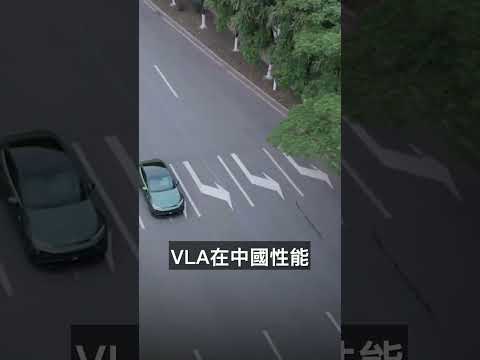
小鵬VLA 2.0敢挑戰Musk FSD?2026年8月追平!#小鵬VLA #TeslaFSD #自動駕駛 #電動車 #ElonMusk #XPeng
大鱼聊电动· 2026-03-14 11:12
中國小鵬 VLA 2.0% 現在已經敢跟 Tesla FSD 正面剛了! 小鵬也是 端到端純視覺 推理速度飆12倍 接管率砍近5倍 廣州晚高峰 開起來 效率高23% 順到你懷疑人生 何小鵬甚至放話 2026年8 月底 VLA在中國性能 要追平FSD! FSD全球 數據更猛 但小鵬的 本土適應 簡直開掛 這場中外 AI駕駛大戰 誰能笑到最後?. ...