
Ke Ji Ri Bao

Search documents
液态金属驱动的新型电机研制成功
Ke Ji Ri Bao· 2026-01-22 22:53
Core Insights - A new type of motor developed by scientists from the University of New South Wales and the University of Sydney utilizes flowing liquid metal instead of traditional rigid components, potentially transforming applications in soft robotics, flexible electronics, and medical devices [1][2]. Group 1: Innovation and Technology - The liquid metal droplet rotating paddle motor operates uniquely without coils or magnets, generating internal vortices in a saline solution when an electric field is applied, achieving a maximum speed of 320 revolutions per minute, setting a new record for liquid metal actuators [1]. - This innovation demonstrates that flowing metal can produce stable rotational motion, paving the way for the development of a new generation of flexible motors [1]. Group 2: Applications and Market Potential - The flexible liquid metal motor is particularly suited for scenarios where traditional rigid motors struggle, such as in soft robotics, where devices need to bend, stretch, or navigate confined spaces [2]. - The potential applications extend beyond soft robotics to include flexible displays, microfluidic chips, and biomedical implants, enabling compact and self-sustaining motion control in closed, precise, and dynamically changing environments [2].
最大纳米颗粒量子叠加态创建
Ke Ji Ri Bao· 2026-01-22 22:52
Core Insights - A research team from the University of Vienna has achieved a significant breakthrough by placing metal nanoclusters, nearly the size of viruses, into a spatially distinct quantum superposition state, marking the largest superposition state ever created [1] Group 1: Quantum Research Findings - The study provides new evidence for exploring the boundary between the quantum and classical worlds, with implications for quantum computing and precision measurement technologies [1] - The researchers created a metal cluster composed of over 7,000 sodium atoms, approximately 8 nanometers in diameter, which is comparable in size to some viral particles [1] - The experiment involved precision interference experiments that allowed these clusters to exist simultaneously in different spatial locations, approximately 133 nanometers apart, forming a quantum superposition state similar to Schrödinger's cat [1] Group 2: Experimental Methodology - The experiment utilized an interferometer device composed of three sets of laser gratings, operating under ultra-high vacuum and low-temperature conditions [2] - Sodium nanoparticles exhibited significant wave-like behavior after passing through slits, with different paths corresponding to "matter waves" that interfered to form a clear interference pattern [2] - The results indicated that each nanoparticle did not follow a single path but rather existed as a "probability cloud" in space, with the separation distance of the superposition state being about 16 times the size of the particles themselves [2] Group 3: Macro-Scale Quantum Effects - The experiment achieved a "macroscopicity" measure of 15.5, which is an order of magnitude higher than previous records, indicating the extent of quantum effects at a macroscopic scale [2] - Future plans include expanding the experimental subjects to larger biological systems, such as viruses, and using interference patterns as high-sensitivity probes to explore weak and difficult-to-measure physical forces [2]
又一例“人工心脏”植入手术在合肥京东方医院完成
Ke Ji Ri Bao· 2026-01-22 09:47
据介绍,"人工心脏"即左心辅助装置,是一种尖端生命支持系统。整个装置系统分为体内和体外两部 分,体内的血泵和管道与心脏精密连接,体外的控制器和电池组让患者能够自由活动。此次接受"人工 心脏"植入的患者患有扩张型心肌病,其左室射血分数(LVEF)仅为15%,远低于55%的正常标准。该 疾病是一种遗传性疾病,目前尚无根治方案,随着病情进展,患者心脏功能逐年衰退。 合肥京东方医院心脏中心团队经过全面评估与审慎研讨,迅速组建由心脏外科、心血管内科、麻醉科、 体外循环科、重症监护室、超声科等多领域专家构成的诊疗团队。术中,团队默契配合、精准操作,成 功将"人工心脏"植入患者体内。装置启动后运行平稳,即刻承担起左心室泵血功能,患者全身血液循环 得到显著改善。 姚建民介绍,"人工心脏"是救治终末期心衰的关键手段,与心脏移植相比,术后不用终身服用抗排异 药。此外,该技术也为稀有血型、体重较大或65岁以上等难以接受心脏移植的患者,提供了新的治疗希 望。 近日,又一例"人工心脏"植入手术在合肥京东方医院成功开展。合肥京东方医院心胸外科主任姚建民表 示,植入的"人工心脏"仅90克,是由新型材料制成的一个很轻很小的机械装置。它协助心 ...

我国芯片突破关键难题!弯折变形后仍可使用
Ke Ji Ri Bao· 2026-01-22 09:02
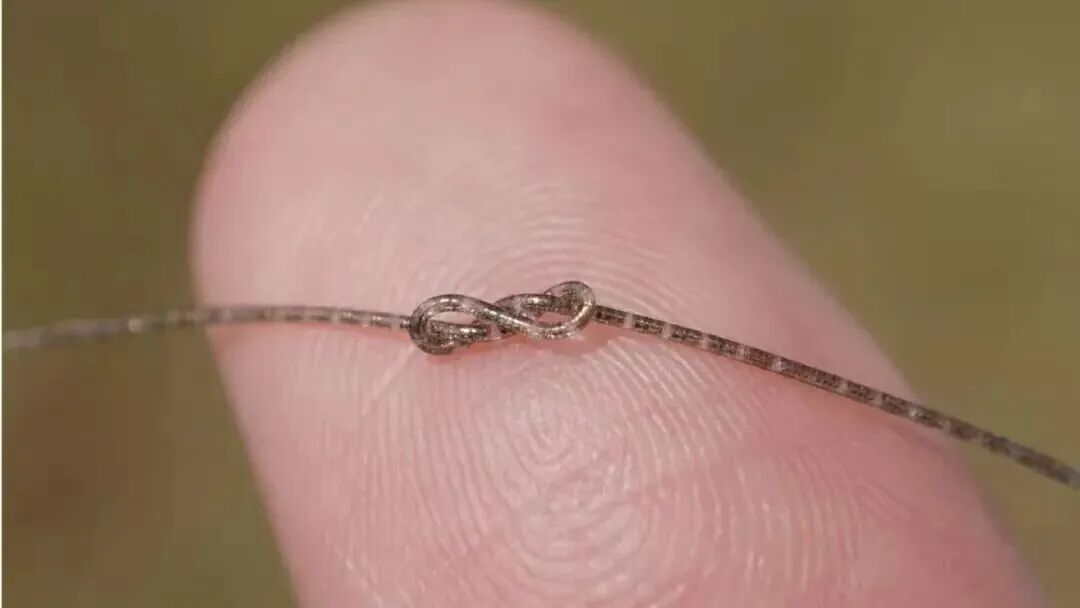
团队开发了与目前光刻工艺有效兼容的制备路线。他们首先采用等离子体刻蚀技术,将弹性高分子表面"打磨"至低于1纳米的粗糙度,有效满足商业光 刻要求。随后,在弹性高分子表面沉积一层致密的聚对二甲苯膜层,为电路披上一层"柔性铠甲"。这层保护膜不仅可以有效抵御光刻中所用极性溶剂对弹性 基底的侵蚀,还能缓冲电路层受到的应变,确保纤维芯片在反复弯折、拉伸变形后,电路层结构和性能依然稳定。 该成果有望为纤维电子系统的集成提供新的路径,有望实现从"嵌入"到"织入"的转变,助力脑机接口、电子织物、虚拟现实等新兴领域的变革发展。 该设计使纤维内部的空间得到极致利用,实现了一维受限尺寸内的高密度集成。 智能设备的柔性化始终卡在一个关键瓶颈:作为"大脑"的芯片,长久以来都是硬质的。复旦大学彭慧胜/陈培宁团队成功在弹性高分子纤维内部,构建 出大规模集成电路,研发出全新的"纤维芯片",为解决柔性化难题提供了新的有效路径。这项成果于1月22日发表在国际期刊《自然》上。 ...

优质手术机器人“工资”更高
Ke Ji Ri Bao· 2026-01-22 08:37
Core Insights - The market share of domestic surgical robots in China has increased from 32.61% in 2023 to 48.89% in 2024, indicating significant growth in the sector [1] - Despite advancements, the utilization rate of surgical robots in China remains low at 6.33%, compared to 42% in the United States, highlighting the need for further development [1] - The National Healthcare Security Administration (NHSA) has released a guideline to rationalize the pricing logic for surgical robots, aiming to promote innovative technologies in healthcare [1] Pricing Logic Changes - Previously, surgical robot charges were based on factors like surgical approach and brand, leading to unclear pricing and increased patient burden [2] - The new guideline introduces three pricing categories: navigation, participation in execution, and precise execution, which will clarify the value of surgical robots in clinical settings [2][3] - This "pay-for-performance" model allows for higher fees for robots that demonstrate greater clinical value and effectiveness, discouraging low-value products from benefiting financially [3] Expansion of Precision Surgery - The guideline aims to broaden the application of precision surgery by encouraging the use of surgical robots for remote operations, thus expanding their clinical use [4] - A new pricing category for remote surgical assistance has been established, allowing experts in resource-rich areas to assist patients in remote locations [4][5] - The introduction of remote surgical capabilities is expected to enhance access to advanced medical technologies for patients in underserved areas [5] Future Developments - The NHSA plans to complete the guideline compilation to achieve a unified pricing system for medical services across the country, ensuring high-quality and affordable healthcare for the public [5]

“氢”风已来,破局前行
Ke Ji Ri Bao· 2026-01-22 08:34
Core Insights - A transformation centered around green hydrogen is quietly unfolding in China, impacting various sectors from transportation to industrial manufacturing [1] - The green hydrogen industry is expected to transition from demonstration to commercialization, with significant growth in hydrogen fuel cell vehicle ownership anticipated [1] - The industrial sector presents a larger opportunity for green hydrogen, with projects in resource-rich areas expected to lower production costs significantly [1] Group 1: Green Hydrogen Applications - The "Hydrogen Spring" tourist train symbolizes the practical application of green hydrogen in transportation [1] - Various projects, including hydrogen fuel cell ships and drones, are emerging across the country, indicating a growing integration of green hydrogen in multiple fields [1] - Mature business models for hydrogen fuel cell vehicles have developed in regions like the Yangtze River Delta and Beijing-Tianjin-Hebei [1] Group 2: Market and Policy Dynamics - The combination of policy support and market forces is expected to drive the green hydrogen industry towards commercialization during the 14th Five-Year Plan [1] - The lifecycle cost of hydrogen fuel cell vehicles is projected to become competitive with traditional fuel vehicles [1] Group 3: Industrial Sector Potential - Green hydrogen projects are proliferating in resource-rich areas such as Inner Mongolia and Xinjiang, with costs expected to drop to 12 yuan per kilogram [1] - This cost reduction is anticipated to provide economically viable solutions for industrial decarbonization, fostering a positive industry ecosystem [1] Group 4: Technological Advancements - The domestic production rate of core equipment like electrolyzers is increasing, and advancements in liquid hydrogen technology are expected to break existing monopolies [2] - Flexible hydrogen production systems are being developed to address the intermittency and volatility of wind and solar power generation [2] - Continuous technological breakthroughs and supportive policies are boosting industry confidence and expanding the application range of green hydrogen [2]
能效比提升超228倍 我国科学家研制出新芯片
Ke Ji Ri Bao· 2026-01-22 06:27
Core Insights - The research team from Peking University has developed a new analog computing chip for non-negative matrix factorization, significantly improving computational speed and energy efficiency compared to current digital chips [1][2]. Group 1: Technology Overview - Non-negative matrix factorization (NMF) is a powerful data dimensionality reduction technique used in various fields such as recommendation systems, bioinformatics, and image processing [1]. - Traditional digital hardware struggles with real-time processing demands due to computational complexity and memory bottlenecks when handling large-scale datasets [1]. Group 2: Chip Performance - The new analog computing chip demonstrates a speed increase of approximately 12 times and an energy efficiency improvement of over 228 times compared to advanced digital chips in Netflix dataset applications [2]. - In the MovieLens 100k dataset recommendation system training task, the analog computing solution achieved a speed enhancement of 212 times and an energy efficiency boost of 46,000 times compared to mainstream programmable digital hardware [2]. Group 3: Applications and Implications - This research opens new pathways for real-time solutions to constrained optimization problems like non-negative matrix factorization, showcasing the potential of analog computing in handling complex real-world data [2]. - The advancements could lead to innovations in real-time recommendation systems, high-definition image processing, and genetic data analysis, contributing to more efficient and lower-power artificial intelligence applications [2].
科技日报:第九届温度测量与控制技术学术交流会召开
Ke Ji Ri Bao· 2026-01-22 03:19
本次会议通过学术交流、论文展示与产业对接,为温度计量领域的创新发展提供重要平 台。与会专家认为,会议内容紧扣产业需求,既展现技术前沿,又推动成果落地,对促进温 度计量技术赋能产业升级、服务国家战略具有重要意义。未来,温度计量领域将继续深化产 学研合作,以技术创新驱动产业高质量发展。 编辑:胡之澜 本次会议还同期举办论文宣读与海报展示活动,70余篇学术论文覆盖温度计量基础研 究、检测与校准新方法、不确定度评定及行业应用等方向。研究内容立足产业需求,从技术 应用探索到服务模式优化,从行业痛点分析到未来趋势预判,充分体现学术研究对产业发展 的支撑作用。与会代表围绕报告主题深入交流,海报展示区讨论热烈。 展区汇聚国内十余家温度仪器生产及计量设备企业,展示精准计量、智能监测、现场无 线校准等领域的创新设备与解决方案。参会代表与企业代表深入交流,探讨技术优势与应用 需求的对接,从行业趋势分析到具体应用构想,推动学术研究与产业化发展的深度融合。展 区不仅呈现我国温度仪器设备制造的技术进步,更彰显科研成果向产业转化的良好态势,践 行"立足温度、服务产业"的初心。 近日,由中国计量测试学会温度计量专业委员会主办、湖北省计量测试 ...
湖南自主研制成功盾构掘进装备“智慧大脑”
Ke Ji Ri Bao· 2026-01-22 03:19
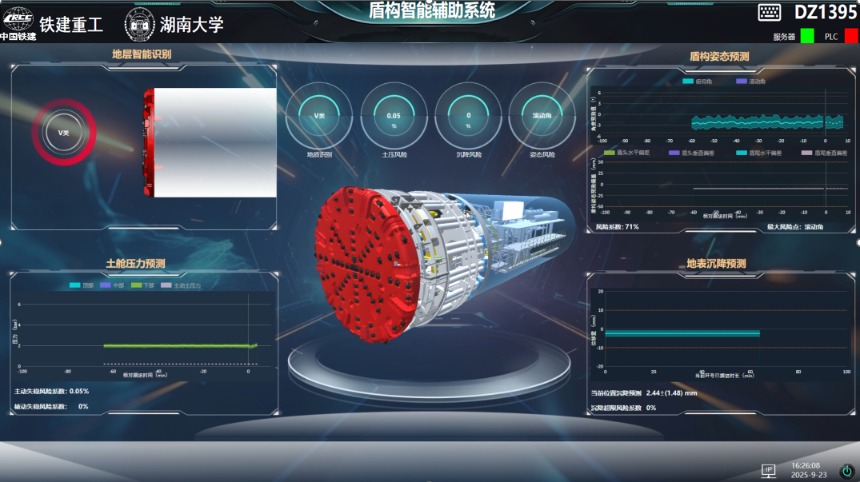
Core Viewpoint - Hunan University, in collaboration with China Railway Construction Heavy Industry Group, has developed an intelligent system for shield tunneling operations and risk prevention, enhancing the safety and efficiency of underground construction projects [1][3]. Group 1: Technology Development - The intelligent system has been integrated into large-diameter shield equipment, providing technical support for major national projects and enabling precise risk prevention [1][3]. - The system allows shield machines to autonomously identify geological conditions and predict risks, transitioning from experience-driven to data-driven tunneling operations [3]. Group 2: Performance Metrics - The system's decision-making accuracy exceeds 90%, with control over tunneling posture deviation limited to within 30 millimeters, addressing issues of traditional manual control [5]. - In the Guanghua Intercity Second Work Area project, the intelligent system improved fault diagnosis efficiency by 20% and increased equipment utilization by 12%, leading to a 5% increase in monthly tunneling progress [5]. Group 3: Industry Impact - The technology has been recognized as a key promotion achievement by the China Highway Society for Tunnel and Underground Space, significantly reducing construction accident rates and human error risks [5]. - Future plans include expanding the application of this technology to more complex engineering scenarios, supporting high-quality development in China's underground construction sector [5].

今年首个X级耀斑爆发 地磁暴对人体健康影响微乎其微
Ke Ji Ri Bao· 2026-01-22 03:04
北京时间1月19日凌晨2时09分左右,太阳活动区爆发X1.9级耀斑,标志着2026年首个X级大耀斑出 现。受日冕物质抛射影响,自1月20日2时起,地球开始发生地磁暴。截至21日17时,已持续出现15小时 特大地磁暴,18小时大地磁暴以及6小时中等地磁暴,目前地磁活动仍在持续。受此次强烈地磁活动影 响,我国多地天空出现了绚丽的极光。 这次地磁暴为何如此强烈?地磁暴能否预报,未来发生频次会增加吗?地磁暴会影响人类生活吗? 1月21日,科技日报记者就此采访了相关专家。 第一问:此次地磁暴为何这么强? 最后是预测地磁暴的强度与持续时间。当日冕物质抛射到达地球附近时,位于日地之间、距离地球 约150万公里(日地L1点)的"哨兵"卫星会对其进行捕捉。这些卫星可以直接测量太阳风的速度、密度 和磁场方向。其中磁场方向的测量尤为关键,如果太阳磁场转为强烈的南向(与地球磁场方向相反), 就会剧烈扰动地球磁场,引发强地磁暴。 "目前来看,与天气预报相比,空间天气预报的误差仍相对较大。"陈安芹说,从日冕物质抛射离开 太阳表面,到被L1点附近的"哨兵"卫星捕获之前,中间缺乏观测数据,导致地磁暴发生时间的预报误差 在±12小时左右。同时 ...