
Ke Ji Ri Bao

Search documents
【科技日报】眼科手术自主机器人系统研发成功
Ke Ji Ri Bao· 2026-01-20 02:11
能开展眼科手术的机器人来了。记者1月19日从中国科学院自动化研究所获悉,该所研究团队成功 研发出一款自主显微眼科手术机器人系统,并完成临床可行性验证。该系统能够显著提升眼科手术的精 准度、安全性与稳定性,最大限度减少手术本身对眼部组织的损伤。相关研究成果发表于《科学-机器 人》杂志。 全球视力受损或失明人数已超过22亿,而眼球内部结构极为精细、操作空间极小,传统眼科手术对 医生的经验和稳定性要求极高。该自主机器人系统通过智能、精准地控制,有望大幅提升手术安全水 平,缩短医生培养周期,为多种眼底疾病的治疗提供全新解决方案。 论文通讯作者、中国科学院自动化研究所研究员边桂彬介绍,研究团队通过多视角空间融合方法, 构建了术中动态更新的眼内三维地图,实现了对手术区域的全面感知;运用多传感器数据融合技术,实 现了手术器械从宏观到微观的跨尺度精确定位;并基于多约束优化与人在回路的混合控制,确保了手术 轨迹的精准与安全。 实验表明,该系统在多种眼球模型上的注射成功率达到100%,平均定位误差较医生手动操作降低 约80%,即使与医生操作机器人辅助手术相比,误差也减少约55%,展现出优越的精确性与安全性。 "这项成果为眼科手术 ...

实验揭示赝能隙态潜藏磁性有序结构 为理解高温超导起源提供关键线索
Ke Ji Ri Bao· 2026-01-20 01:39
Core Insights - Physicists at the Max Planck Institute for Quantum Optics have experimentally revealed magnetic ordered structures hidden in pseudogap states, providing crucial insights into the origins of high-temperature superconductivity [1] Group 1: Research Findings - The study indicates that superconductivity is not directly derived from conventional metallic states but first enters a peculiar intermediate state known as the pseudogap state, where electron behavior is abnormal and available energy states are reduced [1] - The research team utilized a cold atom quantum simulator to construct the Fermi-Hubbard model with lithium atoms, simulating electron interactions in a highly controlled environment [2] Group 2: Experimental Techniques - Using a quantum gas microscope, the team captured over 35,000 high-resolution images of atoms and spin states under varying temperatures and doping conditions [2] - Analysis revealed that while long-range antiferromagnetic order disappears with doping, stable short-range magnetic correlations persist at extremely low temperatures [2] Group 3: Implications for Future Research - The findings suggest that the magnetic correlations at different doping levels and temperatures can be unified into a single curve, closely aligning with the characteristic temperature of the pseudogap, indicating a strong relationship between the pseudogap and the weakened but still present magnetic structure [2] - The research also discovered that in the pseudogap state, electrons form complex multiparticle structures, with measurements showing the involvement of five particles in correlation effects, suggesting that even a single dopant can disturb the surrounding magnetic arrangement over a larger spatial range [2] - The cold atom quantum simulation provides a controllable platform for exploring complex quantum materials, with the potential for discovering new quantum ordered states as experimental temperatures decrease and observational techniques improve [2]
大连:推动创新链与产业链互嵌共生
Ke Ji Ri Bao· 2026-01-20 01:36
Core Insights - A new high-performance engineering plastic developed by a team led by academician Qian Xigao is entering the industrialization phase in Dalian, capable of withstanding temperatures above 350 degrees Celsius and possessing dissolvable properties [1][2] - The project, with a total investment of approximately 685 million yuan, is set to begin trial production by the end of 2025, with plans for a second phase to expand production capacity to 2,000 tons per year [2] Group 1: Innovation and Development - The new material overcomes the industry bottleneck of combining high-temperature resistance and dissolvability, making it the highest-rated polyarylether engineering plastic globally [2] - Dalian's innovation-driven development is highlighted by a stable R&D investment intensity of over 3%, a local technology conversion rate exceeding 45%, and an average of 17.5 high-value invention patents per ten thousand people [3] Group 2: Industry Transformation - The traditional petrochemical industry in Dalian is undergoing a transformation, providing fertile ground for new materials and processes developed in laboratories [3] - The development of a green production technology for ethylene amine, which has been monopolized by foreign entities, showcases the successful collaboration between local scientists and entrepreneurs [3][4] Group 3: Collaborative Efforts - The partnership between Hengli Petrochemical and Dalian Institute of Chemical Physics exemplifies the integration of technology licensing and industrial application, with Hengli investing 500 million yuan to build production facilities [4] - The technology has been implemented in seven domestic and international facilities, achieving a total capacity of 300,000 tons per year and capturing over 50% of the domestic market share [5] Group 4: Future Directions - Dalian's science and technology bureau plans to focus on strengthening innovation platforms, establishing concept verification centers, and forming industry-academia-research alliances to enhance regional technological innovation [5]

“扣子”推出全新功能Agent Skills、Agent Plan
Ke Ji Ri Bao· 2026-01-20 00:47
此外,扣子官方视频Skill也正式上线,该功能支持自动生成视频脚本、匹配视觉素材,并完成剪辑、转 场、配乐等后续流程。 扣子2.0推出Agent Plan,即"长期计划",让AI从"即时问答工具"升级为"可持续运作的智能体"。用户只 需要确定目标,规定好怎么完成、怎么实现,扣子能够持续执行,并向用户主动汇报、最终交付任务。 以自媒体账号运营为例,扣子能够和用户一起讨论账号定位,拆解每个阶段的运营策略,再帮用户创作 内容。如果用户想写一本书,只需把写作主题和目标发给扣子,它会自己搜集资料、撰写初稿,再根据 反馈自行调整,达成3周内写出10万字初稿的计划。用户还可以用长期计划来完成学习目标,比如考雅 思,扣子会设定每日任务并准备学习资料。 (文章来源:科技日报) 1月19日,字节跳动旗下AI Agent(智能体)平台"扣子"宣布2.0品牌升级。扣子2.0集成了Agent Skill、 Agent Plan、Agent Coding、Agent Office能力,让AI真正成为用户的"工作伙伴"。 通用Agent已展现出强大的基础任务处理能力,在日常对话、信息整合与简单推理方面有了长足进步, 但要应对高度专业化、高 ...
韩2025年出口竞争力明显下降
Ke Ji Ri Bao· 2026-01-20 00:33
从具体品目来看,钢铁和机械行业的低迷尤为明显。随着欧盟碳边境调节机制(CBAM)2026年起正式 实施,贸易成本上升,韩国企业在欧洲市场的竞争力可能进一步削弱。化学工业产品受全球需求放缓以 及中国国内自给率提升的影响,持续面临困境。汽车产业方面,随着竞争对手扩大海外生产,韩国汽车 市场竞争力有所下降。2018—2024年间,在全球最大出口市场美国,墨西哥的市场份额上升了4.2%, 而韩国则下降了0.4%。 韩国银行日前发布《主要品目出口竞争力评估》报告,数据显示,韩国出口在全球市场中的占有率呈明 显下降趋势,与中国、越南、印度等国持续增长形成鲜明对比。 韩国银行表示,尽管韩国2025年出口额首次突破7000亿美元,创下历史新高,但出口品目结构性两极分 化严重,且呈进一步恶化趋势。从中长期来看,出口竞争力正在逐步退化,形势并不乐观。2026年在半 导体景气周期推动下,韩国整体出口有望继续增长,但由于主要非IT品目持续低迷,两极分化将进一步 加剧。 半导体方面,通过快速开发并实现高带宽存储器等高附加值产品,韩国维持了技术优势。凭借差异化技 术实力,韩国在最新一代存储芯片的量产时间上比竞争国家领先约一年。但近期在中 ...
人形机器人可完成多语言逼真唇形动作 在教育和老年护理领域具应用潜力
Ke Ji Ri Bao· 2026-01-20 00:31
Core Insights - A new framework designed by scientists at Columbia University enables humanoid robots to generate realistic lip movements synchronized with audio, enhancing human-like communication capabilities [1][2] - The technology demonstrates strong generalization abilities, applicable to multiple languages including French, Chinese, and Arabic, even those not present in the training data [1] - The research represents a significant step towards creating robots that can perform functions while also engaging in humanized interactions [1] Group 1 - The existing robots lack the flexibility to perform intricate lip movements, and few technologies can convert speech into natural lip movement commands in real-time [1] - The research team previously published a study in 2024 describing a humanoid robot's ability to predict and replicate human smiles, laying the groundwork for this new lip synchronization technology [1] - The team developed a learning process that involves collecting visual data of the robot's lip movements to train a model and generate movement reference points [1] Group 2 - A module called the "facial action converter" was created to produce movement commands, allowing the robot's lips to smoothly match different words [1] - The humanoid robot's facial structure features soft silicone skin and magnetic connectors, providing 10 degrees of freedom for complex lip movements, capable of forming various shapes for 24 consonants and 16 vowels [1] - During validation, the team used ChatGPT to generate test sentences and synthesized videos with ideal lip movements for comparison, showing the method's superiority in minimizing differences [2] Group 3 - The framework can generate natural lip synchronization effects for 11 different non-English language phonetic structures [2] - The research team suggests potential applications for humanoid robots in education and elderly care, while also emphasizing the need for careful design to prevent misuse of the technology [2]
飞行汽车未来5年或迎商业爆发时代
Ke Ji Ri Bao· 2026-01-20 00:30
Core Viewpoint - The development of flying cars signifies a paradigm shift in the low-altitude economy from "tool innovation" to "ecological restructuring," with commercial explosion expected between 2025 and 2030 [1] Group 1: Industry Outlook - Flying cars will see dual-track advancement in specialized and popularized application scenarios, with emergency rescue and police equipment upgrades being the first areas to break through [1] - The popularization path will follow "cultural tourism first, shuttle follow-up, and commuting as the final goal," with existing projects like EHang's cultural tourism flights already in operation [1] - Urban commuting is viewed as a long-term goal, while short-distance connections between airports and urban areas will be a focus for scaling [1] Group 2: Challenges in Scaling - Multiple systemic challenges exist for the large-scale development of flying cars, including technical bottlenecks in payload range, airworthiness safety, intelligent driving, and power systems [2] - The lack of vertical take-off and landing infrastructure and a "low-altitude smart network" is a significant barrier, with current planning still in pilot exploration stages [2] - Regulatory frameworks for airworthiness certification and airspace management are still under construction, necessitating improved inter-departmental collaboration and sandbox regulatory mechanisms [2] Group 3: Recommendations for Development - Policy guidance is needed to establish airworthiness certification mechanisms and regulatory standards that align with the technological iteration and large-scale production needs of flying cars [3] - A collaborative working group for low-altitude flight technology should be formed to tackle common technical challenges in flight control and power systems [3] - The integration of the automotive and aviation industries is essential, leveraging the approximately 70% technological commonality between flying cars and new energy vehicles to reduce costs and enhance efficiency [3]
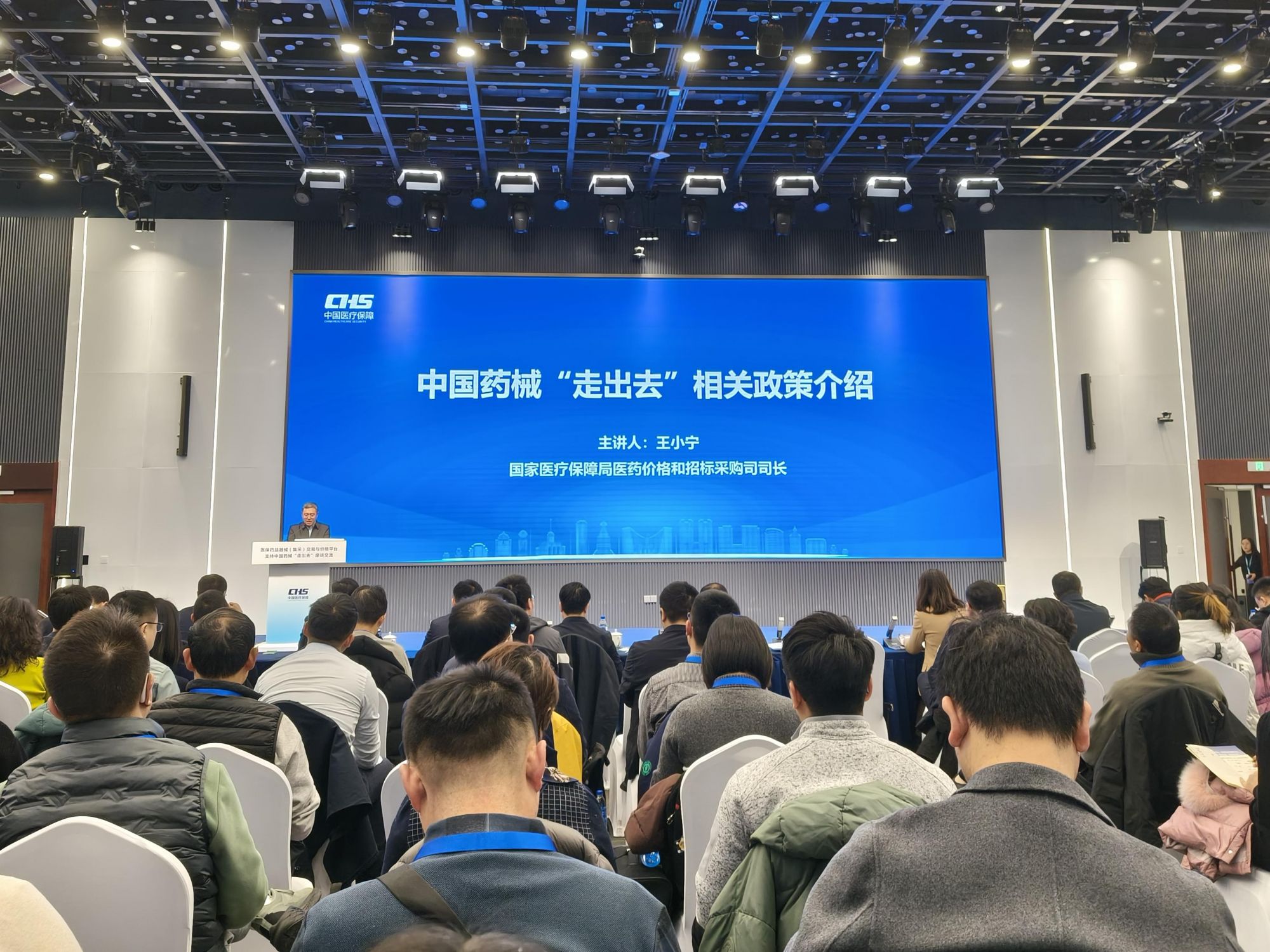
彰显创新价值,护航中国药械“走出去”强劲势头
Ke Ji Ri Bao· 2026-01-19 12:52
Core Insights - By 2025, China's overseas licensing of innovative drugs is expected to exceed 150 deals, with a total value reaching $130 billion, compared to $50 billion in 2024, indicating significant international recognition of China's pharmaceutical and medical device innovations [1] - The successful global market entry of Chinese pharmaceutical and medical device companies requires a collaborative effort involving various departments, financial institutions, and service systems to enhance pricing power and accessibility [1][5] Group 1: Market Trends and Developments - China's pharmaceutical exports have shifted from raw materials and intermediates to innovative drugs, high-end formulations, and advanced medical devices, with a total export value of $100.895 billion in the first 11 months of last year [5] - The establishment of cross-border procurement platforms, such as the China-ASEAN procurement platform, has facilitated significant transactions, including over 10 million yuan in deals for companies like Haizheng Pharmaceutical and Qilu Pharmaceutical [6] Group 2: Pricing and Regulatory Framework - The introduction of an overseas price certification system for innovative drugs aims to provide companies with a reliable pricing reference, addressing previous issues of price information asymmetry and enhancing international market competitiveness [7] - The National Medical Insurance Administration is working on a pricing mechanism for newly launched drugs to ensure that prices reflect the high investment and risk associated with innovative products, thereby stabilizing prices during the initial market entry phase [8]

万兴科技入围中国人工智能百强榜
Ke Ji Ri Bao· 2026-01-19 12:47
Group 1 - The core viewpoint of the news is that Wondershare Technology has been recognized in the "Top 100 Chinese Artificial Intelligence Companies" list, ranking in the top 50 due to its continuous innovation in AI digital creative software [1] - Wondershare Technology has made significant investments in AI technology research and development, product application, industry ecosystem collaboration, and AI talent development [1] - The company plans to launch the Wondershare Tianmu Multimedia Model 2.0 by June 2025, which boasts an average performance improvement of approximately 90% compared to version 1.0 [1] Group 2 - Wondershare Technology's overseas version, ToMoviee 2.0 AI, ranks among the top three in the global evaluation list VBench-2.0 for text-to-video models, achieving first place in key metrics related to camera motion and motion rationality [1] - The company has established partnerships with major firms such as Microsoft, Huawei, NVIDIA, and Google to co-build a cutting-edge AI application ecosystem [1] - Wondershare Technology's products cover video creativity, document creativity, and drawing creativity, with several overseas products integrating advanced models from Google and OpenAI [1][1] Group 3 - Wondershare Technology operates in over 200 countries and regions globally, with a cumulative active user base exceeding 2 billion [2] - The company has developed several flagship products, including Wondershare Filmora, Wondershare MindMaster, and Wondershare SelfyzAI, and is regarded as the "Chinese version of Adobe" [2]

四部门推动职业技能证书互通互认
Ke Ji Ri Bao· 2026-01-19 08:31
Core Viewpoint - The recent notice issued by multiple government departments aims to promote the mutual recognition of vocational skill certificates, thereby reducing the burden on laborers and facilitating the smooth flow of skilled talent across regions and industries [1][2]. Group 1: Promotion of Mutual Recognition - The notice focuses on facilitating the mutual recognition of vocational skill certificates to enhance the effective allocation of skilled labor resources [2]. - It specifies that individuals who have obtained electrical or welding qualifications from one department can apply for corresponding certificates from other departments with simplified processes, such as exemption from safety training or theoretical exams [2][3]. Group 2: Integration of Certification Systems - The notice mandates the establishment of a mechanism to connect vocational qualification certificates with vocational skill level certificates, allowing those with electrical or welding qualifications to be regarded as having achieved corresponding junior or intermediate skill levels [2]. - It supports localities in pooling skill evaluation resources and exploring the "one test, multiple certificates" approach, enabling candidates to obtain both vocational qualification and skill level certificates through a single examination [3]. Group 3: Enhancing Certificate Recognition - The notice emphasizes the need to improve the circulation and market recognition of vocational skill level certificates, ensuring high-quality evaluations and promoting nationwide acceptance of these certificates [3].