
Ren Min Ri Bao Hai Wai Ban

Search documents
掘进地下万米(“十四五”,我们见证这些硬核突破⑥)
Ren Min Ri Bao Hai Wai Ban· 2025-10-29 22:55
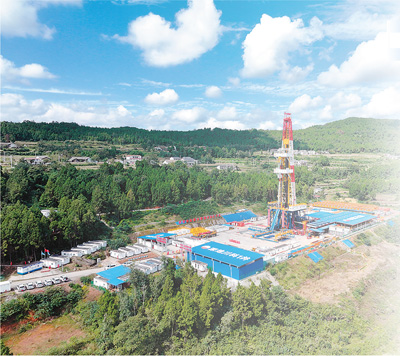
Core Insights - The successful completion of China's first 10,000-meter scientific exploration well, the Deep Earth Ta Ke 1 Well, marks a significant milestone in deep earth engineering and energy security for the country [5][9][14]. Group 1: Project Overview - The Deep Earth Ta Ke 1 Well, located in the Aksu region of Xinjiang, has reached a depth of 10,910 meters, setting five drilling records [5][6][8]. - This well is part of a major deep earth engineering initiative by China Petroleum in the Tarim Basin, which is known for its complex geological conditions [6][9]. Group 2: Technical Challenges - Drilling at such depths presents extreme challenges, including high temperatures (up to 220 degrees Celsius) and pressures (up to 145 MPa), as well as complex rock formations that require frequent adjustments in drilling techniques [7][10][11]. - The project utilized advanced technology, including a self-developed 12,000-meter automated drilling rig and specialized drill bits to handle the extreme conditions [10][11]. Group 3: Geological Significance - The successful drilling of the well has provided valuable geological data from depths previously unexplored, confirming the potential for oil and gas resources in the Tarim Basin [9][12]. - The well's findings contribute to understanding ancient geological environments and the evolution of sedimentary basins, which is crucial for future exploration [13]. Group 4: Strategic Importance - The advancement in deep earth drilling technology is essential for China's energy security, as the country seeks to reduce its reliance on foreign oil and gas [12][14]. - The exploration of deep layers is becoming increasingly important as shallow resources are depleted, with significant reserves identified in depths exceeding 8,000 meters [12][14].


走近农民手艺人
Ren Min Ri Bao Hai Wai Ban· 2025-10-29 22:55
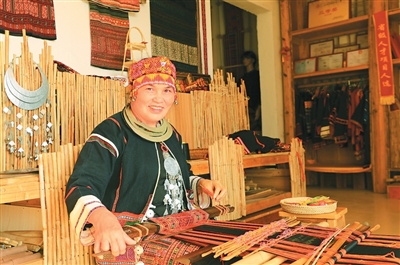
Group 1: Cultural Heritage and Craftsmanship - The article highlights the importance of preserving traditional crafts, such as the Li brocade weaving and the Kuqa big naan, as vital components of cultural heritage [5][7][10] - Various artisans have taken initiatives to pass on their skills to younger generations, ensuring the continuity of these crafts [6][9][11] - The government is increasingly recognizing the value of intangible cultural heritage, leading to more support for artisans and their crafts [6][12] Group 2: Innovation and Market Adaptation - Artisans are adapting traditional crafts to modern tastes, creating new products that appeal to younger consumers, such as fashion accessories made from Li brocade [5][8] - The integration of traditional techniques with contemporary design has led to the development of unique products that attract both local and tourist markets [9][14] - The establishment of training programs and workshops has empowered local communities, allowing them to monetize their skills and contribute to the local economy [11][15] Group 3: Economic Impact and Community Development - The revival of traditional crafts has become a source of income for many artisans, with some reporting significant increases in earnings through their craft [11][13] - The establishment of businesses around these crafts, such as workshops and cultural tourism, has created job opportunities and stimulated local economies [9][12] - Artisans are not only preserving their heritage but also fostering community development by engaging local youth and promoting cultural tourism [10][15]
这个姑娘“布”得了(千行百业看海归)
Ren Min Ri Bao Hai Wai Ban· 2025-10-29 22:55
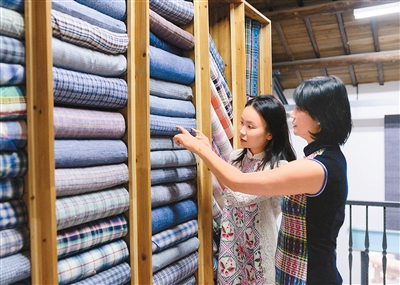
Core Insights - The article highlights the revival and innovation of Chongming Tubu, a traditional handwoven fabric from Chongming Island, which has a history of over 600 years and is being reinterpreted by a new generation [1][4][12] Group 1: Historical Context - Chongming Tubu, also known as "old cloth" or "dowry cloth," has been a significant part of Chinese textile history, especially during the Ming and Qing dynasties [1] - The fabric has gradually faded from public attention due to industrialization, yet it remains a cherished memory for many locals [1] Group 2: Personal Journey - Zhou Yuxin, a graduate from Michigan State University, returned to Shanghai to engage in the preservation and innovation of Chongming Tubu after her mother's foreign trade factory faced challenges due to the pandemic [5][6] - Zhou Yuxin's transition reflects a broader trend among young people reassessing the value of traditional culture [5][6] Group 3: Innovation and Education - Zhou Yuxin aims to blend traditional techniques with modern technology, utilizing both traditional and modern weaving machines to enhance the production process [7] - She has developed a tiered teaching system to attract younger audiences, offering both in-depth courses and creative workshops [7] Group 4: Market Expansion - Zhou Yuxin has recognized the potential for Chongming Tubu in broader markets, noting its appeal outside Shanghai, particularly in cities like Beijing [8] - Recent interactions with international visitors have led to increased interest in the fabric, exemplified by a Swedish tourist's desire to order a custom-made dress [9][10] Group 5: Business Model and Experience Economy - The transformation of a former factory into a cultural space integrates exhibition, experience, and sales, contributing to a complete "experience economy" tourism chain [11] - Zhou Yuxin emphasizes the importance of differentiation in a competitive market, ensuring that her offerings are unique and engaging for visitors [11] Group 6: Product Development - The development of a digital fabric pattern catalog is underway, allowing for the identification and commercialization of unique designs [12] - Collaborations with brands have begun, with successful licensing of patterns for children's clothing, indicating a viable path for monetizing traditional designs [12]
“万亿商城”平地起
Ren Min Ri Bao Hai Wai Ban· 2025-10-29 22:55
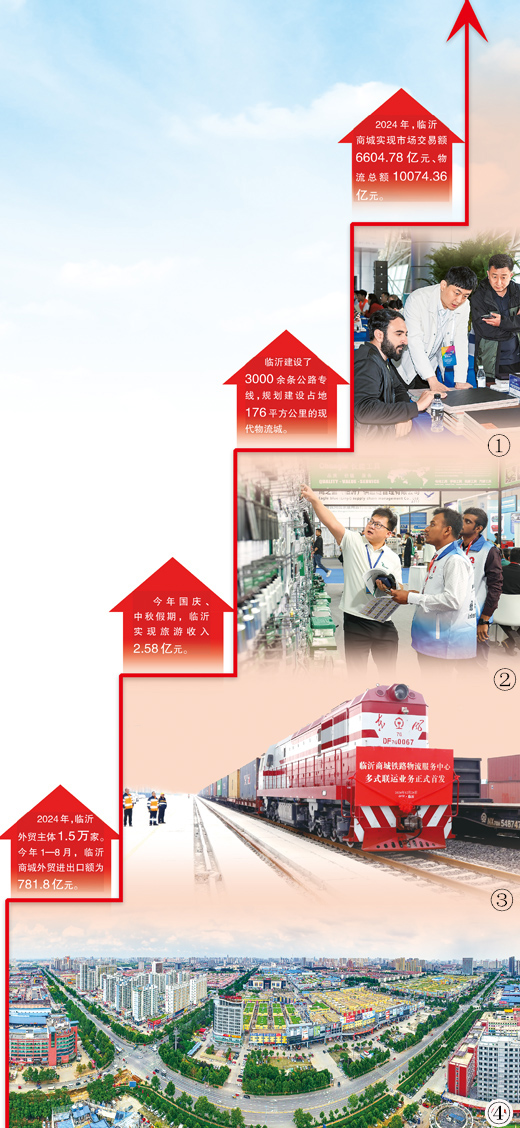
Core Insights - In 2024, Linyi Mall achieved a market transaction volume of 660.48 billion yuan and a logistics total of 1,007.44 billion yuan, establishing itself as a "trillion mall" [3][4][12] - The city has developed over 3,000 dedicated highways and is planning a modern logistics city covering 176 square kilometers [8][12] - Linyi's foreign trade entities have reached 15,000, with an import and export volume of 78.18 billion yuan from January to August this year [12][14] Economic Development - Linyi Mall's market transaction volume and logistics total have seen significant growth, with respective increases of 8.4% and 12.4% year-on-year [14] - The city has become a major commercial logistics center, recognized as "China's Market City" and "China's Logistics Capital" [5][6] - The number of professional wholesale markets in Linyi has reached 136, with over 63,700 shops and 460,000 business operators [6] Tourism and Consumer Experience - During the National Day and Mid-Autumn Festival holidays, Linyi generated tourism revenue of 258 million yuan, reflecting a year-on-year increase of 14.53% [11] - The integration of shopping and tourism has created new consumer hotspots, with Linyi's small commodity city being upgraded to a national 3A tourist attraction [11][10] - The city has enhanced its shopping experience by creating immersive shopping areas that reflect local culture [11] International Trade and Expansion - Linyi has implemented a "going out" strategy, establishing 59 overseas malls and warehouses, and has organized over 1,500 enterprises to expand internationally [12][13] - The city hosted the third Linyi Mall International Procurement Conference, attracting over 2,000 international buyers from 99 countries [13] - Linyi's cross-border e-commerce transaction volume reached 25.2 billion yuan, contributing to a 4.2% increase in the city's overall import and export growth [14]
我们为什么要记录
Ren Min Ri Bao Hai Wai Ban· 2025-10-29 22:55
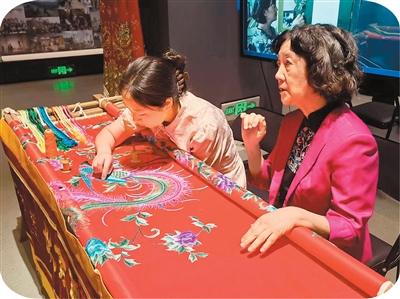
Core Points - The exhibition titled "Preserving the Heritage: Achievements of National Intangible Cultural Heritage Representatives" showcases the results of a decade-long project initiated by the Ministry of Culture and Tourism in 2015, focusing on the documentation of national intangible cultural heritage representatives [2][6] - The project has recorded 1,279 national intangible cultural heritage representatives out of 2,290 targeted individuals, with a total of 75,548.9 hours of raw material collected, amounting to 2,969.7 TB of data [6] - The exhibition features interactive displays that allow visitors to explore information about various ethnic groups and their intangible cultural heritage, emphasizing the diversity and richness of Chinese culture [7][8] Documentation Achievements - The project has successfully collected and documented traditional techniques, such as paper-making, which correspond with historical texts like "Tiangong Kaiwu" by Song Yingxing [3][5] - The documentation includes 20,880.2 hours of audiovisual materials, with oral history transcripts totaling 14,831.8 million words, involving 9,156 interviewees [6][9] - The methodology for documentation includes a "3+1" approach, focusing on oral history interviews, project practice recordings, and teaching methods of the heritage representatives [9][10] Cultural Significance - The project highlights the importance of preserving intangible cultural heritage as a means of safeguarding cultural identity and history, with the National Library serving as a repository for these records [5][11] - The exhibition also pays tribute to the late representatives, with nearly 500 photographs displayed in black and white to signify those who have passed away, underscoring the urgency of the documentation work [12][13] - The initiative aligns with UNESCO's 20th anniversary of the "Convention for the Safeguarding of the Intangible Cultural Heritage," emphasizing the fragility and resilience of such heritage [11][12]
国家工业遗产“上新”,更多“生产线”变身“风景线”
Ren Min Ri Bao Hai Wai Ban· 2025-10-29 07:03
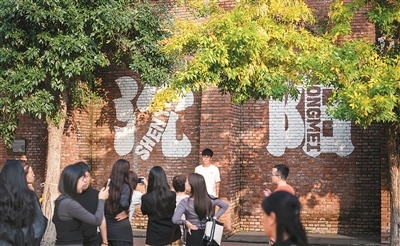
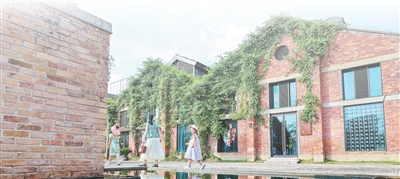
Core Insights - The Ministry of Industry and Information Technology recently announced the seventh batch of national industrial heritage sites, highlighting 32 locations across China, showcasing the country's comprehensive industrial system and its potential for industrial tourism [2][3] Group 1: Industrial Heritage Sites - The Hongmei MSG Factory in Shenyang has transformed from a production site into a cultural and creative park, featuring over 80 specialty shops and hosting nearly 200 cultural events annually, thus becoming a new leisure destination for residents and tourists [3][4] - The Chang'an Dahua Textile Factory in Xi'an has been converted into a museum that preserves the history of the textile industry, showcasing old machinery and photographs, while also serving as a cultural park that attracts both young visitors and local residents [5][6] - The Qianshu Long Kiln in Yixing, Jiangsu, is the only traditional wood-fired kiln in the province, maintaining its ancient pottery-making techniques and attracting tourists through live demonstrations and educational workshops, contributing significantly to local income [7][8] Group 2: Economic Impact - The Hongmei Cultural and Creative Park has created over 1,000 jobs and generates an annual output value of nearly 120 million yuan, marking it as a highlight in the development of industrial tourism in Shenyang [4] - The Qianshu Long Kiln contributes over 200 million yuan in total annual output value to the local economy, with an average income of 46,000 yuan per person, showcasing the economic benefits of preserving industrial heritage [8]
景德镇以瓷为媒连世界
Ren Min Ri Bao Hai Wai Ban· 2025-10-29 03:50
Core Insights - The "World Mayors Dialogue in Jingdezhen and 2025 Jingdezhen Forum" was held on October 19, gathering municipal representatives from various countries to discuss cultural and urban governance through the lens of porcelain [4][5] - Jingdezhen is recognized for its unique experience in cultural heritage protection and revitalization, transforming the city into a "living ceramic history textbook" [4] Group 1: Cultural Heritage and Urban Development - Jingdezhen has implemented authentic preservation of ancient kilns, docks, factories, and theaters, safeguarding the city's memory and character [4] - The city is seen as an "open-air museum," integrating ceramic elements into urban infrastructure, as noted by the mayor of Montelupo Fiorentino, Italy [5] - The participation of young people in artistic celebrations and traditional crafts is crucial for the continuation of Jingdezhen's ancient craftsmanship [5][6] Group 2: International Collaboration and Events - The event coincided with the 2025 Jingdezhen Autumn Fair, attracting thousands of artists from various countries to showcase their handmade crafts [5][6] - Jingdezhen has established friendly relations with 180 cities across 72 countries, enhancing cooperation in the ceramic industry and promoting cultural exchange [7] - A collaboration agreement was reached with Iznik, Turkey, to establish a ceramic production base aimed at the global market [7]
“十四五”时期,锂矿、铀矿、高纯石英等矿产资源勘查突破不断——点亮“地下藏宝图”
Ren Min Ri Bao Hai Wai Ban· 2025-10-29 03:38
Core Insights - The discovery of the "Asian Lithium Belt" marks a significant achievement in China's mineral resource exploration during the 14th Five-Year Plan period, enhancing the country's strategic mineral resource security [2][4] - Investment in non-oil and gas mineral exploration continues to grow rapidly, with a year-on-year increase of 23.9% in the first half of 2025, indicating a robust exploration environment [1][5] Group 1: Lithium Resource Development - The "Asian Lithium Belt," spanning 2,800 kilometers from Sichuan to Xinjiang, has propelled China's lithium reserves from sixth to second globally [2][3] - The exploration target for lithium has been set at 800,000 tons of lithium oxide during the 14th Five-Year Plan, which was achieved ahead of schedule [2][3] - China's cumulative lithium oxide resource amount is now 17.5 times that of 20 years ago, with significant discoveries in regions like Sichuan and Xinjiang [3] Group 2: Technological Innovations - China has transitioned from relying on foreign mining theories to developing its own innovative mineral formation theories and exploration technologies [3][10] - New technologies such as drones and satellite remote sensing have significantly improved exploration success rates and reduced costs [3][10] - Key breakthroughs in lithium extraction technologies have revitalized previously underutilized resources [3] Group 3: Broader Mineral Resource Achievements - The 14th Five-Year Plan has seen a total investment of nearly 450 billion yuan in mineral exploration, with 150 new mineral sites discovered [5][6] - Major breakthroughs in energy minerals, including the discovery of 10 billion-ton oil fields and 19 trillion cubic meter gas fields, have bolstered energy security [6] - The discovery of nearly 5,000 tons of rare earth resources in Inner Mongolia further solidifies China's position as the world's leading rare earth producer [7] Group 4: Strategic Implications - The advancements in lithium and other mineral resources are expected to support the development of new energy and strategic emerging industries, promoting regional economic transformation [4][6] - The new round of exploration strategies emphasizes government leadership and innovation, aiming to enhance national energy resource security [9][10] - The integration of exploration, evaluation, and technological breakthroughs is seen as a key driver for accelerating mineral resource discoveries [9]
二〇二五首届华侨文化遗产学术研讨会举行
Ren Min Ri Bao Hai Wai Ban· 2025-10-29 01:09
《人民日报海外版》(2025年10月29日 第 05 版) 人民日报海外版电(记者严瑜)近日,中国博物馆协会华侨博物馆专业委员会第三届全体会议暨2025首 届华侨文化遗产学术研讨会在福建泉州举行。来自广东、福建、北京、浙江、山东、黑龙江的华侨博物 馆专委会会员单位代表以及来自北京、福建、广东等文博机构、高校、科研院所的专家学者参加此次会 议,共同探讨华侨文化遗产传承保护的前沿理念和实践创新。 中国侨联副主席程红在会上对华侨文化遗产保护传承工作提出三点希望:一是深学细悟习近平文化思 想,筑牢华侨文化遗产保护传承的思想根基;二是系统落实相关要求,推动构建华侨文化遗产保护传承 的"四梁八柱";三是加强协同,凝聚华侨文化遗产保护传承的强大合力。 福建省文旅厅党组成员、副厅长、省文物局局长傅柒生从文物保护的角度,强调了华侨文化遗产的历史 价值与保护的重要性,在他看来,"文物是自言自语的个体,而文化遗产是你言我语的整体,需要在你 言我语的共有环境下让文化遗产更好地焕发出生机与活力"。 主旨演讲中,泉州文化遗产研究院教授杨昌鸣聚焦华侨文化遗产最直观的物化载体——建筑,探讨该领 域的研究与保护实践。五邑大学学术委员会主任张国 ...
把孩子的“心事”放在心上(有事说事)
Ren Min Ri Bao Hai Wai Ban· 2025-10-29 00:51
Group 1 - The core viewpoint highlights a significant shift in the mental health landscape for children and adolescents, with a notable increase in hospitalization rates among those under 18, rising to 81.95% in 2022 from 80% being adults in 2015, indicating a growing recognition of mental health issues in younger populations [1] - The improvement in detection technologies and updated concepts surrounding mental health have led to better identification of previously overlooked issues, suggesting that society is becoming more aware and responsive to children's mental health needs [1] - The changing environment for today's youth, characterized by increased pressure and reduced avenues for stress relief, contrasts sharply with previous generations, leading to feelings of isolation despite the presence of virtual connections [2] Group 2 - The implementation of measures such as the "Ten Measures to Further Strengthen Mental Health Work for Primary and Secondary School Students" aims to address issues like exam anxiety and promote healthy internet usage, emphasizing a collaborative approach to fortifying children's mental health [3]