
Ren Min Ri Bao Hai Wai Ban

Search documents
共筑互信之桥 同绘文旅新篇
Ren Min Ri Bao Hai Wai Ban· 2025-10-28 22:52
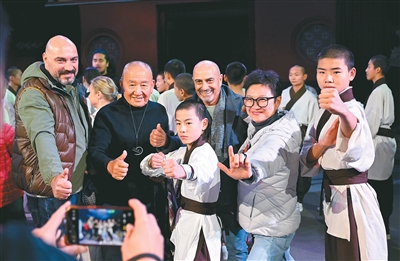
Core Viewpoint - The "World Mayors Dialogue: Zhengzhou" event serves as a significant platform for international cooperation, focusing on cultural heritage, urban renewal, and tourism integration, with approximately 300 participants from various countries [4][6][13]. Group 1: Cultural Heritage and Urban Renewal - Urban renewal is viewed as an inevitable trend in city development, emphasizing the need to balance cultural preservation with sustainable development [6]. - Participants agree that urban renewal should not merely involve demolition but should focus on organic regeneration that maintains the city's cultural essence [6]. - Zhengzhou has integrated cultural construction into its urban fabric, promoting the fusion of culture, commerce, and tourism to revitalize its historical identity [6][7]. Group 2: International Cooperation and Experience Sharing - The event encourages sharing experiences and learning from each other, with cities like Palomeque and Chiang Mai presenting their successful models of cultural preservation and urban renewal [6][10]. - Various mayors expressed their desire to implement similar innovative practices in their cities, inspired by Zhengzhou's approach to cultural tourism [10][12]. - Zhengzhou has established friendly relations with 48 cities across 36 countries, enhancing its global connectivity and cultural exchange [13]. Group 3: Tourism Integration and Cultural Exchange - The event featured immersive experiences, such as visits to the Henan Museum and performances at the Shaolin Temple, showcasing Zhengzhou's rich cultural heritage [8][10]. - The use of modern technology in cultural presentations, like the light show at Ruyi Lake, was highlighted as a means to attract tourists and enhance cultural experiences [8][10]. - Participants emphasized the importance of cultural tourism as a natural means of cultural exchange, fostering understanding and appreciation among different cultures [10][12].

跨越山海,音乐触动中欧观众心弦(共建文明百花园)
Ren Min Ri Bao Hai Wai Ban· 2025-10-28 22:52
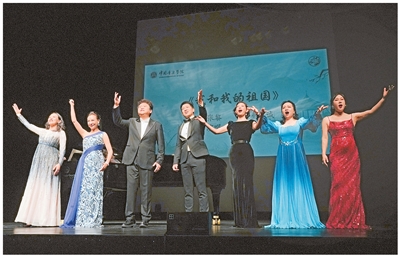
Core Viewpoint - The article highlights the cultural exchange and musical collaboration between China and European countries, celebrating the 50th anniversary of diplomatic relations between China and Europe through a series of performances and academic exchanges by the China Conservatory of Music [7]. Group 1: Cultural Exchange and Performances - The China Conservatory of Music organized multiple concerts in Germany, Hungary, and Slovakia, showcasing the unique charm and contemporary style of Chinese music, which enhanced mutual understanding and friendship between China and European nations [7]. - Performances included traditional Chinese songs such as "Hong Yan," "Qing Yu An: Yuan Xi," and "Wo He Wo De Zu Guo," which captivated audiences and prompted positive feedback from attendees [8][9]. - The concerts served as a platform for cultural dialogue, with comments from local officials emphasizing the role of music in bridging cultural gaps and fostering understanding [9]. Group 2: Musical Fusion and Innovation - Chinese artists not only performed traditional pieces but also reinterpreted Western classical opera segments, demonstrating a creative fusion of Eastern and Western musical elements [10]. - The "Butterfly Dream Bamboo" ensemble engaged in exchanges with European musicians, exploring the similarities and differences between Chinese and European musical traditions, particularly focusing on the yangqin and its counterparts in Hungary and Slovakia [11]. Group 3: Educational Collaboration - The visiting team from the China Conservatory of Music held discussions on topics such as cross-cultural music education and the contemporary transmission of ethnic instruments, aiming to establish ongoing collaborations with European institutions [13]. - The proposal for regular cooperation between the China Conservatory and Hungary's Liszt Academy was well-received, highlighting the potential for enriching music education practices in both countries [13].
隋文静/韩聪:因热爱归来
Ren Min Ri Bao Hai Wai Ban· 2025-10-28 22:52
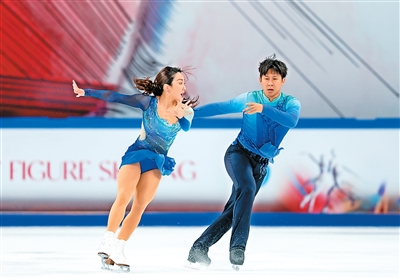
Core Viewpoint - The return of the figure skating duo Sui Wenjing and Han Cong at the 2025 China Cup signifies a revival of Chinese pairs skating, showcasing their passion and commitment to the sport after a hiatus following their Olympic victory in 2022 [1][5]. Performance Summary - Sui Wenjing and Han Cong ranked third in the short program with a score of 72.45 and achieved a total score of 202.92 in the free skate, earning a bronze medal despite not executing all elements perfectly [2]. - Their performance was characterized by a strong emotional connection to the music from the dance poem "Only This Green," reflecting their love for figure skating [2][5]. Training and Challenges - The duo faced challenges in regaining their peak performance levels, with Han Cong admitting to physical fatigue during the free skate and acknowledging that their training time was limited [2][5]. - Han Cong has lost 20 pounds since resuming training, indicating a significant physical adjustment as they prepare for upcoming competitions [5][6]. Background and Motivation - After their Olympic success, both athletes took time off for personal development; Han Cong pursued teaching and officiating roles, while Sui Wenjing focused on furthering her education in choreography [3][5]. - Their return is driven by a sense of responsibility to advance the sport in China and inspire younger athletes, with Han Cong expressing a desire to motivate the next generation of skaters [6][7]. Future Prospects - The duo is currently leading in the qualification standings for the upcoming Milan Winter Olympics, with their scores from the China Cup and the National Championships being critical for their Olympic selection [6]. - They are aware of the technical challenges ahead, including stabilizing their jumps and improving the quality of their spins, as they aim to reach their former competitive standards [6].
更多“生产线”变身“风景线”
Ren Min Ri Bao Hai Wai Ban· 2025-10-28 22:52
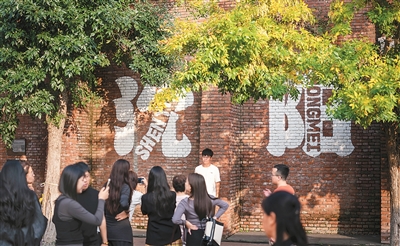
Core Insights - The Ministry of Industry and Information Technology of China has announced the seventh batch of national industrial heritage sites, with 32 locations recognized, highlighting China's comprehensive industrial system as a rich resource for developing industrial tourism [1] Group 1: Industrial Heritage Sites - The Shenyang Hongmei MSG Factory site has been transformed into a cultural and creative park, retaining historical architecture while integrating modern artistic elements, attracting over 80 specialty shops and providing more than 1,000 jobs with an annual output value of nearly 120 million yuan [4][5] - The Chang'an Dahua Textile Factory, established in 1935, has been converted into a museum and cultural district, preserving industrial heritage while showcasing the history of textile production in the region [6][7] - The Qianshu Long Kiln in Yixing, Jiangsu, is the only traditional wood-fired kiln in the province, maintaining a 600-year-old pottery-making tradition and generating over 200 million yuan in annual output value for the local community [8][10] Group 2: Economic Impact - The transformation of industrial sites into cultural and tourism hubs has created significant economic opportunities, with the Shenyang site generating an annual output value of approximately 120 million yuan and the Yixing site contributing over 200 million yuan to the local economy [5][10] - The development of these sites not only preserves industrial heritage but also enhances local employment and tourism, with the Shenyang cultural park providing over 1,000 jobs and the Yixing community benefiting from increased visitor numbers and related services [5][10] Group 3: Cultural Significance - The integration of industrial heritage with cultural tourism allows for a unique experience that connects visitors with the historical and cultural narratives of the regions, as seen in the Shenyang and Chang'an sites [4][6] - The preservation of traditional techniques, such as those at the Qianshu Long Kiln, emphasizes the importance of maintaining cultural practices while adapting to modern tourism demands [8][10]
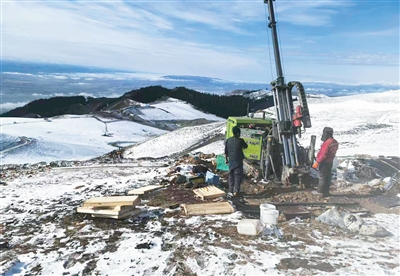
点亮“地下藏宝图”(“十四五”,我们见证这些硬核突破⑤)
Ren Min Ri Bao Hai Wai Ban· 2025-10-28 21:52
Core Insights - China's mineral resource exploration and development during the "14th Five-Year Plan" period has shown significant progress, particularly in lithium mining, with the discovery of the "Asian Lithium Belt" being a notable achievement [5][6][9] Group 1: Lithium Mining Developments - The "Asian Lithium Belt," spanning 2800 kilometers from Sichuan to Xinjiang, has elevated China's lithium reserves ranking from sixth to second globally [6][11] - The exploration target for lithium during the "14th Five-Year Plan" was set at 800,000 tons of lithium oxide, which was achieved ahead of schedule [6][8] - New technologies such as drones and satellite remote sensing have improved exploration success rates and reduced costs [8][15] Group 2: Overall Mineral Resource Exploration - In 2024, China's geological exploration investment reached 115.994 billion yuan, marking four consecutive years of growth [9][10] - A total of 150 new mineral sites were discovered during the "14th Five-Year Plan" period, contributing to enhanced energy mineral security [9][10] - Major breakthroughs in oil and gas exploration included the discovery of 10 billion-ton oil fields and 19 trillion-cubic-meter gas fields [9][10] Group 3: Technological Innovations - China has developed a new mineral formation theory and established a comprehensive exploration model that integrates various mining techniques [7][14] - The country has made significant advancements in lithium extraction technologies, enabling the utilization of previously unexploitable resources [8][15] - The application of high-precision geophysical detection and big data technologies has become widespread in mineral exploration [15] Group 4: Strategic Resource Management - The "find-evaluate-attack" integrated approach has been adopted to enhance resource discovery and utilization efficiency [14][15] - The government has prioritized strategic mineral exploration to ensure national energy resource security [14][15] - The discovery of new resources, such as rare earths and high-purity quartz, is expected to reduce reliance on imports and strengthen domestic supply chains [10][11]
广西柳州加速拥抱人工智能
Ren Min Ri Bao Hai Wai Ban· 2025-10-28 07:46
Core Viewpoint - The integration of artificial intelligence (AI) into manufacturing is revitalizing the industrial landscape in Liuzhou, Guangxi, with significant advancements in various sectors, including robotics and smart vehicles [1][4]. Group 1: AI Integration in Manufacturing - Liuzhou's manufacturing sector is experiencing a transformation through AI, with the first industrial humanoid robot and low-speed autonomous vehicles being tested [1][2]. - The production value of AI products in Liuzhou reached 8.87 billion yuan from January to July, with a 23.7% year-on-year increase in smart terminals and robots [3]. - Companies like Guangxi Liugong Machinery and Zhituo Technology are leveraging AI for precision tasks, enhancing efficiency in production and maintenance processes [2][3]. Group 2: Traditional Industries Transformation - Traditional industries in Liuzhou, such as automotive and steel, are undergoing digital transformation, with 435 small and medium-sized enterprises adopting AI technologies [4][7]. - The Guangxi Liugong Group's smart factory can produce an excavator in just 13 minutes, showcasing the efficiency brought by AI [7]. - The local steel industry is implementing AI platforms to optimize production costs and energy consumption [7]. Group 3: Government Support and Policy Framework - The local government has established a dedicated task force to promote AI development, implementing various policies to support the growth of AI and manufacturing sectors [8][10]. - Liuzhou aims to achieve a breakthrough of 50 billion yuan in AI-related industries by 2027, with a focus on integrating AI into manufacturing processes [8][10]. - The city has created over 100 demonstration application scenarios for emerging industries, facilitating market access for new products [10]. Group 4: Collaborative Efforts and Future Prospects - Liuzhou is fostering collaboration with national institutions and enterprises to enhance technological advancements in AI [9]. - The partnership between SAIC-GM-Wuling and Huawei aims to develop smart vehicles, indicating a shift towards intelligent and connected automotive solutions [5][6]. - The establishment of a comprehensive AI ecosystem encompassing various sectors is underway, with a focus on smart manufacturing and supply chain optimization [6].

截至三季度末 全国累计发电装机容量增长17.5%
Ren Min Ri Bao Hai Wai Ban· 2025-10-28 05:44
Core Insights - As of the end of September this year, the total installed power generation capacity in the country reached 3.72 billion kilowatts, representing a year-on-year growth of 17.5% [1] - The installed solar power generation capacity reached 1.13 billion kilowatts, with a significant year-on-year increase of 45.7% [1] - The installed wind power generation capacity reached 580 million kilowatts, showing a year-on-year growth of 21.3% [1] Installed Capacity Growth - In the first three quarters, the country added a total of 36.673 million kilowatts of new power generation capacity [1] - Among the new capacity, solar power accounted for 24.027 million kilowatts, while wind power contributed 6.109 million kilowatts [1]
锐财经丨工业企业利润加快恢复
Ren Min Ri Bao Hai Wai Ban· 2025-10-28 02:35
Core Insights - The profits of industrial enterprises above designated size increased by 3.2% year-on-year in the first three quarters, with a notable acceleration in September, where profits grew by 21.6% [1][2] Profit and Revenue Analysis - The profit growth rate for industrial enterprises above designated size has continued to rebound, with manufacturing profits increasing by 9.9% and the electricity, heat, gas, and water production and supply sector growing by 10.3% [2] - Revenue for these enterprises grew by 2.4% year-on-year in the first three quarters, with September showing a 2.7% increase, indicating a favorable condition for sustained profit recovery [3] Industrial Value Added - The industrial value added for enterprises above designated size increased by 6.2% year-on-year in the first three quarters, with manufacturing growing at 6.8% [4] - In September, the industrial value added grew by 6.5%, reflecting a significant acceleration compared to August [5] Sector Performance - Out of 41 major industrial categories, 37 experienced year-on-year growth, resulting in a growth coverage of 90.2% [5] - The equipment manufacturing sector played a crucial role, with a 9.7% increase in value added, contributing significantly to overall industrial growth [5] Advancements in Manufacturing - The manufacturing sector is advancing towards high-end, intelligent, and green production, with high-tech manufacturing value added increasing by 9.6% [6][7] - Notable growth in production of green products includes a 29.7% increase in new energy vehicles and a 72.4% increase in wind turbine production [7]
工业企业利润加快恢复
Ren Min Ri Bao Hai Wai Ban· 2025-10-28 00:24
Core Insights - The profits of industrial enterprises above designated size increased by 3.2% year-on-year in the first three quarters, with a notable acceleration in September, where profits grew by 21.6% [1][2] Group 1: Profit Growth - The profit growth rate for industrial enterprises above designated size has continued to rebound, with manufacturing profits increasing by 9.9% and profits in the electricity, heat, gas, and water production and supply sector rising by 10.3% [2] - In terms of enterprise size, large, medium, and small enterprises saw profit increases of 2.5%, 5.3%, and 2.7% respectively [2] - Private enterprises and foreign-invested enterprises reported profit growth of 5.1% and 4.9%, respectively, indicating a recovery across different types of enterprises [2] Group 2: Revenue Growth - Revenue for industrial enterprises above designated size grew by 2.4% year-on-year in the first three quarters, with September showing a growth of 2.7% [3] - The profit margin for these enterprises improved, with a profit margin of 5.26% in the first three quarters, increasing to 5.49% in September [3] Group 3: Industrial Value Added - The industrial value added for enterprises above designated size increased by 6.2% year-on-year in the first three quarters, with manufacturing growing by 6.8% [4][5] - A significant majority of industries saw growth, with 37 out of 41 major industrial categories reporting an increase in value added [5] Group 4: High-tech and Green Manufacturing - High-tech manufacturing value added grew by 9.6%, contributing 24.7% to the overall industrial growth [6] - The production of green products, such as new energy vehicles and lithium-ion batteries, saw substantial increases, with production growth rates of 29.7% and 46.9%, respectively [7]
截至三季度末普惠小微贷款余额超36万亿元
Ren Min Ri Bao Hai Wai Ban· 2025-10-28 00:18
Core Insights - The People's Bank of China reported a rapid growth in inclusive micro loans in 2023, with a balance of 36.09 trillion yuan by the end of Q3, representing a year-on-year increase of 12.2%, which is 5.6 percentage points higher than the growth rate of all loans [1] - The balance of operating loans for individual farmers, with a single credit limit of less than 5 million yuan, reached 9.92 trillion yuan, with an increase of 346.5 billion yuan in the first three quarters [1] - The balance of student loans reached 294.4 billion yuan, showing a significant year-on-year growth of 41.1% [1] Agricultural Loans - The balance of agricultural loans, including both domestic and foreign currency, stood at 53.4 trillion yuan by the end of Q3, reflecting a year-on-year growth of 6.8%, which is 0.3 percentage points higher than the overall loan growth rate [1] - In the first three quarters, agricultural loans increased by 3.28 trillion yuan [1]