
Ren Min Ri Bao Hai Wai Ban

Search documents
保护在华外企知识产权,他们这样做(我在中外交流第一线)
Ren Min Ri Bao Hai Wai Ban· 2025-10-10 22:10
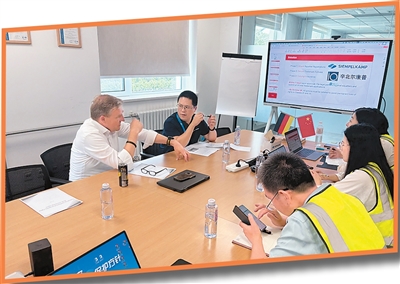
Core Viewpoint - The importance of intellectual property (IP) protection for foreign enterprises in China is increasingly recognized, leading to proactive measures by local governments to enhance IP services and create a favorable business environment [6][12]. Group 1: Qingdao's IP Services - Qingdao has initiated a "health check" program focusing on IP risks for foreign enterprises, identifying potential risks and providing tailored strategies [7][10]. - The program has already assisted 12 foreign enterprises in conducting customized IP risk assessments since its launch in 2023 [11][12]. - The service team provided detailed reports and recommendations, including strategies for trademark registration and patent application [10][11]. Group 2: Chengdu's Rapid Patent Services - Chengdu has established a fast-track examination process for patent applications, significantly reducing the average authorization time for invention patents from 18 months to 65 days [13][16]. - The city has also implemented a mechanism to address IP-related issues, collecting 57 requests from enterprises and resolving 26 of them [16]. - Chengdu's efforts include enhancing IP financing support by integrating resources from various sectors to assist both domestic and foreign enterprises [15][16]. Group 3: Shanghai's Efficient IP Dispute Resolution - Shanghai has developed a high-efficiency administrative mediation process for IP disputes, with cases typically resolved within four months [17][18]. - The city has successfully handled 87 foreign-related patent infringement cases from 2020 to August 2025, with 98% of cases not leading to administrative litigation [19]. - The collaborative approach among different IP authorities has strengthened the protection network for foreign enterprises in Shanghai [19].

在琉光璃彩中感受历史文化魅力
Ren Min Ri Bao Hai Wai Ban· 2025-10-10 22:10
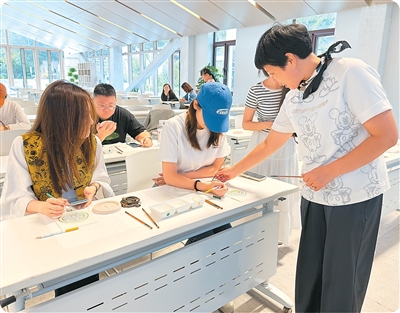
Core Viewpoint - The article highlights the cultural and historical significance of Liuliqu Village, which has transformed into a creative cultural industry park that integrates intangible cultural heritage, cultural experiences, and leisure tourism, attracting visitors from both sides of the Taiwan Strait [1]. Group 1: Cultural Heritage and Development - Liuliqu Village is home to a royal Liuli kiln established in 1263, which has produced Liuli products for over 700 years, used in significant royal buildings like the Forbidden City and the Temple of Heaven [1]. - The village has undergone protective renovations, evolving into a cultural industry park that showcases the development and preservation of the national intangible cultural heritage of Liuli craftsmanship [1]. - Liuli is recognized as one of the five major artifacts in ancient China, requiring over ten complex processes for production, making each piece unique and a testament to ancient craftsmanship and cultural heritage [1]. Group 2: Media Engagement and Experience - Recently, over ten media reporters from both sides of the Taiwan Strait visited the Liuli Cultural Creative Industry Park, exploring various facilities such as the Liuli Museum and the Intangible Cultural Heritage Studio [1][2]. - The reporters participated in hands-on experiences, such as mixing glaze colors and painting, which highlighted the intricate techniques involved in Liuli production [2]. - The visit also included tours of historical sites like Tanzhe Temple and Jietai Temple, allowing reporters to appreciate the rich cultural and natural heritage of the region [2]. Group 3: Local Economic Development - The Tanggu commercial area features a "nature + business + culture" model, attracting consumers with diverse offerings, including Michelin restaurants and family-friendly entertainment options [3]. - The commercial area aims to provide a relaxing escape for city dwellers, promoting local tourism and cultural integration [3].
推动产业关键核心技术攻关
Ren Min Ri Bao Hai Wai Ban· 2025-10-10 22:10
Core Viewpoint - The Fujian Provincial Department of Industry and Information Technology has issued an implementation plan aimed at promoting key technological breakthroughs and the integration of technological and industrial innovation [1] Group 1: Focus Areas - The plan focuses on enhancing innovation capabilities in key industrial sectors in Fujian, organizing efforts to tackle critical core technologies [1] - It supports advanced technologies and products with good industrialization prospects that can enhance corporate competitiveness and industry influence [1] Group 2: Goals and Outcomes - The initiative aims to accelerate the formation of key technologies that can achieve domestic substitution, innovative results that can be practically applied, and advanced standards that can lead the industry [1] - The plan outlines that from 2025 to 2027, no more than 65 projects will be selected for support each year [1]
维护良好市场价格秩序(锐财经)
Ren Min Ri Bao Hai Wai Ban· 2025-10-10 22:10
Core Viewpoint - The announcement by the National Development and Reform Commission and the State Administration for Market Regulation aims to regulate market pricing behavior and maintain a good market price order to support high-quality development [1][2]. Group 1: Market Price Order - The current disorderly competition in some industries may lead to negative impacts on industry development, product innovation, and quality safety, which is detrimental to the healthy development of the national economy [1]. - The government is implementing policies to resolve structural contradictions in key industries, promote the exit of backward and inefficient production capacity, and expand the supply of mid-to-high-end capacity [1][2]. Group 2: Pricing Principles - Operators of market-regulated goods and services should adhere to the principles of fairness, legality, and good faith, basing their pricing on production costs and market supply and demand [2]. - The announcement emphasizes the importance of maintaining market price order while protecting operators' right to set prices autonomously [2]. Group 3: Industry Average Cost Evaluation - Industry associations can evaluate average costs in key industries with serious pricing disorder to provide reference for reasonable pricing [3]. - Evaluating industry average costs serves three main purposes: providing pricing reference for operators, guiding improvements in production management, and assessing industry competition [3]. Group 4: Role of Industry Associations - Industry associations are encouraged to comply with relevant laws and promote self-discipline within the industry to maintain fair competition [4]. Group 5: Tendering and Bidding Regulations - The announcement includes specific regulations for operators in the tendering and bidding sector, prohibiting bids below their own costs [5][6]. - Measures against disorderly pricing include reminders, regulatory enforcement, and credit punishment for non-compliance [6][7]. Group 6: Monitoring and Enforcement - The government will enhance industry self-discipline, strengthen market monitoring, and enforce regulations to address pricing disorder [7].
临空经济区经营主体超1.5万
Ren Min Ri Bao Hai Wai Ban· 2025-10-10 22:10
本报北京10月10日电(记者王东辉)依机场而建、因机场而兴,北京大兴国际机场临空经济区近年来加 速聚集临空高端产业,累计引进重点产业项目336个,总投资1537.85亿元,经营主体由2019年的不足 1000家增至目前的1.5万余家。 (责编:岳弘彬、牛镛) 关注公众号:人民网财经 北京大兴国际机场临空经济区跨京冀两地,功能定位为国际交往中心功能承载区、国家航空科技创新引 领区、京津冀协同发展示范区。去年,临空经济区内的大兴机场综保区实现进出口总值99亿元,同比增 长4倍。临空经济区累计完成固定资产投资2300亿元,建成产业载体面积近500万平方米,承载能力得到 明显提升。 ...
推动完善全球经济治理的中国担当(环球热点)
Ren Min Ri Bao Hai Wai Ban· 2025-10-10 22:10
Core Viewpoint - China's announcement to not seek new special and differential treatment in WTO negotiations reflects its commitment to a balanced and fair global trade system, garnering positive reactions from the international community [1][2][5]. Group 1: Special and Differential Treatment - Special and differential treatment (SDT) is a mechanism established to provide developing countries with favorable conditions in trade negotiations, allowing for more flexible policies and longer implementation periods [2][3]. - China, upon joining the WTO in 2001, retained certain SDT privileges, such as a lower commitment on domestic support for agricultural products, which is crucial for its food security [3][4]. - The SDT system is not merely a concession from developed countries but a result of long negotiations, providing developing countries with necessary flexibility to engage in international trade [3][7]. Group 2: China's Current Position - China's recent declaration is a strategic decision to support the multilateral trading system amidst rising protectionism and unilateralism, showcasing its commitment to global trade governance [6][8]. - The decision to forgo new SDT does not affect China's existing rights and privileges as a developing country, nor does it alter its status within the WTO [5][9]. - China emphasizes that its position as a developing country remains unchanged, and it will continue to advocate for the rights of other developing nations while promoting global trade liberalization [8][9]. Group 3: Implications for Global Trade - By not seeking new SDT, China aims to break the deadlock in WTO development discussions and encourage reforms, countering claims that developing countries exploit SDT for unfair advantages [5][6]. - This move is expected to enhance China's role in maintaining a healthy and balanced multilateral trading system, encouraging other members to adopt similar stances [9][10]. - China's commitment to not seeking new SDT is seen as a significant step towards fostering a more equitable global trade environment, reinforcing its responsibility as a major developing country [6][9].
两岸青少年用画笔共绘“生命万象”
Ren Min Ri Bao Hai Wai Ban· 2025-10-10 22:10
观众在欣赏展出的美术作品。 王朝东摄 本报电(钟欣)台湾学生用细腻笔触描绘憨态可掬的环尾狐猴;北京学生笔下的草原生机勃勃…… 海峡两岸关系协会副会长黄文涛表示,青少年是中华民族的未来,是两岸关系和平发展的希望所在。本 届海峡两岸少儿美术大展,不仅为两岸青少年搭建了展示才华的平台,更筑起一座促进两岸青少年同胞 心灵相通、情感相融的桥梁。 策展人周樱介绍,本次展览以"生命万象"为主题,旨在鼓励青少年认识到生命的珍贵,了解中华文化的 多元和生生不息。"台湾小画家的作品《岛屿的记忆》让我印象深刻,作者通过画作追寻自身的血脉传 承和文化传统。"周樱说,"我们希望画作借助日常的生活和生命状态来促进两岸小朋友交流。" "从达尔文的物种起源,再到中国的创世神话,孩子们在笔下展示出他们对生命的想象。"大陆艺术家谢 丽芳在观赏参展作品后表示,这些画作不仅展现了孩子们丰富的创造力,也体现了共同的文化传承和情 感联结。 (责编:岳弘彬、牛镛) 近日,第十六届海峡两岸少儿美术大展北京展开幕,来自海峡两岸及港澳、海外的青少年用画笔共 绘"生命万象"。 本次展览展出近450组作品,呈现不同地域青少年对生命的理解和认识。今年大展还特别展出台 ...

全球经济的真正考验可能即将到来
Ren Min Ri Bao Hai Wai Ban· 2025-10-10 22:10
Group 1 - The global economy is performing better than expected but has not reached the necessary level, with signs of potential challenges ahead [1] - Current global uncertainties are rising due to geopolitical changes, technological revolutions, demographic shifts, and environmental damage [1] - Tariff policies have not fully manifested their effects, with potential inflationary pressures arising from compressed corporate profits in the U.S. [1] - A loose financial environment is masking underlying weaknesses, and a significant valuation correction could hinder global economic growth, particularly affecting developing countries [1] - Despite disruptions, most global trade continues to follow established rules, and there is a call to maintain trade as a key driver of economic growth [1] Group 2 - The International Monetary Fund (IMF) projected a global GDP growth rate of 3% for this year, with a slowdown expected in 2024 [2] - The IMF will update its economic growth forecasts during its annual meeting in Washington from October 13 to 18 [2]
个别西方媒体企图挑拨中国同有关国家友好关系,注定不会得逞
Ren Min Ri Bao Hai Wai Ban· 2025-10-10 22:10
据新华社北京10月10日电(记者冯歆然、邵艺博)在10日的外交部例行记者会上,有记者问:近期有西 方媒体报道中国向柬埔寨提供大量武器援助,质疑中方在柬泰边境冲突问题上偏帮其中一方,曲解中方 同有关国家的防务合作,引发关注。请问中方对此有何评论? (责编:岳弘彬、牛镛) "中方支持柬泰双方通过对话协商化解争端,支持马来西亚发挥东盟轮值主席国作用,以'东盟方式'推 动政治解决。"郭嘉昆说,中方愿根据柬泰双方意愿,继续以自己的方式劝和促谈,为巩固停火共识、 和平解决争端发挥建设性作用。 郭嘉昆表示,中国同包括柬、泰在内的东盟国家都在开展正常防务合作。个别西方媒体企图借此挑拨中 国同有关国家友好关系,注定不会得逞。 外交部发言人郭嘉昆表示,柬泰边境冲突发生以来,作为柬埔寨和泰国的友好邻邦,中方秉持公正公允 立场,积极劝和促谈,中柬泰外长达成"安宁共识",中柬泰三方举行非正式会晤,中国外交部亚洲事务 特使多次前往柬、泰穿梭调停。在中国、马来西亚等有关方面积极推动下,柬泰双方达成停火共识,正 在通过双边机制保持沟通。有关各方对中方发挥的不可替代作用表示高度赞赏。 ...
八年终圆梦
Ren Min Ri Bao Hai Wai Ban· 2025-10-10 22:10
Core Points - The Serbia section of the Hungary-Serbia railway officially opened on October 3, 2023, and began passenger operations on October 8, marking a significant achievement in Sino-Serbian cooperation in railway construction [1][4] - The project faced challenges in aligning Chinese high-speed rail construction management practices with European standards, which were addressed through a multi-level coordination mechanism established by the Chinese team [1][3] - The construction of the railway has integrated Chinese technology and materials, including the use of Chinese steel and communication signal systems, which are new to Serbia [2][3] Group 1 - The Hungary-Serbia railway project is seen as a "steel silk road" that fulfills the long-standing aspirations of the Serbian people and reflects the dedication of Chinese and Serbian railway builders over eight years [1] - The project has successfully implemented Chinese solutions, such as optimizing bridge designs, which reduced costs and construction time, despite initial resistance from Serbian partners [2] - The railway has transformed commuting between Belgrade and Novi Sad, with over 1.2 million passengers transported, demonstrating its impact on local transportation [3] Group 2 - The project exemplifies the successful integration of Chinese wisdom with European standards, showcasing a model for cooperation under the Belt and Road Initiative [4] - The introduction of new track-laying technologies and equipment by the Chinese team has contributed significantly to the timely completion and high quality of the railway construction [3] - The railway is expected to bring further changes to Serbia in the coming years, enhancing connectivity and economic development [3][4]