Ren Min Ri Bao Hai Wai Ban

Search documents
岛内各地举办仪式致敬至圣先师孔子
Ren Min Ri Bao Hai Wai Ban· 2025-09-30 00:53
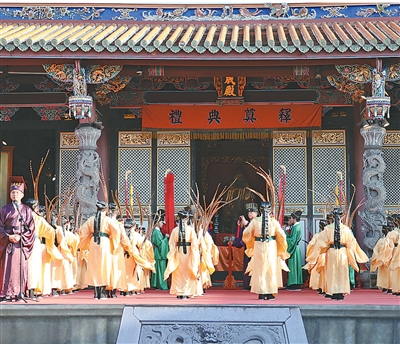
Group 1 - The ceremony commemorating Confucius's 2576th birthday took place at the Taipei Confucius Temple, attended by hundreds of people from various sectors [1][2] - The event featured traditional rituals, including 37 ceremonial procedures such as welcoming the deity and offering incense, showcasing respect for Confucius [1] - Taipei's Deputy Mayor Zhang Wende served as the chief officiant, while Confucius's 79th direct descendant, Kong Chui-Chang, acted as the sacrificial officer, highlighting the cultural significance of the event [1] Group 2 - Students from local schools participated in the ceremony, with one student waking up at 3 AM to prepare, reflecting the community's engagement with traditional culture [2] - Various Confucius temples across Taiwan held similar ceremonies, emphasizing the importance of cultural heritage and the need for its transmission to future generations [2] - The event included activities like "pulling wisdom hair" at the Tainan Confucius Temple, attracting students and promoting traditional cultural practices [2]

北京青少年科学教育学术交流大会举行
Ren Min Ri Bao Hai Wai Ban· 2025-09-30 00:53
Core Points - The 2025 Beijing Youth Science Education Academic Exchange Conference was held at the Beijing Science Center, focusing on the theme of "Innovation, Collaboration, Empowerment" [1] - The conference connected various stakeholders including science venues, primary and secondary schools, universities, and research institutions, gathering 158 academic papers from 19 provinces [1] - The event aimed to create a high-end academic platform for communication between science education practitioners and researchers, consolidating wisdom and strength for the development of science education [1] Summary by Categories Conference Overview - The conference featured deep exchanges among guests regarding the development of science education, establishing an authoritative voice matrix with an "international perspective empowerment + domestic and foreign practice guidance" [1] - It included discussions on key issues in science education and localized needs through roundtable dialogues and parallel salons [1] Key Themes - The event focused on three main themes: "Innovation in Science Education Activities," "Co-cultivation of Talent for Technological Innovation," and "Quality Improvement of Education through Technology Empowerment" [1] - Three parallel salons were set up to further promote the collision of academic results, sharing of practical experiences, and construction of collaborative mechanisms [1]
青春力量传递中非友好
Ren Min Ri Bao Hai Wai Ban· 2025-09-30 00:53
Core Insights - The event "The 9th China-Africa Youth Gala" showcased China's advancements in smart manufacturing and clean energy to African youth representatives, emphasizing the importance of cultural exchange and collaboration between China and Africa [1][3]. Group 1: Smart Manufacturing - The Xiaomi automobile factory in Beijing, covering an area of 718,000 square meters, features high levels of automation with minimal human labor, showcasing advanced technologies such as robotic arms and automated guided vehicles [2]. - Visitors were impressed by the clean and quiet environment of the factory, highlighting the innovative production processes that transform raw materials into vehicles in a short time [2]. - The exhibition area displayed 1:1 replicas of core components and models, demonstrating Xiaomi's capabilities in automotive manufacturing, with particular praise for the smart cockpit features [2]. Group 2: Clean Energy - The visit to the solar power facility in Qinghai allowed African representatives to observe China's innovations in clean energy, with hopes of applying similar practices in their home countries [3]. - The discussions emphasized the potential for ecological and industrial synergy, reflecting a shared vision for sustainable development between China and Africa [3]. - The event served as a platform for cultural dialogue, fostering cooperation and friendship among the youth from both regions, aiming for a more inclusive and sustainable world [3].

生产平稳增长,政策效能持续显现——实现全年目标任务有信心
Ren Min Ri Bao Hai Wai Ban· 2025-09-30 00:01
Economic Overview - The overall economic operation is stable despite external pressures, supported by macro policies [2] - Manufacturing and service sectors show positive growth, with significant increases in high-tech manufacturing and service production indices [2] - In August, the value added of equipment manufacturing and high-tech manufacturing grew by 8.1% and 9.3% year-on-year, respectively [2] Demand Side Analysis - Policy effectiveness is evident, showcasing resilience and capacity to withstand pressure [3] - Retail sales of new energy vehicles increased by over 20% year-on-year in the first eight months, while service retail sales grew by 5.1% [3] - Manufacturing investment rose by 5.1%, with notable increases in information services and aerospace sectors [3] - In August, total goods import and export value increased by 3.5% year-on-year, with exports to Belt and Road countries growing by 12.8% [3] Artificial Intelligence Action Plan - The State Council has issued an opinion to implement the "Artificial Intelligence+" action, aiming for over 70% application penetration of new intelligent terminals and agents by 2027 [4] - The initiative emphasizes the role of private enterprises in AI development, with significant growth in AI software startups [4] - Measures include promoting innovative operational models for computing power infrastructure and supporting the development of standardized cloud services [4] "Three North" Project Development - The "Three North" project is the largest ecological protection and restoration initiative globally, with a construction period exceeding 70 years [5][6] - The new overall plan includes a comprehensive revision of previous phases, focusing on coordinated management of desertification, water, and mountain issues [6] - The project will enhance its self-sustaining capabilities by integrating ecological industries such as photovoltaic sand control and specialty agriculture [6]
千里明月寄相思
Ren Min Ri Bao Hai Wai Ban· 2025-09-29 22:57
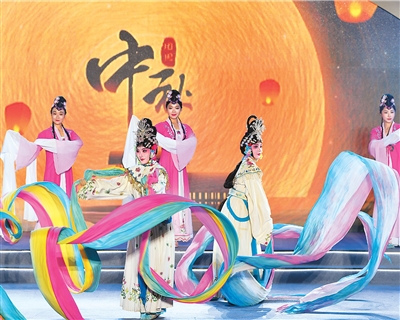
Group 1 - The article highlights the significance of the Mid-Autumn Festival in Chinese culture, symbolizing reunion and deep emotional connections among family and friends [2][3][7] - Various celebratory activities are taking place across regions, particularly in Fujian and Jiangsu, where over 20 events are organized to foster connections between Taiwanese and mainland Chinese communities [3][4] - The events include cultural performances, traditional food tasting, and interactive activities, showcasing the shared customs and values of both sides [3][4][8] Group 2 - In Taiwan, the Mid-Autumn Festival is marked by unique traditions such as barbecuing, which has become a popular way for families to bond [9] - The article mentions the historical context of the "博状元饼" game in Kinmen, emphasizing its cultural significance and the efforts to promote traditional customs through interactive experiences [10] - Various artistic and cultural events are being organized in cities like Taichung, inviting citizens to engage in music and storytelling, further enriching the festive atmosphere [10]
三千年前的“中国制造”什么样
Ren Min Ri Bao Hai Wai Ban· 2025-09-29 22:57
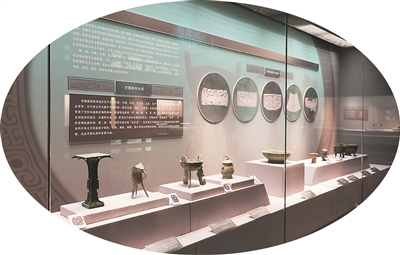
Core Viewpoint - The exhibition "Shang Yi Hundred Crafts - Chinese Manufacturing 3,000 Years Ago" at the Tianjin Museum showcases the remarkable achievements of Shang Dynasty craftsmanship, highlighting a highly specialized state-run handicraft system that laid the foundation for future industrial development in China [4][12]. Summary by Sections Exhibition Overview - The exhibition is the first of its kind in China focusing on the late Shang Dynasty's handicraft achievements, featuring over 180 artifacts including finished products, semi-finished products, raw materials, and production tools [4][12]. - It consists of five main sections: "Overview of Crafts," "Building Shang City," "All Tools are Crafts," "Rituals and Music," and "Transportation," along with a special section on "Great Shang Manufacturing: Cattle" [4][12]. Artifacts and Their Significance - Notable artifacts include the "Yazhang Niu Zun," a bronze vessel for wine, and a jade ornament shaped like a cow, displayed face-to-face to illustrate the connection between ancient and modern craftsmanship [5]. - The exhibition features a comparison between the smallest Shang bronze ding, comparable in size to an egg, and the largest, the Houtu Muwu Ding, which is 26 times taller and nearly 17,000 times heavier, showcasing the range of craftsmanship [5]. Cultural and Historical Context - The exhibition emphasizes the continuity of cultural practices, with artifacts like a 3,000-year-old "bathing tool" and a jade tool for untying knots, reflecting the practical and aesthetic values of ancient Chinese society [7]. - The "Rituals and Music" section highlights the significance of ritual practices in the Shang Dynasty, with artifacts that illustrate the deep integration of craftsmanship and ceremonial standards [10]. Interconnections Between Artifacts - The exhibition employs a method of "mutual verification" between excavated and inherited artifacts to reconstruct historical contexts, enhancing the understanding of their cultural significance [9]. - For instance, a jade ornament's classification as a high-status item is confirmed through comparisons with similar artifacts found in the Yinxu site [9]. Educational Activities - The Tianjin Museum has organized a series of expert-led activities to deepen audience understanding of the artifacts, emphasizing the craftsmanship and philosophical beliefs of the Shang Dynasty [10].
将绿色“中华书简”展现给世界
Ren Min Ri Bao Hai Wai Ban· 2025-09-29 22:57
Core Insights - The China Pavilion at the Osaka Expo has attracted over 1.6 million visitors and hosted more than 250 dignitaries from over 90 countries, serving as a significant platform for international understanding of China [2][3] Group 1: Project Overview - The China Pavilion is the first project to systematically export Chinese construction technology to Japan [4] - The construction utilized prefabricated building methods, with key components produced in China and assembled in Japan, ensuring compliance with Japanese material standards [5][6] - A digital management platform was developed for real-time supervision and control of the construction process, facilitating seamless collaboration between Chinese and Japanese teams [5][6] Group 2: Sustainability and Design - The pavilion embodies a green and low-carbon philosophy, with its theme centered on building a community of life between humans and nature [6][7] - Materials used include bamboo and steel, with bamboo products chosen for their low carbon footprint and rapid growth cycle, contributing to reduced energy consumption and carbon emissions [7][8] - The design features a multi-curved roof made of lightweight, translucent materials to enhance natural lighting and reduce reliance on artificial lighting [8] Group 3: Cultural Representation - The exhibition narrative includes themes of "harmony between humanity and nature," "green mountains and clear waters," and "endless vitality," showcasing Chinese wisdom and philosophy [9][10] - A giant installation representing the 24 solar terms integrates traditional Chinese agricultural wisdom with modern virtual reality technology, illustrating the cyclical relationship between nature and human life [10][11] - The pavilion also highlights bamboo as a cultural symbol, representing low-carbon materials and the essence of Chinese civilization, promoting cross-cultural dialogue [11][12]
全民共享的科学盛宴
Ren Min Ri Bao Hai Wai Ban· 2025-09-29 22:57
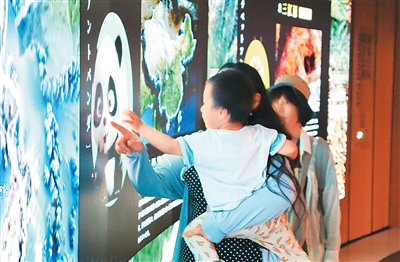
Core Points - The first National Science Popularization Month has successfully engaged the public with numerous activities across the country, promoting scientific knowledge and innovation [2][8] - The event showcased various scientific achievements and innovations, including a desktop 4D printer and wearable electronic fabrics, highlighting the integration of technology and education [3][4] - The China Association for Science and Technology (CAST) reported a significant increase in public participation in science activities, with a focus on expanding the reach and impact of science education [8][9] Group 1: Science Popularization Activities - The National Science Popularization Month featured over 100,000 activities nationwide, encouraging participation from all age groups [2] - Events included interactive exhibits at the China Science and Technology Museum, where children could engage with scientific concepts through hands-on experiences [3][5] - The "Science Night" event combined science and art, offering immersive experiences that sparked interest in scientific exploration [4] Group 2: Technological Innovations - The introduction of a desktop 4D printer at the China Science and Technology Museum allowed visitors to see the transformation of materials into soft robots, demonstrating advanced manufacturing techniques [3] - Wearable electronic fabrics showcased the potential for smart clothing, capable of lighting up and performing various functions, marking a significant advancement in textile technology [4] Group 3: Educational Initiatives - Educational programs during the Science Popularization Month included activities like designing parachutes for Mars landings, blending exploration with practical learning [7] - The Beijing Science Center organized a series of events, including a science carnival and collaborative performances between scientists and artists, to enhance public engagement with science [8] Group 4: Achievements in Science Education - The proportion of Chinese citizens with scientific literacy reached 15.37% in 2024, surpassing the 2025 target, indicating a growing public understanding of science [8] - CAST plans to expand science museum coverage to rural areas and enhance the quality of original science resources, aiming to make scientific knowledge more accessible [9]
买车你会选厂家直营吗?
Ren Min Ri Bao Hai Wai Ban· 2025-09-29 22:57
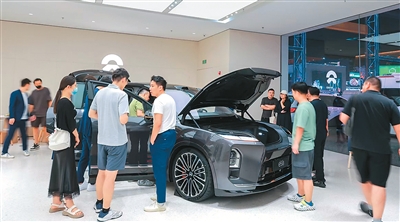
Core Viewpoint - The traditional car purchasing experience in China is being transformed by the rise of direct sales models, where manufacturers sell vehicles directly to consumers, enhancing transparency and convenience in the buying process [3][5][7]. Group 1: Changes in Sales Channels - The shift towards direct sales models is evident as both domestic and joint venture brands explore new retail formats, moving away from traditional 4S dealerships to urban experience centers [3][5]. - Consumers are increasingly using mobile apps and official websites to place orders, simplifying the purchasing process and eliminating the need for negotiation [5][6]. - Direct sales stores are being established in city centers, allowing consumers to conveniently explore vehicles while shopping [3][5]. Group 2: Advantages of Direct Sales Model - The direct sales model offers price transparency and a standardized purchasing experience, addressing the inconsistencies found in traditional dealership pricing [7][9]. - Manufacturers can directly control pricing, service quality, and brand image, leading to improved customer engagement and loyalty [7][9]. - The rise of digital tools enables manufacturers to connect directly with consumers, reducing reliance on traditional dealership networks [9][10]. Group 3: Transformation of Dealerships - Dealerships are evolving from sales-focused entities to service providers, offering support in areas such as test drives and customer service [11][12]. - The profitability of dealerships is shifting from sales commissions to service-based revenue models, reflecting the changing dynamics in the automotive retail landscape [11][12]. - The coexistence of direct sales and authorized dealership models is anticipated, creating a complementary ecosystem that balances transparency with traditional service offerings [12].
AI能否成为全球贸易的“共享”机遇?(环球热点)
Ren Min Ri Bao Hai Wai Ban· 2025-09-29 22:57
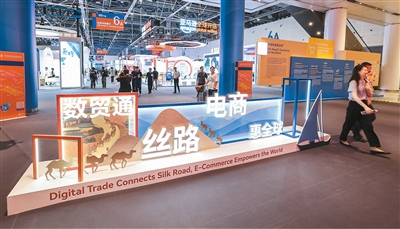
Core Insights - The World Trade Organization (WTO) predicts that artificial intelligence (AI) could drive global trade growth by nearly 40% by 2040, primarily by reducing trade costs and enhancing supply chain efficiency [4][10] - The report highlights a shift in global trade dynamics, where data control becomes a core competitive advantage, potentially exacerbating the digital divide for developing countries lacking technology and infrastructure [4][10] Group 1: Opportunities for SMEs - AI is enabling small and medium-sized enterprises (SMEs) to overcome language and information barriers, allowing them to enter international markets more easily [5][6] - In Yiwu, China, nearly 30,000 merchants are utilizing various AI tools for business, akin to using a calculator, which enhances their operational efficiency and market reach [5][6] - AI assists SMEs in analyzing historical sales data, market trends, and compliance costs, thereby improving logistics and reducing inventory risks [6][7] Group 2: Data as a Valuable Asset - Unlike traditional business models, AI captures data to create real-time feedback and reduce forecasting errors, positioning data as the new core of international trade [8][9] - Companies like SHEIN leverage AI to analyze global fashion trends, significantly reducing the time from trend identification to product delivery, thus transforming the business model [8][9] Group 3: Challenges for Developing Countries - Developing countries face significant risks of imbalance in global trade due to a lack of digital infrastructure, talent, and funding, which may hinder their participation in AI-driven markets [10][12] - The report indicates that without improvements in digital infrastructure, income growth for high-income countries could reach 14%, while low-income countries may only see an 8% increase by 2040 [10][12] - The potential job displacement in service sectors, particularly in translation and customer support, poses additional challenges for low-income countries that rely on these sectors for export opportunities [11][12] Group 4: Future Directions for Global Trade - The report emphasizes the need for inclusive AI governance to create fair global trade rules, with China playing a significant role in promoting cooperation among developing countries [13][14] - Investment in infrastructure, talent development, and open collaboration is crucial for AI to serve as a new engine for global trade and inclusive growth [13][14] - The evolving international trade rules must adapt to the digital age, focusing on cross-border data flow and AI governance frameworks to ensure equitable participation [14]