Ren Min Ri Bao Hai Wai Ban

Search documents
2025年创新领域盘点——创新活力持续迸发(人民日报海外版)
Ren Min Ri Bao Hai Wai Ban· 2025-12-30 08:36
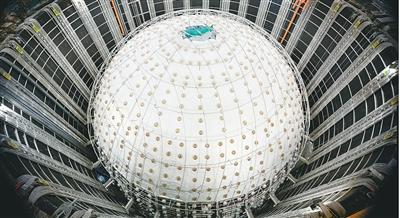
Core Insights - In 2025, China's technological innovation continues to thrive, with significant advancements in various fields such as artificial intelligence, quantum information, life sciences, and clean energy, contributing to high-quality development and improved living standards [1] Group 1: Fundamental Research - China has achieved new heights in fundamental scientific research, with multiple results breaking international records and filling gaps in various fields [2] - The Jiangmen Underground Neutrino Observatory (JUNO) has successfully measured two key parameters of neutrino oscillation with a precision 1.5 to 1.8 times better than previous international standards [2] - A team from the Chinese Academy of Sciences has created five types of two-dimensional metals with single-atom thickness, marking a significant breakthrough in material science [3] - As of August 2025, China leads the world with 2,342 hot papers, accounting for 53.2% of the global total, and ranks second in highly cited papers [3] Group 2: Cutting-edge Technologies - In quantum computing, the "Zuchongzhi 3" prototype has been developed, featuring 105 readable qubits and achieving speeds surpassing the fastest supercomputers [4] - The AI model DeepSeek-R1 has been released, achieving performance comparable to top global models with fewer computational resources, marking a shift in AI development strategies [4] - The number of AI companies in China has exceeded 5,300, representing 15% of the global total, establishing a comprehensive industrial system [4] Group 3: Robotics and Aerospace - The humanoid robot industry is rapidly emerging, with significant public demonstrations showcasing advancements in embodied intelligence [5][6] - The Tianwen-2 probe has been successfully launched, marking China's first asteroid sampling and comet flyby mission, filling a technological gap in small celestial body exploration [6] - The EAST nuclear fusion experiment has achieved a world record of 1 million degrees Celsius for 1,066 seconds, validating the feasibility of steady-state operation for fusion reactors [6] Group 4: Life Sciences and Resource Utilization - In life sciences, breakthroughs in pest control and cancer treatment have been made, promoting green and precise pest management and developing new strategies for nasopharyngeal cancer immunotherapy [8] - The South-to-North Water Diversion Project has delivered over 80 billion cubic meters of water, benefiting 185 million people and addressing groundwater over-extraction issues [9] - China's high-speed rail technology has set new records, with the CR450 train achieving a single-column speed of 453 km/h, leading the world in rail technology [9] Group 5: Global Collaboration - China is leading global renewable energy development, with solar and wind power surpassing fossil fuels in new electricity generation [10] - Major scientific projects like the Jiangmen Neutrino Experiment are open to global collaboration, attracting top scientists to tackle significant scientific challenges [10] - China is sharing technological advancements in public health and agriculture, contributing to global governance improvements [11]
中国—东盟跨境物流实现“无感通关”
Ren Min Ri Bao Hai Wai Ban· 2025-12-30 02:58
该项目今年9月试运行以来,跨境转关车辆平均监管核对及施验封时间压缩90%,多区转关货物整体通 关时间从3—4天大幅缩短至1天,企业跨境物流综合成本平均下降15%。(记者 张云河) 《人民日报海外版》(2025年12月30日 第 04 版) 责编:李芳、穆瑀宸 人民日报海外版南宁12月29日电 近日,全国首创的跨境贸易多区联动"智慧通"创新改革项目在中国 (广西)自由贸易试验区南宁片区通过竣工验收,中国—东盟跨境物流迈入"无感通关"新阶段。 南宁片区管委会牵头推进"智慧通"项目,构建"1个智慧监管平台+N个海关监管场所"联动体系。项目集 安全智能锁、AI图像识别、卫星定位等技术于一体,在南宁综保区、吴圩国际机场、爱店口岸等关键 节点织就智能监管网,实现不同监管区间信息壁垒"一键打通"。 据介绍,与传统模式相比,"智慧通"项目简化了流程,货物从启运地到目的地,全程只要"一次申报", 系统会自动施封。 ...
【人民日报海外版】2025年创新领域盘点——创新活力持续迸发
Ren Min Ri Bao Hai Wai Ban· 2025-12-30 02:27
Core Insights - In 2025, China has made significant advancements in various fields such as artificial intelligence, quantum information, life sciences, and clean energy, contributing to high-quality development and improving the quality of life for its citizens [4][9]. Group 1: Basic Research Achievements - China has achieved new heights in basic scientific research, with multiple results breaking international records and filling gaps in various fields [5]. - As of August 2025, China produced 2,342 hot papers, accounting for 53.2% of the global total, maintaining the top position worldwide [8]. Group 2: Breakthroughs in Frontier Technologies - In quantum computing, the "Zuchongzhi 3" superconducting quantum computing prototype was released, outperforming the fastest supercomputers in processing quantum random circuit sampling [9]. - The AI model DeepSeek-R1 was launched, achieving performance comparable to top global models with fewer computational resources, marking a shift in AI development strategies [9]. Group 3: Innovations in Robotics and Aerospace - The humanoid robot industry is rapidly emerging, with significant achievements showcased during major public events, highlighting China's capabilities in this sector [10]. - The Tianwen-2 probe was successfully launched, marking China's first asteroid sampling and comet flyby mission, filling a technological gap in small celestial body exploration [10]. Group 4: Energy and Communication Advances - The EAST nuclear fusion experiment achieved a world record of 1 million degrees Celsius for 1,066 seconds, validating the feasibility of controlled nuclear fusion energy [11]. - A new adaptive full-bandwidth high-speed communication chip was developed, capable of data transmission rates exceeding 120 Gbps, laying the hardware foundation for 6G technology [12]. Group 5: Enhancements in Quality of Life - In life sciences, breakthroughs in pest control and cancer treatment strategies have been developed, promoting green and precise pest management and improving cancer treatment protocols [13]. - Major engineering projects like the South-to-North Water Diversion have benefited millions, addressing water scarcity issues in northern China [14]. Group 6: Global Collaboration and Contributions - China has led global renewable energy growth, with solar and wind power surpassing fossil fuels in new electricity generation, contributing to climate change mitigation efforts [15]. - The DeepSeek model has been made available globally, demonstrating China's commitment to sharing technological advancements and solutions for public health and agricultural safety [15].

多举措助力产业科技创新能力提升
Ren Min Ri Bao Hai Wai Ban· 2025-12-30 01:50
Core Insights - The article emphasizes the importance of applying technological innovations to specific industries and supply chains to enhance industrial competitiveness. The recent national industrial and information technology conference outlined key initiatives for 2026 aimed at accelerating the transformation of technological innovations into productive forces, signaling a deep integration of technological and industrial innovation [1]. Group 1: Focus on Core Technologies - The conference highlighted the need to "overcome a batch of core technologies that drive industrial development," indicating a strong focus on innovation guided by industrial needs and applications. This approach is crucial for building a modern industrial system [2]. - The strategy involves targeting current needs for "precision" innovation while aligning with broader industrial transformation trends. Strengthening key common technologies, frontier leading technologies, modern engineering technologies, and disruptive technology innovations is essential for establishing a solid technological foundation for industrial development [2]. Group 2: Manufacturing Pilot Platforms - China has established over 2,400 pilot platforms for manufacturing in recent years. Statistics show that the industrialization success rate of technological achievements verified through pilot testing can reach over 80%, compared to only 30% for those that have not undergone such validation [3]. - The conference called for enhancing high-level manufacturing pilot platforms and emphasized the creation of a national manufacturing pilot service network that encourages multi-party participation and resource sharing, aiming to address the "last mile" challenge in technology transfer [3]. Group 3: Market-Oriented Technology Transfer - The conference proposed a "pay after use" reform pilot for technology achievements by 2026, aimed at lowering the barriers for technology transfer and reducing innovation risks for enterprises. This initiative is expected to increase the willingness and motivation of companies to engage with technological innovations [4]. Group 4: Cultivating New Industries - The focus on new industries includes the development of emerging pillar industries such as integrated circuits, new displays, new materials, aerospace, low-altitude economy, and biomedicine. Support for artificial intelligence breakthroughs and the orderly launch of satellite IoT commercial trials are also highlighted [5]. - The Ministry of Industry and Information Technology plans to nurture high-quality enterprises, including new "little giant" companies and manufacturing champions, while also addressing overdue payments to businesses and creating public service demonstration platforms for small and medium-sized enterprises [5].
2025年创新领域盘点——创新活力持续迸发
Ren Min Ri Bao Hai Wai Ban· 2025-12-30 00:42
Core Insights - In 2025, China's technological innovation continues to thrive, with significant advancements in various fields such as artificial intelligence, quantum information, life sciences, and clean energy, contributing to high-quality development and improved living standards [1] Group 1: Fundamental Research - China has achieved new heights in fundamental scientific research, with multiple results breaking international records and filling gaps in various fields [2] - The Jiangmen Underground Neutrino Observatory (JUNO) has successfully measured two key parameters of neutrino oscillation with a precision 1.5 to 1.8 times better than previous international standards [2] - The Chinese Academy of Sciences' team has developed a unique "atomic-manufactured van der Waals squeezing technology," successfully creating five types of two-dimensional metals, marking a significant breakthrough in the field [3] - As of August 2025, China leads the world with 2,342 hot papers, accounting for 53.2% of the global total, and ranks second in high-citation papers with 76,271, representing 37.41% of the world share [3] Group 2: Cutting-edge Technologies - China has made remarkable progress in quantum computing, with the release of the "Zuchongzhi 3" superconducting quantum computing prototype, which outperforms the fastest supercomputers [4] - In artificial intelligence, the DeepSeek-R1 model has achieved performance comparable to top global models with fewer computational resources, marking a shift in AI development strategies [4] - The number of AI companies in China has surpassed 5,300, accounting for 15% of the global total, establishing a comprehensive industrial system [4] Group 3: Robotics and Aerospace - The embodied intelligent robot industry is rapidly emerging, with significant public demonstrations of robots at major events [5] - The Tianwen-2 probe successfully launched, marking China's first asteroid sampling and comet flyby mission, filling a technological gap in small celestial body exploration [6] - The EAST nuclear fusion experiment has achieved a world record of 1 million degrees Celsius for 1,066 seconds, validating the feasibility of controlled nuclear fusion energy [6] Group 4: Life Sciences and Resource Utilization - In life sciences, breakthroughs in pest control and cancer treatment have been achieved, promoting green and precise pest management and developing new strategies for nasopharyngeal cancer immunotherapy [8] - The South-to-North Water Diversion Project has delivered over 80 billion cubic meters of water, benefiting 185 million people and addressing groundwater over-extraction issues [9] - China's high-speed rail technology has set new records, with the CR450 train achieving speeds of 453 km/h, leading the world in operational efficiency [9] Group 5: Global Collaboration - China's innovation is characterized by open collaboration, contributing to global technological progress, particularly in renewable energy, which has surpassed fossil fuels in new electricity generation [10] - The DeepSeek model has been made available globally, leading to widespread adoption and recognition in various industries [10] - China has taken the lead in establishing international guidelines in healthcare and agriculture, enhancing global public health and agricultural safety [11]
《银行间外汇市场管理规定》发布
Ren Min Ri Bao Hai Wai Ban· 2025-12-30 00:28
Core Viewpoint - The People's Bank of China is revising the regulations governing the interbank foreign exchange market to enhance supervision, promote high-quality development, and protect the rights of market participants, effective from February 1, 2026 [1] Summary by Relevant Sections Regulatory Framework - The new regulations aim to create a systematic regulatory framework that integrates existing rules and practices in the interbank foreign exchange market [1] Market Supervision - Enhanced supervision will cover various aspects including trading venues, qualification requirements, pricing standards, transaction clearing rules, information management, data services, and self-regulation [1] Market Stability - The regulations are designed to maintain the stable operation of the foreign exchange market and to standardize the rights and obligations of market infrastructure, domestic and foreign financial institutions, currency brokers, and financial information service providers [1] Principles of Operation - Market operations must adhere to principles of openness, fairness, justice, and good faith to protect the legitimate rights and interests of market participants [1] Development Support - The regulations will support the continuous enrichment of trading and clearing varieties, currencies, and methods in the foreign exchange market infrastructure, facilitating financial institutions in providing foreign exchange services to clients [1]
二〇二五,医疗提质惠民生(年终盘点)
Ren Min Ri Bao Hai Wai Ban· 2025-12-29 22:47
Core Insights - The article discusses the ongoing improvements in China's healthcare system, emphasizing the integration of medical and elderly care services, the expansion of insurance coverage, and the enhancement of accessibility to healthcare services for the population [6][15][20]. Group 1: Healthcare Accessibility - Over 90% of residents can access medical services within 15 minutes, with the number of grassroots medical institutions increasing from 970,000 to 1,040,000 [8]. - The establishment of a unified national medical insurance information platform has enabled instant settlement of medical expenses, covering 1.33 billion insured individuals and 1.14 million designated hospitals and pharmacies [12]. - More than 200 types of medical examination results are now mutually recognized across the country, facilitating easier access to healthcare for patients [9]. Group 2: Insurance and Financial Support - The inclusion of assisted reproductive services in medical insurance aims to alleviate financial burdens for families, with coverage expanding to all provinces and regions by 2025 [6]. - The dynamic adjustment of the medical insurance drug list has added 114 new drugs, increasing the total to 3,253, focusing on urgently needed innovative medications [6]. - Approximately 80 million low-income individuals receive insurance subsidies annually, with a 90% reimbursement rate for hospitalization costs in rural areas [6]. Group 3: Elderly Care Integration - The "Medical and Elderly Care Integration Promotion Action Plan (2025-2027)" aims to address challenges faced by the elderly, such as access to healthcare and quality of life [15]. - The establishment of "15-minute elderly service circles" in cities ensures that elderly individuals receive timely and convenient care [15]. - Long-term care insurance trials are expanding, covering 250 million people, providing home care and rehabilitation services for the elderly [15]. Group 4: Pediatric Healthcare Improvements - Nationwide, 4,845 secondary and tertiary public hospitals now offer pediatric services, addressing the shortage of pediatric care [10]. - Efforts to optimize pediatric healthcare services include appointment systems and extended hours during peak seasons for childhood illnesses [10]. - The average waiting time for pediatric patients has decreased significantly, improving the overall experience for families [11]. Group 5: Traditional Chinese Medicine (TCM) - The number of TCM healthcare institutions has reached 104,000, with 99.6% of community health service centers providing TCM services [20]. - The cultural promotion and international collaboration in TCM have increased public awareness of TCM health culture from 20.69% to 26.85% [20]. - The establishment of expert studios and national laboratories for TCM is enhancing the preservation and innovation of traditional practices [20].
2025,我见证的“中国主场”(2025年终特别报道)
Ren Min Ri Bao Hai Wai Ban· 2025-12-29 22:47
Group 1 - In 2025, China showcased its openness and development through high-profile diplomatic activities and significant initiatives, engaging overseas Chinese in these moments [1] - The 9th Asian Winter Games in Harbin served as a platform for overseas Chinese to witness their hometown's development and express cultural identity [2][3] - The Shanghai Cooperation Organization summit in Tianjin established six practical cooperation platforms, enhancing opportunities for overseas Chinese in various sectors [4] Group 2 - The 80th anniversary of the victory in the Anti-Japanese War highlighted the historical sacrifices of overseas Chinese, fostering a sense of pride and security among them [6] - The China International Import Expo (CIIE) has evolved into a vital channel for Thai businesses to enter the Chinese market, emphasizing technology and future trends [8] - The 15th National Games showcased China's sports development and fostered a sense of national pride among overseas Chinese [11][12] Group 3 - The official launch of the Hainan Free Trade Port marks a significant opportunity for overseas Chinese businesses, promoting free trade and resource integration [15][16]
这一年,开放中国“引力”足
Ren Min Ri Bao Hai Wai Ban· 2025-12-29 22:47
Core Viewpoint - In 2025, China continues to enhance its openness to foreign investment, with significant growth in newly established foreign enterprises and a focus on attracting high-quality foreign investments in advanced manufacturing and modern services [8][10][11]. Investment Environment - In the first 11 months of 2025, China saw the establishment of 61,207 new foreign-invested enterprises, a year-on-year increase of 16.9%. In November alone, 7,425 new foreign-invested enterprises were established, marking a 35.3% increase compared to the previous year [10]. - The "2025 Action Plan for Stabilizing Foreign Investment" was released, aiming to expand pilot openings in telecommunications, healthcare, and education, and to encourage long-term investments in listed companies [8][10]. - The "Encouragement Directory for Foreign Investment Industries (2025 Edition)" was officially released, emphasizing the attraction of foreign investment to advanced manufacturing and modern service sectors, particularly in central and northeastern regions [8][10]. Foreign Investment Projects - Major foreign investment projects in China include BMW's investment of 15 billion RMB in a new factory in Shenyang, and Siemens Healthcare's investment of over 1 billion RMB in a new base in Shenzhen [10]. - The "Foreign Investment Enterprise Local Tour" initiative has been launched, facilitating direct communication between foreign enterprises and local governments to address over 200 requests from foreign businesses [11]. Trade and Exhibition - The eighth China International Import Expo (CIIE) achieved a record intended transaction amount of 83.49 billion USD, a 4.4% increase from the previous year [12]. - The 138th Canton Fair attracted over 310,000 overseas buyers from 223 countries and regions, marking a 7.5% increase compared to the last session [12]. R&D and Innovation - China is becoming a hub for global R&D, with many multinational companies establishing their R&D centers in the country. For instance, L'Oréal's R&D center in China has been operational for 20 years, developing around 300 new formulas annually [14][15]. - By May 2025, the number of foreign-funded R&D centers in Shanghai reached 603, with a significant increase in new centers established in Beijing and other regions [16][17]. Consumer Market - The launch of the Hainan Free Trade Port has led to a surge in duty-free shopping, with a reported 11 billion RMB in duty-free shopping amounts from December 18 to 24, 2025, reflecting a 54.9% increase year-on-year [18][19]. - The "Shopping in China" initiative aims to enhance consumer experiences through diverse shopping and dining activities, promoting local specialties and international products [19][20].

追寻抗战历史 触摸发展脉动
Ren Min Ri Bao Hai Wai Ban· 2025-12-29 22:47
"从昆明的西南联大博物馆,到西双版纳的热带雨林,再到西南边陲的少数民族村寨,两岸媒体记者和 自媒体人一路同行、用心记录。这不仅是一次对历史的追寻,更是一场关于祖国山河之壮美、文化之璀 璨的生动体验。"台湾自媒体人苏允恺对记者说。 "铭记抗战历史 弘扬民族精神"两岸新媒体人云南行交流活动近日在云南举办,50余名两岸媒体记者和 自媒体人在昆明、西双版纳展开为期6天的采访交流,共同追寻抗战历史、感受当地多彩民族风情和旺 盛发展活力。 铭记峥嵘岁月 弦歌不辍,刚毅坚卓。两岸媒体记者和自媒体人首站来到西南联大旧址,感悟烽火岁月中的风骨与情 怀。1937年全面抗战爆发后,北京大学、清华大学和南开大学三所高校被迫南迁,先至长沙,因战火逼 近,转往昆明安顿,组建西南联合大学,以教育薪火赓续文化血脉、书写报国华章。 参访团在西南联大原教室、革命烈士纪念碑、西南联大纪念碑等处驻足,聆听师生们在艰困环境中坚持 研究与学习、在国难日亟关头以多种形式投身抗战的故事。"我的外公是云南昭通人,年轻时便投身军 旅,先是在台儿庄战役中浴血奋战,又加入中国远征军,辗转于滇缅战场,参与了松山战役。"苏允恺 说,自己多年前来到云南创业,去年成了"云 ...