Ren Min Ri Bao Hai Wai Ban

Search documents
找矿走向深蓝
Ren Min Ri Bao Hai Wai Ban· 2026-01-01 00:05
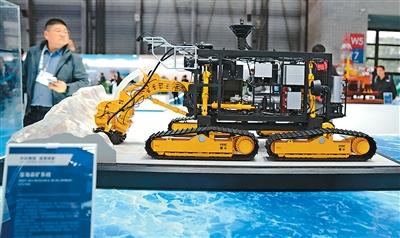
Core Viewpoint - The deep-sea mining sector is emerging as a new frontier for technological and strategic competition among nations, driven by the increasing global demand for critical metals such as nickel, cobalt, copper, and others found in polymetallic nodules on the ocean floor [4][6]. Group 1: Importance of Deep-Sea Mining - Deep-sea mining is crucial for enhancing the supply chain autonomy of strategic minerals, with China's reliance on imports for metals like cobalt reaching nearly 99% and copper at 77% [7]. - The economic value of deep-sea mining is significant, with the value of extracted minerals from the ocean floor estimated to be 6,000 to 7,000 yuan per ton, compared to only a few hundred yuan for land-based sources [7]. - The development of deep-sea mining technology is expected to drive upgrades across multiple industries, including high-end equipment, marine engineering, and new materials [8]. Group 2: Challenges in Deep-Sea Mining - The primary challenges in deep-sea mining include technological difficulties, environmental concerns, and high costs [9]. - Technological challenges involve ensuring the reliability and efficiency of mining equipment under extreme conditions, such as high pressure and low temperatures, which require advanced materials and systems [10]. - Environmental challenges stem from insufficient understanding of deep-sea ecosystems, leading to potential irreversible impacts from mining activities [10]. - Cost-related challenges include high capital and operational expenses, fluctuating metal prices, and potential regulatory barriers, making commercial viability uncertain [11]. Group 3: Future Development and Strategic Planning - China has outlined a long-term roadmap for deep-sea mining, emphasizing the need for coordinated resource exploration and sustainable development [12]. - Recent initiatives include collaborative exploration efforts with countries like the Cook Islands to assess deep-sea mineral resources and establish environmental baselines [13]. - The focus for future development should be on foundational research, international cooperation, and creating sustainable frameworks for deep-sea mining [14].

大山深处的“背篓电工”
Ren Min Ri Bao Hai Wai Ban· 2026-01-01 00:05
图③:铁塔银线在两当县的青山间延伸,构筑起山区电力输送网络。 图④:"背篓电工"赶赴故障现场进行抢修。 本文照片均为宋朝军、王美惠摄 寒潮来袭,夹风带雪。在甘肃省陇南市两当县,杨店供电所电工宋刚和王加林来到一座山下,各自背着 背篓,踩出一条小道缓缓上山,更换变压器的开关。他们嘴里呼出白气,额头挂着汗珠。这是电力"迎 峰度冬"时的一次检修维护。 春夏秋冬,寒来暑往,国网甘肃省电力公司两当县供电公司的23名电工,常年奔走山乡,全程"陪伴"他 们的,就是背上的竹篓,因此他们被当地百姓称为"背篓电工"。 图①:"背篓电工"在山里巡查。 图②:"背篓电工"宋刚(左一)在村民家中进行安全用电检查并了解用电服务需求。 两当县地处陕甘川交界、秦岭山区,所辖14个乡镇里,有12个在山区,山高谷深、深涧相隔。曾经,崇 山峻岭间车辆难通行,背着背篓徒步翻山越岭成为电工的唯一选择。现在,随着城乡路网体系优 化,"四好农村路"越建越多,背篓使用的机会少了,但在应急等场景中,背篓仍然不可或缺。随着时代 变化,背篓里的物品也更新迭代,装满了"新故事"。 "半人高的背篓,装着'户户通电'的期盼" 在杨店供电所大院里,记者见到了放在应急抢修车 ...

投资中国就是投资未来(环球热点)
Ren Min Ri Bao Hai Wai Ban· 2026-01-01 00:05
Core Insights - The release of the "Encouragement Directory for Foreign Investment Industries (2025 Edition)" aims to attract and utilize foreign investment in China, enhancing confidence among foreign enterprises [2][3][4] Group 1: Investment Trends - Foreign investment in China is showing a trend of quality improvement and stable volume, with a shift towards high-tech industries and R&D centers [3][5] - A report by KPMG indicates that 75% of multinational companies operating in China plan to maintain or increase their investments by 2025 [3] - From January to November 2025, 61,207 new foreign-invested enterprises were established in China, marking a 16.9% year-on-year increase [4] Group 2: Sector Focus - High-tech industries, including e-commerce services, medical equipment manufacturing, and aerospace manufacturing, have seen significant foreign investment growth, with increases of 127%, 46.5%, and 41.9% respectively [4] - Foreign enterprises are increasingly focusing on localization, with 83% of companies planning to localize key parts of their operations in China [3] Group 3: Economic Environment - China's economic stability and growth potential are attracting foreign investors, with international organizations raising China's economic growth forecasts for 2025 [6][7] - China is viewed as a source of certainty in an uncertain global economic landscape, with a welcoming attitude towards foreign investment [8][9] Group 4: Future Opportunities - The 14th Five-Year Plan suggests significant opportunities for foreign enterprises in sectors such as finance, healthcare, artificial intelligence, and high-end manufacturing [11][12] - The emphasis on expanding domestic demand and innovation-driven development will provide foreign enterprises with broader high-quality development space in various sectors [11][12][13]

农业现代化水平不断提高
Ren Min Ri Bao Hai Wai Ban· 2025-12-31 02:01
Core Insights - The agricultural sector in China is experiencing significant growth, with the value of agriculture and related industries reaching 20.6173 trillion yuan in 2024, accounting for 15.29% of GDP [2] - The seed industry revitalization initiative has led to a stable grain production of over 1.3 trillion jin for several years, with a record high of 1.4298 trillion jin achieved this year [3] - The modernization of agricultural production and seed safety assurance levels are improving, with seed quality compliance rates remaining above 98% [4] Group 1: Agricultural Development and Modernization - Hebei Province is advancing agricultural structural adjustments by developing specialty facility agriculture and high-quality vegetable cultivation to increase farmers' income and support rural revitalization [2] - The agricultural modernization level is continuously improving, with major grain crops achieving full mechanization in planting and harvesting [2] - The national seed supply guarantee rate has reached 80%, an increase of 10 percentage points since 2020 [4] Group 2: Seed Industry and Technological Innovation - The proportion of domestically bred crop varieties has exceeded 95%, with domestic seed sources for livestock, aquatic products, and vegetables holding market shares of over 80%, 85%, and 91% respectively [3] - The establishment of national livestock and poultry genetic resource banks has positioned China as the world leader in the preservation of agricultural genetic resources [3] - The investment in research and development by crop seed companies has doubled since 2020, indicating a robust innovation ecosystem [3] Group 3: Agricultural Social Services - The coverage and quality of agricultural social services are expanding, with a target to enhance service capabilities across the entire production chain by 2025 [5] - There are currently 1.111 million operational entities providing social services, serving nearly 93 million smallholder farmers [6] - The shift towards comprehensive service models is promoting the integration of advanced varieties, technologies, and equipment to support smallholder and modern agricultural development [6] Group 4: Policy and Strategic Initiatives - The Central Rural Work Conference emphasized the need to accelerate the construction of an agricultural powerhouse, focusing on improving grain quality and diversifying food supply capabilities [7] - The Ministry of Agriculture and Rural Affairs is implementing a new round of initiatives to enhance grain production capacity and ensure food security [8] - The promotion of smart agriculture and the application of new technologies such as big data and AI in agriculture are key components of the modernization strategy [8]

2026年1月1日起 我国调整部分商品关税税率税目
Ren Min Ri Bao Hai Wai Ban· 2025-12-31 00:12
Group 1 - The State Council Tariff Commission announced the 2026 Tariff Adjustment Plan, which will implement provisional import tariff rates lower than the most-favored-nation rate for 935 items starting January 1, 2026, to enhance the linkage between domestic and international markets [1] - The plan aims to promote high-level technological self-reliance by reducing import tariffs on key components and advanced materials, such as hydraulic pressure machine parts and composite joints [1] - It also focuses on supporting the green transformation of the economy by lowering tariffs on resource-based products like regenerated black powder for lithium-ion batteries [1] - The adjustment includes measures to improve public welfare by reducing tariffs on medical products, such as artificial blood vessels and diagnostic kits for certain infectious diseases [1] - The plan will cancel provisional tariff rates on items like micro motors and sulfuric acid, restoring the most-favored-nation rate based on domestic industry development and supply-demand changes [1] Group 2 - The tariff schedule will include new entries for smart bionic robots, bio-aviation fuel, and forest ginseng to support technological development and the circular economy [2] - The total number of tariff items will be adjusted to 8,972 [2] - The plan continues to implement preferential tariff rates for certain imported goods from 34 trade partners based on 24 free trade agreements and preferential trade arrangements signed by China [2]
2025 “听见”中国体育
Ren Min Ri Bao Hai Wai Ban· 2025-12-30 22:54
Core Viewpoint - The article highlights the evolving landscape of Chinese sports, emphasizing the themes of passion, responsibility, and legacy as athletes face challenges and celebrate achievements in their careers [1]. Group 1: Athletes' Achievements and Challenges - Su Yiming, a snowboarding champion, overcame injuries and competition to win the overall season championship and set a Guinness World Record with a unique trick [6]. - Chen Yuxi, a diving star, achieved a remarkable feat by winning three gold medals at the World Swimming Championships, showcasing her resilience after facing psychological and physical challenges [7]. - The article notes that many athletes, including Zheng Qinwen and Pan Zhanle, are battling injuries and setbacks while preparing for future competitions [7]. Group 2: Farewells and Legacy - Su Bingtian, known as "Asia's Flying Man," bid farewell to his athletic career at the National Games, reflecting on his journey and expressing a desire to contribute to the development of sprinting in China [11]. - Gong Lijiao, after winning her fifth consecutive national championship in shot put, shared an emotional farewell, highlighting her dedication to the sport and her plans to continue contributing to athletics [11]. - The article mentions other athletes like Zheng Siwei and Liu Hong who are also stepping away from competitive sports, leaving behind a legacy of dedication and passion [11]. Group 3: Grassroots Sports and Community Engagement - The Jiangsu Province's amateur football league, "Su Super," gained significant popularity, attracting over 2.43 million spectators and revitalizing local community engagement through sports [14][15]. - The success of "Su Super" has inspired similar grassroots events across China, fostering a sense of community and increasing local economic activity [15][16]. Group 4: Emerging Young Talents - Young athletes like Yu Zidi and Chen Yuxi are making headlines, with Yu breaking a 13-year-old Asian record in swimming and Chen winning the women's 100m final at the National Games [19][20]. - The article emphasizes the emergence of a new generation of athletes who are not only achieving personal milestones but also embodying the spirit of teamwork and legacy in sports [20]. Group 5: Personal Reflections and Values - Athletes are sharing personal letters that reflect their values of love, responsibility, and perseverance, highlighting the emotional and mental aspects of their journeys [25][28]. - These letters convey a deep connection to their families and communities, illustrating that the spirit of Chinese sports extends beyond medals and competitions [28].

科技考古六十年 学科荒原变前沿
Ren Min Ri Bao Hai Wai Ban· 2025-12-30 22:54
Core Viewpoint - The development of carbon-14 dating in China has significantly advanced the field of archaeology, transforming it from a phase of uncertainty to a leading discipline, with ongoing improvements in technology and methodology [10][11][14]. Group 1: Historical Development - The establishment of the first carbon-14 laboratory in China in 1965 marked the beginning of a specialized journey in scientific archaeology [13]. - The introduction of carbon-14 dating by researchers such as Qiu Shihua and Cai Lianzhen has allowed for the accurate dating of Neolithic archaeological cultures in China, providing a framework for understanding prehistoric timelines [10][12]. - The 1977 publication by Xia Nai on carbon-14 dating and its application in Chinese archaeology solidified the method's importance in establishing absolute dates for various archaeological sites [10][12]. Group 2: Technological Advancements - Over the past decades, carbon-14 dating technology has evolved from gas and liquid methods to advanced accelerator techniques, enhancing precision and reliability [11][14]. - The application of modern technologies such as digital archaeology, ancient DNA studies, and isotopic analysis has expanded the scope of archaeological research, allowing for multi-dimensional studies of ancient societies [12][14]. - The integration of artificial intelligence and advanced imaging techniques has revolutionized data processing and analysis in archaeological studies, leading to deeper insights into historical contexts [12][15]. Group 3: Collaborative Efforts - The development of scientific archaeology in China is a collaborative effort involving various research institutions and universities, highlighting a collective advancement in the field [14][15]. - Institutions like Peking University and Jilin University have established specialized laboratories and research centers, contributing to the growth of carbon-14 dating and other archaeological methodologies [14][15]. - The establishment of multiple key laboratories and research centers across China reflects a comprehensive approach to archaeological research, encompassing a wide range of scientific disciplines [15].

2025,老外追的那些“中国爆款”
Ren Min Ri Bao Hai Wai Ban· 2025-12-30 22:54
Core Viewpoint - Chinese culture is gaining global popularity through various mediums such as films, music, and literature, showcasing its diverse appeal and ability to resonate with international audiences [1]. Group 1: Film Industry - The animated film "Ne Zha: The Devil Child Comes to the World" has topped the global box office for animated films, indicating a significant achievement for Chinese cinema [1]. - The film has sparked a wave of interest among foreign audiences, with many children and families engaging with its merchandise and storylines [3][4]. - The emotional themes of the film, such as family and friendship, resonate universally, allowing it to transcend cultural barriers [4]. Group 2: Music Industry - The songs "Da Zhan Hong Tu" and "Ba Fang Lai Cai" have gone viral globally, with "Da Zhan Hong Tu" receiving over 4.3 billion views on Douyin and "Ba Fang Lai Cai" over 6.6 billion views [19]. - These songs have become popular background music for travel vlogs and short videos, showcasing their widespread appeal [19][20]. - The integration of Chinese cultural elements in the lyrics has helped foreign audiences connect with the music, fostering a greater interest in Chinese culture [20]. Group 3: Literature Industry - The web novel "Lord of the Mysteries" has become a top favorite among English-speaking readers, ranking first on the translation works chart with 69.7 million clicks and a high rating of 4.89 out of 5 [13]. - The novel's unique blend of Western fantasy elements with Chinese cultural themes has captivated a global audience, leading to its adaptation into an animated series that has also received high ratings [14]. - The success of "Lord of the Mysteries" reflects the growing interest in Chinese web literature, with platforms like Yuanqi Reading fostering a community of French-speaking readers [15].

高铁,从延安出发
Ren Min Ri Bao Hai Wai Ban· 2025-12-30 22:54
Core Viewpoint - The opening of the Xi'an to Yan'an high-speed railway marks a significant milestone for the Shaanxi revolutionary area, enhancing regional economic development and connectivity, while contributing to China's high-speed rail network expansion [4][7]. Group 1: High-Speed Railway Details - The Xi'an to Yan'an high-speed railway officially opened on December 26, with a total length of 299 kilometers and a design speed of 350 km/h, making it the highest-speed railway crossing the Loess Plateau [7]. - The railway reduces travel time from Xi'an to Yan'an to 68 minutes, a significant decrease of 62 minutes compared to the fastest previous service [7]. - The line features 47 tunnels and 67 bridges, with a bridge-tunnel ratio of 91%, showcasing advanced engineering solutions to navigate complex geological conditions [7]. Group 2: Economic and Social Impact - The high-speed railway is expected to boost local economies, particularly in the apple industry of Luochuan, where the improved transport will facilitate faster distribution of apples, enhancing sales opportunities [10][11]. - The railway's opening is seen as a catalyst for tourism, making travel more convenient and promoting local agricultural products, thus expanding the market for local farmers [11]. - The high-speed connection is anticipated to create a "1-hour economic circle," significantly improving the quality of life for residents in the region [9][11]. Group 3: Community Sentiment - Local residents express excitement and optimism about the railway, viewing it as a transformative development that fulfills long-held aspirations for better connectivity [8][9]. - The emotional connection to the railway is highlighted by personal stories, such as a 92-year-old man who has long awaited this moment, symbolizing the broader community's hopes for progress [8].

推动中医药发展,香港迈出关键一步
Ren Min Ri Bao Hai Wai Ban· 2025-12-30 22:54
Core Insights - The Hong Kong government has released its first "Traditional Chinese Medicine Development Blueprint," outlining a vision and strategy for the future development of TCM in Hong Kong, marking a new stage of comprehensive, high-quality growth in the sector [1][2]. Group 1: Blueprint Framework - The blueprint consists of five key areas: TCM services, TCM professionals, Chinese medicine development, cultural heritage, and international outreach [2]. - Eight main goals include optimizing clinical services, establishing a cross-disciplinary service system, leading TCM professional development, enhancing the quality of Chinese medicine, contributing to international standards, driving research and innovation, promoting TCM culture, and facilitating TCM's global outreach [2]. - Twenty action items support these goals, such as defining TCM's role in the healthcare system, leveraging technology for service upgrades, and building a comprehensive TCM talent training system [2]. Group 2: Clinical Services and Community Integration - The blueprint prioritizes optimizing TCM clinical services, emphasizing TCM's role within Hong Kong's healthcare system and highlighting its advantages [2]. - Specific actions include creating a list of TCM's effective treatment areas, developing clinical guidelines unique to TCM, and supporting big data research in both TCM and Western medicine [2]. - Currently, 23 TCM effective treatment areas have been established, with plans to expand this list to enhance community access to targeted TCM services [2][3]. Group 3: Market Demand and Infrastructure - Hong Kong has a strong grassroots foundation for TCM, with over 10,000 TCM practitioners, 90% of whom work in the private sector, and more than 16 million annual visits to TCM services, amounting to over HKD 1.2 billion in expenditures [3]. - The blueprint aims to strengthen TCM's role in primary healthcare, enhancing the integration of TCM into the primary healthcare system and establishing a collaborative framework among various healthcare professionals [3][4]. Group 4: Government Support and International Collaboration - The Hong Kong government has been actively promoting TCM development through talent training, service promotion, industry regulation, and standardization [5]. - The blueprint aligns with national TCM development strategies and aims to enhance Hong Kong's participation in the Greater Bay Area's TCM initiatives and the national high-quality development of TCM [5]. - It emphasizes the need for a robust talent training system, continuous professional development, and the establishment of quality management standards for Chinese medicine production [5].