
Ren Min Ri Bao Hai Wai Ban

Search documents
唐代诗人超有梗(远航的书架)
Ren Min Ri Bao Hai Wai Ban· 2025-11-27 00:57
唐诗在中国文化中,占据了妥妥的C位。中国人自打启蒙就背"鹅,鹅,鹅,曲项向天歌"。李白、杜 甫,是中华民族集体记忆中最牢固的DNA。这些诗人的生平事迹,更是代代流传。《唐才子传》作为 了解这个群体的首要文献,其价值不言自明。 鲁迅给友人许寿裳的儿子许世瑛开的中国文学学习书目中,位列第二的就是《唐才子传》(第一是宋代 计有功的《唐诗纪事》),可见其地位。清人伍崇曜盛赞此书:"评骘精审,似钟嵘《诗品》;标举新 颖,似刘义庆《世说》;而叙次古雅,则又与皇甫谧《高士传》等相同。"把该书跟《诗品》《世说新 语》《高士传》等名作相提并论,一方面说明其史学价值之大,另一方面也指出其写作水平之高。 "颂其诗,读其书,不知其人,可乎?"孟子知人论世的观点,想必辛文房听进去了,所以有了第一部唐 代诗人传记专书——《唐才子传》。 比如"才名一时钦动"的李涉,路遇强盗打劫。当强盗头子得知他是"李山人"后,不单不许抢他,还向他 求诗。李涉写道:"暮雨潇潇江上村,绿林豪客夜知闻。他时不用逃名姓,世上如今半是君。"强盗闻之 大喜,送了他不少牛肉美酒,礼送出境。无独有偶,"临沂子"王毂去解救被无赖围殴的朋友,只说了一 句:"别打啦,我就是写 ...
适度超前,“新基建”这么建
Ren Min Ri Bao Hai Wai Ban· 2025-11-27 00:24
Group 1 - The core idea of the news is the emphasis on "appropriate advanced construction" of new infrastructure during the 15th Five-Year Plan period, which aims to support high-quality development and address structural contradictions in existing infrastructure [2][3][5]. - New infrastructure includes advancements in information technology, digital economy, and traditional infrastructure transformation, which are crucial for high-quality development [2][4]. - The government is expected to play a leading role in investing in new infrastructure to enhance public services and promote urbanization and common prosperity [3][4]. Group 2 - The concept of "appropriate advanced" construction reflects the need to balance infrastructure supply with economic demand, ensuring that development aligns with current and future needs [5][6]. - Companies are increasingly focusing on building advanced computing infrastructure to meet the growing demand for digital services, with an emphasis on high efficiency and green technology [6][7]. - Collaboration among government, society, and the market is essential for the successful implementation of new infrastructure projects, encouraging private investment and innovation [8].
如何理解“适度超前”?“新型基础设施”将这么建
Ren Min Ri Bao Hai Wai Ban· 2025-11-27 00:23
Core Viewpoint - The article emphasizes the importance of "appropriate advanced construction" of new infrastructure during the 14th and 15th Five-Year Plans in China, highlighting its role in supporting high-quality development and addressing structural contradictions in existing infrastructure [1][2][3]. Group 1: New Infrastructure Development - New infrastructure includes information, integration, and innovation facilities that support digital economy development and traditional infrastructure upgrades [2][3]. - The 15th Five-Year Plan explicitly mentions "appropriate advanced" construction of new infrastructure, marking a significant shift in policy direction [2][3]. - The construction of new infrastructure is seen as essential for promoting new urbanization and achieving common prosperity [3][4]. Group 2: Implementation Principles - The principle of "appropriate advanced" construction requires balancing supply and demand, current and long-term needs, and efficiency and quality [5][6]. - The government is expected to lead the investment in new infrastructure to enhance public services and address existing gaps [3][4][5]. - The focus should be on integrating traditional and new infrastructure while ensuring that development aligns with economic and social needs [5][6]. Group 3: Market Opportunities - Companies are increasingly interested in the opportunities presented by new infrastructure, particularly in areas like computing and digital solutions [7][8]. - The development of advanced computing infrastructure is seen as a key area for growth, with companies aiming to leverage this for competitive advantage [7][8]. - The construction of clean energy facilities, such as nuclear power plants, is highlighted as a critical component of new infrastructure development [8]. Group 4: Collaborative Efforts - Successful implementation of new infrastructure requires collaboration among government, society, and the market to stimulate private investment and innovation [9]. - Encouraging enterprises to take the lead in research and development is crucial for integrating new infrastructure with industry needs [9].
走进“新疆和田地区非物质文化遗产展”—— 赏丝路明珠的绚烂画卷
Ren Min Ri Bao Hai Wai Ban· 2025-11-26 23:41
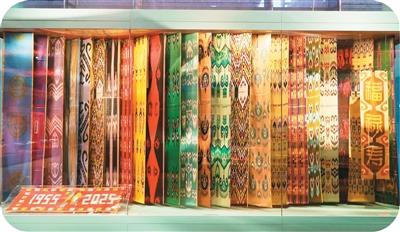
Core Viewpoint - The exhibition "Wanfang Lezou You Yutian - Intangible Cultural Heritage Exhibition of Hotan Region, Xinjiang" showcases nearly 600 exhibits, highlighting the rich cultural heritage and craftsmanship of the Hotan region, including traditional techniques such as the production of Adire silk and Uyghur carpet weaving [2][5][6]. Group 1: Exhibition Highlights - The exhibition features 30 representative projects of national and regional intangible cultural heritage, including Adire silk weaving, Uyghur carpet weaving, and traditional residential construction techniques [2][5]. - Visitors can engage in immersive experiences, including watching traditional performances, tasting local cuisine, and participating in hands-on demonstrations of heritage crafts [2][7]. Group 2: Cultural Significance - Hotan is historically significant as a key point on the Silk Road, known for its jade and silk production, which facilitated cultural exchanges between the East and West [3][4][7]. - The region has a long-standing tradition of silk production, with evidence of sericulture dating back over 2,200 years, making it a major silk supplier along the Silk Road [5][6]. Group 3: Craftsmanship and Techniques - Adire silk, characterized by its vibrant colors and unique patterns, is a significant cultural product of the region, with its weaving techniques recognized as a national intangible cultural heritage since 2008 [5][6]. - The exhibition also showcases other traditional crafts, such as Hotan carpets and mulberry paper, which reflect the ancient wisdom and skills of the local people [6][7].

五百孔院惠八方
Ren Min Ri Bao Hai Wai Ban· 2025-11-26 23:09
Core Viewpoint - The Confucius Institute has evolved into a globally recognized platform for educational and cultural cooperation, significantly contributing to the international demand for Chinese language learning and cultural exchange [10][11]. Group 1: Development and Expansion - As of October 31, 2025, there will be 510 Confucius Institutes established in 164 countries and regions, with 16 new institutes and classrooms opened this year, injecting new vitality into the global network [8]. - The first Confucius Institute was established in Uzbekistan in 2004, marking the beginning of a global initiative that has grown significantly over the past 20 years [7]. Group 2: Cultural Exchange and Impact - Confucius Institutes serve as platforms for cultural exchange, showcasing Chinese culture while also introducing local cultures to China, thus promoting dialogue between different civilizations [10]. - Numerous stories of cultural exchange, such as ceramic painting classes in Austria and traditional music performances in Togo, highlight the dual cultural engagement facilitated by these institutes [10]. Group 3: Educational Innovations - The current trend in international Chinese education is shifting from purely language instruction to a dual focus on language education and skill development, with many institutes offering vocational training courses [12]. - Examples include "Chinese + Agriculture" programs that not only teach the language but also provide agricultural skills, contributing to local agricultural development [12][13]. Group 4: Future Directions - The establishment of a global alliance for agricultural-focused Confucius Institutes aims to enhance cooperation in agricultural technology and poverty alleviation [15]. - Future initiatives will focus on deepening local integration and addressing diverse educational needs, with an emphasis on creating tailored teaching content and cultural projects [15]. Group 5: Digital Transformation - The integration of digital technology in Chinese education is expanding opportunities, with interactive apps and AI-driven platforms enhancing the learning experience [16][17]. - The upcoming release of a comprehensive digital Chinese language curriculum reflects the commitment to modernizing educational resources and improving teaching quality [18].

适度超前,“新基建”这么建(这些新提法,写入“十五五”规划建议②)
Ren Min Ri Bao Hai Wai Ban· 2025-11-26 23:09
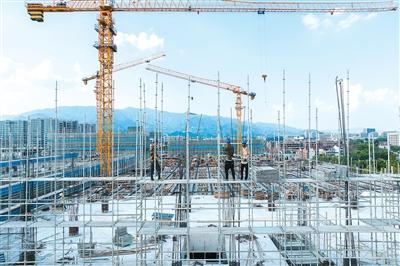
Group 1: Infrastructure Development - The construction project of the East Trading Area in Jinhua City, Zhejiang Province, has been included in the National Development and Reform Commission's emergency infrastructure project library, which will enhance the city's supply capacity and improve the logistics hub system in the Yangtze River Delta region [2] - The supergravity centrifuge simulation and experimental device in Hangzhou, Zhejiang Province, is a major national scientific infrastructure that creates a supergravity field for critical experiments [4] - Wuhu City in Anhui Province is accelerating the construction of computing power infrastructure, leveraging its position within one of the top ten data center clusters in China and the national "East Data West Computing" project [6] Group 2: New Infrastructure Initiatives - The "14th Five-Year Plan" emphasizes the acceleration of new infrastructure construction, while the "15th Five-Year Plan" introduces the concept of "appropriate advance" in infrastructure development [7] - New infrastructure includes advancements in information, integration, and innovation, which are crucial for the development of the digital economy and the transformation of traditional industries [7][8] - The government aims to enhance public services and promote common prosperity through new infrastructure, which is seen as a vital measure to stimulate domestic demand [9] Group 3: Strategic Planning and Implementation - The construction of new infrastructure requires careful planning and orderly implementation, balancing supply and demand, and addressing structural contradictions in existing infrastructure [10][11] - "Appropriate advance" in infrastructure development reflects the need to match infrastructure with economic and social development levels while ensuring it leads and supports future growth [11] - The government, society, and market must collaborate to effectively implement new infrastructure projects, encouraging private investment and innovation [14]
2025,留学新动态
Ren Min Ri Bao Hai Wai Ban· 2025-11-26 23:09
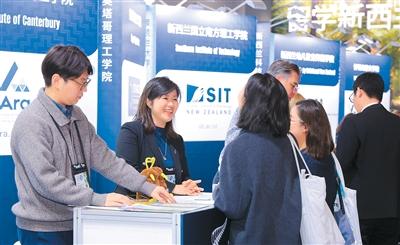
Core Insights - The 2025 China International Education Expo was held in Beijing, featuring nearly 400 institutions from 38 countries and regions, allowing face-to-face interactions with students and parents [1] Group 1: STEM Education - STEM education was a major highlight of the expo, with significant interest in computer-related programs, particularly from Singapore's Nanyang Technological University, which has established "3+1" programs with several Chinese universities [2] - The German education sector attracted many inquiries, especially regarding industrial programs, with a noted increase in students interested in business directions alongside traditional engineering fields [2] - New Zealand, as the guest country, showcased 15 diverse institutions, with a focus on STEM and AI education, indicating a growing interest from Chinese students in these fields [2][4] Group 2: International Education Trends - There is a rising trend among parents considering sending their children abroad for middle and high school education, with a focus on enhancing language skills and independent thinking [4] - The UK is a preferred destination for many families due to its comprehensive A-Level curriculum, which is globally recognized and supports holistic development through extracurricular activities [4] - New Zealand has implemented guidelines to ensure the safety and well-being of international students, reflecting its commitment to providing quality education and support [4] Group 3: Cost-Effectiveness of Studying Abroad - The number of Russian institutions participating in the expo has increased, with a focus on fields like clinical medicine and engineering, appealing to students due to lower costs compared to Western countries [6] - Southeast Asia, particularly Thailand, is gaining attention for its high cost-effectiveness in education, with several universities receiving international accreditation for their engineering programs [6] Group 4: Educational Collaboration and Reports - The expo was part of the 26th China International Education Annual Conference, which released 25 significant reports and signed 27 cooperation agreements, focusing on international collaboration in education [7]
有“技”青年 一展所长
Ren Min Ri Bao Hai Wai Ban· 2025-11-26 23:09
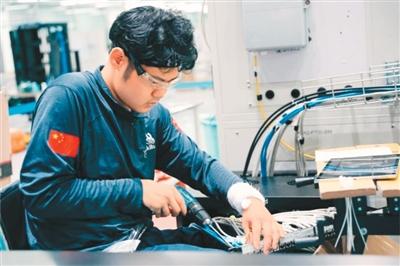
Core Viewpoint - The articles highlight the achievements of vocational students in various skill competitions, emphasizing the importance of vocational education in shaping their careers and contributing to national development [4][6][8][14][16]. Group 1: Achievements in Competitions - A student from Tianjin won a gold medal in the information network cabling project at the 47th World Skills Competition, breaking a 17-year foreign dominance in this category [4]. - Another student from Shandong secured a silver medal at the BRICS Skills Competition, showcasing their expertise in industrial robotics [6]. - A student from Heilongjiang won a gold medal in woodworking at the national vocational skills competition, representing their province at the national level [9]. Group 2: Personal Development and Commitment - Students express how their commitment to skill training and education has transformed their lives, with one student stating that vocational education allowed them to be "seen" and recognized for their skills [4][6]. - The dedication to practice and improvement is evident, with students spending extensive hours honing their skills, often sacrificing personal time for training [6][8][14]. - The articles illustrate the journey from initial uncertainty to achieving recognition and success in their respective fields, highlighting the transformative power of vocational education [8][14][16]. Group 3: Future Aspirations and Industry Impact - Students are motivated to continue their education and skill development, aiming to contribute to their industries and the broader economy [4][6][14][16]. - The integration of modern technology, such as AI and 3D modeling in design education, is preparing students for future challenges in their fields [10][11]. - The articles emphasize the growing demand for skilled professionals in various sectors, indicating a positive outlook for vocational education and its role in workforce development [15][17].
赏丝路明珠的绚烂画卷
Ren Min Ri Bao Hai Wai Ban· 2025-11-26 23:09
Core Points - The exhibition "Wanfang Lezou You Yutian - Intangible Cultural Heritage Exhibition of Hotan Region, Xinjiang" showcases nearly 600 exhibits, highlighting 30 national and regional intangible cultural heritage projects, including traditional crafts like Adire silk weaving and Uyghur carpet making [1][5] - The exhibition offers an immersive experience through various forms such as video displays, skill demonstrations, and interactive activities, allowing visitors to appreciate the rich culture of Hotan [1][7] Group 1: Cultural Heritage - The exhibition features significant intangible cultural heritage items from the Hotan region, including Adire silk weaving, Uyghur carpet weaving, and traditional residential construction techniques [1][5] - The Adire silk, known for its vibrant colors and unique patterns, has been recognized as a national intangible cultural heritage since 2008, with Hotan being a key area for this craft [5][6] - The historical significance of jade from Hotan is emphasized, with archaeological findings dating back thousands of years showcasing the region's long-standing connection to jade culture [4][5] Group 2: Economic and Cultural Exchange - Hotan has historically been a vital point on the Silk Road, facilitating trade and cultural exchange between the East and West, with its jade and silk products playing a crucial role [4][7] - The region's silk production techniques were influenced by Central Plains agricultural practices, leading to Hotan becoming a major silk production area along the Silk Road [5][6] - The exhibition not only highlights the craftsmanship of the region but also aims to promote tourism and cultural appreciation, encouraging visitors to explore Xinjiang [7][8]

日方应诚实、准确、完整地讲清其所谓“一贯立场”
Ren Min Ri Bao Hai Wai Ban· 2025-11-26 21:22
Core Viewpoint - The Chinese government criticizes Japan's recent cabinet response regarding Taiwan, stating that Japan's reiteration of its "consistent position" is insufficient and lacks clarity on its adherence to the One China principle [1][2]. Group 1: Japan's Position on Taiwan - Japan's cabinet response on November 25 claims that Prime Minister Fumio Kishida's statements do not alter Japan's "consistent position" and emphasizes the importance of peace and stability in the Taiwan Strait for Japan's security [1]. - The Chinese government demands that Japan clearly articulate what its "consistent position" entails and whether it still upholds the One China principle [2]. Group 2: China's Response - The Chinese government firmly opposes Japan's remarks on Taiwan, asserting that they violate the spirit of the four political documents between China and Japan and undermine the political foundation of bilateral relations [1][2]. - China urges Japan to take its serious demands seriously, reflect on its mistakes, and retract its erroneous statements regarding Taiwan [2].