新型基础设施

Search documents
固收+系列报告之九:公募 REITs2026 年投资展望:攻守之道与价值掘金
Guoxin Securities· 2025-12-30 05:26
Report Industry Investment Rating No relevant content provided. Core Viewpoints - The operation performance of public REITs is the core premise for judging their investment value. The income of REITs essentially comes from the cash - flow creation ability of underlying assets. The differentiation of operation performance is the key to distinguish high - quality assets from weak ones [41]. - In the current stage of public REITs with valuation adjustment, narrowing price difference between primary and secondary markets, and accelerating policy expansion and commercial real - estate pilot, it is recommended to adopt a dumbbell allocation strategy to balance the needs of "defense for income" and "offense for elasticity" [74]. Summary by Directory Market Review: From Valuation Fluctuation to Value Return Market Characteristics and Driving Factors - China's public REITs have entered the stage of normalized development. In 2025, they continued the normalized issuance trend, but the scale declined. By December 20, 2025, 19 public REITs were issued with a scale of 38.7 billion yuan [13]. - From 2021 to 2025, the subscription multiples of China's public REITs fluctuated significantly, driven by product supply scarcity, market sentiment, and expected returns of asset types [19]. - The secondary - market performance of public REITs can be divided into six stages since the listing of the first batch in 2021. As of December 19, 2025, the annual increase of the CSI REITs total return index was +3.2%, significantly weaker than the CSI 300 and CSI Convertible Bonds, only better than the CSI Aggregate Bonds [21][22]. - The return of public REITs is between the CSI 300 and CSI Aggregate Bonds, complementary to the stock - bond hybrid nature of CSI Convertible Bonds. In the long - term, REITs have lower volatility than the CSI 300 and CSI Convertible Bonds, higher than the CSI Aggregate Bonds, and have a low correlation with other assets, suitable for balancing portfolio fluctuations [27]. Institutional Allocation Preference Differences - The holders of the current public REITs' floating shares are highly concentrated, dominated by institutional investors. Securities proprietary trading accounts for 51.3%, followed by insurance funds (19.9%) and industrial capital (13.6%), with the total proportion of these three types of institutional investors exceeding 84% [2][28]. - The structure of floating - share holders of different types of public REITs shows significant sector differentiation. Securities proprietary trading prefers assets with high liquidity and high valuation elasticity, while insurance funds focus on assets with stable long - term cash flows. The proportion of public funds and individual investors is low [2][30]. - The number of REIT products allocated by public fund FOFs has been continuously expanding, but the growth rate has slowed down. From the first to the second quarter of 2025, the allocation was diversified, and from the second to the third quarter, it shifted to concentrated addition of high - attention products [31][36]. Fundamental: Differentiated Performance of Asset Types - **Industrial Parks**: In 2025, the rental rate and rent level of industrial park REITs showed the characteristics of "intensified differentiation and supply - demand game". High - quality science and technology parks and core - location assets showed resistance to decline, while some traditional industrial parks faced rising vacancy rates and falling rents [42]. - **Warehousing and Logistics**: In 2025, the operating income of warehousing and logistics REITs mostly showed a fluctuating downward trend. The rental rate was differentiated, with some maintaining full occupancy and some fluctuating significantly. The rent level generally declined, and core - location assets had strong anti - risk abilities [46]. - **Consumption**: In 2025, consumption REITs showed significant differentiation. In the third quarter, some performed well, while others declined. The market presented the characteristics of "stable high - level rental rate and differentiated rent level" [51]. - **Affordable Housing**: The affordable housing REIT market showed strong operational resilience, with most REITs maintaining a rental rate of over 93% by the third quarter, and the rent level fluctuated minimally [54]. - **Transportation**: The core driving logic of the transportation sector is the recovery of travel demand and the improvement of asset operation efficiency. The traffic volume and toll revenue showed significant differentiation among different REITs [57]. - **Ecological and Environmental Protection**: The operating performance of ecological and environmental protection REITs improved. In the third quarter, the operating income of two listed REITs increased year - on - year, and the waste treatment volume and sewage treatment volume increased [61]. - **Energy**: In 2025, except for one REIT, the operating income of other energy REITs declined significantly. The photovoltaic field performed well, while the wind - power field was generally sluggish [63]. - **Municipal Facilities**: The heating area and charging area of a municipal heating REIT remained basically stable in 2025, but the heat - stop rate and charging rate decreased significantly in the third quarter [67]. - **Water Conservancy**: The operating income of a water - conservancy REIT increased significantly in the third quarter of 2025, mainly due to the 50.91% increase in the supply of raw water [69]. - **New Infrastructure**: Two new - infrastructure REITs disclosed their operating income for the first time in the third quarter of 2025. Their trusteeship service fee collection rates were both 100%, laying a good foundation for subsequent operations [71]. Investment Recommendations: Structural Opportunities under Policy Dividends and Asset Differentiation Primary Market: Select Projects in the Differentiated Market - Since this year, the enthusiasm for REITs new - issue subscriptions has declined, and there have been cases of breaking the issue price on the first - day of listing. The decline in primary - market new - issue returns is affected by the weak secondary - market performance and the narrowing price difference between the primary and secondary markets. Different asset types show differentiated performance. It is recommended to focus on high - quality projects in primary - market new - issue subscriptions and strategic placements, and be cautious about strategic placements with long lock - up periods [75]. Secondary Market: The Dumbbell Strategy Combines Defense and Offense - Public REITs are a supplementary asset class for asset allocation, matching the investment needs of "idle funds + long - term holding". Appropriate allocation of REITs can improve the Sharpe ratio of the investment portfolio, but the allocation ratio should be moderate [77][78]. - In the future, there will be short - term local unlocking disturbances, with a peak in the first half of 2026. It is recommended to follow the "policy dividends + high - quality assets" principle, adopt the dumbbell strategy, explore the stable dividend value of affordable housing and municipal environmental - protection assets, and invest in new - infrastructure sectors such as data centers and clean energy. Also, grasp the incremental opportunities brought by expansion and issuance [82].
闫萍:坚持投资于物和投资于人紧密结合
Jing Ji Ri Bao· 2025-12-12 00:17
Core Viewpoint - The integration of investment in physical assets and human capital is a significant enhancement of China's investment philosophy, aimed at optimizing investment structure and stimulating economic growth during the high-quality development phase [1] Group 1: Current Economic Context - China's economy is undergoing a critical transition in development methods, economic structure optimization, and growth momentum conversion, making the integration of investment in physical and human capital highly relevant and urgent [2] - Investment in both physical and human capital is essential for overcoming key technological bottlenecks and achieving self-reliance in technology, requiring funding for both infrastructure and talent development [2] - The shift from traditional comparative advantages to new advantages based on quality and brand necessitates a collaborative approach to investment in physical and human capital for industrial transformation and upgrading [3] Group 2: Domestic Circulation and Consumption - Enhancing human capital through education and skills training directly increases labor income, thereby boosting consumer confidence and laying a solid foundation for expanding consumption [3] - A strong domestic consumption market encourages enterprises to invest in technology and brand development, creating a dynamic balance between supply and demand [3] Group 3: Social Equity and Common Prosperity - Investment in infrastructure and public services is crucial for achieving social equity and promoting common prosperity, while human capital investment plays a significant role in reducing income disparities [4] - Developing a high-quality labor force through human capital investment enhances overall productivity and innovation capabilities, contributing to a larger and more equitably distributed economic "cake" [4] Group 4: Systematic Approach to Investment - The relationship between investment in physical and human capital is inherently unified, requiring a systematic approach to optimize the structure of existing capital and promote a virtuous cycle of economic development and improved livelihoods [5] - Both forms of investment are interdependent; physical capital provides the platform for human capital to realize its value, while human capital enhances the effectiveness and technological advancement of physical capital [5] Group 5: Long-term Mechanisms and Policy Framework - Establishing long-term mechanisms to improve the quality and efficiency of investments in both physical and human capital is essential for sustainable economic growth [8] - Coordinated development strategies should be integrated into national economic and social development plans, ensuring that policies for human capital development accompany industrial policies [8] - A collaborative evaluation system should be established to assess the contribution of human capital to the efficiency of physical capital, preventing disconnection between the two [8] Group 6: Investment Structure Optimization - Maintaining a reasonable scale of physical capital investment while optimizing investment layout is crucial, with increased focus on new infrastructure and advanced manufacturing [9] - Precision and effectiveness in human capital investment should be enhanced, with targeted training programs to meet the demands of new productive forces [9] - Encouraging diverse stakeholders through fiscal and financial policies can stimulate investment in advanced equipment and employee training [9] Group 7: Comprehensive Policy System - A comprehensive policy framework should address the entire lifecycle of human capital needs, from early childhood education to elderly care, ensuring continuous accumulation and quality improvement of human capital [10] - Investments should focus on enhancing educational quality, improving labor market matching, and providing adequate healthcare and housing support [10]
适度超前,“新基建”这么建(这些新提法,写入“十五五”规划建议②)
Ren Min Ri Bao Hai Wai Ban· 2025-11-26 23:09
Group 1: Infrastructure Development - The construction project of the East Trading Area in Jinhua City, Zhejiang Province, has been included in the National Development and Reform Commission's emergency infrastructure project library, which will enhance the city's supply capacity and improve the logistics hub system in the Yangtze River Delta region [2] - The supergravity centrifuge simulation and experimental device in Hangzhou, Zhejiang Province, is a major national scientific infrastructure that creates a supergravity field for critical experiments [4] - Wuhu City in Anhui Province is accelerating the construction of computing power infrastructure, leveraging its position within one of the top ten data center clusters in China and the national "East Data West Computing" project [6] Group 2: New Infrastructure Initiatives - The "14th Five-Year Plan" emphasizes the acceleration of new infrastructure construction, while the "15th Five-Year Plan" introduces the concept of "appropriate advance" in infrastructure development [7] - New infrastructure includes advancements in information, integration, and innovation, which are crucial for the development of the digital economy and the transformation of traditional industries [7][8] - The government aims to enhance public services and promote common prosperity through new infrastructure, which is seen as a vital measure to stimulate domestic demand [9] Group 3: Strategic Planning and Implementation - The construction of new infrastructure requires careful planning and orderly implementation, balancing supply and demand, and addressing structural contradictions in existing infrastructure [10][11] - "Appropriate advance" in infrastructure development reflects the need to match infrastructure with economic and social development levels while ensuring it leads and supports future growth [11] - The government, society, and market must collaborate to effectively implement new infrastructure projects, encouraging private investment and innovation [14]

总投资额突破10万亿元!多地密集发布向民间资本推介项目清单!
Sou Hu Cai Jing· 2025-07-06 13:45
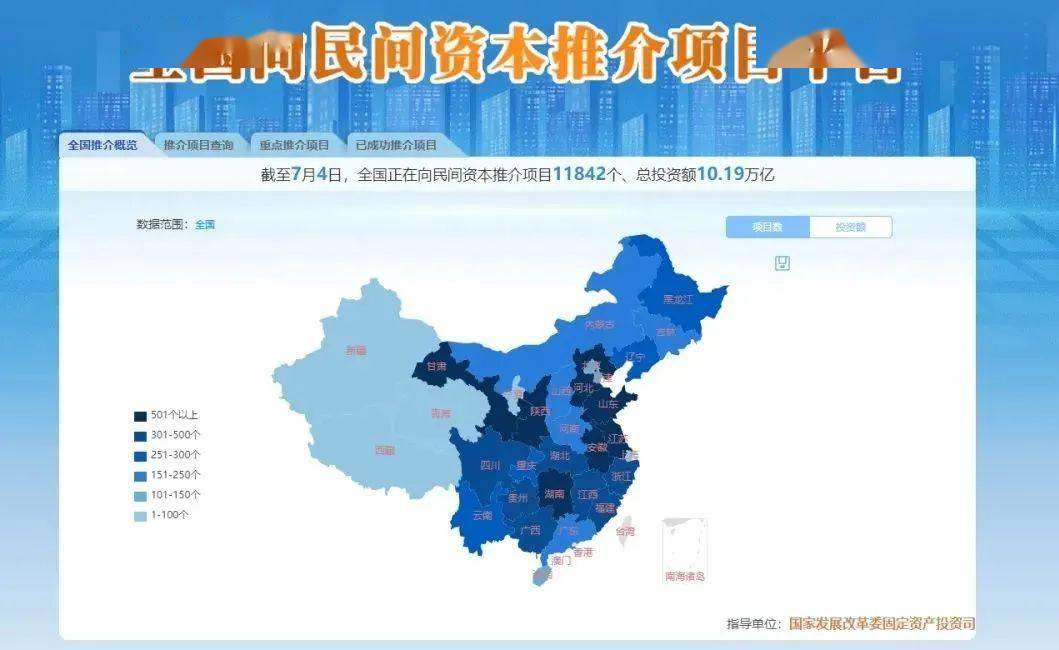
Group 1 - The core viewpoint emphasizes the importance of promoting the sustainable, healthy, and high-quality development of the private economy as a major long-term policy of the state [1] - As of July 4, there are 11,842 projects being promoted to private capital with a total investment of 10.19 trillion yuan [1] - The National Development and Reform Commission (NDRC) has organized the introduction of over 3,200 new projects to private capital, involving a total investment exceeding 3 trillion yuan, focusing on key areas such as transportation, energy, and new infrastructure [3][4] Group 2 - The implementation of the "Private Economy Promotion Law" since May 20 aims to ensure fair competition and promote investment financing, allowing private economic organizations to participate equally in various sectors [3] - The number of items in the "Market Access Negative List (2025 Edition)" has been reduced from 117 to 106, further relaxing market access restrictions [4] - Local governments have recently published project lists for private capital, with Beijing releasing 119 key projects totaling approximately 124.4 billion yuan, and Henan Province announcing 75 major projects with a total investment of 33 billion yuan [5][6] Group 3 - The current wave of project promotion signals a deepening of market-oriented reforms and optimization of resource allocation, aiming to attract private enterprises to enhance project construction and operational efficiency [7] - The focus on attracting private capital is particularly significant in areas such as technological innovation and new infrastructure, where private investment is seen as a crucial driver for industrial upgrading and high-quality economic development [7]
多部门权威解读民营经济促进法!更多配套制度机制将出
券商中国· 2025-05-08 12:37
Core Viewpoint - The introduction of the "Private Economy Promotion Law" marks a significant milestone in the development of the private economy in China, establishing a legal framework to support and protect private enterprises, ensuring fair competition and promoting high-quality development [5][6]. Group 1: Legislative Framework - The "Private Economy Promotion Law" consists of 9 chapters and 78 articles, focusing on fair competition, investment financing, technological innovation, operational regulation, service guarantees, and rights protection [5]. - This law is the first to explicitly state the legal status of the private economy and emphasizes the long-term commitment of the state to support its development [6]. Group 2: Implementation and Support Mechanisms - Various supporting systems are being accelerated, including investment financing promotion, technological innovation, service guarantees, and rights protection [2][9]. - The National Development and Reform Commission is working on a long-term mechanism for private enterprises to participate in major national projects, with an investment scale of approximately 3 trillion yuan in key areas such as transportation, energy, and urban infrastructure [4][10]. Group 3: Administrative Oversight - The Ministry of Justice is establishing a mechanism for handling complaints about administrative law violations, aiming to address issues such as arbitrary fees and inspections [4][8]. - The law includes provisions to regulate administrative enforcement behaviors, ensuring that enterprises can report violations effectively [7][8]. Group 4: Financial Support for Private Enterprises - Over the past five years, the average growth rate of loans to private enterprises has been 1.1 percentage points higher than that of other loans, with a loan balance of 76.07 trillion yuan as of Q1 2025, reflecting a year-on-year growth of 7.41% [12][13]. - The financial regulatory authority is focusing on targeted financial services for key sectors and is promoting innovative financing methods to support technology-driven enterprises [13][14]. Group 5: Future Directions - The government is committed to further enhancing the legal and institutional framework to support the private economy, with ongoing efforts to refine policies and regulations [9][11]. - The focus will also be on improving the business environment for private enterprises, ensuring their rights and interests are protected during the implementation of the law [11].