2 1 Shi Ji Jing Ji Bao Dao

Search documents
春节档总票房破4亿,韩寒+沈腾《飞驰人生3》预测票房超30亿
2 1 Shi Ji Jing Ji Bao Dao· 2026-02-15 15:47
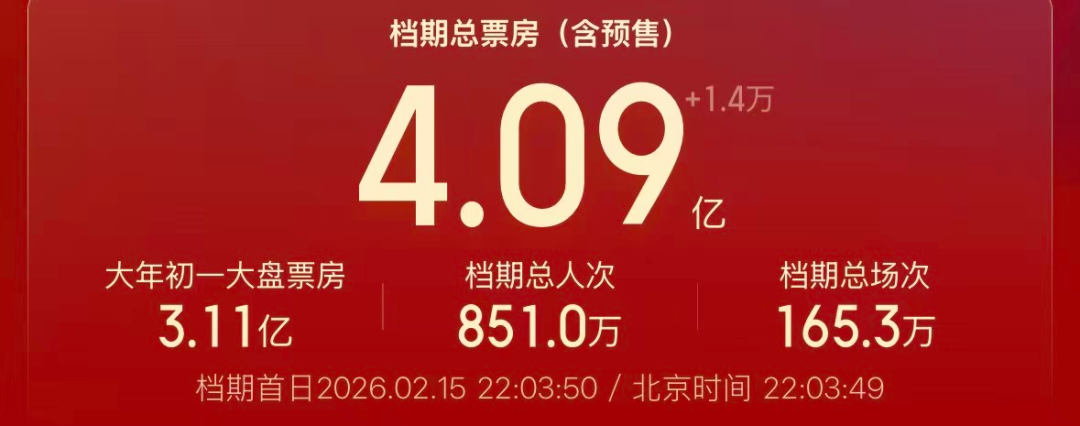
Core Viewpoint - The pre-sale box office for the Spring Festival films has exceeded 3.7 billion yuan, with "Flying Life 3" leading significantly over "Silent Awakening" and other films [2]. Group 1: Box Office Performance - "Flying Life 3" has a strong lead in pre-sale, with a first-day pre-sale of 666.83 million yuan and a total of 146,126 screenings [5]. - "Silent Awakening" has a first-day pre-sale of 666.83 million yuan and a total of 38,100 viewers interested [5]. - "Biao Ren: Wind Rises in the Desert" has a first-day pre-sale of 377.96 million yuan and a total of 25,000 viewers interested [7]. - "Boon Year of the Bear" has a first-day pre-sale of 325.50 million yuan and a total of 25,900 viewers interested [7]. - "Star River in Dream" has a first-day pre-sale of 212.16 million yuan and a total of 9,700 viewers interested [9]. Group 2: Film Variety and Themes - The films released during this Spring Festival feature a diverse range of genres, including comedy, action, animation, and science fiction [15]. - "Biao Ren: Wind Rises in the Desert" tells the story of a desert escort facing challenges while protecting a mysterious person [18]. - "Flying Life 3" focuses on a race car driver returning to reality after the last race, facing new challenges [20]. - "Star River in Dream" involves a futuristic virtual dream system and an adventure through dream challenges [21]. - "Boon Year of the Bear" depicts a crisis caused by unexpected guests and the teamwork of the main characters to resolve it [25]. Group 3: Market Impact and Predictions - The strong pre-sale performance has led to a positive reaction in the capital market, with several film-related stocks experiencing significant gains [27]. - Predictions indicate that the box office for the first day of the Spring Festival will reach 1.187 billion yuan, with "Flying Life 3" and "Silent Awakening" expected to dominate the box office [27]. - The top three films for the Spring Festival are projected to be "Flying Life 3," "Silent Awakening," and "Biao Ren: Wind Rises in the Desert," with total box office estimates reaching 9.298 billion yuan [27]. Group 4: Company Involvement - Multiple listed companies are involved in the production of the films, including "Flying Life 3," "Silent Awakening," and "Boon Year of the Bear," which are set to release during the Spring Festival [26]. - Companies like Hengdian Film and Wanda Film are participating in the production and distribution of these films, indicating a strong industry collaboration [31].


春节假期首日 全社会跨区域人员流动量预计超2.8亿人次
2 1 Shi Ji Jing Ji Bao Dao· 2026-02-15 14:20
Group 1 - The Spring Festival holiday begins on February 15, with a nine-day duration, and marks the start of toll-free travel for small passenger vehicles on highways [1] - It is estimated that by February 15, 2026, the total inter-regional passenger flow will reach 28,592 million trips, reflecting a 0.1% month-on-month increase and a 10.5% increase compared to the same period in 2025 [1] - The expected passenger volumes for various transport modes include: 13.95 million for railways (down 8.8% month-on-month, up 4.3% year-on-year), 0.85 million for waterways (down 11.9% month-on-month, up 28.1% year-on-year), and 2.37 million for civil aviation (down 1.6% month-on-month, up 6.4% year-on-year) [1] Group 2 - During the Spring Festival travel period, transportation departments across regions are enhancing service guarantees, particularly in key hubs like Beijing [2] - The "Eight Stations and Two Airports" in Beijing have achieved full coverage of subway connections, significantly improving passenger flow and transfer efficiency during peak hours [2] - In response to rising travel demand, ferry services from Beihai to Weizhou Island are being optimized, with new vessels introduced and integrated transport services launched to facilitate passenger transfers [2]
春节假期首日,全社会跨区域人员流动量预计超2.8亿人次
2 1 Shi Ji Jing Ji Bao Dao· 2026-02-15 14:15
Core Insights - The Spring Festival holiday is expected to see a total of 28,592 million person-times of cross-regional mobility, reflecting a 0.1% month-on-month increase and a 10.5% increase compared to the same period in 2025 [1] Transportation Sector Summary - Railway passenger volume is projected to be 13.95 million person-times, showing an 8.8% month-on-month decrease but a 4.3% increase year-on-year compared to 2025 [3] - Waterway passenger volume is expected to reach 0.85 million person-times, with an 11.9% month-on-month decrease but a significant 28.1% increase compared to 2025 [3] - Civil aviation passenger volume is anticipated to be 2.37 million person-times, reflecting a 1.6% month-on-month decrease and a 6.4% increase year-on-year compared to 2025 [3] - Road transportation, including both highway and ordinary national and provincial roads, is expected to account for 26,875 million person-times, with a 0.7% month-on-month increase and a 10.8% increase compared to 2025 [3] - The expected volume of commercial road passenger transport is 3.795 million person-times, showing a 5.4% month-on-month decrease but a 6.8% increase compared to 2025 [3] - Non-commercial small passenger vehicle travel on highways and ordinary national and provincial roads is projected to be 23,080 million person-times, with a 1.7% month-on-month increase and an 11.5% increase compared to 2025 [3] Operational Enhancements - Transportation departments are enhancing service guarantees, particularly in key hubs like Beijing, by coordinating with railway and civil aviation sectors to optimize train and flight schedules [4] - The "Eight Stations and Two Airports" have achieved full coverage of subway connections, significantly improving passenger transfer efficiency during peak hours [4] - To further enhance station transfer capabilities, nine subway lines will extend operating hours on peak travel days, and five lines will open earlier to accommodate passenger needs [4] - In Guangxi, the popularity of routes such as Beihai to Weizhou Island is rising, prompting operators to adjust capacity and introduce new vessels to meet demand [4] - Beihai New Yi Cruise has implemented a "train + bus + cruise" intermodal service, facilitating seamless transfers for passengers from the train station to the port [4] - Ticket sales strategies include pre-selling tickets 15 days in advance and monitoring real-time demand to adjust availability, ensuring a smoother purchasing experience for travelers [4]

梁庆彦上任广物控股集团董事长 明确要“打赢脱困转型攻坚战”
2 1 Shi Ji Jing Ji Bao Dao· 2026-02-15 14:08
2月11日,广物控股集团召开2026年工作会议,梁庆彦以新身份出席并作工作报告。其提出2026年是"十 五五"规划的开局之年,也是集团脱困转型的攻坚之年,"要坚定信心、迎难而上,坚决打赢脱困转型攻 坚战"。 梁庆彦表示,今年要推进发展方式变革,以基础重构实现从"管资产"到"管资本"的跃升,包括推进土 地、物业资产盘活,统筹产业园区整体规划建设与招商运营,多维度攻坚扭亏治亏,实现减亏止损增 效。 2月14日,广东省人社厅发布广东省人民政府最新人事任免,任命梁庆彦为广东省广物控股集团有限公 司董事长。这是广物控股集团董事长空缺约五个月后,在集团任职多年的核心高管走马上任。 同时,他还提到要推进组织架构调整与人员补齐配强,开展板块专业化整合,优化资源配置提升协同效 能,精准开展战略性新兴产业投资并购,培育新质生产力与产业新增长极,稳步推进混合所有制改革, 以股权多元化激活企业市场化发展活力等。 公开信息显示,梁庆彦,1967年12月出生,中共党员,本科毕业,硕士学位,经济师。历任广东省商业 企业集团党委委员、副总经理,广东省商贸控股集团党委委员、副总经理,广东省商贸控股集团党委副 书记、董事、总经理,广物控股集团党 ...
10亿用户的高德 5天迎来三次约谈
2 1 Shi Ji Jing Ji Bao Dao· 2026-02-15 14:03
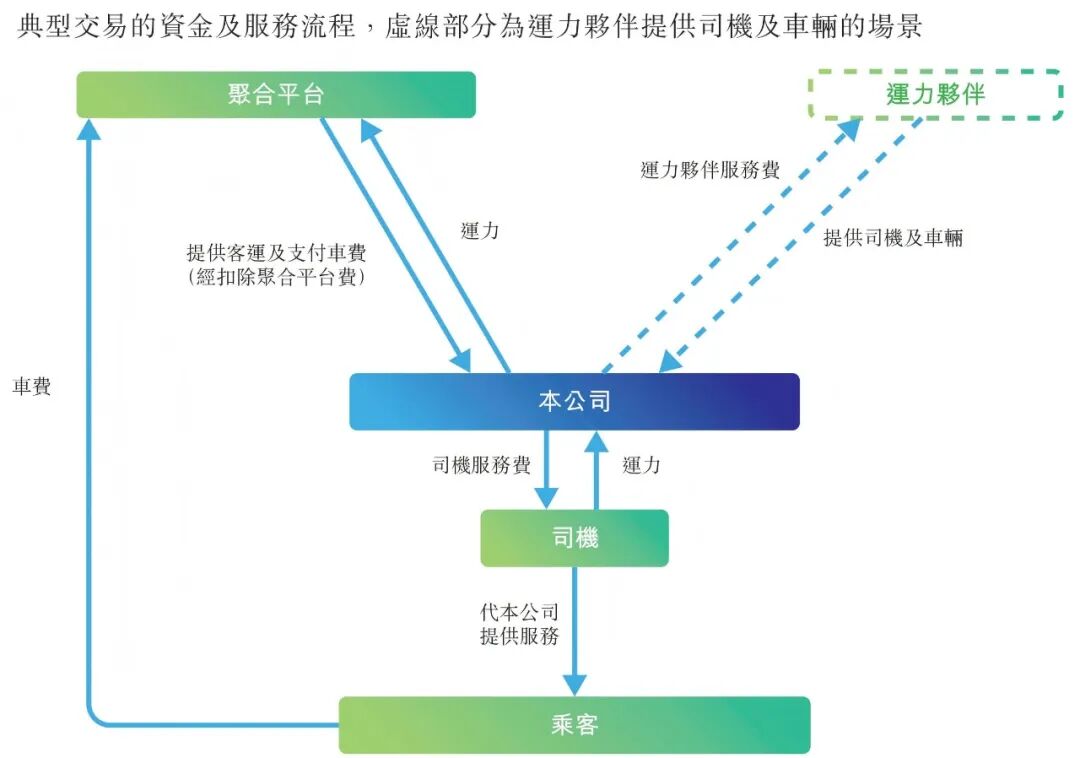
Core Viewpoint - Gaode has faced increasing regulatory pressure, being summoned three times in five days due to issues related to its ride-hailing business, including commission rates and compliance with regulations [1][23]. Group 1: Regulatory Pressure - Gaode and five other ride-hailing platforms were summoned by financial regulators on February 13 due to lending practices [1]. - The company has been under scrutiny for its commission practices and management of partner platforms, leading to a call for introspection and compliance improvements [22][23]. - As of December 2025, Gaode's order compliance rate was 69.4%, significantly lower than self-operated platforms like Didi and Cao Cao, which exceed 80% [18]. Group 2: Business Model and Financials - Gaode operates as an aggregator, facilitating transactions without owning a fleet or managing drivers, which allows it to maintain lower operational costs [13]. - The commission rates for aggregators range from 10% to 20%, with Gaode's effective rate calculated at 7.4% based on data from a partner company [4]. - In the first half of 2025, Gaode contributed to 94.5% of a partner's total transaction value, highlighting its significant role in the market [4]. Group 3: Market Dynamics - By the end of 2025, there were 395 ride-hailing platforms in China, with Gaode capturing a substantial share of the market [3]. - The number of ride-hailing orders processed by Gaode is projected to reach 2.92 billion by December 2025, accounting for 30% of the total market [25]. - The company has been quietly expanding its ride-hailing business while focusing on new initiatives, such as Robotaxi services, to adapt to market changes [28][36]. Group 4: Driver and User Experience - Drivers report dissatisfaction with transparency regarding commission structures, indicating a lack of clarity in earnings [2][7]. - The average passenger reward per order has fluctuated, with a notable decrease in recent periods, reflecting the pressure on driver incomes [9]. - The operational model of aggregators like Gaode has led to a "passing the buck" phenomenon, where service issues are often not adequately addressed, impacting user experience [16].
欧莱雅、雅诗兰黛中国销量复苏,高端消费者又回来了?
2 1 Shi Ji Jing Ji Bao Dao· 2026-02-15 10:56
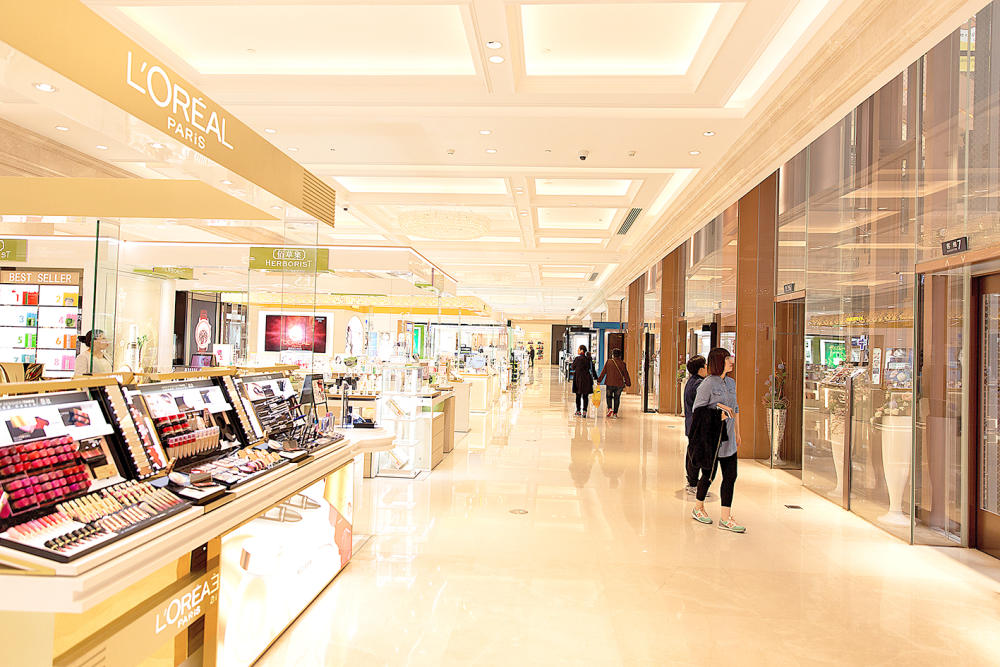
Core Insights - L'Oréal reported a sales revenue of €44.05 billion (approximately ¥360 billion) for 2025, marking a 4% year-on-year growth, with the North Asia region, including China, showing signs of recovery after two years of decline [1] - Estee Lauder also demonstrated strong performance, with a 6% increase in sales to $4.229 billion for the second fiscal quarter of 2026, and a significant turnaround in net profit from a loss of $590 million to a profit of $162 million [1][2] - The recovery in the beauty industry reflects not only a cyclical rebound but also the resilience and potential of the Chinese consumer market [1] Company Performance - L'Oréal's professional hair products segment led with a comparable growth of 7.5%, surpassing €5 billion, while the skincare segment grew by 5.5% to €7.2 billion [2] - Estee Lauder's net sales for the first half of the 2026 fiscal year reached $7.71 billion, a 5% increase, with a net profit turnaround from a loss of $746 million to a profit of $209 million [2] - Both companies attribute their recovery to improved consumer confidence and proactive adjustments in product structure and channel efficiency [1][2] Market Trends - The high-end beauty segment is showing signs of recovery, with L'Oréal's sales in China increasing from 1% growth in the first half to 5% in the second half of 2025 [3] - The overall Chinese cosmetics market reached a total transaction value of ¥1.104245 trillion in 2025, growing by 2.83%, solidifying its position as the largest cosmetics market globally [7] - Domestic brands have increased their market share to 57.37%, indicating a shift in consumer preferences towards local products [7] Strategic Adjustments - Estee Lauder has restructured its organization to treat the Chinese market as a strategic core, reporting a full-year sales figure of $2.741 billion (approximately ¥19.6 billion) for mainland China [6][7] - L'Oréal is focusing on enhancing its digital and direct-to-consumer (D2C) strategies, with e-commerce sales surpassing 30% of total revenue for the first time in 2025 [7] - The competitive landscape is shifting, with international brands needing to solidify their high-end offerings while adapting to local consumer demands [8]


春节长假今日开启 广东旅游市场迎来井喷
2 1 Shi Ji Jing Ji Bao Dao· 2026-02-15 10:51
Core Insights - The first 9-day Spring Festival holiday in China since the Golden Week system was implemented in 1999 has sparked a surge in tourism, particularly in Guangdong, with various travel consumption scenarios experiencing significant growth [1][6] - Family-oriented high-end customized tours have become the mainstream choice for visitors, with a notable increase in the number of out-of-province tourist groups coming to Guangdong [5][9] Group 1: Tourism Trends - The Spring Festival holiday has led to a peak in local tourism, with outbound travel, domestic inter-provincial travel, and nearby tourism markets thriving [6][7] - Customized family tours are increasingly popular, with tourists willing to pay for high-quality travel experiences, as evidenced by a family group from Hangzhou spending an average of 8,300 yuan per person [5][8] Group 2: Travel Experience Enhancements - Guangdong's local attractions have introduced various themed activities to attract visitors, enhancing the holiday experience [9][11] - The integration of travel agencies and hotels has created a seamless high-quality experience for tourists, exemplified by a customized itinerary that includes luxury accommodations and guided tours [8][13] Group 3: Cultural and Recreational Activities - The "2026 Flower Blooming Spring Festival" event at the Yunlu Botanical Garden has become a popular destination, featuring flower exhibitions and large-scale lantern displays [11][13] - Various attractions are offering interactive experiences and educational programs that cater to family visitors, combining local customs with nature exploration [11][13]


欧莱雅、雅诗兰黛中国销量复苏,高端消费者又回来了?丨美妆变局
2 1 Shi Ji Jing Ji Bao Dao· 2026-02-15 10:38
Core Insights - The high-end beauty market is showing signs of recovery, with L'Oréal and Estée Lauder reporting positive sales growth and improved profitability in their recent financial results [1][2][4] Group 1: Financial Performance - L'Oréal achieved sales of €44.05 billion (approximately ¥360 billion) in 2025, marking a 4% year-on-year increase, with the North Asia region, including China, showing a 0.5% growth after two years of decline [1] - Estée Lauder reported a 6% increase in sales to $4.229 billion for the second fiscal quarter of 2026, significantly improving its net profit to $162 million from a loss of $590 million in the previous year [1][3] - L'Oréal's professional hair products segment led the growth with a 7.5% comparable increase, surpassing €5 billion, while the skincare segment grew by 5.5% to €7.2 billion [3] Group 2: Market Dynamics - The recovery in the beauty sector is attributed to restored consumer confidence and proactive adjustments in product structure and channel efficiency by major brands [2][4] - Both L'Oréal and Estée Lauder's recovery signals a cyclical turnaround in the beauty industry and reflect the resilience and potential of the Chinese consumer market [2][4] Group 3: Strategic Adjustments - Estée Lauder has restructured its organization to treat the Chinese market as a strategic core, reporting a full-year sales figure of $2.741 billion (approximately ¥19.6 billion) for the mainland China market, which accounts for nearly 20% of the company's overall sales [6][7] - L'Oréal emphasized its leading position in the Chinese market, with e-commerce sales surpassing 30% of total sales for the first time in 2025, highlighting the importance of digital channels [7] Group 4: Consumer Trends - The demand for high-end and ultra-high-end skincare products is stabilizing, driven by higher frequency of use and emotional value associated with these products [4][6] - The overall cosmetics market in China reached a transaction value of ¥1.104245 trillion in 2025, with a year-on-year growth of 2.83%, solidifying its position as the largest cosmetics market globally [7]
*ST立方被重罚!连续三年财务造假 拟被终止上市
2 1 Shi Ji Jing Ji Bao Dao· 2026-02-15 06:27
Core Viewpoint - *ST Lifan faces delisting after three consecutive years of financial fraud, with the Anhui Securities Regulatory Commission imposing a fine of 10 million yuan and initiating delisting procedures due to false financial disclosures from 2021 to 2023 [1][5][6]. Group 1: Financial Fraud Details - *ST Lifan inflated revenue and costs through three main methods: agency business, financing trade, and fictitious trade [2][3]. - The company engaged in agency business with 12 companies, using total amount accounting despite lacking control over the goods, which violates accounting standards [2]. - Financing trade involved signing contracts with clients while providing upfront payments, which should not be recognized as revenue or costs [2]. - Fictitious trade in 2022 involved a business with a media company that lacked commercial substance, leading to further inflated financial figures [3]. Group 2: Financial Impact - From 2021 to 2023, *ST Lifan's financial reports showed significant inflation: - In 2021, revenue was inflated by 280 million yuan (50.09% of total revenue) and costs by 277 million yuan (60.61% of total costs) [4]. - In 2022, revenue was inflated by 312 million yuan (51.67%) and costs by 305 million yuan (53.54%), with a profit inflation of 510,000 yuan (0.33%) [4]. - In 2023, revenue was inflated by 45.87 million yuan (24.00%) and costs by 45.23 million yuan (27.55%) [4]. Group 3: Regulatory Actions and Consequences - The Anhui Securities Regulatory Commission ordered *ST Lifan to correct its practices, issued a warning, and imposed a fine of 10 million yuan [5]. - The company is set to be delisted due to the cumulative inflated revenue exceeding 500 million yuan over two years, which is more than 50% of the reported revenue for those years [6]. - *ST Lifan has received multiple warnings regarding delisting risks and has been under scrutiny for its accounting practices since at least January 2024 [9].

投资人探厂记:华工教授All in 康复硬科技 谁给的底气?
2 1 Shi Ji Jing Ji Bao Dao· 2026-02-15 06:20
Core Insights - The article highlights the advancements in rehabilitation technology, particularly through the use of AI and robotics, exemplified by the lower limb rehabilitation robot developed by Lizi Intelligent Technology (Guangzhou) Co., Ltd, which aids patients with Parkinson's disease and lower limb paralysis [1][3]. Company Overview - Lizi Intelligent, a spin-off from South China University of Technology, has accumulated over 100 invention patents and international patents, positioning itself as a strong player in the "AI + medical rehabilitation" sector [3]. - The company was founded in 2022 after nearly a decade of technological development, focusing on transforming research achievements into marketable products [5]. Market Context - There are approximately 15 million stroke patients in China, with 3.3 million new cases annually, and a lifetime risk of stroke for adults reaching 39% [4]. - The high disability rate from strokes in China, around 75%, compared to 20%-30% in developed countries, underscores the urgent need for rehabilitation technology [4]. Technological Development - Lizi Intelligent has developed nearly 20 intelligent rehabilitation robot products, with 6 receiving Class II medical device registration, and plans to complete certification for the remaining products within the year [5][9]. - The company has established a comprehensive technology chain, including brain-computer interfaces, physiological and motion sensing sensors, AI algorithms, and embodied intelligent robots [5]. Financial Support and Growth - Lizi Intelligent received significant financial backing, including a multi-million yuan credit line from Minsheng Bank, reflecting confidence in its technology and market potential [3][7]. - The company has successfully navigated early challenges, including product market acceptance and funding crises, ultimately securing multiple rounds of financing in 2023 and 2024 [7][10]. Future Plans - The company aims to develop more cost-effective home rehabilitation robots, focusing on lightweight, compact, and intelligent designs to make rehabilitation accessible to a broader audience [10]. - Minsheng Bank is committed to supporting Lizi Intelligent's growth through a comprehensive financial service system tailored for technology-driven enterprises [10].