
Xin Hua Cai Jing

Search documents
【环球财经】特朗普公布美国劳工统计局局长新提名人选
Xin Hua Cai Jing· 2026-02-01 01:26
按程序,特朗普的这一任命仍待参议院批准。 美国劳工统计局网站信息显示,松本自2015年至今在劳工统计局物价与指数研究部门担任经济学家。白 宫网站信息显示,松本在白宫经济顾问委员会担任高级经济学家的同时,其在劳工统计局的职务处于离 岗状态。 新华财经纽约1月31日电(记者刘亚南)美国总统特朗普1月30日在社交媒体上宣布,提名白宫经济顾问 委员会高级经济学家布雷特·松本出任美国劳工部下属劳工统计局局长,以替换此前撤回的提名人选。 去年8月初,特朗普因不满美国劳工部发布的疲弱就业数据宣布解雇时任劳工统计局局长埃丽卡·麦肯塔 弗,指责她"出于政治目的操纵就业数据"。特朗普此后宣布提名保守派智库传统基金会经济学家E.J.安 东尼出任这一职务,但因遭到两党的批评而撤回提名。 特朗普说,相信松本的专长可以让其快速解决美国劳工统计局长期存在的问题。他继续攻击美国劳工统 计局发布"非常不准确的数据"让美国商界、决策者和家庭失望。 (文章来源:新华财经) 美国劳工统计局负责收集和发布物价、就业、生产力和工资收入等多方面数据。 ...
新华财经早报:2月1日
Xin Hua Cai Jing· 2026-02-01 01:15
Group 1: Manufacturing and Economic Indicators - In January, China's manufacturing Purchasing Managers' Index (PMI) was reported at 49.3%, a decrease of 0.8 percentage points from the previous month, indicating a contraction in the manufacturing sector [2] - The production index stood at 50.6%, indicating continued expansion, while the new orders index fell to 49.2%, reflecting a decline in market demand [2] - Industries such as agricultural and food processing, as well as railway, shipping, and aerospace equipment, showed production and new orders indices above 56.0%, indicating rapid release of supply and demand [2] - Conversely, industries like petroleum, coal, and automotive had indices below the critical point, signaling a slowdown in market demand and production [2] Group 2: Taxation and Regulatory Updates - The Ministry of Finance and the State Taxation Administration issued an announcement clarifying the calculation of taxable sales for value-added tax (VAT) transactions, particularly for financial products [2] - New regulations specify that the sales amount for transferred financial products is calculated based on the balance after deducting the purchase price from the selling price, with provisions for handling negative balances [2] - Additional announcements were made regarding VAT and consumption tax policies for export goods and cross-border services, providing clarity on tax exemptions and refunds [2] Group 3: Transportation and Mobility - The 2026 Spring Festival travel season will begin on February 2 and last for 40 days, with an expected cross-regional mobility of 9.5 billion people, marking a historical high [2] - Self-driving travel is anticipated to dominate, accounting for approximately 80% of the total travel, while railway and civil aviation passenger volumes are projected to reach 540 million and 95 million, respectively [2]


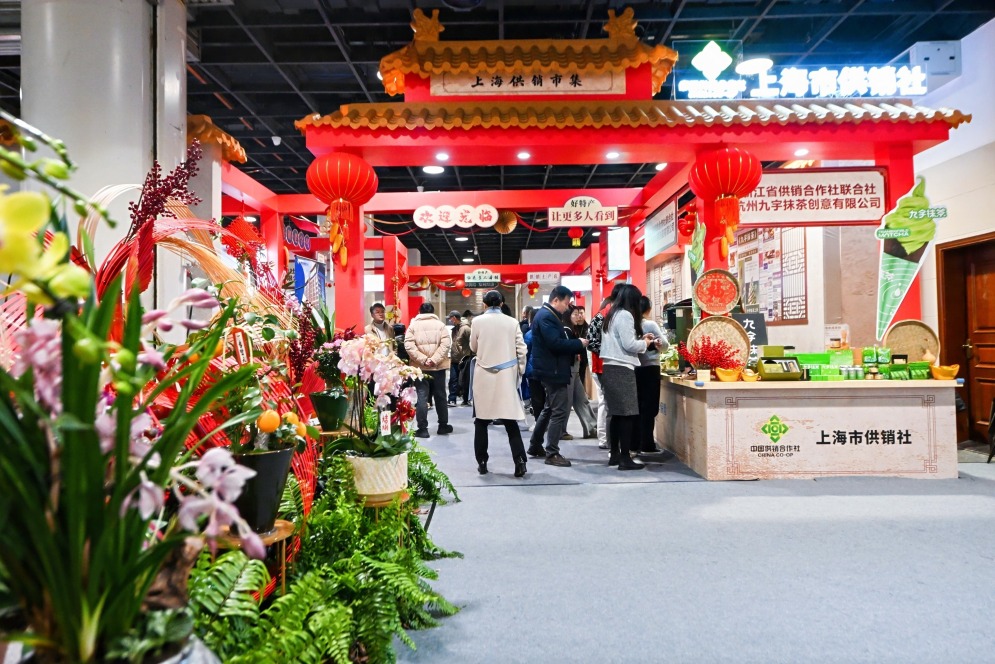
上海供销市集:强化全国农产品“入沪第一站”平台功能
Xin Hua Cai Jing· 2026-01-31 14:36
(文章来源:新华财经) 上海供销市集,全国农产品"入沪第一站"。(受访者供图) 今年,供销市集将着力推动"展品变商品""展商变合作商",打通爆款产品进入上海线上线下流通网络的快速通道,并促进优质参展企业与本 地企业建立稳定供应链。同时,强化供销市集的产品准入标准,精选全国地理标志产品、名特优农产品,加强标准化运营和持续的品质管 控。 上海市供销合作总社相关负责人表示,上海供销市集将致力于从"节气性展销"向复合消费体验的升级。除了丰富的线下展销,市集将联合共 建"上海供销市集推荐官"直播平台,通过直播带货、短视频等方式,实现"3天线下市集"与"365天线上销售"的深度融合。同时,积极探索"供 销市集+"模式,与文旅、文艺、体育等领域结合,创新消费场景,并链接"进博经济",引入国际元素,丰富市集内涵。 为拓展服务辐射,市集正推动从短期"进"到长期"驻"的转型,计划在虹口鲁迅公园等地设立常驻展销点位,打造"3+7+365天"永不落幕的市集 模式,让市民常年享受优质农产品。此外,市集还将贯彻绿色低碳理念,倡导使用环保包装,营造绿色消费氛围,引领可持续生活方式。 新华财经上海1月31日电(记者李荣)正在进行的"2026 ...

中国神华资产重组获受理 或成为上交所首个适用简易审核程序案例
Xin Hua Cai Jing· 2026-01-31 13:00
Core Viewpoint - China Shenhua has announced the issuance of shares and cash payment to acquire equity from 12 core enterprises under its controlling shareholder, the State Energy Investment Group, and has received acceptance from the Shanghai Stock Exchange for its application [1][2]. Group 1: Transaction Details - The proposed transaction involves a significant asset scale exceeding one hundred billion yuan [1]. - The Shanghai Stock Exchange has accepted the application for the issuance of shares to purchase assets and raise matching funds, confirming that the application documents are complete and in legal form [1]. Group 2: Simplified Review Process - This transaction is expected to be the first case to apply the simplified review process under the Shanghai Stock Exchange's new rules, which allows for expedited review for certain qualifying transactions [1][2]. - The simplified review process is designed for well-governed companies with robust information disclosure, enhancing review efficiency for high-quality enterprises [2]. Group 3: Strategic Intent - The restructuring aims to achieve professional integration of coal and related assets within the State Energy Group, addressing long-standing issues of intra-industry competition and creating a more complete industrial chain [2].

【新华解读】1月PMI有所波动 后续经济回升向好基础仍需巩固
Xin Hua Cai Jing· 2026-01-31 12:25
Group 1: Manufacturing Sector - In January, China's manufacturing Purchasing Managers' Index (PMI) was reported at 49.3%, a decrease of 0.8 percentage points from the previous month [1] - The new orders index for manufacturing was 49.2%, down 1.6 percentage points, indicating a slowdown in market demand [2] - Despite the slowdown, the production index remained above the critical point at 50.6%, indicating continued expansion in manufacturing [2] - High-tech manufacturing PMI was at 52.0%, showing strong performance driven by global AI investment and domestic equipment upgrades [2] Group 2: Service Sector - The service sector's business activity index slightly decreased by 0.2 percentage points to around 49.5%, while the new orders index also saw a minor decline [3] - The financial sector's business activity index rose significantly to over 65%, with new orders remaining above 60%, indicating robust growth in financial activities [4] - The optimism in the service sector is supported by the ongoing development of new economic drivers, particularly in digital economy and AI sectors [5] Group 3: Economic Outlook - Experts suggest that the manufacturing sector's performance will be influenced by export growth, real estate market trends, and the timing and intensity of growth-stimulating policies [3] - There is a call for increased government investment in public goods to stimulate demand and enhance business orders, which is crucial for sustaining economic recovery [3] - The financial sector's activity is expected to continue rising, with optimistic forecasts for service-related industries as the Spring Festival approaches [5]
2025年农业银行主承销地方政府债及信用债规模超2万亿元
Xin Hua Cai Jing· 2026-01-31 12:19
Core Insights - Agricultural Bank of China (ABC) is expected to underwrite over 2 trillion yuan in local government bonds and credit bonds by 2025, representing a 26% year-on-year increase [1] - The bank's underwriting of credit bonds is projected to exceed 600 billion yuan, marking a 45% year-on-year growth [1] - ABC has also underwritten nearly 1.7 trillion yuan in national bonds and policy financial bonds, reflecting a 14% year-on-year increase [1] Group 1: Credit Bonds and Rural Revitalization - ABC is focusing on inclusive finance, guiding financial resources to support rural revitalization, with 462 million yuan in rural revitalization bonds underwritten from 2021 to 2025 [1] - The bank has actively participated in the market for technology innovation bonds, underwriting nearly 80 billion yuan to support the growth of innovative enterprises [1] Group 2: Green Finance Initiatives - ABC has enhanced its green finance capabilities, underwriting over 80 billion yuan in various green bonds, positioning itself among the market leaders [1] - The bank has also underwritten the first batch of "green + technology + two new" bonds, significantly supporting the development of green industries [1] Group 3: Social Welfare and Pension Finance - ABC has innovated in pension finance service models, underwriting the first pension bonds in the market, creating new financing pathways for the pension industry [1] - As a key player in the interbank bond market, ABC is committed to its mission as a state-owned bank, directing financial resources to critical sectors of the real economy [1]

【财经分析】2025年财政支出民生导向鲜明 全年税收收入总体呈稳步回升态势
Xin Hua Cai Jing· 2026-01-31 11:24
Core Viewpoint - The 2025 fiscal revenue and expenditure report indicates a decline in general public budget revenue by 1.7% year-on-year, while expenditure shows a modest increase of 1%, reflecting a focus on social welfare and key sectors such as education and health [1][5]. Revenue Summary - In 2025, the total general public budget revenue reached 21,604.5 billion yuan, a decrease of 1.7% compared to the previous year [2]. - Tax revenue amounted to 17,636.3 billion yuan, showing a growth of 0.8%, while non-tax revenue fell by 11.3% to 3,968.2 billion yuan [2]. - Central government revenue decreased by 6.5% to 9,396.3 billion yuan, whereas local government revenue increased by 2.4% to 12,208.2 billion yuan [2]. - Key tax categories showed resilience, with domestic value-added tax growing by 3.4%, corporate income tax by 1%, and personal income tax by 11.5% [3]. Expenditure Summary - Total general public budget expenditure for 2025 was 28,739.5 billion yuan, reflecting a 1% increase year-on-year [5]. - Central government expenditure rose by 5.7% to 43,034 billion yuan, while local government expenditure saw a slight increase of 0.2% to 244,361 billion yuan [5]. - Significant increases in spending were noted in social security and employment (6.7%), education (3.2%), and health (5.7%) [5][6]. - Approximately 100 billion yuan was allocated for childcare subsidies, marking a significant direct financial support initiative for families [6]. Future Outlook - The macroeconomic team at Huatai Securities anticipates a notable increase in fiscal reserves and deposits post-September 2025, which will support a strong start for 2026 [4].
【环球财经】贵金属市场再现极端行情 后续走势如何?
Xin Hua Cai Jing· 2026-01-31 07:55
贵金属市场出现史诗级下跌。截至31日收盘,现货黄金盘中一度跌破每盎司4700美元,收盘下跌了 9.6%,回到4860美元附近。现货白银价格盘中更是一度暴跌超过30%,收盘则回到每盎司85美元附近。 受到影响,国内金饰价格31日大幅下调,部分品牌金饰克价较前一日跌超100元。其中,周大福足金饰 品报1625元/克,较前一日跌60元,老庙黄金报1546元/克,较前一日跌144元。 从极速拉升到高位跳水 最近一周,国际黄金市场呈现剧烈波动。数据显示,1月26日早盘,现货黄金率先突破5000美元整数关 口,午后再度攀升至5100美元;1月28日黄金持续爆发,早盘突破5200美元,午后冲上5300美元,尾盘 则升至5400美元,单日连破三道关口;1月29日早盘涨势不减,突破5500美元并逼近5600美元这一重要 整数位,4天内完成6道整百关口的突破,创下全球黄金市场短期上涨新纪录。 不过,这一轮上涨势头在巅峰时刻戛然而止。1月29日当天,金价在创下历史新高后急转直下,现货黄 金价格从每盎司5530美元附近跌至每盎司5105.83美元,日内最大跌幅达5.7%,一度跌超400美元。1月 30日,金价呈现单边急速下行,盘中一 ...
1月份制造业采购经理指数有所回落
Xin Hua Cai Jing· 2026-01-31 06:59
Group 1: Manufacturing Sector - The manufacturing Purchasing Managers' Index (PMI) for January is 49.3%, indicating a decline from the previous month [1][2] - The production index remains above the critical point at 50.6%, showing continued expansion in manufacturing production [2] - New orders index is at 49.2%, reflecting a decrease in market demand [2] - Certain industries, such as agricultural processing and aerospace, show strong production and new orders indices above 56.0%, while sectors like automotive and fuel processing are below the critical point [2] - Price indices for raw materials and factory output have risen, with the raw material purchase price index at 56.1% and the factory price index at 50.6%, marking an improvement in overall market prices [2] Group 2: Large vs. Small Enterprises - Large enterprises have a PMI of 50.3%, indicating continued expansion, while medium and small enterprises have PMIs of 48.7% and 47.4%, respectively, showing a decline [3] - High-tech manufacturing leads with a PMI of 52.0%, indicating a positive development trend [3] - Consumer goods and high-energy industries show lower PMIs of 48.3% and 47.9%, respectively, indicating a downturn in these sectors [3] Group 3: Non-Manufacturing Sector - The non-manufacturing business activity index is at 49.4%, reflecting a decrease from the previous month [4] - The service sector's business activity index is at 49.5%, with financial services showing high activity levels above 65.0%, while the real estate sector is below 40.0% [4] - The construction sector's business activity index has dropped to 48.8%, indicating a significant decline in activity due to seasonal factors [4] Group 4: Composite PMI - The composite PMI output index is at 49.8%, indicating a slowdown in overall business activities compared to the previous month [5] - The manufacturing production index is at 50.6%, while the non-manufacturing business activity index is at 49.4%, contributing to the composite index's decline [5]
【环球财经】2025年俄罗斯鱼类和海产品出口额达约60亿美元
Xin Hua Cai Jing· 2026-01-31 06:35
Core Insights - The core viewpoint of the articles indicates that Russia's fish and seafood export volume is expected to remain stable in 2025 compared to 2024, while the export value is projected to increase significantly due to market dynamics, particularly with China and Japan as key trading partners [1] Group 1: Export Volume and Value - In 2025, Russia's total fish and seafood export volume is estimated to be around 2.1 million tons, maintaining the same level as in 2024, while the export value is expected to grow by 14% to approximately $6 billion [1] - The export volume to China is projected to decrease by 6% to 1.2 million tons, but the export value is anticipated to rise by 13%, reaching about $3.4 billion [1] Group 2: Market Share and Growth - Japan is expected to account for 6% of Russia's fish and seafood export volume and 16% of the export value in 2025, with the export volume to Japan increasing by 9% to 118,000 tons and the export value growing by 10% to approximately $952 million [1]