Hua Xia Shi Bao

Search documents
2025年全国综合竞争力百强区榜单发布:苏粤两省新城区发展突出,杭州力压深圳重回榜首
Hua Xia Shi Bao· 2025-12-02 04:17
| 全国综合竞争力百强主城区与百强新城区比较 | | | | | --- | --- | --- | --- | | 指 标 | 单位 | 全国百强主城区 全国百强新城区 | | | GDP总额占全国比重 | તેર | 19.11 | 11.49 | | 一般预算收入总额占全国比重 | તેર | 6.97 | 4.76 | | 一般预算支出总额占全国比重 | તેર | 5.72 | 5.63 | | GDP平均规模 | 亿元 | 2577.5 | 1550.7 | | GDP总体增长率 | તેર | 4.95 | 4.91 | | 人均GDP | 元 | 221,259 | 128.650 | | 人均一般公共预算收入 | 元 | 13.151 | 8.670 | | 一般公共预算收入占GDP比重 | તેર | 5.94 | 6.74 | | 一般公共预算收支比率 | તેર | 94.2 | 65.2 | | 城镇居民可支配收入 | 元 | 76.992 | 64.256 | | 小学在校生占常住人口比重 | તેર | 6.64 | 5.91 | | 中小学在校生比率 | 比率 | 0.58 | ...

实探兰州智能工厂!王老吉西北落子,饮料行业产能竞赛再升级
Hua Xia Shi Bao· 2025-12-02 03:17
Core Viewpoint - The beverage industry is transitioning from a phase of rapid growth to a focus on capacity layout competition, with leading companies shifting their strategic emphasis from marketing and channel battles to supply chain efficiency and regional penetration [2][4]. Group 1: Company Developments - The newly completed production base of Wanglaoji in Lanzhou represents a significant addition to China's beverage industry capacity upgrade map, featuring highly automated production lines operating in a sterile environment [2][3]. - The Lanzhou production base is Wanglaoji's fourth self-owned facility, with a total investment of 350 million yuan, covering an area of approximately 100 acres, and an annual production capacity of about 6.5 million standard boxes [3][4]. - Wanglaoji aims to establish the Lanzhou base as a national-level green factory and intelligent manufacturing demonstration factory, leveraging local resources and geographical advantages to strengthen its supply chain network [4][5]. Group 2: Strategic Significance - The Lanzhou base is strategically positioned to enhance Wanglaoji's domestic and international supply chain systems, facilitating access to the Central Asian market and supporting the Belt and Road Initiative [5][6]. - Wanglaoji has expanded its international presence, covering over 100 countries and regions, and has maintained its position as the world's top seller of natural plant beverages for five consecutive years [5][6]. Group 3: Industry Trends - The expansion of Wanglaoji's production capacity reflects a broader trend among beverage giants in China, as they collectively embark on capacity expansion amid intensifying competition [6][7]. - The beverage industry is experiencing a shift in competitive logic, moving from aggressive market expansion to a focus on production efficiency and supply chain optimization, as companies adapt to slowing growth and increased competition [7][8]. - The current expansion wave is not limited to traditional beverage companies; some liquor companies are also exploring entry into the beverage sector, although this diversification is still in its early stages [6][7].

俄罗斯对华免签生效,机票酒店热度猛增
Hua Xia Shi Bao· 2025-12-01 15:03
Group 1 - The Russian government has officially implemented a visa-free policy for Chinese citizens, allowing them to travel to Russia for tourism and business purposes until September 14, 2026, with a maximum stay of 30 days [1] - Following the announcement, there was a significant surge in flight searches to Russia, with cities like Beijing, Shanghai, and Guangzhou showing the highest interest. For instance, the search volume for flights from Hangzhou to St. Petersburg increased by 3.6 times [1] - Year-on-year growth in flight searches from various Chinese cities to St. Petersburg and Moscow was notable, with cities like Urumqi and Qingdao experiencing increases of 16 times and 15 times, respectively [1] Group 2 - The tourism company, Zhongxin Travel, plans to enhance its offerings in Russia, focusing on unique experiences such as aurora viewing and winter sports, which are expected to attract a broader demographic of Chinese tourists [2] - Online travel service provider Tongcheng Travel reported a continuous rise in flight searches to Russia, with hotel bookings for Russian destinations increasing by over 40% year-on-year [2] - The visa-free policy is anticipated to boost inbound and outbound tourism at border ports like Heilongjiang, with a significant increase in travel experiences available to Chinese tourists in Russia [3]
中国最大文具综合体落沪,“小而精”的文具为何开大店?
Hua Xia Shi Bao· 2025-12-01 14:19
Core Insights - The traditional perception of stationery stores as small and specialized is being transformed by the emergence of large-scale "stationery megastores" driven by the consumption habits of Generation Z [2][3] - Deli Group's flagship store in Shanghai, covering 1,500 square meters, represents a significant shift in the stationery retail landscape, emphasizing experience over mere product sales [3][4] Company Strategy - Deli Group's decision to open a large-scale stationery experience store is part of a strategic upgrade aimed at deepening connections with consumers and enhancing brand engagement [3][4] - The flagship store is designed to be an immersive experience space, showcasing Deli's innovations in technology, design, and lifestyle, thus moving from "super manufacturing" to "super experience" [3][5] Market Trends - The flagship store features a wide range of products, including student stationery, premium stationery, and IP-related merchandise, catering to the evolving preferences of consumers [3][5] - The rise of IP collaborations, such as with popular Chinese animation, reflects a trend where stationery is becoming a medium for emotional expression and cultural trends among younger consumers [5][6] Consumer Behavior - Generation Z consumers prefer social, personalized, and content-driven shopping experiences, valuing brand stories and interactive experiences [5][9] - The transition from "functional" to "emotional" consumption in the stationery market indicates a shift where products are seen as expressions of identity and creativity rather than mere tools [9][10] Industry Evolution - The transformation of stationery stores from "small and refined" to "large and comprehensive" signifies a restructuring of the industry value chain, aligning with the experience economy [9][10] - The concept of "pan-stationery" is emerging, where the boundaries between learning, office, and lifestyle products are increasingly blurred, leading to a broader range of offerings [10]


前瞻2026:对中国经济和宏观调控的思考与建议
Hua Xia Shi Bao· 2025-12-01 12:59
Core Insights - In 2025, China's economy demonstrated strong resilience amid internal and external challenges, characterized by two "better than expected" and two "worse than expected" trends, with an overall growth rate showing a "high first, low second" trajectory [2][3][7] - For 2026, a GDP growth target of around 5% is anticipated, with a dual focus on both real and nominal GDP growth to address low inflation [2][11][18] Group 1: Economic Performance in 2025 - China's exports showed strong resilience, with a year-on-year growth of 5.3% from January to October, supported by diversified market layouts and upgraded export structures [3][4] - The capital market outperformed expectations, driven by institutional reforms and increased risk appetite, particularly in technology stocks, leading to a significant bull market [4][5] - The real estate market's recovery was slower than anticipated, with real estate investment declining by 14.7% year-on-year from January to October, exceeding the previous year's decline [5][6] - Consumer spending showed initial improvement but fell short in the latter half of the year, with retail sales of home appliances declining significantly in the last quarter [6][7] Group 2: Economic Challenges and Policy Recommendations for 2026 - The core issues for 2026 will revolve around real estate and local government debt, which are intertwined and pose both short-term and long-term challenges [8][9] - Local government financial capacity is under pressure due to declining land sales revenue, which is expected to drop from 8.7 trillion yuan in 2021 to below 4 trillion yuan in 2025 [8][9] - To stabilize the economy, macroeconomic policies need to be more proactive, with a focus on fiscal policy, monetary policy, and real estate policy working in concert [2][11][19] - A "dual 5" growth target is recommended, aiming for both 5% real and nominal GDP growth, to embed price recovery within growth objectives [18][20] Group 3: Structural Changes and Future Outlook - The economic growth structure is expected to shift, with traditional growth drivers weakening and new drivers, such as service consumption and infrastructure investment, gaining momentum [12][13] - Despite ongoing trade tensions and geopolitical risks, China's exports are projected to remain resilient, supported by new demands from emerging markets and advancements in technology [12][14] - The real estate market is anticipated to undergo a prolonged adjustment period, with potential recovery contingent on easing policies in major cities and adjustments in mortgage rates [15][16] - The government is advised to implement a comprehensive policy framework to stabilize the real estate market, including the establishment of a "Real Estate Stability Fund" and increased fiscal support for local governments [22][23]

俄罗斯对华免签生效,机票酒店热度猛增|快讯
Hua Xia Shi Bao· 2025-12-01 10:18
Core Points - Russia has officially implemented a visa-free policy for Chinese citizens for tourism and business purposes until September 14, 2026, allowing stays of up to 30 days [2] - The announcement has significantly boosted interest in outbound travel to Russia, with a notable increase in flight searches from major Chinese cities [2][3] Group 1: Impact on Travel Industry - Online travel platform Qunar reported a surge in flight searches to Russia, with routes from cities like Beijing, Shanghai, and Guangzhou seeing substantial increases [2] - The most significant growth in searches was observed for flights to St. Petersburg and Moscow, with some routes experiencing increases of up to 16 times compared to the previous week [2] - Travel agencies like Zhongxin Tourism are planning to develop specialized tours focusing on Russia's unique offerings, such as the Northern Lights and winter sports, to attract a broader demographic of Chinese tourists [3] Group 2: Market Trends and Projections - The visa-free policy coincides with the peak season for winter travel, suggesting a potential record high in tourism to Russia during the upcoming New Year and Spring Festival [4] - The border regions, particularly Heilongjiang, are expected to see explosive growth in inbound and outbound tourism due to the favorable visa situation [4] - Data from Tongcheng Travel indicates that major cities like Beijing, Guangzhou, and Shanghai are leading in hotel bookings and flight searches, with a stable pricing trend for tickets to Russia expected until February [4]


立减金、组合礼扎堆!银行个人养老金开启年末冲刺
Hua Xia Shi Bao· 2025-12-01 09:36
Core Insights - Banks are intensifying promotional activities for personal pension accounts, focusing on customer retention and active participation rather than just attracting new accounts [3][6][7] Group 1: Promotional Strategies - Major banks, including China Bank and Industrial and Commercial Bank, are offering various incentives such as WeChat discounts and cash rewards to encourage account opening and contributions [4][5] - The promotional focus has shifted from merely attracting new customers to enhancing customer experience and retention, as many accounts remain inactive after initial opening [3][6] Group 2: Customer Behavior and Market Trends - There is a prevalent issue of "high account openings but low contributions," with many customers opening accounts for short-term rewards but not actively contributing [7][8] - A report indicates that as of November 2024, only 21% of personal pension account holders are making contributions, despite a significant number of accounts being opened [7][8] Group 3: Regulatory and Competitive Landscape - The regulatory framework allows individuals to open only one personal pension account with a commercial bank, intensifying competition among banks to attract customers [5][8] - Banks are innovating their services, such as introducing appointment-based contribution options, to lower barriers for customers and encourage ongoing contributions [9][10]


稳稳“穿越四季”:“低利率”时代的财富密码
Hua Xia Shi Bao· 2025-12-01 07:15
Group 1 - The core viewpoint of the article highlights the shift in investment strategies among Chinese investors as deposit rates fall below 1%, leading to increased interest in diversified financial assets, particularly as the GDP per capita is projected to reach $13,000 in 2024 [2][3] - The article discusses the historical context of asset allocation changes in other countries, such as the U.S. and Japan, when their GDP per capita surpassed $10,000, indicating a similar trend may occur in China [2][3] - The article emphasizes the importance of transitioning from a "single asset" investment approach to a diversified asset allocation strategy to balance risk and return in the current market environment [3][4] Group 2 - Common pitfalls in asset allocation are identified, including the misconception that holding multiple products equates to diversification, which can lead to concentrated risks in specific sectors [6][7] - The article points out that many investors are struggling to adapt to new investment paradigms, often clinging to traditional methods that do not meet their wealth growth needs [4][5] - The article introduces the "Four Seasons Portfolio" strategy developed by Citic Bank, which aims to simplify asset allocation for ordinary investors by providing a balanced mix of assets to withstand various market conditions [7][8] Group 3 - The "Four Seasons Portfolio" is designed to be user-friendly, allowing investors to select based on their risk tolerance and investment goals, with automatic rebalancing features to maintain the desired asset allocation [9] - The strategy is based on the "Permanent Portfolio" concept, which has historically achieved stable returns while minimizing drawdowns, thus providing a reliable framework for investors [7][8] - The article concludes that effective asset allocation is essential for wealth preservation and growth, positioning it as a necessary skill for investors as they increasingly shift their wealth towards financial assets [9]

积极推进科技驱动战略,构建核心系统变更风险管控体系——长江证券金融科技在核心交易系统变更质量管理中的应用研究
Hua Xia Shi Bao· 2025-12-01 05:49
Core Viewpoint - The article discusses the innovative application of financial technology in the change quality management of core trading systems at Changjiang Securities, highlighting the transition from experience-driven to data-driven management through the implementation of an AI-native intelligent change quality management platform [2][37]. Group 1: Research Background - The core trading system is essential for securities companies, directly impacting market stability and investor rights, facing unprecedented operational pressures and change challenges due to market reforms and technological advancements [3]. - From 2014 to 2024, regulatory bodies issued 49 IT-related penalties to 33 securities firms, with 34 related to information security, indicating vulnerabilities in core trading systems [3]. - Strengthening change quality management in core trading systems is crucial for the digital transformation of the securities industry, with Changjiang Securities leading the exploration of financial technology applications in this area [3][4]. Group 2: Company Overview - Changjiang Securities, established in 1991 and listed in 2007, is a comprehensive financial service provider in China, offering a wide range of services including wealth management, investment banking, and asset management [4][5]. - The company operates a financial holding group structure with subsidiaries across various sectors, aiming to enhance its service model and drive business innovation [5][6]. Group 3: Technology Empowerment and System Construction - The company emphasizes the importance of robust and secure core systems, viewing change quality management as critical for business continuity and customer experience [7]. - In 2024, the company faced over 13,400 modification points in system upgrades, highlighting the inadequacy of traditional quality management methods reliant on manual experience [7][8]. Group 4: Research Findings - Traditional change quality management faces significant limitations in efficiency, precision, and coverage due to reliance on personal experience and lack of systematic support [8][9]. - The complexity of the core trading system, with millions of lines of code and thousands of interfaces, hampers efficient understanding and problem identification [10][11]. - Manual evaluation of numerous change points is insufficient for comprehensive risk assessment, leading to potential oversights [11][12]. Group 5: Intelligent Change Quality Management Solutions - Changjiang Securities developed an AI-native intelligent change quality management platform, integrating various technologies to enhance the entire change lifecycle [14][19]. - The platform includes a layered evaluation model, standardized management processes, and intelligent technology support to improve risk assessment and operational efficiency [15][17][19]. Group 6: Practical Outcomes and Value - The application of financial technology has led to significant improvements in change risk assessment accuracy, system stability, and operational efficiency [27][29]. - The automated and intelligent management of change processes has reduced implementation cycles by approximately one-third and testing time by 70% [30][31]. - The platform has enabled the creation of high-quality data assets from various system-generated data, driving business innovation and enhancing market competitiveness [32]. Group 7: Experience Summary and Outlook - The intelligent transformation of change quality management is a complex process involving technology, processes, and organizational culture, requiring continuous optimization and collaboration [33]. - Future efforts will focus on establishing a feedback loop for continuous improvement, enhancing human-machine collaboration, and promoting industry standards [34][36].


涨停2连板+近一个月涨幅22%,万通发展跨界芯片能走多远?
Hua Xia Shi Bao· 2025-12-01 04:50
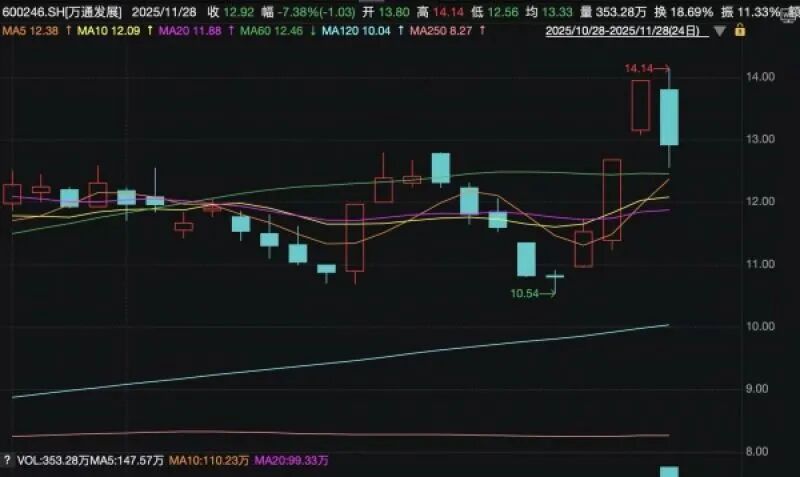
Core Viewpoint - The recent stock price volatility of Wantong Development reflects market reassessment of its transition from real estate to the semiconductor industry, with investors showing both optimism and caution regarding the company's transformation efforts [3][4]. Group 1: Stock Performance - Wantong Development's stock has seen a cumulative increase of over 22% in the past month, with a notable 19.99% rise in the last two trading days before a 7.38% drop on November 28, closing at 12.92 yuan [3]. - The fluctuations in stock price indicate a divided sentiment among investors regarding the company's future in the semiconductor sector [3]. Group 2: Semiconductor Business Development - In August, Wantong Development acquired a 62.98% stake in Beijing Shudu Information Technology Co., marking its entry into the PCIe 5.0/6.0 high-speed interconnect chip market, coinciding with a surge in AI computing demand [4]. - The PCIe 5.0 switch chip has entered the introduction phase with multiple clients, and is expected to achieve mass production by Q4 2025, addressing a gap in the domestic AI server interconnect chip market [4][5]. - The chip's application in AI servers is significant, as it directly impacts system computing efficiency, with a high technical barrier and potential for market replacement [4]. Group 3: Governance Changes and Incentive Plans - The company faced governance challenges following the former chairman's legal issues, which raised concerns about the stability of its strategic direction [7]. - An equity incentive plan was introduced, granting restricted stock to 106 key technical and management personnel at Shudu Technology, representing 63% of its total workforce, with a grant price of 6.25 yuan per share [7]. - The incentive plan's performance targets exceed the commitments made at the time of acquisition, indicating a dual intention to stabilize the core team and reinforce confidence in the semiconductor business [7]. Group 4: Challenges in Transformation - Despite efforts to stabilize the team, Wantong Development's transition faces significant challenges, as indicated by its Q3 2025 financial report showing a revenue decline of 4.37% to 317 million yuan, although net losses narrowed by 82.94% [8]. - The company is leveraging cash flow from its traditional real estate business to support its strategic shift towards communication and digital technology, seeking a second growth curve in the digital economy [8]. - The complexity of understanding the new business model poses a challenge, as the transition from real estate to technology-intensive sectors increases management difficulties [8][9]. Group 5: Market Position and Competition - Wantong Development's diversification into various sectors, including satellite internet and 5G technology, raises concerns about a lack of coherent strategic planning [9]. - The company faces uncertainty regarding the sustainability of demand as it shifts from the stable real estate market to rapidly evolving technology sectors, where competition is fierce [9][10]. - The company has yet to establish a competitive advantage in the technology field, with previous investments resulting in significant losses, impacting shareholder value [10].