Shen Zhen Shang Bao

Search documents
今年新基金 数量超去年
Shen Zhen Shang Bao· 2025-10-28 01:21
Group 1 - The core viewpoint of the articles highlights a significant recovery in the issuance of public funds in the A-share market, with a notable increase in the number and scale of stock funds established this year [1][2][3] - As of October 27, 2023, a total of 1,187 new funds have been established, surpassing last year's total of 1,135, indicating a positive trend in fund issuance [1][2] - The issuance scale of stock funds reached 3,456.53 million units, accounting for 37.47% of the total issuance, marking the highest proportion since 2011 [1][2] Group 2 - Stock funds accounted for 57% of the new fund issuance this year, with 676 stock funds established, a significant increase from last year's 21.14% [2] - The average issuance size of new stock funds is 5.11 million units, slightly lower than the average from the previous year, indicating that the market has not yet reached a peak in fund issuance [3] - The increase in stock fund issuance is primarily driven by passive index funds, with six equity funds exceeding 2.5 billion units in issuance, five of which are passive index funds [3] Group 3 - Seven products this year have achieved issuance scales of 6 billion yuan or more, with the top product being the Dongfang Asset Management's Dongfang Hong Yingfeng Stable Allocation Fund, raising 6.573 billion yuan [1] - Among the seven products with significant fundraising, five are bond funds, while two are fund of funds (FOF), indicating a diverse range of investment strategies [1] - Several FOF products have experienced rapid fundraising, with some announcing early closure of subscriptions on their first day due to high demand [1][3]
证监会主席吴清在金融街论坛年会上表示将启动实施深化创业板改革
Shen Zhen Shang Bao· 2025-10-28 01:19
Group 1 - The core viewpoint of the article is the announcement by the Chairman of the China Securities Regulatory Commission, Wu Qing, regarding the implementation of reforms in the ChiNext board to better align with the characteristics of emerging industries and innovative enterprises [1][2] - The new listing standards will provide more precise and inclusive financial services for new industries, new business formats, and new technologies [1] - The introduction of a refinancing framework and the encouragement of mergers and acquisitions are aimed at broadening support channels for corporate restructuring [1] Group 2 - Wu Qing emphasized the importance of enhancing corporate governance and increasing shareholder returns through dividends and buybacks [1] - The focus is on leveraging long-term funds as stabilizers in the market, promoting public fund reforms, and ensuring that pension and insurance funds are aligned with long-term investment strategies [1] - There will be a strengthened risk monitoring system across markets, industries, and borders to prevent significant market fluctuations [2] Group 3 - A "zero tolerance" approach will be adopted towards financial fraud, market manipulation, and insider trading, aiming to enhance investor trust and confidence [2]

净利腰折!三只松鼠陷现金流困局
Shen Zhen Shang Bao· 2025-10-28 01:03
Core Viewpoint - The company, Three Squirrels, reported an increase in revenue but a significant decline in profit for the first three quarters of 2025, indicating challenges in profitability despite revenue growth [2][3]. Financial Performance - For the first three quarters of 2025, the company's operating revenue reached 7.76 billion yuan, a year-on-year increase of 8.22% [3]. - The net profit attributable to shareholders was 161 million yuan, down 52.9% year-on-year [3]. - The net profit after deducting non-recurring gains and losses was 57.14 million yuan, a decrease of 78.57% year-on-year [3]. - In Q3 alone, operating revenue was 2.28 billion yuan, up 8.91% year-on-year [3]. - The net profit for Q3 was 22.27 million yuan, down 56.79% year-on-year [3]. - The net profit after deducting non-recurring gains and losses for Q3 was 6.31 million yuan, a decline of 83.45% year-on-year [3]. Cash Flow and Financial Health - The company faced a cash flow crisis, with a net cash flow from operating activities of -505 million yuan, a year-on-year decline of 1690.52% [4]. - Cash and cash equivalents dropped from 866 million yuan at the beginning of the year to 242 million yuan, a decrease of 72.06% [4]. - Short-term borrowings surged by 59.87% compared to the end of the previous year due to new borrowings [4]. - Sales expenses reached 1.61 billion yuan, an increase of 24% compared to the beginning of the year, primarily due to higher platform and promotional costs [4]. - Investment income decreased by approximately 30% compared to the previous period, impacting overall profitability [4]. Dependency on Non-Recurring Gains - The company's reliance on non-recurring gains has exceeded 60%, with government subsidies amounting to 98.82 million yuan included in the current period's profit [3].


全球首个超仿生具身智能体面世 越疆成功“复活”史前中华龙鸟
Shen Zhen Shang Bao· 2025-10-28 00:24
Group 1 - The core achievement of the company is the successful "revival" of the prehistoric creature, the Chinese Dragon Bird, utilizing multimodal interaction technology, marking a significant commercialization of embodied intelligence technology [1] - The revived Chinese Dragon Bird is not a static exhibit but an interactive intelligent entity capable of walking, breathing, and making sounds, integrating complex technologies such as multimodal interaction, environmental perception, and motion control [1] - The project opens a pathway for the commercialization of embodied intelligence technology, transforming it from a laboratory concept into a defined commercial product that addresses the questions of what embodied intelligence can do in open environments and for whom it creates value [1] Group 2 - The project aims to build a universal embodied intelligence technology platform that allows for low-cost and efficient scaling through the logic of "hardware rotation and content reuse," enabling the same robotic "core" to quickly "revive" other ancient creatures and cultural IPs by changing the bionic skin and updating interaction programs [2] - This template-based replication capability significantly reduces marginal costs and allows for the amortization of high R&D investments [2] - The project effectively integrates and drives the industry chain, stimulating demand for high-precision simulation skins, precision electromechanical transmission, and new materials in high-end manufacturing, while also fostering a digital IP and content development ecosystem around dinosaur behavior libraries, interactive scripts, and educational courses [2]
原阿里高管刘鹏“接棒” 山姆中国迎新总裁
Shen Zhen Shang Bao· 2025-10-27 23:55
Core Insights - Walmart China has appointed Liu Peng as the new president of Sam's Club, effective immediately, as part of its strategy to enhance investment and business upgrades in China [1] - Liu Peng brings extensive experience from Alibaba, where he held various leadership roles, and is expected to leverage his understanding of global brand localization and consumer insights to improve Sam's Club offerings [1] - Walmart China reported strong growth, with Sam's Club achieving a 30.1% year-on-year increase in net sales for Q2, significantly outpacing industry averages [2] Group 1 - Liu Peng has joined Walmart China as the president of Sam's Club, reporting directly to the CEO, Zhu Xiaojing [1] - Jane Ewing, the previous acting president, will return to Walmart International at the end of the year [1] - Walmart China views this leadership change as a critical step in its ongoing investment and strategic upgrade in the Chinese market [1] Group 2 - Walmart's total revenue for Q2 was $177.4 billion, reflecting a 4.8% year-on-year growth, with a 5.6% increase when excluding currency fluctuations [2] - Sam's Club is expanding rapidly, with nearly 60 stores in over 30 cities and plans to open about five new stores by the end of the year [2] - Membership numbers for Sam's Club are increasing, with stable growth in renewal rates and activity levels, and e-commerce now accounts for over 50% of sales [2]

特斯拉三季度利润下滑
Shen Zhen Shang Bao· 2025-10-27 23:55
Core Insights - Tesla reported Q3 2025 revenue of $28.1 billion, a 12% year-over-year increase, surpassing the expected $26.36 billion [1] - Adjusted net profit for Q3 was $1.77 billion, a 29% decline year-over-year, following a 23% decline in Q2 [1] - The company is facing a "revenue growth without profit increase" issue, attributed to declining automotive profit margins and continued investment in R&D for future growth [1] Financial Performance - Q3 revenue reached $28.1 billion, exceeding the forecast of $26.36 billion, marking a 12% increase compared to the previous year [1] - Adjusted net profit for Q3 was $1.77 billion, reflecting a 29% decrease year-over-year [1] - Gross margin for Q3 was 18%, higher than the expected 17.2%, but down from 20% in the same period last year [1] Business Developments - Tesla is advancing its humanoid robot project, Optimus, with production line installation expected to be completed by the end of 2026, targeting an annual production capacity of 1 million units [1] - The company continues to focus on the development of autonomous driving Robotaxi, electric vehicles, and energy storage solutions [1]

还差一毫米!沪指逼近4000点
Shen Zhen Shang Bao· 2025-10-27 23:28
Core Insights - Nearly 60% of listed companies reported a year-on-year increase in net profit for the third quarter, indicating a positive trend in corporate earnings amid economic recovery [1][3]. Group 1: Market Performance - The Shanghai Composite Index rose over 1%, approaching the 4000-point mark, closing at 3996.94 points, marking a significant increase [1]. - The total trading volume in the Shanghai and Shenzhen markets reached 23,568 billion yuan, an increase of 3,650 billion yuan compared to the previous trading day [1]. Group 2: Company Earnings - Among the 1,312 listed companies that disclosed their third-quarter reports, 774 companies (58.99%) experienced a year-on-year increase in net profit, while over 40% reported a decline [1][2]. - Leading companies such as China Mobile, China Telecom, and China Unicom showed steady growth in both revenue and net profit [2]. - Notable high-growth companies include Ningde Times, CITIC Securities, and Zijin Mining, with net profit increases exceeding double digits [2]. Group 3: Sector Performance - The semiconductor, artificial intelligence, consumer electronics, and telecommunications sectors demonstrated strong performance, contributing significantly to the overall market growth [2][3]. - Specific companies like Jingrui Electric Materials, Xinqianglian, and Shuo Beide reported extraordinary net profit growth rates of 19,202.65%, 7,158.91%, and 2,925.45%, respectively [2]. - A structural characteristic of this earnings season is the strong performance of sectors benefiting from economic recovery and industrial upgrades, particularly in technology and traditional industries [3].





真喝不动了!白酒企业密集换帅
Shen Zhen Shang Bao· 2025-10-27 22:36
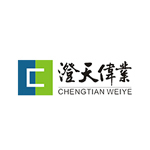
近5年来,贵州茅台集团频频"换帅",历经高卫东、丁雄军、张德芹3任董事长。在张德芹主政的一年半时间 里,贵州茅台交出了一份亮丽的"成绩单",2024年核心指标全部达到并超过年初设定的"增长15%左右"目 标。 国内白酒销售遇阻,开拓海外市场已成为酒企的新目标。图为外国嘉宾在法国巴黎烈酒博览会上品尝贵州茅 台酒。(新华) 深圳商报记者 苑伟斌 10月27日,贵州省人民政府发布通知。根据通知,推荐陈华为中国贵州茅台酒厂(集团)有限责任公司董 事、董事长,贵州茅台酒股份有限公司董事、董事长人选。建议张德芹不再担任中国贵州茅台酒厂(集团) 有限责任公司董事长、董事和贵州茅台酒股份有限公司董事长、董事职务。 记者注意到,同在10月,珍酒李渡集团宣布管理层调整:原CEO颜涛退守二线转任董事会副主席,公司老将 汤向阳接棒成为新任首席执行官,全面负责集团战略执行与国际化布局。早前7月,洋河股份董事、董事长 相继辞职,金种子酒总经理挂印而去,年内白酒企业高管大变动背后折射出的是白酒行业在多重压力下的深 层困境与转型阵痛。 茅台业绩增速已现疲态 白酒行业的人事动荡,是传统增长模式遭遇时代挑战的必然反应。业内相关人士表示,事实上, ...


银行三季报陆续披露 “打头阵”4家表现有亮点
Shen Zhen Shang Bao· 2025-10-27 22:36
Group 1: Overall Performance of Listed Banks - Four listed banks reported improved year-on-year revenue and net profit, with Chongqing Bank showing the most significant growth, achieving over 10% growth in both revenue and net profit [1] - Chongqing Bank's revenue reached 11.74 billion yuan, a 10.40% increase, and net profit was 5.196 billion yuan, a 10.42% increase, marking the first time in nearly nine years that both metrics achieved double-digit growth [1] - Wuxi Bank maintained excellent asset quality with a non-performing loan ratio of 0.78% and a provision coverage ratio exceeding 420% [1] Group 2: Performance of Specific Banks - Ping An Bank reported a revenue of 100.668 billion yuan, a decline of 9.8%, and a net profit of 38.339 billion yuan, down 3.5%, indicating a "double decline" in both revenue and profit [1][2] - Despite the decline, Ping An Bank's net profit for the third quarter increased by 18.4% compared to the second quarter, attributed to reduced credit impairment losses and improved cost management [2] - Huaxia Bank's revenue was 64.881 billion yuan, down 8.79%, and net profit was 17.982 billion yuan, down 2.86%, marking three consecutive reporting periods of declining revenue and profit [2] - Huaxia Bank's non-performing loan ratio decreased by 0.02 percentage points to 1.58%, but its provision coverage ratio fell below the regulatory warning line for the first time [2] - Wuxi Bank's revenue for the first three quarters was 3.765 billion yuan, a 3.87% increase, and net profit was 1.833 billion yuan, a 3.78% increase, achieving five consecutive years of revenue growth [3]




年内超20家港股完成私有化退市
Shen Zhen Shang Bao· 2025-10-27 17:23
Core Viewpoint - The article discusses the trend of privatization and delisting of Hong Kong-listed companies, highlighting that 21 companies have completed this process in 2023 due to factors such as low trading volumes, loss of financing capabilities, and strategic transformations [2][4]. Group 1: Privatization Details - Minmetals Land announced its plan to privatize and delist from the Hong Kong Stock Exchange, offering a buyout price of HKD 1 per share, which represents a premium of approximately 104.08% over the last trading day [4]. - The privatization process typically involves the controlling shareholders proposing to buy out all issued shares, often at a price higher than the market value, indicating a willingness to compensate minority shareholders [4][5]. - In addition to small-cap companies, larger firms like HSBC have also announced privatization plans, with HSBC proposing a cash buyout of HKD 155 per share, reflecting a 30% premium over the previous closing price [4]. Group 2: Reasons for Privatization - The primary reasons cited for privatization include providing exit opportunities for shareholders, long-term low liquidity of the company's stock, limited capital raising capabilities, and the need for strategic flexibility [4][6]. - Companies often face challenges such as low trading volumes and diminished financing abilities, which drive the decision to privatize [6]. Group 3: Market Reactions and Outcomes - Following the announcement of privatization plans, most companies experience significant stock price increases, as seen with Minmetals Land's stock surging by 90% on October 24 [4]. - However, there are instances where privatization proposals fail due to shareholder opposition, as demonstrated by the case of Goldlion, where a proposed buyout was rejected by a significant percentage of shareholders [5].