
Zhong Guo Jing Ying Bao

Search documents
8名外籍船员被遗弃中国水域,广州海事、法院联动破救助僵局
Zhong Guo Jing Ying Bao· 2026-01-10 02:25
8名外籍船员被遗弃在中国水域。 2026年1月7日,最高人民法院召开新闻发布会,发布《最高人民法院办公厅交通运输部办公厅关于推进 水上"一站式"解纷中心建设的意见》(以下简称《意见》)及水上"一站式"解纷典型案例。会上,交通 运输部海事局局长徐伟介绍了一起外籍轮船东弃船导致8名船员被困、欠薪约26万美元的紧急事件。 随着全球贸易的增长、中国海洋经济的发展,各类专业性强、涉外因素多、主体多元的海事纠纷日渐增 多。《意见》首次通过执法司法协作的方式,在全国范围内体系化构建水上"一站式"多元解纷机制,为 健全社会治理体系、加快建设交通强国和海洋强国提供有力法治保障。 《中国经营报》记者了解到,截至2025年12月,全国范围内共设立60余家水上"一站式"解纷中心,覆盖 全国沿海、长江流域和其他内河水域。中心建设以"海事法院+海事系统"为主体,联动当地人社部门、 司法部门、行业协会等多家单位,形成了"行政调解+司法保障+社会支持"的多元解纷体系。 最高人民法院审判委员会副部级专职委员王淑梅发布《意见》时表示,充分发挥解纷中心防范和调解处 置水上交通、船员劳务、人身损害赔偿、船舶污染、行政争议等方面矛盾纠纷的作用,全面提 ...
多晶硅巨头遭约谈,光伏反内卷转向市场化
Zhong Guo Jing Ying Bao· 2026-01-10 02:21
Core Viewpoint - The recent meeting with the State Administration for Market Regulation highlighted concerns about potential monopolistic practices in the polysilicon industry, prompting calls for regulatory compliance and market-driven solutions to address excessive competition and price manipulation [1][2][4]. Industry Overview - On January 6, 2026, the State Administration for Market Regulation held discussions with major polysilicon companies, including Tongwei Co., GCL-Poly Energy, Daqo New Energy, and Xinte Energy, regarding reported monopolistic risks and corrective measures [1][2]. - Following the meeting, stock prices for these companies fell significantly, with declines of 3.83%, 7.89%, 6.1%, and 7.81% respectively by January 9 [1]. Regulatory Actions - The meeting's minutes indicated that since July 2025, there have been reports of companies using self-regulation as a pretext to raise polysilicon prices, leading to the establishment of a platform company aimed at capacity integration [2]. - The regulatory body emphasized that companies should not agree on production capacity, sales prices, or engage in market division, and must avoid any form of communication regarding pricing and production volumes [2]. Market Dynamics - The establishment of the platform company, Beijing Guanghe Qiancheng Technology Co., was intended to address the issue of excessive competition in the polysilicon sector through a dual-track model of "debt acquisition + flexible capacity utilization" [2]. - Analysts noted that the recent discussions have shifted market expectations towards anti-monopoly measures, leading to a withdrawal of funds from the polysilicon market and a potential breakdown of previously established price alliances [1][5]. Future Outlook - The polysilicon industry is currently facing significant challenges due to supply-demand imbalances and widespread losses among companies, necessitating a swift resolution to foster healthy development [4]. - Future pricing trends for polysilicon may be influenced by the recent regulatory actions, with expectations of price adjustments as market dynamics evolve [5].


上海警方侦破一起销售伪劣消防水带案 案涉品牌为“上海鲸鱼牌”
Zhong Guo Jing Ying Bao· 2026-01-10 02:08
Core Viewpoint - The article highlights a significant case of selling counterfeit fire hoses in Shanghai, which poses a direct threat to public safety and citizens' lives and property. The police have detained the suspect, and the investigation is ongoing [1]. Group 1: Incident Details - Shanghai police uncovered a case involving the sale of substandard fire hoses, with the involved amount exceeding 4 million yuan [1]. - The suspect, identified as Xiao, was apprehended after the fire department discovered that the "Shanghai Whale" brand fire hoses were of inferior quality [1]. - Xiao, as the legal representative and actual controller of "Shanghai Whale Company," knowingly supplied over 60,000 rolls of defective fire hoses to three suppliers despite previous administrative penalties [1]. Group 2: Law Enforcement Response - The Shanghai police have committed to maintaining a strong crackdown on the production and sale of counterfeit fire safety products [1]. - There is a focus on enhancing front-end risk prevention and conducting extensive actions against counterfeit fire products to safeguard public safety [1].
涉及四类违法行为 中信消费金融被罚105万
Zhong Guo Jing Ying Bao· 2026-01-10 02:06
Core Viewpoint - The People's Bank of China, Beijing Branch, has imposed an administrative penalty on Citic Consumer Finance Co., Ltd. for various compliance failures, resulting in a fine of 1.05 million yuan [1] Group 1: Administrative Penalty - Citic Consumer Finance was penalized for exceeding the time limit for handling disputes and failing to provide written responses as required [1] - The company also did not properly mark disputed information and inaccurately reported personal credit information [1] - The individual responsible for the risk management department, Zhao Moudan, was fined 96,000 yuan for direct responsibility in these compliance failures [1]
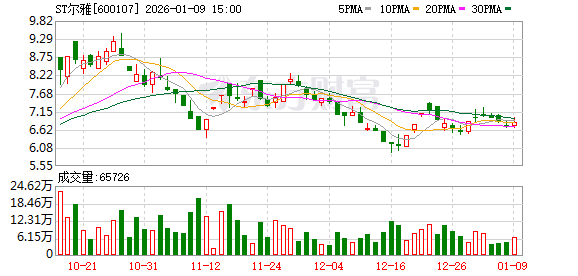
未及时披露非经营性资金占用关联交易 ST尔雅及实控人将被罚款750万元
Zhong Guo Jing Ying Bao· 2026-01-10 02:05
Core Viewpoint - ST Er Ya (600107.SH) faces administrative penalties from Hubei Securities Regulatory Commission for failing to timely disclose non-operating fund occupation related party transactions, resulting in fines totaling 3.9 million yuan for the company and its executives [2][3]. Group 1: Administrative Penalties - The company received a warning and a fine of 3 million yuan for non-compliance [2]. - The actual controller, Zheng Jiping, was fined 450,000 yuan, while the former general manager and financial director were fined 150,000 yuan and 70,000 yuan respectively [2]. Group 2: Related Party Transactions - From November 2022 to March 2023, ST Er Ya and its subsidiaries transferred a total of 10,372,000 yuan to related parties, which were used for Zheng Jiping and his affiliates' daily operations or debt repayment [2]. - The non-operating fund occupation amounted to 7,150,000 yuan in November-December 2022, representing 9.42% of the company's latest audited net assets, and 3,222,000 yuan in the first half of 2023, accounting for 5.12% of the same [3]. Group 3: Disclosure Issues - The company failed to disclose the non-operating fund occupation transactions in its 2022 annual report and 2023 semi-annual report, leading to significant omissions in these financial documents [3].

西藏珠峰控股股东信披违法被罚200万元
Zhong Guo Jing Ying Bao· 2026-01-10 02:03
Group 1 - The core issue involves the administrative penalty imposed on the controlling shareholder of Tibet Everest (600338.SH), Xinjiang Tacheng International Resources Co., Ltd. (Tacheng International), for failing to disclose shareholding changes, resulting in a fine of 2 million yuan [1] - Tacheng International's chairman, Huang Jianrong, received a warning and a fine of 1 million yuan for his role in the undisclosed shareholding arrangements [1] - Tacheng International had entered into agreements with Shanghai Jiesheng Environmental Technology Co., Ltd. (Jiesheng Environmental) regarding shareholding arrangements, which were not disclosed to Tibet Everest, leading to false records in the company's annual and semi-annual reports [1] Group 2 - Tacheng International, China Global New Technology Import and Export Co., Ltd. (Zhonghuan Technology), and an individual named Liu were previously among the top 10 shareholders of Tibet Everest, with undisclosed relationships and potential economic interest transfers [2] - The agreements between Tacheng International, Liu, and another individual, Gao, regarding debt compensation and shareholding arrangements were not disclosed to Tibet Everest, resulting in significant omissions in the company's reports [2]

开展虚假贸易虚增收入成本虚减利润 监管拟对聚石化学及责任人罚款670万元
Zhong Guo Jing Ying Bao· 2026-01-10 02:03
Core Viewpoint - 聚石化学 is facing administrative penalties from the Guangdong Securities Regulatory Commission for engaging in fraudulent trade practices that inflated revenue and costs while reducing profits [1][2] Group 1: Administrative Penalties - 聚石化学 received a notice of administrative penalty, which includes a fine of 2.4 million yuan and warnings to the company and four responsible individuals, including the chairman and general manager [1] - The total fines imposed on the responsible individuals amount to 4.3 million yuan [1] Group 2: Violations Identified - The company and its subsidiaries are accused of conducting false trade activities to inflate revenue and costs while reducing profits [1] - 聚石化学's subsidiary, Guangdong Guanzhen Technology Co., Ltd., controlled four trading companies that engaged in fictitious trades without actual goods [1] - The company was involved in trade chains of polypropylene and other products, where the procurement and sales amounts were nearly identical, lacking commercial substance [1] - Another subsidiary, Anhui Jurun Trading Co., Ltd., sold isooctane to two petrochemical companies without actual shipment, later repurchasing the goods at a markup [1] Group 3: Financial Impact - In the first half of 2023, 聚石化学 inflated its operating revenue by 157 million yuan, operating costs by 158 million yuan, and reduced profits by 1.6629 million yuan, representing 8.32%, 8.51%, and 6.81% of total revenue, total costs, and total profit respectively [2]

北大医药资产腾挪余波
Zhong Guo Jing Ying Bao· 2026-01-09 20:29
Core Viewpoint - The recent acquisition of a 9.75% stake in Daxin Pharmaceutical by Peking University Pharmaceutical is a strategic move to regain control over a previously divested asset, despite the company's ongoing financial struggles and the associated risks of the transaction [2][4][6]. Group 1: Acquisition Details - Peking University Pharmaceutical acquired the 9.75% stake in Daxin Pharmaceutical for 22 million yuan, with the transaction being completed swiftly on the same day as the auction [3][4]. - The total equity value of Daxin Pharmaceutical is approximately 233 million yuan, with a valuation increase of 28.52% [4]. - The stake was previously pledged as collateral for a debt of approximately 1.32 billion yuan owed by Southwest Synthesis to Peking University Medical Group [5]. Group 2: Financial Performance of Daxin Pharmaceutical - Daxin Pharmaceutical reported a revenue of approximately 269 million yuan in 2024, with a loss of 27.48 million yuan, and a revenue of about 212 million yuan with a net profit of 63,600 yuan in the first eight months of 2025 [6]. - The company's net assets have decreased to approximately 181 million yuan, reflecting a significant decline from 271 million yuan in 2015 [6]. Group 3: Ongoing Legal and Operational Challenges - Peking University Pharmaceutical is involved in an arbitration case with Chongqing Synthesis regarding an asset transfer agreement, which has resulted in a ruling that may lead to increased operational costs due to personnel management issues [7][8]. - The company faces a potential revenue loss of approximately 600 million yuan and a net profit decrease of about 40 million yuan due to the termination of a long-term service contract with Peking University International Hospital [9]. - In the third quarter of 2025, Peking University Pharmaceutical experienced a 47.95% year-on-year decline in revenue, amounting to approximately 274 million yuan [9].

遭遇成长“阵痛” 理想汽车向内“动刀”
Zhong Guo Jing Ying Bao· 2026-01-09 20:25
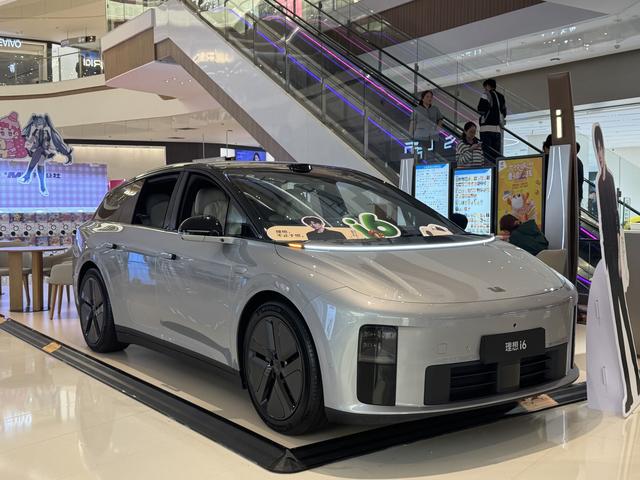
Core Insights - Li Auto is undergoing significant changes due to operational challenges, including a projected delivery of 406,300 vehicles in 2025, which represents an 18.81% year-on-year decline from its target of 640,000 vehicles [2] - The company reported a 39% year-on-year drop in deliveries and a net loss of 624 million yuan in Q3 2025, influenced by the recall costs of the Li Auto MEGA [2] - Li Auto is shifting back to an entrepreneurial management model from a professional manager system to enhance agility in responding to market changes [4] Management Strategy - The entrepreneurial management model emphasizes innovation, agility, and rapid iteration, contrasting with the professional manager model that focuses on stability and control [3] - Li Auto's CEO, Li Xiang, believes that the professional manager model has led to slower decision-making and product iteration, making the company less responsive to competition [4] - The company aims to foster a culture of open dialogue and quick decision-making, moving away from hierarchical reporting structures [5] Product Line Adjustments - In early 2026, Li Auto will restructure its product lines from three to two, focusing on efficiency and market coverage [5] - The L series will return to a simplified SKU model to enhance product experience and supply chain efficiency, addressing previous customer complaints about product complexity [6] - The L series has faced declining sales due to internal competition and external market pressures, necessitating a revitalization strategy [7][8] Competitive Landscape - The L series is experiencing significant competition from both internal models and external brands, which has impacted its sales performance [8] - Analysts suggest that revitalizing the L series is crucial for Li Auto to overcome current market challenges and improve sales in 2026 [8]

车企掌门人齐发声 开局即决战
Zhong Guo Jing Ying Bao· 2026-01-09 20:16
Core Insights - The Chinese automotive industry is entering a critical phase characterized by technological innovation, transformation, and global expansion, as highlighted by the statements from various industry leaders [1][2][4]. Group 1: Industry Performance and Trends - In 2025, the retail sales of passenger cars in China exceeded 23.78 million units, with the penetration rate of new energy vehicles surpassing 50% [1]. - The market penetration rate of L2-level advanced driver assistance systems reached 64% in the first three quarters of 2025, indicating that over 60% of new cars are equipped with advanced driving features [3]. - The first batch of L3-level conditional autonomous driving vehicle licenses was issued in December 2025, marking a significant milestone in the industry [3]. Group 2: Company Strategies and Innovations - Great Wall Motors achieved a historical sales high of 1,323,672 units in 2025, reflecting a 7.33% year-on-year growth, driven by its strategy of making advanced driving features standard across its models [4][6]. - China FAW Group adopted a dual approach of self-research and collaboration to develop its intelligent driving systems, with its Hongqi brand focusing on fully self-developed technologies [5][6]. - Xiaomi Motors emerged as a significant player, delivering over 410,000 vehicles in 2025, surpassing its annual target, with its first model, the Xiaomi SU7, delivering over 240,000 units [6]. Group 3: Competitive Landscape and Future Outlook - The competition in the automotive sector is intensifying, with traditional automakers and new entrants facing a survival race centered around technological capabilities and market share [4][10]. - Industry experts predict that the market will see increased concentration among leading companies, with smaller brands facing potential consolidation or exit [11]. - The focus of competition is shifting from delivery volumes to technological barriers, profitability, and global capabilities, with companies that prioritize innovation and strategic market positioning likely to gain an advantage [11].

