
Zhong Guo Qing Nian Bao

Search documents
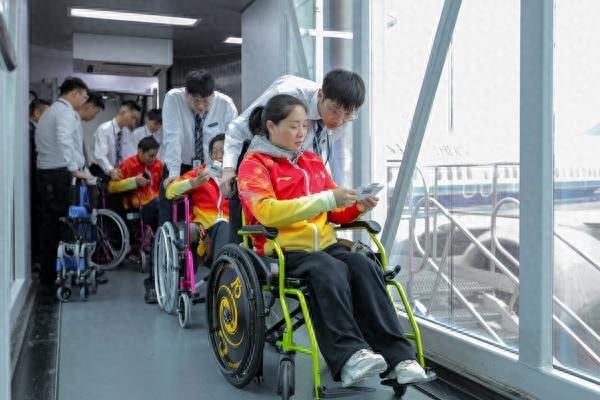
南航精细化服务 护航残特奥会人员出行
Zhong Guo Qing Nian Bao· 2025-12-18 00:38
Core Viewpoint - China Southern Airlines (CSA) has successfully provided specialized transportation services during the 12th National Games for Persons with Disabilities and the 9th Special Olympics, ensuring seamless travel for athletes and support personnel [2][3]. Group 1: Service Implementation - CSA has operated a total of 984 flights related to the events, serving approximately 4,100 participants and handling over 4,200 pieces of checked luggage, including 349 wheelchair passengers [2]. - A dedicated event support team was established within CSA to monitor flight operations and passenger needs dynamically, ensuring comprehensive tracking throughout the process [2]. - CSA has continued to offer benefits such as "Athlete Cards" and MICE (Meetings, Incentives, Conferences, and Exhibitions) exclusive services to eligible athletes and their companions [2]. Group 2: Operational Enhancements - To accommodate the specific needs of athletes carrying equipment and medical devices, CSA has set up dedicated check-in counters at key hubs like Guangzhou Baiyun International Airport, prioritizing check-in and luggage handling for participants [3]. - All checked luggage was tagged with special identifiers for tracking, and an additional 106 wheelchairs were deployed at the Guangzhou hub to meet demand during peak times [3]. - CSA's cabin crew underwent specialized retraining to enhance their skills in assisting passengers with disabilities, ensuring that all necessary equipment and supplies were available for personalized service [3]. Group 3: Customer Feedback - Feedback from event staff, such as Mr. Zhang from the Jiangsu Province table tennis team, highlighted the warmth and thoroughness of CSA's service, which greatly facilitated the athletes' travel experience [4].


制造低资金流水假象、购买轨迹信息伪装 平台企业涉税违法行为花样百出受严查
Zhong Guo Qing Nian Bao· 2025-12-17 23:58
Core Viewpoint - Platform enterprises are increasingly involved in tax evasion and fraudulent activities, disrupting fair market competition and necessitating stricter tax regulation and compliance measures [2][6]. Group 1: Tax Evasion Methods - Various methods of tax evasion by platform enterprises include creating false business operations, disguising service fees as liabilities, and failing to withhold personal income tax, leading to significant tax losses [3][4][5]. - Specific cases include Zhejiang Mamatang Network Technology Co., which concealed 2.97 million yuan in taxes and failed to withhold 4.73 million yuan in personal income tax [3]. - Another case involves Yunsidi Technology, which fabricated transportation operations and issued fraudulent VAT invoices totaling 13.04 billion yuan from upstream and 18.55 billion yuan to downstream enterprises [4]. Group 2: Regulatory Response - The tax authorities have begun to expose these tax violations to signal a zero-tolerance approach towards tax evasion in the platform economy [5][6]. - The rapid growth of platform economies has led to the emergence of various platforms that exploit their characteristics for tax evasion, necessitating a comprehensive regulatory framework [6][8]. - The implementation of the "Internet platform enterprise tax information reporting regulations" aims to enhance transparency and compliance among platform enterprises, with over 7,000 platforms already fulfilling their reporting obligations [8][9]. Group 3: Future Directions - Experts suggest that tax regulations should evolve to address the unique characteristics of platform economies, promoting a proactive rather than reactive approach to tax compliance [8][9]. - The establishment of a clear legal framework for platform enterprises regarding their tax obligations is essential for fostering a fair and competitive market environment [8].
网红被驱赶,号召19000位粉丝“人肉”保安?后续来了……
Zhong Guo Qing Nian Bao· 2025-12-17 07:48
Core Points - A blogger named "Zhen Shiba" was live streaming in a Taobao delivery uniform at the Bund in Shanghai when security personnel intervened, leading to a viral video of the incident [1][6] - The Shanghai Huangpu police educated and released the blogger after the incident on December 15 [1] - The live streaming activity occupied public viewing areas and disrupted normal tourist activities, prompting security to intervene [1][6] - The scenic area management office stated that such behavior violates management regulations and will be dealt with accordingly [1] - The blogger's Kuaishou account was banned on December 16 for violating community guidelines [1] - The blogger's Douyin account was also banned shortly after the incident [4] Incident Details - The blogger performed a series of actions during the live stream and provoked security by asking viewers to "dox" the security personnel [6][7] - The security personnel maintained that they were performing normal management duties [7] - Many netizens expressed support for the banning of the blogger's accounts [7]

阿依美热木·吐尔地:帕米尔高原上的“小小戍边员”
Zhong Guo Qing Nian Bao· 2025-12-17 03:34
阿依美热木·吐尔地来自一个三代护边家庭。从零下20摄氏度的雪原到40摄氏度的戈壁,她稚嫩的脚步 与祖国的边境线紧紧相连,"一生只做一件事,我为祖国守边防"的誓言,也早已融入她的血脉。 阿依美热木·吐尔地的护边故事,要从爷爷吾斯曼·苏云说起。55年时光里,爷爷穿着补丁摞补丁的牛皮 靴,一步步丈量完1133公里边境线,每一道靴底的纹路里,都表达着对祖国的赤诚。父亲吐尔地·吾斯 曼接过爷爷的巡边望远镜,在卫星定位仪与暴风雪的较量中续写忠诚,荣获"自治区爱国双拥模范人 物"称号。翻开家里的相册,爷爷的军功章与父亲的荣誉证书像是无声的嘱托,将护边的责任悄悄传递 给了阿依美热木·吐尔地。 每个周末,她都会跟着父亲踏上巡边路,那些艰辛的瞬间,她刻骨铭心。寒冬零下20摄氏度的雪地里, 她踩着父亲深深的雪窝前行,睫毛结满冰晶。七月戈壁的烈日下,她看着父亲的后背被汗水浸透成深 色,默默记住铁丝网上每一处修补,那是父亲用双手为边境线筑起的"防护墙"。最让她难忘的一次,正 午40摄氏度的戈壁上,父亲的水壶早就空了,嘴唇干裂起皮,却仍要坚持走完最后一段巡边路,只淡淡 说一句"界碑不能没人守"。那一刻,父亲的身影在她心中变得格外高大,护 ...
毕赣:不害怕成为一名小众的艺术电影导演
Zhong Guo Qing Nian Bao· 2025-12-17 03:34
Core Viewpoint - The film industry in China has undergone significant changes over the past decade, with the micro-short drama market expected to surpass the domestic film market in 2024. Despite this, director Bi Gan remains committed to creating niche art films, emphasizing his passion for filmmaking rather than commercial success [1][13]. Group 1: Bi Gan's Background and Artistic Journey - Bi Gan was born in 1989 in Kaili, Guizhou, and developed a unique storytelling perspective from a young age, influenced by his strict yet supportive grandmother and the diverse conversations in his mother's barbershop [2]. - He initially pursued a television directing degree in Taiyuan, where he began exploring existential themes in his films, distinguishing himself from peers who focused on campus life [3][7]. - His early exposure to philosophy and literature in a local bookstore shaped his artistic vision, leading him to view art as a means to explore profound questions [3][5]. Group 2: Career Development and Challenges - Bi Gan's first film, "Old Tiger," was made with limited resources and faced numerous technical challenges, leading him to question his suitability for filmmaking [7][8]. - After a brief stint in a wedding studio, he returned to filmmaking with "Kaili Blues," which gained recognition and attracted investment, marking the beginning of his career as a director [8][10]. - Despite initial doubts and external pressures to pursue a stable job, Bi Gan chose to follow his instinct for filmmaking, recognizing the importance of personal choice in his artistic journey [9][12]. Group 3: Recent Work and Artistic Philosophy - Bi Gan's latest film, "Wild Times," reflects his observations of contemporary life and the disconnect between individuals and the world, structured through sensory experiences rather than linear storytelling [12][13]. - He acknowledges the risks of collaborating with commercial actors but believes that a talented actor can enhance a project, maintaining that his creative logic remains unchanged despite industry shifts [13][14]. - Bi Gan emphasizes that the essence of filmmaking lies in conveying genuine emotions, regardless of the complexities involved in the process [14].

澳大利亚未满十六岁,禁止登录社媒
Zhong Guo Qing Nian Bao· 2025-12-17 02:32
Core Viewpoint - Australia has become the first country to implement strict legislation prohibiting minors under 16 from using social media platforms, with penalties of up to AUD 49.5 million for non-compliance [1][2]. Group 1: Legislative Impact - The new law requires social media platforms to implement measures to prevent access by users under 16, or face significant fines [1]. - The legislation has garnered support from leaders in other countries, including the UK, France, Denmark, and Norway, who are considering similar measures [1][2]. - A significant portion of the Australian population, 77%, supports the ban on minors using social media [5]. Group 2: Social and Psychological Concerns - The law is partly a response to tragic incidents of cyberbullying, such as the case of a 15-year-old girl who took her own life due to online harassment [3]. - Research indicates that excessive social media use among teenagers is linked to higher risks of depression, anxiety, and eating disorders [4]. - Parents express relief at the ban, feeling it alleviates the pressure of monitoring their children's social media use [5]. Group 3: Implementation Challenges - Social media companies are expected to use technology such as facial recognition and user data to verify ages, but the effectiveness of these measures is uncertain [7]. - Despite the ban, children are finding ways to circumvent age verification, indicating potential challenges in enforcement [11]. - The government acknowledges that some accounts may be missed in the initial enforcement phase, and ongoing checks will be necessary [11]. Group 4: Global Context and Comparisons - Other countries are exploring age verification technologies, with Malaysia planning to implement a similar ban by 2026 [1]. - The Australian approach contrasts with practices in the US and Europe, where parental consent is often required for minors to use social media [14]. - Discussions around the balance between protection and freedom in social media use continue globally, with various countries adopting different strategies [16].
我国空气质量标准“升级”
Zhong Guo Qing Nian Bao· 2025-12-17 02:16
Core Points - The Ministry of Ecology and Environment has released a draft for the revision of the "Ambient Air Quality Standards" and related technical specifications, focusing on tightening the concentration limits for PM2.5, PM10, sulfur dioxide, and nitrogen dioxide [1][2] - The revised standards propose to lower the secondary limits for PM2.5 from 35 and 75 micrograms per cubic meter to 25 and 50 micrograms per cubic meter, and for PM10 from 70 and 150 micrograms per cubic meter to 50 and 100 micrograms per cubic meter [1] - The implementation of the revised standards will occur in two phases: the first phase from 2026 to 2030 with transitional limits, and the second phase starting in 2031 with full enforcement of the new limits [1] Summary by Sections Revision Details - The draft proposes stricter limits for PM2.5 and PM10, as well as for sulfur dioxide and nitrogen dioxide, to enhance public health protection [1] - The new PM2.5 annual and daily secondary limits will be 30 and 60 micrograms per cubic meter during the transitional phase [1] Impact on Air Quality Assessment - The revision may lead to changes in air quality evaluation results for certain cities and regions, potentially shifting from compliant to non-compliant status under the new standards [2] - This change does not indicate a deterioration in air quality but reflects a commitment to improving air quality under higher standards [2]
国产游戏再引海外热议 外国网友“恶补”中国历史
Zhong Guo Qing Nian Bao· 2025-12-17 01:49
Core Insights - The article highlights the success of the Chinese game "Where Winds Meet," which has gained significant popularity among overseas players, showcasing Chinese culture in a unique way [1][3] - The game, set during the Five Dynasties and Ten Kingdoms period, has attracted over 2 million players within 24 hours of its overseas launch, indicating a strong market reception [1] - The discussions among overseas players reflect a growing interest in Chinese history and culture, as many players are actively seeking to learn more about the historical context presented in the game [1][2] Group 1 - "Where Winds Meet" has been well-received for its high degree of freedom in gameplay and rich Eastern martial arts cultural elements, marking a significant entry of Chinese games into the global market [1] - Players have expressed a desire to engage with the game's narrative, with some stating they are motivated to learn Chinese and study Chinese history due to the game's content [1][2] - The game has sparked discussions on platforms like Reddit and X, where players are sharing insights about Chinese cultural references, such as the "Twelve Hours" time system and historical anecdotes [2] Group 2 - Despite the cultural barriers, there is a notable shift in perception among Western players regarding Chinese games, moving away from the stereotype that they merely imitate Western titles [3] - The incorporation of distinct Chinese cultural narratives in games like "Where Winds Meet" is fostering a deeper interest in Chinese culture and history among international audiences [3] - The article emphasizes that the unique cultural elements in these games are becoming focal points for discussion, encouraging players to explore the historical and philosophical themes embedded in the gameplay [3]
青年早新闻 | 日本民众排长队告别大熊猫,每批只能看1分钟
Zhong Guo Qing Nian Bao· 2025-12-17 01:44
Group 1 - The last two giant pandas in Japan, "Xiaoxiao" and "Leilei," are scheduled to return to China in early 2026, prompting a significant public farewell event at Ueno Zoo in Tokyo [1][3] - From December 16, Ueno Zoo implemented visitor restrictions for the panda viewing area, allowing each group of visitors only one minute to observe the pandas [1][5] - Long queues were reported, with visitors typically waiting over 40 minutes on weekdays and more than an hour on weekends to see the pandas [1][7] Group 2 - The Australian government has enacted a law prohibiting social media access for individuals under 16, with penalties for non-compliance reaching up to 49.5 million AUD (approximately 230 million RMB) [11] - This legislation has garnered international attention, with countries like the UK, France, Denmark, and Norway expressing support, and others like Indonesia and Malaysia exploring similar regulations [11] Group 3 - The Shanghai Consumer Protection Commission has raised concerns regarding a product labeled as "99% high-purity Antarctic krill oil" from Beijing Tongrentang, which was found to contain no actual krill oil [19][20] - The commission has urged the involved companies to conduct self-inspections, apologize to consumers, and recall the defective products [20]


李阳:在大湾区书写创新传奇
Zhong Guo Qing Nian Bao· 2025-12-16 23:29
Core Insights - The article highlights the journey of Guangzhou Huizhi Microelectronics Co., Ltd. and its CEO Li Yang, emphasizing the company's growth and innovation in the field of reconfigurable radio frequency chips over the past 15 years [1][2][3]. Company Overview - Huizhi Micro was founded in 2011 in Guangzhou, focusing on reconfigurable RF chips, and has successfully developed products that compete with international manufacturers [2]. - The company has achieved significant milestones, including the successful application of its technology in high-end smartphones and IoT devices, breaking the long-standing foreign monopoly in this sector [2]. Industry Context - The article discusses the supportive environment in the Greater Bay Area, which has evolved from limited resources to a thriving innovation hub, benefiting companies like Huizhi Micro [3][4]. - The integration of the Greater Bay Area has simplified cross-border operations and enhanced collaboration, allowing Huizhi Micro to leverage local resources and talent effectively [3]. Technological Innovation - Huizhi Micro's reconfigurable RF chips have been recognized for their performance and cost-effectiveness, contributing to the advancement of domestic chip technology [2]. - The company emphasizes a long-term commitment to innovation, countering initial skepticism about its technology's viability [2]. Future Outlook - Li Yang envisions the Greater Bay Area becoming a world-class innovation center, akin to Silicon Valley, with a complete industrial chain and efficient collaborative ecosystems [4].