
Zhong Guo Qing Nian Bao

Search documents
万亿元赛道上的冰雕师:“冷”职业迎来“热”发展
Zhong Guo Qing Nian Bao· 2025-12-18 23:40
Core Insights - The ice sculpture industry is experiencing significant growth, with the total scale of China's ice and snow industry projected to increase from 270 billion yuan in 2015 to 980 billion yuan by 2024, and expected to surpass 1 trillion yuan by 2025 [2][3] Industry Overview - The 27th Harbin Ice and Snow World opened on December 17, featuring a 70-meter-long ice train created by a team of nearly 100 ice sculptors [1] - The ice sculpture profession, once a niche activity, is now gaining popularity and recognition, with more people interested in learning about ice sculpture techniques [2][3] Economic Impact - The ice and snow economy is projected to reach 1.5 trillion yuan by 2030, as outlined in the State Council's 2024 policy document [2] - The demand for ice sculptors has led to the establishment of specialized programs in universities, with student enrollment in ice sculpture courses increasing from 3 to over 60 [3] Professional Development - Ice sculptors can earn between 200 to 500 yuan per day, with skilled artisans making up to 30,000 yuan per month [3] - The profession faces challenges such as harsh winter conditions and the need for teamwork and coordination among large groups of workers [3][4] Skills and Techniques - Ice sculpting requires knowledge of mechanics to ensure structural stability, especially for complex designs like arches [4] - The seasonal nature of the profession limits work to about two months per year, prompting some sculptors to diversify their income through summer activities related to ice and snow culture [4]
黑河,有一群坚守的年轻人
Zhong Guo Qing Nian Bao· 2025-12-18 23:24
在我国东部,有一条北起黑龙江省黑河市、南至上海市的"北气南下"天然气能源通道,它途经9个省 (区、市),年输气能力380亿立方米。 投产通气正式运行6年来,"北气南下"能源通道为新时代东北全面振兴、京津冀协同发展、长三角一体 化高质量发展提供了稳定可靠的清洁能源保障,也对改善我国东部地区大气环境、实现"双碳"目标起到 了积极作用。 扛起建设、运营维护全国油气管网重任的,是成立于2019年的国家石油天然气管网集团有限公司(以下 简称"国家管网集团")。而国家管网集团东北公司哈尔滨分公司黑河作业区的员工们,就是守护"北气 南下"能源通道的管网人。 黑河联合团支部自2019年5月伴随"北气南下"能源通道投产应运而生,现有团员7名、35岁以下青年23 名。这些年轻人分布在生产运行、管道巡护、计量化验等关键岗位,构筑了一道坚实的青春防线。 坚守在"寒风一吹,说话都不利索"的"极境寒地" 北纬50度的冰原,是名副其实的"极境寒地":年平均气温仅2摄氏度,无霜期不足4个月;"冬季保供 期"的定义是每年10月至次年3月,最低温可达零下48摄氏度。 黑河的初雪通常在10月初,化雪要从次年5月初开始;去年最冷的时候,室外零下30 ...
捐赠藏品现身拍卖市场?公众期待更详实的调查结论
Zhong Guo Qing Nian Bao· 2025-12-18 12:27
Core Viewpoint - The recent appearance of the Ming Dynasty painting "Jiangnan Spring" by Qiu Ying at an auction has raised significant public concern, leading to its withdrawal from sale after intervention by the National Cultural Heritage Administration and a report from the descendant of the original donor [3][4]. Group 1: Auction Incident - The painting "Jiangnan Spring" was estimated at 88 million yuan and was set to be auctioned in Beijing before being withdrawn due to legal disputes regarding its ownership [3]. - The Nanjing Museum received 137 pieces of ancient paintings and calligraphy from the family of collector Pang Laichen in the 1950s, which included the disputed painting [3][4]. - Five other donated artworks are currently unaccounted for, raising questions about their whereabouts and the museum's handling of these items [3][4]. Group 2: Museum's Response - The Nanjing Museum stated that it is cooperating with legal proceedings and will investigate the status of the five disputed artworks, promising to address any illegal actions if found [3][4]. - The museum's explanation regarding the disposal of the artworks previously identified as forgeries lacks transparency, particularly concerning the process and whether the donor was informed [4]. - The Jiangsu Provincial Department of Culture and Tourism has initiated a joint investigation into the matter, indicating a higher-level oversight to ensure accountability [4]. Group 3: Broader Implications for Cultural Institutions - The incident highlights the growing public interest in cultural heritage and the need for museums to enhance their management and protection of donated items [5]. - There is a call for cultural institutions to review their processes and improve transparency to maintain public trust and ensure the preservation of cultural artifacts [5].

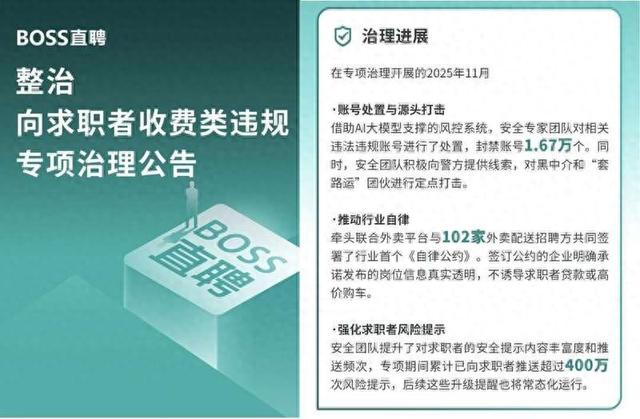
BOSS直聘:单月封禁1.67万涉“套路收费”类账号
Zhong Guo Qing Nian Bao· 2025-12-18 09:01
Core Insights - BOSS Zhipin released a special announcement on December 17 regarding the crackdown on job-seeking fee-related violations, revealing that 16,700 accounts were dealt with in November and over 4 million risk warning messages were sent to job seekers [2][4]. Group 1: Violations and Actions - The special governance focused on typical violations such as charging fees for truck drivers, ride-hailing drivers, delivery riders, vehicle rentals and purchases, training and enrollment fees, and image packaging fees [2]. - The announcement also disclosed two significant cases of "套路运" (scam operations) and "黑中介" (black intermediaries) that were recently cracked down in cooperation with the police [2]. Group 2: Scam Characteristics - The prevalent scams, despite their evolving nature, fundamentally lure job seekers with promises of "quick employment" and "high and stable salaries" [4]. - Job seekers are advised to conduct communications and exchanges of contact information within the platform to avoid early transitions to third-party software; if such a transition occurs, they should stop communication immediately and retain evidence for reporting [4].
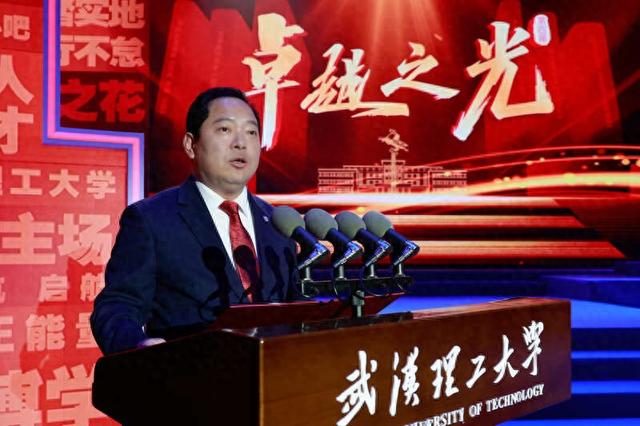
武汉理工大学“卓越之光”第四届理工故事展演会举行
Zhong Guo Qing Nian Bao· 2025-12-18 08:38
Core Viewpoint - The "Excellence Light" Fourth Science and Engineering Story Exhibition at Wuhan University of Technology showcases inspiring stories from alumni and faculty, emphasizing patriotism, dedication, and the pursuit of excellence in education and research [1][2]. Group 1: Event Overview - The exhibition was launched in September and aimed to collect and select six representative stories based on themes such as moral education, serving the country through technology, and bringing glory to the nation [2]. - The event featured performances and storytelling from notable figures, including the "Most Beautiful Teacher" and "Most Beautiful Student," who shared their experiences and insights on what it means to be "the most beautiful" [1]. Group 2: Key Contributions - Alumni and faculty shared personal narratives that reflect their commitment to their professions and the development of China's maritime industry, highlighting the importance of national sovereignty and dignity [1]. - The WUT hybrid formula racing team presented their journey of competing internationally, emphasizing the importance of innovation and showcasing the capabilities of Chinese youth on a global stage [1].
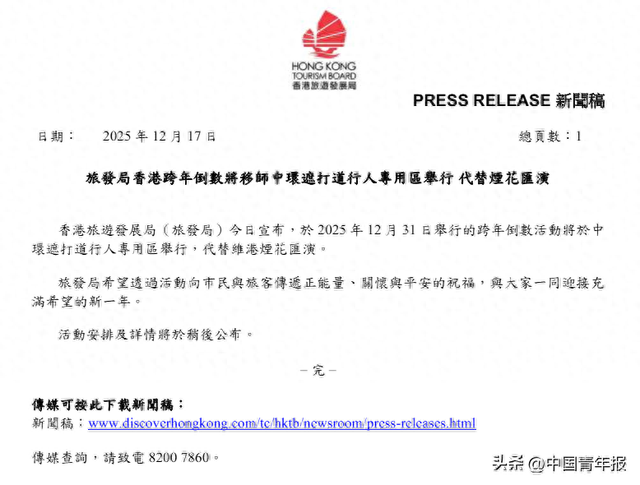
香港取消维港跨年烟花秀
Zhong Guo Qing Nian Bao· 2025-12-18 06:32
据广州日报消息,12月17日,香港旅游发展局(旅发局)宣布,于2025年12月31日举行跨年倒数活动, 代替维港烟花汇演。旅发局表示,希望透过活动向市民与旅客传递正能量、关怀与平安的祝福,与大家 一同迎接充满希望的新一年。 据新华网消息,香港特区政府政务司司长陈国基12月17日主持节庆安排跨部门工作小组会议,全面统筹 并督导各政府部门做好有关元旦假期接待访港旅客的预备工作。 陈国基说,自元旦起一连3天为内地假期,香港在元旦假期将举行一系列活动,预计访港旅客会明显增 加。特区政府会做好接待访港旅客预备工作,包括积极协调及统筹口岸和交通配套,并与相关机构及旅 游业界保持紧密联系,做好人流管理、信息发布、公共交通及各口岸安排,确保各项接待旅客环节能运 作顺畅,为访港旅客提供优质体验。 据香港特区政府新闻处消息,香港今年的跨年活动将取消烟花汇演。 因应跨年倒数活动的举行,特区政府与深圳市政府已商讨延长跨年的关口服务时间。港珠澳大桥口岸及 落马洲/皇岗口岸在跨年夜会如常24小时通关。 2024年12月31日晚,香港维多利亚港举办跨年倒数烟花汇演。 来源:新华网、广州日报、@大湾区之声 ...
常青田:以文字还原历史的厚重
Zhong Guo Qing Nian Bao· 2025-12-18 04:26
Core Viewpoint - The article discusses the adaptation of the novel "Silent Glory" from the original TV series, highlighting the challenges and differences in narrative style and content between the two formats [2][3][4]. Group 1: Adaptation Process - The adaptation of "Silent Glory" involved a tight timeline, with the author having only three to four months to convert a 500,000-word script into a novel, ultimately completing a 330,000-word draft in two months [2][4]. - The novel aims to provide a more in-depth exploration of characters and historical context, which the TV series could not fully present due to time constraints [4][5]. Group 2: Narrative and Stylistic Differences - The adaptation faced challenges in converting the visual and auditory elements of the TV series into a linear narrative form suitable for a novel, requiring a balance between literary quality and the original's immersive experience [4][5]. - The author emphasized the need for a change in narrative style, opting for concise and direct language to align with the dialogue's spoken nature, thus creating a unified literary style [5][6]. Group 3: Historical Accuracy and Artistic Interpretation - The novel is based on over 90% historical events and characters, which necessitated a careful selection of which historical details to include while maintaining artistic integrity [6][7]. - The author highlighted the principle of "big events not being fictionalized, while small details can be flexible," which guided both the TV series and the novel's creation [6][7].
数字星火 红土新声
Zhong Guo Qing Nian Bao· 2025-12-18 02:05
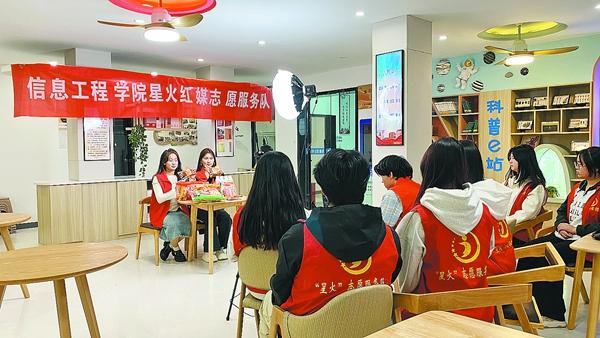
他们深入街巷,把复杂的政策条文改编成通俗易懂的情景短剧,将反诈知识谱写成朗朗上口的趣味说 唱。这些接地气、有温度的作品,打破了传统宣传的壁垒,让信息传递更高效、更入心。这一创新实践 在赣西红土地萍乡,一支名为"星火红媒"的青年团队正以数字技术为笔,在新时代画卷上挥洒汗水与智 慧。这支来自江西工业工程职业技术学院数字媒体专业的团队,在学院组织部的组织推动与曾琳、蔡英 龙两位老师的指导下,将安源红色基因融入血脉,以新媒体技术为实践抓手,活跃在红色文化传承、城 市品牌塑造、基层治理创新、社会公益服务等多个领域,生动诠释了新时代高职青年如何将专业技能转 化为服务社会的青春能量。 深植红土:让历史在数字记忆中"活"起来 安源,中国工人运动的摇篮,为"星火红媒"提供了不竭的精神滋养。团队自2019年起,连续六年深度参 与"江西省红色走读"竞赛,足迹遍及井冈山、瑞金等革命圣地。他们不仅是历史的访客,更是新时代的 转译者——走访革命后代、对话党史专家、挖掘尘封史料,运用短视频、数字动画、非遗创新作品等青 年喜闻乐见的形式,将厚重的红色历史转化为鲜活的新媒体产品。 六年间,团队累计获得省级一等奖2项、二等奖4项、三等奖6项。2 ...
冲击高端轿车市场 中国汽车品牌迎来“大考”
Zhong Guo Qing Nian Bao· 2025-12-18 00:57
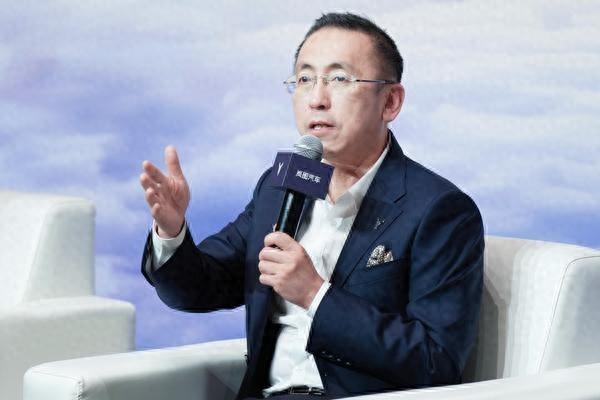
Core Viewpoint - The Chinese automotive market is witnessing a shift towards high-end electric vehicles, with companies like Lantu aiming to compete directly with established luxury brands such as BBA (Benz, BMW, Audi) [2][9] Group 1: Market Dynamics - Statistics indicate that the demand for vehicle upgrades and exchanges has become the main driver of consumption in the Chinese automotive market [2][6] - In November, domestic luxury car retail reached 240,000 units, with the penetration rate of electric vehicles rising to 38.8%, up from 32.9% year-on-year [10] - The market is experiencing intense competition, with leading companies engaging in price wars to capture market share, leading to sustained pressure on overall profit margins [12] Group 2: Company Developments - Lantu's flagship sedan, the Zhaiguang L, was launched with a price range of 279,900 to 309,900 yuan, positioning it to compete with traditional luxury car models [2][9] - The Zhaiguang L features advanced technology, including an 800V system, 5C ultra-fast charging, and a 63kWh large-capacity battery, making it a significant player in the PHEV segment [10] - Lantu aims to establish itself as a leading high-end electric vehicle brand, emphasizing the need for Chinese brands to enhance their market presence and brand image [4][11] Group 3: Future Outlook - Analysts predict that the Chinese automotive market will face a critical turning point by 2025, with a focus on technological advancements in battery technology and smart driving features [12][13] - The government is expected to continue supporting automotive consumption policies, which will provide a favorable environment for the growth of high-end electric vehicles [12]
摆脱久坐 过半受访青年愿意尝试人体工学设备或站立办公
Zhong Guo Qing Nian Bao· 2025-12-18 00:53
Core Insights - A trend of "workplace wellness" is emerging, with 97.2% of surveyed youth having tried "light wellness" methods [1] - The survey indicates a significant interest in ergonomic equipment and standing desks, with 53.5% of respondents willing to try them [1] Group 1: Survey Findings - 45.4% of respondents are open to taking short breaks through walking or climbing stairs [3] - 43.5% are interested in keeping wellness tea bags and healthy snacks at their desks [3] - Other popular methods include stretching at the desk (41.8%) and setting reminders to stand up (35.9%) [3] Group 2: Individual Experiences - A wellness influencer from Guangxi has adopted various "workplace wellness" methods, leading to noticeable health improvements [1] - Another individual from Beijing has started incorporating stretching and hydration into her work routine to combat fatigue [2] - A university student from Hubei has also adopted alternating between sitting and standing while working to alleviate discomfort from prolonged sitting [2] Group 3: Expert Recommendations - Experts suggest simple desk exercises, such as jumping jacks and neck stretches, to improve physical health during long hours of sitting [4] - Recommendations include using ergonomic chairs and engaging in strength training to counteract the effects of aging and sedentary lifestyles [4]